Buyer Fit Snapshot
| Best fit | Custom Product Sleeves with Logo projects where brand print, material claims, artwork control, MOQ, and repeat-order consistency need to be specified before quoting. |
|---|---|
| Quote inputs | Share finished size, material target, print colors, finish, packing count, annual reorder estimate, ship-to region, and any compliance wording. |
| Proofing check | Approve dieline scale, logo placement, barcode or warning zones, color tolerance, closure strength, and carton packing before bulk production. |
| Main risk | Vague material claims, crowded artwork, missing packing details, or unclear freight terms can make a low unit price expensive after revisions. |
Fast answer: Custom Product Sleeves with Logo: Design, Cost, Process should be specified like a repeatable production item. The safest quote records material, print method, finish, artwork proof, packing count, and reorder notes in one written spec.
Production checks before approval
Compare the actual filled-product size with the drawing, then confirm tolerance on folds, seals, hang holes, label areas, and retail display edges. Reserve space for logos, QR codes, warning copy, and material claims before decorative graphics fill the panel.
Quote comparison points
Review material grade, print process, finish, sampling route, tooling charges, carton quantity, and freight assumptions side by side. A quote is only useful when the supplier can repeat the same color, closure quality, and packing count on the next order.
Custom Product Sleeves with Logo: Design, Cost, Process
A plain carton can do its job and still disappear on shelf. Custom Product Sleeves with logo change that in one move: a printed wrap can turn a stock box, tray, bottle pack, or folding carton into branded packaging that feels intentional without forcing a full structural redesign. For brands that refresh promotions, run seasonal artwork, or need a cleaner path than fully custom printed boxes, custom product sleeves with logo are often the most practical place to start.
From a buyer's point of view, the appeal is easy to understand. You keep the base package that already works, change only the sleeve, and the item still feels new. That matters for launches, limited editions, value-added multipacks, and any line where the graphics need to move faster than the structure. I have seen plenty of projects where the sleeve did more than decorate; it carried the sales story, the key ingredient claim, the flavor cue, and the promo hook all at once.
Custom product sleeves with logo also solve a retail problem that shows up early: the first impression happens before the shopper reads the fine print. The sleeve is often the most visible surface because it wraps the front, adds contrast, and creates a clean block of branding. In practice, that means the sleeve may do the heavy lifting for package branding even if the carton or tray underneath is standard.
There is a reason buyers keep coming back to custom product sleeves with logo instead of jumping straight to a full structural overhaul. Fit, stock choice, print method, and folding style all affect how polished the finished piece looks, how it behaves on the line, and how much it costs to run. Get those pieces right, and the sleeve can feel premium without making the whole package complicated.
A good sleeve should do three jobs at once: catch the eye, protect the message, and support the way the pack is actually assembled.
What custom product sleeves with logo are and why they matter
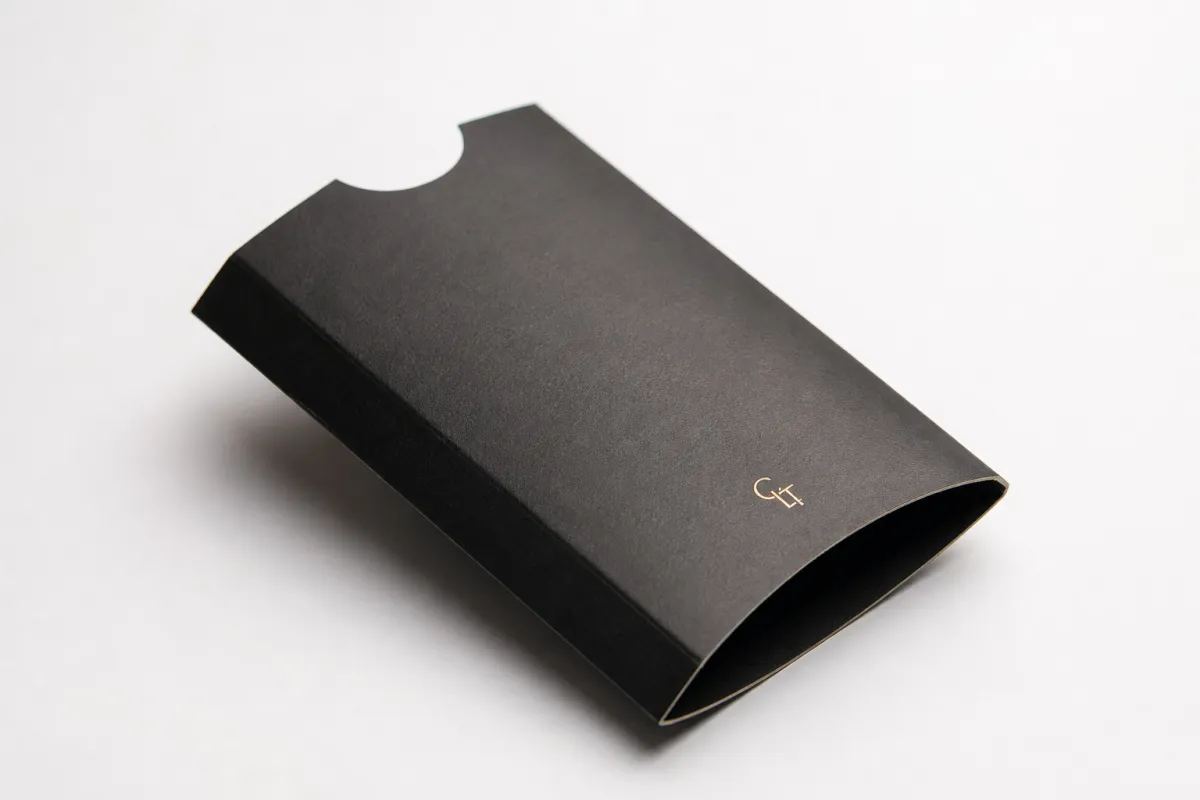
Custom product sleeves with logo are printed wraps, bands, or jackets that slide over an existing package and add branding without replacing the base structure. Think of a plain carton, a tray and lid, a bottle carrier, or even a subscription kit that needs more retail presence. The sleeve becomes the visible face of the item, while the original container continues doing the practical work underneath. That is why custom product sleeves with logo show up so often in food, beverage, cosmetics, gift sets, and promotional product packaging.
What makes them useful is not only the look. A sleeve can carry product details, promotions, scan codes, ingredient callouts, and seasonal graphics in one place. It can also change quickly. If a product line rotates artwork by flavor, collection, or retailer, custom product sleeves with logo are easier to update than a new carton tool or a fully bespoke folding carton program. That is a big reason many teams use sleeves as a bridge between standard packaging and fully custom solutions.
In retail packaging, shoppers often read the sleeve before they notice the base pack. That first read matters. The sleeve can signal price tier, category, and quality level in seconds, which is why good packaging design treats the sleeve as a front-line sales surface rather than an afterthought. A clean logo, a short benefit statement, and one strong image usually outperform a crowded layout with too many competing claims.
Another practical reason to choose custom product sleeves with logo is flexibility. If your product itself is stable but the promotion changes often, a sleeve keeps inventory risk lower. You can hold one base package and swap only the printed wrap. That keeps waste down, simplifies forecasting, and gives your marketing team room to test different messages without resetting the entire structure.
Most teams find sleeves make the most sense when the base package already works. If the carton closes well, the tray stacks properly, and the product looks good in the pack, a sleeve can be the smartest branding move. It adds presence without asking the whole system to start over, and that is why buyers keep using custom product sleeves with logo for launches, holiday runs, and short-cycle promotions.
How custom product sleeves with logo are made and applied
The build starts with a flat printed sheet. For custom product sleeves with logo, that sheet is usually cut to shape, scored so it folds cleanly, and then finished as an open-ended wrap, a glued seam sleeve, or a locking style depending on the product and the packing method. The dieline matters here more than most people expect. It controls the wrap width, the overlap, the bleed area, the score locations, and the amount of clearance needed so the sleeve slides on without scraping the corners or buckling at the fold.
If the sleeve is too tight, the line suffers. If it is too loose, the graphics drift and the pack can look sloppy. That is why experienced suppliers pay close attention to the actual product dimensions, not just the nominal carton size. A good dieline for custom product sleeves with logo should account for board thickness, panel depth, and how the sleeve will sit once it is around a filled product rather than an empty sample.
Print method changes the result too. Offset printing is often chosen for crisp color, solid coverage, and cleaner reproduction on larger runs. Digital printing can work well for shorter runs, versioned artwork, or projects that need faster changes. Special effects such as spot UV, foil, embossing, and tactile varnish can elevate custom product sleeves with logo, but every extra finish adds setup, time, and a little more production risk if the artwork is already tight.
Application is the last practical step, and it deserves just as much attention as design. Small quantities may be wrapped by hand or with simple bench tools. Higher-volume orders often move through semi-automated or automated packing lines where timing, friction, and fold behavior matter. If the sleeve snags, opens too easily, or requires operators to fight it into place, throughput drops. A sleeve that looks beautiful on a proof can still be a poor production choice if it slows the line.
Custom product sleeves with logo work best when the visual front face and the mechanical reality are planned together. The front panel can carry the hero image and the logo, but the folds, seams, and edges need to disappear in a way that feels deliberate. That is where good prepress and honest production planning pay off.
Materials, finishes, and structural choices that change results
Stock choice changes the whole feel of custom product sleeves with logo. Lightweight paperboard can be fine for simple wraps, but many retail projects benefit from 14 pt to 18 pt SBS or C1S board because it gives a cleaner edge and a more stable hand feel. If the sleeve needs a premium look, heavier board or a coated surface can help the graphics hold shape and color. If the brand wants a more natural appearance, an uncoated or kraft-style stock can feel warmer and less glossy.
Finishing is where the sleeve starts to speak the language of the brand. Matte coating softens the look and makes text easier to read. Gloss gives brighter color and stronger shelf reflection. Soft-touch lamination adds a velvety feel that can work especially well for beauty, gift, and premium food items. Spot UV, foil stamping, and embossing are useful when you want the logo or a key icon to stand out, but they should be used with restraint. Too many effects can make custom product sleeves with logo feel busy instead of polished.
Structural choices matter just as much. A sleeve can include windows, tear strips, perforations, tuck points, or wrap-around bands depending on how the product is opened and displayed. A window is useful if the buyer needs to see the actual item. A tear strip helps if the sleeve doubles as a tamper or access feature. Perforations can support opening while preserving presentation. These details are small on paper, but they change how the pack behaves in the real world.
The product underneath also shapes the decision. Glass bottles, rigid plastic tubs, folding cartons, pouches, and subscription-style kits all present different tolerances. A bottle sleeve has to stay square and avoid sliding. A carton sleeve should land flush and hold its edges. A pouch sleeve often needs a wider visual front because the pack itself has more movement. That is one reason custom product sleeves with logo should be designed around the actual item, not around a generic template.
Sustainability belongs in the material conversation too. Paper-based sleeves can be a smart choice when the goal is to keep packaging recyclable or at least easier to recover than mixed-material formats. FSC-certified board is a useful option if sourcing is part of the brand promise, and you can read more about that standard at FSC. Reducing ink coverage, limiting heavy coatings, and designing the sleeve so it uses the smallest practical footprint can lower waste without stripping away brand presence.
For some projects, the best answer is not the fanciest finish. It is the one that balances appearance, budget, and handling. That balance is often what separates decent custom product sleeves with logo from the kind that feel truly thought through.
Step-by-step guide to ordering custom product sleeves with logo
The ordering process should start with measurements, not decoration. Before requesting custom product sleeves with logo, measure the product or base package carefully, then confirm the wrap length, opening size, panel depth, and any clearance needed for assembly. Do not guess here. Even a few millimeters can change whether the sleeve sits square or fights the corners. If the item is filled, measure it in its finished condition, because fill weight and closure can change the pack shape.
Next, gather every piece of artwork and content that might land on the sleeve. That includes the logo file, copy, barcode, regulatory text, color references, and any promo details that need to be accurate on press. If the sleeve carries custom product sleeves with logo plus a product statement or legal note, the proof has to be checked line by line. Missing barcode data or late copy changes are among the most common reasons an order slows down.
Then choose the format that fits the line. A simple wrap may be enough for small runs or short promotions. A glued sleeve or a lock style might be better if the product will move through a faster packing line. The right structure depends on how the product is packed, stacked, and shipped, not just how it looks in a mockup. That is one reason custom product sleeves with logo should be specified alongside the filling process, not after it.
Proof review deserves real attention. Check the fold positions, the front panel alignment, the color expectations, the bleed, and any critical text at actual size. If the project has a premium finish or a tight fit, ask for a physical sample or a folded proof. That is especially helpful with custom product sleeves with logo because the graphics can shift once the board is scored and wrapped.
Finally, think about timing in a full launch context. If the sleeve must arrive before product fills, retail photography, or distributor shipment, schedule proofing and production around those milestones. A supplier can only hit a date if the art, dimensions, and approvals are ready. Packaging delays are rarely mysterious; they usually trace back to missing information, slow approvals, or last-minute changes that force the whole job to be reworked.
If you are still comparing formats, it can help to review other Custom Packaging Products alongside sleeves so you can see where the sleeve adds value and where a full box or insert might be a better fit.
Custom product sleeves with logo are easiest to order when the project is treated like a small production system: measure, spec, proof, test, then release. That sequence saves time later.
Process and timeline for custom product sleeves with logo
The usual process starts with discovery. A buyer shares the product dimensions, artwork goals, target quantity, finish preferences, and launch date. From there, the supplier prepares a quote and, if needed, a dieline. Once the structure is approved, artwork is placed, proofs are reviewed, and the job moves into production. For custom product sleeves with logo, that path may look straightforward on paper, but the speed of each step depends on how ready the content is at the start.
Artwork readiness is usually the biggest variable. If the logo is final, the barcode is set, and the colors are already approved, the job moves faster. If the marketing team is still deciding between messaging options, or if compliance wants another pass on the copy, the schedule stretches. The same is true when a sleeve includes foil, embossing, or multiple print passes. Complex finishing asks for more setup, more checks, and sometimes more waste allowance at press. That is normal, but it should be planned rather than discovered late.
For many orders, a simple sleeve can be produced in roughly 10 to 15 business days after proof approval. More complex custom product sleeves with logo may need 15 to 25 business days or more, especially if a sample run, specialty stock, or unusual folding structure is involved. Freight then adds its own timing, depending on distance and service level. If the order is part of a product launch, I always recommend building extra days into the calendar. A launch margin is easier to protect than a launch rescue.
Delays usually come from a few predictable places: missing dimensions, changes after proof approval, late barcode updates, or artwork that does not line up cleanly with the score lines. In a packaging plant, those changes do more than alter appearance; they can force the whole job back into prepress. That is especially true for custom product sleeves with logo where the design wraps around multiple panels and must close precisely.
Transit testing can also matter. If the finished pack will be shipped through parcel networks or mixed distribution channels, it is wise to ask how the sleeve and the base package behave under vibration, compression, and drop conditions. The ISTA standards are a useful reference point for many packaging teams because they help frame the real conditions a packaged product may see before it reaches the shelf.
Good scheduling treats the sleeve as part of the product launch, not as a last-minute print job. That mindset keeps custom product sleeves with logo on track and keeps the rest of the packaging plan from absorbing avoidable risk.
Custom product sleeves with logo: cost, pricing, and MOQ factors
Price is where most buyers start, but it should not be where they stop. The cost of custom product sleeves with logo depends on sleeve size, board type, print coverage, color count, finishing, and whether the job needs special handling such as foil or die-cut windows. Larger sleeves use more material. Heavier boards cost more. Multi-color graphics take more setup. Premium finishes add both press time and finishing time. None of that is surprising, but it does mean two sleeves that look similar from across the room can land in very different price bands.
Quantity is another major factor. Setup work is spread across more pieces as the run grows, so unit pricing usually improves at higher volumes. A small order of 500 sleeves may be suitable for a test market or a narrow promo run, while 5,000 or 10,000 pieces usually produce a better per-unit number. For a straightforward digitally printed sleeve, broad market pricing can land around $0.15 to $0.45 per unit at lower quantities, with larger runs sometimes dropping closer to $0.06 to $0.18 depending on stock and finish. Once foil, embossing, or specialty coating enters the picture, the range moves up. Those numbers are general planning ranges, not hard quotes, because paper costs and finishing charges can swing faster than people expect.
Minimum order quantity can be tied to tooling, material yield, and machine setup. If the sleeve uses a custom die, specialty stock, or a finishing pass that needs extra setup, the minimum may rise. That is why custom product sleeves with logo are often quoted differently from simple labels or stickers. A sleeve is still a paperboard component, and paperboard production carries the realities of makeready, waste, trim, and finishing tolerance.
Here is a practical comparison that many buyers find useful:
| Option | Typical stock or finish | Best use case | Typical unit cost range | Notes |
|---|---|---|---|---|
| Simple sleeve | 14 pt SBS, 4-color print, no special finish | Promotions, test runs, straightforward retail packaging | $0.06-$0.18 at higher volumes | Usually the lowest setup burden for custom product sleeves with logo |
| Mid-tier sleeve | 18 pt C1S with matte coating | Mid-market branded packaging with a cleaner hand feel | $0.10-$0.28 | Good balance of appearance and production efficiency |
| Premium sleeve | Soft-touch, foil, spot UV, or embossing | Gift sets, cosmetics, specialty food, premium launches | $0.22-$0.55+ | Higher impact, but more setup and finish coordination |
| Eco-focused sleeve | Recycled kraft or FSC-certified board | Sustainability-led product packaging | $0.09-$0.26 | Can support a natural look while keeping custom product sleeves with logo clean and retail-ready |
Quote comparisons should include more than the printed piece itself. Freight, sampling, proof revisions, and any assembly or kitting work can change the final number. If the budget is tight, ask for alternate versions: one with simpler finishing, one with a different stock, or one with slightly adjusted quantity. That kind of comparison often reveals where the real money sits. Sometimes the best savings come from removing a decorative effect that does not help the shelf read.
For buyers evaluating custom product sleeves with logo, the cleanest question is not "What is the cheapest quote?" It is "Which version gives the best shelf result for the actual volume and timeline I need?" That is the pricing lens that usually holds up.
Common mistakes when ordering custom product sleeves with logo
The first mistake is sizing by eye. A sleeve that seems close on screen can fail in real life if the measurements are off by even a small amount. Too loose, and the sleeve shifts or sags. Too tight, and the board bows or the score lines split. With custom product sleeves with logo, dimensional accuracy matters more than most buyers expect because the wrap has to land where the graphics say it should land.
The second mistake is overdesigning the piece. A sleeve has limited space, and it already has to do several jobs. If the layout includes too many badges, gradients, icons, claims, and secondary visuals, the logo loses power. A crowded sleeve can also make retail packaging harder to read from a short distance. Usually, a few strong elements beat a wall of decoration.
The third mistake is ignoring the actual packing process. A design can look great in a mockup and still fail on the line if it catches on a tray edge, slips around a bottle, or requires too much manual adjustment. That is especially risky with custom product sleeves with logo because the sleeve needs to cooperate with both the product and the operator. Production reality matters. If the line uses gloves, speed, or secondary cartoning, the sleeve should be built with that in mind.
Another common issue is waiting too long to approve copy or colors. Color matching, barcode placement, and regulatory text are not details to push to the end. Once the job is on press, changes are costly. A late revision can mean a new proof, a revised die layout, or a pushed delivery date. That is avoidable if everyone reviews the same version early.
Finally, some buyers chase the lowest quote and forget the downstream cost. If a lower-priced sleeve causes rework, assembly headaches, or shelf complaints, the savings vanish quickly. In packaging design, the cheapest number on paper is not always the best value in practice. That is one reason many brands use custom product sleeves with logo only after they have tested fit, finish, and line handling together.
One practical habit helps a lot: ask one person on the team to own the spec sheet from start to finish. That person should track dimensions, artwork version, finish, quantity, and ship date. It sounds simple, but it prevents a lot of packaging mistakes.
Expert tips for custom product sleeves with logo and next steps
If fit matters, request a physical sample or a folded proof. Digital mockups are useful, but they cannot show how the board bends, where the seam lands, or how the sleeve feels once it wraps the actual package. For custom product sleeves with logo, a sample often reveals the small things that make a big difference: a corner that rubs, a logo that lands too close to a fold, or a finish that feels too shiny for the brand story.
Ask the supplier to review structure and artwork together. That sounds obvious, yet it is where many jobs go sideways. Graphics should not be designed in isolation from the dieline. A strong supplier will look at the logo placement, the fold positions, the copy hierarchy, and the practical handling of the pack as one unit. That is especially useful for custom product sleeves with logo because the same sleeve has to communicate and assemble cleanly.
Build an internal checklist before you ask for quotes:
- Exact product or package dimensions
- Artwork files and version control
- Quantity by run or by SKU
- Stock and finish preferences
- Barcode, claims, and regulatory text
- Target ship date and launch date
- How the sleeve will be applied on the line
If budget pressure is real, request two versions of the quote. One can be the premium option with the finish you want. The other can be a streamlined version with fewer effects, a different board, or a slightly different quantity. Comparing them side by side often makes the decision easier than trying to reason through pricing alone. It also helps separate the true brand value of custom product sleeves with logo from the decorative extras that may not move the shelf much.
You can also compare sleeve options with other Custom Packaging Products if you are deciding between a sleeve, a carton, or another branded packaging format. That broader look usually clarifies where a sleeve is the best fit and where a different structure may serve the product better.
The last step is simple but important: test one sample on the real product, confirm that the sleeve supports the brand message, and then lock the spec. That is the point where custom product sleeves with logo stop being an idea and become a dependable part of the packaging plan. If you get the measurements, materials, finish, and timeline right, the sleeve does exactly what it should do: elevate the product, keep the structure efficient, and make the brand easier to notice on shelf.
Frequently Asked Questions
How do custom product sleeves with logo differ from a full custom box?
A sleeve adds branding to an existing package, while a full custom box replaces the structure itself. Custom product sleeves with logo are often faster and more economical when the base package already works well, and they are a strong choice for seasonal updates, promotions, and product lines that change frequently.
What information do I need to quote custom product sleeves with logo?
Provide exact dimensions of the product or package, plus where the sleeve needs to sit. Share artwork files, quantity, finish preferences, and any special requirements like barcodes or regulatory copy. Include your target launch date so the supplier can recommend a realistic production schedule for custom product sleeves with logo.
What affects the turnaround time for custom product sleeves with logo?
Artwork readiness, proof revisions, and sample approval usually have the biggest impact. Complex finishes, specialty materials, and tight print registration can extend production time. Shipping distance and whether the order needs kitting or assembly also affect delivery timing for custom product sleeves with logo.
Why does the price of custom product sleeves with logo vary so much?
Price changes with size, stock choice, color count, and finishing complexity. Lower quantities usually carry a higher unit cost because setup time is spread across fewer pieces. Additional services such as sampling, freight, or assembly can also change the final budget for custom product sleeves with logo.
Can custom product sleeves with logo work for small runs?
Yes, they can work well for limited launches, test markets, and seasonal promotions. Small runs are easier when the design is straightforward and the finish requirements are simple. Ask for a quote that balances minimum quantity, unit cost, and the flexibility you need, especially if you want custom product sleeves with logo for a short-term program.

