Buyer Fit Snapshot
| Best fit | kraft paper bags with logo for packaging buyers comparing material specs, print proof, MOQ, unit cost, freight, and repeat-order risk where brand print, material, artwork control, and repeat-order consistency matter. |
|---|---|
| Quote inputs | Share finished size, material target, print colors, finish, packing count, annual reorder estimate, and delivery region. |
| Proofing check | Approve dieline scale, logo placement, barcode or warning zones, color tolerance, and any recyclable or compostable wording before bulk production. |
| Main risk | Vague material claims, crowded artwork, or missing packing details can create delays even when the unit price looks attractive. |
Fast answer: Kraft Paper Bags with Logo: Design, Cost, and Timing should be specified like a repeatable production item. The safest quote includes material, print method, finish, artwork proof, carton packing, and reorder notes in one written spec.
What to confirm before approving the packaging proof
Check the product dimensions against the actual filled item, not only the sales mockup. Ask for tolerance on folds, seals, hang holes, label areas, and retail display edges. If the package carries a logo, QR code, warning copy, or legal claim, reserve that space before decorative graphics fill the panel.
How to compare quotes without losing quality
Compare board or film grade, print process, finish, sampling route, tooling charges, carton quantity, and freight assumptions side by side. A lower quote is only useful if the supplier can repeat the same color, closure quality, and packing count on the next order.
Kraft Paper Bags with Logo: Design, Cost, and Timing
Most packaging gets noticed for a moment and then slips into the background. Kraft Paper Bags with logo behave differently. People carry them through stores, set them on counters, reuse them for errands, and sometimes photograph them before the product inside is even opened. That turns the bag into a moving brand surface, not just a container. For packaging buyers, that one detail changes the value of the whole order.
These bags are usually made from unbleached or lightly processed kraft paper, then customized with a logo, pattern, message, or finish that supports retail, food service, events, and ecommerce use. The appeal is easy to understand. Kraft paper feels direct and practical, yet it still carries a sense of care. It gives brands a natural visual language without forcing a heavy design hand. In many markets, it also signals recycled content, FSC certified sourcing, or a lower-impact packaging choice in a way customers can understand quickly.
The best result rarely comes from choosing the most elaborate version on the table. The real value of Kraft Paper Bags with logo comes from matching structure, paper weight, print method, and lead time to the actual product. A bakery bag, a boutique bag, and a trade-show giveaway bag all need different specs. When those choices line up, the bag feels sturdy, looks clean, and stays on budget. When they do not, even a thoughtful order can arrive warped, too costly, or late.
Thinking in systems helps. Bag style affects print quality. Print method affects minimum order quantity. MOQ affects unit cost. Timing affects which decoration options are realistic. Once those links are clear, kraft paper bags with logo become much easier to buy with confidence.
Kraft Paper Bags with Logo: Why They Stand Out
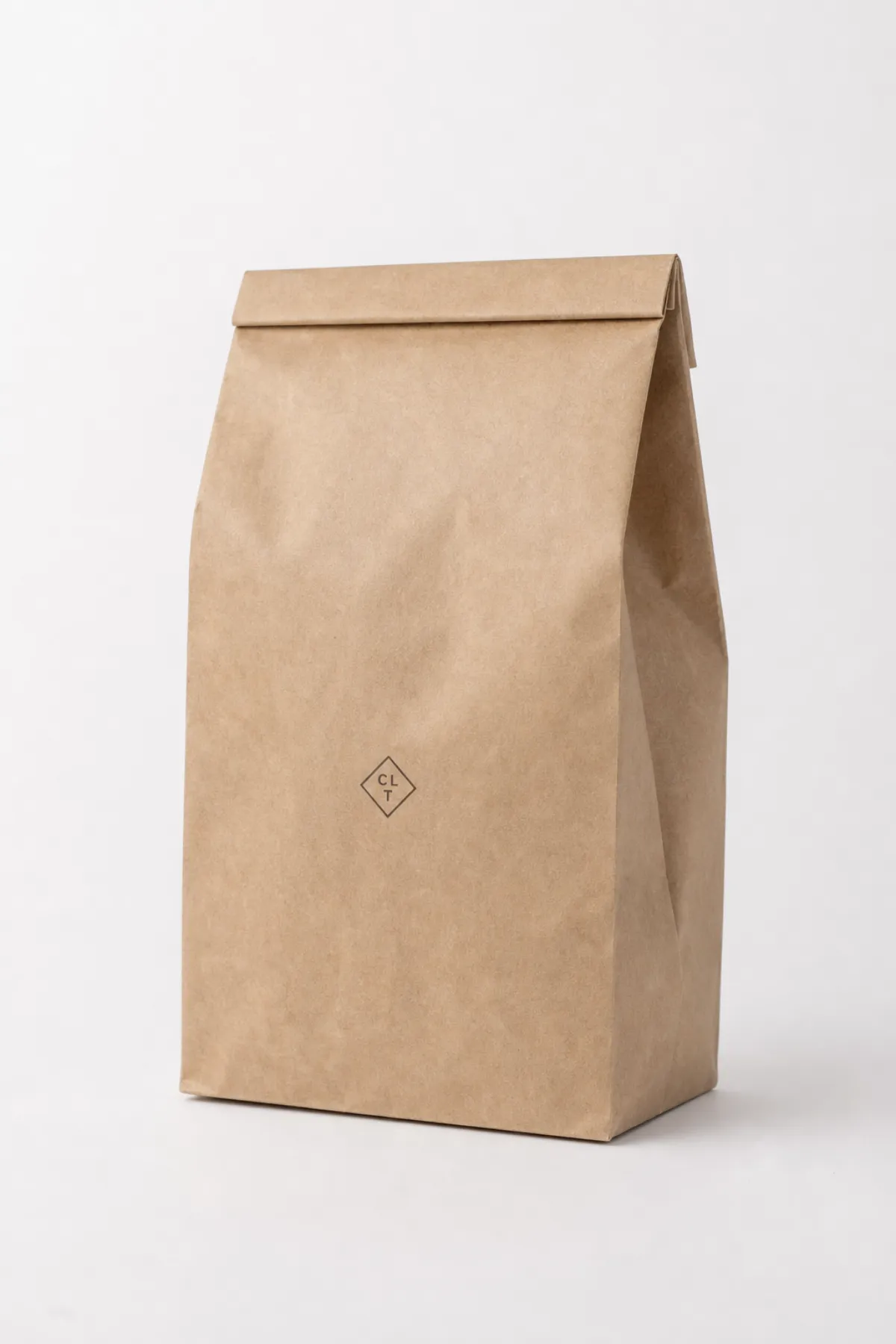
There is a practical reason kraft paper bags with logo show up everywhere from specialty retail to takeaway counters: they work in the real world, not just on a spec sheet. A customer carrying one through a mall, office, campus, or event floor exposes the brand to far more people than the item inside ever will. That is free visibility, but only when the bag is strong enough to survive daily use.
Kraft paper is usually produced from wood pulp that keeps much of the fiber strength intact. That is a big part of why it performs so well as a bag substrate. Compared with slick coated stocks, kraft paper gives printers a surface that feels warm and grounded. Compared with corrugated cardboard, it is lighter, more flexible, and better suited to hand-carry applications where foldability matters. For many brands, that balance is exactly the point.
kraft paper bags with logo also fit the way customers read sustainability. They do not need a long explanation. The material itself does some of the work. Still, careful buyers look past appearances. They ask whether the paper includes post-consumer waste, whether the supplier can offer FSC certified stock, and whether the bag build uses paper-only construction or a mixed-material handle that changes recyclability. Those details matter more than the slogan printed on the front.
From a visual standpoint, the format gives brands an unusual amount of control. You can keep it stripped back with one-color print and a small mark centered on the bag. You can push it further with pattern repeat, inside print, embossed logos, or foil accents. You can also stay economical by using a simple kraft base and a restrained logo, which often feels more premium than a crowded design. In my experience, that is where many buyers miss the mark: they chase decoration before they decide what the bag should communicate.
kraft paper bags with logo work best when the design language mirrors the product. A specialty coffee roaster may want earthy minimalism. A fashion label may want stronger contrast and sharper type. A food brand may need grease resistance or a food-safe lining. The bag is only effective when the structure supports the story, and that part gets kinda obvious once you handle a few bad samples.
Packaging reality check: a great bag is not the most decorated one. It is the one that survives handling, holds its shape, and still looks intentional after three or four touches.
For brands that care about responsible sourcing, the paper supply chain is worth checking carefully. Groups such as FSC and EPA recycling guidance are useful reference points when evaluating materials, claims, and end-of-life behavior. That does not replace supplier documentation, but it keeps the conversation grounded in actual standards rather than marketing language.
These bags also pull weight across channels. The same style can support retail counters, trade shows, gift sets, subscription inserts, and local delivery. kraft paper bags with logo are easy to stack, easy to store, and easier to brand than many other paper formats. When the layout is disciplined, they deliver a clean first impression with relatively little risk.
How Kraft Paper Bags with Logo Are Printed and Finished
The printing method is where many orders succeed or fail. kraft paper bags with logo can be produced with flexographic printing, offset printing, digital printing, foil stamping, embossing, or combinations of those methods. The right choice depends on run size, artwork complexity, and how much texture the brand wants to keep visible.
Flexographic printing is often the workhorse option for high-volume jobs with simple graphics. It handles bold shapes, one- to two-color logos, and straightforward repeat layouts well. Setup costs are usually lower than offset for large runs, but fine detail can soften if the design is too delicate. For kraft paper bags with logo that rely on clean blocks, strong type, and a limited palette, flexo can be a very sensible choice.
Offset printing is better suited to sharper artwork and more controlled color reproduction. It tends to shine when the design includes small text, tighter registration, or more nuanced branding. Digital printing is useful for short runs and faster design changes because it avoids some of the plate setup that traditional methods require. If a buyer needs a few hundred bags for a launch or a test campaign, digital can make more sense than forcing a low-volume flexo job.
Then there are finishes. Foil, embossing, debossing, matte coatings, gloss coatings, reinforced tops, twisted paper handles, flat handles, rope handles, and gusset options all change the look and behavior of the bag. Those choices are not just decorative. They affect the way the bag folds, the way the logo sits on the surface, and the way customers experience the carry. A rigid finish can improve shelf appeal, but it can also introduce extra cost and longer lead time.
kraft paper bags with logo behave differently on brown kraft than on bleached white kraft. Brown stock absorbs and visually mutes some inks, which means thin lines and low-contrast colors can disappear. White kraft gives more brightness, but the look is less rustic and more polished. If the artwork uses gradients, small serif type, or light pastel colors, the paper choice matters just as much as the print method.
Artwork readiness is another place where jobs go off-track. A logo supplied as a JPEG from a website is usually not enough. Printers need vector files, clean outlines, defined Pantone colors when possible, and a clear dieline that respects safe margins and bleed. If the mark sits too close to a fold or handle anchor, the final bag may distort the artwork. The bag can look perfect on screen and still print badly because the paper grain, texture, and ink absorption change the final result.
Proofing is not optional. The first digital mockup is only a planning tool. The material and ink interaction need to be checked on the actual substrate. With kraft paper bags with logo, a press proof or physical sample often exposes problems that software cannot show: a darkened tone, a weak edge, a too-small logo, or a handle placement that crowds the print zone.
Below is a simple way to compare common methods for kraft paper bags with logo:
| Method | Best For | Typical Use Case | Relative Cost | Practical Notes |
|---|---|---|---|---|
| Flexographic | Large runs, simple logos | Retail bags, takeaway bags, single-color branding | Low to moderate | Efficient for repeat work; less ideal for tiny text or complex gradients |
| Offset | Sharper detail, controlled color | Boutique packaging, polished retail presentation | Moderate | Good registration and clean edges; setup can be less attractive on very small orders |
| Digital | Short runs, fast changes | Launches, pilot orders, seasonal programs | Moderate to high | Less plate work; useful when quantity is low or artwork changes often |
| Foil or embossing | Tactile branding | Gift packaging, premium retail, special campaigns | High | Eye-catching, but usually adds setup, cost, and lead time |
If you compare kraft paper bags with logo against other formats like folded cartons or corrugated cardboard mailers, the tradeoff becomes obvious. Bags are easier to hand off, cheaper to store, and more visible in use. Boxes protect better. Bags brand better during carry. That difference should guide the print and finish choices, not the other way around.
The bag surface is not a blank canvas. It is a fibrous material with a personality. The better the buyer understands that, the cleaner the finished kraft paper bags with logo will look.
Cost, Pricing, and MOQ for Kraft Paper Bags with Logo
Pricing for kraft paper bags with logo is shaped by a handful of variables, but quantity usually has the biggest effect on unit cost. Once a printer has to set up plates, calibrate color, confirm registration, and run samples, those fixed costs have to be spread across the order. That is why a 500-piece run can look expensive while a 10,000-piece run of the same bag may drop sharply per unit.
The major price drivers are easy to list, but buyers often underestimate how they interact. Bag size matters because it changes paper usage and converting time. Paper weight matters because thicker stock costs more and may require different machinery settings. Handle type matters because twisted handles, flat handles, rope handles, or die-cut handles each create different labor and material costs. Print coverage matters because a large solid print uses more ink and demands tighter control. Special finishes add another layer.
For practical budgeting, here is a rough market view of kraft paper bags with logo for mid-volume orders. These are broad ranges, not quotes, and they depend on market conditions, freight, and spec details:
- Simple one-color flexo bags: about $0.18-$0.30 per unit at 5,000 pieces.
- Offset-printed retail bags: about $0.24-$0.45 per unit at 5,000 pieces.
- Digital short-run bags: about $0.35-$0.70 per unit at lower quantities.
- Foil, emboss, or specialty finishes: often $0.45-$0.90+ per unit, depending on the build.
MOQ matters because it changes the math. A supplier may be willing to produce a small run of kraft paper bags with logo, but the setup charges do not disappear just because the order is small. A buyer who only compares unit price can miss the real cost picture. Sometimes the quote with the lower per-bag number has higher freight, higher sample charges, or a more expensive plate fee that only appears later.
Hidden costs are where experienced buyers stay alert. Artwork cleanup can add expense if the file is not press-ready. Dieline changes may require a redesign cycle. Samples may be chargeable, especially if multiple revisions are needed. Freight can be a meaningful line item for heavy paper orders. Customs, duties, or local delivery fees may apply depending on origin and destination. If the timeline is tight, rush fees are common. None of this is unusual. It is simply how packaging production works.
Here is a useful comparison of cost drivers for kraft paper bags with logo:
| Cost Factor | How It Affects Price | Buyer Control | What Usually Helps |
|---|---|---|---|
| Quantity | Higher volume lowers unit cost | High | Consolidate orders and avoid splitting runs unnecessarily |
| Paper weight | Heavier stock raises material cost | Medium | Match the stock to the actual load, not to a guess |
| Print colors | More colors usually mean more setup and registration work | High | Keep the logo clean and limit unnecessary color variants |
| Finish | Foil, embossing, and coating add labor and time | Medium | Reserve premium finishes for the bags that truly need them |
| Shipping terms | Freight can swing landed cost significantly | Medium | Quote the same delivery terms across suppliers |
To compare quotes fairly, ask suppliers to price the same bag dimensions, same paper grade, same handle style, same print method, and same delivery terms. A cheap bare number is not the same thing as a true landed cost. Many buyers get burned by comparing incomplete quotes. One supplier is pricing a simplified structure, another is pricing a fully finished package, and the numbers only look similar because the spec sheet is missing detail.
There is also a strategic upside to restraint. For kraft paper bags with logo, a clean one- or two-color design often raises perceived value without pushing the order into premium territory. A restrained mark on good kraft paper can look more expensive than an overbuilt, full-coverage bag that fights the material. In practice, simplicity is often the smarter spend.
One more point: recycled materials are not automatically cheaper, and post-consumer waste content can change stiffness and print behavior. Some buyers assume sustainability options cost less because the base material feels modest. That is not always true. Higher recycled content can require tighter supplier controls, which affects both price and consistency. Ask for the exact construction before you budget.
Production Steps and Timeline for Kraft Paper Bags with Logo
A standard order for kraft paper bags with logo usually follows the same path: define the bag, confirm dimensions, choose paper and handles, prepare artwork, approve the proof, print or convert the bags, then pack and ship them. Simple enough on paper. In real production, every one of those steps can wait on a decision, and that is where lead time stretches.
The biggest delays often happen before production even begins. Slow artwork approval is one. Missing dieline measurements is another. Unconfirmed Pantone colors can hold the order while the printer tries to match expectations. Late changes to handle style, paper weight, or finish are especially expensive because they can push the job back onto the schedule. Once a slot is missed, the next available run may be days away.
For most orders, it helps to think in three phases. First is prepress and proofing, which may take a few business days if the artwork is clean and the specifications are settled. Second is production and finishing, which can take roughly one to three weeks depending on volume, decoration method, and whether the paper has to be sourced to order. Third is transit, which can range from local delivery to international freight. The total window for kraft paper bags with logo can therefore look short on the quote and still become long once every phase is counted honestly.
Typical turnaround for simple kraft paper bags with logo is often around 12-15 business days from proof approval, but that is not a promise. It depends on the factory schedule, stock availability, and how quickly the buyer signs off. Specialty finishes, imported paper, or multiple revisions can push the window longer. If the bag includes embossing or a more complex multi-color layout, extra time should be expected.
Speed-ups are usually created by discipline, not luck. Standard bag sizes move faster because the die lines are already familiar. One-color logos print faster than full-coverage artwork. Twisted paper handles and standard gussets tend to be easier than unusual custom constructions. If the order is time-sensitive, simplifying the build is often better than asking the supplier to force a premium specification into a tight deadline.
Testing principles from organizations like ISTA are useful here, even if the final product is a carry bag rather than a shipper. The logic is the same: think about stress, handling, and transport, not just appearance. For kraft paper bags with logo, the load test should reflect the actual product weight, fill shape, and carry conditions, because a bag that survives a bench test may still fail when it is overstuffed or carried awkwardly.
A good timeline checklist keeps the job from drifting:
- Lock the bag size and paper weight before requesting quotes.
- Confirm handle style, print colors, and finish in writing.
- Send vector artwork and the correct dieline.
- Review the proof on actual stock if possible.
- Approve quickly and schedule buffer time before launch.
The smartest way to protect a deadline is to stop changing the order after production has been queued. That sounds obvious, but it is the single most common reason kraft paper bags with logo arrive late. A clean spec, a fast proof cycle, and a realistic buffer usually beat heroic rush requests.
Key Factors That Change Strength, Print, and Shelf Appeal
Strength starts with paper weight, but the story does not end there. A thicker stock usually means better load-bearing performance, yet too much weight can make the bag feel stiff and overbuilt for lightweight retail items. For kraft paper bags with logo, the right paper grade depends on what the bag actually carries, not on a generic idea of “premium.”
In everyday terms, think of paper weight as the difference between a bag that feels supple and one that stands upright under stress. Lightweight bakery items may do fine in a thinner kraft paper bag if the handles are reinforced. Heavy apparel, boxed goods, or gift sets often need a stronger stock and a wider gusset so the side walls do not buckle. If the contents are awkwardly shaped, the print can wrinkle or distort at the bend lines.
Size matters just as much. A bag that is too narrow can pinch the contents and compress the printed area. A bag that is too shallow can force the product against the top seam. A gusset that is too small can make the bag unstable, while an oversized gusset can create a floppy look that undermines shelf appeal. With kraft paper bags with logo, structure and visual balance are inseparable.
The logo itself changes the performance of the bag. Large solid fills can highlight natural paper texture and any coating inconsistencies. Thin fonts can fade into the surface if the contrast is too low. Fine lines can break on fibrous stock. Dark inks may absorb more on brown kraft than expected. That is why a design that looks sharp on a monitor can appear softer when printed on paper. Simple artwork often wins because it respects the material.
Use case changes everything. A bakery bag needs a different mix of strength, ventilation, and food-safe handling than a boutique shopping bag. A trade-show giveaway bag may need better visible branding and less structural stiffness because it is likely to be reused. For ecommerce inserts, the bag may need to sit inside a larger packout, which changes the size tolerance. One format cannot serve every job well.
Here is the sustainability piece that should not be glossed over. If the bag uses recyclable construction, FSC Certified Paper, and minimal coatings, the end-of-life story is usually clearer. If the bag includes mixed materials, heavy lamination, or a foil-heavy finish, recyclability can become more complicated. Buyers should separate marketing claims from material reality. kraft paper bags with logo can be part of biodegradable packaging strategies, but only when the full build supports that claim.
The most useful way to think about this is not “What looks best?” but “What will still look good after carrying, folding, and handling?” A bag can be photographed beautifully on a flat table and still fail in the hand. Good packaging prevents that gap. That is especially true for kraft paper bags with logo, where the paper surface itself is part of the brand message.
Small details can also improve shelf appeal without driving up cost. A slightly longer handle drop can make the bag easier to carry. A centered logo at the right height can improve visibility in motion. A matte finish can reduce glare under store lighting. A stronger bottom insert can prevent sagging. None of these changes sound dramatic, but together they determine whether the bag looks considered or careless.
Common Mistakes When Ordering Custom Kraft Paper Bags
The biggest mistake is treating the bag like an afterthought. If the packaging team approves a pretty design without checking weight, fold pattern, handle strain, or storage conditions, the order can fail in the field. kraft paper bags with logo need to be judged as working packaging first and branding second.
Another common error is overcomplicating the artwork. Buyers often send logos that are too detailed, too small, or too dependent on gradients. Those features may work on a website, but they do not always print cleanly on kraft paper. If the printer recommends simplifying the design, that advice is usually about production reality, not aesthetic preference. Strong type, clear contrast, and larger logo placement usually perform better.
Proofing gets ignored more often than it should. One wrong line in the dieline can shift the print area. One untested color can dry darker than expected. One missed handle anchor can block a logo or reduce usability. I have seen buyers assume the digital mockup is final, then act surprised when the physical sample tells a different story. With kraft paper bags with logo, that sample is the truth.
Timeline mistakes are just as common. Some buyers assume a supplier can start immediately, split a large run into very small batches, or change materials halfway through the job without consequence. That is not how production scheduling works. Every change has a cost. Every delay affects the queue. If the order needs to hit a store opening or campaign launch, the schedule should be discussed before the quote is accepted.
Here is the practical fix for each issue:
- Test the load: fill the bag with the heaviest expected product and carry it before approving the spec.
- Simplify the artwork: reduce tiny text, weak lines, and unnecessary color complexity.
- Confirm the proof: review the dieline, handle placement, and color on the actual stock if possible.
- Ask for the schedule: request a clear production and shipping window before committing.
There is also a pricing mistake that shows up constantly: comparing quotes that are not built on the same assumptions. A low number for kraft paper bags with logo may exclude freight, assume a lighter paper, or quietly swap in a cheaper handle. If the buyer does not standardize the spec, the comparison is misleading. Apples-to-apples pricing is the only pricing that matters.
One final issue is overclaiming sustainability. If the bag is marketed as recycled, recyclable, or biodegradable packaging, the material stack must support the claim. Buyers should ask for exact construction details. A paper bag with a plastic coating, synthetic rope handle, or heavy composite finish may not behave the same way as a simpler paper-only format. Precision protects both the brand and the customer relationship.
Expert Tips and Next Steps for Kraft Paper Bags with Logo
If you want a smoother order, start with a one-page packaging spec. It should include dimensions, paper weight, handle style, logo placement, print colors, quantity, and delivery date. That one sheet removes most of the confusion from kraft paper bags with logo quotes because every supplier is pricing the same thing.
Ordering a physical sample or short pilot run is usually money well spent. Many bags look slightly different once they are folded, filled, and carried. The folds affect the artwork. The handle affects the grip. The load affects the bottom seam. A small test exposes those issues before the full run begins, which is far cheaper than correcting a large order later.
Ask suppliers three direct questions. First: what is the true all-in unit cost, including setup, packaging, and freight? Second: what is the real production window from proof approval to shipment? Third: what artwork or spec changes will delay approval? Those questions sound basic, but they reveal how transparent the supplier really is. For kraft paper bags with logo, transparency is often more valuable than a lower headline price.
It also helps to align the packaging plan with the rest of the launch schedule. If the bags are meant for a store opening, event, or seasonal promotion, the order should arrive before the inventory does, not after. If the bags are part of ecommerce fulfillment, they should be coordinated with the packing line and storage space. Packaging works best when it is timed to the moment the customer will actually see it in use.
Here is a simple ordering rhythm that keeps teams out of trouble:
- Pick the bag style and paper weight based on product load.
- Request quotes using one exact spec sheet.
- Review the proof with someone who understands the print area.
- Approve a sample if the order is large or the logo is complex.
- Build a buffer before the bags are needed on site.
That process is not glamorous. It is effective. It is also how most reliable packaging programs are built. A bag that looks simple on the shelf often sits on top of a lot of disciplined decisions behind the scenes. kraft paper bags with logo are no exception.
For brands that care about sourcing, printing, and presentation all at once, the best orders usually look restrained, not loud. Clean artwork. The right paper. A handle that feels comfortable. A finish that matches the brand's tone. In the end, kraft paper bags with logo reward buyers who respect the details, because the details are what customers actually notice when they lift the bag, carry it across a store, and remember the brand later.
FAQ
What is the best paper weight for kraft paper bags with logo?
For lightweight retail or gift items, a lighter kraft stock can be enough if the contents are compact and the handle is reinforced. For heavier goods, choose a thicker stock and ask for a load test or supplier recommendation based on actual product weight. If you are unsure, sample the bag with your real items before ordering a full run so you can check stretch, handle strain, and print appearance. That step matters even more for kraft paper bags with logo, because the same artwork can behave differently on different paper weights.
How much do custom kraft paper bags with logo usually cost?
Unit price depends mostly on quantity, paper grade, print colors, handle style, and finishing choices. Setup fees can make small orders look expensive, so ask suppliers for both sample pricing and landed bulk pricing. Always compare quotes using the same size, print method, and delivery terms so the lowest number is not hiding extra charges. For kraft paper bags with logo, the true cost is usually clearer once freight and setup are included.
What is the typical turnaround for printed kraft paper bags?
Most timelines include artwork approval, production, finishing, and shipping, so the total can stretch longer than the print stage alone. Simple one-color runs usually move faster than multi-color or specialty-finish jobs. The quickest way to avoid delays is to approve the proof promptly and confirm all specs before the order starts. That is especially true for kraft paper bags with logo, where small changes can move the job back into the queue.
Are kraft paper bags with logo recyclable after printing?
In many cases, yes, especially when the bag uses paper-only construction and minimal coating. Heavy lamination, mixed materials, or certain specialty finishes can reduce recyclability, so check the full spec instead of assuming. If recyclability is a priority, ask for the exact material build and printing method before you place the order. Many kraft paper bags with logo can fit a recycling-friendly plan, but only if the structure supports it.
Which printing method works best for detailed logos on kraft paper bags?
Digital or offset printing usually gives the cleanest result for fine details, small text, and color-heavy artwork. Flexographic printing is often better for simple logos, bold shapes, and larger-volume runs. Ask for a proof on the actual kraft stock, because a design that looks sharp on screen can soften on textured paper. For kraft paper bags with logo, the method should match both the artwork and the run size.
Takeaway: start with the load, the print method, and the real delivery window, then build the bag around those facts. That is the cleanest way to order kraft paper bags with logo that look good, carry well, and arrive in time to do the job.


