Buyer Fit Snapshot
| Best fit | Custom Product Stickers with Lamination projects where brand print, material claims, artwork control, MOQ, and repeat-order consistency need to be specified before quoting. |
|---|---|
| Quote inputs | Share finished size, material target, print colors, finish, packing count, annual reorder estimate, ship-to region, and any compliance wording. |
| Proofing check | Approve dieline scale, logo placement, barcode or warning zones, color tolerance, closure strength, and carton packing before bulk production. |
| Main risk | Vague material claims, crowded artwork, missing packing details, or unclear freight terms can make a low unit price expensive after revisions. |
Fast answer: Custom Product Stickers with Lamination: Costs, Process should be specified like a repeatable production item. The safest quote records material, print method, finish, artwork proof, packing count, and reorder notes in one written spec.
Production checks before approval
Compare the actual filled-product size with the drawing, then confirm tolerance on folds, seals, hang holes, label areas, and retail display edges. Reserve space for logos, QR codes, warning copy, and material claims before decorative graphics fill the panel.
Quote comparison points
Review material grade, print process, finish, sampling route, tooling charges, carton quantity, and freight assumptions side by side. A quote is only useful when the supplier can repeat the same color, closure quality, and packing count on the next order.
A jar can look polished on the press check, then start to look tired after a week in a cold case. Condensation clouds the surface. Cartons rub against each other in transit. Oily hands leave fingerprints where nobody budgeted for them. That is the real reason custom product stickers with lamination matter: the film on top helps the print stay readable, the colors stay cleaner, and the package keep its shelf appeal through storage, shipping, and retail handling.
For a packaging buyer, custom product stickers with lamination are not just a nicer sticker with a glossy finish. The order includes a printed face stock, an adhesive system, and a laminate that changes how the label behaves in the real world. A small specification choice can decide whether a package feels considered and premium or starts looking beat up before the product has a chance to sell through. Packaging rarely gets a second chance, so the label has to earn its place.
Bottles sweat. Cartons scuff. Beauty jars get handled with wet hands. Food containers sit in refrigeration and pick up moisture every time the door opens. If the label has to survive that routine, custom product stickers with lamination are often the most direct way to protect the print without rebuilding the whole package. The label keeps doing its job instead of becoming the weak link.
Buyers usually want two things at once: appearance and performance. Lamination helps with both, though not always in the same way. It can make a label easier to wipe, less prone to scratches, and more consistent from one batch to the next. That matters for retail packaging, for product packaging design changes, and for brands trying to match labels with Custom Printed Boxes and other branded packaging pieces. Once the finish starts talking to the rest of the system, the package reads as deliberate rather than thrown together.
Custom Product Stickers with Lamination: Why They Matter
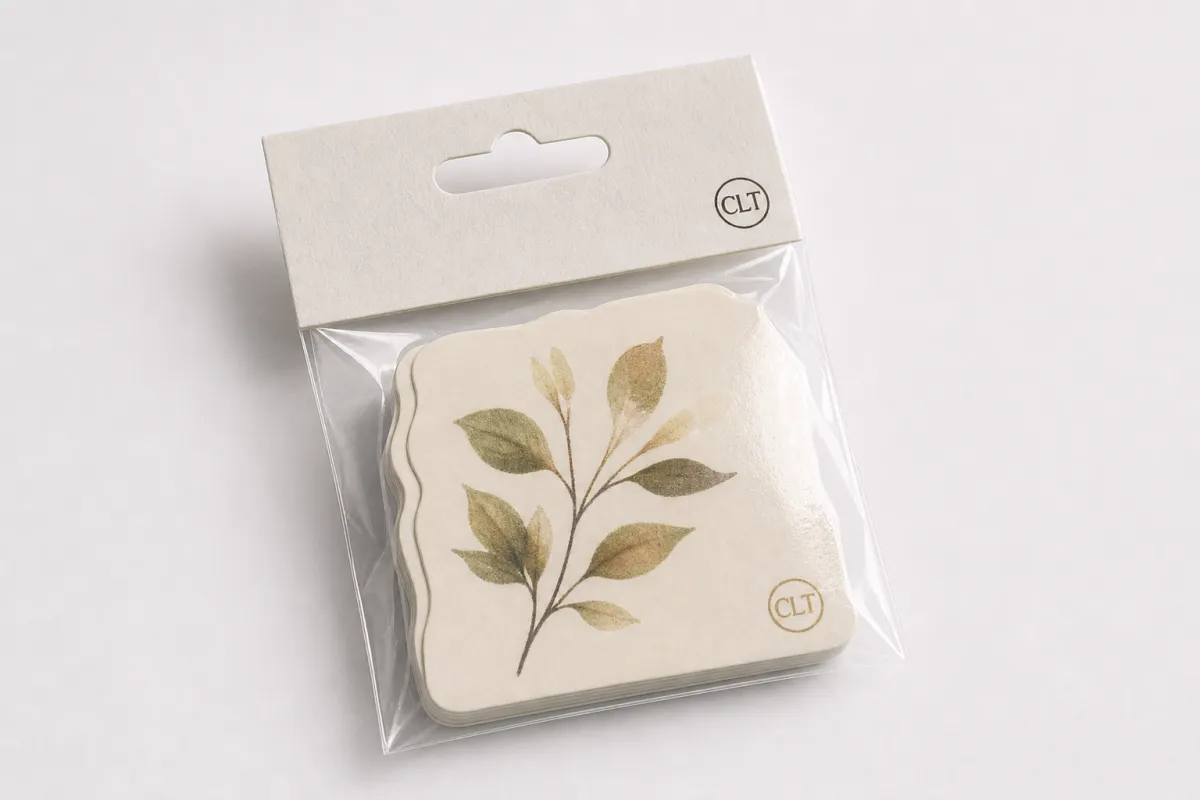
Picture a glass jar label that looks spotless on the proof. The logo is crisp. The color balance is right. The trim line sits exactly where it should. Then the first shipment lands in a damp warehouse, cartons press against each other, and a few customers handle the jars with lotion on their hands. Without a protective top layer, the face stock can scuff, the edges can soften visually, and the print can lose the depth that made the package feel premium. That ordinary sequence is why custom product stickers with lamination have earned a place in packaging programs.
In simple terms, lamination is a thin film applied over the printed surface. It guards against abrasion, light moisture, and surface wear, while also changing the visual finish. Gloss brings shine and stronger color pop. Matte cuts glare and can make a design feel calmer and more restrained. Soft-touch adds a velvety feel that suits cosmetic or specialty food packaging. When buyers ask for custom product stickers with lamination, they are choosing protection and presentation in the same move.
The value becomes obvious after the label leaves the press. A well-laminated sticker wipes clean more easily, resists scratches in a shipping tray, and shrugs off fingerprints better than an uncoated label. For cold-chain products, bath and body lines, refrigerated sauces, and any retail packaging that gets touched often, custom product stickers with lamination can keep artwork legible for longer. That is not just a cosmetic detail. It affects how the product is perceived on shelf and how much of the brand promise survives the trip from warehouse to consumer.
It helps to think about the actual purchase. A laminated sticker is not simply the face print. It is the face stock, the adhesive, the overlaminate, and the finishing work around die cutting, slitting, sheet cutting, or roll packaging. If one of those pieces is off, the label can underperform even when the artwork is strong. That is why I tell teams to treat custom product stickers with lamination as a packaging spec, not a decorative afterthought.
Practical rule: the lowest sticker price on paper is not always the lowest-cost sticker once scuffing, edge lift, and reprint risk show up in the field.
Brand consistency matters too. If time and money already went into package branding, label layout, and Custom Printed Boxes, the label finish should support the same story. A matte laminated label on a kraft carton sends a different signal than a high-gloss label on a clear bottle. Custom product stickers with lamination let brands tune that signal with more precision, which is why they show up so often in food, beauty, wellness, and small-batch consumer goods.
I have seen this play out on shelf tests more than once. A team will spend weeks debating typography, then discover that the finish is doing half the emotional work. A matte face on a natural product line can make the package feel grounded and expensive; the same art under gloss can look louder and more commercial. That shift is subtle, but customers register it fast.
How Custom Product Stickers with Lamination Move Through the Process and Timeline
The production path for custom product stickers with lamination usually begins with artwork review and proofing. A printer checks file size, bleed, resolution, color intent, and the cut line before anything gets committed to press. If the dieline is missing or the artwork sits too close to the edge, the file may need correction before printing starts. That early check matters because custom product stickers with lamination combine print, film, and cutting, and every step has to line up cleanly.
After proof approval, the labels move into print. Depending on the run size and material, that might be digital, flexographic, or another press format. The laminate is then applied over the printed face, either inline or as a separate finishing step. From there, the job moves through die cutting, matrix removal, slitting or sheet finishing, inspection, and packing. Each step is straightforward on paper, but the schedule stretches when the shape is complex or the finish is specialty-oriented. Custom product stickers with lamination that need tight registration or unusual contours usually take longer than a simple rectangle.
Timeline changes for very practical reasons. If the artwork is ready and the material is in stock, a reorder can move quickly. If the buyer wants a new shape, a new adhesive, or a different laminate finish, the order may need tooling, test cuts, or another approval round. If the label has to fit refrigerated product packaging or match a specific retail packaging palette, color approval can also slow the work down. More delays come from indecision than from the press itself. That is especially true with custom product stickers with lamination, because the finish choice changes how the colors read.
Typical lead times vary, but a useful planning range looks like this: a clean reorder can often move in about 5-10 business days after proof approval, while a new custom shape or specialty finish may take 10-15 business days or more. Larger volumes, tight registration, or added testing can push that further out. If the order supports a launch, build in breathing room. Rushed approvals often create rushed finish choices, and those rarely age well on the shelf.
Some packaging teams also look at transit testing and material references before locking a spec. ISTA publishes shipping simulation methods used by many packaging groups, and ASTM standards are commonly cited for materials and physical properties. A buyer does not need to become a standards nerd to order labels, but it helps to know that custom product stickers with lamination can be measured against real handling conditions instead of guesswork. For chain-of-custody expectations around paper-based material sourcing, FSC is another useful reference point: ISTA and FSC.
If the packaging program spans labels, cartons, and other components, it can help to align the sticker schedule with the rest of the launch calendar. Teams often pair Custom Labels & Tags with Custom Packaging Products so the brand assets arrive together and the packaging line does not sit waiting on one missing piece.
Custom Product Stickers with Lamination Cost: What Changes the Quote
Pricing for custom product stickers with lamination comes down to a handful of variables. The biggest mistake buyers make is comparing quotes without confirming that those variables match. Size, quantity, shape complexity, substrate, laminate type, print coverage, and finishing method all move the number. A tiny label with simple black text sits in a different cost bracket from a full-bleed, full-color sticker with a custom die line, soft-touch laminate, and a specialty adhesive.
Volume matters a lot. Unit cost usually falls as quantity rises because setup work gets spread across more labels. Short runs can feel expensive because the press setup, proofing, and tooling do not shrink in the same proportion as the order. If a printer has to create a custom die or spend extra time on color matching, that cost lands at the front end. Custom product stickers with lamination are especially sensitive to that front-loaded work because the laminate adds both material and handling steps.
A common example helps make the math visible. A laminated 2 x 3 inch label order of 5,000 pieces may land somewhere around $0.11-$0.22 per label depending on print coverage, substrate choice, and cut style. Shift to a specialty film, heavier ink coverage, or a more complex shape, and the price can rise. Bigger orders often lower the per-unit cost, but not always as much as buyers expect when they ask for custom product stickers with lamination that use premium finishes.
Minimum order quantity also shapes the quote. Some suppliers price short runs higher because they still need to cover make-ready, file prep, and waste during setup. Others can run short digital batches efficiently, but once the job needs a custom die or a specialty laminate, the economics change. That is why a quote for custom product stickers with lamination should never be treated as a simple unit-price race. The real question is whether the spec, material, and production method match the package conditions.
Finish choice affects cost too. Gloss laminate is often the most straightforward option, while matte and soft-touch can cost more because the film stock or handling may be more specialized. Specialty protection levels, such as extra abrasion resistance or outdoor durability, can add more still. If you are comparing custom product stickers with lamination from different suppliers, ask each one to price the same size, same substrate, same shape, same quantity, and same finish. Anything less will produce a misleading comparison.
| Laminate Finish | Typical Look | Best Fit | Common Cost Impact | Notes |
|---|---|---|---|---|
| Gloss | Bright, reflective, high color pop | Beverage, cosmetics, bold retail packaging | Usually the most economical finish | Wipes easily and shows strong contrast |
| Matte | Soft, low glare, more understated | Premium food, wellness, artisanal branding | Often a modest step up | Useful under harsh store lighting |
| Soft-touch | Velvety, tactile, upscale feel | Beauty, specialty goods, gift packaging | Usually higher than gloss or matte | Nice for premium unboxing, but test for scuff behavior |
| High-durability film | Functional, protective, performance-first | Industrial, moisture-heavy, cold-chain use | Can add noticeable cost | Chosen more for wear resistance than aesthetics |
That table shows why custom product stickers with lamination are not only a design decision. They are a cost-and-performance decision. If the package sits in a dry display box, the highest protection level may not be necessary. If it lives in refrigeration, gets handled often, or ships through rough channels, the extra spend can pay back quickly because the label keeps doing its job.
One more pricing wrinkle: some buyers focus on the unit quote and miss the cost of waste. If a label fails in application, the reprint eats into the savings fast. A laminated label that costs a few cents more but sticks properly and holds up to handling is usually the better buy. The math gets less romantic, but more honest.
Material and Laminate Choices That Affect Durability
The face stock sets the base behavior, and the laminate finishes the job. Paper labels are common and economical, but they are not the first choice for every environment. Polypropylene, vinyl, and other film-based stocks usually offer better moisture resistance and better stability on curved containers. For custom product stickers with lamination, that face stock choice matters because it changes how the label behaves before the laminate even goes on.
Gloss laminate is often selected when a brand wants stronger color saturation and a more eye-catching finish. It tends to make images look richer and gives the sticker a wipeable surface that many beverage and beauty brands like. Matte does the opposite visually. It reduces shine and lets the design sit more quietly on the package. For custom product stickers with lamination, the look should match the material story of the product. A matte label on a kraft carton can feel more grounded, while a glossy label may fit a bright retail display better.
Adhesive choice is just as important. A label that performs well on a flat carton can fail on a cold bottle, a textured jar, or a curved tube if the adhesive is not right. Refrigerated applications often need a different tack profile than dry-room applications. Some labels are designed for repositioning during application, while others are meant to bite quickly and stay put. If the container sees moisture, hand oils, or condensation, custom product stickers with lamination should be tested on the actual surface, not assumed to work because the finish looks durable.
Edge performance deserves more attention than it usually gets. Many label failures begin at the corners. If the die line is too tight, the radius is too sharp, or the laminate does not wrap the edge cleanly, lift can start there. Once the corner opens, dirt and moisture can work underneath. Good custom product stickers with lamination should be cut with enough control that the edge stays stable through shipping and consumer handling. Die cutting quality matters as much as the artwork itself.
Here is a simple durability lens I use:
- Refrigeration: choose a face stock and adhesive that tolerate condensation without softening or peeling.
- High-touch retail packaging: prioritize abrasion resistance and wipeability.
- Outdoor exposure: ask about UV resistance, moisture behavior, and long-term adhesive stability.
- Curved containers: check whether the label stock can conform cleanly without tunneling or edge lift.
- Premium presentation: choose a laminate finish that supports the brand look and still protects the print.
That is why custom product stickers with lamination are rarely one-size-fits-all. A bath product, a snack jar, and an industrial pouch may all need laminated stickers, but the spec behind each one can be very different. Get the material system right, and the label supports both visual design and functional performance. Get it wrong, and the finish may look good for a day and disappoint for months.
Step-by-Step Guide to Ordering the Right Sticker Spec
Start with the use case. Before you ask for custom product stickers with lamination, answer a few practical questions: Where will the product sit? How often will it be touched? Will it see water, grease, refrigeration, shipping abrasion, or display lighting? The clearer the environment, the easier it becomes to pick the right material and finish. Packaging design gets easier when the label spec is tied to the work the package has to do.
Next, gather the inputs that shape the quote and the production file. You need dimensions, quantity, shape, artwork files, intended finish, and whether the labels will be applied by hand or by machine. If there is a barcode, compliance text, or a regulatory panel, include that up front. Custom product stickers with lamination are best ordered when the buyer provides the full picture, not a partial guess. Missing details tend to create proof rounds that slow the project down.
Then ask for a sample or proof set whenever possible. A digital proof will show layout and content, but it will not tell you how the laminate feels in hand or how the label behaves on the actual container. If the product surface is textured, cold, or curved, a physical sample is even more useful. I have seen custom product stickers with lamination pass a proof and still need small adjustments once they are tested on the package. That is not a failure; that is normal process control.
Approval should be a checklist, not a quick glance. Confirm trim, bleed, copy placement, color intent, laminate finish, and any special instructions around application. Save that approved spec somewhere internal, because the second order is usually where teams lose time by trying to reconstruct the first order from memory. When custom product stickers with lamination are reordered from a well-documented spec, the process gets cleaner and the print result becomes more repeatable.
A simple spec sheet can include the following:
- Label size and shape, including corner radius if relevant.
- Face stock and adhesive type.
- Laminate finish, such as gloss, matte, or soft-touch.
- Application surface and storage conditions.
- Quantity, reorder trigger, and target lead time.
- Artwork version and approval date.
If you are managing multiple packaging items, keep the sticker spec tied to the rest of the product packaging record. That way, your labels, inserts, and custom printed boxes all stay aligned in the same branded packaging system. For teams that buy often, custom product stickers with lamination become easier to manage once the technical decisions live on paper instead of in somebody's memory.
And if the line is still changing, keep one person in charge of the spec sheet. Not because they need to micromanage the project, but because somebody has to remember which laminate was approved and why. That small bit of ownership saves a lot of backtracking later.
Common Mistakes When Ordering Custom Product Stickers with Lamination
The most common mistake is choosing finish by appearance alone. A buyer sees a smooth matte label and likes the look, then later discovers the package spends its life in a refrigerator or on a wet shelf display. Now the label is fighting the environment instead of working with it. Custom product stickers with lamination should always be chosen with the package surface and handling conditions in mind, not just the mood board.
Another mistake is under-specifying artwork. Low-resolution files, missing bleed, or unclear dielines can lead to delays, and sometimes they create extra costs if prepress has to rebuild the file. A printer can help clean up a file, but the cleaner the original submission, the smoother the run. With custom product stickers with lamination, file quality matters because print, film, and cut all need to align accurately for the label to look finished.
Buyers also compare laminated and unlaminated quotes as if they were the same thing. They are not. The laminate changes the material stack, the handling, the finish, and the durability of the label. If one quote includes a protective overlayer and another does not, the lower number is not apples-to-apples. That is one reason custom product stickers with lamination can seem more expensive on paper even when they save money in the field by reducing reprints and damaged packaging.
Skipping sample testing is another trap. A label that looks perfect on a proof may still misbehave on a real container. Maybe the adhesive needs more time to bond. Maybe the curve causes tunneling. Maybe store lighting makes the matte finish look different than expected. Testing custom product stickers with lamination on the actual package is the best way to catch those issues before a full run leaves the plant.
Finally, changing the order after proof approval can create avoidable trouble. If the quantity changes, the shape changes, or the laminate changes, the schedule can move, the waste can increase, and the packaging launch can start slipping. It is not just a production headache. It affects marketing, inventory, and customer service too. That is why the smartest buyers treat custom product stickers with lamination as a fixed spec once the proof is approved.
Field lesson: the label that survives handling is often the one that was tested on the package, not the one that simply looked best on a screen.
There is also a quieter mistake: assuming every laminated label is basically waterproof. It is not. Laminate film helps a lot, but the face stock, adhesive, and container surface still decide how the label behaves after repeated exposure. If a product is going to live in a cooler, a bath, or a high-humidity environment, test it there. The lab version and the shelf version are not always the same story.
Next Steps for Better Quotes and Reorders
If you buy stickers regularly, build a one-page spec and keep it current. List the size, shape, face stock, laminate finish, adhesive, storage conditions, and reorder quantity. Add a note for whether the product sits in a dry warehouse, a cooler, a bathroom shelf, or a display case. That one page turns custom product stickers with lamination from a recurring guess into a repeatable purchase.
It also helps to set a sample or test-run habit before large launches. Even a small batch can reveal whether the finish feels right, whether the colors hold up under store lighting, and whether the label stays put on the actual container. For custom product stickers with lamination, that kind of early checking is usually cheaper than discovering a problem after a full shipment has already gone out.
When you request quotes, ask every supplier to price the same spec. Same size. Same quantity. Same shape. Same laminate. Same finish. That sounds simple, but it is the only fair way to compare custom product stickers with lamination across vendors. If one quote includes a die cut, a premium film, and tighter proofing while another quote leaves those items out, the headline number does not mean much.
For reorders, assign one person to own the label record. That person does not have to manage every print job, but they should know where the approved art lives, what finish was used, and what the last production notes said. In a packaging program with multiple SKUs, that discipline saves time. It also makes it easier to keep custom product stickers with lamination aligned with the rest of your product packaging, especially when the brand is growing and the line is expanding.
Small businesses often start with labels and then add more components as the line matures. That might mean moving from a single sticker to a broader branded packaging set that includes inserts, wraps, or custom printed boxes. If that is where your brand is heading, choose the label spec with the larger system in mind. Custom product stickers with lamination can be the first part of that system, not just a standalone part number.
My practical advice is simple: document the environment, choose the finish for the environment, and keep the reorder path clean. That approach gives you better control over quality, fewer surprises on the press floor, and a label that still looks like it belongs on the shelf after shipping, handling, and normal consumer use. For most brands, custom product stickers with lamination work best when the spec is clear, the finish matches the job, and the next order is easy to place.
The useful takeaway is not complicated: decide what the label has to survive before you decide how it should look. If you start there, custom product stickers with lamination become one of the most dependable tools in the packaging kit. Ignore that step, and the prettiest proof can turn into a noisy reprint.
What are custom product stickers with lamination, and when should I use them?
They are printed stickers covered with a protective laminate film that improves durability, handling resistance, and visual consistency. They make the most sense when the label will face moisture, frequent touching, shipping abrasion, or long shelf-life expectations. They are a smart choice when you want the print to hold up better than an unlaminated sticker without changing the core packaging structure. For many brands, that balance is the point.
Are custom product stickers with lamination waterproof?
The laminate itself adds strong moisture resistance, but the overall label performance still depends on the face stock, adhesive, and container surface. A properly specified laminated sticker can handle condensation, light splashing, and normal wipe-downs much better than an uncoated label. For heavy wet exposure or submerged use, ask for testing on the actual package rather than assuming every laminated sticker is fully waterproof. The adhesive often decides more than the film does.
What affects the lead time for custom product stickers with lamination?
Lead time is influenced by artwork readiness, proof approval, quantity, die cutting, laminate type, and whether the order is a repeat or a new spec. Simple reorders usually move faster because the tooling and file setup already exist, while new shapes or specialty finishes can take longer. If the order is tied to a launch date, build in extra time for proof revisions and sample approval so the schedule does not slip. A launch calendar without a cushion tends to create avoidable pressure.
How much do custom product stickers with lamination cost per unit?
Unit cost depends on quantity, size, print coverage, finish, material choice, and the complexity of the cut or finishing process. Small runs often cost more per piece because setup and handling are spread over fewer labels, while larger orders usually lower the unit price. To compare quotes fairly, make sure every supplier is pricing the same size, same laminate, same quantity, and same finishing method. If those inputs differ, the quote is just a number without much meaning.
Should I choose matte or gloss lamination for product stickers?
Gloss usually gives stronger color pop, sharper contrast, and easier wipeability, which can work well for bright consumer packaging. Matte reduces glare and can feel more understated or premium, especially when the product sits under strong retail lighting. The best choice depends on the brand look and the handling conditions, so it helps to test both finishes on the actual package. A proof on screen will not tell the whole story.

