Buyer Fit Snapshot
| Best fit | Custom QR Code Labels Order projects where brand print, material claims, artwork control, MOQ, and repeat-order consistency need to be specified before quoting. |
|---|---|
| Quote inputs | Share finished size, material target, print colors, finish, packing count, annual reorder estimate, ship-to region, and any compliance wording. |
| Proofing check | Approve dieline scale, logo placement, barcode or warning zones, color tolerance, closure strength, and carton packing before bulk production. |
| Main risk | Vague material claims, crowded artwork, missing packing details, or unclear freight terms can make a low unit price expensive after revisions. |
Fast answer: Custom QR Code Labels Order: Specs, Pricing, Process should be specified like a repeatable production item. The safest quote records material, print method, finish, artwork proof, packing count, and reorder notes in one written spec.
Production checks before approval
Compare the actual filled-product size with the drawing, then confirm tolerance on folds, seals, hang holes, label areas, and retail display edges. Reserve space for logos, QR codes, warning copy, and material claims before decorative graphics fill the panel.
Quote comparison points
Review material grade, print process, finish, sampling route, tooling charges, carton quantity, and freight assumptions side by side. A quote is only useful when the supplier can repeat the same color, closure quality, and packing count on the next order.
Custom QR Code Labels Order: Specs, Pricing, Process
A custom QR Code Labels order looks tiny on a spec sheet, but it can pull a lot of weight on a package. One scan can send a shopper to a reorder page, a product video, a support hub, a registration form, or a batch record without making them type a long URL on a phone keyboard. That little square is doing the work of a shortcut, a tracker, and sometimes a customer-service rep all at once.
The catch is that QR labels live in the real world, not in a mockup. I have seen a code scan beautifully on a proof, then fail after it hit a curved bottle, a cold room, or a carton that spent two days getting bumped around a warehouse. That is why a custom qr code labels order should be treated as a packaging decision, not just a print decision. Stock, adhesive, finish, shape, and placement all matter. A lot.
For Custom Logo Things, the goal is simple: help buyers choose a label that fits the pack, the environment, and the budget without sacrificing scan reliability. A custom qr code labels order performs best when design and construction are planned together, because appearance and function are always tugging at each other. A glossy finish may look polished on screen and still throw glare under store lights. A clean white panel can read beautifully and still fail if it crosses a seam or wraps too tightly around a curve.
Custom QR Code Labels Order: Where Scanability Meets Shelf Value
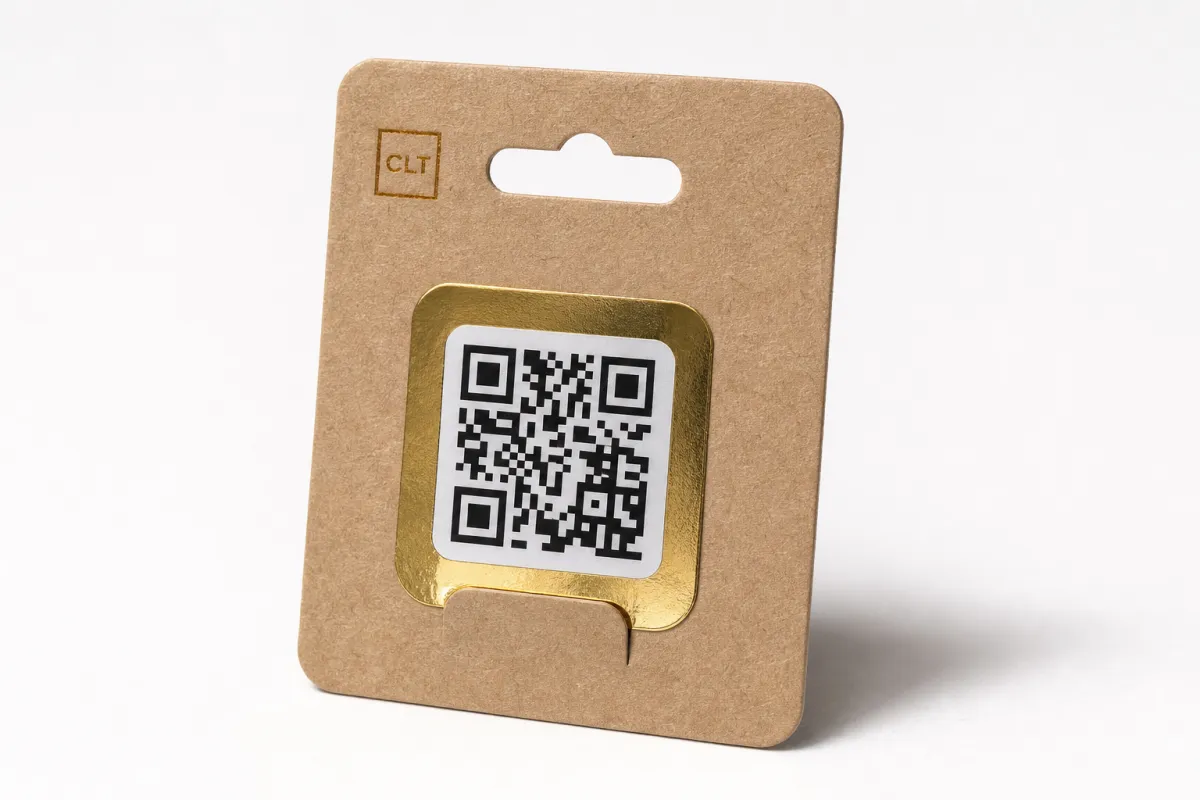
A custom qr code labels order is more than a square code on a sticker. It can support customer education, product authentication, loyalty signups, batch tracking, ingredient lookup, or a direct line to support. That range is why QR labels now show up on retail packaging, shipping labels, health and beauty containers, beverage packs, and Custom Printed Boxes. The same tiny graphic can serve a shopper, a warehouse, and a compliance team, which is kind of wild if you think about it.
From a packaging buyer’s point of view, the value comes from what the label removes. No one wants to retype a long web address from a jar, carton, or bottle. A custom qr code labels order gives that action a shorter route. On crowded shelves, speed matters. After purchase, convenience matters even more, because the package often becomes the first place a customer looks for instructions, ingredients, or warranty details.
The most common mistake is treating the QR code as separate from the label build. It is part of the system. Face stock, adhesive, shape, finish, and placement all affect whether the code stays readable after handling. A code can print sharply on coated paper and still fail if it sits too close to a glossy varnish, crosses a fold, or wraps too aggressively around a curved container. Scanner cameras are unforgiving that way. They do not care how elegant the layout looked in the deck.
For promotions and campaigns, a custom qr code labels order can point to a timed landing page, a coupon sign-up, or a giveaway entry form. For traceability, it can identify a batch or direct the buyer to lot-specific data. For compliance support, it can link to ingredients, storage instructions, or a certificate page. For service teams, it can cut call volume by sending customers to warranty or reorder information in seconds. In practical terms, that means fewer manual steps and fewer dead ends.
Pack shape changes the equation too. A label on a flat corrugate panel behaves differently from one on a squeezable bottle, a chilled jar, or a textured carton. The best custom qr code labels order usually starts with the container, not the artwork board. Measure the surface that will actually carry the label. Check seams. Check curves. Check where fingers will land. That kind of field awareness is often the difference between a label that merely looks finished and one that actually functions in market.
Practical rule: if the label looks good but cannot be scanned on the actual package surface, it is the wrong label.
A good custom qr code labels order supports both performance and shelf value. The code should scan quickly, but it should also sit comfortably inside the overall label system. Enough visual breathing room matters. So does restraint. On strong retail packaging, the QR element should feel deliberate, not pasted on as an afterthought.
For teams comparing options across a broader packaging line, it helps to look at the label alongside Custom Labels & Tags and the rest of our Custom Packaging Products. Planning cartons, mailers, inserts, and shippers together keeps the brand message cleaner and reduces the odds of one component drifting out of sync with the rest.
In the field, QR labels tend to work best for promotions, traceability, loyalty, batch identification, authentication, and customer support touchpoints. A custom qr code labels order can serve all six, but only when code size, material, and scan environment are realistic. Chilled packs, rough handling, and long-distance shipping all raise the stakes. A label built for a dry shelf and a gentle life is not a good match for a cold chain.
Product Details: Materials, Adhesives, and Print Performance
The material choice in a custom qr code labels order sets the tone for the rest of the job. Paper is often the most economical option for dry environments and short shelf-life packs. BOPP, polyester, and specialty stocks bring more staying power for moisture, abrasion, and rough handling. The right selection depends on the container, the temperature, and how often the pack moves through the chain.
Paper labels work well for dry retail packaging, cartons, inserts, and some branded packaging applications where cost matters more than moisture resistance. FSC-certified paper stocks are a sensible option for buyers who care about sourcing; the Forest Stewardship Council is a useful reference point there. Paper prints sharply and can look crisp, but it is a poor match for condensation, heavy rubbing, or freezer conditions.
BOPP is one of the most common choices for a custom qr code labels order because it handles moisture better than paper and still prints cleanly on many presses. It fits beverage labels, health and beauty packs, household products, and product packaging that may sit in a cold room or a damp warehouse. White BOPP creates strong contrast. Clear BOPP can look lighter and more understated, provided the background behind the code remains controlled.
Polyester is the tougher option when the label needs more resistance to heat, abrasion, or repeated handling. It often fits industrial labeling, asset tracking, or a custom qr code labels order that must survive harsher storage and transport conditions. Polyester costs more, but the extra spend can make sense when the label needs to keep working over a longer life cycle.
Textured specialty stocks can look beautiful on premium retail packaging, yet they need careful testing. Rough fibers, embossed surfaces, and uneven coatings can affect code contrast and scanner confidence. A custom qr code labels order on a tactile stock may look richer in packaging design, but it still needs to be tested under real scanning conditions before release. Pretty is nice. Readable is non-negotiable.
Adhesive choice matters just as much as the face stock. A permanent adhesive is the most common selection for a custom qr code labels order because it stays put on glass, plastic, corrugate, and coated cartons. Removable adhesive works better for temporary promotions, sample packs, or labels that need to come off cleanly. Freezer-safe adhesive matters when the label will be applied or stored at low temperatures, and high-tack adhesive can help on difficult surfaces such as rough corrugate or some recycled containers.
Print method belongs in the performance conversation too. Digital printing often suits short and mid-sized custom qr code labels order runs, variable data, and fast proof cycles. Flexographic printing can make more sense for larger quantities where unit economics matter and the artwork stays stable. In both cases, the goal is the same: keep the code edges crisp and the contrast strong enough for scanners to read quickly.
Finishing can help or hurt scanability. Matte finishes reduce glare, which is useful under bright store lighting. Gloss can make the label feel more vivid but sometimes adds reflections that interfere with scanning. A protective laminate can improve abrasion resistance, although it should not crowd the quiet zone or flatten the contrast too much. A clear topcoat is often the safer choice when the code itself needs protection.
Quiet zones, ink density, and substrate smoothness work together. The QR code needs enough blank space around it, the dark modules need to print solidly, and the substrate should not introduce texture that breaks the reader’s path. A custom qr code labels order that ignores those three details can become hard to scan even when the design file looks correct on screen. That is the annoying part: the file can be “right” and the package can still be wrong.
For shipping-related testing, many buyers compare the expected use case against the distribution checks described by ISTA. That is not a substitute for package-specific validation, but it gives a useful framework for thinking about vibration, drop risk, compression, and transit wear. For a custom qr code labels order, those forces matter more than people assume.
| Material | Best Use | Moisture Resistance | Scan Notes | Typical Cost Impact |
|---|---|---|---|---|
| Paper | Dry cartons, inserts, short-run retail packaging | Low to moderate | Very sharp print on smooth stock, but avoid condensation | Lowest |
| BOPP | Bottles, jars, chilled packs, general branded packaging | Moderate to high | Good contrast and durability when properly sized | Low to moderate |
| Polyester | Industrial labels, rough handling, longer life cycles | High | Strong durability, often the safer choice for harsh environments | Moderate to high |
| Specialty textured stock | Premium packaging design, gifting, high-touch retail packaging | Varies | Needs scan testing because texture can affect reader speed | High |
A well-built custom qr code labels order is not automatically the most expensive one. It is the one where face stock, adhesive, finish, and code size match the actual use. That is the difference between a label that looks attractive in a proof and one that still works after packing, shipping, stocking, and being handled by more than one person.
Specifications for a Custom QR Code Labels Order
Specifications are where a custom qr code labels order becomes a production job instead of a concept. Buyers often begin with a logo or a rough idea, but the print team needs exact measurements, code data, placement guidance, and a clear picture of how the label will be applied. Clean information at the start shortens proofing and reduces rework later.
Label size, shape, and safe area
The first decision is label size. A custom qr code labels order should include the finished width and height, plus bleed and safe area expectations. The QR code itself needs room so the trim line, edge seal, or nearby graphics do not crowd the scan area. On small labels, that space gets tight fast. A simple layout often outperforms a decorative one for exactly that reason.
Shape matters too. Square and rectangular labels are usually easiest for a QR code because the code and the pack geometry line up cleanly. Rounded corners can make a label feel more refined and can reduce peeling at the edges, but the design still needs enough flat area around the code. If the label wraps over a curve, the code usually needs to be larger than a flat-surface version.
A useful habit is to plan the custom qr code labels order around the actual container, not the artwork board. Measure the panel that will receive the label. Check for seams. Leave enough margin so the code is not broken by folds or edges. That one pass through the pack in the real world saves far more time than it costs.
Data, links, and version control
Next comes the data. A custom qr code labels order should specify the destination URL or landing page, any test link that needs approval, and whether the code is static or variable. If the code changes by batch, region, retailer, or SKU, that variable structure should be spelled out before production begins. Serial numbers, lot codes, and versioning rules need to be clear so the print file matches the database logic.
Delays often start when the link is still under construction while the quote is already moving. A stronger approach is to provide a live test page or staging link early in the custom qr code labels order process, then lock the final destination after the structure has been verified. That keeps the schedule stable and reduces the odds of reproofing.
If the code will route customers to a support page or registration form, the page should be mobile-friendly and ready for a traffic spike. The label can do its job perfectly, then lose value if the landing page is slow or confusing. That risk is higher in retail packaging because scans usually happen on a phone in a store aisle, a kitchen, or a parking lot.
Code size, contrast, and scan distance
Code size is where many custom qr code labels order jobs go wrong. A code that feels balanced on screen can be too small once print tolerances, quiet zones, and scanner distance are considered. Simple URLs and close-range scans can tolerate smaller codes. Arm’s-length scanning, curved bottles, and uneven lighting usually demand a larger code.
Contrast is just as important. Dark code modules on a light background are easiest to read, and the background should stay quiet. Metallic inks, heavy gradients, and dense artwork behind the code can slow scan speed. In a custom qr code labels order, the safest choice is often a clean white or very light panel behind the QR code with strong, dark printing.
Placement deserves just as much care. Do not put the code across a seam, a fold, a shrink-sleeve transition, or a highly curved area unless the label has been tested there. A code centered on a flat panel gives the scanner a much easier job, especially for consumer-facing packaging rather than warehouse equipment.
Application method and converting details
A custom qr code labels order should also specify how the label will be applied. Hand-applied labels can tolerate different presentation formats than machine-applied ones, while roll direction, core size, unwind direction, and spacing all matter for automated lines. If labels will go through a dispenser or applicator, the converter needs that detail early.
Sheets work well for smaller runs, manual labeling, or office-based applications. Rolls usually suit higher-volume production lines because they move faster and create more consistency. If the order is headed to a labeler, confirm the machine requirements before the proof is finalized so the custom qr code labels order does not become a bottleneck downstream.
For buyers who need help matching the label to the full pack system, our FAQ page covers common setup questions. The right answer often depends on whether the label is going onto product packaging, shipping cartons, or a promotional insert.
To keep approval moving, send the following with the custom qr code labels order:
- Finished label dimensions, shape, and preferred orientation
- The exact QR destination or test link
- Quantity, application method, and whether labels are rolls or sheets
- Surface type, such as glass, plastic, corrugate, or coated carton
- Environmental notes, including refrigeration, condensation, or abrasion risk
- Any variable data rules, lot coding, or versioning instructions
When those details are in place, a custom qr code labels order becomes a straightforward production job instead of a guessing game. That clarity saves time, protects budget, and produces a cleaner result on the shelf.
Cost, Pricing, MOQ, and What Shapes Your Quote
The pricing on a custom qr code labels order comes down to a handful of practical variables, and most of them are easy to understand once they are laid out plainly. Size, material, adhesive, print method, finish, quantity, and variable data all matter. If a job needs added testing, special handling, or more complex proofing, the quote reflects that too.
For small runs, setup costs are spread across fewer labels, so unit price rises quickly. For larger runs, that setup cost gets diluted, which is why the per-label number often drops as order volume climbs. That is normal in label manufacturing. It is not a trick. Press setup, waste, and conversion costs still have to be paid, and fewer labels have to carry that load in a short run.
Here is a practical way to think about a custom qr code labels order:
| Order Type | Typical Quantity | Common Price Range per Label | Notes |
|---|---|---|---|
| Short-run paper labels | 500 to 2,500 | $0.06 - $0.14 | Best for dry use and simple artwork |
| BOPP labels with permanent adhesive | 1,000 to 5,000 | $0.10 - $0.22 | Common for retail packaging and chilled use |
| Polyester or freezer-grade builds | 1,000 to 10,000 | $0.16 - $0.32 | Better for moisture, abrasion, and harsh storage |
| Serialized or specialty QR labels | Varies | $0.22 - $0.45 | Variable data, testing, or premium finish may raise cost |
Those ranges are not fixed prices, because every custom qr code labels order depends on the exact build, but they do give a realistic starting point. A small white paper label with a static QR code is one thing. A freezer-safe BOPP label with variable serial numbers and a matte laminate is a different animal entirely.
Minimum order quantities usually track press setup and material roll usage. A custom qr code labels order can sometimes begin as low as 500 pieces for simpler jobs, but 1,000 or 2,500 is a more common threshold for economical production. Larger sizes, specialty stocks, and variable data can push that MOQ higher because conversion waste and setup time become harder to absorb.
Buyers should think beyond unit price too. Total project cost includes freight, spares, reprints, and application requirements. If a line needs extra rolls because operators tend to overrun, that should be built into the order. If the label will be used in multiple facilities, a few additional copies can prevent a costly delay later.
The fastest quote requests are the ones that provide dimensions, substrate, adhesive type, finish, quantity, and the QR destination in one pass. That is enough to build a clean custom qr code labels order estimate without much back-and-forth. If the order has a strict budget, say so early. Sometimes a shift from polyester to BOPP, or from laminate to varnish, is enough to protect the target price while keeping scan quality strong.
A good quote is not just the lowest number. It should spell out what you are paying for, what assumptions were used, and where there is room to move if the project needs a different price tier. That is the most honest way to compare a custom qr code labels order across material and finishing combinations.
Process and Timeline: Proof, Production, and Delivery
A custom qr code labels order usually follows a familiar sequence: inquiry, specification review, proof, approval, production, and delivery. The route sounds simple, but small details can slow it down if they are not settled early. Clear information at the start lowers the odds of a file sitting in proofing while someone searches for the correct link or the exact container measurement.
The first stage is data collection. The team needs artwork, size, quantity, substrate, adhesive, finish, and QR destination. If the code is variable, the data structure should be explained at the same time. A custom qr code labels order with missing dimensions or an untested link almost always moves slower than one that arrives complete.
Proofing is where delays usually start. Missing vector artwork, unclear finish selections, or late changes to the code destination can all push the schedule. If the buyer is still refining branding, it is better to settle the package branding direction first and then release the label for production. A label proof should be reviewed on the actual pack if possible, not only on a screen.
Turnaround times depend on complexity, quantity, and finishing. A simple custom qr code labels order with ready artwork and a basic material may move through proof and print in about 5 to 10 business days after approval. More complex jobs, especially those with specialty stock, variable data, lamination, or a larger quantity, can take 10 to 15 business days or longer. Shipping time sits on top of production time, so the destination matters.
For launches and promotions, the timeline should be mapped backward from the ship date. If the labels feed a retail rollout or a fulfillment event, the custom qr code labels order should be released early enough to allow proofing, a test scan, and a buffer for freight. It is much easier to protect a launch date than to recover one after the fact.
Here is a simple checklist that keeps the process moving:
- Send the finished label dimensions and preferred shape.
- Provide the QR destination or test link.
- Confirm quantity, stock, adhesive, and finish.
- State whether the labels are hand-applied or machine-applied.
- Share the container or carton type the label will touch.
- Assign one person to give final approval.
That last point carries more weight than it first appears. A custom qr code labels order can stall when three people are sending different edits and nobody knows who has final authority. One reviewer, one approval, one clear set of changes. That combination keeps the job moving and cuts down on avoidable emails.
If the labels will ship into a distribution system with heavy handling, it is smart to think about the full pack-out path. Labels that ride on cartons, trays, or finished goods should hold up under conditions similar to those tested in distribution protocols. The conversation shifts there from design to performance, and from appearance to practical durability.
When the label is built correctly, production stays calm and predictable. The code reads, the material behaves, and the order moves out without drama. That is the real value of a well-managed custom qr code labels order: less uncertainty, fewer surprises, and a cleaner handoff from proof to print to delivery.
Why Choose Us for Custom QR Code Labels
Custom Logo Things is built for buyers who want a packaging partner that understands label construction, not just artwork placement. A custom qr code labels order should be judged the same way a production team judges any other package component: by how it behaves in the real environment, how it fits the line, and how consistently it performs from one run to the next.
That means prepress details matter, scan validation matters, material selection matters, and run consistency matters. Practical issues count too: roll direction, unwind, label spacing, and whether the adhesive will behave on the intended surface. A custom qr code labels order should not create extra work for the packer or the line operator.
Support matters as well. Buyers often need help matching the label to a curved jar, a chilled bottle, a mailer, or a carton that already has a strong printed design. Packaging design and production knowledge have to meet somewhere. A label that looks right but fails in use is a liability. A label that fits the pack and scans cleanly is an asset.
What buyers usually want most: a label that prints cleanly, scans every time, and lands at a price that makes sense for the quantity they need.
We also know many buyers are working across several packaging formats at once. A team may need a QR label for a bottle, a promo sticker for a carton, and a broader set of branded packaging components for a launch. That is where our Custom Labels & Tags page can help, along with the wider range of Custom Packaging Products. If the order is moving through a purchasing process, the Wholesale Programs page is useful for teams comparing volume options.
The goal is not just to print a code. The goal is to deliver a label that performs reliably in the field and fits the packaging system the first time. That is the standard most buyers care about, and it is the standard a serious custom qr code labels order should meet.
Next Steps for a Custom QR Code Labels Order
The easiest way to move a custom qr code labels order forward is to gather the essentials before you request a quote. Start with the label dimensions, the container or carton material, the target quantity, the QR destination, and any environmental concerns such as refrigeration, moisture, or abrasion. Those details remove most of the uncertainty right away.
Then decide what matters most: appearance, durability, or lowest unit cost. That one choice usually narrows the best material and finish combination quickly. If the priority is a premium shelf look, a matte or specialty finish may make sense. If the priority is cold-chain performance, a more durable face stock and a stronger adhesive are usually the better call. If the priority is budget, paper may be enough for a dry environment.
Before production, request a proof and test the code on the actual package surface. A custom qr code labels order should not be approved only on the basis of a digital preview when the label will live on a real container with its own texture, curve, and lighting. A few minutes of real-world scan testing can prevent a costly reprint.
If you are ready to move, send the details together so the custom qr code labels order can be turned into a precise quote, a proof you can review, and a production plan that keeps the launch on schedule. The smoother the handoff, the better the label behaves once it is on the pack, and the more value it delivers across product packaging, retail packaging, and branded packaging programs.
For teams comparing options across a larger rollout, the right label can also sit beside custom printed boxes, inserts, and other package branding elements without looking disconnected. That kind of consistency gives a product line a cleaner, more finished presentation.
When the label is specified well, the custom qr code labels order becomes a practical tool rather than a guess. That is the real payoff: a code that scans, a label that holds up, and a result that fits the brand and the production line at the same time.
FAQ
How do I place a custom QR code labels order?
Send the label size, material preference, quantity, and the exact QR destination so the quote can be built accurately. Confirm whether the labels will be hand-applied, machine-applied, or shipped on sheets or rolls. Approve the proof only after the code scans correctly on the intended package surface.
What information do you need for a custom QR code labels order quote?
We need dimensions, substrate, adhesive type, finish, quantity, and whether the QR code is static or variable. If you already know the application environment, share it, because moisture, refrigeration, or abrasion can change the material recommendation. A destination URL or test link helps confirm the code structure before production.
What affects the price of custom QR code labels most?
The biggest cost factors are material, size, quantity, finish, and whether special testing or variable data is involved. Smaller runs usually carry a higher unit cost because setup is spread across fewer labels. Extra durability features, such as lamination or freezer-grade adhesive, can also raise the quote.
How long does a custom QR code labels order usually take?
Timeline depends on artwork readiness, proof approval speed, quantity, and finishing requirements. Simple orders move faster when the code data and dimensions are final at the start. If you need a specific ship date, share it early so the production plan can be built around it.
Will my QR code still scan after lamination or on curved packaging?
Yes, if the code is sized correctly, kept within the safe area, and printed with strong contrast. Curved or textured surfaces may require a larger code, a different material, or a more flexible adhesive. We recommend testing the proof on the actual package before full production.
The cleanest path for a custom qr code labels order is simple: lock the dimensions, choose the material for the environment, test the code on the real package, and name one person to approve the final proof. Do those four things before release, and you remove most of the expensive surprises that usually show up later.

