Buyer Fit Snapshot
| Best fit | Printed Paperboard Boxes Wholesale projects where brand print, material claims, artwork control, MOQ, and repeat-order consistency need to be specified before quoting. |
|---|---|
| Quote inputs | Share finished size, material target, print colors, finish, packing count, annual reorder estimate, ship-to region, and any compliance wording. |
| Proofing check | Approve dieline scale, logo placement, barcode or warning zones, color tolerance, closure strength, and carton packing before bulk production. |
| Main risk | Vague material claims, crowded artwork, missing packing details, or unclear freight terms can make a low unit price expensive after revisions. |
Fast answer: Printed Paperboard Boxes Wholesale: Specs, Pricing, Process should be specified like a repeatable production item. The safest quote records material, print method, finish, artwork proof, packing count, and reorder notes in one written spec.
Production checks before approval
Compare the actual filled-product size with the drawing, then confirm tolerance on folds, seals, hang holes, label areas, and retail display edges. Reserve space for logos, QR codes, warning copy, and material claims before decorative graphics fill the panel.
Quote comparison points
Review material grade, print process, finish, sampling route, tooling charges, carton quantity, and freight assumptions side by side. A quote is only useful when the supplier can repeat the same color, closure quality, and packing count on the next order.
Printed paperboard boxes wholesale is often the point where packaging stops being a purchase and starts acting like part of the business model. The right carton fits the product, prints cleanly, and keeps margin from leaking out of every reorder. In practice, wholesale runs usually beat retail buys once a brand moves past the "we're just testing this" stage, because setup costs spread out, repeat orders are easier to plan, and the packaging spec stays stable instead of changing every time someone new gets involved.
I've seen this play out with cosmetics, supplements, candles, and small electronics. A brand starts with a short retail order, then demand picks up, and suddenly the packaging becomes the bottleneck nobody budgeted for. That is where printed paperboard boxes wholesale starts making sense. The box has to hold the product, protect it, and sell it. If it misses any one of those jobs, the savings on the quote are kind of fake.
Why printed paperboard boxes wholesale beat retail orders
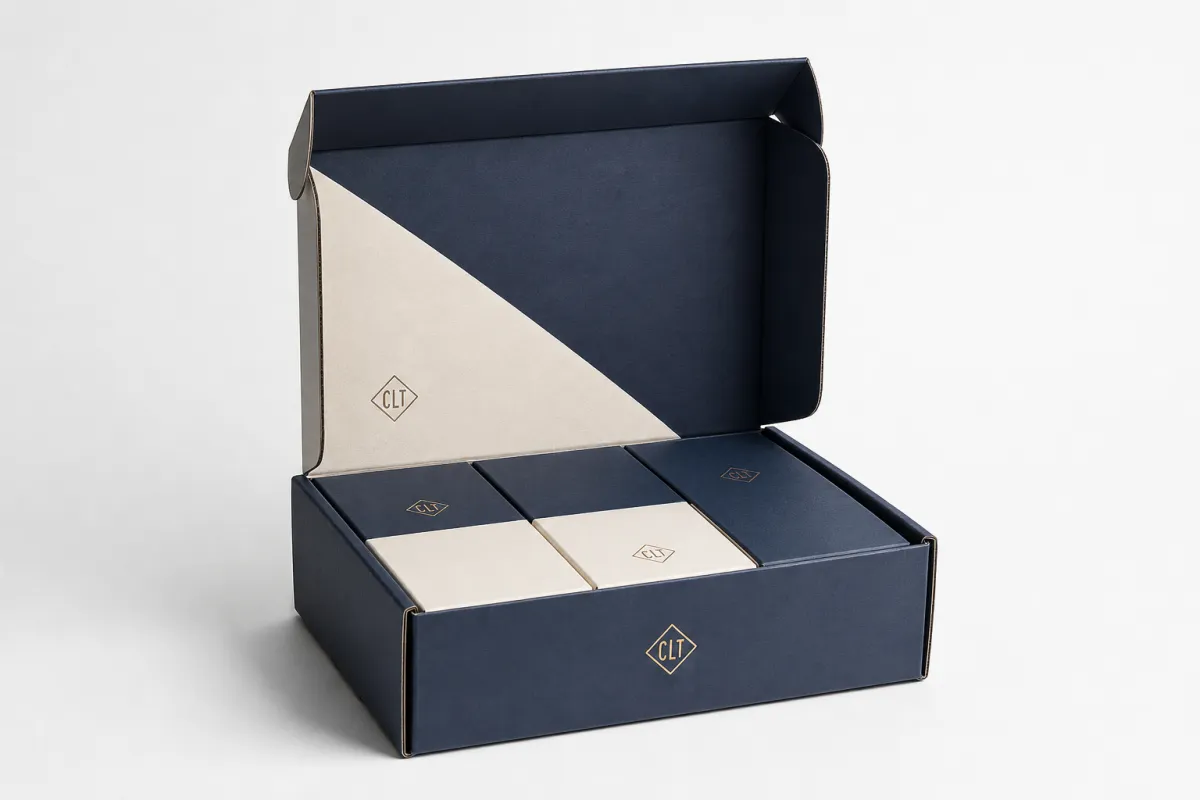
The economics are not mysterious. A small retail run usually carries higher unit cost because the setup work gets divided across fewer boxes. Then the next reorder comes faster than expected, and the brand pays the setup cost again. Printed paperboard boxes wholesale changes that pattern by spreading plates, die setup, and press time across a larger quantity, which lowers the per-box price and gives the buyer a better handle on repeat production.
There is also the fit problem. Retail stock packaging often forces a product into a size that was never meant for it. I have watched teams spend more on void fill, packing labor, and damage replacements than they saved on the box itself. A carton that is slightly too large can make a premium product feel cheap. A carton that is too tight can crush corners, rub print, or create a bad unboxing experience. Printed paperboard boxes wholesale gives you control over those details instead of asking you to work around them.
Categories like cosmetics, supplements, candles, food packaging, gift items, and small consumer electronics tend to benefit most. Those products usually need shelf appeal without the weight or rigidity of a corrugated shipper. Folding cartons are lighter, print sharper, and store flatter. That makes printed paperboard boxes wholesale a practical option when the box needs to do real brand work without turning into an oversized freight problem.
Stock packaging still has a place. If a launch is tiny, a deadline is brutal, or the product is not stable yet, buying ready-made can keep the wheels on. But once a SKU starts recurring, custom wholesale packaging usually wins on total cost and on operational sanity. A box that looks cheap in a spreadsheet but adds manual labor to every pack-out is not cheap. It is just hiding the bill somewhere else.
Planning matters more than people want to admit. Printed paperboard boxes wholesale works best when the next reorder is visible, or at least predictable enough to budget around. The strongest packaging program is the one you can repeat without reopening every decision from scratch. If you are comparing formats, our Wholesale Programs page is the fastest place to start, and our Custom Packaging Products catalog shows how much can be done beyond a standard folding carton.
The lowest quote is often the one that left out the board grade, the finish, or the freight. Buyers usually learn that lesson once.
Consistency matters just as much as price. As brands grow, color drift and structural variance become obvious fast. A carton that was "close enough" on the first order can look sloppy by the third, especially if multiple suppliers or multiple proofing rounds get involved. Printed paperboard boxes wholesale, when handled correctly, gives you repeatable specs and fewer unpleasant surprises on reorder.
Printed paperboard boxes wholesale product details that matter
Not all paperboard behaves the same, and buyers get caught by that more often than they should. Printed paperboard boxes wholesale may use SBS, C1S, C2S, kraft, or recycled board, depending on the look, strength, and budget you need. SBS is common for retail cartons because it prints cleanly and gives a bright surface for detailed graphics. Kraft brings a natural, earthy feel. Recycled board can support sustainability goals, though it is not always the right choice if the design depends on sharp color or heavy ink coverage.
Board thickness matters too. Many folding cartons land in the 14pt to 24pt range, with 16pt and 18pt showing up often for consumer packaging. A light product does not need overbuilt stock, and a heavier product may need more rigidity or a different structure altogether. Printed paperboard boxes wholesale should be matched to the actual weight, handling, and distribution method, not to a guess or a nice-looking sample on a desk.
Structure changes everything. Tuck End Cartons are common for cosmetics and supplements. Reverse tuck is efficient. Auto-lock bottoms help when the product is heavier or the carton needs a stronger base. Sleeves work well over trays or inner cartons. Mailer-style cartons are useful for subscription and direct-to-consumer orders. Structure is not decoration. It is the difference between packaging that works and packaging that creates trouble for the picker, the shipper, and the customer.
Print method affects the result more than many buyers expect. Offset printing is usually the best choice for scale and repeatable color. Digital printing works well for shorter runs or fast setup. Flexo can make sense for simpler graphics or larger-volume jobs where the design does not need high-end photographic detail. For printed paperboard boxes wholesale, offset remains a strong option when the brand needs accurate color across a long run and does not want the output to wander.
Finishes are where budgets can quietly drift. Matte gives a softer, more restrained look. Gloss makes color pop. Soft-touch feels premium, though it adds cost and can show wear if the supply chain is rough. Aqueous coating is practical and common. Foil stamping, embossing, debossing, and spot UV add dimension, but each one also adds setup, labor, and usually time. Printed paperboard boxes wholesale does not need every effect available. Pick the detail that actually serves the product.
Functional extras matter too. Inserts hold bottles, jars, pods, or devices in place. Windows show the product and can improve sell-through. Tear strips help with opening. Food-safe coatings matter in certain applications. Each add-on changes pricing and sometimes the minimum order quantity as well. Buyers often ask for the carton first and the functional details later. That order is backwards. The use case and the structure should be decided together.
For sustainability claims, FSC-certified board is one of the clearer ways to show responsible sourcing. The Forest Stewardship Council explains the standard and chain-of-custody requirements at fsc.org. For shipping and transit testing, the packaging industry often references ISTA protocols or ASTM methods depending on the distribution profile. Printed paperboard boxes wholesale that is tested against real transit conditions tends to save money later, even if it adds a little work upfront. That part is not glamorous, but it is real.
From a production standpoint, the smartest printed paperboard boxes wholesale project usually comes down to four choices: the right board, the right structure, the right print method, and the right finish. Everything else has to earn its place.
Paperboard box specifications to lock down before you request a quote
If you want an accurate quote for printed paperboard boxes wholesale, send the actual specs. Not "something like the old box." Not a vague product description that leaves the supplier guessing. Internal dimensions should be the starting point, because fit drives everything else. Add product weight, board thickness, print coverage, finish, insert requirements, and carton count per master case. That is usually enough to avoid most of the back-and-forth.
Dieline accuracy matters more than a pretty mockup. A polished render can hide a fold problem, a loose lid, or a panel that is off by a few millimeters. That small error becomes a larger one once the box reaches the packing line or the retail shelf. Printed paperboard boxes wholesale should begin with a verified dieline, because a wrong structure burns time, board, and patience. Usually in that order.
Compliance details get missed all the time. Food-contact requirements, barcode placement, retail hang tag space, warning text, and regional labeling rules all affect the final layout. If the carton needs a UPC on one panel, a lot number on another, and legal copy in a fixed area, the artwork has to respect that from the start. Printed paperboard boxes wholesale is easier to manage when those rules are written down before proofing begins, not after somebody spots a problem in the first sample.
Artwork files should leave no room for guessing. Send bleed, safe area, vector logos, Pantone references if you have them, image files at proper resolution, and a clear note on whether the design wraps one side, all sides, or only selected panels. A buyer who sends flat art with no dieline and no measurements is not ready for production yet. That is fine. It just means the project needs a proper setup step before printed paperboard boxes wholesale can move cleanly.
Here is the simplest intake list I recommend before the first quote:
- Internal dimensions of the product and carton
- Quantity needed now and quantity expected for the next reorder
- Board preference, if you already have one
- Print sides, print colors, and finish
- Insert, window, or closure requirements
- Master case count and shipping destination
- Target in-hand date and any hard launch date
- Product sample, photos, or a box you want matched
The more complete the first inquiry is, the fewer revision cycles you need. That matters because every extra round delays production and raises the odds of late artwork changes. Printed paperboard boxes wholesale rewards buyers who know what they want. The machine is not confused. The paperwork usually is.
If you want to compare sourcing options, ask for a reference sample or a photo of a similar structure. That helps confirm whether the box should be set up as a tuck end, a sleeve, an auto-lock bottom, or a Custom Folding Carton. Printed paperboard boxes wholesale should not turn into a guessing contest.
Printed paperboard boxes wholesale pricing, MOQ, and unit cost
Price is driven by a handful of variables, and buyers should know them before they shop blindly. Box size, board grade, print coverage, number of colors, special finishes, inserts, structural complexity, and total quantity all affect the quote. Printed paperboard boxes wholesale is not priced from one magic chart. It is priced from setup, material use, press time, finishing, and packing.
MOQ depends on the production method. Digital runs can often start lower because setup is lighter. Offset and highly customized structures usually need higher volumes to make sense. For many wholesale carton projects, 1,000 to 5,000 pieces is a common working range, while more complex or premium runs may land at 5,000 to 10,000 pieces or more. Printed paperboard boxes wholesale is one of those categories where the economy of scale shows up quickly, then starts flattening once setup costs are already absorbed.
The unit-cost curve is straightforward. The first jump in quantity usually drops the price sharply. The second jump still helps, but the savings taper. That is why buyers should ask for pricing at two or three levels, not just one. If 1,000 pieces, 3,000 pieces, and 5,000 pieces are all on the table, you can see where the real break happens. Printed paperboard boxes wholesale becomes much easier to judge when you compare the quantity tiers side by side.
Hidden costs exist too. Tooling, plates, sample runs, freight, rush fees, and rework after proof approval can all change the landed cost. The quote may look strong until someone notices the freight line or the revision charge. That is not a quote problem. That is a quote-comparison problem. Printed paperboard boxes wholesale should always be compared with the same dimensions, same board, same finish, same packing method, and the same delivery destination. Otherwise you are comparing apples to a box that was quietly shrunk.
| Run type | Typical specs | Approximate unit price | Best fit |
|---|---|---|---|
| Digital short run | 250-1,000 pcs, 16pt C1S, 4-color CMYK, aqueous finish | $0.45-$1.10 | Launches, tests, seasonal drops, smaller wholesale needs |
| Offset standard run | 3,000-10,000 pcs, 18pt SBS, 4-color CMYK, matte or gloss coating | $0.18-$0.42 | Mainstream retail cartons with steady repeat orders |
| Premium retail carton | 5,000-20,000 pcs, SBS board, foil or emboss, soft-touch or spot UV | $0.35-$0.85 | High-margin beauty, gift, and specialty packaging |
| Kraft simple run | 5,000-25,000 pcs, kraft board, 1-2 colors, minimal finish | $0.16-$0.30 | Natural-look brands, value packaging, lower decoration cost |
Those numbers are directional, not a promise carved into stone. Size, print coverage, and finishing change them quickly. Still, they are useful because they show how printed paperboard boxes wholesale usually behaves. Simple structure, lower price. More decoration, higher price. More quantity, lower unit cost. Not a mystery.
If you need a quick sanity check, ask two questions: what is the price at the lowest workable quantity, and what is the price at the quantity you would actually reorder? That second number matters more. Printed paperboard boxes wholesale often looks expensive at the wrong quantity and perfectly sensible at the right one.
Production process, timeline, and turnaround expectations
The production flow should be clear from the start. First comes the request with specs. Then the quote. Then dieline approval. Then proof review. Then sample approval if needed. After that comes printing, converting, packing, and shipping. Printed paperboard boxes wholesale moves faster when every step is approved cleanly the first time. That sounds obvious, but revision loops still show up all the time.
Timelines depend on the order type. Quoting can move in a day or two. Dieline and proof review are usually quick if the buyer knows what they want. Sampling, print setup, and finishing take the real time. A simple paperboard box may move from approval to ship date in roughly 12 to 18 business days. A more complex run with inserts, foil, or a custom structure can take 18 to 25 business days or more. Printed paperboard boxes wholesale is not slow by nature. It is exacting by nature.
What slows a job down? Incomplete specs. Late artwork changes. Color corrections. Structural revisions. Approvals that sit in somebody's inbox for three days because everyone assumes someone else is looking at it. That is the reality. The print line is not waiting around for fun. Once the file is locked, production can move. Before that, every change stacks up.
A pre-production sample is worth the extra time for new launches, premium retail packaging, unusual sizes, or any order where fit and color must be locked before the full run starts. If the carton has to cradle a bottle or protect a fragile device, sample approval is cheap insurance. Printed paperboard boxes wholesale with a sample may take a little longer, but it saves far more time than fixing a bad full run. I have seen one skipped sample turn into a pallet of reprints. Nobody enjoys that phone call.
Shipping needs to be separated from production. People mix those up all the time. Production time is not door-to-door delivery time. A completed run can still spend days in transit depending on freight mode, destination, and customs if the shipment crosses borders. Printed paperboard boxes wholesale is best planned with a real calendar, not a hopeful shrug.
For transit validation, many buyers rely on packaging test frameworks such as ISTA 3A or ASTM methods. That is not overkill. It is how you find weak points before they turn into customer complaints. The best cartons are boring in transit. No crushed corners. No split folds. No weak bottoms. Just quiet competence.
If your schedule depends on packaging arriving intact, build in time for proof approval and freight. Rush orders exist, but they are a tax on impatience.
In practical terms, printed paperboard boxes wholesale should be scheduled backward from the launch date. Start with the ship date you actually need, then subtract freight time, then subtract production, then subtract proof and sample review. That simple exercise saves more projects than any polished pitch ever will.
Why choose us for printed paperboard boxes wholesale
Most packaging problems start with the same list: inconsistent print, weak carton construction, vague pricing, slow replies, and missed delivery dates. Buyers do not need more talking. They need a supplier who can keep a carton spec stable from proof to reorder. That is the real value behind printed paperboard boxes wholesale. It is not just a lower price. It is fewer headaches per order.
A dependable supplier checks artwork before print, verifies structure fit, controls color, confirms board sourcing, and flags timeline changes before they become emergencies. That is the job. Not posting pretty mockups and hoping the rest works out. Printed paperboard boxes wholesale should come with real production discipline, because the first box is easy. The repeat order is where the truth shows up.
Quality control should not be a mystery. Approved proofs need to match the order spec. Production checks should verify dimensions, color, and finish. Carton strength testing should be part of the process where needed. Final inspection should happen before shipment, not after the customer sends a complaint with photos. A good wholesale carton program protects the buyer from guesswork and protects the product from avoidable damage.
We also make it easier to scale without restarting the process from zero. That matters for brands with seasonal spikes, SKU expansion, or new launches that quickly become repeat orders. Printed paperboard boxes wholesale should be repeatable. Same structure. Same board. Same branding logic. If you need a reorder six months later, nobody should have to rediscover the entire spec file.
That is where our support is meant to be practical, not theatrical. We help with packaging guidance, sampling, export-ready packing, and order planning so the job does not drift into chaos. If your line needs a standard folding carton, a premium presentation box, or a structure that sits somewhere in between, our Custom Packaging Products page is a good place to map the format. If you already know you need volume pricing and a repeatable production plan, Wholesale Programs gives you the right starting point.
Honestly, the difference between a smooth run and a painful one is usually not creativity. It is communication. A supplier who asks the right questions early saves money later. A supplier who promises everything and confirms nothing is just building a problem with a logo on it. Printed paperboard boxes wholesale should be handled like a production job, because that is what it is.
From a buyer's point of view, the best relationship is simple: clear specs, clear pricing, clear proofing, clear timing. That is how printed paperboard boxes wholesale stays predictable from one run to the next. And predictable packaging is usually what lets a brand sleep at night, which is not nothing.
Next steps: get a faster quote on printed paperboard boxes wholesale
Getting a fast quote is mostly about sending the right inputs the first time. For printed paperboard boxes wholesale, send the dimensions, quantity, board preference, print colors, finish, delivery address, and target in-hand date. If you have a dieline, attach it. If you have a product sample, even better. Photos help too, especially when the product shape is unusual or the closure needs to fit a specific insert.
Ask for two quote options if you want the decision to be easier. One option should focus on the lowest workable price. The other should show an upgraded board or finish so you can see the tradeoff. Printed paperboard boxes wholesale is easier to approve when you compare a practical version against a nicer version instead of guessing what "premium" means in a spreadsheet.
- Collect the carton dimensions and product sample.
- Confirm board grade, print coverage, and finish.
- Send artwork or a dieline for review.
- Request pricing at two or three quantity breaks.
- Review the proof and approve the sample if needed.
- Lock the production schedule before launch.
That sequence keeps the job moving and cuts out the usual delays. It also keeps everyone honest about the real cost of printed paperboard boxes wholesale, which is exactly what a serious buyer wants. No fluff. No mystery. No "we'll see" hiding behind a friendly email.
If you are comparing suppliers, ask how they handle reorders, print control, structural verification, and shipping packs. Those four details tell you a lot more than a polished sales pitch. For a wholesale carton program, consistency is the feature that matters. Fancy words do not keep boxes straight on a pallet.
One last practical note: if your product is entering retail, moving into a subscription model, or expanding into multiple SKUs, start planning the packaging now. Printed paperboard boxes wholesale gives you room to scale without scrambling every time demand changes. That is the point. Stable packaging supports stable operations.
Send the specs, artwork, and target quantity, and we can turn printed paperboard boxes wholesale into a real quote instead of a guessing game. If you need printed paperboard boxes wholesale, the fastest path is simple: send the dimensions, board preference, finish, and launch date, and we will handle the rest.
What is the minimum order for printed paperboard boxes wholesale?
MOQ depends on box size, board type, and print method. Digital runs can usually start lower than offset runs, while special finishes, inserts, and more complex structures tend to raise the minimum because setup time matters more. For printed paperboard boxes wholesale, ask for pricing at two or three quantity breaks so you can see where the real savings begin.
How much do printed paperboard boxes wholesale cost per box?
Price is driven by quantity, size, material grade, print coverage, and finishing choices. Tooling, plates, freight, and samples can change the landed cost even when the unit price looks good on paper. A clean printed paperboard boxes wholesale quote should list the same specs on every line so you can compare vendors without playing detective.
How long does production take for wholesale paperboard boxes?
Simple jobs may move from proof to shipment in a few weeks, while samples, custom structures, or special finishes add time. Artwork approval is usually the biggest variable because production cannot move until the proof is locked. Rush service is possible in many cases, but it usually costs more and trims your material options.
Can I order custom sizes and finishes for printed paperboard boxes wholesale?
Yes. Custom dielines and finishes are standard for most wholesale carton projects. Unique structures, windows, inserts, and premium coatings usually need extra setup time. Make sure the finish does not interfere with barcodes, legal copy, or any regulatory text on the pack, because that mistake is annoying and expensive.
What do I need to get an accurate quote for printed paperboard boxes wholesale?
Send dimensions, quantity, board preference, print sides, finish, and target ship date. Add a dieline, product sample, or photos if you have them so the supplier can confirm fit faster. The more complete the first request is, the fewer revisions you will need before production starts, and the smoother printed paperboard boxes wholesale becomes.


