Buyer Fit Snapshot
| Best fit | Custom Recyclable Poly Mailers Bulk for Shipping Needs projects where brand print, material claims, artwork control, MOQ, and repeat-order consistency need to be specified before quoting. |
|---|---|
| Quote inputs | Share finished size, material target, print colors, finish, packing count, annual reorder estimate, ship-to region, and any compliance wording. |
| Proofing check | Approve dieline scale, logo placement, barcode or warning zones, color tolerance, closure strength, and carton packing before bulk production. |
| Main risk | Vague material claims, crowded artwork, missing packing details, or unclear freight terms can make a low unit price expensive after revisions. |
Fast answer: Custom Recyclable Poly Mailers Bulk for Shipping Needs should be specified like a repeatable production item. The safest quote records material, print method, finish, artwork proof, packing count, and reorder notes in one written spec.
Production checks before approval
Compare the actual filled-product size with the drawing, then confirm tolerance on folds, seals, hang holes, label areas, and retail display edges. Reserve space for logos, QR codes, warning copy, and material claims before decorative graphics fill the panel.
Quote comparison points
Review material grade, print process, finish, sampling route, tooling charges, carton quantity, and freight assumptions side by side. A quote is only useful when the supplier can repeat the same color, closure quality, and packing count on the next order.
Custom recyclable Poly Mailers Bulk are a shipping choice, not a slogan. For apparel, subscription kits, cosmetics, soft goods, and replacement parts, custom Recyclable Poly Mailers bulk can reduce dimensional weight pressure, shorten pack-out time, and make replenishment easier than a carton-only program ever will. I have sat through enough packaging reviews to know the decision usually comes down to three things: what the product needs, what the warehouse can handle, and what the carrier bill is going to look like after the fact.
The shipping lane is where packaging either pays for itself or quietly drains margin. A lighter mailer cuts cube, removes void fill, and usually lets a packing team move faster than it can with a box-heavy setup. Products that fold, flex, or compress without damage often fit custom recyclable poly mailers bulk better than Custom Printed Boxes, especially when the order mix is stable and the route to the customer is predictable.
Buying in bulk changes the equation again. It steadies supply, lowers cost per unit, and reduces the number of rushed reorders that eat time and budget. From the buyer's side, custom recyclable Poly Mailers Bulk are less about packaging theory and more about building a repeatable system that matches order volume. That is the part brands feel in operations, not just in a deck.
Brands comparing packaging options usually ask the wrong first question. The useful question is not "Is the mailer recyclable?" but "Does this format lower shipping cost while still supporting package branding and a polished unboxing?" In many e-commerce programs, the answer is yes. That is where Custom Poly Mailers fit into a broader product packaging strategy, alongside boxes, inserts, and mail-ready retail cartons.
Why Custom Recyclable Poly Mailers Bulk Make Immediate Sense
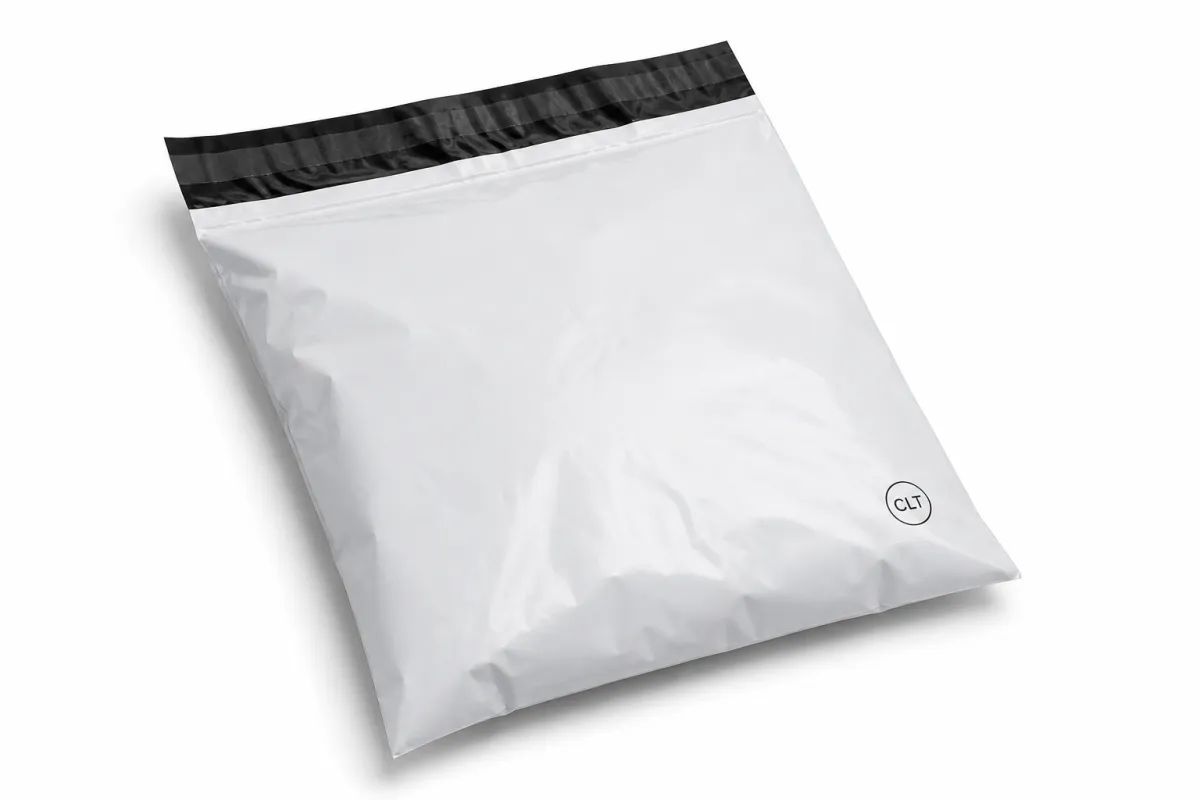
Many teams still treat mailers like the backup option, as if corrugated is always safer. That assumption misses how often custom recyclable poly mailers bulk solve the shipping problem more cleanly. They remove empty space, weigh less, and cut down the number of steps needed at the pack station. A folded tee, a scarf, a small cosmetic bundle, or a flat accessory rarely needs the crush resistance of a heavy carton.
The cost side is easy to see. Less package weight can lower postage, and less cube can keep an order inside a better rate band. Even a fraction of an inch can matter in carrier pricing. If a carton would push a shipment into a higher dimensional weight tier, custom recyclable poly mailers bulk can flatten that package and trim the bill without making the brand look cheap. That is not a small thing when orders start stacking up by the thousands.
Apparel brands, subscription boxes with soft contents, beauty products with outer cartons, sample kits, textiles, and replacement parts all tend to benefit from this format. Those categories ship in high volume and usually have predictable pack-outs, which makes custom recyclable poly mailers bulk a stronger fit than short-run custom printed boxes. The mailer becomes part of the operating model rather than a one-off buying choice, and once that happens, the math gets a lot easier to defend internally.
The bulk part matters just as much as the format. Larger runs improve unit economics and reduce the odds of stockouts. Packaging teams know the pain of a last-minute reorder that costs more in freight than the packaging itself. With custom recyclable poly mailers bulk, the aim is to lock in the spec, buy enough inventory for a meaningful cycle, and keep production from turning into a scramble. Nobody is gonna thank you for a prettier mailer if it arrives late and the warehouse has to improvise with whatever is left in stock.
A buyer gets no credit for a sustainability claim if the mailer tears in transit or slows the line. The winning package is the one that ships cleanly, protects the product, and keeps the pack station moving.
Brand presentation still matters. A well-printed mailer can create the same visual effect as retail packaging without the rigidity, extra inserts, or extra corrugated layer. For direct-to-consumer brands, that makes custom recyclable poly mailers bulk a practical middle ground between retail packaging presentation and warehouse efficiency. The point is not decoration for its own sake. It is packaging design that respects the numbers, which is often the difference between a nice idea and a program that actually survives Q4.
Rigid boxes for every order sound cautious, yet that choice can create more waste, more labor, and more freight expense than necessary. Custom recyclable poly mailers bulk deserve serious attention when the order profile is steady, the product is flexible, and the seller wants a package that looks branded without looking oversized. If the product is brittle, oddly shaped, or high value, the answer may still be a box. That honesty matters more than forcing a mailer where it does not belong.
Custom Recyclable Poly Mailers Bulk: Material and Print Details
Most mailer programs start with polyethylene film. Recyclable PE film is a common baseline because it is light, flexible, and widely understood by packaging suppliers. If your goal is custom recyclable poly mailers bulk, ask for the exact film type, the gauge range, and whether post-consumer content is available in that construction. "Recyclable" should always point to the actual material, not a vague line on a sales sheet. If a supplier cannot tell you what the film is made of, that is a warning sign, not a footnote.
Print is where buyers either keep costs under control or add avoidable complexity. A one-color logo on a single panel is usually the most economical way to launch custom recyclable poly mailers bulk. Full-coverage artwork, edge-to-edge color, and multiple spot colors can look striking, but they also raise setup time, waste, and minimum order quantity. A simple logo, return address block, and short message often carry the brand better than busy artwork. In practice, restraint tends to print cleaner anyway.
Closure details deserve more attention than they usually get. A pressure-sensitive adhesive strip should hold through transit and still seal cleanly at pack-out. Tear strips can make opening easier, and some programs need a second adhesive strip for returns or reuse. If the order includes custom recyclable poly mailers bulk, check seal width, adhesive strength, and any tamper-evident feature before production starts. This is one of those small specifications that becomes a big complaint if nobody tests it.
Recyclability language needs to stay tied to reality. Film collection works differently from curbside recycling, and local rules change what customers can actually do with the mailer after delivery. The EPA recycling guidance is a useful reference point, but local collection rules still control what happens next. Many brands choose a short disposal note on the bag instead of a broad claim that sounds helpful while creating confusion. That approach is slower to market, maybe, but it is also more trustworthy.
Custom size and print placement shape the customer experience too. A mailer that fits closely looks more deliberate, shifts less in transit, and wastes less film in the final package. A tidy front panel with a centered logo can do a lot of the work that custom printed boxes usually handle, especially for lower-fragility product packaging. That is one reason custom recyclable poly mailers bulk can create a sharp visual identity without adding structural weight you do not need.
If your team is comparing branded packaging options, ask for the film grade, print method, and seam structure up front. A good supplier should be able to explain whether the job uses stock recyclable film, a custom-dyed film, or a recycled-content construction. Those details affect cost, consistency, and how confidently the mailer can sit inside your packaging design system. With custom recyclable poly mailers bulk, the best spec is usually the one that keeps the program simple enough to repeat, because repeatability is where bulk orders earn their keep.
Specifications That Matter: Sizes, Gauges, and Closure Options
Five details should be in hand before a quote request goes out: flat width, length, usable interior space, gauge, color, and print coverage. Those details separate a mailer that fits from a mailer that creates rework. With custom recyclable poly mailers bulk, product dimensions alone are not enough because seam allowance, seal area, and internal fold all affect usable room.
Gauge comes next. Lighter constructions usually work well for soft goods, flat apparel, and low-abuse routes. Heavier gauges make more sense for sharper edges, longer transit paths, or products that need added abrasion resistance. A 2.5 mil film may be ideal for folded shirts, while a 3.0 mil or 4.0 mil option may suit catalogs, hard accessories, or mixed SKU kits. A sample-fit check is worth its weight when ordering custom recyclable poly mailers bulk, because that one test can prevent a whole pallet of awkward returns.
Size mistakes happen all the time. Teams measure the product, then forget the folded thickness, the flap, and the adhesive area. The result is a mailer that looks fine on paper and fights the packing line. A careful packaging buyer asks for actual pack-out dimensions, not just product dimensions. That rule applies to custom recyclable poly mailers bulk and to custom printed boxes as well, because the package has to work in the real operation, not only on a spec sheet.
Closure options deserve a direct conversation. Some operations need a strong one-time seal. Others want resealability for returns or reuse. A tear notch can improve first opening, but it should not weaken the closure path. If customer service depends on easy returns, the closure needs to support that process instead of forcing a workaround. The right choice for custom recyclable poly mailers bulk saves labor later, and it saves a few irritated emails too.
Color choices are usually more practical than decorative in bulk programs. White, translucent gray, and black are common because they show logos clearly and hide scuffs in transit. Custom color can strengthen package branding, but it should be weighed against minimum order quantity and print setup. A good spec sheet for custom recyclable poly mailers bulk should state the substrate color, print coverage, and whether the bag is intended to be opaque or semi-opaque.
If you want a simple checklist, this is the shortest useful version:
- Dimensions: product size plus seam allowance, fold, and seal area.
- Gauge: matched to product shape, transit risk, and pack-out speed.
- Print: logo count, color count, and coverage area.
- Closure: standard seal, tear strip, or reseal strip.
- Quality control: request a sample and confirm fit before full production.
Testing still matters. Some teams use transit methods aligned to ISTA standards, especially when the mailer is part of a broader direct-to-consumer shipping program. Not every operation needs a lab-style qualification. A simple fit and seal test will still catch many of the issues that create packaging waste, damaged product, or delayed launches. That is the practical value of custom recyclable poly mailers bulk: the spec stays manageable if the right questions get asked before approval, and it keeps the whole team from guessing later.
Pricing, MOQ, and Quote Structure for Bulk Orders
Pricing makes the discussion concrete. Material grade, gauge, size, print colors, bag count, freight, and setup or plate charges all influence the total. For custom recyclable poly mailers bulk, a single-color print on a standard size will usually price far below a full-coverage, multi-color design on a heavier film. That part is expected. The real mistake is comparing quotes that do not share the same assumptions.
At lower bulk volumes, unit cost often stays high because setup gets spread over fewer pieces. As volume rises, the price per unit usually drops more than buyers expect. That is where MOQ starts to matter. A 5,000-piece run may make sense for a pilot, while a 20,000-piece run often gives a better mix of price and supply continuity for custom recyclable poly mailers bulk. The right breakpoint depends on print complexity and film construction, and it is rarely the same for every brand.
A complete quote should show unit price, tooling or plate charge if applicable, proofing cost, sample fees, production lead time, and shipping terms. If those items are missing, the quote is not complete. Good suppliers make the structure visible because it avoids friction later. For custom recyclable poly mailers bulk, that clarity helps when procurement, operations, and marketing all need to sign off on the same order. It also makes the difference between a clean approval and a week of follow-up questions.
| Option | Typical unit price at 5,000 pcs | Print style | Best fit | Notes |
|---|---|---|---|---|
| Blank recyclable mailer | $0.08-$0.12 | No print | Pilot runs, utility shipments | Lowest setup, fastest procurement, limited branding |
| One-color custom logo | $0.12-$0.20 | Single-panel logo or message | Most e-commerce launches | Best balance of cost and package branding |
| Full-coverage graphics | $0.18-$0.32 | Multi-area, higher ink coverage | Campaign launches, premium retail packaging feel | More setup and stricter artwork control |
| Heavier-gauge custom mailer | $0.22-$0.38 | Custom print plus thicker film | Sharper contents, longer transit routes | Higher material cost, stronger abuse resistance |
Those figures are directional, not universal. Freight can move the landed price more than the difference between two print options, especially on light packaging where the product value is low. A buyer ordering custom recyclable poly mailers bulk should ask for tiered pricing at several volumes, because the breakpoint between 5,000 and 10,000 pieces often shows whether a test run is enough or whether the economics already support a larger buy. If the seller only gives one number, ask for two more. That is usually where the useful truth shows up.
A useful comparison exists between mailers and custom printed boxes. A mailer can win on material cost, but a box can still make sense if the product needs stacking strength, rigid presentation, or more void space for protection. The smartest buying decision is not always the cheapest line item. It is the option that balances product packaging, freight, labor, and brand effect. That is why custom recyclable poly mailers bulk should be quoted against the real order profile, not a generic packaging budget.
Process, Timeline, and Lead Time for Production
The order flow is direct, but it still needs discipline. It usually begins with size selection, artwork review, a digital proof, sample approval if needed, production, inspection, and shipment. With custom recyclable poly mailers bulk, each clean handoff keeps the project from drifting. The fastest teams know their dimensions, have final copy ready, and answer proof questions quickly.
Artwork changes often slow everything down. Late adjustments to print coverage, logos, or dimensions do the same. Even a small revision can affect plate work or the production layout. The safest path is to approve the final spec before production begins. For custom recyclable poly mailers bulk, that means the artwork file, panel placement, color callout, and seal style should all be locked together instead of revised one by one. I have seen a simple logo shift delay a launch by more than the packaging itself should ever have held it up.
A typical lead time after proof approval is often 12-15 business days for production, though the factory schedule, print complexity, and shipping conditions all influence that number. Transit time is separate. If the order has to land by a launch date, build in margin. Repeat orders usually move faster because the tooling, film spec, and art file already exist. That is one quiet benefit of custom recyclable poly mailers bulk: once the spec proves itself, reorders can move with far less friction.
A few steps shorten the cycle. Send print-ready artwork in the requested format. Confirm the shipping destination early. Approve digital proofs promptly. If a sample is needed, review it against the actual product rather than a theoretical package size. A sample-fit check is especially useful for custom recyclable poly mailers bulk because it confirms that the bag closes properly and packs cleanly on the line before the full run is committed.
This is the practical timeline many teams follow:
- Send product dimensions, volume, and artwork brief.
- Review proposed size, gauge, print coverage, and quote structure.
- Approve digital proof or physical sample.
- Release production after final sign-off.
- Inspect finished stock, then ship to the warehouse or 3PL.
That sequence looks basic, but it saves time because each delayed approval raises the chance of a rush shipment or a missed launch window. The strongest packaging programs treat custom recyclable poly mailers bulk as a repeatable procurement process, not a one-time creative exercise. That mindset usually separates smooth operations from reactive ones, and it is a lot less glamorous than a mood board, which is exactly why it works.
Why Buyers Choose Us for Custom Recyclable Poly Mailers Bulk
Reliability comes first. Consistent film quality matters because a weak batch can lead to seal failures, skewed print, or handling problems at the warehouse. With custom recyclable poly mailers bulk, small material or print variations can add up across thousands of units. The right partner keeps the spec steady so the packaging performs the same way on reorder three as it did on the first shipment.
Documentation is the second reason buyers stay with a supplier. Teams need spec sheets, proof approvals, and a clear paper trail for internal review. Marketing may care about package branding, operations may care about pack speed, and compliance may care about recyclability language. A supplier that can support all three reduces friction. That matters most for brands selling through direct-to-consumer channels, marketplaces, and wholesale accounts. Custom recyclable poly mailers bulk have to work in more than one environment, and the paperwork should reflect that reality.
Communication matters too. One missed proof can delay a launch. One unclear change note can create a reprint that nobody wanted. A responsive supplier does more than answer the phone. It keeps the project moving by confirming details early and flagging risks before they become expensive. For custom recyclable poly mailers bulk, that usually means fewer packing errors, fewer surprises at receiving, and less inventory sitting idle in a warehouse.
Channel flexibility is another practical advantage. An apparel brand does not pack the same way as a subscription company or a seasonal kit program. All three may still want the same core benefits: low waste, strong branding, and predictable pricing. Good packaging design shows its value there. The mailer becomes part of the product packaging system, not just a bag. If a buyer needs more than one format, the broader Custom Packaging Products catalog and Wholesale Programs page can help compare options without starting from scratch.
From a margin perspective, the gap between a well-specified mailer and a vague one can be substantial. Waste falls when the size fits better. Labor falls when the seal is reliable. Freight can improve when cube stays controlled. Those gains are not abstract. They show up in order handling, in carrier invoices, and in fewer customer complaints. That is why custom recyclable poly mailers bulk are often chosen by teams that care about sustainability language and operational discipline at the same time.
The strongest buying case is straightforward. The format has to hold up, the branding has to look intentional, and the supply has to arrive when promised. If those three conditions line up, custom recyclable poly mailers bulk become a durable part of the shipping program instead of another packaging experiment.
Next Steps to Order Custom Recyclable Poly Mailers Bulk
Start with three inputs: product dimensions, estimated monthly volume, and the branding you want on the bag. Those details are enough to build an early quote and narrow the options quickly. For custom recyclable poly mailers bulk, the goal is not to overcomplicate the spec. It is to Choose the Right size, gauge, and print plan before money gets tied up in the wrong run.
Request a sample or at least a firm spec confirmation. A sample-fit check is the best way to verify closure performance and overall appearance. It also tells you whether the mailer feels right in the packing operation. If the product fits but slows pack-out, the spec still needs work. If the mailer looks sharp but leaves too much empty space, the size needs adjustment. That is why custom recyclable poly mailers bulk should be tested against actual pack-out conditions, not just a drawing.
Compare two quote structures next: a lower-MOQ test run and a true bulk tier. That comparison usually reveals the volume break where the economics begin to make sense. A small test order can validate sizing and print quality. A larger buy can lock in a better landed cost and reduce reorder risk. This is where buyers often realize that custom recyclable poly mailers bulk are not just a packaging expense; they are a supply planning decision. It is a packaging choice, yes, but also a procurement rhythm that affects cash flow and warehouse planning.
Confirm the timeline, artwork, and shipping destination before release. If the project has a launch date, say so early. If the warehouse needs cartons packed a certain way, specify it. If your internal team needs a proof note on recyclability language, include that in the approval checklist. Those details reduce rework and make custom recyclable poly mailers bulk easier to scale across multiple orders or sales channels.
If you are ready to move forward, choose the size that best matches the product, confirm the gauge that fits the transit risk, and settle the print plan before ordering custom recyclable poly mailers bulk. That is the shortest path to a mailer program that ships cleanly, supports branded packaging, and keeps the numbers under control. The rest is just noise.
What sizes are most common for custom recyclable poly mailers bulk orders?
Most buyers choose sizes that fit the product with minimal empty space, especially for apparel, flat soft goods, and folded kits. The best size depends on pack-out dimensions, not just product dimensions, because the seal area and seam allowance must be included. A sample fit is the safest way to confirm the right size before placing custom recyclable poly mailers bulk in a larger production run. In a lot of programs, that one sample saves more money than any spreadsheet ever can.
How recyclable are custom recyclable poly mailers bulk shipments in practice?
Recyclability depends on the film construction and on local collection programs, so the claim should always match the actual material used. Plain polyethylene mailers are often accepted in store drop-off streams, but buyers should verify local rules before making claims. Clear pack copy can help customers understand how the mailer should be handled after delivery, which is especially useful for custom recyclable poly mailers bulk. Honest labeling builds more trust than a broad promise that sounds eco-friendly but leaves people guessing.
What MOQ should I expect for custom recyclable poly mailers bulk?
MOQ depends on size, print complexity, and whether the order uses stock film or a fully custom spec. Higher volume usually lowers unit cost, while smaller quantities may carry setup or tooling charges that raise the effective price. Ask for tiered pricing so you can compare a test run against a full bulk reorder of custom recyclable poly mailers bulk. That comparison is usually where the break-even point becomes obvious.
How does printing affect pricing for custom recyclable poly mailers bulk?
More print colors, larger coverage, and tighter color matching usually increase cost. Simple one-color branding is typically the most economical option for first orders, especially if the team is still testing product packaging and pack-out behavior. Artwork changes after proof approval can add delay and may increase production expense on custom recyclable poly mailers bulk. If you want a cleaner quote, lock the art before the proof gets sent around internally.
What should I approve before production starts on custom recyclable poly mailers bulk?
Approve the final dimensions, film gauge, print artwork, and closure style before production starts. Check the proof for color, logo placement, and any regulatory or recyclability wording. If possible, approve a physical sample so the bag size and seal performance are verified before the full run of custom recyclable poly mailers bulk. That small step is usually the difference between a smooth release and a costly do-over.

