Buyer Fit Snapshot
| Best fit | Custom Recycled Barcode Labels for Sustainable Packaging projects where brand print, material claims, artwork control, MOQ, and repeat-order consistency need to be specified before quoting. |
|---|---|
| Quote inputs | Share finished size, material target, print colors, finish, packing count, annual reorder estimate, ship-to region, and any compliance wording. |
| Proofing check | Approve dieline scale, logo placement, barcode or warning zones, color tolerance, closure strength, and carton packing before bulk production. |
| Main risk | Vague material claims, crowded artwork, missing packing details, or unclear freight terms can make a low unit price expensive after revisions. |
Fast answer: Custom Recycled Barcode Labels for Sustainable Packaging should be specified like a repeatable production item. The safest quote records material, print method, finish, artwork proof, packing count, and reorder notes in one written spec.
Production checks before approval
Compare the actual filled-product size with the drawing, then confirm tolerance on folds, seals, hang holes, label areas, and retail display edges. Reserve space for logos, QR codes, warning copy, and material claims before decorative graphics fill the panel.
Quote comparison points
Review material grade, print process, finish, sampling route, tooling charges, carton quantity, and freight assumptions side by side. A quote is only useful when the supplier can repeat the same color, closure quality, and packing count on the next order.
A label can look flawless on press and still fail the first time it meets a cold dock door, a humid warehouse, or a fast-moving conveyor. That is the real test for custom recycled barcode labels, because sustainability only matters if the barcode scans cleanly, the adhesive stays put, and the package keeps moving without rework. A label that saves material but creates a reprint loop is not a win. It is just a quieter kind of waste.
For a packaging buyer, this is not merely a label decision. It touches product packaging, retail packaging, branded packaging, and the broader package branding system that lives on cartons, totes, and shipper cases. A smart label spec can support recycled-content goals without sacrificing traceability, and that balance is what most teams are really trying to get right. A label also acts as a tiny data carrier inside the larger packaging ecosystem, which is why material choice, print quality, and warehouse conditions should be treated as one conversation rather than three separate ones.
For related label and packaging programs, you can also compare options in Custom Labels & Tags or review broader Custom Packaging Products that keep the visual system consistent across the shipper and the shelf. That matters more than many buyers admit. A carton, a label, and a shipper insert can each be technically sound and still look like they came from different companies.
What Custom Recycled Barcode Labels Are
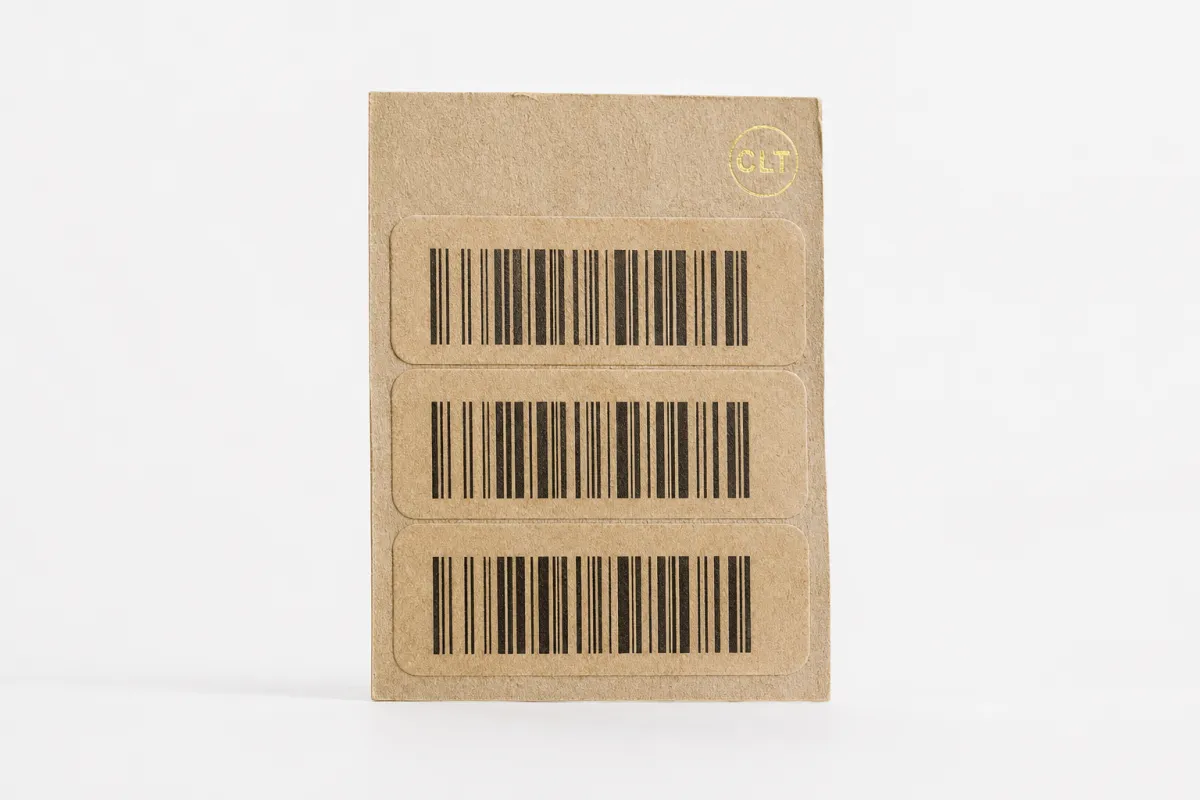
Custom recycled barcode labels are barcode labels built with recycled-content facestock, matched adhesive systems, and print methods that preserve scannability while reducing dependence on virgin materials. In plain terms, they are not just "green stickers." They are working parts of the supply chain, and they have to perform the same job as any other label: identify, track, sort, and verify items with as little friction as possible. The recycled-content claim only matters if the label still behaves like a production tool.
That distinction matters because sustainability starts with function. A label that fails adhesion on a corrugated carton, smears under handling, or drops contrast under heat does not save resources in the long run. It creates waste, adds labor, and forces reprint cycles. Good custom recycled barcode labels are designed with the actual use case in mind, whether that is a shipping carton, a warehouse location marker, a compliance label, or a branded carton insert in a lower-impact packaging program. The shortest path to better materials usually runs through better specification, not better slogans.
From a packaging buyer's point of view, the label is only one piece of the system. The liner, adhesive, face stock, inks, coating, and end-of-life goal all shape the environmental profile. If the label is meant to live on the box until the box is recycled, the material choice may be very different than a label that must survive repeated handling on a reusable tote. That is why custom recycled barcode labels should be specified alongside the carton style, pallet flow, and distribution environment, not after the fact. The box and the label age together; the spec should reflect that.
Most teams run into these labels in a few common places:
- Shipping labels for e-commerce and fulfillment cartons
- Inventory labels for warehouse racks, bins, and location codes
- Retail compliance labels that carry pricing, item data, or route-to-market information
- Branded carton labels that tie into package branding and the rest of the package design system
In practice, the more disciplined the application, the better recycled content can work. A label used on a stable, indoor carton line can be a fairly straightforward spec. A label used in a chilled warehouse, or on a rough recycled box with visible fiber lift, needs more thought. That is why I always tell teams to treat custom recycled barcode labels as a performance material first and a sustainability story second. A recycling claim does not rescue a barcode that will not scan.
A recycled label is only sustainable if it works on the first pass.
That idea sounds simple, but it is where a lot of good intentions get lost. Buyers often start with the environmental claim, then discover the label needs a different adhesive, a different topcoat, or a different print method to survive real-world handling. If you are trying to align the label with broader sustainable packaging goals, the most reliable approach is to define the service conditions first and let the material follow. A cold room, a dusty carton, and a high-speed line are three different engineering problems, even if they all end up with the same label shape.
For teams building out a wider program, the label choice should also connect to the carton and shipper. A recycled-content label paired with Custom Printed Boxes made from certified fiber can create a more coherent sustainability story than a label chosen in isolation. That kind of coordination is part of smart packaging design, not just procurement. The buyer who sees the whole system usually avoids the expensive mismatch that shows up later as a line stoppage.
How Custom Recycled Barcode Labels Work on the Line
Every label is a layered construction, and custom recycled barcode labels are no different. The facestock is the visible top layer, the adhesive holds the label to the surface, the liner supports the web during converting and application, and the print layer carries the barcode data and any human-readable text. Each layer can help or hurt performance depending on the line speed, surface texture, and storage environment. That is why two labels that look similar on a PDF can behave nothing alike on a conveyor.
The facestock is where recycled content usually gets the attention, and rightly so. Recycled paper stocks are common for cartons, inventory tags, and short- to medium-life applications. Recycled-content synthetic options, often based on polypropylene or similar films, can be better when moisture, scuffing, or cold storage are part of the job. With custom recycled barcode labels, the important question is not whether the material sounds sustainable on paper; it is whether the finished label meets the durability target without overbuilding the structure. A lighter stock that survives the trip is better than a heavy stock that wastes material without adding value.
Printing method matters just as much. Thermal transfer is often the safest route when the barcode needs to survive friction, shipment, or moderate moisture exposure, because ribbon-based imaging can deliver stronger contrast and better durability. Direct thermal can be useful for shorter-life applications, but it is more sensitive to heat and abrasion. Flexographic and digital print methods can work well for branded packaging runs or variable data, but the label stock has to be compatible with the chosen ink system and finish. The wrong print method on a recycled stock can weaken the barcode before the label ever reaches the carton. A label that looks sharp on press and goes gray in the warehouse has already missed the point.
Adhesive choice is where a lot of label problems begin or end. A permanent adhesive is often the starting point for corrugated cartons, but rough recycled board, dusty surfaces, chilled surfaces, and low-energy plastics can all change the result. A label might stick beautifully in a room-temperature test, then lift at the edge after a few hours on a cold dock or a condensed carton. That is why custom recycled barcode labels should be tested on the actual substrate, not just on a sample card in the office. Real cartons have seams, dust, and scuffed corners; office samples do not.
Scanner performance is the final check. Barcode size, quiet zones, contrast, label placement, and application consistency all matter. A clean design with the wrong module width can still fail if the print gain is too high or the code is placed near a carton seam. For most warehouse systems, you want the label format to match the scanner distance and the speed of the workflow, whether the label is being read at arm's length, on a line scan, or at a fixed checkpoint. A label that needs three scans to read is not a label, it is a delay.
The most useful way to think about custom recycled barcode labels is as a system response. The material, the adhesive, the print method, and the scan environment all have to agree with one another. If one element is off, the whole system slows down. That is why a good label spec often reads less like marketing copy and more like a shipping protocol.
| Label Construction | Typical Use | Approx. Unit Range | Strengths | Trade-Offs |
|---|---|---|---|---|
| Recycled paper facestock + permanent adhesive | Shipping cartons, inventory labels, retail compliance | $0.04-$0.09 at 10,000 pcs | Economical, easy to print, good for dry environments | Lower moisture resistance, can scuff more easily |
| Recycled-content synthetic film + permanent adhesive | Reusable totes, chilled storage, long-handling cycles | $0.09-$0.18 at 10,000 pcs | Better abrasion resistance, improved durability | Higher cost, may be more material than needed for short-life use |
| Topcoated recycled stock + thermal transfer print | High-contrast barcodes, shipping and warehouse tracking | $0.06-$0.14 at 10,000 pcs | Strong scan quality, good print sharpness | Requires ribbon compatibility and correct printer settings |
| Special adhesive recycled label for cold or rough surfaces | Chilled cartons, textured recycled board, fluctuating conditions | $0.10-$0.24 at 10,000 pcs | Better initial tack and hold under tougher conditions | More testing required, higher setup sensitivity |
The table above is not a universal price list, but it does show how the construction changes the job. A label built for a dry warehouse is usually not the same label you would choose for a chilled distribution network. The right spec for custom recycled barcode labels is the one that matches the real surface and the real handling pattern. A low-cost label that needs replacement after every pallet move is expensive in disguise.
For higher-volume branded packaging programs, it is common to align the label with the carton art, the pallet mark, and the rest of the retail packaging system. That keeps the visual language tighter and makes the order easier to manage across multiple SKUs. A well-matched label can even reduce operator errors, because the line can recognize product families faster when the visual system stays consistent.
Useful technical references help here too. ISTA test methods are often used to simulate shipment hazards, and the ISTA site is a solid starting point for distribution testing standards. For barcode readability, many production teams also use ISO/IEC verification principles so a label can be checked before it gets anywhere near the dock. A barcode that passes inspection on the table and fails after three hours in transit is a bad investment, not a bad day.
Custom Recycled Barcode Labels: Materials and Performance
Material choice drives performance, and custom recycled barcode labels are a good example of why recycled content alone does not tell the whole story. Buyers should look at recycled content percentage, face stock thickness, opacity, moisture resistance, and the type of coating on the label surface. A recycled paper that looks fine on a spec sheet may behave very differently from one roll to the next if brightness, caliper, or coating uniformity drifts too much. The difference can be small enough to miss in procurement and large enough to matter on a scanner.
That consistency matters because barcode readability depends on contrast and print fidelity. If the facestock surface varies, the ink or ribbon transfer can vary too. In a warehouse, that can show up as extra retries on the scanner or a larger number of manual interventions on the line. For custom recycled barcode labels, the safest path is often to ask for material samples, printed proofs, and a test run on the exact printer you plan to use. A close match in the lab can still be a poor match on the floor.
Recycled paper is the most common option for short-life cartons, shelf labels, and inventory tags. It is usually a good fit when the label does not need to handle heavy abrasion or wet handling. Recycled-content synthetic labels cost more, but they can be the better call for reusable totes, chilled storage, or long distribution chains. That is not because synthetic is automatically better; it is because the service life is longer and the line pressure is higher. Over-specifying a label can be just as wasteful as under-specifying one. The cheapest material is not always the one that costs least once labor is counted.
Environmental claims also need care. Recycled content is not the same thing as recyclability, and neither one automatically means the label can be composted or accepted by local programs. If you are using FSC-certified fiber in the paper facestock, that is a meaningful chain-of-custody signal, and FSC provides useful context at FSC. If you are making broad sustainability claims, keep them specific and document the basis for each one. It is better to say the label contains recycled content than to imply the whole package is recyclable unless you have verified the full system. Packaging claims travel fast; weak claims travel even faster.
From an operations standpoint, moisture and friction are the two most common enemies. Condensation can soften paper labels, rough carton surfaces can cut into the adhesive bond, and repeated rub can blur a barcode even when the print looked great at application. If the label travels through cold-chain distribution, the adhesive must be chosen for the actual application temperature and the eventual service temperature, which are not always the same. That is why custom recycled barcode labels for chilled or frozen environments should be tested after dwell time, not just immediately after application. A label that sticks for thirty seconds is not the same thing as a label that sticks after a night in a cooler.
For a practical review, I like to use a simple checklist:
- Scan rate: Does the code read on the first pass at the expected distance?
- Abrasion resistance: Does the barcode still print clearly after carton rub and handling?
- Adhesion after dwell time: Does the label stay down after several hours or overnight?
- Humidity tolerance: Does the face stock buckle, haze, or soften under warehouse conditions?
- Application window: Can operators place the label cleanly at the production speed you run?
Those checks sound basic, but they catch most of the expensive mistakes. A label that performs well in an office sample can still fail once it is slapped onto a rough recycled carton that has a little dust on the surface. The best custom recycled barcode labels are the ones that have already been through that real-world stress before the first full order ships. That is the point of the test: not perfection, but confidence.
There is also a broader sustainability link here. The U.S. EPA has a useful overview of materials management and source reduction at EPA Sustainable Materials Management. For packaging teams, that matters because the cleanest outcome is usually the one that reduces waste upstream, not the one that tries to fix a poor material choice after the fact. A label that lasts too long for its job can be as wasteful as a label that fails too soon.
Process, Timeline, and Production Steps
The production path for custom recycled barcode labels is straightforward when the brief is clear, and surprisingly slow when the brief is vague. A good supplier will usually move through application review, material selection, artwork setup, proofing, sample approval, print production, slitting, and final inspection. Each step is small on its own, but a mistake in one stage tends to show up later as a scan failure, a peel problem, or a rerun. The schedule often bends around the first unclear detail.
The fastest way to keep the schedule moving is to send practical information up front. That means barcode symbology, label dimensions, substrate type, printer type, application surface, print volume, and the exact environment the label will see. If the label is for a shipper case, say so. If it must survive refrigeration or outdoor exposure, say that too. Custom recycled barcode labels are much easier to quote and much easier to build when the application details are concrete instead of general. "Warehouse use" is not a spec. A pallet route, a temperature band, and a run length are.
Typical lead time depends on the construction. A simple recycled paper label with standard adhesive and a straightforward print layout may move through production quickly once artwork is approved. Add a specialty adhesive, a topcoated stock, or a custom verification requirement, and the schedule often stretches by several days. If there is extensive testing or multiple proof rounds, it can take longer. I would rather tell a buyer to budget extra time than promise a date that only works if every variable stays flat. Production plans built on perfect conditions usually break on the second shipment.
Delays usually come from a few repeat problems. Teams approve artwork before testing the code on the actual carton. Barcodes change late in the process because a fulfillment team updated a SKU structure. The operation switches from a dry warehouse to a cold room and discovers the label no longer behaves the same way. These are not unusual problems, but they are preventable when custom recycled barcode labels are treated like production components instead of artwork-only items. A label is not finished when the design file closes; it is finished when it survives the line.
A useful timeline framework looks like this:
- Request and discovery: Gather size, volume, material, barcode, and environment details.
- Material recommendation: Match recycled facestock, adhesive, and print method to the use case.
- Proof and sample: Check layout, contrast, and fit on the actual package.
- Test run: Apply and scan under real handling and storage conditions.
- Production: Print, inspect, slit, and pack the order.
- Rollout: Confirm line setup, operator instructions, and reorder settings.
That process sounds methodical because it is. The packaging floor does not reward guesswork. A small error on a label can stop a bigger system, and the cost of a line pause is usually much higher than the cost of an extra proof. Teams ordering custom recycled barcode labels for larger branded packaging programs should build that buffer into the launch plan from the start. A half-day spent confirming the label can save a week of cleanup.
One more point: if you are coordinating labels with custom printed boxes or other product packaging components, make sure the art approval process stays synchronized. It is common for the box design, carton copy, and barcode label to live in separate approval tracks. That separation creates mistakes. A better method is to review them together so the package branding stays aligned and the SKU logic stays clean. Labels rarely fail because one person was careless; they fail because three departments were working from different assumptions.
Cost, Pricing, and MOQ Factors to Plan For
Pricing for custom recycled barcode labels usually comes down to a handful of variables: recycled facestock choice, adhesive type, print method, label size, color count, variable data, and finishing requirements. If the label is a simple black-barcode-on-white-stock job, the price can stay relatively efficient. Add topcoating, specialty adhesive, flood coating, or variable numbering, and the price rises because the job now needs more setup and more control. The press does not care about intent; it cares about steps.
MOQ matters because setup costs are fixed. A press has to be prepared, the art has to be checked, the stock has to be loaded, and the order has to be inspected regardless of whether you buy 1,000 labels or 50,000. That is why small runs often carry a higher unit cost. For custom recycled barcode labels, the lower the quantity, the more the unit price reflects setup and handling rather than raw material alone. A tiny order can be perfectly sensible, but it rarely behaves like a large one on the cost sheet.
There is also a wide gap between basic recycled paper labels and labels built for tougher service conditions. If the label needs freezer-grade adhesion, moisture resistance, or abrasion protection, the quote will usually move up. That is not a markup problem; it is a materials problem. Better adhesive systems and better topcoats cost more because they behave better under stress. In many cases, the right label is still the cheaper label once you factor in reprints, labor, and missed scans. Paying more for the label can cost less for the operation.
Here is a practical way to think about price bands for custom recycled barcode labels:
| Order Type | Typical Volume | Typical Price Range | Best Fit |
|---|---|---|---|
| Simple recycled paper barcode labels | 5,000-20,000 | $0.04-$0.08 per label | Dry cartons, inventory, general shipping |
| Thermal transfer recycled labels with topcoat | 5,000-25,000 | $0.06-$0.14 per label | Better scan durability, warehouse handling |
| Recycled-content synthetic barcode labels | 10,000-50,000 | $0.09-$0.18 per label | Reusable totes, chill areas, higher abrasion |
| Special adhesive or freezer-grade builds | 10,000+ | $0.12-$0.24 per label | Cold-chain, rough cartons, demanding surfaces |
These ranges are not a quote, but they are close enough to help with planning. Freight, proofing, testing, and repeat order frequency can shift the final number. So can print coverage, if the label includes branded packaging elements, a logo, or detailed copy beyond the barcode itself. Buyers comparing options should look at price per usable label, not only price per sticker, because a cheaper label that fails in the line is not really cheaper. A true unit cost includes the cost of trust.
That is especially true for high-volume operations where a scan failure slows picking or dispatch. A slightly better material spec can eliminate a lot of downstream cost. For custom recycled barcode labels, the cheapest quote is not always the best purchase; the most stable label is often the better value. The arithmetic changes once labor, downtime, and rework enter the equation.
Common Mistakes When Ordering Custom Recycled Barcode Labels
The first mistake is putting recycled content ahead of performance. I understand why it happens. The sustainability goal is visible, measurable, and easy to communicate internally. The problem is that a label that looks responsible but fails in transit produces more waste than it saves. Good custom recycled barcode labels should reduce impact without creating a hidden operations problem. The label should earn its place every time it is scanned.
The second mistake is ignoring printer compatibility. Existing label printers are often tuned for a specific coating, ribbon type, release liner, or label gauge. Change the label construction without checking the printer settings, and you can end up with weak print density, wrinkled edges, or poor transfer. Thermal transfer systems, in particular, need the stock, ribbon, and settings to work together. A label spec that looks fine in the quote can still produce weak barcodes on the actual printer. The machine does not negotiate.
The third mistake is approving the design on screen only. That is risky because barcode contrast, quiet zones, and edge placement are physical properties, not just digital ones. A file can look excellent in a PDF and still land too close to a fold, a seam, or a rounded carton corner. With custom recycled barcode labels, I always want a real sample on a real package before a full release. The carton shape can undo the cleanest art file in a single fold line.
The fourth mistake is underestimating environment changes. A label spec that works in dry storage can fall apart when the same SKU is moved into a chilled room or an outdoor staging area. Temperature swings create condensation. Condensation changes adhesion. Adhesion changes scan reliability. That chain reaction is why the application brief has to reflect the real path of the product, not the ideal path. Warehouses are not stable labs, and labels know the difference.
The fifth mistake is sending vague requirements and hoping the supplier will fill in the blanks. A good supplier can help, but they cannot guess the scan standard, the load surface, or the service life if those details are not provided. If the label needs to meet a certain verification level, say that. If the product sits in a retail packaging flow before shipping, say that. If the carton texture is rough, say that too. Specifics make custom recycled barcode labels easier to quote, easier to make, and easier to repeat. The more a buyer defines the job, the less room there is for surprise.
If the label cannot survive the carton, the label spec is not finished yet.
That sentence is blunt, but it reflects what happens on the floor. Operations teams do not get credit for intentions. They get credit for labels that scan the first time, stay down during transit, and keep the order stream moving. That is the standard worth aiming for. Anything less turns the label into a recurring exception.
Another common issue is overbuilding the label. Some buyers assume that thicker always means better, or that the toughest adhesive must be the safest choice. Not always. If the label only needs to live for a short shipping window, a lighter recycled paper stock may be the cleaner and more economical solution. Matching custom recycled barcode labels to the shortest usable life can cut waste and reduce cost at the same time. The right answer is often smaller than the instinctive one.
Expert Tips for Specifying and Ordering Custom Recycled Barcode Labels
The best way to order custom recycled barcode labels is to write down the application in practical terms before you ask for a quote. Start with the end use, then add the barcode type, label dimensions, printer type, expected lifespan, and environmental exposure. A one-page spec sheet is usually enough to eliminate half the back-and-forth that slows a project down. Clear specs are not glamorous, but they save money.
I also recommend asking for samples or a short test run before committing to a full production order. That matters most when the label will see moisture, abrasion, refrigeration, or repeated handling. A sample applied to the actual carton or tote tells you more than a dozen assumptions. For custom recycled barcode labels, a test strip and a scan check on the line can save you from a much larger correction later. A few minutes of field testing often prevent a week of cleanup.
Here is a practical test plan that works well in the field:
- Apply the label to the real substrate, not a substitute sheet.
- Scan it at the distance the operator or scanner will actually use.
- Check it again after dwell time, especially if the carton is chilled or dusty.
- Rub the edge lightly to see whether the print or adhesive lifts.
- Move a few samples through handling, pack-out, and shipping vibration.
That kind of test is not fancy, but it is honest. It exposes weak points early, Before You Buy thousands of labels. It also tells you whether the recycled-content stock is really fit for the line, which is the question that matters for custom recycled barcode labels. The label either survives the route or it does not; the test reveals which.
Another smart move is to match the construction to the shortest realistic service life. If the label only needs to survive one shipment and one receipt scan, do not over-spec it with a heavy film unless the environment truly demands it. If it will stay on a reusable tote for weeks, do not save a few cents and accept a weak bond. The right label should do the minimum necessary job cleanly and consistently. Overengineering a short-life label can create the same waste as underengineering a long-life one.
Documentation matters more than many teams expect. Once you find a label that works, record the material code, adhesive type, print settings, application surface, and scan results. That makes reorders faster and reduces surprises later. For high-volume operations, this is how custom recycled barcode labels become a repeatable part of the packaging system instead of a recurring troubleshooting project. The note you write now may be worth more than the order you place today.
It also helps to connect the label with the rest of the package design. If your cartons, inserts, and shipping marks already use a clear visual hierarchy, the barcode label should fit that system instead of fighting it. Good package branding is not only about how the box looks on a shelf; it is about how cleanly the whole package communicates in the warehouse, the truck, and the store. A coherent package speaks in one voice, even when that voice is mostly numbers.
For teams comparing label and packaging programs across multiple SKUs, keep the conversation practical: which labels need recycled paper, which need synthetic durability, which need temperature resistance, and which can stay simple. That is how custom recycled barcode labels support sustainability without adding unnecessary complexity to the order line. Simplicity, in this setting, is not minimalism for its own sake. It is fewer failure points.
When you get the spec right, the label disappears into the workflow in the best possible way. It scans, sticks, survives, and gets out of the way. That is what good packaging production is supposed to do. The best label is the one nobody has to discuss again.
Are custom recycled barcode labels durable enough for shipping cartons?
Yes, if the facestock and adhesive are matched to the carton surface and shipping environment. For corrugated cartons, custom recycled barcode labels usually work best when the construction balances tack, abrasion resistance, and barcode contrast. A sample test on the actual carton is the safest way to confirm performance before you place a full order. A label that survives a box move, a tape pass, and a dock transfer has already answered the real question.
What is the best adhesive for custom recycled barcode labels on recycled boxes?
A permanent adhesive is often the safest starting point for standard cartons, but the right choice depends on surface texture and temperature. If the box is rough, dusty, chilled, or coated, the adhesive may need more initial tack or a wider service window. Always verify adhesion after dwell time, not just right after application, because custom recycled barcode labels can behave differently once the carton has been stored for a few hours. The first minute and the fifth hour are rarely the same test.
Do custom recycled barcode labels work with thermal printers?
Often yes, but compatibility depends on the coating, liner release, and whether the label is direct thermal or thermal transfer. Thermal transfer usually offers better durability when the barcode must survive handling, shipping, or moisture exposure. Before full production, match the ribbon, label stock, and printer settings so the finished custom recycled barcode labels produce strong contrast and clean scan results. A printer that is dialed in can make recycled stock look expensive in the best way.
How do I estimate pricing for custom recycled barcode labels?
Ask for pricing based on label size, material, adhesive, print method, quantity, and any finishing requirements. Check whether the quote includes setup, proofing, and freight so you can compare apples to apples. Smaller quantities usually raise unit cost because setup is spread over fewer labels, which is why custom recycled barcode labels often price differently at 5,000 pieces versus 25,000 pieces. The quote should tell you more than the number; it should tell you where the cost is coming from.
What information should I send for a quote on custom recycled barcode labels?
Include the barcode type, dimensions, substrate, printer type, expected environment, and estimated annual volume. Share whether the labels need to survive shipping, refrigeration, abrasion, or chemical contact. The more complete the application detail, the faster the supplier can recommend the right construction for custom recycled barcode labels, and the fewer revisions you will need before approval. Good input makes better labels, and better labels make quieter operations.
For most teams, the real goal is not just buying a label that looks recycled. It is buying custom recycled barcode labels that protect scan performance, match the packaging line, and support a lower-impact material strategy without creating waste, downtime, or rework. The most practical next step is simple: write a one-page spec, apply a sample on the real carton, and confirm that it still scans after dwell time. That is the part that decides whether the label is useful or merely well-intentioned.

