Buyer Fit Snapshot
| Best fit | Custom Recycled Labels for Boxes projects where brand print, material claims, artwork control, MOQ, and repeat-order consistency need to be specified before quoting. |
|---|---|
| Quote inputs | Share finished size, material target, print colors, finish, packing count, annual reorder estimate, ship-to region, and any compliance wording. |
| Proofing check | Approve dieline scale, logo placement, barcode or warning zones, color tolerance, closure strength, and carton packing before bulk production. |
| Main risk | Vague material claims, crowded artwork, missing packing details, or unclear freight terms can make a low unit price expensive after revisions. |
Fast answer: Custom Recycled Labels for Boxes: Material, Adhesive, Artwork, and MOQ should be specified like a repeatable production item. The safest quote records material, print method, finish, artwork proof, packing count, and reorder notes in one written spec.
Production checks before approval
Compare the actual filled-product size with the drawing, then confirm tolerance on folds, seals, hang holes, label areas, and retail display edges. Reserve space for logos, QR codes, warning copy, and material claims before decorative graphics fill the panel.
Quote comparison points
Review material grade, print process, finish, sampling route, tooling charges, carton quantity, and freight assumptions side by side. A quote is only useful when the supplier can repeat the same color, closure quality, and packing count on the next order.
Custom Recycled Labels for Boxes: A Practical Guide
If your cartons need to look sharp, travel well, and support a sustainability story that can survive a skeptical buyer, custom recycled labels for boxes are a sensible place to start. A good label can still look premium, hold through warehouse handling, and survive scuffs, condensation, and carton-to-carton contact, provided the face stock and adhesive fit the box surface.
That last part is where a lot of projects go sideways. “Recycled” does not mean flimsy. It also does not automatically mean recyclable. Performance lives in the full build: the paper face stock, the adhesive chemistry, the liner, the print method, and the way the label behaves on corrugated board, recycled board, or lightly coated cartons.
For brands that care about package branding, labels do more than carry a logo. They tighten carton identification, support product packaging across multiple SKUs, and make Recycled Shipping Boxes look intentional instead of improvised. That can delay or even remove the need for expensive custom printed boxes. If you are comparing label-only options with a broader packaging refresh, it helps to look at both Custom Packaging Products and Custom Labels & Tags so the graphics, board choice, and label spec all pull in the same direction.
For sustainability claims and materials language, the source matters. FSC guidance at fsc.org is useful for paper sourcing questions, and ista.org is a solid reference point when you are thinking about real distribution conditions, shock, vibration, and transit abuse.
Custom recycled labels for boxes: what they are and why they matter
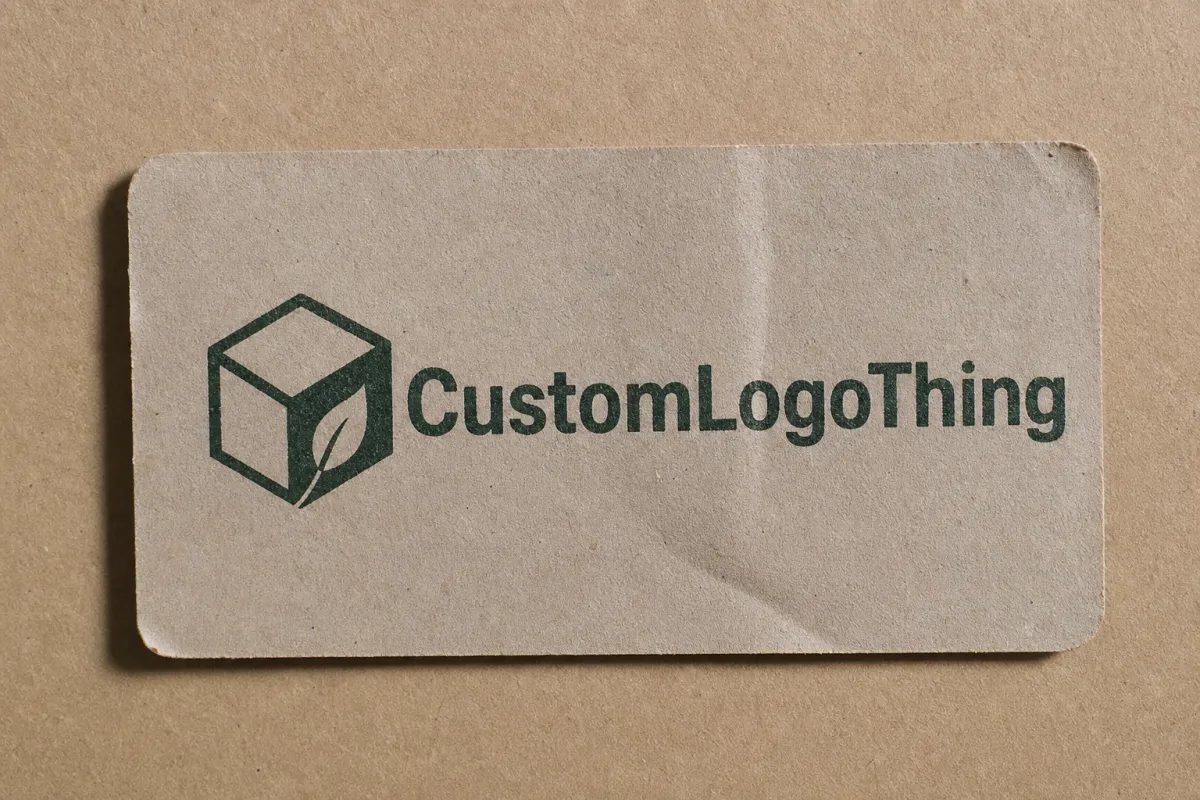
In practical terms, a recycled label is a pressure-sensitive label built with a paper face stock that contains recycled fiber, a liner that may also include recycled content, or both. The adhesive can still be permanent, high-tack, or freezer-grade, because the recycled content usually refers to the paper components rather than the glue itself. That distinction matters when you are comparing specs from different suppliers or trying to compare one eco-friendly quote against another.
Brands usually choose these labels for a few grounded reasons. A recycled paper label can soften the visual jump between a brown corrugated carton and a bright, heavily coated sticker, which helps on kraft boxes and brownboard mailers. It can also support cleaner unboxing, better carton identification, and a more polished look for retail packaging, especially when the label carries a logo, SKU, shipping mark, or compliance text in one tidy block.
There is also a purchasing angle that matters on the floor. A good recycled label can cut down the need for multiple print steps, hand stamps, or separate slips, which keeps pack-out simple. For a warehouse team or a contract packer, one well-chosen label can handle branding, routing, and shipping identification with less fiddling at the bench. That is not a small advantage when labor is tight and every extra motion slows the line.
The biggest mistake is treating recycled content as the only variable. A label with 30% recycled fiber on the face stock may behave very differently from one with 100% recycled content, and both may outperform a lower-quality “eco” label if the adhesive is matched correctly and the carton surface is clean. The full construction matters more than one marketing claim, and in packaging that usually means the claim on the spec sheet is the least interesting part of the job.
Test the label on the actual carton you ship, not on a sample sheet sitting flat on a desk. Fiber texture, dust, temperature, and carton storage time change the result more than most first-time buyers expect.
How custom recycled labels for boxes work on the pack line
A pressure-sensitive label sounds simple. Production makes it less simple. It has three basic layers: the face stock you see and print on, the adhesive that sticks to the box, and the liner that carries the label before application. Each layer affects how the label prints, how it peels, how it dispenses, and how fast a packer can move without fighting curled edges or broken release.
Face stock: the visible part
The face stock is where most of the visual character comes from. Recycled uncoated paper gives a natural, tactile look that suits kraft corrugated cartons and low-gloss product packaging. A smoother recycled sheet will usually print cleaner fine type and barcodes, while a rougher sheet gives a more handmade appearance that some brands want for branded packaging or retail packaging with a natural finish.
Caliper matters here. A thicker face stock can feel more substantial, but it may also need more careful die-cutting and slightly different adhesive behavior at the edges. If the label has narrow radii, tiny type, or a tight barcode area, caliper and surface smoothness can change readability more than a buyer expects. That matters if your team expects one label format to work across multiple box styles.
Adhesive: the part that does the real work
Adhesive choice is where many recycled label projects succeed or fail. A permanent acrylic adhesive is a common starting point for dry, room-temperature cartons because it gives dependable hold on most corrugated surfaces. High-tack adhesives are useful when the carton has a rough surface, when dust is present, or when the label has to bite fast on an automated line.
Temperature changes matter too. A label applied to a cold box from a storage area may not wet out the same way as one applied to a carton that has been sitting at packing-room temperature. Humidity, condensation, and the amount of recycled fiber in the carton board can all affect the bond, which is why carton testing beats relying on a generic material name. If your boxes are sealed immediately after labeling, you also need to account for pressure from stacking, because that can reveal an adhesive issue that a quick bench test will miss.
Liner: the part buyers often overlook
The liner does not show in the final package, but it affects conversion waste, dispensing speed, and in some cases sustainability messaging. Glassine liners are common because they release well and work smoothly on many applicators. Recycled-content liners can be a good fit for brands trying to reduce virgin fiber in the whole label structure, while film liners may be chosen for certain automated applications where dimensional stability matters more than fiber content.
On the pack line, liner and release behavior influence speed. If the release is too tight, a hand-applied label takes longer to peel. If the release is too loose, the label can shift in the roll or sheet before the operator is ready. Good converting work keeps that balance stable so the label feeds cleanly on a manual bench, a semi-automatic dispenser, or a high-speed applicator.
The box surface itself changes the equation. Uncoated kraft board has texture and open fibers, so a label needs enough wet-out to settle into the surface. Printed corrugate can be slick in some ink areas and absorbent in others. Lightly coated cartons may resist initial grab, especially if there is dust or powder on the surface. A recycled label can still perform well on all three, but only if the adhesive and face stock are chosen for that exact surface.
Print method matters too. Digital printing works well for short runs, seasonal graphics, and variable data. Flexographic printing is often better for repeated programs and higher volumes, especially when the artwork is stable. Die-cutting defines the shape, and that shape can affect both appearance and application speed. If the label needs extra abrasion resistance, an aqueous coating, spot varnish, or in some cases overlamination may be added, though a full film lamination should be weighed carefully if recyclability is part of the brief.
For labels that carry serial numbers, barcodes, or route information, the layout should be built for the actual line speed and scan distance. A beautiful label that cannot be scanned quickly is a production problem, not a design win. On a busy pack line, the best label is the one that applies cleanly, scans on the first pass, and still looks presentable after a few hours in transit.
Cost, pricing, and MOQ factors for recycled box labels
Price starts with the basics: size, shape, quantity, print coverage, and material choice. A simple rectangular label with one or two ink colors will usually cost less than a custom die-cut shape with heavy solid coverage, multiple finishes, and serialized data. Short runs almost always carry a premium because setup time is spread across fewer pieces, while repeating programs tend to price down as press time becomes more efficient.
MOQ, or minimum order quantity, is not random. It usually reflects the work needed to prepare artwork, make or pull the die, calibrate the press, and set the label for clean converting. If a supplier has to create a new custom shape, check registration, and produce a proof, they will often need enough volume to cover that setup without pushing the unit price too high. For simple digital jobs, the MOQ can be lower; for custom flexo work, it is often higher.
Buyers sometimes focus on the sticker price and ignore the rest of the bill. That can lead to false comparisons between quotes. A lower unit price can still cost more if the supplier charges separately for proofs, sample rolls or sheets, special packaging, freight, barcode setup, or variable-data formatting. The useful number is total landed cost, not only the price on the quote line.
Here is a simple way to think about the main cost drivers:
- Label size - larger labels use more face stock and adhesive, so material cost rises fast.
- Shape complexity - rounded corners are usually easier than intricate custom die-cuts.
- Material grade - premium recycled face stocks and specialty liners carry more cost.
- Print coverage - solid ink areas, metallic accents, and multiple colors increase press time.
- Finish - coatings and abrasion resistance add protection, but also add cost.
- Run length - short runs cost more per piece than recurring programs with stable artwork.
The table below gives illustrative ranges for standard label sizes on a moderate volume run. Exact pricing shifts with artwork, quantity, and the actual carton surface, so treat these as planning numbers rather than fixed quotes.
| Label construction | Best use | Typical MOQ range | Illustrative unit cost | Buying note |
|---|---|---|---|---|
| Recycled paper face stock with standard permanent adhesive | Shipping boxes, carton ID, light branding | 500-2,500 pieces | $0.05-$0.12 each at 5,000 pieces | Good starting point for dry kraft cartons and simple graphics. |
| Premium recycled paper with high-tack adhesive | Rough corrugate, busier pack lines, stronger hold | 1,000-5,000 pieces | $0.07-$0.15 each at 5,000 pieces | Often worth the small premium if carton texture is inconsistent. |
| Recycled-content liner with variable-data digital print | Short runs, SKU labels, serial numbers, promotional packs | 250-2,000 pieces | $0.08-$0.20 each at 2,500 pieces | Useful when artwork changes often or order sizes stay small. |
| Heavy-duty paper with freezer-grade or moisture-tolerant adhesive | Cold storage, humid shipping, condensation risk | 1,000-10,000 pieces | $0.09-$0.22 each at 5,000 pieces | Testing matters more than brochure language in cold or damp conditions. |
One practical rule helps buyers compare quotes fairly: if a slightly higher-priced label applies faster, scans better, and fails less often, it may be the cheaper choice across the whole job. A label that saves two seconds per carton can matter a lot over a month of shipping volume. That is especially true for custom printed boxes or any program where a label has to support both product packaging and route identification.
For brands balancing cost and branded packaging, recycled labels usually sit in a middle ground. They are often more cost-effective than full custom printed boxes, but they still create a cleaner result than a generic shipping sticker. For many programs, that balance is the point.
Process and timeline: from quote to production steps
A smooth label project starts with clean information. The first step is a solid quote request, and the best quote requests include carton dimensions, label size, quantity, print colors, application method, and the conditions the box will see in storage or transit. If the label must carry a barcode, hazard text, or variable data, that should be stated early, not added after the proof stage. Late changes are where schedules go to die.
From there, the workflow usually moves through a predictable sequence. Prepress checks the artwork, confirms fonts and bleed, and makes sure the barcode has enough quiet space. Material is chosen next, followed by the adhesive review and die specification. Once the art is approved, the job moves into print setup, test pulls, die-cutting, rewinding or sheeting, inspection, packing, and shipment.
The timeline depends on several real-world variables. Artwork revisions can add days. New die work can add more. If the supplier has to source a specialty recycled face stock or a freezer-grade adhesive, material availability can shift the schedule. Rush jobs are possible in some cases, but the fastest projects usually start with final copy, a clear quantity, and a sample of the actual box surface.
Here is a typical path for a standard custom recycled label order:
- Inquiry and discovery - gather box specs, label size, quantity, and application method.
- Material selection - match face stock, adhesive, and liner to the carton and environment.
- Artwork review - confirm bleed, safe areas, barcode contrast, and finish requirements.
- Proof approval - review digital proof or sample before production starts.
- Production - print, cut, inspect, and package the finished labels.
- Delivery - ship in a format that suits the pack line, such as rolls or sheets.
For many jobs, the full cycle lands somewhere around 7-15 business days after proof approval, though simple digital label orders can be faster and custom, material-specific work can take longer. If the project uses a new die, a special recycled liner, or difficult artwork, plan extra time. In packaging operations, time lost before launch is usually cheaper than fixing a bad spec after the first pallet is already moving.
Distribution testing can help here. If your cartons travel through a network with vibration, pressure, or temperature swings, standards from organizations like ISTA are useful reference points. They do not replace real carton testing, but they give the team a shared language for what the package needs to survive.
Step-by-step guide to choosing the right recycled label
The right label starts with the job it has to do. A shipping label and a branding label may live on the same carton, but they do not always share priorities. Some labels need to scan quickly. Others need to look premium from three feet away. Some need tamper evidence. Others need to survive freezer storage, moisture, or a rough distribution path. Custom recycled labels for boxes only work well when the spec matches the actual use case instead of the wish list.
Step 1: define the use case
Ask what the label is actually responsible for. Is it branding, shipping, compliance, barcode reading, tamper evidence, or a mix of those jobs? The answer changes the spec. A simple logo label on a retail packaging carton can focus on print quality and appearance, while a logistics label may need a stronger adhesive and a clearer layout for fast scanning.
If the label is doing too many things, split the functions. I have seen teams force brand graphics, shipping data, regulatory copy, and a long sustainability statement onto one small label. It reads badly and slows the line. Separate labels are not always prettier, but they are often more practical.
Step 2: match the stock and adhesive to the box
Uncoated kraft, recycled corrugate, and lightly coated cartons each behave differently. If the carton has a rough, absorbent surface, a high-tack adhesive and a slightly more forgiving paper face stock may be the right call. If the box is smoother, a standard permanent adhesive may be enough. For colder environments, moisture-tolerant or freezer-grade options deserve a closer look.
That choice should also reflect how the cartons are stored before labeling. A board that has sat in a cold dock overnight can behave differently from one kept in a warm packing room. The label may look fine on paper and still fail in production if the carton and adhesive are not brought into the same temperature range.
Step 3: set the size and information hierarchy
A label should be easy to read at a glance while the carton is moving. That means choosing a size that fits the message without crowding it. The logo, the shipping data, and the barcode all need space to breathe. If everything is squeezed into one corner, the label may look busy on a proof and even worse on a brown carton in a dim packing area.
Good packaging design respects visual hierarchy. The most important message should be legible first, the secondary detail second, and decorative elements last. For a brand that wants its shipping boxes to do more than transport goods, that hierarchy can turn a plain carton into part of the brand experience without adding a lot of cost.
Step 4: request a sample and test the real carton
This step saves the most money over time. Ask for a sample roll or sheet and apply it to the exact box you plan to use. Check for edge lift, curl, wrinkle, and adhesive grab. Let the carton sit for a while, then press on the label again and inspect whether it has settled cleanly. If there is barcode content, test scan it under the lighting and distance used in the actual facility.
If the package will travel through a cold dock, humid warehouse, or long storage cycle, test under those conditions too. That is where an otherwise good recycled label can fail. A small pilot run may feel slower up front, but it is far cheaper than discovering a bond problem after hundreds or thousands of boxes are already in circulation.
A sample that looks perfect on the bench is only half a sample. The real test is whether the label still looks right after the carton has been handled, stacked, and moved through the same environment your product packaging sees every day.
Common mistakes with recycled labels for shipping boxes
One common mistake is assuming all recycled paper labels behave the same. They do not. Fiber content, surface coating, caliper, and even the way a sheet was converted can affect print sharpness and adhesive performance. Two labels that sound similar in a quote can perform very differently on the same corrugated box.
Another mistake is choosing adhesive by description alone. A label that sounds strong on paper may not hold as well on dusty kraft, cold cartons, or boxes stored in humid air. The surface energy of the board, the amount of dust from carton conversion, and the temperature at application all matter. If the adhesive has not been tested on the actual carton, the spec is still a guess.
Design can also create trouble. Heavy ink coverage on brown board can muddy the graphics if contrast is not high enough. Tiny type can disappear in a warehouse. A barcode with weak quiet zones can scan poorly. A label that tries to do too much can look crowded and still fail at its functional job.
Operational mistakes are just as common. Some teams order the wrong format for the applicator, such as sheets when the line needs rolls, or a roll core size that does not fit the dispenser. Others ignore barcode requirements until the artwork is nearly done, or they buy too much before a pilot run proves the spec. A little discipline early on avoids a lot of waste later.
There is also a sustainability mistake worth calling out. Buyers sometimes assume that “recycled” automatically means recyclable in every stream. That is not always the case. The label face may be paper, but the adhesive, coating, or liner can affect how the package is handled in a recycling system. If end-of-life claims matter, confirm the full construction and the local recycling rules before you put the message on the carton.
For teams managing branded packaging at scale, the safest habit is simple: test the label, document the result, and lock the spec. That gives procurement, operations, and design the same reference point the next time the order repeats.
Expert tips and next steps for a cleaner rollout
High-contrast artwork usually wins on recycled paper. Deep black on a light recycled face stock reads well, and so do strong dark brand colors with enough white space around the logo. On brown board, too little contrast can make the label feel muddy, even if the proof looked good on a screen. If the label needs a barcode, keep the quiet zone generous and avoid putting art too close to the scan area.
White space is not wasted space. It gives the eye a place to rest and helps the label look deliberate rather than crowded. On kraft cartons, that breathing room also lets the recycled paper texture show through in a way that feels intentional instead of random. For retail packaging and shipping cartons alike, that visual calm can do more than another line of copy.
It helps to build a simple spec sheet before you request quotes. Include the box material, label dimensions, expected quantity, print colors, application method, storage conditions, barcode needs, and deadline. If you can send a sample carton or even a photo of the box surface under good light, do it. Clear input usually produces cleaner pricing and fewer rounds of revision.
For teams that want to keep the rollout controlled, a small pilot run is the best next step. Run the label on real cartons, watch the application speed, check the edges after handling, and verify scanability. If the label passes those checks, scale it with confidence. If it fails, you still have room to adjust the adhesive, the face stock, or the layout before the full order moves ahead.
There is a wider business benefit here too. A well-chosen recycled label can support package branding without forcing a full redesign of the box itself. That makes it useful for seasonal launches, recurring shipping programs, and product packaging that needs to look polished without moving all the way to custom printed boxes. For many operations, that is the best balance of speed, cost, and presentation.
If you want the cleanest rollout, keep the spec boring. That sounds unimpressive, but boring is exactly what production teams want: one carton type, one adhesive choice, one label format, one tested application method. The fewer variables you leave floating, the less likely the next reorder is to turn into a surprise.
When the goal is a cleaner shelf of cartons, better line efficiency, and a more credible sustainability story, custom recycled labels for boxes are one of the most practical tools available. The right label construction gives you hold, readability, and a better finish on the box, and that is the kind of result that keeps both operations and brand teams happy.
FAQs
Are custom recycled labels for boxes recyclable with corrugated cartons?
Often yes, especially when the label uses a paper facestock and an adhesive that does not interfere with the recycling stream. The exact answer depends on your local recycling rules and the full construction, including the liner and any coatings, so it is smart to confirm the spec before ordering.
What adhesive works best for custom recycled box labels on kraft cartons?
A permanent adhesive is usually the safest place to start, but the right choice depends on carton texture, dust, temperature, and whether the box will see moisture. Kraft cartons can vary a lot from one board grade to another, so testing on the actual surface matters more than relying on a generic adhesive name.
Can recycled labels hold up in cold storage or humid shipping conditions?
Yes, if the face stock and adhesive are selected for those conditions and the label is applied to a dry carton at the right temperature. A small pilot in the same storage environment is the cleanest way to confirm performance before a full run.
Do custom recycled labels for boxes cost more than standard labels?
Sometimes they do, especially if the job uses specialty recycled paper, a custom shape, or a short run with extra finishing. The unit cost usually falls as quantity increases, so comparing total landed cost is more useful than judging the quote on price alone.
What should I send for an accurate quote on custom recycled labels for boxes?
Send the box material, label size, shape, quantity, print colors, application method, and any barcode or variable-data needs. If you can include a sample carton and your target deadline, the supplier can recommend a better construction and give you a more accurate timeline.

