Buyer Fit Snapshot
| Best fit | Custom Die Cut Inserts for Boxes projects where brand print, material claims, artwork control, MOQ, and repeat-order consistency need to be specified before quoting. |
|---|---|
| Quote inputs | Share finished size, material target, print colors, finish, packing count, annual reorder estimate, ship-to region, and any compliance wording. |
| Proofing check | Approve dieline scale, logo placement, barcode or warning zones, color tolerance, closure strength, and carton packing before bulk production. |
| Main risk | Vague material claims, crowded artwork, missing packing details, or unclear freight terms can make a low unit price expensive after revisions. |
Fast answer: Custom Die Cut Inserts for Boxes: Board, Finish, Dieline, and Unit Cost should be specified like a repeatable production item. The safest quote records material, print method, finish, artwork proof, packing count, and reorder notes in one written spec.
Production checks before approval
Compare the actual filled-product size with the drawing, then confirm tolerance on folds, seals, hang holes, label areas, and retail display edges. Reserve space for logos, QR codes, warning copy, and material claims before decorative graphics fill the panel.
Quote comparison points
Review material grade, print process, finish, sampling route, tooling charges, carton quantity, and freight assumptions side by side. A quote is only useful when the supplier can repeat the same color, closure quality, and packing count on the next order.
Custom Die Cut Inserts for Boxes: A Practical Guide
Custom Die Cut Inserts for boxes solve a very ordinary problem that gets expensive fast: products move, and moving products get damaged. The box arrives looking fine. The item inside does not. It is scratched, chipped, dented, or rattling around like it had somewhere else to be. A few cents of insert material is usually cheaper than a reshipment, a refund, or the bad review that follows when packaging fails to do the one job it was hired for. For brands investing in product packaging, branded packaging, or premium retail packaging, the insert is not filler. It is structure, protection, and presentation working together.
Most teams get better results when they start with a sample and a real spec sheet, not a mood board and a guess. If you are also reviewing outer cartons, you can browse our Custom Packaging Products to match the insert with the box style, print method, and finish already in play.
Custom die cut inserts for boxes: what they are and why they matter
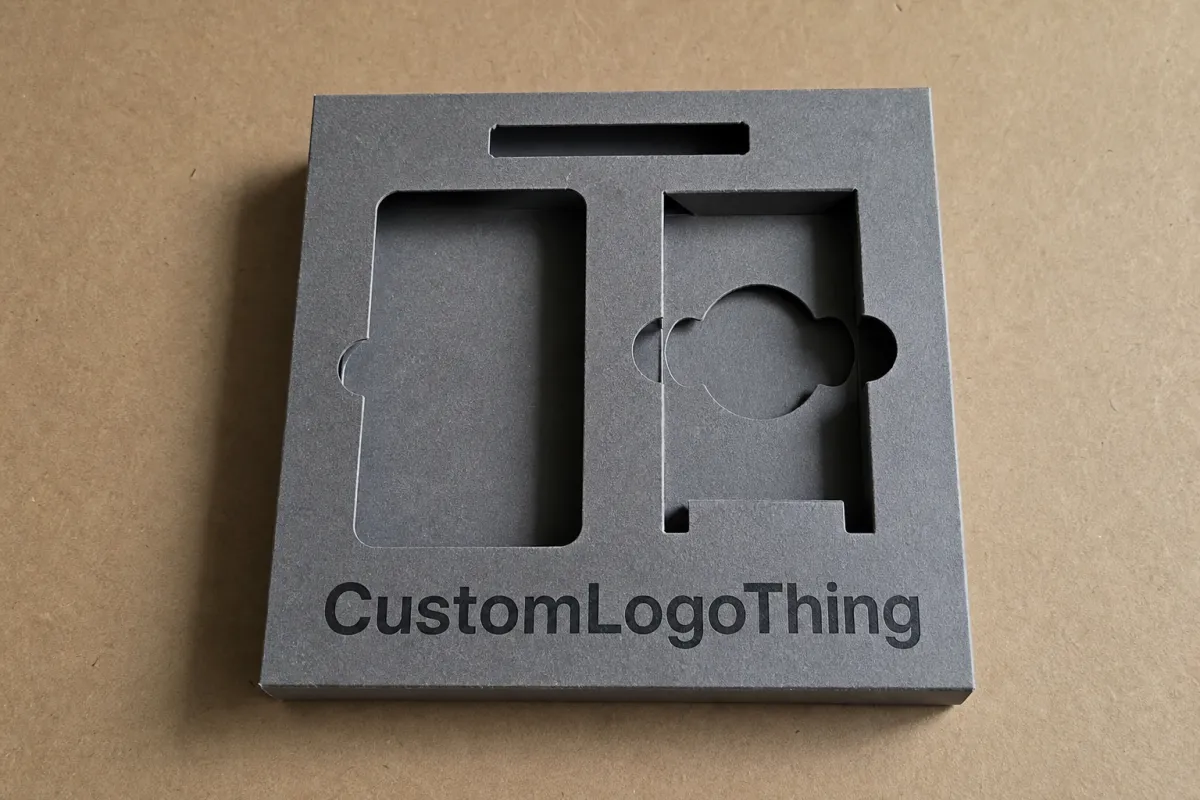
Most packaging failures are boring. That is exactly why they hurt. The outer carton looks fine on the porch, but inside the product has shifted, rubbed a wall, or cracked because the void space was never controlled. That is the job of Custom Die Cut inserts for boxes: lock each item into a defined cavity so it does not bounce, tilt, scrape, or collide during shipping.
Die cut inserts are precision-shaped interior components made from materials such as corrugated board, chipboard, foam, molded pulp, or specialty paperboard. Instead of loose fill, folded tissue, or a heroic amount of kraft paper, the product sits in a formed pocket that matches its footprint. Two things happen immediately. Movement drops. The opening experience stops looking improvised.
That matters across a long list of categories:
- Cosmetics kits where bottles, jars, droppers, and cards need to stay separated.
- Electronics where cords, chargers, and devices need clean compartmentalization.
- Candles where glass jars and lids need cushioning and a stable fit.
- Glassware where impact control matters more than empty space.
- Gift sets where presentation has to look premium the second the lid opens.
- Subscription boxes where repeat unboxing needs the same tidy layout every month.
- Premium retail packaging where the insert is part of the brand story, not just a safety measure.
From a packaging buyer’s point of view, the payoff is almost annoyingly practical. Fewer damaged shipments. Fewer customer service tickets. Fewer replacements. Less time spent packing orders that never quite sit right. A cleaner insert also improves shelf appeal, which matters if the box is displayed instead of just shipped. The box opens once, and that first look decides whether the product feels worth the price.
A damaged product costs you twice: once in freight and again in trust. The insert usually costs less than both problems combined.
If your packaging line already uses custom printed boxes or other branded packaging elements, the insert can reinforce that look without stealing attention. Sometimes it stays hidden. Sometimes it becomes part of the reveal. Either way, the structure needs to fit the product, the box, and the packing process. Pretty is nice. Stable is better.
How custom die cut inserts for boxes work
The idea is simple. Each cavity gets cut to the product’s footprint so the item sits snugly instead of floating around inside the box. The design work behind that simple idea has more moving parts than most teams expect. A decent insert starts with measurement, turns into a dieline, becomes a sample, then gets tested against the real product and the real box. That is the difference between packaging that looks good on a screen and packaging that survives a delivery truck.
Here is the usual workflow:
- Measure the product, including any cap, handle, label, protrusion, or base shape that affects fit.
- Confirm the outer box size and closure style so the insert does not fight the carton.
- Choose the insert material based on weight, fragility, presentation, and cost target.
- Build a dieline and prototype the first sample.
- Test the fit with the real product, not just a rendering.
- Revise the layout if the item shifts, binds, bows, or sits too high.
- Approve the final version and move to production.
Different materials solve different problems. Corrugated insert structures show up often in shipping because they add stiffness and absorb some abuse. Chipboard or paperboard tends to look cleaner and fits well in retail packaging. Foam works for delicate items or odd shapes, although it can raise sustainability questions depending on the program. Molded pulp often earns points for a more eco-minded feel and can be a smart option when the product shape is forgiving. Specialty board suits lighter items where the insert needs to look refined more than armored.
Protection and presentation are not the same thing, and good packaging design knows the difference. A foam cavity can protect a heavy glass component very well, but it may not match the look a luxury brand wants. A folded paperboard insert may look elegant, but if the product weighs too much it can crush or deform. The best design balances three things: fit, shipping strength, and packout speed. Ignore one, and the quote starts lying to you.
To make that more concrete, here is a practical comparison of common insert options:
| Material | Typical Use | Protection Level | Presentation | Tradeoff |
|---|---|---|---|---|
| Corrugated board | Shipping kits, heavier items, ecommerce mailers | Medium to high | Clean but utilitarian | Good value, but bulkier than paperboard |
| Chipboard / paperboard | Cosmetics, small gift sets, retail packaging | Low to medium | Sharp and premium | Needs careful design for heavier products |
| Foam | Fragile electronics, glass parts, precision items | High | Functional | Strong protection, but less brand-friendly for some markets |
| Molded pulp | Eco-conscious shipping programs, protective trays | Medium | Natural, simple, recycled look | Good for sustainability, but not ideal for every shape |
| Specialty board | Light luxury items, display-ready gift packaging | Low to medium | Very polished | Best for lighter products and tighter specs |
If your program needs more formal documentation, a supplier should also explain the board caliper, flute profile, foam density, or mold wall thickness. Those details sound dull until an insert collapses in transit. Then they suddenly matter a lot.
Key factors that affect fit, protection, and unboxing
Product dimensions are only the starting point. A spec sheet that lists length, width, and height can still produce a bad insert if it ignores coating thickness, label buildup, cap diameter, or the way the item gets packed by hand. In practice, you need a little clearance for insertion, but not so much that the product rattles. That gap is often tighter than people expect, especially with polished surfaces or painted parts that scuff if they keep touching the wall.
Weight changes the design fast. A lightweight lip balm is not the same problem as a glass perfume bottle or a cast-metal accessory. Heavier products need stronger walls, deeper pockets, more support points, or denser materials. Fragility matters too. If the item fails from vibration rather than impact, the design should control micro-movement, not just absorb a drop. That is where a good packaging designer earns the fee.
Box style changes everything as well. A mailer box with a tuck flap behaves differently from a rigid box with a lift-off lid or a folding carton packed flat and glued on the line. The insert has to work with the carton mechanics, not against them. If the lid bulges, the customer notices. If the insert blocks closure, the line crew notices first and complains second.
Branding plays a bigger role than some buyers expect. Inserts can be printed, color-matched, embossed, or kept neutral depending on the product experience you want. In a beauty kit, the interior may need the same polished tone as the outside. In a shipping box for replacement parts, the insert may disappear into the background because function matters more than theater. That is still package branding. It just does not shout.
Assembly is another cost driver that gets ignored in the quote stage. A design that needs slow folding, double-sided tape, or manual alignment can hurt throughput. If the pack line has to stop and babysit each cavity, the insert is not saving money. It is hiding labor in a prettier shape. Ask how the insert will be assembled, who will assemble it, and how long one finished unit takes to load on the line.
For brands focused on sustainability, it helps to check fiber source and recovery path early. If you want paper-based packaging with responsible sourcing, look at FSC certification standards at FSC. If you are validating shipping performance, ISTA testing protocols are worth reading too; the association publishes guidance for transport testing at ISTA. The point is not to become a test engineer. The point is to stop guessing.
Some practical fit checks save headaches later:
- Leave a realistic clearance for coated or wrapped products, often around 1-3 mm depending on the finish and pack method.
- Test the insert with the heaviest unit in the set, not the lightest one.
- Check whether the product can be removed cleanly without tearing labels, marring surfaces, or catching on folded edges.
- Confirm that the box still closes cleanly once all components are loaded.
- Verify that the insert still looks aligned after vibration, not just after one careful hand-packed sample.
That last one matters more than people think. A perfect insert that shifts out of place in transit is just a neat-looking failure.
Process and timeline: from sample to production run
The full process usually starts with discovery, not production. A buyer sends product dimensions, box dimensions, quantity, photos of the current packout, and a note about what the insert needs to do. Is it protecting? Displaying? Separating multiple items? Doing all three? The answer shapes the structure. A supplier who prices the job without that information is mostly guessing, even if the quote looks tidy.
After discovery, the supplier builds a sample or prototype. For simple structures, that can move in a few business days once the measurements are clear. More complex kits, multi-cavity layouts, or jobs with special finishing usually take longer. If the spec changes halfway through, the sample clock resets. That is not a factory problem. That is a specification problem.
A realistic timeline often looks like this:
- Quote stage: 1-3 business days if the product details are complete.
- Prototype sample: often 3-7 business days for straightforward board-based inserts.
- Revisions: another 1-5 business days depending on the complexity of the changes.
- Production: commonly 10-20 business days after approval, though the run size and material choice can push that shorter or longer.
- Shipping: depends on freight mode, carton count, and destination.
What slows the schedule? Unclear measurements. Product changes after sampling. Multiple SKUs that all need separate cavities. A late decision to add print. A late-stage change to box style. Or the classic move where someone says, "Can we just make it fit tighter?" after approval. Sure. For a price. And with time attached.
The fastest way to move a project forward is to send the right inputs on day one:
- A physical sample of the product whenever possible.
- A sample of the outer box, or at least a precise box spec.
- Target quantity and any likely repeat order volume.
- Photos of the current packout and how the product is loaded today.
- Notes on drop sensitivity, scratch sensitivity, or orientation requirements.
The approval process matters too. A buyer can review a digital mockup all day and still miss a fit issue that a physical sample would reveal in ten seconds. If the product has odd contours, glossy surfaces, or a tall center of gravity, the sample is not optional. It is the part of the process that prevents expensive optimism.
For companies building package branding around a premium reveal, the sample is where the interior experience gets judged honestly. Does the product sit centered? Does the lid open without snagging? Do the cavities look intentional, or did somebody just make a hole and hope for the best? These are tiny details, and they are the details customers remember.
Cost and pricing: what drives unit cost and MOQ
Cost comes down to a few predictable levers: material, size, cavity count, print, finishing, labor, and run length. The bigger the insert and the more complicated the layout, the more material and setup time you burn. Add printed branding, special coatings, or multiple fit revisions and the price climbs again. Nobody should be shocked by that, but plenty of quotes still pretend otherwise.
In general, simple paperboard or corrugated inserts can be economical in larger runs, while foam, molded pulp tooling, or highly detailed multi-piece structures push pricing up. Low quantities are where unit costs get rude. A small order still has to absorb design time, sample work, setup, and often manual assembly. Spread across fewer pieces, those fixed costs hit harder. That is why minimum order quantity matters. It is not a punishment. It is how manufacturing works.
For rough planning, here is a practical range many buyers use as a starting point. Exact pricing depends on the job, so treat this as a working frame, not a promise written in lipstick:
| Order Size | Simple Board Insert | More Complex Insert | Common Cost Drivers |
|---|---|---|---|
| 250-500 pcs | $0.60-$1.50 each | $1.20-$3.50 each | Setup, sample time, manual assembly, freight |
| 1,000-3,000 pcs | $0.25-$0.80 each | $0.70-$2.20 each | Material efficiency, die cost, print coverage |
| 5,000+ pcs | $0.12-$0.45 each | $0.35-$1.50 each | Run efficiency, cavity count, nesting layout, assembly speed |
These numbers move around depending on board grade, insert size, tooling, and whether the job needs special finishes. A high-coverage print job or a dense foam insert can cost more than the table suggests. A simple chipboard tray might land lower. The useful question is not "What is the cheapest insert?" The useful question is "What is the least expensive insert that still protects the product, fits the line, and looks right in the box?" Those are not the same thing.
MOQ is another area where buyers need to think in tradeoffs instead of wishful thinking. Yes, some materials and processes support small runs. No, that does not mean small runs are automatically efficient. A low-volume order can still make sense if the product is high-value, fragile, or used in a launch campaign where damage would be embarrassing. If the box contains a $90 item, spending an extra quarter on a better insert is usually easier to justify than absorbing refunds.
Ask quote providers a few direct questions:
- Does the quote include sample development and revisions?
- Is assembly included or separate?
- Does the price include freight, or is that another line item later?
- Are tooling, setup, and die charges one-time or recurring?
- What happens to unit price if the order doubles?
That last question matters because good packaging programs should scale. If the insert works in a 1,000-piece test run, you want a clear path to 5,000 or 10,000 without redesigning everything from scratch. That is where the best custom printed boxes and insert programs pay off. They stop being one-off projects and turn into repeatable systems.
Common mistakes when ordering custom die cut inserts for boxes
The first mistake is measuring only the product and ignoring the full packout stack-up. The total height of the item, the closure, the internal print, the protective sleeve, and any extra card or accessory all affect fit. If the cavity looks perfect on paper but the lid cannot close once the cable and card are added, the insert failed before production even started.
The second mistake is designing for ideal conditions instead of shipping reality. Boxes get dropped. They get stacked. They get slid across conveyor belts and tossed into vehicles by humans who are not paid to admire your packaging. If the insert only works when the box is set gently on a table, it is underbuilt. That is why test methods such as ISTA drop and vibration routines or ASTM shipping simulations are useful references when the product is sensitive.
The third mistake is picking the wrong material based on appearance alone. Foam may look too basic for a premium brand, but it may be the correct answer for a delicate object with a bad center of gravity. Paperboard may look elegant, but it may sag under weight. Molded pulp may be the right sustainability answer, but not every shape will sit cleanly in it. Material choice should follow product behavior first and brand feel second. Reverse that order, and you usually pay for it later.
The fourth mistake is forgetting labor. A design that needs too many folds, too much tape, or too much hand positioning can hurt throughput. That problem does not show up clearly in a quote unless someone asks how long one packed unit takes to assemble. A slower pack line means higher labor cost and more mistakes. Nothing premium about that.
The fifth mistake is skipping a physical sample or a real drop test. Digital proofs are useful, but they do not simulate the weight of an actual bottle or the way a product settles after a three-foot drop. If a supplier says the first proof is enough, ask what happened to the sample stage. A good vendor should want the same thing you want: a fit that survives transit, not just a file that looks nice on screen.
Some red flags to watch for during ordering:
- The supplier refuses to ask about product weight or carton style.
- The quote does not mention sample approval.
- Everything is "standard" even though the product shape is clearly not standard.
- The insert is priced without any reference to assembly labor.
- No one can explain how the design performs in transit, only how it looks in a mockup.
That does not mean every job needs a complicated engineering process. It means the simple jobs should still be checked properly. A small mistake in a cavity dimension can create a big problem once you produce thousands of pieces. Packaging is full of those fake savings.
Expert tips and next steps for a better spec
If you want a cleaner result, start with one hero SKU instead of trying to design for every product at once. That keeps the fit tight and the quote readable. Multi-product kits can be done well, but the first layout should be built around the item that sets the strictest requirement, usually the heaviest, tallest, or most fragile piece.
Send complete information the first time. A supplier can price the real job if you give product dimensions, weight, box size, target quantity, and photos of the current packing method. Better still, send a sample product and a sample box. That lets the designer check clearance, cavity depth, and closure behavior instead of building around guesses. Packaging drawings are helpful. Real samples are better.
Ask for a prototype and test it with the exact weight, closure method, and shipping route you actually use. If the box goes through parcel shipping, a parcel test matters. If it is handled mostly in wholesale pallets, pallet pressure and stacking matter more. If the product has a glossy surface, scratch tests matter. If the item is glass, impact control matters. This sounds obvious until someone ships a perfectly fitting insert that fails in the first transfer loop because the test was too polite.
Compare quotes on the same basis. Material, setup, sample approval, assembly, and freight should all be visible before you decide. If one quote looks dramatically cheaper, check what it left out. The missing line item is often where the surprise lives. A straightforward proposal that lists every cost is usually more useful than a bargain quote that shows up with extra charges later.
Here is a simple spec checklist you can use before requesting custom die cut inserts for boxes:
- Product dimensions, weight, and any fragile or protruding features.
- Outer box dimensions and box style.
- Number of items per box and how they should be arranged.
- Desired look: hidden support, visible insert, or premium reveal.
- Quantity range and likely repeat order volume.
- Shipping method, drop risk, and whether the item needs formal testing.
If you are coordinating with a packaging partner, keep the brief simple and direct. One good sample can answer more questions than a dozen vague emails. And if you are already comparing outer cartons, printed sleeves, and interior structures, look through our custom printed boxes and insert options to keep the whole system aligned instead of piecing it together later. A coordinated pack usually costs less than a patchwork one.
For brands refining branded packaging, the smartest move is usually not to overbuild the insert. It is to design the right structure for the product, test it once, and scale only after the fit proves itself. That is how you get protection without wasting board, time, or money.
FAQ
What makes custom die cut inserts for boxes better than loose fill?
They hold the product in a fixed position, so items do not grind against each other or slam into the box walls. They also create a much cleaner presentation than paper fill, peanuts, or air pillows, which matters if the box is part of the brand experience rather than a plain shipping carton.
What do I need to request a quote for custom die cut inserts for boxes?
Send product dimensions, weight, box size, target quantity, and a photo or sample of the item being packed. Include whether the insert needs to protect, display, separate multiple items, or all three, because that changes the structure and the price.
How long does the process take for custom die cut inserts for boxes?
Prototype timing is often measured in days, but it depends on how quickly measurements, approvals, and revisions move. Production timing is usually longer and is affected by quantity, material availability, and whether the job needs tooling or special finishing.
Are custom die cut inserts for boxes expensive for small orders?
Small orders usually have a higher unit cost because setup and sample work get spread across fewer pieces. If the product is fragile or premium-priced, a small insert run can still pay for itself by reducing damage and reships.
Can custom die cut inserts for boxes be made for multiple products in one kit?
Yes, as long as each cavity is designed around the real item dimensions and the packing order makes sense on the line. Kits with several components often need tighter planning, because mixed weights and shapes can change how the insert should support each piece.
If you want a result that holds up in real shipping, start with one SKU, test the fit, and scale from there. That is how custom die cut inserts for boxes move from a nice idea to a packaging system that actually protects the product and makes the unboxing feel intentional.

