Buyer Fit Snapshot
| Best fit | Custom Recycled Shipping Labels Bulk projects where brand print, material claims, artwork control, MOQ, and repeat-order consistency need to be specified before quoting. |
|---|---|
| Quote inputs | Share finished size, material target, print colors, finish, packing count, annual reorder estimate, ship-to region, and any compliance wording. |
| Proofing check | Approve dieline scale, logo placement, barcode or warning zones, color tolerance, closure strength, and carton packing before bulk production. |
| Main risk | Vague material claims, crowded artwork, missing packing details, or unclear freight terms can make a low unit price expensive after revisions. |
Fast answer: Custom Recycled Shipping Labels Bulk: Specs & Pricing should be specified like a repeatable production item. The safest quote records material, print method, finish, artwork proof, packing count, and reorder notes in one written spec.
Production checks before approval
Compare the actual filled-product size with the drawing, then confirm tolerance on folds, seals, hang holes, label areas, and retail display edges. Reserve space for logos, QR codes, warning copy, and material claims before decorative graphics fill the panel.
Quote comparison points
Review material grade, print process, finish, sampling route, tooling charges, carton quantity, and freight assumptions side by side. A quote is only useful when the supplier can repeat the same color, closure quality, and packing count on the next order.
Custom Recycled Shipping Labels Bulk: Specs & Pricing
Brands that have already moved cartons and mailers to recycled content can still leave a gap at the last step of the shipment. Custom Recycled Shipping labels bulk closes that gap with a label that fits recycled-content goals, scans cleanly, and keeps fulfillment moving without constant reorders. The label is small. The effect is not. Across thousands of parcels, one material decision repeats again and again, which is why shipping labels now sit inside the branded packaging conversation instead of outside it.
Ecommerce teams live with two pressures at once: the package has to arrive intact and the line has to keep moving. A recycled label stock can support package branding, fit with product packaging standards, and still run on the printer already sitting on the packing table. The real question is not whether recycled labels exist. The real question is which build gives the best mix of price, durability, and throughput for the way the operation actually ships.
Why Bulk Recycled Labels Cut Waste at Scale
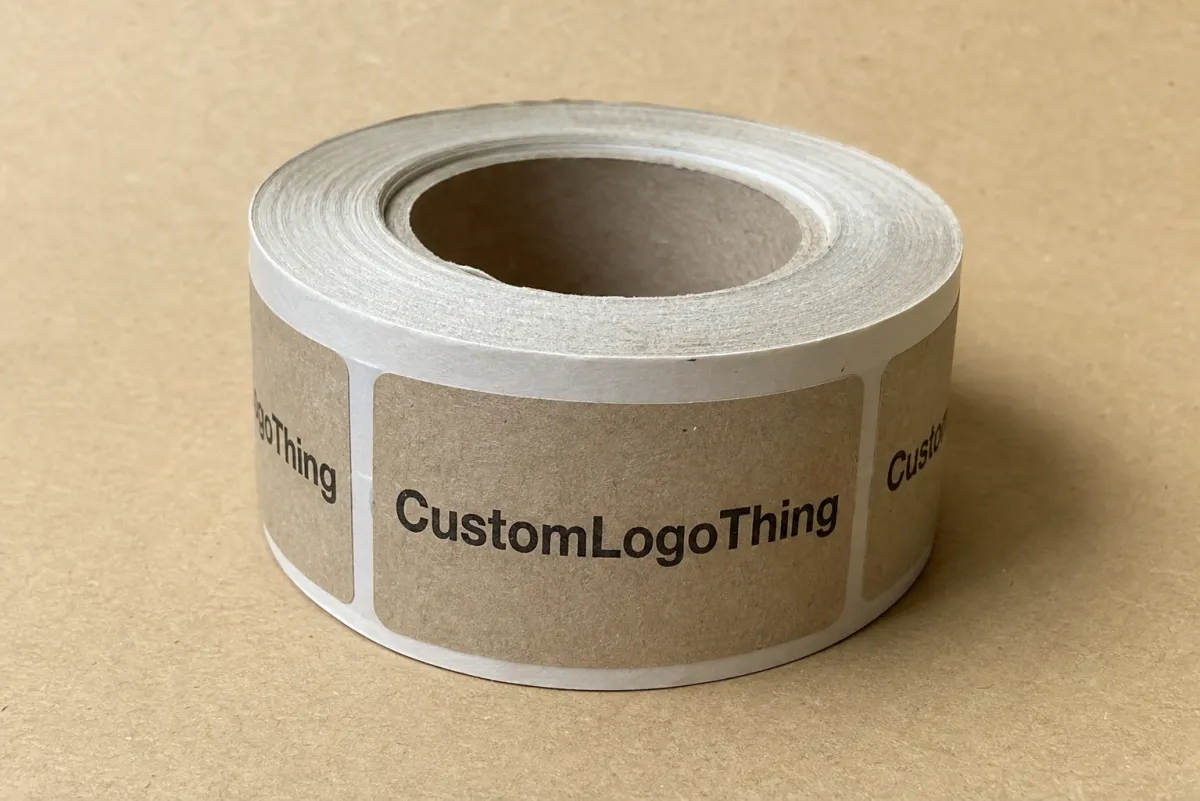
A common mistake is to make sustainability choices only where the material is visible. A brand upgrades to recycled corrugate, switches to recycled mailers, and then prints every shipment on a petroleum-heavy label stock because no one asked the label supplier the right question. That gap is tiny on one parcel. Multiply it across 10,000, 50,000, or 250,000 orders and the math changes fast.
Fulfillment managers usually see the numbers before they see the philosophy. If a label costs a fraction of a cent less in bulk, the savings can disappear into freight or get swallowed by rush fees. If it costs a little more but reduces emergency buying, protects the shipping line, and supports the sustainability story, the economics can still favor it. Bulk purchasing matters because the setup run gets spread across more units, which usually pulls the per-label price down enough to make recycled content practical rather than decorative.
Labor tells the same story in a different language. Emergency reorders create stop-start behavior in the warehouse. Someone notices the label roll count is low. Someone else chases a quote. A supervisor signs off on overnight freight. The pack line waits. That is not efficiency; it is interruption disguised as procurement. Buying custom recycled shipping labels bulk reduces that friction, which makes the choice an operations decision as much as an environmental one.
EPA recycling guidance is a useful reference point for brands that want upstream material choices to align with broader waste-reduction goals. The agency’s general recycling resources are a plain-language starting point for procurement teams that need a baseline: EPA recycling resources. Buyers usually need one simple test: does the label support the shipment without making the package harder to process, harder to scan, or harder to defend in a sustainability review?
"If your shipping team is reordering labels every week, the problem is usually not the label alone. It is the cost of disruption. Bulk recycled labels reduce waste and churn at the same time."
What Custom Recycled Shipping Labels Bulk Includes
Most buyers start by asking for a shipping label, but the build can vary more than people expect. A custom order may come in rolls, sheets, or fanfold stacks. Rolls are the standard choice for high-speed packing stations, automatic dispensers, and thermal printers. Sheets tend to work better for smaller teams, kitting stations, or mixed-use environments where labels are applied by hand. Fanfold formats help when the packing line needs a steady feed and less downtime for roll changes.
Customization reaches beyond a logo. Custom recycled shipping labels bulk can include branded headers, return instructions, barcodes, QR codes, order numbers, variable data, SKU references, promotional copy, and compliance text. That matters because the shipping label often becomes a brand touchpoint. If your team already invests in branded packaging, custom printed boxes, or Custom Poly Mailers, the label should reinforce the same visual system rather than look like a generic carrier form.
Recycled stock needs a clear definition. A recycled facestock means the paper layer contains recycled fiber. Post-consumer recycled content means the fiber has already been used by consumers or businesses and returned through the waste stream before becoming paper again. Those claims are not identical. A label described as recycled may still contain a mix of recycled and virgin fiber, and the liner may be a different material entirely. That is not automatically a problem, but buyers should ask for the breakdown if a procurement policy requires a specific percentage or a post-consumer claim.
Print method changes both cost and performance. Direct thermal works well for short-life shipping labels because it does not require a ribbon, but the print can fade if it sits in heat or strong light. Thermal transfer costs more per print because it needs a ribbon, yet it is often the better choice if the label must survive longer transit, moisture, or rough handling. Pressure-sensitive labels give the broadest flexibility for adhesive choice and substrate compatibility, especially when the application environment changes from one order stream to another.
Typical customization options include:
- Logo placement in a top band or corner block for stronger visibility.
- Brand colors that match retail packaging or website identity.
- Variable data such as order numbers, routing codes, or serial information.
- Barcodes and QR codes for scan-based picking and returns.
- Return instructions or customer service text to reduce support requests.
- Compliance notes for hazmat, temperature-sensitive, or special handling shipments.
If you are comparing a label program with broader packaging spend, it helps to look at the full system rather than one SKU. The same team choosing labels may also be buying Custom Shipping Boxes or standardizing on Custom Packaging Products, so the label spec should fit the wider package branding system. In a mature operation, that consistency reduces errors because the visual language stays stable from carton to mailer to label.
Specifications That Affect Performance on the Line
Labels fail for boring reasons. The stock is too thin. The adhesive is too weak. The liner curls. The roll does not match the printer. The barcode sits too close to the edge and the scanner sees glare. None of that is glamorous, and all of it costs money. A recycled label can perform very well, but only if the spec sheet is written for the real shipping environment instead of a mockup on a screen.
Start with facestock thickness. For shipping labels, many buyers specify a paper facestock in the range of 2 to 4 mil, or a comparable paper weight that balances print quality and durability. Too thin, and the label can tear when it is peeled from the liner. Too heavy, and it can become stiff, feed poorly, or curl at the edges in humid conditions. If the label travels through distribution centers, parcel hubs, and last-mile handoffs, that balance matters more than most buyers expect.
Adhesive choice matters just as much. A permanent acrylic adhesive is the most common option for shipping labels because it bonds well to corrugate, paper mailers, and many poly surfaces. Removable adhesives exist, but they are usually better for returnable containers, internal warehouse use, or temporary identifiers. Freezer-grade and cold-chain labels use a different adhesive profile altogether, because an ordinary label can lift when condensation forms or when a box comes out of cold storage. A recycled facestock does not change those physics.
Liner weight and release quality also affect line speed. A liner that is too light can buckle, while a liner that does not release cleanly can slow down a picker who is trying to move 200 boxes an hour. Recycled liners are available in some programs, but not every supplier offers them. That is worth asking early. A recycled facestock sitting on a virgin liner still reduces virgin paper use, but it is not the same as a fully recycled label system.
Size and layout deserve real attention. The standard 4 x 6 shipping label remains popular because it gives enough room for a barcode, destination data, service level, and a branded header without crowding the scan area. Smaller labels can work, but the design has to be disciplined. A cluttered label slows down the pack line because someone has to check placement. It also raises the odds that a barcode lands too close to a fold, seam, or glossy area and becomes harder to read.
For operations teams, compatibility checks should be treated as non-negotiable. Confirm these before placing the order:
- Printer type: direct thermal or thermal transfer.
- Core size: commonly 1 inch or 3 inch, depending on the printer.
- Roll diameter: must fit the printer housing and feed path.
- Unwind direction: affects how the label faces the printhead.
- Adhesive strength: match to corrugate, poly, cold storage, or moisture exposure.
- Application speed: manual peel-and-stick is not the same as automated application.
The best buyers test labels against actual transit stress. ISTA publishes packaging test procedures that many teams use as a reference when they want to think beyond the print sample and into real handling conditions: ISTA test resources. That perspective is useful because a label that looks fine on a desk can still fail after vibration, heat, dust, condensation, or pressure from stacked parcels.
One more practical point: barcode quiet zones are not optional. If the printed design crowds the barcode or places a logo too close to the scan field, the warehouse might save pennies on print coverage and lose dollars in manual intervention. The cheapest label is not the one with the lowest quote. It is the one that disappears into the shipping process without creating a rework loop.
Custom Recycled Shipping Labels Bulk Pricing and MOQ
Bulk pricing usually follows a simple pattern: higher quantity, lower unit cost. The details depend on print method, number of colors, adhesive choice, finish, and whether the job needs a custom die or a standard size. If a supplier quotes a very low unit price without spelling out setup, proofing, freight, or packaging, the number is incomplete. Buyers should compare landed cost, not just headline cost.
MOQ, or minimum order quantity, is often misunderstood. It is not only a supplier hurdle. It is a production planning tool. A press setup takes time, material needs to be staged, and a run has to be efficient enough to make sense. That is why MOQ may be 5,000, 10,000, or 25,000 pieces depending on size and process. Digital printing can lower the barrier for shorter runs, while flexographic or other high-efficiency methods can reward larger quantities with better pricing.
As a practical guide, these are common price bands for custom recycled shipping labels bulk, excluding tax and depending on artwork and material complexity:
| Order Type | Typical Use Case | Indicative Unit Price | Notes |
|---|---|---|---|
| Short-run digital print | New launch, pilot program, lower volume replenishment | $0.06-$0.18 | Best for variable artwork or tighter MOQ; setup is usually simpler. |
| Standard bulk run, 1-color or 2-color | Established ecommerce shipping program | $0.02-$0.07 | Often the best balance of price and consistency for steady order fulfillment. |
| Special adhesive or cold-chain build | Freezer, moisture, or long-transit applications | $0.04-$0.12 | Performance requirements can add material and qualification cost. |
| High-coverage branded label | Strong package branding or retail packaging tie-in | $0.05-$0.15 | More ink coverage, more proofing, and sometimes tighter registration control. |
Those ranges are not a promise. They are a realistic working frame for buying conversations. A larger roll count, simpler artwork, and a standard 4 x 6 size can bring cost down quickly. A custom size, a special adhesive, or a multi-panel design can push it back up. If you need a logo, a barcode, and service text, it is often cheaper to simplify the layout than to chase an extra color or decorative feature that does not improve the shipment.
There are also cost levers the buyer controls. Standardizing label size across SKUs can reduce waste. Reducing the number of artwork versions can cut proofing time. Aligning reorder volume with monthly shipment volume lowers the chance that you are paying rush freight because the label room ran dry. Teams already buying Custom Poly Mailers or other branded packaging often discover that the label line becomes easier to manage once the formats are standardized.
One practical rule holds up well: ask for a quote that separates material, print, packaging, proofing, freight, and rush service. If a supplier cannot break down those items, comparison gets messy. A quote that looks cheaper can turn expensive once the freight and packaging line items are added back in. Procurement teams already know this; the label program should be held to the same standard as any other packaging component.
Process and Timeline: From Proof to Delivery
A clean ordering process saves more money than a small unit discount. The fastest programs start with a complete spec sheet: size, quantity, printer type, adhesive, core size, unwind direction, artwork, and whether the label will be used for direct thermal or thermal transfer printing. Missing one of those details can add days because the supplier has to ask follow-up questions, redraw the layout, or reissue a proof.
The usual order flow is straightforward. First, the buyer requests a quote with the shipment environment described clearly. Next, the supplier confirms stock, adhesive, and print method. Then the artwork proof is created. After approval, the order moves into production, packaging, and freight booking. Repeat orders move faster because the die, art files, and material choices are already established.
- Gather the specs: label size, roll or sheet format, printer model, and shipment conditions.
- Confirm the build: facestock, adhesive, liner, and any recycled-content requirements.
- Review the proof: check barcode placement, logo size, quiet zones, and copy accuracy.
- Approve production: once approved, the clock starts on manufacturing.
- Plan freight: standard shipping, split shipments, or rush delivery all affect timing.
Timeline depends on complexity. A repeat run with standard artwork can often move through production in about 7 to 12 business days after approval, then transit adds another few days depending on location. First-time custom jobs usually need more breathing room, especially if the supplier has to validate a new size, a special adhesive, or a unique print combination. Budget 2 to 4 weeks for a first custom order if you want a comfortable buffer instead of a scramble.
For operations teams, the right timing strategy is to reorder before the safety threshold is breached. That is not the same as "order when the box is empty." If weekly shipment volume is stable, set a reorder point that covers lead time plus a cushion for peak days. One week of extra demand can drain a label reserve faster than expected, especially in ecommerce shipping programs where promotions, weather, or product launches can change volume overnight.
A proof should also be treated as a functional document, not just a design file. Print size, barcode contrast, adhesive callouts, and roll orientation should all be checked before sign-off. A label that looks good in a PDF may still be wrong for a warehouse printer. That is why experienced buyers ask for a physical sample or production proof if the order is new. A quick check on the packing table is much cheaper than reprinting 20,000 labels after a scan issue shows up.
Why Choose Us for Sustainable Packaging Programs
Custom Logo Things is built for buyers who need labels to perform inside a real packaging system, not just on a sample sheet. That distinction matters. A supplier that only resells catalog stock can quote a price, but a manufacturing partner can help match the label to the printer, the shipping environment, the artwork, and the packaging line. That is a different level of support, and it is the one high-volume teams usually need.
Consistency is a major advantage. If your brand already uses a defined palette, a specific artwork hierarchy, and standardized package branding across product packaging, custom printed boxes, and mailers, the label should fit that system without creating more work for the warehouse. Stable specs also make future reorders easier. The more repeatable the build, the fewer surprises at proof stage and the fewer errors in replenishment.
Documentation matters too. Procurement teams often need a paper trail that explains recycled content, print specs, and reordering history. If a sustainability report or internal procurement review asks why a particular material was chosen, a clear spec sheet is easier to defend than a vague "eco-friendly" claim. Recycled content details, adhesive notes, and packaging records all help. If a buyer wants a chain-of-custody paper trail for fiber sourcing, FSC documentation can be part of that conversation even when the final application is a shipping label rather than a retail carton.
For teams comparing a managed supply program against cheap generic labels, the risk profile is very different. Generic labels can look attractive when the quote arrives. The problems tend to show up later: poor scan quality, adhesive failure on a humid route, inconsistent print color, or a roll that feeds badly in the printer. Each issue creates waste, but it also creates labor cost, and labor is often the most expensive part of the mistake. Fewer reprints mean less scrap and smoother order fulfillment.
That is why the best label programs are built around fit, not just price. Fit to the line. Fit to the storage conditions. Fit to the brand. Fit to the sustainability targets. When all four line up, custom recycled shipping labels bulk becomes more than a supply item. It becomes a clean, measurable part of the packaging program.
To build the right system, start with the label, then look at the rest of the packout. If you also need Custom Labels & Tags for product identification or internal routing, it is smarter to align those specs now than to manage mismatched formats later. Buyers who standardize early usually spend less time firefighting later.
Next Steps: Build Your Spec Sheet and Request a Quote
The fastest way to get a useful quote is to send a complete spec sheet. Include the label size, printer model, adhesive needs, annual volume, and any branding or barcode requirements. If the label needs to survive a cold room, a humid route, or extended transit time, say so plainly. Vague requests often come back with generic options that do not fit the operation.
If this is a first-time order, request a sample or proof before committing to the full run. A sample can reveal whether the label releases cleanly, prints sharply, and adheres the way your team expects. That small step can prevent a larger expense later. One mismatch in roll size or adhesive strength can create waste across an entire shipping cycle.
Then set a reorder point. For many teams, the right trigger is not the last carton in the storage cage. It is the point where remaining labels cover the next shipment window plus a cushion. That small adjustment keeps the program in stock without paying for expediting. High-volume ecommerce shipping teams usually benefit from a reorder discipline tied to weekly shipment counts, not to a guess.
If you are comparing suppliers, ask for landed cost, not just unit price. Make them show the freight, proof, packaging, and any special charges. Then approve the artwork only after the layout has been checked against the printer and the line conditions. That is the practical route to a label program that supports the sustainability message, protects speed, and keeps budget control intact.
For buyers building a broader supply plan, a wholesale arrangement can also help stabilize price and timing across multiple packaging SKUs. The same logic that makes labels easier to manage often applies to cartons, mailers, and other recurring items, which is why many teams pair label planning with Wholesale Programs to reduce disruption across the packaging schedule.
Are custom recycled shipping labels bulk recyclable after use?
The facestock may contain recycled content, but recyclability after use depends on the adhesive, liner, and whether the label has been applied to a carton. If end-of-life recycling matters, ask for material documentation and match the label to the recycling stream used for your shipping boxes. For most brands, the bigger win is reducing virgin material use at the source while keeping the label fully functional in transit.
What is the minimum order for custom recycled shipping labels bulk?
MOQ varies by size, print method, and material, but bulk runs are usually set to make the press setup and material yield efficient. Ask for tiered pricing so you can see the exact breakpoints between entry quantities and the next cost drop. If your volume is uncertain, start with a pilot quantity that covers one shipping cycle and then scale into a larger replenishment run.
Will recycled shipping label stock work with my thermal printer?
In most cases, yes, but compatibility depends on whether you use direct thermal or thermal transfer, plus the required ribbon and adhesive pairing. Check core size, roll diameter, unwind direction, and print darkness settings before placing the order. A spec review upfront is cheaper than replacing a full run of labels that do not scan or feed correctly.
How long does production take for custom recycled shipping labels bulk?
Lead time depends on proof approval, print complexity, and order quantity, so first-time custom jobs usually take longer than repeat orders. Budget additional time if you need special adhesives, variable data, or a new die size. The fastest path is to approve artwork quickly and keep the specs standard where possible.
Can I get water-resistant or freezer-grade recycled shipping labels?
Yes, but you need to specify the environment, because moisture, cold storage, and long transit conditions change the adhesive and facestock requirements. Freezer-grade performance usually needs a purpose-built adhesive, even when the label itself contains recycled content. Tell the supplier exactly how the package moves through your operation so the material can be matched to the real use case, and custom recycled shipping labels bulk can still meet the job without forcing a compromise on performance.

