Buyer Fit Snapshot
| Best fit | Custom Retail Bags MOQ projects where brand print, material claims, artwork control, MOQ, and repeat-order consistency need to be specified before quoting. |
|---|---|
| Quote inputs | Share finished size, material target, print colors, finish, packing count, annual reorder estimate, ship-to region, and any compliance wording. |
| Proofing check | Approve dieline scale, logo placement, barcode or warning zones, color tolerance, closure strength, and carton packing before bulk production. |
| Main risk | Vague material claims, crowded artwork, missing packing details, or unclear freight terms can make a low unit price expensive after revisions. |
Fast answer: Custom Retail Bags MOQ: Pricing, Specs, and Lead Time should be specified like a repeatable production item. The safest quote records material, print method, finish, artwork proof, packing count, and reorder notes in one written spec.
Production checks before approval
Compare the actual filled-product size with the drawing, then confirm tolerance on folds, seals, hang holes, label areas, and retail display edges. Reserve space for logos, QR codes, warning copy, and material claims before decorative graphics fill the panel.
Quote comparison points
Review material grade, print process, finish, sampling route, tooling charges, carton quantity, and freight assumptions side by side. A quote is only useful when the supplier can repeat the same color, closure quality, and packing count on the next order.
Custom retail bags MOQ is often the point where packaging budgets stop being theoretical and start becoming real. A quote can look tidy on paper, then setup charges, print plates, carton counts, and freight move the total in a different direction. Buyers see the unit price first; factories see the whole run.
That gap matters. A launch collection, a holiday campaign, or a new store opening does not need the smallest order a supplier can physically make. It needs the order size that fits sell-through speed, backroom space, and cash flow without forcing another reorder before the first stack is gone. A low minimum can be useful. It can also be a trap if the bags sit in storage longer than the merchandise they were meant to carry.
For retailers comparing packaging formats, the aim is simple: choose a bag that matches the product, supports the brand, and stays within a sensible landed cost. If you are evaluating bag builds alongside other Custom Packaging Products, the first advantage is knowing which specifications actually drive the quote before you ask for one.
Practical rule: the lowest quote is not always the lowest-cost purchase. A slightly higher MOQ on a standard bag often beats a tiny order on a custom size with heavy print and expensive freight.
Why custom retail bags MOQ changes the real quote
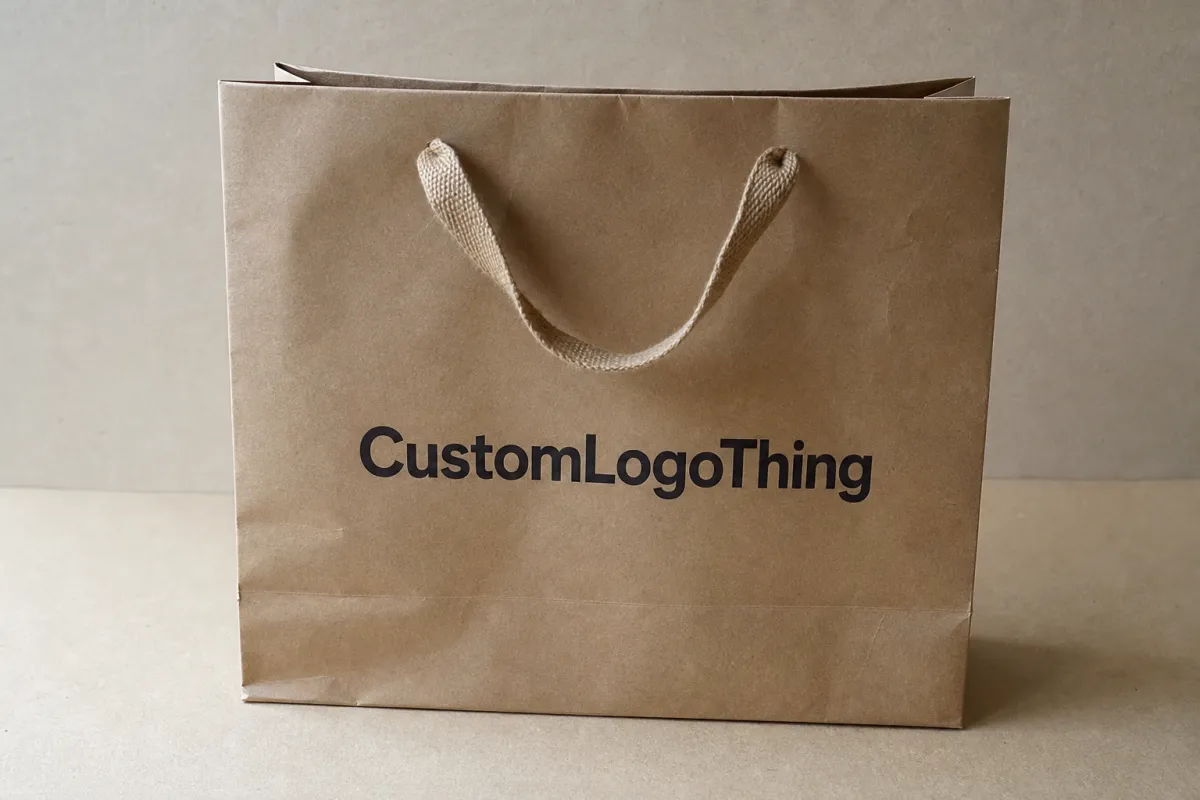
MOQ exists because packaging production is a setup business, not a vending machine. Every run needs material loading, machine adjustment, print alignment, cutting, inspection, packing, and shipping preparation. Those fixed costs are present whether the factory makes 500 bags or 50,000. Spread them across a small run, and the price per bag climbs quickly.
That is why buyers can be surprised by a quote that looks attractive at first glance. The bag itself may be cheap, but the order is not only the bag. A lower MOQ can make sense for a pop-up shop, a seasonal collection, or a test market where the design might change next quarter. It gives the buyer room to move without leaving behind obsolete packaging.
The opposite mistake is just as common. Teams often chase the smallest possible commitment, then pay for it later through repeat setup fees, higher freight per unit, and rushed replenishment. Two 500-piece orders are frequently more expensive than one 1,000-piece order, especially if the second batch needs fresh plates or expedited transport. Packaging math is unforgiving that way.
For a buyer, the right MOQ is the one that matches inventory turnover. A brand moving 300 bags a month should not order 10,000 pieces unless there is a very clear plan for storage and usage. A retailer moving 2,000 a month may need the opposite problem solved: enough quantity to avoid running out in the middle of a campaign. Custom retail bags MOQ is not just a production number. It is an operations choice.
Supplier behavior changes with order size too. Factories usually price standard sizes, common materials, and repeatable print setups more competitively because the work is easier to schedule and wastes less material. That is not marketing language. It is simply how a production line stays efficient enough to keep pricing realistic.
Choose the right custom retail bag style for your store
Different bag styles solve different retail problems. A boutique selling jewelry does not need the same build as a home goods store carrying boxed candles or ceramics. Good buyers begin with product weight, customer handling, and storage reality, then select the bag that supports those conditions instead of fighting them.
Paper Shopping Bags remain the default for many retail brands because they are easy to brand, easy to stack flat, and familiar in the customer’s hand. They suit apparel, cosmetics, gifts, and lightweight accessories. Laminated paper bags add surface protection and a more polished finish, which helps if the bag will be carried through rain, handed out at events, or reused several times.
Plastic retail bags still have a place in lower-cost distribution, giveaways, and fast-moving stores that need light packaging with decent carry capacity. Die-cut handle bags are compact and economical for promotions or events. Premium boutique bags, often with rope handles, rigid board, or specialty finishing, serve a different job: they make the packaging part of the brand experience.
Bag styles and where they fit
| Bag style | Typical MOQ | Common unit cost range | Best use case | Buying note |
|---|---|---|---|---|
| Standard paper shopping bag | 500 to 2,000 pcs | $0.18 to $0.45 | Apparel, gifts, lightweight retail | Usually the best balance of price, print options, and storage |
| Laminated paper bag | 1,000 to 3,000 pcs | $0.35 to $0.90 | Boutique retail, premium presentation | Higher finish cost, but better surface protection and perceived value |
| Die-cut handle bag | 1,000 to 5,000 pcs | $0.08 to $0.25 | Promotions, events, lightweight items | Simple construction keeps the minimum more approachable |
| Plastic retail bag | 2,000 to 10,000 pcs | $0.05 to $0.18 | High-volume giveaways, basic retail use | Low cost, though brand perception is more limited |
| Premium boutique bag | 1,000 to 3,000 pcs | $0.70 to $2.50 | Luxury retail, giftable packaging | Handle, board, and finish details can change the price quickly |
Those ranges are practical examples, not a promise. A narrow bag with one-color print can stay near the lower end. A larger bag with foil, matte lamination, thick board, and rope handles will sit much higher. That is normal. Buyers should expect finish level to matter as much as the bag body itself.
Handle choice changes the economics more than many teams expect. Twisted paper handles are economical and work well for everyday use. Cotton or rope handles feel more premium and are stronger in the hand, but they raise cost and can push MOQ upward. Die-cut handles are clean and efficient, though not always ideal for heavier loads or repeated reuse.
Gusset depth matters too. A deeper gusset gives room for boxed products and thicker merchandise, but it also uses more material and can alter how the bags stack in cartons. If the package needs to carry heavier items, reinforcement is worth discussing. If the bag mostly holds soft goods, a lighter structure may be enough.
Branding decisions affect the bill as well. Foil stamping, embossing, spot UV, and full-bleed artwork each add steps to the run. They can be justified when the bag has to function as both packaging and advertising, but they are not decorative freebies. The real question is whether the finish helps sell the product or only improves the mockup.
Specifications that affect custom retail bags MOQ and cost
The Quote for Custom retail bags MOQ comes from a chain of production decisions. Dimensions, material, handle type, print colors, and finishing all influence setup time, waste, and labor. Change enough of those variables, and the job becomes custom in the expensive sense, not just the branding sense.
Dimensions should be decided first. Standard sizes usually win on price because the factory already knows how to cut and run them efficiently. Fully custom dimensions may create more material waste or require a dedicated cutting setup. That does not make a custom size a mistake. It just means the deviation should solve a real product problem, not satisfy a mood board.
Material thickness is another major lever. For paper bags, gsm and board strength matter. A 170gsm bag for light retail use is not the same as a 250gsm bag with a rigid insert. For plastic options, film thickness and gauge directly affect durability and price. If the bag has to carry anything dense, thin material becomes a false economy.
What to lock before requesting a quote
- Dimensions: width, gusset, and height in clear units.
- Material: paper grade, laminate type, or film thickness.
- Handle: twisted paper, rope, die-cut, ribbon, or none.
- Print colors: one color, two colors, full color, inside print, or full-coverage artwork.
- Finish: matte, gloss, soft-touch, foil, embossing, or spot UV.
- Pack style: bulk packed, polywrapped, or carton count per case.
Print coverage Changes the Cost more than most buyers expect. A simple one-color logo on one panel costs less than artwork that wraps across both sides, the gusset, and the interior. Full-bleed artwork can look striking, especially for retail packaging that needs to stand out on the floor, but it increases ink use, setup complexity, and the chance of color variation between runs.
Structural details also matter. Bottom boards make bags feel more secure. Reinforced tops help the bag hold shape. Rope handles can improve the customer’s sense of quality, but they add cost. Matte or gloss lamination protects the print surface and changes the final look, yet it also affects MOQ because the job needs another production step.
A practical approach works better than guessing: define the use case before the decoration. If the bag needs to carry a boxed item, ask for the lightest spec that still survives store traffic. If it mainly carries soft goods, do not overbuild it just because the render looks polished. Overbuilding increases unit cost without creating more value.
The best packaging design is the one that passes the hand test and the transit test. It looks appropriate, it does not fail in front of the customer, and it does not cost more than the margin can support.
For businesses that care about responsible sourcing, paper bags can often be specified with FSC-certified stock. For shipping durability, especially if bags are packed into outer cartons for distribution, it helps to think about transit conditions and test the package the way it will actually be handled. The ISTA testing standards are a useful reference point for shipping and distribution performance, even if the finished item is a retail bag rather than a shipping box. For paper sourcing, the Forest Stewardship Council is a widely recognized certification body.
Custom retail bags MOQ, pricing, and quote breakdown
A proper quote should show where the money goes. If it does not, the buyer is guessing. For custom retail bags MOQ, the main cost buckets are raw material, printing, setup, finishing, packing, and shipping. Once those pieces are visible, comparing offers gets much easier. A single number by itself is never enough.
Raw material is the base substrate: paper grade, film thickness, board weight, and handle stock. Printing covers plates, inks, color matching, and the run itself. Setup includes machine time and operator prep. Finishing includes lamination, foil, embossing, or specialty construction. Packing involves bundle counts, cartons, and protective wrapping. Shipping depends on weight, volume, route, and whether the order moves by air, sea, or domestic truck.
A simple way to think about pricing tiers is this:
- Lower volume: 500 to 1,000 pieces usually has the highest unit cost because setup is spread thin.
- Mid volume: 1,000 to 3,000 pieces often brings the best balance of price and flexibility.
- Higher volume: 5,000 pieces and up usually lowers unit cost, while storage and cash tied up in inventory become more visible.
This is where quotes often become difficult to compare. One factory may price the bag well but leave out freight. Another may quote a different material weight than the one you expected. A third may not include the same carton count or protective packing. Suddenly the buyer is comparing offers that are not actually the same product.
That is why apples-to-apples comparison matters. Every quote should match the same size, the same material, the same handle, the same print count, the same finish, the same packing format, and the same delivery term. If one supplier gives FOB pricing and another gives DDP, the numbers are not comparable until logistics are normalized.
Common quote traps
- Missing dimensions: "medium bag" is not a specification.
- Unclear artwork: a logo file without print guidance can trigger rework.
- Vague finishing: gloss, matte, soft-touch, and foil are not interchangeable.
- Handle assumptions: the wrong handle type can add cost fast.
- Ignored freight: a low ex-factory number can become expensive after shipping.
Volume usually changes the economics in a predictable way. A 500-piece order may work for a small launch, but the unit cost can stay stubborn. A 1,000-piece order may reduce the price enough that total spend barely changes while the per-bag number improves. At 3,000 or 5,000 pieces, pricing often improves again, though the buyer has to be comfortable with the extra inventory.
There are times when a higher MOQ is cheaper overall. If 1,500 pieces unlock a better material buy, lower print waste, or a freight-efficient carton count, that can beat a 1,000-piece order with awkward packing and expensive shipping. Buyers should compare landed cost, not just the sticker price per bag. That is the figure that decides whether the order protects margin or quietly drains it.
For companies also buying labels, inserts, or Custom Packaging Products such as tissue, mailers, or printed cartons, it helps to plan the packaging mix together. That does not mean every item must be ordered in one purchase. It means the specs should be aligned early so the branding stays consistent and the schedule stays under control.
Production process and lead time after you approve the artwork
Once artwork is approved, the schedule usually moves in a familiar sequence: inquiry, spec review, quote, artwork proof, sample or pre-production approval, production, inspection, and shipping. Delays usually come from the details, not the order of operations.
A realistic timeline depends on style and finish. For a standard paper bag with simple print, production may take about 10 to 20 business days after proof approval. More complex builds with foil, lamination, or specialty handles can stretch into the 3 to 5 week range. Add shipping on top of that, and the arrival date depends heavily on whether you choose air, sea, or domestic transport.
Sampling and mass production are not the same thing. A proof or sample tells you whether the size, layout, and overall build are right. It does not always reflect the final production schedule or the carton packing format. Buyers who treat a proof as a finished shipment date tend to get disappointed. A proof is a checkpoint, not a promise that the finished stack appears tomorrow.
Delays usually come from three places: artwork revisions, material sourcing, and peak-season queue pressure. Artwork revisions sound minor until a logo is low resolution, a bleed is missing, or a color value is unclear. Material sourcing can slow things down if the bag uses a specific paper stock, laminate, or handle component. Peak-season queues are exactly what they sound like: too many orders and not enough line time.
How to keep lead time under control
- Send final artwork in the correct format the first time.
- Lock dimensions and material before requesting the proof.
- Keep the print count simple if the date matters.
- Approve the sample quickly so production can start.
- Ask whether the quoted lead time includes packing and export preparation.
Urgent orders are possible, but they are not magic. Faster turnaround usually means standard specs, simpler print, or a higher unit price to secure production priority. If a buyer needs to hit an opening date, the smart move is to say so early rather than hoping the factory can compress the calendar later.
Clean files save real time. Vector artwork, correct Pantone references where needed, and clear dieline placement all reduce back-and-forth. That matters more than many people want to admit. Packaging production is full of small decisions, and every avoidable revision slows the run.
For sustainability-focused buyers, it is reasonable to ask whether the material can be sourced from responsible forestry or recycled content. If the bag will move through domestic distribution, it can also help to review packaging and shipping recommendations from the EPA recycling guidance. Not every bag needs a sustainability badge on the front, but the material choice should match the brand promise.
Why choose us for custom retail bags MOQ orders
For buyers who need custom retail bags MOQ support, the real value is clarity. Clear specs, fast quoting, stable material supply, and repeatable production keep a retail packaging program from turning into a spreadsheet full of apologies.
Good execution starts with the quote. If the supplier can explain why one build is cheaper, where the MOQ comes from, and which spec changes will move the price, you are already ahead. That kind of clarity saves time and makes branded packaging decisions easier to defend internally.
Quality control matters too. The bag should be checked for print alignment, color consistency, handle strength, edge finish, and carton packing. If those controls are loose, you may save a little upfront and pay for it later in damaged product presentation or inconsistent packaging across stores.
Direct factory coordination reduces the back-and-forth that usually stretches timelines. Instead of passing messages through too many hands, the buyer gets cleaner answers on dimensions, proofs, and production timing. That matters a lot when the order is tied to a store opening, seasonal campaign, or event date.
Service should also include practical logistics support. DDP or FOB options, artwork checks, and help choosing the most efficient bag build all make a difference. A supplier who can suggest a lighter paper weight, a simpler finish, or a better carton count is not just selling. They are helping protect margin.
Transparency is the point. No inflated promises. No fake urgency. Just the numbers, options, and tradeoffs buyers need to make a solid ordering decision. That is how repeat business happens in packaging. The buyer knows what they are getting, and the supplier knows what the production line can realistically deliver.
Next steps for ordering custom retail bags MOQ
If you want an accurate quote, send the full picture instead of a partial one. The fastest path to a useful response is to provide the bag type, dimensions, material, handle, print colors, finishing, quantity, and target delivery date. That gives the factory enough information to price the order without guessing.
Send logo files and any artwork references too. If you have a brand standard for color, include it. If you care about feel, say so. If the bags will sit next to custom printed boxes or other product packaging, mention that as well so the style stays consistent across the retail lineup.
It is smart to request two or three spec options rather than one. Compare a standard paper bag, a laminated paper bag, and a premium rope-handle bag. That shows how MOQ and unit cost shift with each choice. Sometimes the mid-tier option is the sweet spot. Sometimes the lower-cost option is enough. The point is to see the numbers before making the call.
A good decision path is simple: choose the lowest spec that still matches the brand presentation, then scale quantity to reach the best landed cost you can comfortably store and sell through. That is the practical side of custom retail bags MOQ. Fancy is nice. Margin is better.
If you are ready to move, request a quote only after the specs are locked. That keeps the numbers clean and prevents the same details from being revisited three times. For custom retail bags MOQ planning, clarity beats optimism every time.
FAQ
What is a typical custom retail bags MOQ?
MOQ depends on bag style, size, print method, and finishing, but many custom runs start around 500 to 1,000 pieces per design. Premium finishes, unusual sizes, or multi-color printing usually push the MOQ higher. Standard sizes and simpler artwork are the easiest way to keep the minimum order lower.
How can I reduce custom retail bags MOQ without ruining the price?
Use a standard size, one print color, and a common material so the factory does not need extra setup. Limit specialty finishes unless they are tied to brand value or customer perception. Ask for a couple of spec options so you can see the cost difference before approving the order.
Does a lower custom retail bags MOQ increase unit cost?
Yes. Setup and prep costs get spread across fewer bags, so the unit price usually rises. The smallest order is not always the cheapest total buy once freight and repeat ordering are included. Compare landed cost, not just the sticker price per bag.
What details do you need for an accurate quote on custom retail bags MOQ?
Send dimensions, material, handle type, print colors, finishing, quantity, and delivery location. Include logo files or artwork so the factory can check print feasibility. If timing matters, state your target in plain language. Otherwise the quote will be theoretical, which is not useful.
How long does it take to produce custom retail bags after approval?
Artwork approval is often the fastest part if files are clean. Production lead time commonly runs a few weeks, then shipping adds its own clock depending on destination and method. Rush orders are possible, but they usually require simpler specs or a higher price.
Custom retail bags MOQ is not just a purchasing detail. It shapes the quote, the timeline, the shelf life of the design, and the final unit cost. Get the specs right, and the order works for the business instead of against it.
The clearest takeaway is this: lock dimensions, material, handle, print, finish, carton count, and delivery term before you request pricing, then compare landed cost across two or three realistic spec options. That gives you a number you can actually use, not just a quote that looks good in an email.

