Buyer Fit Snapshot
| Best fit | Custom Retail Box Inserts projects where brand print, material claims, artwork control, MOQ, and repeat-order consistency need to be specified before quoting. |
|---|---|
| Quote inputs | Share finished size, material target, print colors, finish, packing count, annual reorder estimate, ship-to region, and any compliance wording. |
| Proofing check | Approve dieline scale, logo placement, barcode or warning zones, color tolerance, closure strength, and carton packing before bulk production. |
| Main risk | Vague material claims, crowded artwork, missing packing details, or unclear freight terms can make a low unit price expensive after revisions. |
Fast answer: Custom Retail Box Inserts: Board, Finish, Dieline, and Unit Cost should be specified like a repeatable production item. The safest quote records material, print method, finish, artwork proof, packing count, and reorder notes in one written spec.
Production checks before approval
Compare the actual filled-product size with the drawing, then confirm tolerance on folds, seals, hang holes, label areas, and retail display edges. Reserve space for logos, QR codes, warning copy, and material claims before decorative graphics fill the panel.
Quote comparison points
Review material grade, print process, finish, sampling route, tooling charges, carton quantity, and freight assumptions side by side. A quote is only useful when the supplier can repeat the same color, closure quality, and packing count on the next order.
Custom Retail Box Inserts: Design, Cost, and Fit Basics
Custom retail box inserts can make a product feel engineered or careless in a single second. A premium serum, a phone accessory, or a kitchen gadget can look sharp on the shelf and still arrive looking cheap if the insert lets it rattle around. That first impression starts before the customer even lifts the product out of the carton.
For most brands, custom retail box inserts do three jobs at once: holding the product, controlling the reveal, and reducing damage. That mix affects retail packaging, shipping cost, and the way the customer judges the whole box before the product even comes out. If you are comparing options, the right place to start is usually a full view of your Custom Packaging Products, not just the outer carton.
Custom Retail Box Inserts: What They Are and Why They Matter
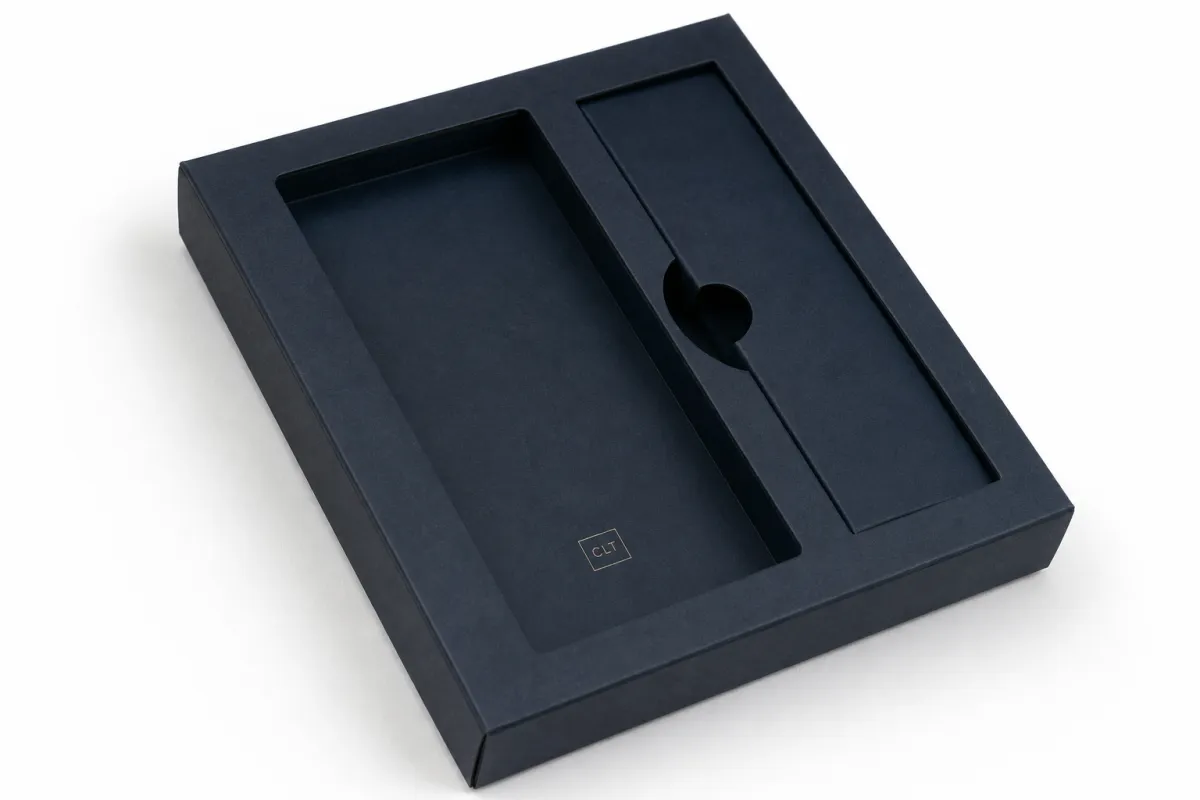
Custom retail box inserts are the interior components that hold a product in place inside a carton, sleeve, drawer box, or folding box. They can be folded paperboard, scored corrugated, molded pulp, foam, or hybrid builds. The point is simple: stop movement, improve presentation, and keep the product from arriving in pieces.
That sounds obvious, but a lot of packaging gets designed as if the outer box is the whole story. It is not. The outer structure can look expensive and still fail if the product slides, tilts, or lands with too much pressure on one corner. In practice, custom retail box inserts are where package branding stops being decoration and starts becoming function.
From a packaging buyer's point of view, custom retail box inserts usually pay for themselves in fewer returns, fewer complaints, and fewer awkward unboxing moments. A customer who opens a box and sees a product floating around in a random pocket of air does not think, "nice efficiency." They think somebody cut corners. That reaction is expensive.
Good retail packaging also needs to translate the brand. A clean cavity, a lift tab, a printed face, or a well-placed finger notch can make the product feel intentional. Custom retail box inserts do not need to shout. They just need to make the product look like it belongs there.
There is a practical side too. For fragile items, custom retail box inserts reduce abrasion, protect edges, and limit stress on seals, caps, or display screens. For heavier products, they keep the load centered so the box does not deform during handling. For bundle sets, they keep every component visible and easy to count during packing. That is how product packaging stops being a guessing game.
A beautiful box with a sloppy insert is still sloppy. Customers notice movement before they notice print.
I've watched a carefully printed carton lose its premium feel because the inner tray was a little too loose, and the product kept shifting every time the box moved. That kind of thing is cheap to miss and expensive to fix. Once you see it, you do not forget it.
Brands that care about branded packaging usually learn this the hard way. The box can have a decent laminate, good color control, and a polished logo, but if the insert is loose or awkward, the whole thing feels unfinished. Custom retail box inserts are the difference between "good enough" and something that feels planned from the first touch.
If you are building Custom Printed Boxes for retail shelves, the insert matters even more because presentation and protection are happening at the same time. Shelf appeal, transit durability, and packout speed are all tied to one internal structure. That is why custom retail box inserts should be treated as part of the packaging design, not an afterthought.
How Custom Retail Box Inserts Work in Real Packaging
At the simplest level, custom retail box inserts stabilize the product. They reduce empty space, create contact points where needed, and define how the product exits the box. That exit matters more than most teams expect. If the customer has to wrestle the product out, or if the item snaps back into the cavity, the insert is working against the experience instead of helping it.
Geometry is the real issue. Tabs, folds, cutouts, pockets, and friction locks have to match the product, not just the carton. A sleek insert that looks good on a PDF can be useless if it depends on a tight fit that collapses after the first run or jams the packing line. Custom retail box inserts should match the product's weight, surface finish, and center of gravity first. Pretty graphics come second.
Paperboard works well for lighter items, gift sets, cosmetics, and accessories that need a crisp look. Corrugated inserts make more sense when the product is heavier, the box is larger, or the shipment needs more shock resistance. Molded pulp is useful when you want a structured, more sustainable feel with decent cushioning. Foam still has a place for delicate goods, but many retail teams avoid it unless the product is fragile, irregularly shaped, or expensive enough to justify the tradeoff.
In real packaging runs, custom retail box inserts affect the whole system, not just the interior. A well-designed cavity can reduce carton size by a few millimeters, which sounds minor until freight rates and pallet counts get involved. A tighter packout can also speed assembly because workers are not aligning loose product with loose paper and loose hopes. That is the part nobody wants to discuss in a branding meeting, yet it is where money leaks out.
For shipping performance, teams often test custom retail box inserts using drop and vibration checks based on ISTA testing methods or related ASTM procedures such as ASTM D5276 for drop testing. The exact method depends on the product and route, but the logic is consistent: if the package cannot survive a controlled test, it is not ready for real handling. Simple enough. Annoying, but simple.
When a team skips the test, the failure usually shows up in a messy way: a corner crush, a scuffed finish, or a tray that looks fine until the first parcel shipment bends it just enough to matter. That is why fit testing is not a formal extra. It is part of the job.
Custom Retail Box Inserts Cost and Pricing Factors
Custom retail box inserts are priced by material, size, complexity, quantity, and how much labor the design needs. There is no honest way around that. A flat paperboard insert with a simple die-cut cavity is a different animal from a multi-panel insert with locking tabs, print, coatings, and hand assembly.
For low-volume work, setup is what hurts. Die creation, blade setup, proofing, sampling, and approval time all get spread across fewer units. That is why custom retail box inserts can look cheap at first glance and still come out expensive once you account for tooling and freight. Higher volumes flatten the setup cost, so unit pricing usually improves as the run grows.
As a general range, simple paperboard custom retail box inserts might land around $0.12-$0.30 per unit at 5,000 pieces, depending on board thickness, cut complexity, and print coverage. Corrugated inserts often run about $0.18-$0.45 per unit at similar volume. Molded pulp may fall around $0.25-$0.70, while foam or highly engineered builds can run higher, especially if there is manual assembly. Those are working ranges, not promises. The shape of the product can swing the number fast.
Here is a practical comparison that buyers can actually use:
| Insert Material | Typical Use | Approx. Unit Cost at 5,000 | Setup Complexity | Notes |
|---|---|---|---|---|
| Paperboard | Light products, cosmetics, accessories, gift sets | $0.12-$0.30 | Low to moderate | Good for clean presentation and printed branding |
| Corrugated | Heavier retail goods, protective retail packaging | $0.18-$0.45 | Moderate | Stronger structure, useful for shipping stability |
| Molded pulp | Fragile or sustainability-focused product packaging | $0.25-$0.70 | Moderate to high | Good cushioning, more tooling and process control |
| Foam | Delicate electronics, premium inserts, awkward shapes | $0.30-$1.20 | Moderate to high | Strong protection, less attractive for some brands |
| Hybrid build | Mixed sets, premium branded packaging, unusual formats | $0.35-$1.50+ | High | Best fit when one material alone cannot do the job |
There are hidden costs too. Tooling, sample revisions, protective coatings, specialty inks, and foil or embossing on the insert face all add up. So does oversized freight, especially if the insert nests poorly and ships with too much dead space. Custom retail box inserts that look elegant in a mockup can become awkward in a carton if the supplier has to pack them flat, stack them loose, or ship them in odd bundles.
MOQ matters as well. A small run may be perfectly reasonable for a launch, but it will almost always carry a higher per-unit cost than a repeat order with predictable specs. If a supplier gives you one line item and hides the setup fee, sample fee, or freight line, that quote is not a real comparison. It is just a number with mascara on.
For buyers comparing packaging design options, ask for a quote that separates unit cost, tooling, samples, assembly, and freight. That way you can compare custom retail box inserts on the same basis as other Custom Packaging Products instead of guessing where the money went. A cheap quote that leaves out half the bill is not a deal. It is a future headache.
One more thing: print coverage can matter even when the insert is inside the box. Heavy solids, multiple colors, and tight registration increase waste and setup pressure. If the insert does not need a full-bleed image, do not force it. A cleaner structure with a restrained print layer often gives better retail packaging and a lower unit price. Fancy is not a business model.
Production Process and Timeline for Retail Box Inserts
The production path for custom retail box inserts usually starts with measurements, then moves to material recommendation, dieline creation, sample approval, and full run production. If the brief is clear, a simple paperboard insert can move fairly quickly. If the brief is vague, the project will wander. It always does.
Step one is product data. The supplier needs the exact product dimensions, weight, fragile points, finish sensitivity, and any accessories that must sit beside the main item. Then they need the carton interior size, not the outside box size. A lot of teams skip that distinction and then wonder why the insert fits like a bad joke.
Next comes structural design. The supplier should recommend a board grade or substrate, estimate cavity depth, and define how the product will load in and out of the insert. For custom retail box inserts, this is where the line between a functional build and a pretty disaster gets drawn. A well-built cavity can save assembly time and improve shelf presentation. A poorly built one just creates more manual handling.
Prototype timing depends on the format. Flat paperboard samples may come back in a few business days once the dieline is approved. More complex custom retail box inserts, especially molded pulp or parts that need tooling, can take longer. If the pack is being tested for launch, plan for at least one sample cycle, one fit check, and one correction round. If you do not leave room for revisions, the schedule will make the decision for you.
Typical production timing looks something like this:
- Brief and measurement review: 1-3 business days if the product data is complete.
- Dieline and structural proof: 2-5 business days for simpler custom retail box inserts.
- Physical sample or prototype: 3-7 business days for paperboard; longer for molded or engineered builds.
- Revisions and approval: 2-5 business days if the fit is close on the first attempt.
- Production: often 10-15 business days for straightforward inserts after approval, and 20-40 business days for more complex builds.
That is the healthy version. Delays usually come from one of four places: vague measurements, last-minute size changes, artwork that keeps changing, or a product team that forgot there are three other SKUs sharing the same line. Custom retail box inserts do not tolerate moving targets very well. Neither does the factory.
When sustainability matters, many buyers also ask for FSC-certified paper stock or board from responsible sources. The Forest Stewardship Council is the common reference point here, and it is worth checking whether the source material matches your brand claims. Nobody wants a "green" package built on fuzzy sourcing and vague certificates. That is not package branding. That is trouble with nicer typography.
Step-by-Step Guide to Ordering the Right Insert
The easiest way to buy custom retail box inserts without wasting time is to treat the process like a fit problem first and a design problem second. A nice-looking insert that does not hold the product is useless. A plain insert that protects, presents, and packs quickly is a win.
1. Measure the product first
Start with the product itself, not the carton. Measure height, width, depth, and any protruding parts that could press against the insert. If the item has a cap, lens, cord, screen, or fragile edge, mark it. Custom retail box inserts should support the real object, not the perfect cube you wish the object was.
Also record weight. A 120-gram accessory and a 900-gram device do not behave the same way in transit. The insert material thickness, cavity depth, and friction points all shift with weight. That sounds basic because it is basic. Yet this is where many packaging teams stumble.
2. Measure the carton interior second
The inside dimensions of the box determine how much room the insert has to breathe. If the carton is too tight, the insert will buckle or force the product into a bad position. If it is too loose, the product will move. For custom retail box inserts, the sweet spot is usually a fit that holds firmly without making assembly miserable.
If the product ships as a single unit, you can design closely around the object. If it ships in bundles, you need a little more tolerance and a more forgiving loading path. That is especially true for retail packaging that has to survive both shelf handling and parcel shipping.
3. Choose the format based on risk and presentation
Paperboard is a strong choice for lighter sets and premium-looking unboxing. Corrugated makes more sense when the item needs structural support. Molded pulp is a good middle ground for brands that want lower visual clutter and a more natural feel. Foam is usually reserved for fragile or high-value items where protection outranks everything else. Custom retail box inserts should follow the product risk, not whatever the team saw on a competitor's shelf last week.
If your branding goal is a sharp reveal, paperboard often works better because it prints well and folds cleanly. If your goal is shipping resilience, corrugated or molded pulp may be smarter. And if the product will be opened, closed, and reinserted by retailers or consumers, the insert should hold up to repeated handling. That is the part people forget during packaging design reviews.
4. Ask for a prototype before full production
Do not approve custom retail box inserts from a flat drawing alone if the product is odd-shaped, heavy, or fragile. Ask for a sample or prototype and test the fit in the actual box. Check product removal, shelf appearance, and whether the item stays put when the carton is tilted or lightly shaken. A five-minute test can save a thousand expensive headaches.
- Place the product in the insert and check for movement.
- Lift the box, tilt it, and listen for noise.
- Remove the product and confirm the customer can do it without damage.
- Repack it a few times to see whether the structure holds.
If the sample only works when the operator handles it just right, it is not ready. Production floors are not built on perfect behavior, and customers definitely are not. The insert has to work even when somebody is a little rushed.
5. Lock the spec before production starts
Once the fit is right, lock the material, coating, print finish, quantity, assembly method, and delivery window. The less room there is for late changes, the less likely the order is to drift. Custom retail box inserts are not the place for "we might tweak it later." Later is how costs creep and deadlines slip.
If the insert is part of a larger launch, ask the supplier how it interacts with the rest of the pack. Will it fit with your label, tray, closure, or outer custom printed boxes? Will it slow line speed? Will it change the shipping carton size? These questions sound boring until they become expensive. Then everybody suddenly remembers them.
Common Mistakes With Custom Retail Box Inserts
The most common mistake is measuring the carton and ignoring the product. That usually produces a loose fit, a noisy box, or an insert that pinches the item in the wrong place. Custom retail box inserts are supposed to control movement. If the item can shift two centimeters inside the cavity, the structure is already losing.
Another mistake is overdesign. Some teams add too many folds, too much print, or decorative cutouts that look clever in a mockup but create slow assembly and extra scrap. The better question is not, "Can we make it more elaborate?" It is, "Will this improve protection, presentation, or packout speed?" If the answer is no, stop decorating the structure like a wedding cake.
Skipping samples is a classic bad move, especially with delicate surfaces, tall bottles, odd shapes, or products with tight retail presentation standards. The file may look perfect. The physical pack may not. Custom retail box inserts can behave differently once board grain, compression, and manual handling enter the picture. That is why a sample is not a luxury. It is a filter for mistakes.
Operational issues cause just as much trouble as design errors. A product team may approve one SKU and forget there are three sizes. Or the insert may fit beautifully but take too long to assemble on the packing line. Or the chosen material may look clean but crush too easily under stacked cartons. In retail packaging, the best design is the one that survives operations.
There is also a sustainability mistake that shows up a lot: using a greener material without checking performance. FSC paperboard is useful, molded pulp can be excellent, and certain corrugated structures are very efficient. But "eco" is not a substitute for fit. A damaged product is not sustainable just because the insert was made from paper. Waste is waste.
If the product is part of a line, standardize the insert family where possible. That gives you more predictable quality control, simpler inventory, and fewer artwork headaches. Custom retail box inserts can be built as a modular system across sizes, which helps brands that need multiple SKUs without rebuilding everything from scratch each time. Smart packaging design usually looks boring on paper. That is often the point.
One more thing: do not ignore tolerances. Even a clean insert needs room for manufacturing variance, especially if the product has molded parts or coated surfaces. A 1-2 mm allowance can be the difference between a smooth fit and a stack of rejected samples. Custom retail box inserts reward boring precision. Guesswork does not.
Expert Tips and Next Steps for Better Inserts
If you want better custom retail box inserts, standardize what you can. Build a family of insert structures that can stretch across related products with minor changes in cavity size or fold lines. That keeps package branding more consistent and cuts the amount of new engineering you need for each launch.
Design for assembly reality, not just shelf appeal. The best insert is the one that gets packed correctly by real people on a real line. If the build takes too many steps, uses too many loose parts, or confuses fulfillment staff, the design is not finished. Good custom retail box inserts reduce labor instead of creating a new labor problem with nicer graphics.
Ask suppliers for unit-cost tiers, sample options, lead-time ranges, and tolerance notes before you approve anything. That sounds basic because it is. A supplier who can explain where the price moves, where the fit is risky, and how the material behaves is usually more useful than one who only sends a shiny mockup. You want answers, not theater.
From a purchasing angle, the smartest next step is usually simple: measure the product, gather the carton interior size, define the protection goal, and request a sample fit. Then test the pack with actual handling, not just a desk-level inspection. For many brands, custom retail box inserts become the point where the box finally starts doing real work instead of just looking polished.
If you are balancing speed, cost, and presentation, keep the structure clean. A disciplined insert, a sensible substrate, and a tight fit can improve retail packaging without turning the project into a science fair. Custom retail box inserts are one of the few packaging components where a small structural improvement can change the customer experience, the shipping result, and the brand perception all at once. That is worth doing properly.
How do I measure custom retail box inserts correctly?
Measure the product first, then the carton interior. Do not assume the outer box size tells you enough. Include fragile zones, protruding parts, and any area that should not press directly against the insert. Share the product weight too, because that affects board thickness, cavity depth, and how much support the insert needs.
What material is best for custom retail box inserts?
Paperboard is a strong choice for light products and premium presentation. Corrugated is better when the insert needs more structure or extra shipping protection. Molded pulp works well for fragile items or brands that want a lower-plastic option. Foam still has a place for delicate or irregular products, but it is not the only answer.
How much do custom retail box inserts usually cost?
Price depends on material, size, die complexity, print coverage, and quantity. Lower volumes usually carry a higher unit price because setup and tooling are spread across fewer pieces. Ask suppliers to separate unit cost, tooling, samples, and freight so you can compare quotes honestly.
What is the typical lead time for custom retail box inserts?
Simple paperboard runs can move fairly quickly once the dieline is approved. Sample revisions usually take the most time, especially if the fit is not locked in early. More complex builds, specialty materials, and molded formats need more planning, so give yourself a real buffer before launch.
Can custom retail box inserts improve unboxing without raising costs too much?
Yes, if the structure is simple and the material choice matches the product. A clean insert can improve presentation, reduce movement, and lower damage without adding much to the total packout cost. The cheapest-looking option is not always the cheapest once returns, breakage, and labor are counted.
The practical takeaway is this: start with the product, confirm the carton interior, test a sample in real handling, and lock the spec before production. If those four steps line up, custom retail box inserts usually do exactly what they are supposed to do, and they do it without drama.

