Buyer Fit Snapshot
| Best fit | Printed Poly Mailers for Cosmetics projects where brand print, material claims, artwork control, MOQ, and repeat-order consistency need to be specified before quoting. |
|---|---|
| Quote inputs | Share finished size, material target, print colors, finish, packing count, annual reorder estimate, ship-to region, and any compliance wording. |
| Proofing check | Approve dieline scale, logo placement, barcode or warning zones, color tolerance, closure strength, and carton packing before bulk production. |
| Main risk | Vague material claims, crowded artwork, missing packing details, or unclear freight terms can make a low unit price expensive after revisions. |
Fast answer: Printed Poly Mailers for Cosmetics: Design, Cost, and Fit should be specified like a repeatable production item. The safest quote records material, print method, finish, artwork proof, packing count, and reorder notes in one written spec.
Production checks before approval
Compare the actual filled-product size with the drawing, then confirm tolerance on folds, seals, hang holes, label areas, and retail display edges. Reserve space for logos, QR codes, warning copy, and material claims before decorative graphics fill the panel.
Quote comparison points
Review material grade, print process, finish, sampling route, tooling charges, carton quantity, and freight assumptions side by side. A quote is only useful when the supplier can repeat the same color, closure quality, and packing count on the next order.
Printed Poly Mailers for Cosmetics: Design, Cost, and Fit
A cosmetic return is often caused by a scuffed pouch or crushed corner, not a failed formula. That is why Printed Poly Mailers for cosmetics matter more than many brands expect: the outer bag is the first proof that the order was packed with care, and it can shape the customer’s opinion before the product is even opened. A mailer that arrives clean, correctly sized, and true to the brand makes even a modest shipment feel intentional, which is a surprisingly big part of the experience.
For a lot of beauty sellers, Printed Poly Mailers for cosmetics sit in a useful middle ground between plain shipping supply and brand statement. They are light, moisture-resistant, easy to store, and visible the second they land on a doorstep, so they fit sample kits, sheet masks, lip gloss sets, skincare accessories, subscription items, and other soft or lightly protected goods. A well-made mailer can carry both the product and the brand mood without adding much weight to the parcel, and that balance is exactly why teams keep coming back to it.
The catch is simple: they are not a cure-all. If the contents are glass, loose powder, or a fragile kit with hard corners, the mailer should be treated as the outer shell, not the only defense. Used well, Printed Poly Mailers for cosmetics can balance protection, branding, and shipping efficiency in a way that feels practical rather than flashy. That is not a bad thing at all; in fulfillment, practical usually wins.
Printed Poly Mailers for Cosmetics: Why They Stand Out
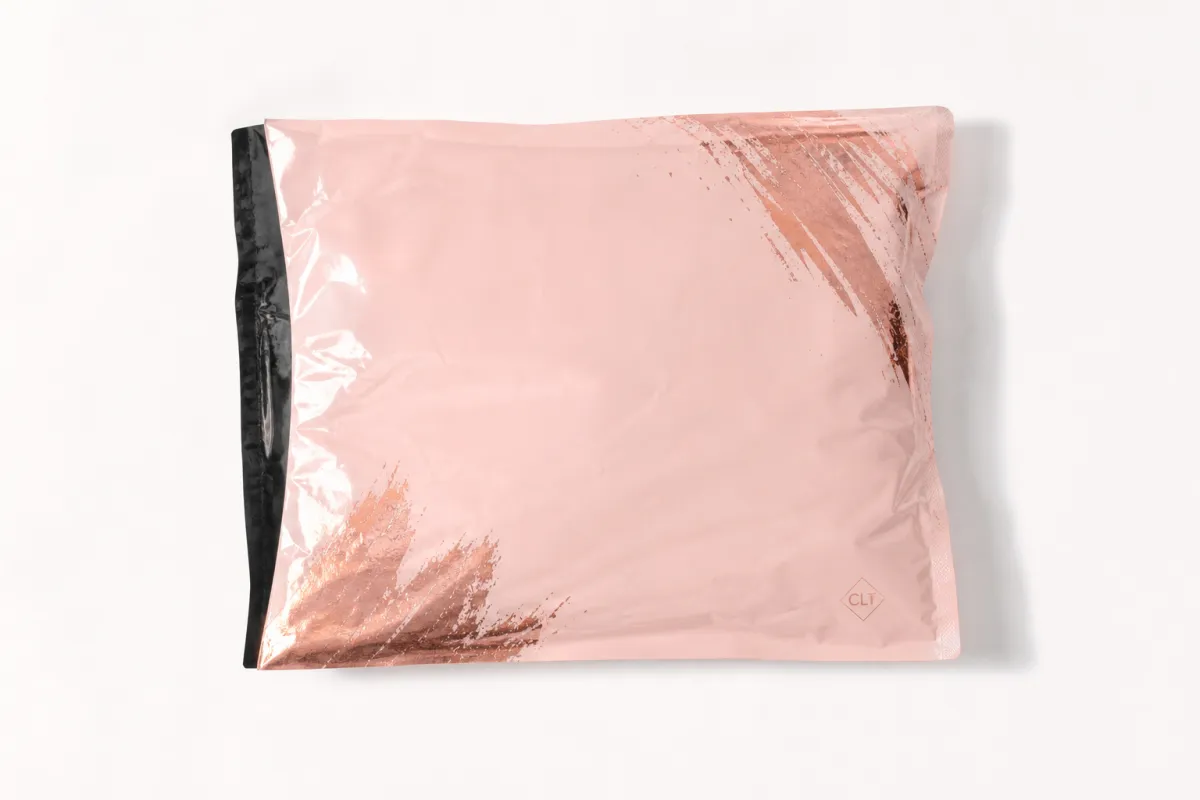
Most people think about the product formula first and the shipping bag last, but in real fulfillment work the outer package is part of the product story. printed poly mailers for cosmetics give you a branded surface before the box is opened, which means the customer starts forming an opinion from the outside in. A clean print, a crisp seal, and a mailer sized correctly for the packed item can make a small order feel deliberate rather than thrown together.
There is also a plain operational reason they stand out. printed poly mailers for cosmetics are built from polyethylene film, so they keep weight low, resist moisture, and handle light abrasion better than many paper-based alternatives during parcel sorting. From a packaging buyer’s point of view, that matters because shipping cost is tied to weight and dimensional efficiency, and cosmetic brands often want presentation without adding a heavy carton to every order. A lighter shipper also gives warehouse teams less to manage on crowded packing days, which is the kind of small relief that adds up fast.
Here is where they fit best:
- Sample kits and discovery sets with flat inserts
- Sheet masks, pouches, sachet bundles, and soft accessories
- Lip gloss, mascara, brushes, and non-fragile skincare items
- Subscription orders that need a clean branded outer layer
- Retail fulfillment for items already protected in an inner carton or sleeve
There is a boundary, though, and it is worth drawing it early. printed poly mailers for cosmetics are excellent for moisture resistance, low shipping weight, and a polished first impression, but they do not replace cushioning for glass, rigid compacts, or loose formulas that can crack, leak, or shift under pressure. A small inner box, tissue wrap, or corrugated insert can be the difference between a good arrival and a return. I have seen otherwise solid launches stumble because the outer mailer was chosen for appearance first and product behavior second, and that mismatch is always avoidable.
A strong mailer protects the presentation before it ever protects the product.
That is the main promise here: use printed poly mailers for cosmetics where they make the shipment lighter, easier to handle, and more brandable, then add an inner layer only where the product actually needs it. If you keep that logic straight, the package tends to work harder for you on both cost and perception. And honestly, that is the kind of packaging decision that saves headaches later.
Printed Poly Mailers for Cosmetics: How the Pack Works
At a basic level, a mailer is a formed polyethylene sleeve with sealed edges, a printable outer surface, and a pressure-sensitive closure strip that closes the flap after packing. In printed poly mailers for cosmetics, that outer surface is where the graphics live, so the brand message is visible from the moment the parcel leaves fulfillment and stays visible until the customer opens it. The structure is simple, which is part of the appeal: fewer parts, less assembly, and less wasted motion at the packing table.
The material itself does a few quiet jobs. The film helps block moisture, keeps dust off the contents, and stands up to light scuffing from conveyor belts, bins, and shared shipping containers. That is why printed poly mailers for cosmetics are often chosen for orders that do not need rigid crush protection but still need a package that looks intact after normal transit handling. Even when the mailer is handled several times in the parcel stream, the outer face can still look polished if the film and print are chosen well.
Print method changes both cost and flexibility. Flexographic printing is common for larger volumes because it keeps unit cost controlled once the job is set up, while digital or other short-run methods are often better when a brand wants faster artwork changes, multiple SKUs, or a smaller launch quantity. For many buyers comparing printed poly mailers for cosmetics, the real question is not whether the print looks good on press; it is whether the print method matches the order size and how often the artwork will change. A seasonal scent launch, for example, may justify a shorter run with a faster turnaround, while a stable hero product can carry a larger scheduled order.
Finish changes the feel more than some buyers expect. A gloss film gives the package a brighter, higher-shine beauty look, while a matte finish feels softer and a bit more premium in the hand. Opaque or block-out film is useful when privacy matters, and it also helps hide the contents better if the mailer is thin or if the product shape would otherwise show through. Small choices like these can affect the way a customer reads the package before they ever touch the item inside.
The customer experience matters just as much as the material. Seal placement, tear behavior, and opening experience all influence how the package is remembered, so printed poly mailers for cosmetics should be designed with the unboxing moment in mind, not just the shipping lane. If the opening is awkward, the adhesive is too aggressive, or the artwork is placed where it gets rubbed off, the package can feel cheaper than it really was. A well-planned opening feels calm and easy; a bad one makes the whole order seem less refined. That part is kinda invisible on a spec sheet, but very visible in the hands of the customer.
For a deeper look at the broader packaging mix, the Custom Packaging Products catalog is a useful place to compare formats, while the Custom Poly Mailers page is a good reference point if you want to evaluate sizes and material styles side by side.
Key Factors to Compare Before You Order
Size sounds obvious until you start packing real products. The right way to think about printed poly mailers for cosmetics is to measure the packed item, not just the product itself, and then add room for inserts, tissue, instruction cards, or a small protective sleeve. A lip gloss tube that measures 5 inches long can become a 7-inch packed unit once you add a card, a barcode label, and the seal margin the mailer needs to close correctly. A bag that looks roomy on a spec sheet can feel very tight once the packer adds the actual order components.
Thickness and durability deserve real attention too. In packaging language, you are looking at film gauge, puncture resistance, and seal strength. Thicker film is not automatically better, but if the shipment has corners, caps, or hard edges, a little extra body in the material can reduce stretch marks and edge wear. Many printed poly mailers for cosmetics fall into the lighter retail range, yet a slightly heavier spec is often the smarter choice for subscription packs or multi-item orders. The goal is not the thickest bag available; the goal is a film that suits the product shape and the shipping route.
Printing details matter more than the art mockup suggests. Before approving printed poly mailers for cosmetics, check the number of colors, ink coverage, barcode or address panel needs, and the distance between the artwork and the edges of the bag. Copy that sits too close to the seal or a side seam can get clipped or distorted, and once the job runs, that mistake repeats across the full order. A clear proof review saves money later, especially when a logo or tagline has narrow spacing that looks fine on screen but not on film.
Closure and tamper resistance
The adhesive strip is not just a convenience feature. A clean pressure-sensitive seal should close firmly without fighting the packer, and if the contents are high-value or small enough to invite tampering, a second security seal or tamper-evident design can be worth the modest extra cost. For printed poly mailers for cosmetics, that little detail helps the shipment feel more deliberate and less vulnerable. It also gives the customer a clearer sense that the parcel has not been opened and reclosed along the way, which is something buyers notice even if they never say it out loud.
Sustainability is part of the decision now, and it should be handled carefully rather than as a marketing afterthought. Some printed poly mailers for cosmetics are made from recyclable mono-material polyethylene structures, which can be a useful option when the local collection system accepts film plastics. For broader recycling guidance, the U.S. EPA offers useful consumer information at epa.gov/recycle. If your project includes paper insert cards or outer cartons, FSC-certified paper components can also support a cleaner sourcing story, even though the mailer itself is still a plastic film package. Brands that want to speak clearly about materials should match the label to the actual structure, not a wishful version of it.
That is the practical comparison: fit, film strength, print layout, seal performance, and disposal path. If you keep those five points on the table, printed poly mailers for cosmetics are much easier to specify, and the final package is less likely to surprise you during fulfillment.
Cost, Pricing, MOQ, and Unit Cost for Printed Poly Mailers
Price is driven by more than just size. With printed poly mailers for cosmetics, the biggest cost factors are the bag dimensions, film thickness, number of print colors, ink coverage, finish, custom features, and the quantity needed to make the production line economical. A small run with heavy coverage and a custom size will almost always cost more per unit than a larger run using a standard format and simpler artwork. The production method matters too, since certain print setups carry a fixed cost that gets spread over the whole order.
MOQ, or minimum order quantity, is where many cosmetic brands feel the tension first. Smaller launches may only need a few hundred or a few thousand mailers, while a growing brand can bring the unit cost down by ordering 5,000 pieces or more. For printed poly mailers for cosmetics, the lower MOQ usually comes with a higher unit price, because the setup work does not disappear just because the quantity is smaller. A test run may be the right choice for a new collection, yet it should be priced with the setup burden in mind so the budget stays realistic.
Tooling and setup can affect that first order in a real way. If the artwork needs plates, prepress work, or a custom size that is not already in stock, the initial cost rises before a single bag is packed. That is normal, but it is one reason smart buyers ask for a quote that includes exact dimensions, quantity, color count, seal type, and target ship date from the start. A vague request can make printed poly mailers for cosmetics look cheaper than they really are until the missing details get added. Clear specs keep the conversation honest and make supplier comparisons much easier.
| Option | Typical MOQ | Typical Unit Cost | Best For | Main Tradeoff |
|---|---|---|---|---|
| Stock-size digital print | 500-2,000 units | $0.30-$0.75 | Launches, test markets, many artwork changes | Higher per-unit cost |
| Custom flexographic print | 5,000+ units | $0.12-$0.28 | Ongoing fulfillment and repeat SKUs | More setup and plate cost |
| Premium film with matte or gloss finish | 3,000+ units | $0.18-$0.42 | Beauty brands focused on presentation | Finish adds cost and lead time |
| Recycled-content mono-PE structure | 5,000+ units | $0.16-$0.34 | Brands prioritizing recyclability messaging | Availability can vary by size and color |
Those numbers are not fixed, and they should not be treated like a quote, but they are a useful planning frame. In practice, printed poly mailers for cosmetics become cheapest per unit once the design is stable, the size is standardized, and the order quantity is large enough to spread setup costs across more pieces. A premium finish or a heavier film can be a sensible upgrade if it saves you from damage claims, reprints, or a poor first impression. There is a long-term cost to weak packaging that does not always show up in the first invoice.
There is a difference between cheap and smart. Saving a few cents on a flimsy bag that stretches, tears, or prints poorly can cost you more in customer complaints than a slightly better spec ever would. A clean quote for printed poly mailers for cosmetics should list the size, film gauge, print colors, adhesive style, quantity, and whether the order is for samples, retail shipping, or full fulfillment so you can compare suppliers on equal footing. Once those details are fixed, it becomes much easier to judge whether the bag is actually the right fit for the job.
If you want to compare packaging categories before you commit, the Custom Packaging Products page helps you see where mailers fit next to boxes, inserts, and other branded formats. That broader view can make printed poly mailers for cosmetics easier to justify because you can see the tradeoff between weight, protection, and visual impact more clearly.
Process and Timeline: From Artwork to Delivery
The cleanest projects begin with measurements and specs, not artwork. For printed poly mailers for cosmetics, the sequence usually starts with packed dimensions, then moves into mailer size selection, artwork placement, proof review, approval, and production scheduling. If the product dimensions are wrong at the start, every later step gets harder because the design is forced to fit a bag that was never a true match. A good launch plan begins with the item in hand, packed as it will ship, not with a design file alone.
Lead time changes with complexity. Existing sizes and simple artwork generally move faster, while custom sizes, specialty finishes, or unusual print coverage add time. As a rule of thumb, printed poly mailers for cosmetics with straightforward digital work can often be ready in 7-10 business days after proof approval, while custom flexographic jobs may sit closer to 12-18 business days, and a fully custom size can stretch longer if material needs to be sourced or set up specifically for the job. Shipping time after production should be added on top of that so the arrival date is not guessed at the last minute.
Proofing is where expensive mistakes get caught. A digital proof should be checked for logo placement, bleed, panel alignment, barcode readability, text size, and color expectations, but a sample or press proof is even better if the design is sensitive to exact brand color or if the artwork wraps close to the edge. Tiny shifts that look harmless on a screen can become visible across a full run of printed poly mailers for cosmetics, especially when the design uses clean lines, small type, or high-contrast blocks. Bright cosmetic branding tends to reveal alignment issues very quickly.
Shipping and receiving should be part of the timeline too. Production completion is not the same as usable inventory. The bags still need to be cartonized, shipped, received, and stored, so plan enough room for freight transit and warehouse intake before launch. A good schedule reduces rush fees, avoids last-minute changes, and gives your team time to check that printed poly mailers for cosmetics actually pack the product the way the proof suggested. This is the point where a good plan saves real labor later.
For transit testing, the standard to follow is not guesswork. The International Safe Transit Association has useful testing resources at ista.org, and a simple drop or vibration check can tell you far more than a polished mockup ever will. If the package will move through parcel networks, that test is a practical way to confirm that printed poly mailers for cosmetics survive real handling instead of only looking good on a desk. A few controlled tests can reveal whether a seal holds, a corner rubs, or a product shifts enough to matter.
A well-planned sequence keeps everyone honest. Measure, proof, test, approve, and only then scale. That order saves time later because the production run of printed poly mailers for cosmetics is much less likely to need a correction after the bags are already printed and on the floor.
Common Mistakes When Ordering Printed Poly Mailers for Cosmetics
The most common mistake is choosing a size that looks fine in a spec sheet but fails once the product, insert, and seal margin are all inside the bag. That is a classic problem with printed poly mailers for cosmetics: the contents are measured alone, not as a packed unit, and the result is a mailer that feels tight, awkward, or impossible to close cleanly. The error is small on paper and obvious at the packing bench.
Fragility gets underestimated all the time. A glass bottle, rigid compact, or layered kit can survive a bench test and still fail in parcel transit if there is no inner box or cushioning. For printed poly mailers for cosmetics, the mailer should not be treated as the only line of defense for hard, brittle, or leak-prone products. A soft outer bag is no substitute for structure inside the pack when the item needs true crush protection.
Artwork problems are another expensive trap. Low-resolution files, unconverted color spaces, and text placed too close to the seal or edge can turn a good design into a production headache. In a job for printed poly mailers for cosmetics, that matters because the print area is often large enough to make mistakes obvious, but not so large that sloppy placement gets hidden. The eye catches offset logos and clipped type very quickly on a simple film surface.
Skipping transit testing is a mistake that shows up later, usually after the product has already reached customers. A package can survive hand packing, a quick glance, and a warehouse shelf, then fail when it is stacked, dropped, or rubbed by other parcels. If you are ordering printed poly mailers for cosmetics for a launch, it is better to sacrifice a few test pieces up front than to learn about weak seals from a wave of complaints. A small pilot protects the bigger run from a costly surprise.
Compliance is less glamorous, but it matters. Before the first full order goes live, check mailing labels, return address placement, recycling language, and any product-specific handling notes that need to stay visible after the bag is sealed. With printed poly mailers for cosmetics, a clean layout is part of trust, and trust is part of repeat business. If the package looks confused, the customer tends to read the whole order that way.
- Measure the packed product, not just the product itself.
- Protect glass, powders, and rigid items with an inner layer.
- Check artwork bleed, edge clearance, and text size before approval.
- Run a transit test before committing to the full order.
- Confirm recycling and labeling language matches the actual material.
Expert Tips and Next Steps for a Better Order
Start with the SKUs that ship most often. If your catalog includes three or four core products, measure the packed dimensions of each one and choose one or two mailer sizes that cover the majority of orders. That approach keeps printed poly mailers for cosmetics simple to stock, simpler to fulfill, and less expensive to reorder because you are not scattering volume across too many bag sizes. It also reduces the chance that the warehouse team reaches for the wrong format during a busy shift.
Samples are worth the time. Ask for film samples, print finish samples, and adhesive samples before approving the full job so you can see color, feel, and seal performance in real handling conditions. For printed poly mailers for cosmetics, a sample often reveals practical issues that are invisible in a mockup, such as glare on a glossy finish, fingerprints on a matte bag, or an adhesive strip that is too aggressive for fast packing. A few physical samples can settle questions that digital proofs never answer well.
Ask for a real quote, not a placeholder. The best requests include exact dimensions, quantity, artwork count, target delivery date, and whether the order is going to fulfillment, a launch campaign, or a subscription program. With printed poly mailers for cosmetics, those details make the difference between a clean quote and a revision chain that eats up time later. Clear inputs also make it easier to compare suppliers without guessing at hidden assumptions.
A pilot run is the smartest middle step. Print a short batch, pack actual products, ship them through normal channels, and review how the mailers hold up against scuffing, sealing, and unboxing expectations. If the pilot passes, printed poly mailers for cosmetics can scale with far less risk because the bag has already been proven in the exact use case you care about. A short trial often pays for itself by catching small issues before they grow.
For many brands, the next move is simply to compare options and narrow the field. Review the broader Custom Packaging Products lineup, compare the current Custom Poly Mailers selections, then decide whether your line needs a standard shipping bag, a premium finish, or a more specialized structure. The right choice for printed poly mailers for cosmetics usually becomes obvious once you measure, sample, quote, and test before scaling.
Keep the package light, keep the artwork clear, keep the size honest, and make sure printed poly mailers for cosmetics are chosen for the product they actually need to protect, not just for the look they create on a screen. If you do that, the mailer stops being a throwaway supply and starts doing real work for the brand. A package built on that kind of discipline tends to hold up better in transit and leave fewer surprises in the customer inbox.
What size printed poly mailers for cosmetics should I choose?
Measure the packed product, not just the product alone, and include inserts, sleeves, and seal allowance. Pick a size that fits the most common order shape without forcing the contents or leaving too much empty space. If you ship multiple SKUs, test the smallest, largest, and most fragile version before standardizing one mailer size for printed poly mailers for cosmetics. That extra check helps keep fulfillment fast and reduces wasted inventory.
Are printed poly mailers for cosmetics safe for glass bottles?
They can be used for glass only when the bottle is protected inside a box, sleeve, or cushioning layer. Do not rely on the mailer alone for loose glass, heavy jars, or products that can crack under impact. A drop or transit test is the right way to confirm whether printed poly mailers for cosmetics are suitable for that product mix. Glass needs structure around it, even if the outside package is light and attractive.
What affects MOQ for printed cosmetic mailers?
MOQ usually depends on print method, setup cost, film availability, and whether the size is standard or custom. More colors, special finishes, and unusual dimensions generally push the minimum higher. If you need a smaller run, ask about stock sizes, fewer colors, or digital print options for printed poly mailers for cosmetics. A simpler spec often opens more manageable order quantities.
How long does it take to produce printed poly mailers for cosmetics?
Timeline depends on artwork approval, proofing, print method, material availability, and freight. Existing sizes and simple artwork usually move faster than fully custom sizes or high-color designs. Build in time for sampling and approval so printed poly mailers for cosmetics do not become a rush job. A little breathing room keeps the final order closer to the original plan.
Can printed poly mailers for cosmetics be recyclable?
Yes, if they are made from a recyclable mono-material polyethylene structure and the local program accepts film plastic. Keep the mailer clean and dry, because contamination can reduce recyclability in many areas. Use clear recycling language only after confirming the material and your target market’s disposal rules for printed poly mailers for cosmetics. Accurate guidance protects both the brand and the claim.