Buyer Fit Snapshot
| Best fit | custom retail box packaging factory for packaging buyers comparing material specs, print proof, MOQ, unit cost, freight, and repeat-order risk where brand print, material, artwork control, and repeat-order consistency matter. |
|---|---|
| Quote inputs | Share finished size, material target, print colors, finish, packing count, annual reorder estimate, and delivery region. |
| Proofing check | Approve dieline scale, logo placement, barcode or warning zones, color tolerance, and any recyclable or compostable wording before bulk production. |
| Main risk | Vague material claims, crowded artwork, or missing packing details can create delays even when the unit price looks attractive. |
Fast answer: Custom Retail Box Packaging Factory: How It Works Inside should be specified like a repeatable production item. The safest quote includes material, print method, finish, artwork proof, carton packing, and reorder notes in one written spec.
What to confirm before approving the packaging proof
Check the product dimensions against the actual filled item, not only the sales mockup. Ask for tolerance on folds, seals, hang holes, label areas, and retail display edges. If the package carries a logo, QR code, warning copy, or legal claim, reserve that space before decorative graphics fill the panel.
How to compare quotes without losing quality
Compare board or film grade, print process, finish, sampling route, tooling charges, carton quantity, and freight assumptions side by side. A lower quote is only useful if the supplier can repeat the same color, closure quality, and packing count on the next order.
Custom retail box packaging factory work matters because a carton can tip a shopper toward premium, ordinary, or “put it back.” That decision often happens before the product gets handled. The box is already doing the selling. Packaging design, board choice, print quality, and structure all shape that first read. A strong retail package does more than hold an item. It protects it in transit, keeps it organized for display, and reinforces package branding every time someone picks it up.
I have seen teams spend months polishing product formulas, then treat the box like an afterthought. That usually ends the same way: delayed launches, weak shelf presence, and a lot of annoyed emails. A custom retail box packaging factory is there to keep that from happening. The right partner turns a brand idea into a carton that can survive the pressroom, the warehouse, and the store shelf without falling apart or looking tired under fluorescent lights. If you want to compare common formats while you read, our Custom Packaging Products page is a useful starting point.
What a custom retail box packaging factory really does
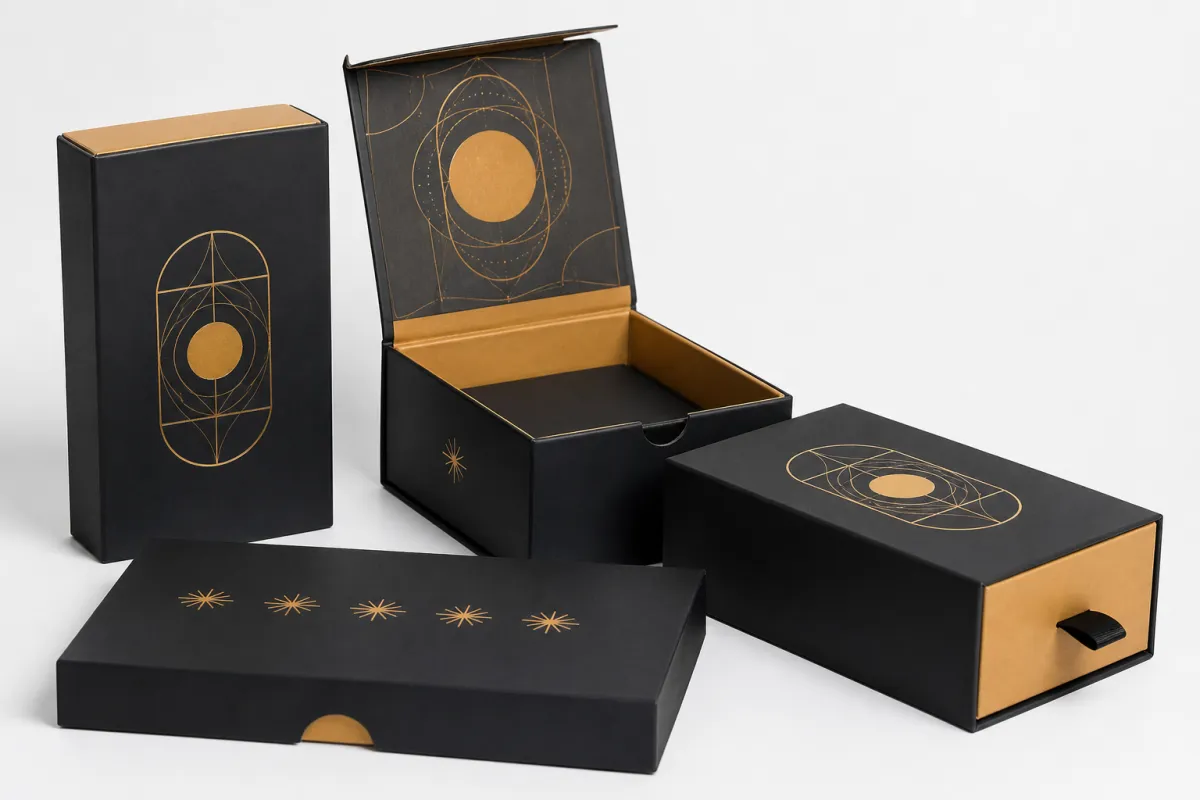
A good custom retail box packaging factory is not a print shop with a gluing line and a fresh logo. It is a production partner that handles structural design, material selection, artwork prep, printing, finishing, assembly, and quality control in one workflow or through a tightly managed chain. Each step changes the next one. A dieline that looks fine on screen can fail once a product is inserted. A finish that looks elegant in a mockup can slow down folding or scuff during distribution. The factory is where brand intent gets punched in the face by production reality.
That sounds blunt because it is. Packaging is a physical job, not a vibes-based exercise. A lightweight cosmetic item may call for a crisp folding carton with a tuck flap and a clean, high-end surface. A heavier bottle or electronics accessory may need stronger board, an insert, or an E-flute structure to handle compression and shipping stress. A seasonal promotion may need the same custom retail box packaging factory to move fast from concept to shelf-ready cartons without letting print consistency drift across the run.
Plenty of buyers miss this part: the box is not only part of the packaging, it is part of the sales process. A plain carton can still do the job, but a well-built branded package does more. It helps the item sit properly on a shelf. It gives the retailer a cleaner presentation. It can make a mid-priced product feel sharper. That is why experienced teams pay attention to material feel, opening experience, and how the printed surfaces read under store lighting. The difference is subtle, then suddenly obvious.
In a strong custom retail box packaging factory, these core responsibilities usually sit together:
- Structural design: dielines, closure style, inserts, and product fit.
- Material selection: SBS, CCNB, kraft, duplex board, rigid board, or corrugated options.
- Printing: offset, digital, flexographic, or specialty print processes depending on the job.
- Finishing: aqueous coating, UV, matte lamination, soft-touch, foil, embossing, or spot effects.
- Assembly and QC: gluing, folding, packing, and checking size, color, and structure consistency.
“The cleanest retail box is usually the one that looks simple because the hard work happened earlier in design, sampling, and process control.”
That is the line between a packaging supplier and a manufacturing partner. A supplier may sell stock cartons or take a file and print it. A true custom retail box packaging factory can take a product brief, adjust the box structure, recommend the right paperboard, and move the job from idea to production-ready Custom Printed Boxes without making the brand guess at every step.
How a custom retail box packaging factory turns ideas into cartons
The first stage is intake, and it is more technical than most people expect. A serious custom retail box packaging factory will ask for product dimensions, product weight, display method, shipping method, shelf goals, and any handling issues such as fragility, leakage, or tamper evidence. Those details shape nearly every later choice. A vague brief forces guesswork, and guesswork is expensive in packaging.
Once the product profile is clear, the structural work starts. The factory develops or confirms a dieline, then matches the structure to the retail environment. A small skincare jar may use a tuck-end folding carton. A supplement bottle may need an auto-lock bottom for better support. A gift set may call for a sleeve, insert, and tray combination so the contents do not shift. A custom retail box packaging factory that understands shelf behavior will think through how the carton opens, closes, stacks, and presents from multiple angles, not just how it looks flat in a file.
Material choice comes next, and this is where packaging gets real. For many retail cartons, 14pt to 18pt SBS or C1S board is common because it prints well and folds cleanly. For heavier items or display packaging that needs more stiffness, 24pt board, duplex board, or corrugated solutions may be a better fit. Inserts can be paperboard, molded pulp, EPE foam, or corrugated partitions depending on protection needs and budget. A good custom retail box packaging factory will usually recommend the lightest structure that still protects the product, because extra material can push cost up without adding much value.
Artwork prep is another place where experienced factories save money. Print files need bleed, safe zones, barcode placement, and dieline alignment That Actually Works on press. Color management matters too. A design that looks rich on a monitor may print too dark if the inks and coating are not balanced properly. Spot UV, foil, embossing, and soft-touch lamination all change the final look and feel, but they also add setup complexity. In a disciplined custom retail box packaging factory, proofing is not an afterthought. It is where expensive rework gets blocked.
Sampling is the point where theory becomes physical. Flat samples confirm dimensions and folds. Mockups test fit and structure. Printed proofs let the team review color, logo placement, and finish behavior before committing to a full run. If the packaging needs to survive shipping or rough handling, some teams also request transit testing or product drop checks. The International Safe Transit Association publishes recognized test methods that help brands think more clearly about distribution risk, especially for fragile or high-value items. That is not overkill. It is just decent product packaging practice.
Then production begins. In most jobs, the sequence is simple enough: print, cure or dry, coat or laminate, die-cut, crease, glue, inspect, pack, and ship. The exact path depends on the box style and finish, but the logic stays the same. A custom retail box packaging factory that keeps these steps organized can hold tighter tolerances and catch defects early. When the run is managed well, the cartons arrive flat, square, consistent, and ready to assemble without fighting the line.
For brands comparing options, it helps to remember that custom printed boxes are not all built the same. A glossy carton for a toy, a matte fold-over box for cosmetics, and a rigid gift box for a premium accessory each ask for different paper structures, press setups, and finishing limits. If the project manager can explain those tradeoffs clearly, that is usually a good sign the custom retail box packaging factory knows what it is doing.
Custom retail box packaging factory pricing: what drives cost
Pricing is where a lot of packaging conversations get muddy, so it helps to break it down plainly. A custom retail box packaging factory usually prices a job based on material, size, print method, finish, structure complexity, order quantity, and any extra services such as sampling or freight coordination. Two boxes that look similar on the shelf can land in very different price ranges once the board, coating, and labor are counted properly.
Material is usually the first cost driver. A lighter folding carton made from 18pt SBS is not priced the same way as a heavier corrugated retail mailer or a rigid set-up box. Caliper, coating, fiber content, and whether the board is virgin or recycled all influence the number. FSC-certified paperboard can carry a small premium, but for many brands that cost is easy to justify if sustainability claims are part of the packaging story. If that matters to your brand, it is worth reviewing the certification details directly at the Forest Stewardship Council.
Size and structure matter just as much. A larger box uses more board and usually more ink coverage. A complicated fold structure needs more setup and more labor during conversion. Inserts, windows, sleeves, and specialty closures all add to the total. From a custom retail box packaging factory perspective, the cheapest box is often the one that protects the product with the fewest unnecessary components. Buyers sometimes ask for extra layers because they think more material means more quality, but that is not always true.
Print and finish choices can move the price noticeably. Digital printing works well for short runs and fast changes, but it may cost more per unit at scale. Offset printing usually becomes more efficient as quantities rise. Foil stamping, embossing, debossing, spot UV, and soft-touch lamination each add setup or finishing time. That does not mean they should be avoided. It means they should be used where they reinforce brand value rather than where they just make the mockup look busy.
Order quantity has a huge effect on unit price because setup costs get spread across more cartons. A 1,000-piece run may look expensive per unit, while 10,000 pieces can pull the price down quickly. Most custom retail box packaging factory quotes improve as volume rises, but the shape of that improvement depends on tooling, press size, and how much handwork the job requires. If the project is a launch test, it may be smarter to start with a smaller run and avoid sitting on excess inventory.
Here is a practical comparison that shows how common retail box options often price out at scale. These ranges are broad, but they reflect the way many production conversations start for a 5,000-piece order, before freight and tax:
| Box type | Typical build | Best use | Typical unit price |
|---|---|---|---|
| Standard folding carton | 18pt SBS, 4-color print, aqueous coating | Cosmetics, supplements, small retail goods | $0.18-$0.32 |
| Premium folding carton | 18pt to 24pt board, matte lamination, foil or spot UV | Mid-range branded packaging with shelf appeal | $0.32-$0.68 |
| Retail mailer or display box | E-flute corrugated, printed exterior, optional insert | Shipping plus shelf presentation | $0.68-$1.20 |
| Rigid premium box | Wrapped rigid board, specialty paper, magnet or ribbon closure | Gift sets, luxury product packaging | $1.90-$4.50 |
Those numbers are not fixed rules, and a careful custom retail box packaging factory will usually explain why a quote lands where it does. Tooling, sample charges, freight, packaging inserts, warehousing, and rush production can all add cost. Shipping alone can surprise first-time buyers if the cartons are large but lightweight, because dimensional weight may matter more than actual box weight. That is why comparing only unit price can be misleading.
If you need to balance branded packaging with budget control, ask for two or three versions of the same box: one basic, one mid-tier, and one premium. That gives the factory room to show what changes with board grade, coating, and finish, instead of forcing a one-line quote that hides the tradeoffs. A thoughtful custom retail box packaging factory should be able to explain each option clearly, not just drop a number into a spreadsheet.
Timeline and production flow in a custom retail box packaging factory
A realistic schedule starts before artwork is approved. The best custom retail box packaging factory projects move through a simple sequence: quote, structural review, dieline, artwork, sampling, approval, production, finishing, packing, and freight. The work looks linear on paper, but it usually loops in the middle because brands revise copy, adjust barcodes, or ask for finish changes after they see the first proof. That is normal. The key is planning for it instead of pretending it will not happen.
For a straightforward folding carton, the quote and brief review may take 1 to 3 business days. Dieline development or confirmation can take another 1 to 4 days depending on how much structural work is required. Sampling often adds 3 to 7 days, and printed proof approval can add more if the brand needs color correction or legal review. Once approved, a production run might take 12 to 15 business days for a moderate job, though complex finishes or larger volumes can stretch that window. A seasoned custom retail box packaging factory will be upfront about those time frames instead of promising something unrealistically fast.
Schedule risk usually comes from a handful of predictable places. Late artwork changes are the most common. Color corrections can add another round of proofing. Structural revisions become a problem when the first sample does not fit the product properly. Specialty finishes such as foil, embossing, or textured lamination can add setup time because they need extra passes or extra tooling. If a box must match a product launch date, these variables should be discussed before the order is placed, not after the production slot is reserved.
One simple way to reduce timing problems is to treat the package as part of the launch calendar, not as a separate line item. If product filling starts on Monday, the packaging should not arrive on Friday unless the team is comfortable with risk. A practical custom retail box packaging factory partner will encourage the brand to work backward from the launch date, leaving a buffer for freight, sampling, and any last-minute proof correction. That buffer is often what saves the launch.
It also helps to understand where work happens in-house and where it does not. Factories that can print, die-cut, laminate, glue, and inspect in one controlled production flow usually move faster and with fewer handoff errors. If a job must be sent to multiple vendors for coatings, inserts, or specialty finishing, the schedule gets longer and the chance of miscommunication rises. A well-run custom retail box packaging factory should be able to tell you exactly which steps happen internally and which ones depend on outside vendors.
For products that need stronger shipping validation, ask whether the packaging plan follows recognized testing methods such as ISTA 3A or ASTM D4169. That is especially useful for ecommerce, fragile retail items, and anything with a lot of return risk. The point is not to overengineer every carton; it is to make sure the packaging matches the route the product will actually travel. A carton that looks beautiful on a shelf but fails in transit is not a win for product packaging.
Key factors to evaluate before choosing a custom retail box packaging factory
Capability comes first. Not every custom retail box packaging factory handles the same board types, finish combinations, or box structures with equal consistency. Some are excellent at folding cartons and short-run custom printed boxes. Others are better suited to rigid packaging, display units, or corrugated retail formats. The right factory is the one whose equipment and process fit your product, not the one that simply says yes to everything.
Minimum order quantity matters more than many teams expect. A launch-stage brand may need a lower MOQ to reduce inventory risk, while a larger retailer may prefer volume pricing and a longer production schedule. Lead time should be discussed in both normal and rush scenarios. A good custom retail box packaging factory will explain whether sampling is included, how many proof rounds are allowed, and what happens if the artwork changes after approval. That clarity saves money later.
Quality systems deserve close attention. Ask how the factory checks color consistency, dieline accuracy, glue strength, barcode placement, and carton squareness. Good retail packaging should look consistent from the first box to the last. The test is not just how the carton looks under perfect studio light; it is how it holds up in a warehouse, on a pallet, and on a store shelf after handling. If the factory can describe its inspection checkpoints in practical terms, that is a strong sign.
Communication is another real difference-maker. A project may involve design, procurement, production, freight, and compliance questions all at once. The best custom retail box packaging factory partners do not bury the buyer in jargon or leave revision notes unclear. They keep track of the latest approved artwork, call out risks early, and tell you what needs sign-off before the press starts. That kind of project management is worth paying for because it cuts rework.
Sustainability deserves a careful look, but it should be evaluated with evidence instead of slogans. Ask whether the board is recyclable in your target market, whether FSC options are available, how waste is managed, and whether coatings or laminations interfere with recycling claims. Some finishes are fine when used sparingly; others can complicate the end-of-life story. A responsible custom retail box packaging factory should be able to explain these tradeoffs without turning the conversation into marketing fluff.
If your team is comparing suppliers for retail packaging, this is a good moment to ask for samples from similar projects. Hold the samples, check the folds, compare print sharpness, and see how the coating behaves when light hits it. A factory can sound excellent on a call and still be a poor fit for your product. Physical samples usually expose the truth faster than any quote sheet.
For brands that care about package branding, the right partner also thinks about how the box supports the whole system, not just one SKU. Color consistency across product lines, logo placement across sizes, and uniform board feel across collections all matter. That is why a custom retail box packaging factory should be willing to talk about the larger packaging system, not just the carton sitting in front of them.
Common mistakes brands make with custom retail box packaging factory projects
One of the biggest mistakes is ignoring the product’s real dimensions and weight. A few millimeters can change how the insert fits, how the tuck flaps close, and whether the box bulges at the seams. A weak fit can lead to damaged goods, while an oversized carton wastes board and makes the package feel loose. A good custom retail box packaging factory will usually ask for a physical sample for exactly this reason.
Another common error is choosing finishes for appearance alone. Soft-touch lamination, heavy foil coverage, or a complex texture can look excellent in a render, but the final production run may need more time, more care, or more handling than the brand expected. In some cases, a finish that looks premium can also show fingerprints or scuffing more easily. The better approach is to ask how the finish behaves in real retail packaging conditions, not just how it photographs.
Late artwork changes are another pain point. Barcode placement, legal copy, ingredient panels, warnings, and dieline alignment all need review before the order goes to press. Changing those items after approval can force reproofing and delay the schedule. A custom retail box packaging factory can usually absorb small adjustments early, but once the job is on the machine, those changes become expensive fast.
Focusing only on unit price is a classic trap. A quote that looks cheaper can carry higher freight, extra tooling, more sampling charges, or a weaker QC process. It may also leave out details like packaging inserts or special finishing. Buyers who compare only the bottom line often discover hidden costs later. A better comparison looks at the full scope, including board grade, finish, lead time, and how well the factory handles communication.
Skipping sample testing is probably the most preventable mistake. Even a small pilot run can reveal issues with color, fit, glue, or folding direction before the full order is committed. If the project includes a new structural idea, a sample is not optional in my opinion. It is the cheapest insurance the team can buy. A reliable custom retail box packaging factory will be comfortable recommending a mockup or printed proof before mass production.
There is also a subtler mistake: treating the box as an isolated object instead of part of the product packaging system. The carton has to work with the product, the label, the shipping method, and the retail channel. That is why the best decisions come from a clear brief, not from a loose request for “something premium.” Specificity helps the factory make better choices and helps the brand avoid rework later.
Expert tips and next steps for a custom retail box packaging factory project
Start with a tight brief. A custom retail box packaging factory can move much faster when it knows the product dimensions, weight, shelf goals, shipping method, target quantity, branding priorities, and any compliance requirements. If you can include photos of the product and examples of packaging you like, even better. That gives the factory a clear read on the retail presentation you want without guessing at the details.
Send a physical sample if you can. A product sample often reveals things that a spec sheet does not, such as how much protection the item really needs, whether the insert should be paperboard or molded pulp, and where pressure points might show up during transport. In real production, those details matter more than a polished mood board. A careful custom retail box packaging factory will use the sample to confirm fit before quoting the full run.
Compare quotes line by line. Do not stop at the total price. Check board grade, print method, finish, insert type, MOQ, sampling terms, freight assumptions, and payment structure. Two quotes can look similar and still be completely different in scope. If one custom retail box packaging factory includes proofing and another does not, or one uses a heavier board, those differences need to be visible before the order is placed.
Ask for a prototype or printed proof whenever the box uses specialty finishes, precise brand colors, or a new structure. That one step often saves the run. If the proof is off, the team can correct it before the press is filled with hundreds or thousands of sheets. For retail packaging projects, that kind of discipline is usually what separates a smooth launch from a stressful one.
“The smartest packaging teams are not the ones that spend the most; they are the ones that spend with the fewest surprises.”
If you are evaluating a new vendor, ask how they document approvals, how they track revisions, and what happens if the first production batch needs review. A strong custom retail box packaging factory should have a clear path for sign-off, a clean production record, and a process that feels organized instead of improvised. That is the kind of partner that protects both your timeline and your brand.
For many companies, the next move is simple: define the packaging brief, compare the best-fit options, request a sample, and lock the dieline before production begins. That sequence keeps the project grounded in real manufacturing steps instead of wishful thinking. If you want the short version, choose the custom retail box packaging factory that can show process control, practical advice, and honest answers, then move forward with the proof, the run, and the final inspection with confidence.
My blunt takeaway: do not pick a packaging vendor because the quote is the cheapest or the mockup looks pretty. Pick the custom retail box packaging factory that can prove fit, explain tradeoffs, and flag problems before they become expensive. That is how you get a box that sells, ships, and survives the shelf without drama.
FAQ
How do I compare custom retail box packaging factory quotes?
Compare board grade, print method, finish, insert type, MOQ, and freight instead of looking only at the unit price. Ask whether sampling, tooling, and approval rounds are included so there are no surprise add-ons later. Check lead times and payment terms, because the cheapest quote is not always the best fit for a launch schedule.
What should I send to a custom retail box packaging factory first?
Send product dimensions, weight, photos, target retail channel, and any shipping or display requirements. Include your logo files, brand colors, copy content, barcode needs, and examples of packaging you like. If you already have a sample product, mail it in so the factory can confirm fit and structural choices.
How long does a custom retail box packaging factory project usually take?
Simple projects can move quickly after artwork approval, while custom structures or special finishes usually take longer. Sampling, revisions, and approval delays often matter more than the actual production run. Plan backward from your launch date and leave room for freight and any last-minute proof changes.
Which materials work best for retail product boxes?
Paperboard is common for lightweight retail cartons, while corrugated board is better for heavier products or shipping protection. The right choice depends on product weight, shelf appearance, print quality, and how much protection the package needs. Ask the factory for samples of different board grades so you can compare stiffness, print feel, and finish quality.
How can I reduce risk when switching to a new custom retail box packaging factory?
Start with a sample or short pilot run so you can inspect print quality, fit, and assembly before scaling up. Document your specs clearly, including tolerances, approved colors, and acceptable packaging materials. Build in a review step for the first production batch so any problems are caught early.
For any brand that wants retail packaging to do more of the selling work, the right custom retail box packaging factory makes that possible by turning the brief into a carton that fits, prints well, holds up in transit, and supports package branding from the first touch to the final shelf display.

