Buyer Fit Snapshot
| Best fit | Custom Retail-ready Boxes MOQ projects where brand print, material claims, artwork control, MOQ, and repeat-order consistency need to be specified before quoting. |
|---|---|
| Quote inputs | Share finished size, material target, print colors, finish, packing count, annual reorder estimate, ship-to region, and any compliance wording. |
| Proofing check | Approve dieline scale, logo placement, barcode or warning zones, color tolerance, closure strength, and carton packing before bulk production. |
| Main risk | Vague material claims, crowded artwork, missing packing details, or unclear freight terms can make a low unit price expensive after revisions. |
Fast answer: Custom Retail-ready Boxes MOQ: Board, Finish, Dieline, and Unit Cost should be specified like a repeatable production item. The safest quote records material, print method, finish, artwork proof, packing count, and reorder notes in one written spec.
Production checks before approval
Compare the actual filled-product size with the drawing, then confirm tolerance on folds, seals, hang holes, label areas, and retail display edges. Reserve space for logos, QR codes, warning copy, and material claims before decorative graphics fill the panel.
Quote comparison points
Review material grade, print process, finish, sampling route, tooling charges, carton quantity, and freight assumptions side by side. A quote is only useful when the supplier can repeat the same color, closure quality, and packing count on the next order.
Buying custom retail-ready boxes MOQ is not a small purchasing decision. It affects landed cost, launch timing, storage needs, and how much capital sits in inventory before the first unit sells. A quote can look clean on paper and still turn messy once freight, palletization, and warehouse space are added back in.
Packaging buyers usually pay for two jobs at once. The carton has to survive the distribution chain, then show up on shelf like it belongs there. That split is exactly why MOQ matters. The minimum order quantity influences setup charges, print efficiency, board usage, and the amount of cash tied up in stock. Choose the wrong run size and a launch slows down. Choose it badly again and you end up staring at boxes that have been aging in a warehouse longer than the product they were made for.
At Custom Logo Things, the practical goal is straightforward: match the order size to the best blend of unit cost, service level, and inventory control. That is rarely the lowest number on the quote sheet. It is the order that fits the sales forecast you can actually defend with data.
A carton that saves $0.04 per unit but holds two extra months of inventory is not cheap. It just looks cheap until the carrying cost shows up.
Why custom retail-ready boxes MOQ changes the economics
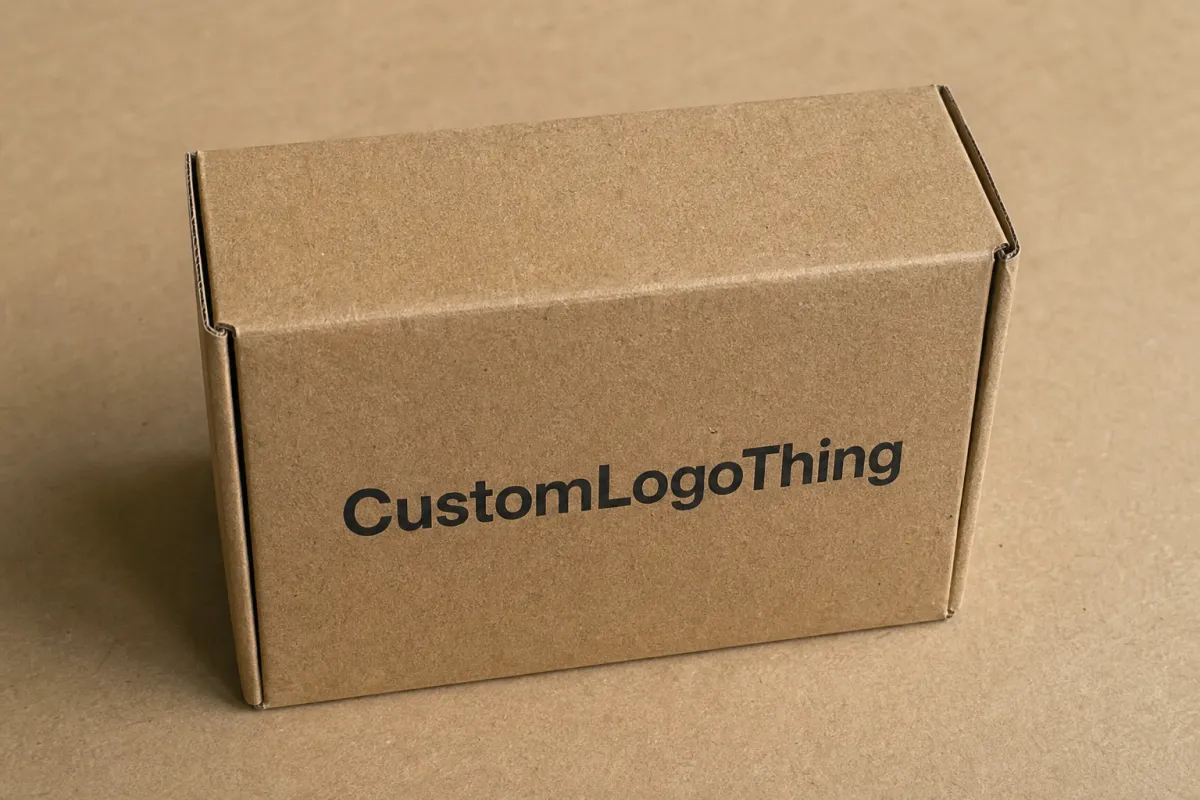
MOQ changes the economics because packaging sits between manufacturing, logistics, and cash flow. Smaller runs are easier to approve and easier to absorb, but the unit price usually rises because setup and tooling get spread across fewer boxes. Bigger runs lower the unit cost, then raise storage exposure. Forecasts miss. Inventory ages. Finance notices. Everyone has a meeting about it.
Retail-ready cartons are judged in two places at once. Buyers and replenishment teams care about shelf presentation, opening speed, and retailer compliance. Operations teams care about stackability, case weight, pallet pattern, and whether the carton survives handling without opening early. If the box looks good on the shelf and fails in the warehouse, that is not a win. The reverse is not much better. Good retail packaging has to survive both tests.
Think about a SKU moving into club, grocery, or a shelf-ready display program. Sales wants the first shipment in place before the promo window opens. A high MOQ can become a delay because the buyer does not want that much inventory risk sitting on day one. A low MOQ can push the unit price high enough that the launch starts to look expensive. The right order size is the one tied to sell-through, not the one that is easiest to produce.
The cash-flow piece gets ignored too often. Packaging is usually bought before revenue comes back in. Ten thousand boxes might make sense for a national rollout. The same order can be a bad fit for a new SKU with an uncertain demand curve. In those cases, the smarter move is often a smaller opening order, then a reorder trigger once the product proves itself.
That is the real point of custom retail-ready boxes MOQ. Treat it like a cost lever, not a brick wall. The useful question is not “What is the minimum?” It is “What order size gives the best landed cost for this sales plan, this channel, and this timeline?”
What custom retail-ready boxes do on the shelf
Retail-ready boxes are shipping cartons built to become display-ready packaging with minimal handling in store. The product arrives protected, then the carton opens, tears, or folds into a shelf-facing unit without someone repacking every piece by hand. That saves labor. It speeds replenishment. It keeps the display looking like someone planned it instead of throwing it together between customers.
The merchandising value becomes obvious in a busy aisle. A well-built carton creates cleaner facings, better brand blocking, and a shelf presence that looks deliberate instead of accidental. It gives the product a frame. Shoppers notice that. They may not say it out loud, but they notice when one brand looks organized and the other looks like it got dumped there by a tired forklift driver who was already behind schedule.
Protection matters just as much. Retail-ready packaging still has to pass through warehouse picking, truck vibration, stacking pressure, and repeated handling at receiving. The box protects the contents before it turns into display packaging. That means structure, board grade, and closure style all need to work together. Too light and the carton crushes or bows. Too heavy and you are paying for board you do not need.
Different channels want different behavior:
- Club retail usually wants larger shelf-ready or pallet-ready formats with strong compression resistance.
- Grocery tends to favor easy-open fronts, clean tear lines, and neat presentation on shelf.
- Mass retail often cares about fast stocking, readable branding, and standard case packs.
- E-commerce may need extra transit protection even when the outer carton also serves as a display unit.
That is where package branding and protection collide. A carton is not just a container. It is a controlled brand surface. Print area, opening style, and cutout geometry all affect how the product looks after shipping. Strong packaging design lines up structure with retailer expectations instead of hoping the shelf will forgive a bad decision.
For buyers comparing Custom Packaging Products, the real question is simple: does the format reduce shelf labor while still protecting the product through distribution? If it only looks good in mockups, it is not ready for a store floor. If it only survives shipping and looks rough in front of customers, it misses the point in the other direction.
Specifications that affect fit, strength, and speed
The fastest path to a useful quote is a real spec sheet. Internal dimensions, product count per carton, unit weight, and stacking requirements are the basics. Leave those out and the quote turns into a guess. The MOQ recommendation does too. A box can look close enough in a sample room and still fail once it lands on a pallet because compression load was never part of the conversation.
Board choice is one of the biggest technical variables. Corrugated flute profile changes both cushioning and stacking strength. E-flute can give you a smoother print surface and a slimmer profile. B-flute and C-flute are often chosen for better stacking performance. Double-wall construction may be worth the cost for heavier products or longer shipping routes, but plenty of SKUs do not need that much box. The right grade depends on product weight, stack height, and how much punishment the carton will take before it reaches the shelf.
Print and finish affect cost and speed too. Flexographic print is common for corrugated retail packaging because it scales well and handles bold branding, barcodes, and straightforward color coverage without drama. Coatings can improve appearance or scuff resistance. Perforations, tear strips, and pre-cut display openings help store staff, but each feature adds complexity to the die. Every extra detail should earn its place.
Structural details often decide whether a carton gets approved. Hand holes can make handling safer. Crash-lock bases can speed packing in certain designs. Glued seams usually create more consistency than mechanical locking in higher-volume runs. Easy-open features help retail teams, but they still need to hold up during shipping. Nobody wants a display carton that opens in transit and turns the inside of a truck into confetti.
Logistics specs deserve more attention than they usually get. Outer dimensions affect freight rates. Case pack affects how many units fit per pallet. Pallet pattern affects warehouse efficiency and load stability. Even a small change in carton footprint can shift how many cases fit on a standard pallet, and that changes both freight cost and receiving workload.
- Critical inputs: internal dimensions, product weight, units per case, stacking height.
- Technical choices: flute profile, board grade, print method, coatings, tear features.
- Operational factors: pallet pattern, case pack, outer size, warehouse handling.
If you want help shaping those decisions, our FAQ page covers common packaging questions buyers ask before requesting quotes. Better specs mean less guesswork in pricing. That part is not complicated. It is just often skipped.
Custom retail-ready boxes MOQ, pricing, and quote math
custom retail-ready boxes MOQ is usually driven by material yield, machine setup, tooling, finishing steps, and the actual economics of the production line. A factory does not set MOQ to be difficult. It sets MOQ because each run needs press prep, die setup, trimming, folding, gluing, and quality checks. When the order is too small, those fixed costs chew up too much of the job value.
The relationship between MOQ and unit cost is direct, but the story does not end there. As quantity rises, setup cost gets spread across more cartons, so the per-unit price drops. Inventory commitment rises at the same time. The lowest price on the quote sheet can still be the worse business choice once storage, insurance, shrinkage, and timing risk show up. Packaging has a bad habit of teaching that lesson after the order is already approved.
Here is a practical way to read quotes. Separate the visible line items from the hidden ones:
- Visible: board, print, tooling, dieline, sample or proof, finishing, freight.
- Often overlooked: warehouse space, internal handling, obsolescence risk, carton damage, delay risk.
That second list carries real weight. A seasonal product with 15,000 boxes can tie up cash longer than the sales cycle deserves. A stable SKU with repeat orders can justify a larger run because the lower packaging cost helps margin and the stock turns. Same MOQ. Different answer. That is normal.
Ask for tiered pricing every time. A single number is not enough. You want to see the break at 1,000, 2,500, 5,000, and 10,000 units, or whatever tiers fit the structure. That makes the tradeoff visible. Sometimes the next tier barely moves the needle. Sometimes it saves enough to justify the jump. Guessing is expensive. Seeing the math is cheaper.
For planning, here is an illustrative example of how quantity can affect the price structure for Custom Printed Boxes used in retail-ready applications. Exact numbers shift with structure, board, print coverage, and finishing, so treat this as a budgeting frame rather than a promise.
| Order Quantity | Typical Unit Cost Range | What Usually Happens | Best Fit |
|---|---|---|---|
| 1,000 units | $1.20-$1.85 | Setup costs weigh heavier per box; freight per unit stays high | Test launches, short promos, low-volume SKUs |
| 2,500 units | $0.82-$1.22 | Tooling and press costs spread better; stock risk stays manageable | Early-stage rollouts, regional distribution |
| 5,000 units | $0.58-$0.94 | A common price-break zone where production gets more efficient | Established SKUs, regular replenishment |
| 10,000 units | $0.42-$0.71 | Often the lowest unit economics, with more inventory exposure attached | National programs, repeat orders, stable demand |
Those ranges are not promises. They are a planning frame for buyers who need a budget before the formal quote lands. A simple uncoated corrugated display carton will land in a different cost range than a heavily printed unit with perforations, specialty finishing, and tighter color tolerances. The pattern still holds: bigger runs usually lower unit cost, smaller runs usually lower cash commitment.
One more thing. A quote that looks low can be incomplete. If a supplier leaves out freight, skips sample fees, or buries tooling, the final invoice climbs later. Good sourcing work means comparing landed cost, not just carton price. That matters even more for branded packaging in retail channels, where a delay can cost sales faster than a small price difference can save them.
Process and timeline: from dieline to delivery
The path from inquiry to shipment is usually straightforward, but each step can drag if the brief is thin. The sequence usually starts with a spec review, then a quote, then dieline approval, artwork development, sample or proof review, production, and freight booking. If any piece stalls, the schedule shifts. Packaging never seems to care how urgent your calendar is.
Most delays come from avoidable problems. Late artwork changes are one of the biggest. Unclear internal dimensions and missing case weight data are close behind. Approval cycles can drag when three teams review the same proof and none of them wants to be the first one to say yes. A buyer can save days by sending a complete brief at the start instead of assembling the order after the quote lands.
Production time and total lead time are not the same thing. Production time is the factory window. Total lead time includes approvals, material procurement, printing, finishing, packing, and shipping. Buyers often focus on the factory schedule and forget that transportation can add another week or more. That difference matters when the boxes have to arrive before a store reset, a promotion, or a seasonal switch.
Rush schedules can work in some cases. They are most realistic when the design is final, the print files are ready, and the factory already has the required board or can source it right away. If the job still needs structural changes, the risk climbs fast. Rushing a half-finished design usually costs more than waiting a few extra days and getting it right the first time.
What shortens turnaround?
- Final carton dimensions before quote submission.
- Print-ready files with correct color profiles and bleed.
- Clear case pack, pallet, and shipping requirements.
- Fast approval on sample or proof.
- Realistic inventory forecasting so the MOQ matches demand.
For standards-conscious buyers, transport testing can matter too. Organizations such as ISTA publish test methods for distribution environments, and the EPA offers guidance on packaging and environmental management topics that affect material selection. If a carton needs to survive stack pressure or long transit, those references are worth a look during the design stage.
A buyer who arrives with a complete spec and a stable forecast can usually cut back-and-forth time in a noticeable way. That is often more valuable than squeezing out a slightly lower quote, because missing a launch window can cost more than the difference between two bids.
Why choose us for custom retail-ready boxes
Manufacturing control matters because every handoff creates risk. When design, print, cutting, and packing sit under fewer transfers between vendors, it gets easier to keep the spec tight and the schedule predictable. For custom retail-ready cartons, that consistency is not cosmetic. It is operational.
Consistency shows up in small places that become big once the order is on a truck. Print alignment should stay true from run to run. Die-cut openings should open the same way every time. Glued seams should hold under real loading, not just under a studio light and a polite sample review. Those details sound minor until a carton fails and the retailer starts asking questions you do not want to answer.
Design support reduces risk too. A structure that looks fine in a flat dieline can create weak points once it is folded and packed. A useful packaging partner flags those issues before they turn into rework or retailer complaints. That saves time and protects the launch schedule. It also improves the final product packaging instead of just making it look better in a render.
Transparency matters just as much. Buyers need straight answers on MOQ, price breaks, and lead time. Vague quotes waste time. Worse, they change after approval and force everyone to rework budgets. Clear production planning helps customers choose between a lower first run and a sharper price break. That matters when storage is limited and multiple launches are fighting for attention.
Logistics coordination gets overlooked more than it should. Better planning around palletization and shipping can reduce surprises at receiving. If carton count, pallet height, and outer dimensions are defined early, the warehouse can plan inbound space more accurately. That becomes a real advantage when retail-ready cartons arrive right before a promotional reset and nobody wants a pile of boxes sitting in the aisle.
For buyers comparing Custom Packaging Products, the advantage is not only the box itself. It is the process behind the box: spec discipline, repeatable quality, and production planning that respects your sales calendar. That is what turns custom printed boxes into something useful instead of another purchase order to file away.
Next steps to get the right order moving
Before you request quotes, gather the facts that shape both cost and lead time. Start with SKU dimensions, product weight, case pack count, retail channel, print coverage, and target order quantity. Add shelf-ready features like tear-away fronts, display openings, or reinforced handles. If the carton has to meet retailer compliance rules, include those too. A better brief produces a cleaner quote. Not magic. Just less chaos.
Then ask for at least two or three MOQ scenarios. That makes the tradeoff between unit price and total spend visible. A quote at 2,500 units might be the right choice for a regional test. Five thousand or 10,000 may fit a stable product with predictable sell-through. The right answer comes from demand, not from a random love of round numbers.
Set approval timing early. Confirm when dielines will be signed off, whether a physical sample is required, and how long artwork review will take. If the packaging is tied to a store promotion, build backward from the ship date, not from the date you place the order. That one change prevents a lot of missed windows.
One last planning note: align packaging timing with inventory timing. Retail-ready cartons should arrive before the product needs to hit shelf, not after the promo has already started. If the carton is part of the merchandising plan, it deserves the same calendar discipline as the product itself.
Good buying is not just about finding the lowest line price. It is about comparing quotes, confirming specs, and checking custom retail-ready boxes MOQ, Price, and Lead Time before the order goes in. That is how you protect margin without creating avoidable stock risk.
FAQ
What is the typical MOQ for custom retail-ready boxes?
There is no universal MOQ. The minimum usually depends on structure, print method, board grade, and finishing complexity. Simple printed corrugated cartons often allow lower quantities than specialty display designs with perforations, tear strips, or extra finishing. The smartest move is to request tiered quotes so you can compare the minimum run with better price breaks at higher volumes.
How does MOQ affect the unit cost of custom retail-ready boxes?
A larger MOQ usually lowers unit cost because setup and tooling expenses get spread across more cartons. The cheapest unit price is not always the best outcome if the order creates storage costs or slow-moving inventory. Compare unit cost with freight, warehousing, and expected sell-through so the decision reflects the full landed cost.
Can I order multiple SKUs under one custom retail-ready boxes MOQ?
Sometimes yes, if the structure stays the same and only the artwork changes. Combining SKUs can help absorb setup costs, but each version still needs its own production and inventory plan. Confirm whether the factory can share tooling or dielines across the full assortment before you commit so the pricing stays accurate.
What affects the lead time for custom retail-ready boxes?
Lead time is shaped by artwork approval, sample requests, material availability, production queue, and shipping method. Projects move faster when the dieline, dimensions, and print files are final before quoting. International freight or retailer-specific compliance checks can add time after production wraps, so building in a buffer is smart.
What should I prepare before requesting a quote for custom retail-ready boxes MOQ?
Prepare product dimensions, case pack count, carton weight, retail channel, print requirements, and target order quantity. Include any special needs such as tear-away fronts, shelf-ready openings, or pallet configuration requirements. The more specific the brief, the faster the quote and the more accurate the MOQ recommendation will be.

