A small label can hold up a shipping table if the text is cramped, the adhesive is wrong, or one digit in the return address is off. That is the practical value of Custom Return Address Labels: they turn a repetitive, error-prone step into a controlled part of the packing process, while giving every parcel a cleaner first impression.
The appeal is not limited to appearance. For boutiques, subscription brands, apparel sellers, and small fulfillment teams, these labels reduce handwriting mistakes, shorten pack-out time, and keep packages consistent as volume grows. A label is a minor component in cost terms, but it touches several parts of the operation at once: address accuracy, visual consistency, labor time, and the chance of rework.
Used well, they sit inside a broader packaging system rather than standing alone. That is why buyers often pair them with Custom Labels & Tags and Custom Packaging Products. The label itself is small. The effect is not.
What Custom Return Address Labels Actually Do
At the most basic level, custom Return Address Labels identify the sender. In practice, they do more than that. They standardize the shipping table, reinforce the brand, and reduce the chance that an operator has to stop and retype or rewrite information while orders are waiting.
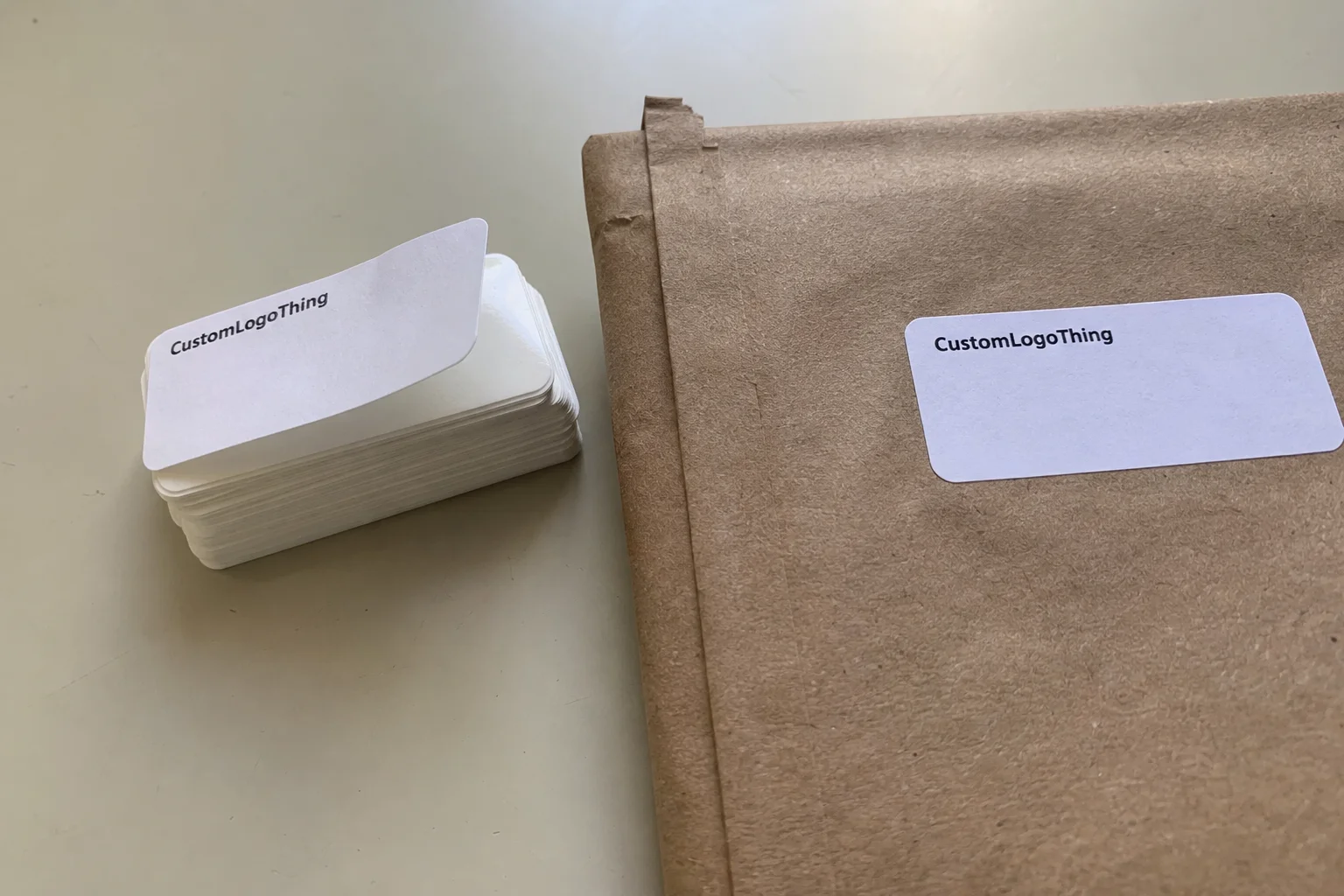
A return label is often one of the few branded elements that every customer sees before the package is opened. It can sit on envelopes, poly mailers, garment boxes, or outer cartons. If the design is clean, it suggests the rest of the packing process is equally organized. That signal matters more than people assume. A neat label on a plain mailer creates a more intentional package than a handwritten address on an otherwise polished box.
There is also a workflow benefit that tends to get overlooked. When the same format is used repeatedly, packers spend less time checking line breaks, confirming the return address, or correcting label placement. On a small team, that can save a surprising amount of time across a week. On a larger team, it reduces drift, which is what happens when every person develops a slightly different way of doing the same task.
For apparel and DTC brands, these labels often bridge retail presentation and shipping execution. One day they are applied to a kraft mailer, the next to a carton for a wholesale sample. That makes consistency more valuable than novelty. A label system that looks the same across orders helps the brand feel controlled even when the order mix changes.
How the Labeling Process and Timeline Works
The production path is usually straightforward, but the details matter. Most orders begin with artwork and address setup, followed by a proof, then print production, finishing, packing, and shipment. The proof is not a formality. It is where line breaks, logo placement, type size, and address accuracy are checked before anything is printed in volume.
Digital printing is usually the best fit for shorter runs because setup is lighter and design changes are easier to handle. Flexographic and offset printing can be more efficient at scale, especially when the same label will be reordered often, but they typically require more preparation. A run of 1,000 to 5,000 labels often ships in roughly 5 to 8 business days after proof approval. Larger runs, specialty materials, or multi-version orders commonly take 10 to 15 business days. Rush orders are possible, but they usually compress the proofing window and increase the unit cost.
That timeline only works if the files are prepared correctly. Vector artwork is best for logos because it keeps edges sharp at small sizes. Address blocks should be set for the final label size, not copied from a letterhead or website footer. Small labels force tradeoffs fast. On a 2 x 1 inch format, a four-line address block can become cluttered very quickly. Font size, leading, and margin control matter more than decorative elements.
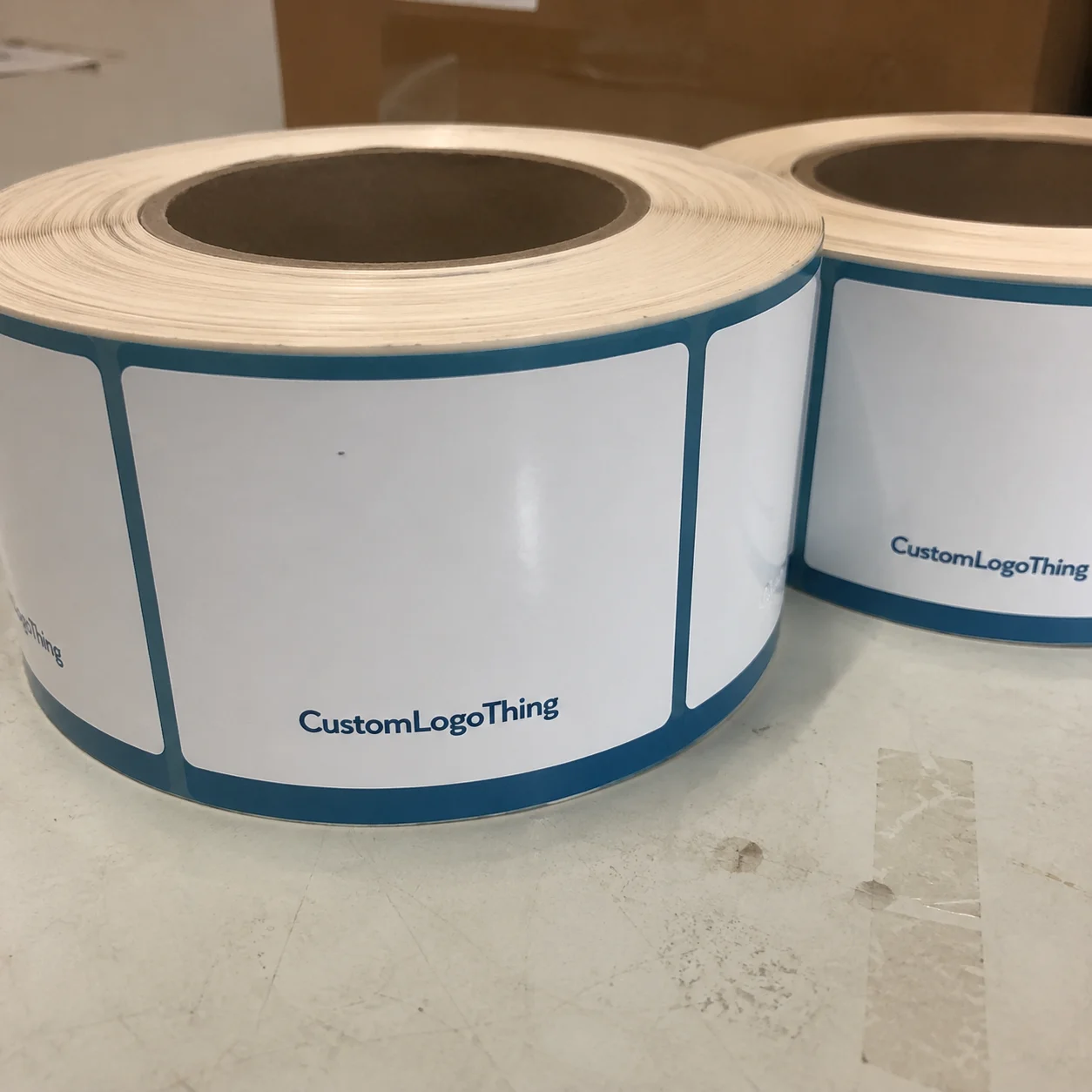
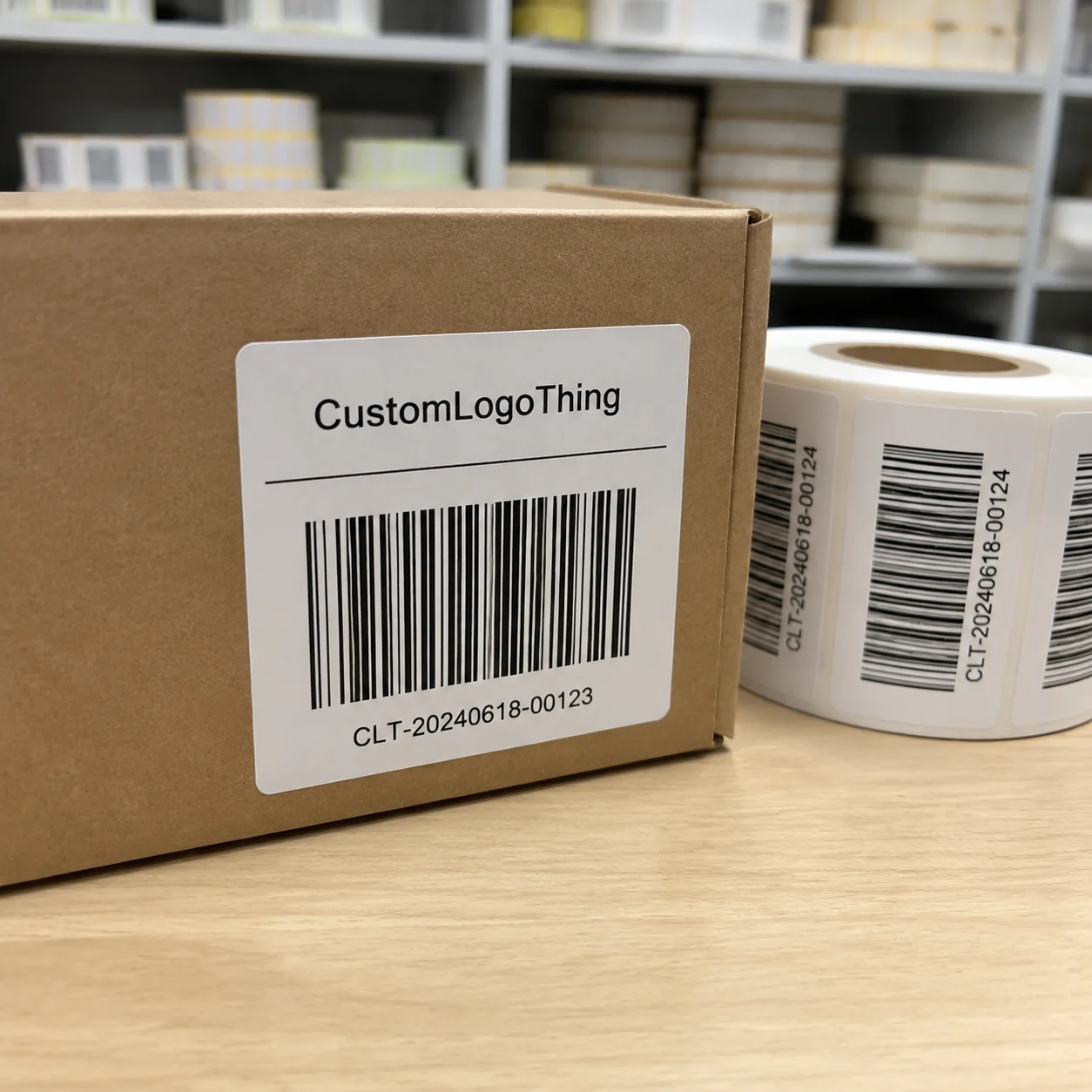
Sheets and rolls serve different workflows. Sheets are practical for offices, lower-volume mailing, and hand application. Rolls are better for higher-volume fulfillment or dispenser-based packing stations because the operator can keep moving without peeling each label individually. If the team ships in bursts, rolls usually reduce handling time. If orders are smaller and irregular, sheets are easier to store and manage.
Quality control should be part of the timeline, not an afterthought. A solid supplier will check barcode or address readability if relevant, confirm color and registration, verify die size, and inspect adhesive behavior against the chosen stock. A good-looking proof is not enough if the label curls on the packaging surface or loses adhesion during transit.
Cost, Pricing, and MOQ Factors to Compare
Pricing for custom Return Address Labels is driven by a short list of variables: size, material, adhesive, finish, quantity, color count, and print method. The lowest quote is rarely the best comparison if one vendor includes proofing, another charges separately for setup, and a third omits freight until the end. The total landed cost is what matters.
MOQ, or minimum order quantity, should be treated as a planning tool rather than a sales hurdle. A very small run can look inexpensive in total dollars but expensive on a per-label basis because setup is spread across fewer pieces. For brands that ship consistently, a slightly larger order often lowers the real unit cost enough to justify the inventory. That is especially true if the same label spec will be used for months rather than weeks.
| Format | Typical Run | Approx. Unit Cost | Best Use |
|---|---|---|---|
| Economy paper, sheets | 500 to 2,500 | $0.08 to $0.18 | Office mailing, light-duty retail packaging |
| Coated paper, sheets or rolls | 2,500 to 10,000 | $0.05 to $0.12 | Cleaner print, moderate shipping volume |
| Film or weather-resistant stock | 5,000+ | $0.10 to $0.24 | Moisture, cold storage, poly mailers |
Those ranges are directional, not fixed. A one-color label on plain paper can sit near the low end, while a full-color design on film with special adhesive or finishing costs more. Freight can also distort comparisons, especially on short runs. Ask for unit cost, setup, proofing, and shipping as separate lines so the quote can be evaluated honestly.
For repeat buyers, annual volume is a better lens than one purchase. A supplier that is a few cents higher on the first order may still be cheaper across the year if the labels feed better, arrive with fewer defects, and generate fewer reprints. A lower price that creates waste is not actually lower.
Material, Adhesive, and Finish Choices That Change Performance
The three choices that affect performance most are substrate, adhesive, and finish. Get one of them wrong and the label may still look fine in a mockup, but fail under warehouse lighting, on a textured mailer, or after a few hours in transit.
Paper stock is the standard choice for most envelope and mailer use. It prints well, keeps costs down, and adheres well to smooth surfaces. Film stock, usually polypropylene or a similar material, is more resistant to moisture and rubbing. That matters if the label may encounter condensation, friction, or rough handling inside a parcel stream. Specialty materials are available too, including removable and freezer-grade options, but they are only worth paying for if the application actually requires them.
Adhesive is where many orders either succeed quietly or cause recurring problems. Permanent adhesive is the default for shipping cartons and mailers that need to stay labeled through delivery. Removable adhesive can work for temporary marking, but it is not the right answer for every package. Texture matters as well. Kraft paper, recycled envelopes, coated cartons, and poly mailers do not all accept adhesive the same way. Humidity, cold storage, dust, and surface roughness can all affect bond strength.
Finish affects both appearance and readability. Matte usually handles small text better because it cuts glare under packing lights. Gloss can deepen color and create a sharper visual effect, but too much shine can make tiny type harder to scan quickly. For address labels, legibility is usually more valuable than decoration. If the label also sits beside custom printed boxes or another branded element, a restrained finish can make the whole package look more intentional without calling attention to itself.
Material sourcing deserves a direct question as well. If sustainability claims matter to your brand, ask whether the paper stock is FSC-certified and whether there are recycling guidelines specific to the adhesive or film. The relevant standards are not abstract: FSC addresses responsible forest sourcing, and ISTA testing methods help evaluate packaging durability across transit conditions. A label is only one component, but it still sits inside the larger shipping environment.
Step-by-Step Ordering Checklist for Buyers
Before placing an order, define the use case. A label for outgoing mail is not always the same as one used on apparel packaging or internal routing. The surface, handling method, and storage conditions all influence what should be specified.
- Confirm the exact return address and brand name.
- Choose a size based on the packaging surface you use most often.
- Decide whether the logo belongs on the label and how much space it needs.
- Select a finish that matches the reading distance and lighting at the packing station.
- Ask for a proof and check it line by line, not just visually.
- Confirm whether the labels will be applied by hand, by dispenser, or as part of another workflow.
- Request a sample photo, swatch, or material sheet if the spec is new to the team.
The proof stage is where most avoidable errors are caught. A mistyped digit, a broken line, or a logo that sits too close to the edge is far cheaper to fix before production than after thousands of labels have been printed. It also helps to check the proof at actual size. A design that looks balanced at full-screen scale can become cramped once it is reduced to a 2 x 1 inch format.
A wrong digit on a return label is not a design issue. It is a reroute, a delay, and sometimes a lost package.
If the label is part of a larger packaging system, keep the spec aligned with the rest of the line. The same logic that applies to labels should also apply to Custom Packaging Products: fewer variations, fewer surprises, and fewer last-minute decisions at the packing table.
Common Mistakes That Raise Reprint Risk
The most common mistake is designing for a screen instead of the physical label. A return address label can look balanced in a mockup and still fail in print if the address block is too small or the logo takes up too much of the available area. Once the size drops below a few inches, every spacing decision becomes visible.
Another common issue is mismatch between the label and the packaging surface. A label that holds well on a smooth envelope may curl on recycled kraft or struggle on a textured carton. If the business uses more than one packaging type, the adhesive should be chosen for the hardest surface, not the easiest one. That single choice often decides whether edge lift becomes a recurring waste problem.
- Do not use too many font styles.
- Do not force the logo into the address block.
- Do not assume one adhesive fits every mailer.
- Do not approve low-contrast artwork because it looks refined on a monitor.
- Do not skip the proof, even for a straightforward address label.
Low contrast deserves special caution. Light gray text on warm kraft stock may look tasteful in a presentation and disappear under warehouse lighting. Small-format packaging rewards clarity. If an operator has to pause and stare at a label to confirm the return address, the design is doing too much and too little at the same time.
Supplier quotes can also create avoidable reprint risk if the details are not broken out clearly. Some include art changes, some do not. Some include shipping, some hide it. Some quote paper labels without specifying adhesive grade. A lower number is not helpful if the omitted details show up later as added cost or material mismatch.
Expert Tips for Better Branding and Lower Waste
Strong packaging systems are usually boring in the right places. A good return label is standardized, easy to store, and simple to repeat. It does not force packers to make design decisions at the table. That may sound unglamorous, but it is what keeps errors low and throughput steady.
Standardization matters more than many buyers expect. If one team uses a 2 x 1 inch label, another orders 2.5 x 1.5 inch labels, and a third requests a custom die size, inventory becomes harder to manage and restocking turns into guesswork. A single size across the business reduces confusion, simplifies reorder planning, and makes the system easier to train.
Use negative space with intent. A label with room around the address often looks more premium than one packed with every available detail. It also prints more reliably. In a packing station shipping 400 parcels a day, saving even four seconds per label adds up to more than 25 minutes of labor across a single shift. That kind of time recovery is more useful than a decorative feature that adds no function.
Color decisions should follow the packaging environment, not just the brand palette. A bright accent can work on a white mailer and fall flat on brown kraft. A dark brand color can look crisp on coated stock and muddy on rough recycled paper. The finish and substrate should be chosen together. Visual consistency comes from matching the label to the actual packaging surface, not from using the same ink everywhere.
For buyers comparing custom return address labels across vendors, one question tends to expose the real quality gap: how much waste does the spec create? A label that fits the surface, prints cleanly, and survives transit without lifting is usually the better buy even if it costs more upfront. That is the tradeoff worth making.
Next Steps: Order Smarter, Not Just Faster
Start by auditing the shipping workflow. Identify where labels slow the team down, create errors, or make the package look less finished than it should. Then measure the actual surfaces in use: envelopes, poly mailers, garment cartons, and any other packaging that leaves the building regularly. The right label spec should match the real pack-out, not the sample on a desk.
Next, request quotes that separate unit cost, setup, proofing, and shipping. Without that breakdown, comparisons are noisy. If the material or adhesive is changing, place a small test order first. Live handling reveals issues mockups miss, especially on textured surfaces or in cold, humid storage. A sample that looks good in an email can behave differently on an actual packing line.
Once the trial works, lock in one standard format. That gives the team a clearer inventory plan, a simpler pack station, and fewer last-minute decisions. It also helps the label system work with the rest of the packaging line, from custom printed boxes to inserts and tissue. The less the team has to improvise, the smoother the operation tends to run.
For most brands, custom return address labels are not decorative extras. They are a control point. They affect speed, accuracy, and presentation at the same time. Choose the Right size, test the right adhesive, and keep the spec simple enough to repeat. That is how a small printed detail starts paying its way.
What size are custom return address labels usually printed in?
Common sizes include 2 x 1 inches, 2.5 x 1.5 inches, and 3 x 1 inches. The best choice depends on how many lines of text need to fit, whether a logo is included, and what surface the label will be applied to.
Are custom return address labels better on rolls or sheets?
Rolls are usually better for higher-volume fulfillment and dispenser-based application. Sheets are easier for office mailing, small batches, and hand application.
How much do custom return address labels cost?
Cost depends on size, quantity, material, finish, adhesive, and print complexity. Per-label pricing drops as quantity rises, but setup, proofing, and freight can change the real comparison between quotes.
How long does it take to produce custom return address labels?
Simple digital runs can often be ready in about 5 to 8 business days after proof approval. Larger, more complex, or specialty-material orders usually take closer to 10 to 15 business days.
Can custom return address labels stick to mailers and clothing packaging?
Yes, but adhesive choice matters. Textured kraft, coated cartons, poly mailers, humidity, and cold storage can all affect adhesion, so it is smart to test the label on the actual packaging before scaling the order.