Buyer Fit Snapshot
| Best fit | Custom Reusable Tote Bags Printed projects where brand print, material claims, artwork control, MOQ, and repeat-order consistency need to be specified before quoting. |
|---|---|
| Quote inputs | Share finished size, material target, print colors, finish, packing count, annual reorder estimate, ship-to region, and any compliance wording. |
| Proofing check | Approve dieline scale, logo placement, barcode or warning zones, color tolerance, closure strength, and carton packing before bulk production. |
| Main risk | Vague material claims, crowded artwork, missing packing details, or unclear freight terms can make a low unit price expensive after revisions. |
Fast answer: Custom Reusable Tote Bags Printed: Film, Print, MOQ, and Carton Packing should be specified like a repeatable production item. The safest quote records material, print method, finish, artwork proof, packing count, and reorder notes in one written spec.
Production checks before approval
Compare the actual filled-product size with the drawing, then confirm tolerance on folds, seals, hang holes, label areas, and retail display edges. Reserve space for logos, QR codes, warning copy, and material claims before decorative graphics fill the panel.
Quote comparison points
Review material grade, print process, finish, sampling route, tooling charges, carton quantity, and freight assumptions side by side. A quote is only useful when the supplier can repeat the same color, closure quality, and packing count on the next order.
Custom reusable tote bags printed look plain at first glance, which is part of the reason they are easy to underestimate. One well-made tote can move from a store to a conference, then into a car, then into a kitchen closet, and still resurface months later at a farmers market or on a train platform. Very few branded items keep working after the original handoff with that kind of persistence. For packaging buyers, the category sits at an unusual crossroads: carrier, merchandise, and moving billboard all folded into one object.
That staying power is why custom reusable tote bags printed keep showing up on shortlists for retail programs, events, and welcome kits. They can replace several single-use carriers, support a package branding story, and remain useful enough that customers keep them nearby. A tote by the front door becomes a grocery bag. The same tote in the trunk becomes an emergency carryall. The brand keeps moving with it, without another media spend.
The economics are less forgiving than the visual payoff. A bag built for repeated use usually needs denser fabric, stronger stitching, and a decoration method that can survive abrasion, folding, and the occasional wash. Those choices affect price, lead time, and artwork prep. The real question is not whether custom reusable tote bags printed work. It is which combination of bag, print method, and finish fits the job without wasting money.
A tote that survives a dozen errands is a better brand asset than a tote that tears before lunch.
Custom Reusable Tote Bags Printed: Why Brands Rethink Them
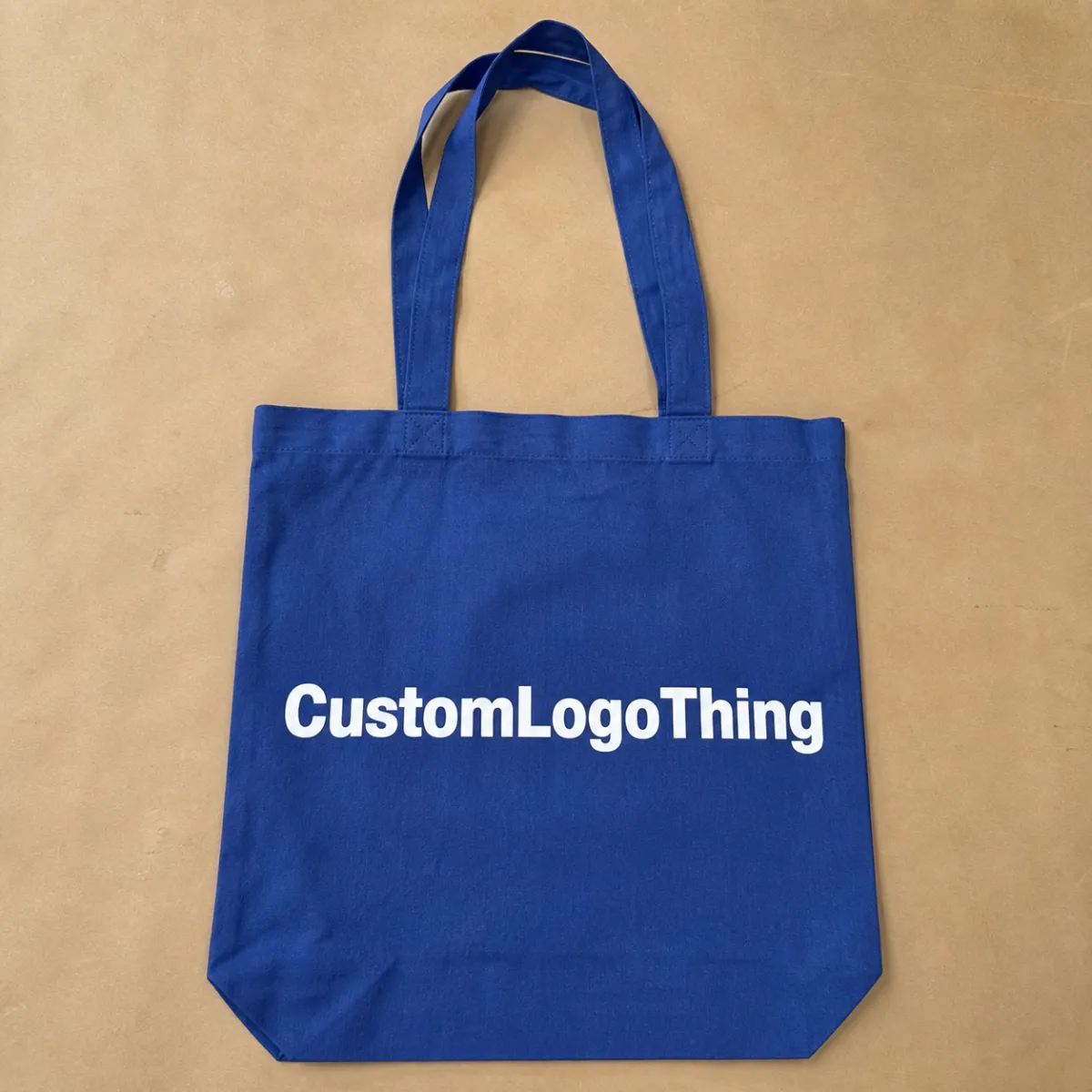
Packaging teams often begin by treating the bag as transport only. That view changes quickly once a buyer sees a customer reuse the same tote three or four times in one week. Custom reusable tote bags printed behave less like disposable carriers and more like portable advertising with a utility function. They leave the store with the purchase, then keep carrying the message long after the receipt is gone.
Repeated exposure is the main appeal. A tote used for groceries twice a week, then for gym gear, then for work papers, can generate far more visibility than a stack of low-grade bags that disappear after one trip. That matters because the value is not confined to the day of distribution. It stretches across months, and sometimes years, if the construction holds up.
Brands also like the flexibility. Not every launch needs rigid packaging or a Custom Printed Box. Uneven items, sample kits, event materials, and bundled handouts all fit more comfortably in a reusable carrier. In practice, custom reusable tote bags printed often become the middle ground between promotion and function, which is one reason they stay in circulation.
The word reusable gets used too casually. Reusable does not mean durable enough for repeated branding exposure. A thin bag may technically be used again, but if the seam opens or the ink flakes after a few outings, the marketing value falls apart. The stronger custom reusable tote bags printed are built for friction, folding, weight, and the slow punishment of everyday use.
Sustainability sits in the background of almost every tote discussion, and for good reason. A bag that replaces several single-use bags and stays in rotation can reduce waste and improve the optics of a campaign. Claims only hold up when the product works in real life. Recycled content helps, but it does not excuse weak stitching or poor decoration choices. A tote people actually keep is usually the better environmental outcome.
Custom reusable tote bags printed also move easily across channels. In retail, they lift the handoff. At trade shows, they carry catalogs, samples, badges, and brochures. In onboarding kits, they organize welcome items. In local promotions, they become a mobile billboard on sidewalks and buses. That broad utility explains why they keep appearing alongside branded packaging programs even when the original brief was for something else entirely.
How Custom Reusable Tote Bags Printed Are Produced
The production path for custom reusable tote bags printed starts with information, not ink. A supplier needs the bag type, dimensions, artwork, quantity, print locations, and delivery date before the first proof can be meaningful. After that comes quoting, file review, setup, sampling or virtual approval, and final production. Buyers who understand that chain usually avoid the delays that come from guessing at the wrong stage.
Decoration method is where many decisions are won or lost. Screen printing remains common because it delivers strong opacity, consistent color, and efficient pricing on repeat runs. It tends to suit logos, bold shapes, and clean layouts. Digital printing is a better fit for gradients, detailed illustrations, and artwork that needs more color variation, though small orders can price higher. Heat transfer can help with short runs or complex graphics. Embroidery looks premium on heavier canvas, but tiny text and large solid fills can make it impractical.
Bag construction affects the outcome as much as the print method. Seams can interrupt a logo. Gussets expand capacity, but they also change the usable print area. Handle placement shifts the visual balance. Fabric texture matters more than many buyers expect: smoother surfaces usually hold detail better, while rough weaves can soften edges and reduce crispness. For custom reusable tote bags printed, the bag body is part of the print process, not just the backdrop.
Artwork preparation is where avoidable friction often begins. Suppliers usually want vector artwork for logos, clean color separation, and a clearly defined print area. Multiple colors can raise setup complexity, especially with screen printing. Fine rules, tiny type, and delicate gradients often need simplification for fabric. I have watched a six-color design get reduced to two colors and end up stronger for it: cleaner, cheaper, and easier to read at arm’s length.
Quality checks matter just as much as setup. Proofs should be checked for placement, size, and color accuracy. Ink adhesion needs inspection. Stitch strength deserves attention before the full run is approved. If a sample exists, use it. A physical sample reveals things a PDF cannot: the hand feel of the fabric, the thickness of the handles, the weight of the bag, and whether the logo still reads clearly from across a room. For custom reusable tote bags printed, sample approval often separates a solid run from a costly disappointment.
There is a useful comparison with Custom Printed Boxes. Boxes offer a fixed shape and a predictable surface. Totes are looser, which sounds simpler until you factor in fabric stretch, texture variation, and movement during printing. Experienced packaging teams treat custom reusable tote bags printed as a production job with variables, not as a casual design request.
One detail I learned after visiting a screen-print shop outside Chicago still sticks with me: the operators spent almost as much time checking the bag’s seam placement as they did loading the ink. That is the part buyers rarely see. On paper, a tote looks like a flat canvas. In production, it is a sewn object with tension points, folds, and tolerances that can change how a logo lands.
Cost and Pricing for Custom Reusable Tote Bags Printed
Custom reusable tote bags printed cost more or less depending on several moving parts: material, construction, number of print colors, number of print locations, quantity, and any special finishing. The final quote can shift quickly because one change often pulls another with it. A heavier canvas bag may look better but need different handling on press. A more elaborate design may require extra setup. A small order can make the unit price look high even when the print process itself is efficient.
Small runs usually feel expensive because setup math is unforgiving. Screen printing often carries per-color setup charges, and those charges have fewer units to spread across when the order is small. It is common to see screen setup fees in the range of $25-$75 per color per location, although some suppliers package them into the unit rate. Sampling, color matching, and revisions can add more. For custom reusable tote bags printed, the number on the quote rarely tells the whole story unless freight and setup are already included.
A better way to judge value is cost per use. A $1.00 tote used once is expensive. A $3.00 tote used thirty times becomes a bargain by comparison. Reuse changes the equation. A stronger bag that stays in a customer’s rotation can outperform a cheap giveaway that ends up in a drawer or recycling bin after one outing.
Hidden costs show up fast if nobody asks about them. Freight can be meaningful because tote orders often ship in large cartons with low density. Rush service can add 10% to 25%, depending on supplier and production load. Special packaging, barcode labels, polybagging, or individual insertion can also change the total. If the artwork needs multiple revisions, design fees or timeline extensions can follow. For custom reusable tote bags printed, the useful quote is the one that matches the real delivery plan.
| Tier | Typical Material | Common Order Band | Indicative Unit Cost | Best Fit |
|---|---|---|---|---|
| Entry-level | Nonwoven polypropylene | 500-2,500 units | $0.60-$1.50 | Events, handouts, simple promotions |
| Mid-range | Cotton or light canvas | 300-2,000 units | $1.25-$3.50 | Retail, member gifts, welcome kits |
| Premium | Heavier canvas, recycled PET, upgraded trim | 250-1,500 units | $3.00-$6.50+ | Luxury retail, brand launches, long-life reuse |
These figures are directional, not universal. A straightforward one-color screen print on stock bags can land below them. A custom size, full-color art, woven label, or specialty handle can push them higher. The point is not to chase the lowest number. The point is to understand where the money goes and whether the bag will do enough work to justify it.
Budgeting becomes clearer when you think in tiers. Entry-level orders usually prioritize volume and visibility. Mid-range orders balance feel, durability, and cost. Premium orders serve bags that need a stronger tactile impression, better shelf presence, or longer reuse. The same logic appears in other branded packaging categories. A tote is not the answer to every brief, but it can be the right spend when repeat use matters more than one-time containment.
Choosing Materials, Sizes, and Print Methods
Matching the bag to the job is where custom reusable tote bags printed either justify themselves or underperform. A grocery tote needs weight capacity and a wide opening. A trade show tote needs room for catalogs, samples, and a notebook. A boutique retail tote may need better hand feel and a cleaner silhouette. An employee kit bag may need structure more than softness. There is no universal best choice, only the right fit for the use case.
Cotton is familiar and easy to brand. It feels approachable, which is one reason it works well for lifestyle retail and nonprofit campaigns. Canvas is heavier, more structured, and better at holding shape. Recycled PET can work for buyers who want a lighter sustainability narrative and a smoother print surface. Nonwoven polypropylene tends to be the most budget-friendly and suits high-volume events. For custom reusable tote bags printed, the material should reflect how long the bag needs to stay in circulation, not just how it photographs.
Size and construction shape the customer experience more than many buyers realize. A tote that is too small gets left behind. A tote that is too large feels awkward unless the shopper actually needs the capacity. Gussets add depth for groceries, boxes, and sample kits. Handle length changes how the tote is carried and whether it works on the shoulder. Short handles feel neat and retail-focused. Longer handles help with commuting and heavier loads. The value of custom reusable tote bags printed often comes from these practical choices, not just from the logo placement.
Color and finish influence how the print reads. Light-colored bags usually make logos easier to see. Dark bags can feel more premium, though they may need stronger ink coverage or underbase work. Natural fabrics can support a softer, more eco-minded presentation. Smoother surfaces usually improve detail reproduction, while rougher textures can feel more artisanal and still reduce sharpness. If the artwork depends on tiny type or thin lines, the surface matters almost as much as the design.
Sustainability deserves verification, not assumption. If a supplier claims recycled content, ask for documentation. If the order includes hang tags, inserts, or carton liners, paper components should be reviewed too. The FSC framework can help buyers evaluate paper-based elements that support the bag without weakening the broader story. In practical terms, the best sustainability decision is the one customers will use often enough to offset the footprint.
The same thinking shows up in broader package branding decisions across retail. A tote can complement custom printed boxes, inserts, and other packaging components when the visual language is consistent. Custom reusable tote bags printed work best as part of that larger system, not as a detached promotional item with no link to the rest of the brand experience.
A useful test I use is simple: if the logo were removed, would the bag still feel worth keeping? If the answer is yes, the material and proportions are probably doing real work. If the answer is no, the decoration is carrying too much of the burden, and the tote may age badly.
Process and Timeline: From Quote to Delivery
The route from quote to delivery gets easier when everyone starts from the same spec. A supplier usually needs bag type, size, material, color, artwork, print locations, quantity, and delivery date. Once those pieces are fixed, the quote has a chance of meaning what it says. For custom reusable tote bags printed, vague instructions invite substitutions, and substitutions are where most of the headaches begin.
A typical workflow runs like this: request quote, confirm specifications, submit artwork, review proof, approve sample or virtual mockup, produce, pack, and ship. Every step can add delay. Art changes during proof review take time. Sample requests add another checkpoint. Shipping to multiple addresses adds coordination. The cleanest projects are usually the ones that start with a firm brief and files that do not need rescue.
Lead time depends on method and inventory. Simple stock bags with one-color screen print can move quickly, sometimes within 10-15 business days after proof approval if the bags are already available. Custom fabrics, heavier canvas, embroidery, and multi-location print jobs usually take longer. If the bags need to be made from scratch, the calendar stretches further. With custom reusable tote bags printed, smart planning leaves room for proofing and freight, not just press time.
Rush work helps only when the buyer understands the tradeoff. Materials may be limited. Printing options may narrow. Freight costs can rise. Color matching may become less forgiving. People sometimes ask for a rush after they see the quote, only to find that speed costs more than the budget can absorb. Suppliers know that pattern well. Faster production usually means paying to move to the front of the line.
A cleaner process starts with clear milestones in writing. For example:
- Quote issued with exact bag specs and print method.
- Artwork submitted in the required format, usually vector for logos.
- Proof reviewed with placement, size, and color notes.
- Sample or mockup approved before production starts.
- Production calendar shared with expected completion and shipping dates.
- Carton count and tracking details confirmed before dispatch.
If the totes are part of a broader retail rollout or store opening kit, the shipping carton matters too. Boxes should survive transit, especially when the order is split across locations or traveling long distances. The transit-testing standards associated with ISTA offer a useful lens here. A damaged carton can make a good tote program look careless before customers even see the bags.
That detail matters more than it first appears. A tote can be excellent and still arrive poorly if the distribution plan is weak. Good timing, good packing, and good communication are part of the product. For custom reusable tote bags printed, logistics discipline is part of the job, not an afterthought.
Common Mistakes When Ordering Tote Bags
The most common mistake is choosing the cheapest bag instead of the bag that actually survives use. The logic sounds fine in a spreadsheet and fails in the real world. A thin tote might clear budget review, but if the handles pull or the print cracks quickly, the spend becomes waste. A slightly better bag can stay in circulation long enough to justify the higher price. With custom reusable tote bags printed, durability is part of the return.
Design mistakes come next. Too many colors raise cost and can reduce consistency. Tiny text may disappear on textured fabric. Thin rules can vanish in print. A design that feels elegant on screen can lose force on cotton weave or rougher surfaces. The safer move is to design for the material. If the logo needs to read from ten feet away, simplify it. If the message matters more than the illustration, make the message larger.
Lead time is another trap. Buyers often underestimate how long artwork approval, sample review, and freight coordination take. The problem gets worse when the order has to ship to multiple locations or hit a launch date that cannot move. More tote programs go off schedule because approvals lag than because the print itself fails. A supplier can only move as fast as the slowest sign-off.
Vague specifications create risk as well. If bag weight, handle length, color, print placement, or finish is not spelled out, the supplier has room to interpret. That can lead to substitutions that technically satisfy the order but do not match the buyer’s expectation. If you want a 10 oz canvas bag with 22-inch handles and centered print, say exactly that. For custom reusable tote bags printed, specificity protects the quote.
Sustainability claims can be overstated too easily. A tote marketed as eco-friendly is not automatically the better choice. Real value comes from verified material claims, durable construction, and actual reuse. If recycled content is mentioned, ask how much and in which part. If a supplier says the bag is sustainable because it is reusable, ask how many uses the construction is realistically built to handle. That question tells you more than a slogan ever will.
A beautiful tote that fails early does not help the environment. It just reaches the bin faster.
There is also a packaging strategy mistake that shows up often: treating tote bags as a separate decision instead of one piece of the broader branded packaging system. If store bags, mailers, inserts, and signage all tell different stories, the brand feels fractured. Custom reusable tote bags printed work best when they follow the same visual rules used elsewhere in product packaging and retail packaging.
Another common miss is forgetting the practical life of the tote after the first use. If the bag is too large for daily errands or too shallow for real carrying, it becomes a souvenir rather than a tool. That might still look pleasant in a photo, but it weakens the long-term return that makes the format attractive in the first place.
Expert Tips and Next Steps
The first practical step is to build a one-page spec sheet before asking for quotes. Include bag dimensions, material, color, handle style, print locations, artwork file type, quantity, target ship date, and destination. That makes every supplier price the same job. Custom reusable tote bags printed become much easier to compare once the baseline is identical.
Second, request a physical sample or swatch if feel, color accuracy, or durability matters. A digital proof cannot show how a bag drapes, whether the weave feels thin, or how the ink sits on the surface. If the order supports a retail program or premium giveaway, the sample is worth the time. It is usually where problems appear before they become expensive. For brands thinking about broader merchandising, the Custom Packaging Products catalog can help align tote choices with inserts, mailers, and other supporting pieces.
Third, compare suppliers using three filters: delivered cost, durability, and brand fit. Delivered cost means quote plus freight plus extras. Durability means whether the bag survives repeated use. Brand fit means whether the finished piece supports the story customers should tell about your company. Those three filters are better than chasing the lowest price or the prettiest mockup. Custom reusable tote bags printed should earn a place in the program, not just a checkmark on a spreadsheet.
Fourth, plan inventory around actual distribution behavior. Some totes move fast because they are tied to events. Others leave in waves through stores. A few sit in storage longer than expected because the campaign slips. Track usage and replenishment patterns, and the next order becomes easier to forecast. That matters when branded packaging is being coordinated across multiple channels, because one late tote shipment can distort a much larger launch.
If you are still narrowing the options, this checklist helps:
- Confirm the use case and carrying load.
- Choose the material based on reuse goals, not just price.
- Keep the artwork bold enough to print cleanly.
- Ask for sample approval when the finish matters.
- Check freight, setup, and rush charges before comparing quotes.
- Make sure the tote supports the wider retail packaging story.
Custom reusable tote bags printed work best when they are treated like a long-life brand asset. Not a novelty. Not a filler item. A practical object people will keep reaching for because it solves a carrying problem and still looks good doing it. Tight specs, honest budgeting, and materials chosen for actual use usually beat the fastest low-cost version.
The clearest takeaway is simple: specify the tote as if it will be handled, carried, folded, and reused many times, because that is the only scenario that makes the format worth buying. If the bag, print method, and distribution plan all support that outcome, custom reusable tote bags printed can earn their place in a packaging program with unusual efficiency.
What material is best for custom reusable tote bags printed?
Canvas and heavier cotton usually feel premium and hold up well for repeated retail use. Recycled PET and nonwoven polypropylene can be better for budget-conscious campaigns or larger events. The best choice depends on how often the tote will be reused, how much weight it must carry, and how the print needs to look. For custom reusable tote bags printed, durability should guide the material choice more than first-price alone.
How many colors can I print on custom reusable tote bags printed?
The answer depends on the print method. Screen printing often handles solid color blocks best, while digital methods allow more detail. More colors usually increase setup complexity and can raise the price, especially on smaller quantities. If cost matters, simplifying the artwork to fewer colors usually improves both pricing and consistency.
What is the typical MOQ for custom reusable tote bags printed?
MOQ varies by supplier and production method, but decorated tote orders often start in the low hundreds. Complex prints or specialty materials may require higher minimums because setup costs need to be spread across more units. Ask for tiered pricing so you can compare the unit cost at several quantity levels before committing.
How long does production take for custom reusable tote bags printed?
Lead time usually depends on artwork approval, print method, quantity, and whether the bag is in stock or custom built. Simple runs can move faster, while custom materials, rush requests, and multi-color designs usually take longer. The safest plan is to budget extra time for proofing and shipping, not just the production window.
Are custom reusable tote bags printed actually sustainable?
They can be sustainable if they replace many single-use bags and are used often enough to offset the material and printing footprint. A tote made from recycled content helps, but durability and real reuse matter just as much as the marketing claim. The most sustainable option is usually the one customers will actually keep, carry, and reuse.
For brands that want their packaging to do more than sit on a shelf, custom reusable tote bags printed can be a smart move. The bags reward careful specs, honest budgeting, and materials chosen for real-world use, which is exactly why they keep showing up in stronger packaging design programs. If the goal is practical branded packaging with repeat visibility, custom reusable tote bags printed are one of the few formats that can carry the message long after the purchase is over.

