Buyer Fit Snapshot
| Best fit | Custom Rigid Boxes Recycled Board projects where brand print, material claims, artwork control, MOQ, and repeat-order consistency need to be specified before quoting. |
|---|---|
| Quote inputs | Share finished size, material target, print colors, finish, packing count, annual reorder estimate, ship-to region, and any compliance wording. |
| Proofing check | Approve dieline scale, logo placement, barcode or warning zones, color tolerance, closure strength, and carton packing before bulk production. |
| Main risk | Vague material claims, crowded artwork, missing packing details, or unclear freight terms can make a low unit price expensive after revisions. |
Fast answer: Custom Rigid Boxes Recycled Board: Board, Finish, Dieline, and Unit Cost should be specified like a repeatable production item. The safest quote records material, print method, finish, artwork proof, packing count, and reorder notes in one written spec.
Production checks before approval
Compare the actual filled-product size with the drawing, then confirm tolerance on folds, seals, hang holes, label areas, and retail display edges. Reserve space for logos, QR codes, warning copy, and material claims before decorative graphics fill the panel.
Quote comparison points
Review material grade, print process, finish, sampling route, tooling charges, carton quantity, and freight assumptions side by side. A quote is only useful when the supplier can repeat the same color, closure quality, and packing count on the next order.
Custom rigid Boxes Recycled Board sit in a useful sweet spot: they feel substantial, hold their shape, and support a polished finish without depending on virgin fiber or a pile of decorative extras. A rigid box should land in the hand with a little authority, and it should still be built on a recycled board core that does the structural work quietly in the background. That balance is why these boxes keep showing up in premium product packaging, where the pack has to protect the item and also speak clearly about the quality of what is inside.
From a buyer’s point of view, the appeal is straightforward. Custom Rigid Boxes recycled board work well for luxury retail, subscription sets, gifts, cosmetics, electronics accessories, and branded packaging that needs the unboxing moment to feel considered rather than rushed. The key is not simply choosing recycled board and calling it a day. The real job is matching board caliper, wrap paper, insert style, and finishing method so the box performs like packaging, not just a display object.
There is also a practical honesty to keep in mind. Recycled board is a sensible material choice, but a box is only as recyclable as the full material mix allows. A paper-wrapped rigid box with paperboard inserts tells a very different end-of-life story from one that adds heavy lamination, magnets, foam, and multiple coatings. That is why Custom Rigid Boxes recycled board deserve a technical review before a brand signs off on the spec and starts production.
Custom Rigid Boxes Recycled Board: What They Are and Why They Matter
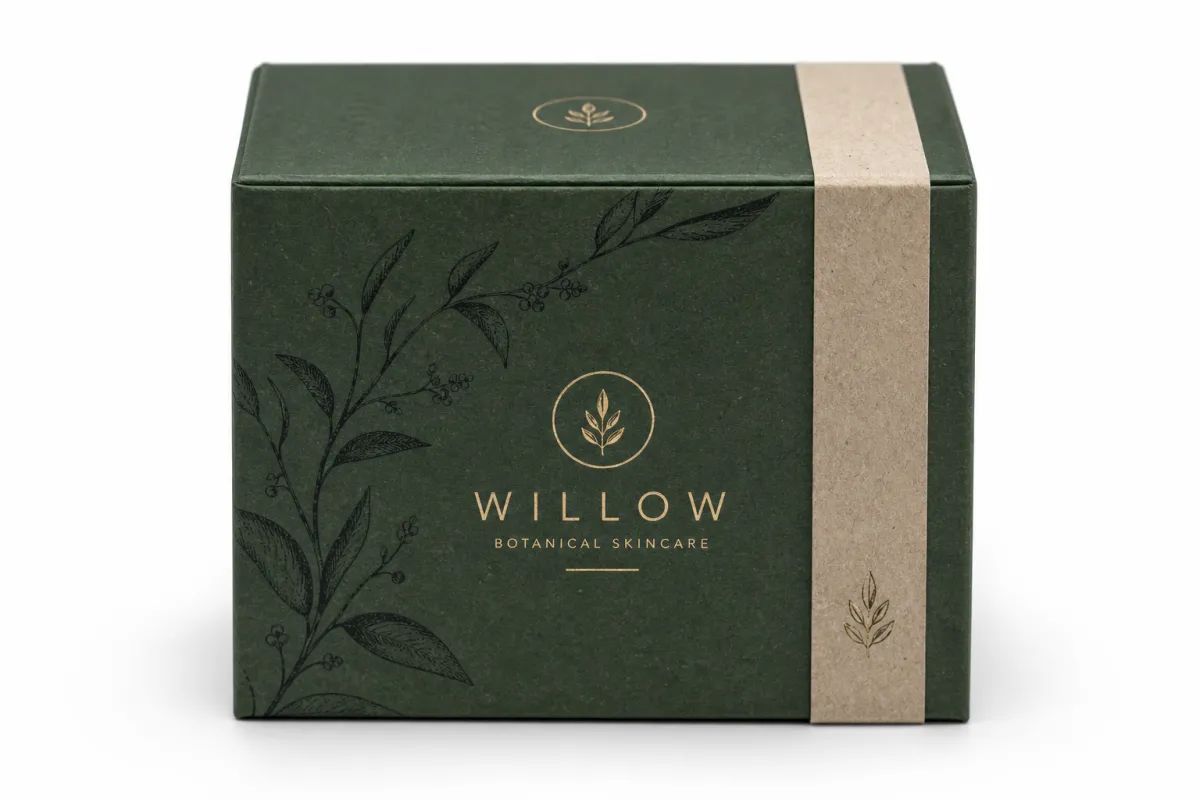
At the simplest level, custom rigid boxes recycled board are premium packages built around a dense board shell made with recycled fiber content, then wrapped in printed or specialty paper. A folding carton ships flat and gets formed later; a rigid box is built to stay formed. That difference gives it sharper edges, cleaner corners, and a more elevated unboxing feel. People notice that stiffness quickly, often before they ever read the print on the lid.
The structure usually comes down to three parts: the board core, the outer wrap, and the interior support. The core provides rigidity. The wrap carries the artwork, texture, and finish. The interior may be a tray, a paperboard insert, a molded cradle, or a support that keeps the product from shifting. When those layers are planned well, custom rigid boxes recycled board can feel polished and still remain practical for retail handling and transit.
They matter because they sit between several competing goals. A brand wants visual presence, but it also needs protection, predictable cost, and a packaging design that does not create headaches in production. Buyers often compare custom rigid boxes recycled board with folding cartons or corrugated mailers and find that the rigid format makes more sense for items that are valuable, fragile, giftable, or expected to signal a higher price point. That is especially true for cosmetics, premium drinkware, accessories, and compact electronics, where the box becomes part of the product experience.
There is another reason these boxes matter: they can support a cleaner brand story than people sometimes assume. Recycled fiber content, responsibly sourced wrap paper, and paper-based inserts can align well with current packaging goals. The material mix still needs attention, though. A rigid box wrapped in paper, decorated with a restrained finish, and paired with a paperboard insert is usually easier to explain than one that mixes several materials without a clear recovery path. If the packaging story needs to hold together, custom rigid boxes recycled board should be designed with end-of-life in mind from the start.
That design mindset is also where branding value shows up. Good packaging branding does not depend on noise; it depends on proportion, surface quality, and structure. A crisp lid, square corners, a clean wrap seam, and one deliberate foil detail often say more than a crowded layout ever could. In plain terms, custom rigid boxes recycled board do not need to shout premium. They need to feel intentional.
Good rigid packaging should survive the trip, sit well on the shelf, and open with confidence in the hand. If it only looks good in a mockup, the spec is not finished yet.
How Custom Rigid Boxes Recycled Board Are Made
The build process for custom rigid boxes recycled board starts with the board itself. The shell is usually made from dense grayboard or recycled chipboard, selected for caliper and compression performance rather than appearance alone. A thicker board often feels more substantial, but thickness is only one piece of the puzzle. Fiber quality, internal bonding, and the board’s ability to resist crush all affect whether the box keeps its shape after handling, stacking, and transit stress.
In practice, a well-specified board should hold its edges cleanly and resist the corner denting that can make premium packaging look tired before it even reaches the customer. For heavier products, buyers often look for board in the range of 1.5 mm to 3 mm, though the right choice still depends on box size, product weight, and how the item is supported inside. Small jewelry or accessory boxes can work with lighter structures, while larger presentation boxes for sets or kits usually need more rigidity to keep the panels from flexing. That is why custom rigid boxes recycled board should never be chosen by thickness alone.
Once the shell is set, the outer paper wrap takes over the visual job. This is where the brand identity lives. The wrap can be coated, uncoated, textured, or printed with rich solids and fine detail. During converting, the wrap is glued to the board and turned at the edges so the corners look neat and the board stays hidden. Good wrap work is quiet, precise labor. The line between acceptable and excellent often comes down to corner folding, adhesive control, and seam placement that supports the artwork instead of breaking it up.
The inside matters just as much. Some custom rigid boxes recycled board use a simple paperboard insert. Others use a shoulder-and-neck build, a full tray, a lift-out platform, or a magnetic closure with ribbon pull. Each option affects assembly time, cost, and the way the product is presented. If the item has an unusual shape, extra components, or layered accessories, the insert is more than a detail. It becomes the part that keeps the box from rattling, scuffing, or arriving with crushed corners caused by movement in transit. I have seen more than one beautiful shell lose credibility because the inner fit was a little too loose, and honestly, that happens more often than people think.
Compared with folding cartons, rigid boxes demand more assembly. A folding carton can be cut, scored, and shipped flat, which lowers freight and setup labor. A rigid box, by contrast, is built piece by piece, then wrapped and formed. That difference is a big reason custom rigid boxes recycled board feel more substantial. It is also why they need tighter planning, because every added feature adds handling time somewhere in the workflow.
What the structure usually includes
- Rigid board shell: recycled chipboard or grayboard cut to size.
- Outer wrap: printed or specialty paper that carries the branding.
- Insert or tray: paperboard, molded fiber, or formed support for fit and protection.
- Closure system: lift-off lid, magnetic flap, shoulder-and-neck, or telescoping style.
That combination is what gives custom rigid boxes recycled board their place in premium retail packaging. They are not trying to be the lightest package on the line. They are built to deliver structure, presentation, and a controlled unboxing experience that feels consistent from one unit to the next.
Key Factors That Affect Performance and Cost
The biggest cost drivers for custom rigid boxes recycled board are usually board thickness, insert complexity, and finishing choices. A simple two-piece rigid box with a paper wrap and a basic insert is one thing; a magnetic box with foil, embossing, soft-touch lamination, and a custom tray is another. The jump in cost is not just about materials. It is also about labor, setup, and the number of steps needed to turn the spec into a finished package.
For many buyers, the surprise is how quickly the smaller details add up. Soft-touch lamination can make a box feel expensive, but it also adds a film layer and an extra conversion step. Foil stamping can create a strong logo moment, yet the tooling and registration need careful control. Embossing adds depth, but only if the artwork and paper stock can carry the relief cleanly. With custom rigid boxes recycled board, the best-looking package is not always the one with the most effects. Often it is the one with the strongest proportion and the cleanest execution.
Labor deserves more attention than it usually gets. Rigid box assembly is less automated than many folding carton jobs, especially when the box includes inserts, windows, or unusual closures. A design tweak that sounds minor on paper can ripple through production time. Moving a seam, changing the lid depth, or adding a separate ribbon pull may look small, yet each change can affect cutting, wrapping, cure time, and hand assembly. That is why custom rigid boxes recycled board are often priced as much on process as on raw material.
Volume matters too. Setup costs spread across the run, so lower quantities usually carry a higher per-box price. At 1,000 units, a premium rigid box might land in a very different cost band than the same build at 10,000 units. The exact number depends on size and finishing, but the direction is consistent: more units usually mean a more efficient setup. Brands that understand that pattern tend to make better decisions about whether to simplify the structure or increase the order quantity to reach a sensible unit price for custom rigid boxes recycled board.
There are also sustainability-related cost factors. If the project requires recycled content verification, FSC-certified wrap paper, or a converter that tracks waste carefully, those controls can influence pricing. They are not always expensive on their own, but they do require sourcing discipline and documentation. Many brands ask for sustainability claims without thinking through the proof behind them. A cleaner approach is to decide which claim matters, then specify the materials and certifications needed to support it. For reference on paper sourcing, the FSC framework is a useful starting point.
| Spec choice | Typical cost impact | Best use case | Practical note |
|---|---|---|---|
| Plain wrap, basic insert | Lower | Gift sets, entry luxury, accessories | Good place to start for new custom rigid boxes recycled board programs |
| Soft-touch lamination + foil logo | Moderate to higher | Beauty, premium retail, branded packaging | Stronger tactile feel, but extra finishing time |
| Embossing + spot UV + magnet closure | Higher | Luxury launch kits, presentation boxes | Works best when the artwork is kept clean and focused |
| Custom tray with complex die-cut support | Higher | Electronics accessories, multi-piece kits | Fit accuracy matters as much as decoration |
If the goal is stronger shipping performance, testing matters just as much as material selection. Many packaging teams look to ISTA methods because they simulate vibration, drop, and compression conditions that show up in transit. For a premium package, that testing is not theater. It is how you learn whether the custom rigid boxes recycled board spec can actually survive the route from warehouse to customer without corner damage or insert failure.
The final cost picture is usually a mix of all these pieces. A box that looks simple may still be expensive if the tolerances are tight and the assembly is hands-on. A box that looks ornate may be more affordable than expected if the structure is straightforward and the run is large. For that reason, comparing custom rigid boxes recycled board only by unit price can be misleading. The stronger comparison looks at fit, finish, waste, freight, and how many production steps are hiding behind the sample in hand.
Order Process and Production Timeline
The cleanest way to order custom rigid boxes recycled board starts with a clear spec sheet. Before a die is drawn or a sample is made, the supplier should know the product dimensions, weight, closure style, insert needs, finish preferences, branding assets, and shipping goals. If the product includes accessories or layered components, those should be listed too. The more complete the starting information, the less likely the project is to drift into revision cycles that chew up time and budget.
The process usually begins with a structural conversation. A good packaging partner will review the product, suggest board thickness, and decide whether a two-piece lid-and-base box, a magnetic rigid box, or a shoulder-and-neck structure is the right fit. After that comes the dieline or structural drawing, followed by a sample or prototype. For custom printed boxes, artwork approval usually comes after the structure is stable, not before. That order matters because print can be beautiful and still be wrong if the box dimensions do not hold the product safely.
Typical timing varies, but custom rigid boxes recycled board often need more lead time than standard folding cartons. A straightforward project might move from proof approval to production in roughly 12 to 18 business days, while a build with special finishes, custom inserts, or multiple sampling rounds can take longer. The sample stage itself may add another 7 to 15 days depending on complexity and factory workload. Those are planning ranges, not promises, and they help buyers set expectations without guessing.
Most schedule problems come from the same few places. Artwork revisions are a common one, especially when logos are redrawn late or print files arrive with low-resolution images. Insert changes create another delay if the product dimensions were estimated instead of measured. Specialty finishing can also slow a job because foil, embossing, and lamination each need their own setup and quality check. For custom rigid boxes recycled board, a late change to the closure or internal support can be especially disruptive because it affects both the structure and the appearance.
Clear approvals keep the job moving. If the brand signs off on the spec, the sample, and the print file in one clean sequence, the production team can lock the plan and move forward with fewer interruptions. That also reduces the chance of rush charges, which usually show up when a launch date is fixed long before the box has been properly approved. A simple rule helps here: make the decisions early, then let the factory build to a stable target. Custom rigid boxes recycled board reward that discipline.
One more practical point: shipping logistics should be discussed before the order is placed, not after. If the boxes must ship flat, nested, or fully assembled, that changes carton pack-out, freight cost, and sometimes even the design itself. A premium box that arrives crushed because it was packed poorly is a wasted investment. That is why the best custom rigid boxes recycled board programs treat production and logistics as one conversation, not two separate steps.
Common Mistakes When Specifying Recycled Board Rigid Boxes
The first mistake is choosing recycled board because the sustainability story sounds good, then discovering the board is too light for the product. Custom rigid boxes recycled board need to be matched to the actual load, not to a marketing phrase. A lightweight accessory box and a heavier set box do not belong in the same structural category. If the board is too soft, the lid can bow, the corners can bruise, and the package can lose the crisp feel that makes rigid packaging worth the spend.
A second mistake is over-designing the box with too many special effects. Foil, embossing, spot UV, textured wrap, magnet closure, ribbon pull, and a custom insert can all work on their own, but stacking every premium effect into one box often creates clutter. It can also complicate production and make end-of-life recovery harder. A cleaner result usually comes from one strong focal point and a calm structure. For many custom rigid boxes recycled board projects, restraint looks more premium than decoration overload.
Insert planning is another common trouble spot. A box can look beautiful while the product inside shifts half an inch during shipment. That movement is enough to cause scuffing, rattling, or crushed corners on the insert itself. Loose tolerances are especially risky for products with chargers, cables, refills, bottles, or layered components. If the pack-out is not physically locked down, the outer shell has to absorb impacts it was never designed to carry. Good custom rigid boxes recycled board specs treat the insert as a structural component, not an afterthought.
People also underestimate the importance of exact dimensions. “Close enough” is not a useful instruction for a premium box. Products with sleeves, accessories, or shrink bands can vary enough that a simple measurement creates problems later. If the dieline does not allow for the right clearance, the item will fit too tightly or float too loosely. Either way, the final package suffers. That is why dimensional accuracy is one of the most important parts of ordering custom rigid boxes recycled board.
Another issue is mixed-material confusion. A buyer may ask for recycled board but forget that a plastic coating, foam insert, magnetic closure, or heavy lamination can change the disposal story. The box may still be premium, but the environmental claim becomes harder to explain. It helps to verify what actually goes into the build: board content, wrap paper, coating, adhesive, and closure hardware. If the goal is a cleaner sustainability message, simpler material combinations are usually easier to defend. The EPA recycling guidance is a useful reminder that recoverability depends on the material mix, not a single label on the carton.
Here is the short list I would keep in front of any buyer team:
- Do not choose board only by recycled content claim.
- Do not add finishes that fight the artwork.
- Do not approve inserts without testing product movement.
- Do not leave dimensions vague.
- Do verify coatings, closures, and material sources before sign-off.
Those checks sound simple, but they are usually the difference between a packaging program that runs smoothly and one that needs repeated fixes. Custom rigid boxes recycled board are forgiving in some ways, but they still demand precision.
Expert Tips for Better Structure, Print, and Finishing
My first recommendation is to match the board grade to real handling, not to the emotion of the mockup. A sample that feels impressive in the hand is useful, but it is not enough if the box must survive distribution, warehouse stacking, and repeated handling. With custom rigid boxes recycled board, the best choice is often the one that balances stiffness with clean assembly rather than simply pushing to the thickest board available. Too much board can make the box bulky without making it meaningfully better.
The second recommendation is to use finishing with a clear point of view. A restrained foil logo, a single embossed mark, or a subtle texture can look far more refined than a crowded surface with several competing effects. The same principle applies to package branding as it does to interior design: one or two deliberate details carry more authority than a dozen loud ones. If your brand voice is calm and premium, custom rigid boxes recycled board should reflect that calm rather than fight it.
The strongest premium boxes usually look simple at first glance and precise on a second look. Sharp corners, even wrap tension, and a finish that suits the paper tell the real story.
Third, think about the whole journey of the box, not just the shelf. Good packaging design has to work in the warehouse, in transit, on display, and in the customer’s hands. A box that looks luxurious but slips around in a shipping carton is not doing its job. A box that stacks efficiently, resists scuffing, and opens cleanly will usually outperform one that is visually dramatic but fragile. That is especially true for custom rigid boxes recycled board, because the format is often chosen to carry both presentation and protection.
Fourth, request physical samples under real lighting. On-screen color can hide the character of a wrap paper, and recycled board textures can shift the perceived tone of a print. A warm white may look clean in one light and dull in another; a matte black can show fingerprints more easily than expected; a soft-touch film can behave differently from a coated paper wrap. If the box is going into retail packaging or a client-facing kit, that real-world check is worth the time. Most surprises are easier to solve before the run than after it.
Finally, design for reuse where it makes sense. A rigid box with a magnetic flap, a tidy insert, and durable wrap paper is often kept by the customer for storage, gifting, or organizing accessories. That can extend the life of the package and strengthen the brand impression long after the product is opened. From a practical angle, fewer material layers also help. If you can reduce excess laminations, remove unnecessary plastic, and keep the structure clean, custom rigid boxes recycled board become easier to explain and easier to live with. That is kind of the point, really.
Next Steps for Buying Custom Rigid Boxes Recycled Board
If you are ready to source custom rigid boxes recycled board, start with a simple checklist rather than a vague idea. Write down the product size, weight, target feel, insert style, finish needs, expected order quantity, and the date the packaging needs to arrive. Those details let a supplier quote with far more accuracy and help you compare options without guessing which assumptions changed the price.
It also helps to ask for two or three options side by side. For example, one structure might use a basic recycled board shell with a paperboard insert. Another might move up to a thicker board, a soft-touch wrap, and a foil logo. A third could include a magnetic closure or a molded insert. Looking at those choices together makes it much easier to see where the cost rises and which features actually improve the user experience. That is the point of buying custom rigid boxes recycled board with care: you want the right package, not simply the fanciest one.
Before you approve anything, ask about minimum order quantity, sample timing, production lead time, and freight assumptions. A project can look affordable on a unit-price sheet and still become difficult if the logistics are unclear. Ask how the boxes will ship, whether they arrive flat or assembled, and whether there is a better way to pack them for export or domestic distribution. If you need broader support across formats, a place like Custom Packaging Products can be a practical starting point for comparing rigid boxes, cartons, inserts, and other packaging structures in one place.
Then compare more than price. Compare fit. Compare corner quality. Compare how the lid closes. Compare how the insert holds the product. Compare how the box behaves in a shipping carton and how it feels in the hand. Those are the details that separate acceptable custom rigid boxes recycled board from packaging that truly supports the brand. The lowest unit cost is not always the lowest total cost once damage, returns, and customer perception enter the picture.
For brands building premium branded packaging, the last step is to tie the structure back to the brand promise. If the product is positioned as carefully made and responsibly sourced, the box should echo that position with clean structure and sensible material choices. If the product is bold and high-contrast, the wrap and finish can carry more drama. Either way, custom rigid boxes recycled board should look like they belong to the product, not like they were borrowed from a different category.
My practical advice is simple: define the product first, then build the box around the actual needs of that item. Do that, and custom rigid boxes recycled board can deliver the premium feel, dependable structure, and smarter material use that make them such a strong fit for modern product packaging.
Are custom rigid boxes with recycled board strong enough for heavier products?
Yes, if the board caliper, wrap paper, and insert design are matched to the product weight. Heavier items usually need a denser board, tighter tolerances, and a well-fitted tray or insert so the product does not move during transit. For anything with real mass, I would always ask for a sample and test corner strength, crush resistance, and fit under the same conditions the finished box will see in shipping. That is the safest way to confirm that custom rigid boxes recycled board are built for the actual load.
Do custom rigid boxes recycled board still feel premium?
They absolutely can. The premium feel comes from structure, wrap material, finishing, and how cleanly the box is made, not from virgin fiber alone. A smooth paper wrap, sharp corners, and a well-proportioned layout can create a very refined result, especially if the decoration is restrained. In many cases, custom rigid boxes recycled board feel more premium than elaborate packaging that tries to do too much. The box should feel deliberate in the hand and precise at the edges.
What affects the price of custom rigid boxes recycled board the most?
Board thickness, insert complexity, and finishing choices usually have the biggest impact on price. Low quantities also cost more per unit because rigid boxes need more labor and setup than folding cartons. Specialty effects like foil, embossing, soft-touch lamination, magnets, and ribbon pulls can push the price up quickly. If you want a tighter budget, simplify the structure first, then decide which visual details matter most. That approach usually gives the best value for custom rigid boxes recycled board.
How long does it take to produce custom rigid boxes recycled board?
Timelines depend on sample needs, artwork approval, and whether the box uses specialty finishes or custom inserts. A simple structure may move relatively quickly once the proof is approved, while a detailed build with magnets, foil, or multiple insert parts will need more lead time. As a planning range, I would expect at least a couple of weeks from approval to production on many programs, and longer if revisions are still open. The cleanest path is to lock the structure early so custom rigid boxes recycled board do not get delayed by late changes.
Can recycled board rigid boxes be made more recyclable?
Yes, by limiting mixed materials and choosing coatings and closures that do not complicate recovery. Paper-based inserts, simpler finishes, and fewer plastic components usually support a better end-of-life outcome than heavy laminations or mixed hardware. The best plan is to think about disposal while the box is still being designed, not after the sample is approved. If the packaging story matters to your brand, custom rigid boxes recycled board should be specified with both presentation and recovery in mind.
For most brands, the practical move is straightforward: define the product first, choose the structure second, and let the board, wrap, insert, and finish follow the real job the box has to do. That is how custom rigid boxes recycled board deliver the premium look, sturdy protection, and sensible material profile buyers are looking for.

