Buyer Fit Snapshot
| Best fit | custom rigid gift boxes for sustainable packaging brands for packaging buyers comparing material specs, print proof, MOQ, unit cost, freight, and repeat-order risk where brand print, material, artwork control, and repeat-order consistency matter. |
|---|---|
| Quote inputs | Share finished size, material target, print colors, finish, packing count, annual reorder estimate, and delivery region. |
| Proofing check | Approve dieline scale, logo placement, barcode or warning zones, color tolerance, and any recyclable or compostable wording before bulk production. |
| Main risk | Vague material claims, crowded artwork, or missing packing details can create delays even when the unit price looks attractive. |
Fast answer: Custom Rigid Gift Boxes for Sustainable Packaging Brands should be specified like a repeatable production item. The safest quote includes material, print method, finish, artwork proof, carton packing, and reorder notes in one written spec.
What to confirm before approving the packaging proof
Check the product dimensions against the actual filled item, not only the sales mockup. Ask for tolerance on folds, seals, hang holes, label areas, and retail display edges. If the package carries a logo, QR code, warning copy, or legal claim, reserve that space before decorative graphics fill the panel.
How to compare quotes without losing quality
Compare board or film grade, print process, finish, sampling route, tooling charges, carton quantity, and freight assumptions side by side. A lower quote is only useful if the supplier can repeat the same color, closure quality, and packing count on the next order.
A customer may keep the box and forget the ribbon, the insert card, and half the packing paper. I have seen that happen more times than I can count, and it is one reason Custom Rigid Gift Boxes keep showing up in premium packaging programs. The package becomes part of the product story. Sometimes it even outlasts the product itself, which is kinda the whole point for brands that want a better second life for their packaging.
Good packaging design proves itself in the hand. Custom Rigid Gift Boxes are not just decorative shells with a logo slapped on top. They are engineered structures with a thick board core, wrapped outer paper, and a feel that tells the customer, before they open anything, that the contents were handled with care. That matters for branded packaging, but it matters just as much for waste reduction, because a box that gets reused earns its place far more honestly than one that looks nice for five seconds and then goes in the bin.
Why custom rigid gift boxes feel premium at first touch
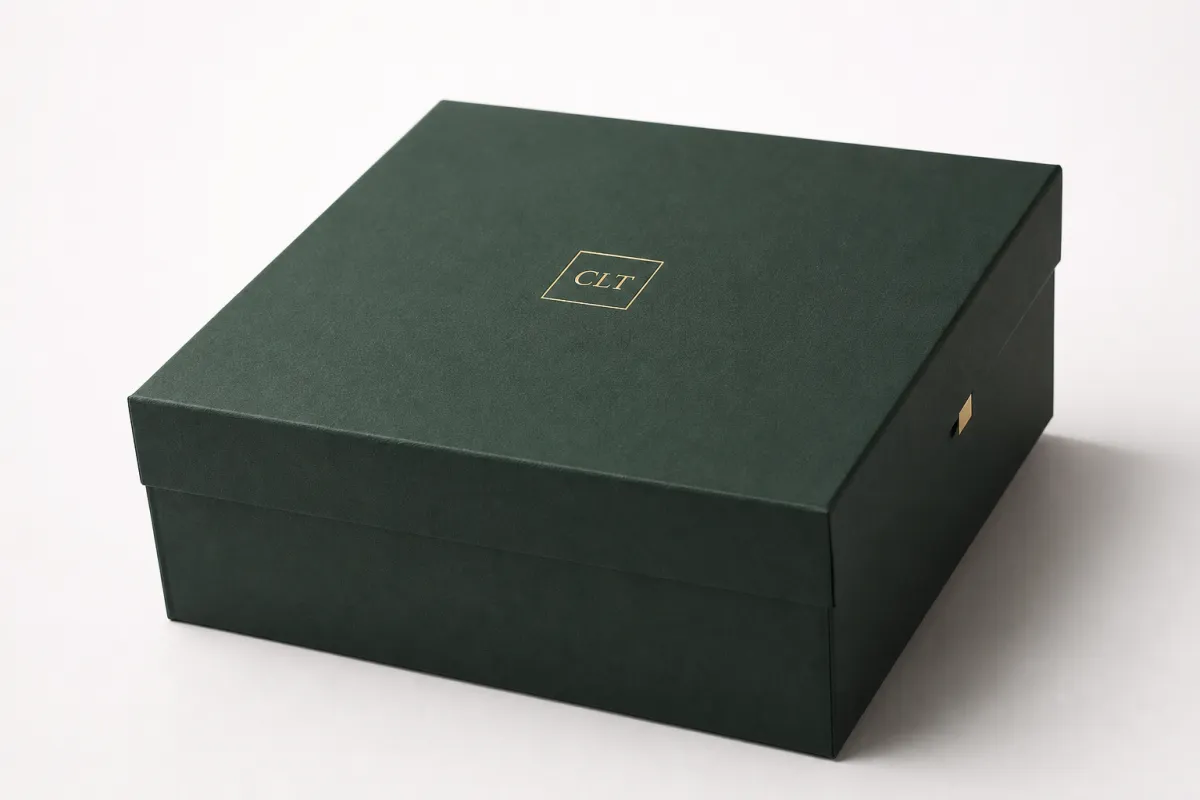
The first touch does a lot of work. A folding carton has some flex, which is fine for plenty of retail packaging jobs, but custom Rigid Gift Boxes feel different immediately. They are firmer, heavier, and more deliberate. That sensation comes from a dense board core, usually greyboard or chipboard, wrapped in printed paper or specialty stock. The box feels substantial because the structure is substantial.
Luxury is only half the equation. Confidence is the other half. When the lid closes cleanly, the corners stay crisp, and the insert holds the product in place, the customer senses that the package was designed rather than improvised. I once reviewed a launch where the artwork looked beautiful, but the insert was two millimeters too shallow. The product bounced just enough to make the whole thing feel cheap. That tiny mismatch did more damage than a dull logo ever could.
That is why custom rigid gift boxes show up so often for candles, skincare kits, jewelry, gift sets, stationery, and apparel accessories. The box starts telling the story before the item is visible. It can create a pause, and then a reveal. Those two beats are far more memorable than a single quick open.
Reuse shifts the economics in a quiet way. A rigid box may live on a vanity, in a closet, or in a desk drawer for months. Every reuse gives the brand another impression without creating another package. Compare that with a mailer, which usually disappears after one trip. One stays in circulation inside the home; the other is done in a day. That difference is small on paper and meaningful in practice.
Premium does not have to mean overbuilt. A lot of packaging gets heavier than it needs to be because people confuse weight with quality. The smarter move is to design custom rigid gift boxes around the actual product, the shipping route, and the opening moment. If the board thickness, insert depth, and closure style are chosen well, the box can feel luxurious without piling on extra layers that only look expensive.
The best result is simple: protect the item, present it well, and use only the material needed to do both. That is the balance where custom rigid gift boxes become useful for brands that care about perception and footprint at the same time. They can carry a premium story without drifting into wasteful packaging theater.
What custom rigid gift boxes are and how they work
At a basic level, custom rigid gift boxes are built from a thick paperboard core that does not fold flat like a standard carton. Most versions use greyboard, chipboard, or another dense board, then wrap that structure with printed paper, kraft paper, textured stock, or specialty wrap. The outer layer carries the branding. The inner core carries the strength.
The anatomy usually has four parts. First is the rigid shell. Second is the wrap paper, which controls color, print, and tactile finish. Third is the insert, which may be paperboard, molded pulp, EVA foam, or a formed tray depending on the product. Fourth is the closure style, such as lid-and-base, magnetic flap, book-style opening, or drawer format. Each part changes how the box opens, how it protects the item, and how it feels in the hand.
That construction explains why custom rigid gift boxes feel so different from folding cartons. A folding carton is cut, scored, and shipped flat. A rigid box is built by wrapping board and forming a structure that stays set. The result is a clean edge, a firm wall, and a presentation that feels ready for gifting the moment it is picked up. It also means the box takes more labor to assemble, so quality control has to be tight.
There is a practical shipping reason to choose this format too. With the right insert, the product does not rattle, shift, or rub against the wall of the box. That protects finishes, labels, and fragile components. For Custom Printed Boxes that need to arrive looking polished, the insert is not an afterthought; it is part of the protection system.
Custom rigid gift boxes make the most sense when presentation is part of the purchase decision. A simple apparel mailer may not need this level of structure. A premium kit, a launch set, or a branded holiday package often does. The point is not to make every package rigid. The point is to match the box to the value and journey of the product inside.
For teams that want to understand transport durability, industry testing references such as ISTA are a useful starting point. That sort of thinking matters because even a beautiful box still has to survive the trip from warehouse to customer without crushing, scuffing, or popping open.
Custom rigid gift boxes process and timeline: from quote to delivery
The production path for custom rigid gift boxes usually starts with a brief that covers product size, weight, quantity, target budget, finish preferences, and whether the box will ship filled or empty. That sounds basic, but it drives almost every later choice. A box for a candle duo has different tolerances than a box for a ceramic accessory set or a glass bottle package.
After the brief, the supplier or packaging team reviews the structure. This stage sorts out board thickness, wrap style, and insert direction. If the item is fragile, the team may recommend a deeper cavity, tighter retention, or a different insert material. If the brand wants a cleaner recycling story, paper-based components may replace foam or magnets. Good custom rigid gift boxes are rarely decided by artwork alone; structure has to come first.
Artwork setup follows structural approval. That stage includes dieline review, bleed checks, color expectations, and placement of logos, copy, and finish marks. From there, the team usually moves to a digital proof or a physical sample, depending on how complex the build is. A plain structure sample is often the fastest way to catch fit issues before full production starts, and it saves a lot of headache later.
Timeline is usually shaped less by printing and more by approvals, insert development, and finishing. A straightforward order might move in around 10 to 20 business days after final approval, while a more detailed build with specialty coatings, foil, embossing, or complex inserts can stretch to three to five weeks. If the box needs a new structural sample, add more time. That is normal. Custom rigid gift boxes are a craft-heavy packaging format, and the best results usually come from giving the process enough breathing room.
One planning rule saves more launches than it gets credit for: if the package is tied to a seasonal drop, a retail launch, or a gift program, start the box process before inventory is finalized. Too many teams leave packaging to the end, then discover the box becomes the bottleneck. With custom rigid gift boxes, the schedule should sit inside the launch calendar, not get bolted on after the fact.
For brands that care about fiber sourcing, the FSC system is a useful benchmark. It does not answer every sustainability question, but it gives buyers a clearer way to think about responsibly sourced paper and board inputs.
Typical production flow looks like this:
- Product brief and quantity target
- Structural recommendation and size confirmation
- Artwork setup and proofing
- Sample or prototype approval
- Main production and hand assembly
- Quality check and packing
- Freight planning and delivery
The important thing to remember is that custom rigid gift boxes reward preparation. A clear brief and a realistic timeline usually save more time than any rush fee can recover.
Key factors that shape custom rigid gift boxes
Five decisions tend to shape most custom rigid gift boxes: board thickness, wrap paper, closure style, insert design, and surface finish. Board thickness often lands around 1.5 mm to 3 mm for many premium builds, though the right spec depends on the product weight and the visual effect the brand wants. A heavier box may feel more substantial, but the strongest build is not always the smartest one for sustainability or freight cost.
Wrap paper matters more than many buyers expect. A smooth printed sheet gives you a clean retail look, while an uncoated kraft wrap can communicate a more natural, lower-impact story. Textured paper can add warmth and tactility. If the goal is a premium but restrained appearance, the outer wrap often does more work than extra decoration on the box itself. That is especially true for custom rigid gift boxes used in branded packaging programs.
Closure style affects both function and perception. A magnetic flap feels upscale, but magnets complicate recycling and add cost. A lift-off lid is simple and familiar. A drawer box creates a satisfying reveal, though it may need tighter tolerances and more hand assembly. For some product packaging jobs, the best option is the least complicated one that still protects the item and supports the brand story. Simpler can be smarter, and sometimes it is.
Insert design is where fit and sustainability meet. Paperboard inserts are often easier to recycle than foam. Molded pulp is a strong choice when the product shape allows it, because it can support the item while keeping the material stack lighter. EVA foam still has a place for very delicate or irregular items, but it can make end-of-life sorting harder. A good rule is to use the insert that holds the product securely with the fewest mixed materials.
Surface finish should be chosen with the same discipline. Soft-touch lamination, matte varnish, gloss lamination, foil stamping, embossing, debossing, spot UV, and textured wraps all change the feel and the cost. Some of them also change recyclability. If a finish does not improve the unboxing experience or the retail packaging story in a meaningful way, it is worth questioning before you approve it.
There is a simple way to think about sustainability in custom rigid gift boxes: the most sustainable box is not the one with the most eco claims printed on it. It is the one that uses the right board, the right wrap, and the right insert for the job, with minimal excess and a clear end-of-life path. Also, local recycling rules matter. A box that works in one city may be handled differently in another.
Many packaging buyers also ask how to validate transport performance. That is where test standards and realistic transit simulation help. The public testing guidance available through ISTA is a solid reference point for teams that want their packaging design to hold up beyond the showroom table.
Custom rigid gift boxes cost, pricing, and MOQ basics
Pricing for custom rigid gift boxes usually comes down to six things: size, board grade, print coverage, finish level, insert complexity, and labor. Bigger boxes use more board and wrap material. Thicker board raises material cost. Full-coverage printing and specialty coatings add setup time. Complex inserts and hand-applied details increase assembly labor. Nothing here is mysterious, but many buyers underestimate how quickly those details add up.
Volume matters just as much. At lower quantities, the setup work is spread across fewer units, so the per-box price is higher. As the run grows, the unit cost usually drops. That is why a limited-edition launch can still justify custom rigid gift boxes, even if the unit price is higher than a standard carton. The question is not only, "What does each box cost?" It is also, "What value does each box create?"
MOQ, or minimum order quantity, varies a lot. A simpler structure may start at a few hundred units, while a fully custom build with special finishes or detailed inserts may require 1,000 pieces or more. Some suppliers can reduce the barrier by using shared tooling, standard board sizes, or simplified assembly. If MOQ is tight, ask about those options early. It is far easier to adjust the structure at the quoting stage than after artwork is approved.
Here is a practical comparison that many buyers find useful. These numbers are typical ranges, not fixed quotes, and they assume a custom build with standard production conditions.
| Build type | Typical MOQ | Common features | Indicative unit cost | Best fit |
|---|---|---|---|---|
| Simple rigid lid-and-base | 500-1,000 | 2 mm board, printed wrap, paperboard insert | $1.90-$3.25 | Launches, gift sets, retail packaging |
| Premium rigid with specialty finish | 1,000+ | Soft-touch, foil, embossing, upgraded insert | $3.50-$6.50 | Luxury product packaging, seasonal campaigns |
| Eco-focused rigid build | 500-1,500 | Recycled board, uncoated wrap, paper insert | $2.10-$4.20 | Sustainable branded packaging, eco-led brands |
| Complex drawer or magnetic style | 1,000+ | Multiple components, tighter tolerances, extra labor | $4.25-$8.00 | High-end gifting, influencer kits, premium retail |
Those ranges can shift based on artwork coverage, freight method, and the country of production. Freight alone can change the landed cost more than many teams expect, especially on dense custom rigid gift boxes that take up more cubic space than folding cartons. A buyer should always quote the box, the insert, the packing method, and the shipping cost together so the final number is honest from the start.
There is also a hidden cost in overdesign. A box with too many finishes may look good in a mockup and still be the wrong choice for the brand. If a soft-touch wrap, foil mark, embossed logo, and magnetic closure all compete for attention, the package can start to feel busy instead of premium. Good package branding usually comes from restraint, not decoration stacked on decoration.
One useful budgeting habit is to compare two or three versions of custom rigid gift boxes: a value build, a balanced build, and a premium build. That makes trade-offs visible. Sometimes the mid-tier option looks best on paper because it preserves the unboxing experience while keeping the sourcing story cleaner and the unit price more manageable.
Common mistakes and expert tips for custom rigid gift boxes
The most common mistake I see is sizing the box by eye instead of by the actual item. A few millimeters can decide whether the product sits neatly or rattles around in the cavity. With custom rigid gift boxes, loose fit creates a cheap feel, while an overly tight fit can scuff the product or make removal annoying. The right answer is a snug but forgiving fit, with enough clearance for the insert and any protective wrap.
Another mistake is mixing too many materials without a reason. Magnets, foam, laminated paper, plastic windows, and heavy coatings may all look appealing during the design phase, but they complicate recycling and push cost upward. If sustainability is part of the brand promise, keep the material stack as simple as possible. Custom rigid gift boxes can still feel premium with paperboard, thoughtful print, and a clean structure.
Here is a practical tip that saves time: request a plain structural sample before locking the artwork. That sample shows you the fit, the closure action, the insert retention, and the opening feel without the distraction of graphics. It is much easier to fix a dimension issue early than to discover it after full production. That one step is especially valuable in custom printed boxes where the graphic design may get approved before the structure gets enough attention.
Another good habit is reviewing artwork on the real board color, not only on a screen. A warm white, natural kraft, or greyboard-backed wrap can change how brand colors read. Dark text may look cleaner than expected, while pale colors can lose contrast. For custom rigid gift boxes, that shift is part of the process, not a failure. You just need to check it deliberately.
There is also a shipping reality that gets missed. A box that looks perfect on a showroom shelf may perform badly in a warehouse if it cannot survive stack pressure, vibration, or corner knocks. That is why I like to think about the full journey: factory packing, palletizing, freight, receiving, fulfillment, and final delivery. If the package only works for the unboxing photo and not the transit path, it is only half-designed.
A premium box that opens awkwardly or arrives scuffed will lose more value than it creates. The goal is not just to impress for five seconds; it is to hold up through the whole customer journey.
For buyers building their first custom rigid gift boxes program, I usually recommend starting with three checks: actual product fit, material simplification, and a realistic shipping test. Those three checks catch a surprising number of problems before production turns expensive.
Next steps for custom rigid gift boxes that balance beauty and sustainability
If you want custom rigid gift boxes to work well for a sustainable packaging brand, start with the product itself. Measure the item with the insert in mind, not just the outer dimensions. Decide whether the box will ship filled, sit on a shelf, or do both. Then define the unboxing goal in plain language: should the customer feel calm, celebratory, earthy, or highly polished? That answer shapes the packaging design more than any trend report can.
Next, choose the minimum structure that still does the job. A sturdy lid-and-base box may be enough. A drawer box or magnetic flap may be justified for certain products, but not every brand needs the extra material or complexity. The smartest custom rigid gift boxes usually feel considered rather than elaborate. They look premium because every part has a reason to exist.
It also helps to ask for two or three quote options side by side. One can be a lower-cost version, one a balanced build, and one a more elevated version. Compare the materials, MOQ, turnaround, and freight together, not just the unit price. That is how you see the real difference between a cheap quote and a smart one. Many teams also explore broader Custom Packaging Products alongside the rigid box itself, especially when they need inserts, sleeves, or matching retail packaging components.
Before production starts, build a simple approval checklist. Include dimensions, artwork files, finish choices, insert fit, sustainability requirements, and shipping method. That checklist sounds basic, but it prevents the kind of late-stage confusion that can delay a launch. With custom rigid gift boxes, a clean approval process is worth more than a rushed promise.
If the brand story includes recycled content or responsible sourcing, make that claim carefully and match it to the actual materials used. Paper-based wraps, recycled board content, and FSC-aligned sourcing can all support a credible sustainability message, but only if they are documented honestly. A package should not say more than it can prove.
Designing for transit matters just as much as designing for display. Even simple drop, vibration, and compression checks can reveal whether the package needs a stronger insert, a tighter closure, or a different board spec. That discipline pays off because custom rigid gift boxes are often judged not only by how they look, but by how well they arrive.
For brands that want premium presentation without wasting material, custom rigid gift boxes remain one of the most useful tools in packaging. They can support product packaging, retail packaging, and package branding in a way that feels tangible and credible. The best versions are not overbuilt. They are carefully sized, clearly specified, and honest about what they need to do.
Are custom rigid gift boxes recyclable if they include inserts or magnets?
Paperboard boxes with paper-based wraps are generally easier to recycle than multi-material builds. If recyclability is a priority, reduce magnets, foam, and laminated components wherever the design allows. When mixed materials are necessary, clear labeling helps end users separate parts more easily. In many custom rigid gift boxes programs, the simplest structure is also the most recycling-friendly, although local recycling rules still matter.
What is the usual MOQ for custom rigid gift boxes?
MOQ depends on box size, structural complexity, print coverage, and finishing. Fully custom builds usually need higher quantities than simpler formats because setup and hand assembly take time. Ask whether the supplier offers shared tooling, standard sizes, or simplified inserts to lower the entry quantity for custom rigid gift boxes. A smaller MOQ is possible, but it usually comes with fewer custom options.
How long does the custom rigid gift boxes process usually take?
Timeline depends on proofing, sampling, production capacity, and freight method. A straightforward run may move in a few weeks after approval, while special finishes or custom insert development can stretch the schedule. Plan extra time before launches and seasonal peaks so custom rigid gift boxes do not become the bottleneck. A sample delay is much easier to absorb than a launch delay.
What drives the cost of custom rigid gift boxes the most?
The biggest cost drivers are size, board thickness, insert design, and special finishes. Foil stamping, embossing, soft-touch lamination, and complex closures add labor and setup time. Lower volumes usually raise unit cost because tooling and assembly are spread across fewer custom rigid gift boxes. Freight can also swing the landed cost more than people expect, especially with larger rigid formats.
How do I choose the right size for custom rigid gift boxes?
Measure the product with room for the insert and any protective clearance, then prototype the fit with the actual item. A drawing can help, but the real product tells the truth about movement, scuff risk, and ease of removal. The best custom rigid gift boxes feel snug without making the customer fight the package. If a customer has to pry it open, the fit is too tight.
The practical takeaway is simple: start with the item, not the artwork. Lock the fit, choose the lightest structure that still protects the product, and prototype before you place the full order. That sequence keeps custom rigid gift boxes looking premium for the right reasons, and it keeps the packaging honest from the first sample to the final shipment.

