Buyer Fit Snapshot
| Best fit | Custom Rigid Lid and Base Boxes projects where brand print, material claims, artwork control, MOQ, and repeat-order consistency need to be specified before quoting. |
|---|---|
| Quote inputs | Share finished size, material target, print colors, finish, packing count, annual reorder estimate, ship-to region, and any compliance wording. |
| Proofing check | Approve dieline scale, logo placement, barcode or warning zones, color tolerance, closure strength, and carton packing before bulk production. |
| Main risk | Vague material claims, crowded artwork, missing packing details, or unclear freight terms can make a low unit price expensive after revisions. |
Fast answer: Custom Rigid Lid and Base Boxes: Board, Finish, Dieline, and Unit Cost should be specified like a repeatable production item. The safest quote records material, print method, finish, artwork proof, packing count, and reorder notes in one written spec.
Production checks before approval
Compare the actual filled-product size with the drawing, then confirm tolerance on folds, seals, hang holes, label areas, and retail display edges. Reserve space for logos, QR codes, warning copy, and material claims before decorative graphics fill the panel.
Quote comparison points
Review material grade, print process, finish, sampling route, tooling charges, carton quantity, and freight assumptions side by side. A quote is only useful when the supplier can repeat the same color, closure quality, and packing count on the next order.
I still think about a sample run in our Shenzhen facility where a set of custom rigid lid and base boxes looked perfect on the CAD sheet, then missed the shoulder reveal by 1.5 mm after the board thickness shifted from 2.0 mm to 2.3 mm on the sample line. We adjusted the fit three times before the lid settled into a clean 3 mm reveal, and that tiny correction kept the piece from feeling cheap on a retail shelf in Shanghai. I remember looking at that sample and thinking, "That is a very expensive way to learn what 1.5 mm looks like." Details like that decide whether custom rigid lid and base boxes feel refined in the hand or clumsy the moment someone lifts the lid.
For cosmetics, apparel, confectionery, electronics, and branded gift sets, custom rigid lid and base boxes do far more than hold a product. They shape the first 10 seconds of the unboxing experience, carry part of the brand story, and often protect an item that cannot bounce around in transit from Dongguan to Los Angeles. I have watched a $24 candle read like a $60 gift simply because the packaging design was disciplined, the paper wrap was tight, and the insert held the vessel dead center. Honestly, I think that is where good packaging earns its keep: not by shouting, but by making the whole thing feel considered, down to the 350gsm C1S artboard wrap and the way the lid lands with a soft, even edge.
What Custom Rigid Lid and Base Boxes Really Are
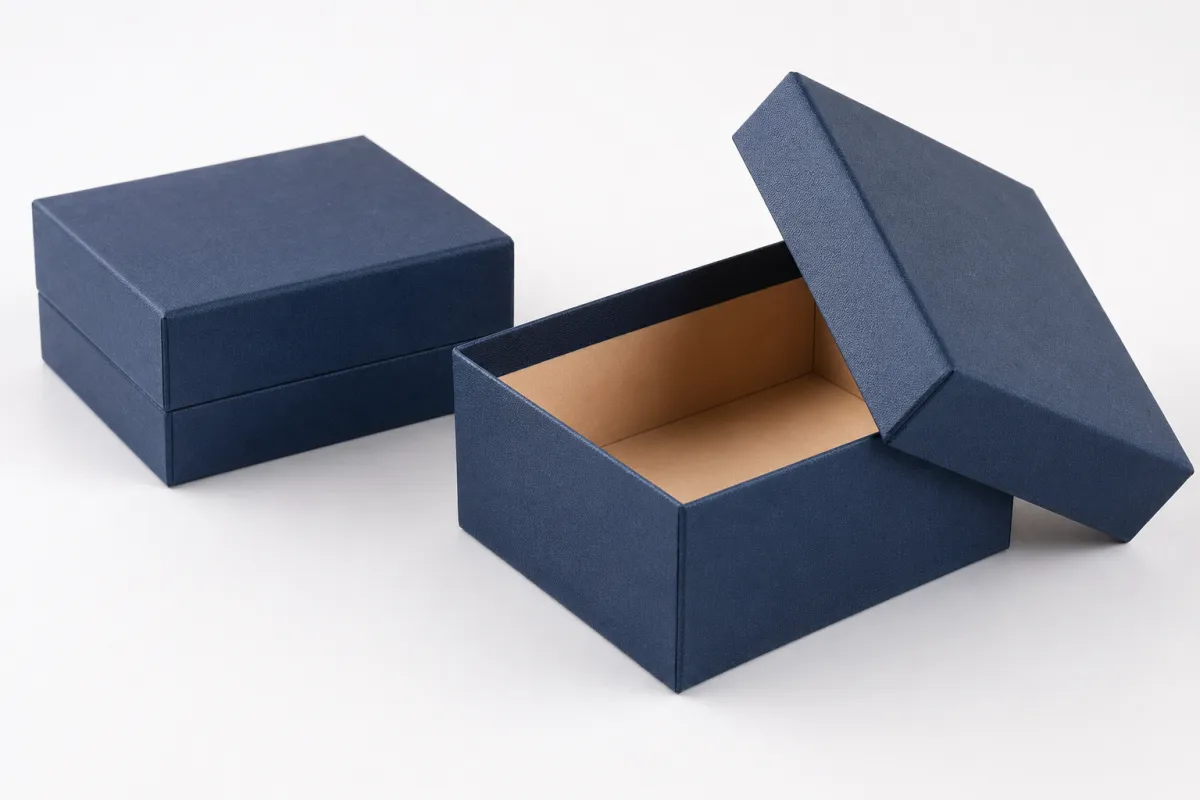
Custom rigid lid and base boxes are two-piece rigid structures made from thick greyboard or chipboard, with a separate lid that lifts off the base. The construction sounds plain, yet the effect is deliberate: the customer gets a controlled reveal, the box stacks more cleanly than a soft carton, and the presentation feels ceremonial in a way folding cartons rarely do. I often describe them in packaging meetings as a small stage built around the product, because the box itself starts telling the story before anyone touches the item inside. That sounds a little poetic, sure, but after opening enough tired-looking cartons, I stand by it, especially when a 2.0 mm board and a 3 mm shoulder reveal are doing the heavy lifting.
Custom rigid lid and base boxes show up wherever a brand wants premium presentation with a steady, upright structure. Cosmetics teams use custom rigid lid and base boxes for skincare kits and fragrance sets, often wrapped in 157gsm art paper or 350gsm C1S artboard. Apparel brands use them for folded shirts, scarves, and seasonal gift bundles. Confectionery companies rely on them for chocolates and truffles, because the box protects shape and gives the shelf more presence. Subscription companies use them for welcome kits, and electronics brands use them for accessories, chargers, and limited-edition packaging where the outer carton needs to feel worth keeping. I have seen a plain bracelet suddenly feel like an heirloom simply because the box had the right 2.5 mm board and the lid came off with a quiet, controlled lift.
The clearest contrast is with folding cartons. A folding carton is lighter, ships flat, and usually costs less, which makes it a practical choice for price-sensitive retail packaging. A rigid box arrives already formed and feels more substantial in the hand, with board thickness commonly ranging from 1.5 mm to 3.0 mm depending on the brief and the factory in Shenzhen, Dongguan, or Foshan. That extra structure changes perceived value and protection at the same time, which is why custom rigid lid and base boxes appear so often in branded packaging where the opening moment matters. If you have ever picked up a box and immediately thought, "Ah, this one means business," that was probably the structure doing half the talking, along with a clean wrap line and a square corner.
The simple way I explain it to clients is this: if the product needs to survive compression, look clean on a shelf, and make the customer slow down for a few seconds during the reveal, custom rigid lid and base boxes belong in the conversation. If the item is light, low-margin, and sold in volume, a folding carton or mailer may be the smarter format. For a broader look at structures, our Custom Packaging Products page is a useful place to compare options before you commit to one style. It is a lot easier to Choose the Right box when you are looking at the full family of options instead of trying to force one structure to do every job, especially if the order starts at 5,000 pieces and needs to land in 12 to 15 business days after proof approval.
People often miss how much package branding lives in the structure itself. A strong logo helps, sure, but the opening action, the lid depth, and the way the shoulders catch the light all shape the finished impression. That is why custom rigid lid and base boxes keep showing up in luxury packaging conversations, even when the artwork is spare and the color palette stays restrained. I am convinced the lid reveal does more emotional work than a lot of marketing decks care to admit, especially when the wrap is a matte 350gsm C1S artboard and the lid sits 6 mm taller than the base wall.
"We thought the graphics would do all the work, but the box feel changed the whole product story. Once the lid sat correctly, the sample finally felt expensive."
How Are Custom Rigid Lid and Base Boxes Built?
The core build for custom rigid lid and base boxes starts with greyboard or chipboard, which is cut into panels and then wrapped with printed paper, specialty paper, or a textured outer layer. The base is assembled into a stiff tray, and the lid is formed separately so it can lift cleanly without scraping. On a well-run line in Dongguan or Zhongshan, the corners stay square, the edges press tight, and the finished structure keeps its shape even after a 500 g product is set inside and removed dozens of times. I have spent enough time around packing tables to know that the machine makes the shape, but the people make the difference.
The wrap stage is where the craft shows itself. Glue coverage has to be even, because too little adhesive leaves bubbles and too much can warp the board or bleed at the edges. Corner folding matters more than many buyers realize. On rigid boxes, a sloppy corner can be visible from a meter away on a retail shelf, especially if the paper is dark or the finish is glossy. I have stood beside a wrapping table in Guangzhou where an operator checked every corner by hand, because a 2 mm gap on one flap can make a premium box look rushed. That kind of control is part of why custom rigid lid and base boxes are trusted for high-value product packaging. And yes, the tiny mistakes always seem to show up after everyone has already said, "It looks fine from here."
Inserts affect both protection and presentation. EVA foam is common for electronics and fragile items because it gives a clean cutout and a stable hold, though it is not always the easiest material to recycle. Paperboard dividers work well for sets with multiple pieces, such as tea assortments or skincare bundles. Molded pulp fits eco-forward briefs, especially when the brand wants a lower-plastic material story. Fabric-lined trays appear in luxury gifting, jewelry, and watch packaging, where the box needs a soft interior surface and a more tactile feel. Each insert choice changes internal depth, so custom rigid lid and base boxes should always be designed with the insert in place, not added later as an afterthought. I have learned the hard way that "we will just add the insert later" is the sort of sentence that ages badly in production, especially if the insert needs a 1.2 mm clearance and a 3 mm finger notch.
Decorative upgrades can turn the same structure into a very different retail object. Foil stamping adds a crisp metallic accent, embossing raises a logo, debossing pushes it inward, soft-touch lamination gives the wrap a velvety hand-feel, and spot UV creates contrast on selected artwork. I once worked with a client whose silver foil proof looked excellent on paper, but the first sample felt crowded because the foil sat too close to the lid seam. We moved the mark 8 mm inward, cleaned up the layout, and the whole piece read better. That is the sort of adjustment that separates standard Custom Printed Boxes from polished custom rigid lid and base boxes. It is also the sort of thing that makes a designer quietly mutter, "Of course it was the seam," which, to be fair, is pretty normal.
Tolerances matter too. Board thickness, product dimensions, insert depth, and lid height all interact. A lid that is too shallow can pop off too easily; one that is too deep can feel sticky and make the opening motion annoying. A comfortable fit usually leaves enough clearance around the product for finger access and for any finish thickness, especially if the wrap adds 0.1 mm to 0.2 mm on each panel. If the goal is a snug but usable fit, custom rigid lid and base boxes should be prototyped with the actual product, not only the CAD file. I cannot stress that enough. Paper does not care about your confidence, and neither does a lid that jams on the third open and close.
Key Factors That Shape the Look, Feel, and Fit
Product weight is one of the first decisions. A 120 g skincare jar does not need the same board caliper or insert support as a 900 g candle set or a glass bottle kit, and that changes how custom rigid lid and base boxes should be built. Fragile items usually benefit from an insert that locks them in place so they do not rattle in transit, while heavier items may need a thicker greyboard base and a deeper tray wall to keep the lift-off lid feeling balanced. I always ask for the exact product weight, not just the dimensions, because weight changes how the box behaves in shipping and on a shelf. A box can be dimensionally perfect and still feel wrong if it bows under load like it is having a bad day.
Sizing is where many projects drift off course. Internal dimensions matter more than outer dimensions, because the product has to fit around the insert, the board thickness, and the paper wrap. Clearance needs to stay generous enough for the user to remove the item without damaging the box. If the brand wants a shoulder or a reveal, that detail should be specified from the start, because a 3 mm reveal looks very different from a 6 mm reveal once the lid is assembled. With custom rigid lid and base boxes, the fit is rarely about one measurement; it is about the whole stack of measurements working together. That is the annoying part, and also the reason the finished box feels so satisfying when it finally clicks into place.
Material choice shapes the final impression as well. A budget-friendly build might use 1.5 mm greyboard wrapped in coated art paper, which works well for high-volume retail packaging where the printed artwork does most of the visual work. A more premium build might use 2.0 mm or 2.5 mm board with a specialty paper wrap, a tactile lamination, and a custom insert. Fabric wraps, pearl papers, and textured stocks bring a different mood to branded packaging, but they can also raise waste and increase the scrap rate if the factory is not used to handling them. That is why I ask suppliers whether they have handled the same wrap on similar custom rigid lid and base boxes before. You want experience, not optimism, from the production side, especially if the wrap is a 350gsm C1S artboard or a textured 157gsm paper laminated to rigid board.
Branding goals matter just as much as structure. Some clients want the box to whisper luxury, with a restrained logo and a matte finish. Others want bolder package branding, with foil, vivid CMYK, and a stronger shelf signal. A third group wants the box to work as both retail packaging and e-commerce protection, which means the outer layer has to look polished while still surviving warehouse handling. The best custom rigid lid and base boxes match the brand voice without forcing the product into the wrong posture. I have seen a lot of boxes try too hard, and frankly, the packaging usually loses that argument, especially when the market wants a clean unboxing in New York but a freight-safe carton in Houston.
Sustainability belongs in the discussion, and it should be handled honestly. Recycled board content, FSC-certified papers, and water-based adhesives can improve the material story, but heavy lamination, plastic inserts, and laminated wraps can make end-of-life recycling more complicated. If sustainability is a key goal, I would ask the supplier exactly what part of the build can be simplified without weakening the box. For guidance on forest certification, the FSC site at FSC is a useful reference point. The aim is not to chase a perfect label; it is to make a deliberate tradeoff for the product and market in front of you. That is usually the honest version, even if it is a little less glamorous for the slide deck, and it matters whether the line is running in Shenzhen, Vietnam, or Ningbo.
What Custom Rigid Lid and Base Boxes Cost
Pricing for custom rigid lid and base boxes usually comes down to size, board thickness, print coverage, paper selection, insert complexity, finish count, and quantity. A small box with a simple printed wrap and no insert can land very differently from a large fragrance set with foil, embossing, a custom EVA insert, and a specialty paper exterior. If you are quoting multiple suppliers, ask for the same specification sheet every time, because one factory may be quoting 1.5 mm board and another may be quoting 2.0 mm board, which makes the numbers look better or worse than they really are. I have seen people compare those quotes like they were apples and apples, and they were really apples and a very confident pear.
Low-volume orders cost more per unit because setup labor gets spread across fewer boxes. Die cutting, wrapping, corner folding, insert assembly, and inspection all take time, and the first 300 or 500 units often carry the same setup burden as the next 5,000. I have seen projects where a client wanted 800 pieces of custom rigid lid and base boxes and expected the same unit cost as a 10,000-piece run, which does not happen in real production. Once quantity rises, the per-box cost usually drops in a noticeable way. That is one of those truths that every procurement team already knows, but somehow still has to rediscover twice a year, usually after someone forwards a quote from Dongguan that assumes a full production run.
Sampling, tooling, and freight also affect the total. A physical sample can cost a modest amount, but it is cheap insurance compared with reworking a full production batch. Freight is another variable, especially for large or heavy rigid boxes, because the cartons take up space even if the finished box itself is not especially heavy. When sourcing custom rigid lid and base boxes, I always tell buyers to look at the full landed cost: sample, unit price, packaging for shipping, transit, duties if relevant, and any local receiving fees. Otherwise the quote looks attractive until the invoices start speaking up, and they always arrive with numbers that are less charming than the original estimate.
Quotes also differ by factory model. A plant that prints, laminates, cuts, wraps, and assembles in-house can control more of the schedule, while a plant that outsources one or two steps may have more handoffs and longer lead times. Labor rates, machine age, quality control, and scrap rate all show up in the quote. I once negotiated with two suppliers for the same lid-and-base project and found a $0.14 per unit difference on 5,000 boxes simply because one plant used an inline wrap line and the other relied on more manual assembly. In another Guangzhou quote, a very plain rigid shell came in at $0.15 per unit for 5,000 pieces before inserts, while the same job with a foil logo and soft-touch finish moved well above $1.00. Both could make the box, but the process was not the same. One felt like a factory; the other felt like a factory with a clipboard and a hope.
The simplest way to compare offers is to compare like-for-like specifications. Do not just compare the headline number. Check the board thickness, paper stock, finish type, insert material, lid depth, proofing process, carton packing method, and whether the quoted price includes a printed outer sleeve or not. A low quote on custom rigid lid and base boxes can be misleading if the other supplier is including better board, tighter tolerances, or stronger shipping cartons. The cheapest line on the page is rarely the cheapest box in the real world, especially once the order lands at a warehouse in California or a distribution center in Europe.
| Spec Level | Typical Build | Common Extras | Estimated Price at 5,000 Units |
|---|---|---|---|
| Basic retail | 1.5 mm greyboard, 350gsm C1S artboard wrap | No insert, matte lamination | $0.15 per unit for 5,000 pieces |
| Mid-tier branded | 2.0 mm greyboard, coated wrap | Paperboard insert, soft-touch lamination | $0.92 per unit for 5,000 pieces |
| Premium presentation | 2.5 mm greyboard, specialty paper wrap | Foil stamping, embossing, EVA insert | $2.18 per unit for 5,000 pieces |
| Luxury gift set | 3.0 mm greyboard, textured or fabric wrap | Multi-piece insert, multi-process finishing | $4.95 per unit for 5,000 pieces |
Those numbers are only planning ranges, not promises, because material markets and factory schedules move around. Still, they help buyers make better decisions before they fall in love with a spec that is too expensive for the target margin. If the box is meant for a seasonal launch or a limited-edition bundle, a higher unit price may be acceptable. If the box is for everyday retail packaging, it may be smarter to simplify the finish and protect the budget. That is the part people hate hearing, because the glittery version is usually the one everyone wants to keep, especially once the foil hits the proof room in Foshan.
One client meeting sticks with me because the buyer brought three sample boxes to the table and asked why one cost almost twice as much as another. The answer was not mysterious: one had 2.0 mm board, a custom insert, foil, and soft-touch lamination, while the cheaper version used thinner board, no insert, and a plain printed wrap. Once the buyer saw the comparison in that form, the pricing made sense. That is usually the moment when custom rigid lid and base boxes stop being a vague line item and become a specific production choice. And once that happens, the conversation gets a lot more honest, which is good for everyone involved, including the team in Shenzhen who has to turn the quote into cartons.
The Step-by-Step Process and Timeline
The best projects start with a clean brief. Before asking for a quote on custom rigid lid and base boxes, gather the product dimensions, product weight, quantity, target budget, delivery destination, and the exact role of the box. Is it for retail display, gifting, subscription fulfillment, or shipping protection? That answer changes the structure. I have seen teams send only a product photo and then wonder why the supplier came back with the wrong lid height; a good brief avoids that kind of confusion from the start. It also prevents the awkward meeting where everyone stares at the sample and says, in unison, "That is not what we meant," after a 12-day prototype run has already been booked in Dongguan.
Next comes the dieline and sample stage. The supplier should confirm the box format, the lid depth, the shoulder or reveal, and the insert layout before any large run begins. A physical prototype is especially useful for custom rigid lid and base boxes because paper thickness and wrap tension can shift the fit by a few millimeters. If you are shipping fragile items, I would also ask whether the sample can be tested against an actual transit standard such as an ISTA method, and the protocols published by ISTA are a useful reference for that kind of planning. I have watched a beautiful sample fail one rough shipping pass, and that failure saved a much uglier production problem later, including a reprint and a new insertion schedule.
Approval is the checkpoint that saves money later. Once artwork, paper selection, finish choice, and sample fit are signed off, production can move without second-guessing the layout. This matters because every revision after approval adds delay, and rigid boxes are not the kind of product you want to rush through a crowded schedule. If the project includes foil, embossing, or specialty wrap, I usually advise clients to budget at least one revision cycle so the final custom rigid lid and base boxes look intentional rather than merely acceptable. A near-miss is not a premium finish. It is just a near-miss with a nicer name.
Production itself follows a predictable order: board cutting, paper printing, lamination, wrapping, insert fabrication, assembly, inspection, and carton packing. A clean line can move quickly, but small issues can still create bottlenecks. I once watched a batch stall because the glue station was running a little hot and the wrap was tightening faster than normal around a soft-touch finish. The operator corrected it, but that 20-minute adjustment would have turned into a full-shift problem if nobody was watching. That kind of reality is why experienced factories treat custom rigid lid and base boxes as a controlled process, not a casual assembly job. This is also why I never trust a schedule that sounds too tidy to be true, especially when the line is split between Shenzhen prepress and Guangzhou packing.
Lead times depend on complexity. A simple structure with one proof round may be ready faster than a decorative box with inserts and multiple finish checks. As a planning rule, many projects land around 12 to 15 business days from proof approval, and more complex builds can take longer, especially if the paper stock is imported or the run needs a special insert. Transit time is separate from production time, so do not let those two numbers blur together when you plan launch dates. The fastest custom rigid lid and base boxes projects are usually the ones where approvals are clean and the artwork is final before sampling begins. Speed is nice, but clean decisions are what really save the calendar, along with a freight booking that does not wait until the last minute in Yantian or Nansha.
One more practical point: if the box must survive parcel distribution, do not guess at shipping performance. Ask the supplier how the cartons are packed, how many units go into each master carton, and whether corner protection is included. A box that looks excellent on a shelf can still get crushed if the master carton is too loose or the pallet stack is too high. Good product packaging respects both the display moment and the warehouse reality. I have seen gorgeous packaging fail because someone treated the warehouse like a suggestion instead of a place where gravity has a strong opinion, especially on a humid August afternoon in Ningbo.
"The sample looked beautiful, but I asked for one more shipping test because the outer cartons were flexing in the corner. That saved us from a claim later."
Common Mistakes to Avoid With Custom Rigid Lid and Base Boxes
The most common mistake is measuring only the product and forgetting everything around it. Inserts need room, wraps add thickness, and wrapped board compresses slightly during assembly. If you specify custom rigid lid and base boxes from the bare product size alone, the finished box may feel too tight or too loose. I tell buyers to account for finger clearance, insert tolerance, and the way a paper wrap behaves when folded over a corner. Otherwise you end up with a box that looks perfect on paper and acts like it was designed by someone who hates hands, especially when the product weighs 780 g and the insert only gives 1 mm of breathing room.
Over-design is another trap. It is easy to add foil, embossing, spot UV, heavy texture, and multiple inks because each finish looks appealing by itself. Put them together and the box can start to feel noisy, which hurts the premium effect. A strong packaging design usually picks one or two hero details and lets the structure carry some of the load. I have seen custom rigid lid and base boxes become much more memorable after we removed one finish layer instead of adding another. Restraint can be hard to sell in a meeting, but it often wins on the shelf, especially if the product already has strong color or a bold form.
Skipping the physical sample is risky, especially for luxury packaging. A dieline may look accurate on screen, but the hand feel is where people notice small failures. A lid that catches on one side, a logo that sits too close to the seam, or a corner wrap that puckers by 2 mm can undo the whole experience. I still remember a beauty brand where the first sample looked almost right, but the lid seam crossed through the brand mark and made the logo feel split. We shifted the art 6 mm, and the finished custom rigid lid and base boxes finally matched the intended look. That tiny move changed the whole emotional read.
Storage and shipping conditions matter more than many teams expect. Rigid boxes do not fold flat, so they take shelf space, and they need clean stacking so edges do not scuff before fulfillment. If the cartons sit in a humid warehouse or are stacked too high, the lids can warp slightly or the wraps can mark. This is especially true for premium retail packaging with soft-touch finishes or darker colors, where a small rub mark becomes obvious fast. If your program needs long storage, plan the space and the carton count before production starts. Nobody enjoys discovering humidity after the goods have already arrived, and a 30-day hold in a 70 percent humidity warehouse can change the fit by more than anyone wants.
Artwork alignment is another place where projects drift. Text and logos should be mapped around the lid seam, the corner wraps, and any insert windows so nothing lands in an awkward place. It is a simple thing, but many buyers miss it on the first round. The best custom rigid lid and base boxes are designed with the structure in mind, not patched together after the graphics are already approved. That extra bit of planning saves the kind of revision that makes everyone pretend they are not annoyed, especially when the printer in Guangzhou has already loaded the plates.
Expert Tips and Next Steps for a Better Order
If you want smoother sourcing, build a one-page spec sheet before you request pricing. Put the product dimensions, product weight, quantity, target budget, delivery location, finish preferences, insert type, and any mandatory branding notes on a single page. That helps a supplier quote custom rigid lid and base boxes without guessing. It also makes supplier comparisons much easier, because every factory should be reacting to the same information set rather than filling in missing details differently. I have never seen a messy brief produce a clean result by magic, no matter how charming the follow-up emails were, and a crisp brief can save two rounds of proofing.
For fit-critical projects, I recommend a plain prototype first, then a decorated sample once the structure is approved. That order saves money because you do not want to discover a lid-depth issue after you have already paid for foil and specialty paper. A plain structural sample answers the hard questions: does the product sit centered, does the lid close properly, and does the reveal look intentional? Once that is solved, the decorated custom rigid lid and base boxes can focus on aesthetics instead of repairs. In my experience, this two-step process is less glamorous, but it avoids a lot of expensive drama, especially when a 2.5 mm board needs to behave the same way in proofing and production.
Ask direct questions about board source, wrap material, adhesive type, and quality-control checkpoints. If a supplier cannot tell you whether the board is 1.5 mm, 2.0 mm, or 2.5 mm, that is not a small detail; it is the heart of the box. I also like to ask whether they have produced similar branded packaging recently, because a factory that handles comparable work can usually spot issues faster. If you want to browse formats and compare styles, our custom packaging products page can help frame the options before you lock in a spec. Sometimes seeing the broader lineup makes the right structure feel obvious, which is nice because packaging decisions are hard enough without guesswork, and it is easier to judge a lid-and-base format against mailers, sleeves, and folding cartons side by side.
It also helps to rank your priorities before quoting begins. Some teams care most about luxury appearance. Others care most about shipping strength or sustainability. A few care most about unit cost because the box sits inside a narrow margin structure. Write those priorities down in order. That way, if the supplier suggests a small tradeoff, you can decide immediately whether the change is acceptable for the program. In my experience, custom rigid lid and base boxes go better when the buyer knows what cannot move and what can flex. A clear hierarchy saves a lot of back-and-forth, and it saves the supplier from guessing at your mood, which, frankly, no one does well.
I would also keep one eye on the final customer experience. A box can pass every structural test and still feel wrong if the reveal is too abrupt, the insert is hard to remove, or the lid comes off with too much force. I have seen clients improve sales samples simply by changing a 4 mm lid depth to 6 mm and softening the insert pull point. Small adjustments like that are where product packaging becomes an experience rather than a container. That is the real value of custom rigid lid and base boxes: they let you control the moment, not just the enclosure, from the first lift of the lid to the final close.
For brands building a gift line or a seasonal release, I also like to compare the box against other custom printed boxes in the catalog so the team can decide whether a rigid format is truly the best fit. Sometimes the right answer is still a rigid lid-and-base structure, but sometimes a different format gives better economics without hurting the presentation. The point is to choose deliberately, not by habit. I have watched teams default to the fanciest option simply because it felt safe, and that is usually how budgets develop a bad attitude, especially after the freight quote arrives from Shenzhen or Ningbo.
If you are planning a first order, start with fit, budget, timeline, and the exact feeling you want the customer to have in the first 10 seconds. Once those are clear, custom rigid lid and base boxes become much easier to specify, quote, and produce, and the final result usually feels more polished because the structure and the brand story were aligned from the beginning. That alignment is what separates a pretty package from one that actually earns a place in the customer’s memory, whether the order is 500 pieces for a pop-up or 20,000 pieces for a national launch.
What products work best in custom rigid lid and base boxes?
They work especially well for premium items that benefit from a controlled reveal, such as cosmetics, candles, apparel sets, jewelry, tech accessories, and gift kits. Heavier or fragile products usually need a rigid base with a custom insert so the item stays centered and does not shift in transit. If the product is low-value and highly price-sensitive, a folding carton may be a better fit than custom rigid lid and base boxes. I tend to recommend them most when the opening moment matters as much as the protection, especially for products sold above $20 retail.
How much do custom rigid lid and base boxes usually cost?
Price depends on size, board thickness, quantity, print coverage, insert style, and the number of finishes you add. Sampling, tooling, and freight can change the total project cost, so the lowest unit price is not always the best comparison. Bigger orders usually reduce the per-box cost because setup and labor are spread across more units, which is why custom rigid lid and base boxes often become more economical at scale. I always suggest looking at the whole picture, because the unit price alone can be a little misleading in a hurry, especially when a quotation from Dongguan includes tooling and another one from Guangzhou does not.
How long does it take to produce custom rigid lid and base boxes?
The timeline usually includes briefing, dieline setup, sampling, approval, production, inspection, and shipping. Projects with simple artwork and one approval round move faster than jobs with multiple finish changes or structural revisions. Plan extra time if the boxes need inserts, premium paper, seasonal scheduling, or overseas freight, because custom rigid lid and base boxes tend to move through more checkpoints than a standard folding carton. A clean approval path is usually the difference between calm scheduling and the kind of calendar scramble nobody enjoys. For planning, 12 to 15 business days from proof approval is a common production window, before transit is added.
What information should I have ready before requesting a quote?
Have product dimensions, product weight, quantity, target budget, and delivery destination ready before you ask for pricing. Share your branding needs, preferred finishes, insert requirements, and whether the box will be used for retail display, gifting, or shipping. If possible, include a reference sample or photo so the supplier can match the style more accurately, especially if you want custom rigid lid and base boxes that mirror an existing line. A little clarity up front saves a surprising amount of back-and-forth later, and it helps a factory in Shenzhen or Foshan quote the right board thickness the first time.
Can custom rigid lid and base boxes be made sustainably?
Yes, they can be built with recycled board, FSC-certified paper, and water-based adhesives to improve material choices. Some finishes, heavy lamination, and plastic-based inserts can reduce recyclability, so it helps to discuss tradeoffs early. If sustainability is a priority, ask for a structure that balances premium presentation with the simplest material mix possible, because the most practical custom rigid lid and base boxes are the ones that meet both brand and material goals. That usually means being honest about what matters most instead of trying to make every option perfect at once, especially on a 2.0 mm or 2.5 mm board build.
If you want a cleaner purchasing process, keep the brief tight, compare real samples, and ask suppliers for the exact board, wrap, insert, and finish details before you approve anything. That discipline saves time, trims waste, and usually leads to custom rigid lid and base boxes that feel right in the hand, look right on the shelf, and support the brand story the way good packaging should. The most practical next step is simple: approve one plain structural sample first, then approve one decorated sample only after the fit, reveal, and lid tension all feel right. That order catches the expensive mistakes before production starts, and it gives the final box a much better chance of arriving exactly the way the brand imagined it.

