Buyer Fit Snapshot
| Best fit | Custom Rigid Shipping Boxes Bulk projects where brand print, material claims, artwork control, MOQ, and repeat-order consistency need to be specified before quoting. |
|---|---|
| Quote inputs | Share finished size, material target, print colors, finish, packing count, annual reorder estimate, ship-to region, and any compliance wording. |
| Proofing check | Approve dieline scale, logo placement, barcode or warning zones, color tolerance, closure strength, and carton packing before bulk production. |
| Main risk | Vague material claims, crowded artwork, missing packing details, or unclear freight terms can make a low unit price expensive after revisions. |
Fast answer: Custom Rigid Shipping Boxes Bulk: Cost, Specs, Lead Time should be specified like a repeatable production item. The safest quote records material, print method, finish, artwork proof, packing count, and reorder notes in one written spec.
Production checks before approval
Compare the actual filled-product size with the drawing, then confirm tolerance on folds, seals, hang holes, label areas, and retail display edges. Reserve space for logos, QR codes, warning copy, and material claims before decorative graphics fill the panel.
Quote comparison points
Review material grade, print process, finish, sampling route, tooling charges, carton quantity, and freight assumptions side by side. A quote is only useful when the supplier can repeat the same color, closure quality, and packing count on the next order.
Custom rigid shipping boxes bulk: cost, Specs, and Lead Time is not just a packaging line item; it shapes damage rates, presentation, and how much rework your fulfillment team ends up doing after the carton leaves the dock. A high-value product that arrives with intact corners and a clean unboxing moment usually does more for repeat orders than a cheaper box ever will.
That is why custom rigid shipping boxes bulk matter to brands shipping cosmetics, electronics, gift sets, premium apparel, and subscription kits. The value shows up in practical ways: stronger walls, better edge protection, and more predictable performance across a full production run. If the box is part of your branded packaging strategy, it has to protect the product and support the sale at the same time.
For buyers comparing custom printed boxes, the real question is not whether rigid construction looks premium. The real question is whether the box reduces breakage, cuts replacement shipments, and holds up in shipping lanes that are rougher than most teams expect. In many cases, custom rigid shipping boxes bulk justify a higher unit price because returns, remakes, and support tickets cost more than the carton itself.
Custom Rigid Shipping Boxes Bulk: Why They Pay Off
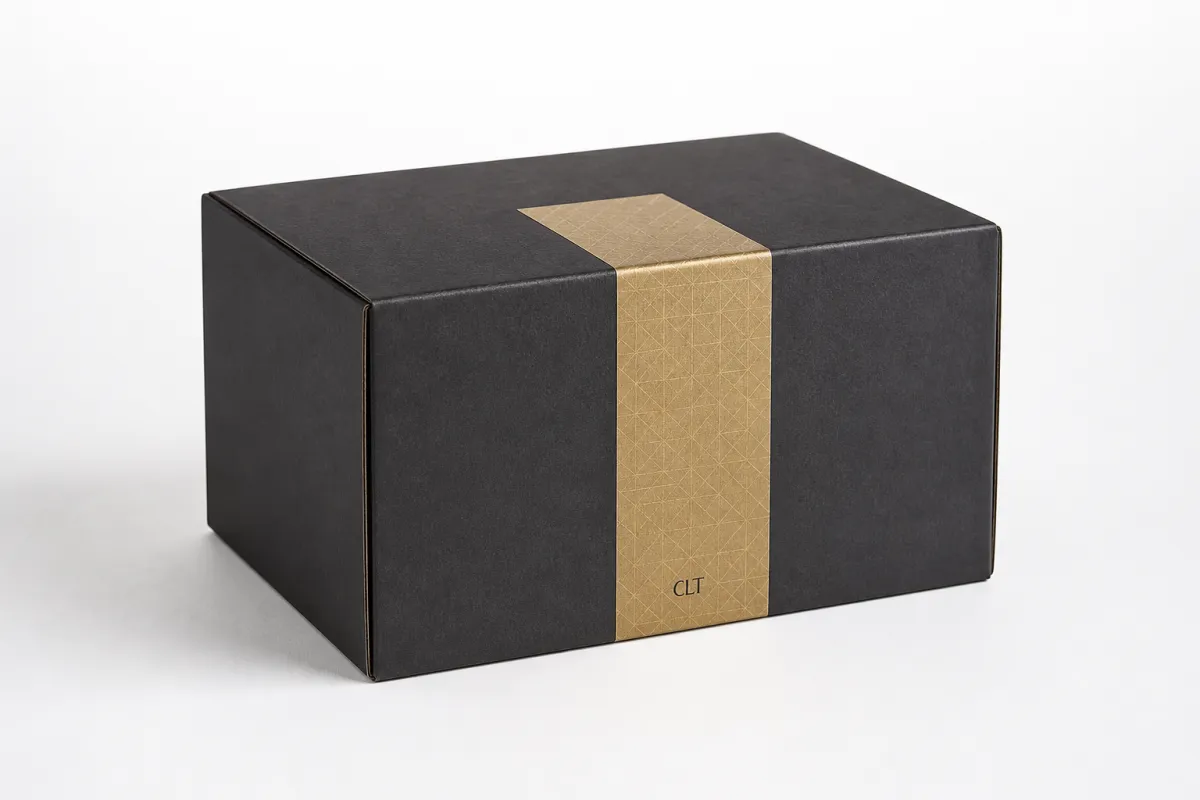
Picture the difference between a box that picks up dents in the delivery network and a box that stays square from warehouse shelf to doorstep. That gap is where custom rigid shipping boxes bulk earn their place. A rigid structure resists crushing better than lightweight cartons, and the edge protection matters more than many buyers realize once product damage starts showing up in the numbers.
Most packaging teams watch unit cost first. I get it. Yet if a $1.60 carton creates even a small spike in replacements, freight credits, and customer service time, the cheaper option becomes expensive very quickly. With custom rigid shipping boxes bulk, the added board thickness and tighter construction can shift the economics in your favor, especially when the shipped item is fragile, premium-priced, or hard to replace.
Consistency is the other advantage that gets overlooked. In bulk production, a rigid box tends to hold its shape more predictably than thin packaging built only to survive a short parcel route. That consistency helps with order fulfillment, retail packaging, and package branding because the customer sees the same box profile again and again, not a mix of crushed flaps and worn edges.
"If the box fails once, the savings disappear." That is usually the real math behind custom rigid shipping boxes bulk.
There is also a presentation angle that is hard to ignore. Some brands still treat transit packaging as a disposable layer. Others use custom rigid shipping boxes bulk to make the outer container part of the product experience. That matters for launches, gift programs, and subscription shipments where the package itself signals quality before the product is even touched.
- Rigid walls help reduce compression damage in mixed freight.
- Reinforced corners improve edge retention during stacking and handling.
- Consistent sizing improves cartonization and warehouse flow.
- Custom printing supports branded packaging without extra labels.
For brands that ship high-value items, the question is often not whether the structure costs more. It does. The better question is whether custom rigid shipping boxes bulk reduce the hidden costs that show up later. If replacement freight is $14, customer support time adds another $6 to $10, and the product itself is difficult to restock, the box upgrade can pay for itself after only a modest reduction in damage.
Custom Rigid Shipping Boxes Bulk: Product Details and Use Cases
What separates custom rigid shipping boxes bulk from standard mailers is the build. A rigid box typically uses dense chipboard or grayboard, often around 1.5 mm to 3 mm or more depending on the design, then wraps that structure with printed or specialty paper. That layered construction gives the box a firm hand feel, better stacking resistance, and a cleaner retail-ready exterior.
In custom rigid shipping boxes bulk programs, the inside matters almost as much as the outside. Inserts, dividers, and shaped trays stop movement, which is where many transit failures begin. A beautiful outer shell does very little if the product rattles around inside. For fragile items, the combination of structure and fit is what protects the shipment, not one element by itself.
Common use cases include cosmetics sets, perfume, consumer electronics, premium apparel, influencer kits, gift boxes, and branded ecommerce shipping programs where the unboxing moment influences repeat purchase behavior. For a premium skin-care line, for example, custom rigid shipping boxes bulk may house glass bottles, sample cards, and a welcome insert in one controlled layout. For electronics, the same format can hold cables, chargers, and accessories without shifting.
There is a point where rigid is the right answer, and another point where it is overkill. If the product is light, low-value, and already protected by a secondary carton, a corrugated shipper may be more cost-effective. If your product needs presentation as well as protection, custom rigid shipping boxes bulk often outperform lower-cost options because the box does not disappear into the background. It becomes part of the product packaging story.
Build the box around the product, not the other way around
That sounds obvious, yet many projects begin with a size guess and end with a compromise. The better approach is to measure the product, the insert, and the clearance needed for safe packing. Once those numbers are fixed, custom rigid shipping boxes bulk can be tuned to the exact shipping method, whether the carton moves through parcel, regional freight, or direct-to-consumer order fulfillment.
Where rigid construction makes the most sense
Rigid packaging is a strong fit when the customer expects more than protection. That includes luxury retail packaging, limited-edition collections, influencer send-outs, and products where the box itself is retained or reused. In those scenarios, custom rigid shipping boxes bulk can do double duty: secure the item and reinforce the brand image with a better first touchpoint.
If you are comparing packaging families, it helps to look at the broader line as well. Our Custom Packaging Products page is a useful place to compare formats, and many buyers cross-shop Custom Shipping Boxes against rigid structures before locking the final spec. For mixed programs, some brands also pair this format with Custom Poly Mailers for lower-risk SKUs.
Specifications for Bulk Orders
Before a factory can quote custom rigid shipping boxes bulk accurately, it needs a proper spec sheet. This is where many programs slow down. Missing dimensions, vague finish requests, and unanswered insert questions create quote revisions, and every revision adds time. A good spec sheet should define the box in practical terms, not general ones.
The core inputs are simple, but they have to be exact: external and internal dimensions, product weight, board grade, wrap paper, closure style, and insert requirements. If the carton will be stacked in a warehouse or packed for ecommerce shipping, say so. If the box must clear a particular parcel dimension threshold, say that too. Those details affect cost and performance in custom rigid shipping boxes bulk orders.
- Dimensions: internal size, external size, and clearance around the product.
- Board grade: 2.0 mm, 2.5 mm, 3.0 mm, or another thickness based on load.
- Wrap material: art paper, kraft paper, specialty paper, or textured wrap.
- Print method: offset print, PMS spot colors, full-bleed graphics, or minimal branding.
- Finish: matte, gloss, soft-touch, embossing, debossing, or spot UV.
- Insert style: paperboard, foam, molded pulp, EVA, or a custom divider set.
Performance matters as much as appearance. Buyers should ask about compression resistance, edge crush behavior, and how the design will handle stacking pressure. If the box is for fragile products, ask whether the team is designing to a transit test standard such as ISTA transit testing methods or comparable distribution tests. For source materials, paper-based components can also be reviewed against FSC certification guidelines when sustainability claims are part of the brief.
That does not mean every custom rigid shipping boxes bulk project needs a laboratory-style qualification run. It means the buyer should know which abuse points matter most. Some shipments fail on a single corner drop. Others fail because a heavy product presses into the lid during transport. If you know the failure mode, you can design around it instead of guessing.
Print and finish choices change more than appearance
Gloss and soft-touch finishes are not just cosmetic decisions. They influence scuff resistance, fingerprint visibility, and how the brand looks after the box has been handled by a warehouse team, a carrier, and the recipient. That is one reason custom rigid shipping boxes bulk quotes can vary so widely. A simple wrap with one color print is a very different job from a luxury retail packaging spec with foil, embossing, and an interior print panel.
Buyers should also think about storage and packing efficiency. Larger rigid boxes take more warehouse space, and bulky inserts can slow order fulfillment if they arrive in nested kits that need assembly. In a high-volume program, the smartest design is often the one that balances protection, speed, and pack-out simplicity. That is where custom rigid shipping boxes bulk outperform guesswork and generic packaging design.
For a practical spec sheet, write the answers down before requesting quotes: product weight, drop sensitivity, intended carrier, storage constraints, branding goals, and target quantity. A complete spec sheet makes custom rigid shipping boxes bulk easier to price, easier to sample, and easier to keep stable once production starts.
Custom Rigid Shipping Boxes Bulk: Cost, Pricing, and MOQ
Cost is usually the first filter, and it should be. Custom rigid shipping boxes bulk pricing is driven by several variables at once, so a single number without context is not very useful. Size, board thickness, wrap coverage, print complexity, finishing, insert design, and order quantity all shift the final quote. Two boxes that look similar from the outside can price very differently once the specs are locked.
The pattern most buyers see is straightforward: as the order grows, the unit cost drops. The reduction is not perfectly linear. Tooling, setup, and sampling are spread across the run, which means the first tier usually carries the highest cost per piece. A custom rigid shipping boxes bulk program becomes more efficient as the quantity climbs, especially after the sample and proof work has already been absorbed.
| Option | Best For | Typical Bulk Unit Cost | What Drives the Price |
|---|---|---|---|
| Standard rigid shipper with light print | Premium direct-to-consumer shipments that need better protection than a mailer | $2.85-$5.40 at 1,000 units | Board thickness, size, simple color coverage, minimal finishing |
| Printed rigid shipper with custom insert | Gift sets, cosmetics, and electronics kits | $3.40-$6.80 at 1,000 units | Insert material, print count, wrap coverage, cut accuracy, assembly time |
| Premium rigid shipper with foil or specialty finish | High-value branded packaging programs and retail packaging | $4.75-$9.50 at 1,000 units | Foil, embossing, soft-touch lamination, specialty paper, tighter QC |
| Corrugated alternative | Lower-risk SKUs where presentation is secondary | $0.55-$1.60 at 1,000 units | Board weight, print method, flute type, carton style |
MOQ deserves plain language. For simple custom rigid shipping boxes bulk programs, minimums can start in the low hundreds, but that does not always mean the economics are attractive at that level. Once print complexity, specialty paper, or inserts enter the spec, the practical minimum often rises because setup costs need enough volume to make sense. Many buyers find their best value at 1,000 to 3,000 pieces, though larger programs can push pricing down further.
Freight and sampling also affect the final number. If a carton needs a protective outer shipper, careful palletizing, or multi-step inspection, those costs should be visible in the quote. The same is true for custom printed boxes with full coverage artwork. Artwork proofing, die setup, and insert tooling can look modest on paper, then become meaningful once combined with a real bulk run. That is why custom rigid shipping boxes bulk should be priced in tiers, not as a single flat offer.
What to trim before you trim protection
If the budget is tight, the first savings usually come from print complexity or finish level, not from reducing structural strength. A clean one- or two-color wrap may still deliver strong package branding. A simpler insert can also cut cost if it keeps the product secure. What should not be trimmed too aggressively is board thickness or internal fit, because those two elements protect the product during transit and support the value of custom rigid shipping boxes bulk over time.
As a rule, ask for at least three pricing tiers. One should be the target spec, one should be a lower-cost version, and one should be the premium version. That comparison shows where the real breakpoints are. It also makes it easier to decide whether the savings are worth the trade-off in appearance or performance. For bulk buyers, that comparison is often the difference between a guess and a controlled purchase.
Process, Timeline, and Production Steps for Bulk Orders
A disciplined production flow matters more than most people think. Custom rigid shipping boxes bulk projects usually move through the same sequence: inquiry, spec confirmation, quoting, dieline or structure approval, sampling, artwork proofing, production, inspection, and shipment. When buyers understand that sequence, they can protect the launch schedule and avoid avoidable revisions.
The fastest projects arrive with complete information. If dimensions are missing, the finish is undecided, or the artwork is still changing, the schedule stretches. That is true whether the order is for custom rigid shipping boxes bulk or any other form of product packaging. The factory cannot build around uncertainty. It can only wait for answers or revise the quote after the fact.
Typical timeline checkpoints
- Quote review: usually 1-3 business days when the spec sheet is complete.
- Sample or prototype: often 5-10 business days, depending on construction.
- Artwork proof: can be same-day or take several rounds if branding is still moving.
- Bulk production: often 12-20 business days after proof approval, sometimes longer for specialty finishes.
- Inspection and packing: commonly 2-5 business days depending on run size and QA requirements.
- Freight transit: ranges widely by mode, destination, and booking window.
These are practical ranges, not guarantees. A simple unprinted structure can move faster than a premium foiled build. A large custom rigid shipping boxes bulk order with dividers, specialty wrap, and multiple print colors will usually take longer than a straightforward run. The buyer who works backward from the launch date rather than forward from the order date usually ends up with fewer surprises.
One of the best habits is to approve a sample before locking the full run. That is especially true for fragile products, cosmetic kits, or anything with a precise fit. A prototype shows whether the insert holds the item correctly, whether the lid closes cleanly, and whether the artwork sits where it should. For custom rigid shipping boxes bulk, that sample can save a full production run from a costly mistake.
Another delay comes from packaging design changes after quoting. A small change to the insert or closure can force a new structure check, which then changes the production timetable. That is why the most efficient custom rigid shipping boxes bulk projects finalize the board grade, print area, and inner layout before the factory starts cutting samples.
For teams that run seasonal launches, the planning lesson is blunt: do not wait until the product is finished. Start the packaging work early enough that the sampling, revision, and freight steps have room to breathe. In wholesale programs, that is often the difference between shipping on time and paying for air freight to repair a missed date.
Why Choose Us for Custom Rigid Shipping Boxes Bulk
From a buyer’s point of view, the best packaging partner is not the one that says yes to everything. It is the one that can explain why a spec will work, where it may fail, and how to adjust it before production starts. That is the value your packaging partner should bring to custom rigid Shipping Boxes Bulk: clear communication, accurate quoting, and repeatable results when the run scales up.
Consistency matters because large orders magnify small errors. A one-millimeter fit issue on a sample can become a pallet-level problem in bulk. A slight color shift can become a brand issue once the same box is used across ecommerce shipping and retail packaging channels. The right partner helps reduce that risk by reviewing structure, artwork, and finish choices together rather than treating them as separate tasks.
There is also value in having a team that understands how packaging choices affect fulfillment. If a box is too complex to pack quickly, labor cost rises. If it is too loose, damage risk rises. If the surface finish shows scuffs too easily, the product may look tired before it reaches the customer. That is where custom rigid shipping boxes bulk need more than a price quote. They need actual packaging judgment.
For brands that are still defining their box program, a good starting point is to compare options inside a wider packaging lineup, then narrow down to the structure that matches the shipment. That is why many buyers look at Wholesale Programs alongside the product-specific spec. If the run is large enough, the discussion should include volume tiers, inspection expectations, and how the carton will interact with the rest of the shipping system.
We also see better outcomes when buyers ask for the same thing in more than one way. Instead of requesting only a single quote, ask for a base spec, a cost-reduced spec, and a premium spec. That gives the team a realistic view of how custom rigid shipping boxes bulk can be tuned to the budget without weakening the product protection. It also makes the decision faster.
Next Steps for Ordering Custom Rigid Shipping Boxes Bulk
If you are ready to move, prepare the information that lets a supplier quote custom rigid shipping boxes bulk without back-and-forth. The essentials are straightforward: product dimensions, product weight, shipping method, desired quantity, artwork files, and any insert or divider requirements. If the box must fit inside another shipper, include those measurements too.
Ask for two or three material and finish options rather than one. That is the easiest way to compare cost and performance side by side. A lighter wrap, simpler print, or alternate insert can sometimes lower the price enough to improve margin without weakening the final result. The goal is not to make the box cheap. The goal is to make the program smart.
For fragile or premium-priced products, order a sample before committing to full production. Testing the fit with the actual product is more useful than judging the box on a flat dieline. If the shipment is gonna travel through parcel networks, run a short practical test cycle: pack the item, shake it, inspect the corners, and evaluate the closure. That is a simple way to pressure-test custom rigid shipping boxes bulk before the bulk order is locked.
When the quote arrives, review four items carefully: MOQ, unit cost by tier, production time, and freight assumptions. Those lines tell you whether the offer really matches the project. If the numbers are unclear, ask for the assumptions in writing. That habit helps keep custom rigid shipping boxes bulk aligned with the launch plan instead of turning into a moving target.
The cleanest projects usually follow this pattern: spec sheet first, sample second, bulk approval third, production fourth. Once that sequence is in motion, the box becomes a tool rather than a problem. For a brand that ships at scale, that is the point. The packaging should support the product, not absorb unnecessary attention.
What is the minimum order quantity for custom rigid shipping boxes bulk?
MOQ depends on the structure, print method, and finishing level. Simple builds can start lower, while premium wrapped cartons with inserts usually need a larger run to make sense. The safest way to judge custom rigid shipping boxes bulk is to ask for tiered pricing so you can see how the minimum changes the unit cost across volume levels.
How much do custom rigid shipping boxes bulk orders cost per unit?
Unit cost is shaped by dimensions, board thickness, print coverage, insert work, and order quantity. A straightforward custom rigid shipping boxes bulk run can land in the mid-single-dollar range at lower bulk tiers, while premium finishes and specialty inserts push pricing higher. The most accurate quote comes from full specs, not a rough estimate.
How long does production usually take for custom rigid shipping boxes bulk?
Timeline depends on artwork readiness, proof approval, sampling, and factory capacity. Many custom rigid shipping boxes bulk projects move through sampling first, then production once the spec is locked. If the schedule is tight, finalize dimensions and finishes early, then leave room for freight and inspection before launch.
Can custom rigid shipping boxes bulk include inserts or dividers?
Yes. Inserts and dividers are common for fragile products, gift sets, and multi-piece kits. They help hold items in place and reduce movement during transit, which is exactly where many shipping failures start. Include insert dimensions in your custom rigid shipping boxes bulk spec sheet so the factory can price and build accurately.
Are custom rigid shipping boxes bulk suitable for fragile products?
Yes, and that is one of the main reasons buyers choose them. For fragile items, custom rigid shipping boxes bulk are often worth the higher unit price because the structure, fit, and presentation work together to reduce damage and support the brand experience. Test the box with the actual product and shipping method before full production, then lock the spec once it performs the way it should.
What should I ask for before approving a bulk order?
Ask for the final dieline, board thickness, wrap material, finish, insert construction, MOQ, Lead Time, and freight assumption in writing. If any of those pieces are still vague, the order is not ready yet. A clean approval starts with a complete spec, and that kind of discipline saves a lot of headaches later.

