Buyer Fit Snapshot
| Best fit | Custom Seal Labels for Boxes projects where brand print, material claims, artwork control, MOQ, and repeat-order consistency need to be specified before quoting. |
|---|---|
| Quote inputs | Share finished size, material target, print colors, finish, packing count, annual reorder estimate, ship-to region, and any compliance wording. |
| Proofing check | Approve dieline scale, logo placement, barcode or warning zones, color tolerance, closure strength, and carton packing before bulk production. |
| Main risk | Vague material claims, crowded artwork, missing packing details, or unclear freight terms can make a low unit price expensive after revisions. |
Fast answer: Custom Seal Labels for Boxes: Material, Adhesive, Artwork, and MOQ should be specified like a repeatable production item. The safest quote records material, print method, finish, artwork proof, packing count, and reorder notes in one written spec.
Production checks before approval
Compare the actual filled-product size with the drawing, then confirm tolerance on folds, seals, hang holes, label areas, and retail display edges. Reserve space for logos, QR codes, warning copy, and material claims before decorative graphics fill the panel.
Quote comparison points
Review material grade, print process, finish, sampling route, tooling charges, carton quantity, and freight assumptions side by side. A quote is only useful when the supplier can repeat the same color, closure quality, and packing count on the next order.
Custom Seal Labels for Boxes: Uses, Cost, Fit, Tips
A plain carton can read as premium or forgettable based on one closure detail, and custom seal labels for boxes are often the detail that decides it. On a busy pack line, custom seal labels for boxes can replace a strip of tape, carry your branding, and make the package feel deliberate instead of assembled in a hurry.
That small change carries more weight than most teams expect. If your brand already uses branded packaging, custom printed boxes, or other product packaging upgrades, the closure is the last thing the customer sees before opening. A weak seal looks improvised. A well-made seal label gives the carton a finished look, even when the box itself is simple kraft board.
The practical reality is simple: custom seal labels for boxes are not one fixed product. They can be decorative closure labels, tamper-evident seals, or a mix of both. The right choice depends on seam width, surface texture, storage conditions, and how fast the label has to move through your operation. Retail packaging, shipping cartons, and mailers each ask for something slightly different.
I have seen brands obsess over box print and then treat the closure like an afterthought, which is backwards. The seal is the first thing fingers touch and the last thing eyes register before opening, so it has to do more than just sit there. If the adhesive is right and the sizing is honest, the whole package feels more considered. If it is wrong, everybody notices, kinda immediately.
Custom Logo Things works with buyers who need the label to earn its place, not just fill space with a logo. The sections below cover how custom seal labels for boxes are made, what changes the price, what to ask for before you approve a run, and where specs go off track. Straight answers, with the practical bits included, because packaging mistakes get expensive fast.
What custom seal labels for boxes are and why they matter
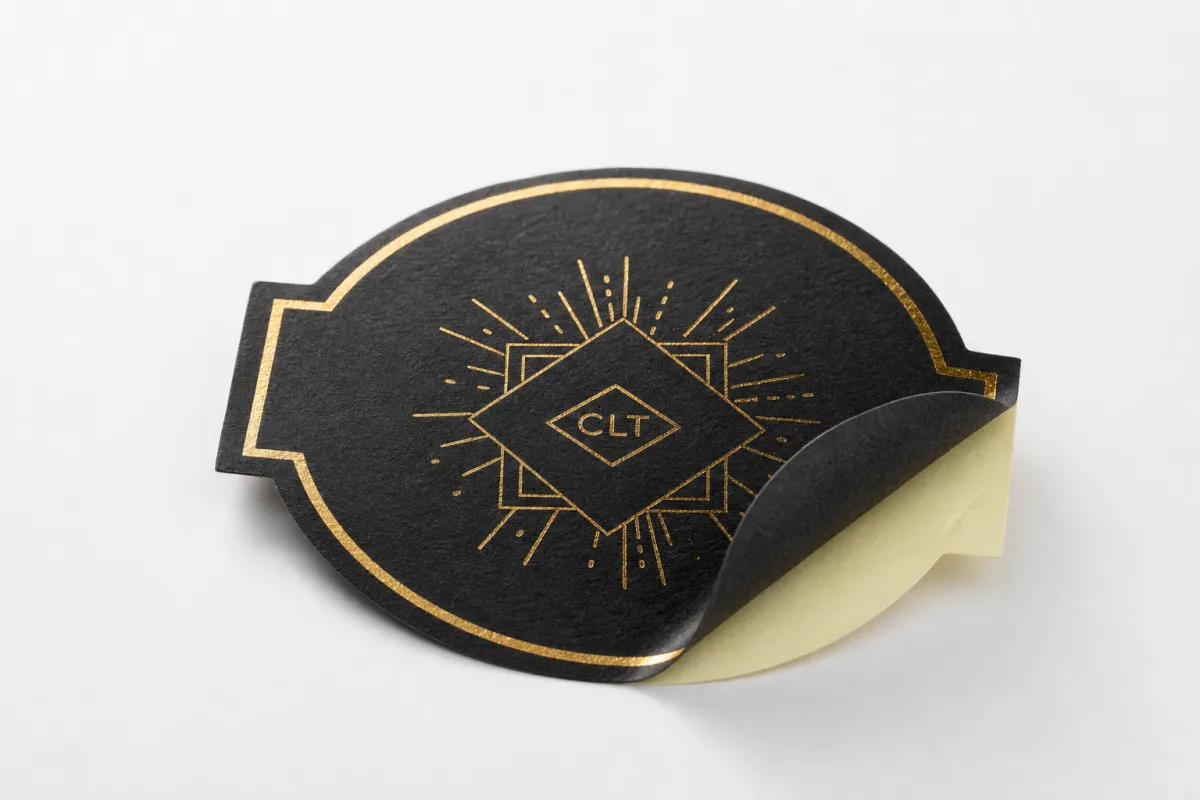
Custom seal labels for boxes are adhesive labels designed to bridge a seam, close a flap edge, or secure two panels together while carrying branding at the same time. In plain terms, they are the small piece that tells the customer this box was packed with intent. That tiny cue changes perception more than a lot of expensive print on the carton body.
Most buyers use them for three reasons. First, they improve presentation. Second, they can reduce tape use on lighter cartons and mailers. Third, they add a little tamper evidence without moving into heavy security packaging. Subscription kits, cosmetics, apparel, and event materials all benefit from a closure that looks clean and feels purposeful. In many cases, custom seal labels for boxes create a stronger brand moment than another line of copy on the side panel.
The label can be decorative, functional, or both. A decorative seal may simply close the seam and carry a logo, pattern, or thank-you message. A security-focused seal may use stronger adhesive, a destructible face stock, or a layout that makes removal obvious. That distinction matters. Custom seal labels for boxes are not the same as anti-counterfeit systems, serialized security stickers, or formal evidence tape. They can support security, but they are not a cure-all.
From a packaging buyer's point of view, the value is clear: fewer loose ends. A plain corrugated carton can be structurally fine and still feel cheap if the closure looks random. Custom seal labels for boxes close that gap. They also help package branding stay consistent across multiple SKUs, so the shipper sees one family of cartons instead of a pile of unrelated boxes. If you already buy Custom Packaging Products, seal labels are often the finishing item that makes the system feel complete.
A seal label is small. The impression it creates is not. Buyers notice the closure before they read the side panel.
There is a practical side too. Custom seal labels for boxes can speed up packing when the size is right and the adhesive matches the carton stock. That helps on small manual lines and even more on semi-automatic operations where the same motion repeats hundreds or thousands of times. When the label fits the box well, workers do not have to fight tape, guess at alignment, or rework a bad fold.
For teams comparing closure options, a seal label often sits between decorative tape and full security packaging. It is lighter than many tamper systems, less expensive than custom tape in some runs, and easier to store than separate printed sleeves. That is why custom seal labels for boxes show up so often in retail packaging, shipping cartons, and event kits. They solve a small problem that changes first impression in a big way.
How custom seal labels for boxes work on the pack line
Placement matters as much as artwork. Most custom seal labels for boxes sit across the center seam, over one flap edge, or across two panels so the closure feels clean and intentional. When the label bridges the overlap correctly, it helps keep the box shut and gives the package a tidy face. If it is too short, too wide, or off-center, the effect falls apart fast.
Manual packing is the simplest setup. An operator peels the label and applies it by hand, usually after the carton is filled and closed. That works well for smaller orders, seasonal runs, and brands with varied box sizes. Semi-automatic lines use peel-and-place tools, label applicators, or small dispensers to keep pace. Higher-volume setups pay close attention to roll direction, liner waste, and consistent placement, because a slow label becomes a bottleneck. Custom seal labels for boxes do not get a pass just because they are small.
Material choice changes the handling experience. Paper labels are common for simple branding and short-run closure work. Film stocks like BOPP or PET do better when moisture resistance or scuff resistance matters. Kraft face stock pairs well with a natural box finish and fits earthy branding. Coated stocks hold sharper print, while finishes such as matte, gloss, or soft-touch change the feel in hand. The face stock matters, and the liner plus adhesive matter just as much. A nice-looking label with the wrong adhesive is still a problem.
For box compatibility, the surface controls the result. Corrugated texture, recycled fibers, dust, humidity, and cold storage all affect how custom seal labels for boxes perform. A label that sticks beautifully to a clean coated carton may fail on recycled kraft if the surface is dusty or rough. Cold chain products create another issue: if the carton is cold, the adhesive may not wet out properly at application time. That is why a label spec should always include the actual box stock, not only the logo size.
Custom seal labels for boxes can also be applied in different ways depending on the look you want. Some brands prefer a crisp centered seal that reads as premium and orderly. Others want a looser, handcrafted look with a kraft label and a rougher edge shape. Neither is wrong. The right call depends on the product packaging style and the brand voice. If your retail packaging is minimal and modern, the seal should be clean. If your package branding is rustic or artisan, the label can feel warmer and less mechanical.
Testing standards help here. For shipping performance, look at transit testing references from ISTA. For paper sourcing and environmental claims, FSC-certified stock is a straightforward option. Not every order needs formal testing, but if the carton goes through rough handling, temperature swings, or multi-stop logistics, custom seal labels for boxes should be tested on real samples before you commit to a full run. That is not being fussy. That is avoiding a batch of useless labels.
One detail I always push buyers to check is the opening direction. A label can be perfectly centered and still make the box awkward to open if it crosses the wrong fold or overlaps the tear path. That is the sort of thing that only shows up after a few real pack-outs, and it can frustrate customers more than you would expect.
Key factors that shape custom seal labels for boxes
The box construction comes first. Corrugated cartons, coated folding cartons, uncoated kraft boxes, and recycled boards all behave differently, and custom seal labels for boxes should be specified with that in mind. A smooth coated carton usually gives the easiest adhesion and the cleanest print appearance. A rough recycled carton looks more natural, but it may need stronger adhesive and a wider seal to avoid edge lift. People usually learn that lesson after a test run, which is the expensive way to learn it.
Size is the next decision. The label should bridge the flap seam with enough overlap on both sides to hold and to look balanced. If the seam width is 1 inch, the label may need more than 1 inch of actual contact area because the center seam and flap edges are not perfectly flat. In practice, many custom seal labels for boxes land somewhere between 2 and 5 inches wide, though the box size and visual style matter. A narrow label can look elegant, and it can also peel sooner if the overlap is too thin.
Shape matters more than many people expect. A simple rectangle is usually the cheapest and easiest to apply. A die-cut shape can add personality, but it often costs more and may slow application if the label has unusual corners or a delicate edge. If you need fast production, keep the shape simple. If the label is doing branding work on an otherwise plain box, a Custom Die Cut can be worth the added cost. Custom seal labels for boxes live or die on how they fit into the actual production flow, not on how clever the artwork looks in a PDF.
Print decisions change the budget and the finish. One-color branding is usually the most efficient path, especially for high-volume closure labels. Full-color work is fine when the design really needs it. Foil, embossing, and specialty varnishes can look sharp, but they raise cost and can add lead time. Variable data is useful for serial numbers, batch codes, and campaign-specific messages. If the label has to do more than look good, build that into the spec from the start. Custom seal labels for boxes can carry barcodes or warning text, but tiny print on a seam is a bad place for anything important unless the layout is tested carefully.
Durability is the final filter. Warehouse dust, shipping abrasion, refrigerated storage, condensation, and long transit times all change performance. A soft-touch finish may feel premium, but a gloss film may survive scuffing better. A removable adhesive can help for a temporary promotion, but it is the wrong choice for a closure that should stay put. Many brands use custom seal labels for boxes for retail packaging, then discover they need a tougher stock for export cartons or chilled product packaging. Same box. Different risk. Different spec.
- Clean coated carton: easier adhesion, cleaner print, often a simpler label spec.
- Recycled kraft carton: more texture, usually needs stronger tack and wider overlap.
- Cold storage: demands adhesion testing before volume production.
- Long transit: favors stronger face stock and abrasion resistance.
If you also order Custom Labels & Tags, ask your supplier to match the closure label spec to the rest of your labeling system. It keeps package branding consistent across box seals, inserts, and shipping identifiers. That consistency matters more than fancy art nobody can read at a glance.
Custom seal labels for boxes pricing: what drives cost
Custom seal labels for boxes are priced by a handful of predictable variables: quantity, size, material, adhesive, print colors, finish, and whether the order needs a custom die or special conversion. If the quote seems suspiciously low, one of those items is probably missing or under-specified. That is not cynicism. That is packaging math.
The biggest driver is quantity. Small runs carry more setup cost per unit because the proofing, press setup, and material prep are spread across fewer pieces. Larger runs drop the unit cost fast. A brand that needs 500 labels is paying for convenience and flexibility. A brand that needs 10,000 is paying for efficiency. Both are valid. They are just different buying habits. For custom seal labels for boxes, the breakpoints usually show up clearly at 500, 1,000, 2,500, 5,000, and 10,000 units.
| Quantity | Typical unit price range | Best fit | Notes |
|---|---|---|---|
| 500 | $0.28 - $0.55 | Samples, pilots, short seasonal runs | Setup cost is spread over fewer pieces |
| 1,000 | $0.20 - $0.42 | Small brand launches, limited SKU tests | Good place to validate fit and adhesion |
| 2,500 | $0.14 - $0.30 | Growing DTC and retail programs | Often a better balance of cost and flexibility |
| 5,000 | $0.09 - $0.20 | Repeat programs, multi-batch fulfillment | Common sweet spot for stable SKUs |
| 10,000+ | $0.06 - $0.14 | Higher-volume shipping and retail packaging | Best economics if artwork will stay unchanged |
Those ranges are not a promise. They are the shape of the market. A simple paper label with one-color print and a standard permanent adhesive will sit near the lower end. A film label with foil, soft-touch lamination, or a specialty adhesive can climb quickly. Custom seal labels for boxes are one of those products where every nice feature carries a cost, and the cost is rarely subtle.
Hidden costs are where buyers get annoyed. Proofs may be free or may carry a charge depending on the vendor. Plates or dies can be a one-time setup fee. Rush orders can narrow material options and raise the total. Split SKUs can create extra handling charges if you want different artwork or different sizes in one project. Shipping can also sting if the order needs to be divided across multiple cartons or warehouse locations. If your quote does not spell those out, ask. Custom seal labels for boxes should not turn into a surprise invoice generator.
Here is the tradeoff in one sentence: paper is usually the cheapest path, film buys durability, foil buys attention, and specialty adhesive buys peace of mind. You do not need every feature. You need the right few features. If a closure label is going on a basic mailer, keep it simple. If it is closing a premium carton that sits in a humid warehouse and then travels across the country, spend the extra money where it actually protects the job. That is how experienced buyers think about custom seal labels for boxes.
For teams comparing options, I usually suggest asking for quotes with the same artwork at 500, 1,000, 2,500, 5,000, and 10,000 units. The price curve becomes obvious fast, and you can see which order size gives the best balance of cash flow and inventory. That is a much smarter process than asking for "cheap labels" and hoping the numbers work themselves out.
Production process and timeline for custom seal labels for boxes
The production path is straightforward, but only if the brief is clear. For custom seal labels for boxes, the usual sequence is brief, artwork prep, proofing, approval, print setup, finishing, quality check, and shipping. Each step sounds small. Together they decide whether the job lands cleanly or drags across the calendar because someone forgot to measure the seam width.
Artwork revisions cause the most delays. A lot of brands have the logo ready, but not the exact size, box photo, or placement note. If the supplier has to guess where the label lands or whether the seam is curved, the proof takes longer. Missing box measurements slow things down even more. So does a vague note like "make it fit." That is not a spec. That is a wish. Custom seal labels for boxes work best when the brief includes box type, seam width, print finish, adhesive type, storage condition, and application method.
Timeline depends on the build. Simple digital label runs can move quickly once artwork is approved. Die-cut shapes, foil, special stocks, and custom adhesive requirements add time. Multi-SKU orders add more because the press and finishing setup often need extra handling. If a vendor says a run can be rushed, believe them, and expect tradeoffs: fewer finish choices, tighter review windows, and a higher unit price. That is how rush production usually works. Custom seal labels for boxes can be fast, just not free and not magical.
For planning, think in realistic ranges. Simple runs can often move in roughly 5-10 business days after approval. More complex jobs are often 12-15 business days or longer, especially if they need a custom die, foil, or extra QA. If the box is going into a launch window, do not wait until the last week to test the seal. Order samples early and apply them to the actual carton stock. A digital mockup will not show how the adhesive behaves on recycled corrugate in a cold room.
That is where basic testing saves money. If you are shipping across rough routes, use a transit-testing mindset similar to ISTA procedures rather than trusting a desk sample. If you need sustainability documentation, ask for FSC-certified face stock or paper liner options. The more demanding the job, the more important it is to verify the label on a real box under real conditions. Custom seal labels for boxes are a production item, not an art print. They need to behave in the environment where they will actually be used.
- Brief: state box type, quantity, application method, and performance needs.
- Artwork: supply logo files, copy, and any barcode or batch data.
- Proof: check size, bleed, seam placement, and finish notes.
- Sample test: apply to the real carton stock before volume approval.
- Production: run, inspect, pack, and ship with the correct roll direction or sheet format.
If you are ordering seal labels alongside other package branding items, keep the timeline in one place. Coordinate the label proof with the carton proof instead of treating them as separate projects that somehow meet on the warehouse floor. It sounds obvious. It rarely is.
Common mistakes with custom seal labels for boxes
The most common mistake is sizing by appearance instead of seam width. A label can look balanced in a mockup and still fail to bridge the flap properly on the real carton. That is especially true with custom seal labels for boxes used on varied box sizes, because one size rarely solves every closure problem. Measure first. Design second. Strange habit, but it helps.
Adhesive choice is the next trap. Recycled corrugated boxes, dusty warehouse cartons, textured kraft boards, and cold-storage products all need more attention than a smooth office box. Weak tack on a rough surface is a bad joke that gets old fast. If the seal lifts at the edge, the package looks used before the customer even opens it. Strong permanent acrylic or high-tack adhesive is often the safer choice for custom seal labels for boxes, but you still need to test it on the actual board.
Design mistakes show up just as quickly. Too much copy makes the label feel busy and cheap. Tiny text disappears at the seam. Overcrowded artwork can make the label feel less premium, even if the logo itself is strong. Leave clean space. Let the seal breathe. A well-composed closure label should support the product packaging, not fight it. If your retail packaging relies on a strong logo, keep the seal label simple enough that the eye reads it in one glance.
Workflow mistakes can cost more than design mistakes. If the label is hard to peel, too small for gloved hands, or placed where operators have to reach awkwardly, packing slows down. If the roll direction is wrong, the label can apply upside down or require extra handling. If you use multiple carton sizes, a single label spec may not fit all of them. Custom seal labels for boxes are not universal; they are a fit problem disguised as a branding task.
Another common error is assuming one label can do every job. A label for a lightweight mailer is not always right for a heavy shipping carton. A temporary promotional seal is not the same as a tamper-evident closure. A label that works in dry storage may fail in humidity. Buyers who treat all custom seal labels for boxes as interchangeable usually end up reordering sooner than expected. That costs more than doing the homework once.
If the seal label has to rescue a weak box spec, the label is already doing too much work.
Do not skip the real-world sample. A press proof is useful. A sample on the actual carton is better. You can check adhesion, edge lift, color against the board, and whether the finish reads as premium or just shiny. A lot of packaging design decisions are obvious on screen and wrong in hand. That is why custom seal labels for boxes should be touched, peeled, folded, and handled before full production starts.
There is also a trust issue hidden in the testing stage. If a supplier cannot explain how the adhesive behaves on your exact carton stock, or if the sample changes from proof to proof with no clear reason, that is a signal to slow down. Good packaging work feels calm because the details have been checked, not because someone made a hopeful promise.
Expert tips and next steps for custom seal labels for boxes
Start small and test hard. For custom seal labels for boxes, I would rather see a brand order a few sizes, two or three materials, and one live carton sample than roll straight into a full order on faith. The cost of a sample run is usually tiny compared with the cost of 5,000 labels that peel up on the first pallet. Packaging has a way of punishing optimism.
Match label width to the flap overlap and the application method. Do not start with the logo and work backward unless the logo has a shape that really demands it. Packaging physics does not care about aesthetics. If the seal label is too narrow, it can curl at the edges. If it is too wide, it can wrinkle or slow packing. Custom seal labels for boxes need enough overlap to stay put, but not so much that the line operator feels punished every time a carton passes through.
Build a simple quote sheet before asking for pricing. Include box material, box size, seam width, label size, quantity, finish, adhesive, storage conditions, and application method. That one page can save a lot of back-and-forth. It also helps suppliers give you a more honest number instead of a guess padded with caution. If you want support for the surrounding packaging system, the team at Custom Logo Things can also help you compare options across Custom Packaging Products and related label formats.
A proof is useful. A physical sample is better. Ask for both if the order is anything beyond a simple repeat. Check color against the carton, check edge lift after a few hours, and check how the label looks under the actual lighting in your packing area. Warehouse LEDs and studio lighting are not the same thing, and they do not forgive the same design sins. Custom seal labels for boxes should always be evaluated in the place where they will live, not in a perfect mockup environment.
One more practical move: if your brand has multiple box sizes, test the closure label on the smallest and the largest carton first. Those usually expose the fit issues fastest. Once you know the worst-case box behaves well, the rest of the line is easier. That is the sort of boring, unglamorous planning that keeps custom seal labels for boxes from turning into a recurring problem.
From there, the next steps are simple. Measure the seam. Pick the adhesive. Request two or three quotes. Test on live boxes. Then place the order for custom seal labels for boxes that fit the real workflow, not the fantasy version of it. That is how you get a closure label that looks sharp, sticks properly, and supports the package instead of becoming a headache.
For brands that care about retail packaging, package branding, and practical throughput, that is the whole point. Custom seal labels for boxes are small, but they carry a lot of weight. Get the spec right and the carton looks intentional. Get it wrong and everyone notices, starting with the person trying to peel the bad label off the next day.
The cleanest takeaway is simple: treat the closure label as part of the box structure, not as decoration added at the end. Measure the seam, test on the real carton, and choose the adhesive for the environment the box will actually see. Do that, and your custom seal labels for boxes will support the package instead of fighting it.
What are custom seal labels for boxes used for?
They close the box seam, add branding, and can show whether a carton has been opened. They are common on e-commerce mailers, subscription boxes, retail shipments, and event kits. They also help reduce tape use and make packing look more deliberate.
How much do custom seal labels for boxes cost?
Cost depends on quantity, size, material, adhesive, print colors, and finishing. Small runs usually cost more per label because setup gets spread across fewer pieces. Ask for quotes at 500, 1,000, 2,500, 5,000, and 10,000 units to see real price breaks.
What size should custom seal labels for boxes be?
Measure the flap seam first, then choose a label that bridges the closure with enough overlap on both sides. A label that is too narrow can peel at the edge, while one that is too wide can slow application or wrinkle. Test the size on the actual box material before committing to production.
How long does production take for custom seal labels for boxes?
Simple digital orders can move quickly once the artwork is approved. Die-cuts, foil, specialty stocks, and custom adhesive requirements add lead time. Rush options may be available, but they can limit finish choices and increase unit cost.
What adhesive works best for custom seal labels for boxes?
Permanent acrylic or high-tack adhesive is usually the safest choice for corrugated shipping boxes. Recycled, dusty, cold, or textured surfaces often need stronger testing before full production. Removable adhesive is better for temporary branding, not for a closure that needs to stay put.

