Buyer Fit Snapshot
| Best fit | Custom Foil Labels for Boxes projects where brand print, material claims, artwork control, MOQ, and repeat-order consistency need to be specified before quoting. |
|---|---|
| Quote inputs | Share finished size, material target, print colors, finish, packing count, annual reorder estimate, ship-to region, and any compliance wording. |
| Proofing check | Approve dieline scale, logo placement, barcode or warning zones, color tolerance, closure strength, and carton packing before bulk production. |
| Main risk | Vague material claims, crowded artwork, missing packing details, or unclear freight terms can make a low unit price expensive after revisions. |
Fast answer: Custom Foil Labels for Boxes: Design, Cost, Timing should be specified like a repeatable production item. The safest quote records material, print method, finish, artwork proof, packing count, and reorder notes in one written spec.
Production checks before approval
Compare the actual filled-product size with the drawing, then confirm tolerance on folds, seals, hang holes, label areas, and retail display edges. Reserve space for logos, QR codes, warning copy, and material claims before decorative graphics fill the panel.
Quote comparison points
Review material grade, print process, finish, sampling route, tooling charges, carton quantity, and freight assumptions side by side. A quote is only useful when the supplier can repeat the same color, closure quality, and packing count on the next order.
Custom foil labels for boxes can turn a plain corrugated carton into something that feels deliberate almost immediately. Set the same box down twice, once bare and once with a reflective label, and the version with the foil accent usually reads as more valuable before anyone has even clocked the logo. That is the real draw: custom foil labels for boxes create a premium signal without forcing you into a fully printed carton order.
That matters for brands working inside real packaging limits. A small foil seal on an ecommerce mailer, a front-panel badge on a gift box, or a limited-edition mark on retail packaging can lift the whole presentation while keeping cost and lead time under control. Used thoughtfully, custom foil labels for boxes support package branding, sharpen packaging design, and make product packaging feel finished instead of patched together.
Used carelessly, they become shiny stickers. Shine alone does not equal premium. Stock selection, adhesive strength, label placement, and the amount of handling the box will face all shape whether the result feels refined or rushed.
Why custom foil labels for boxes stand out fast
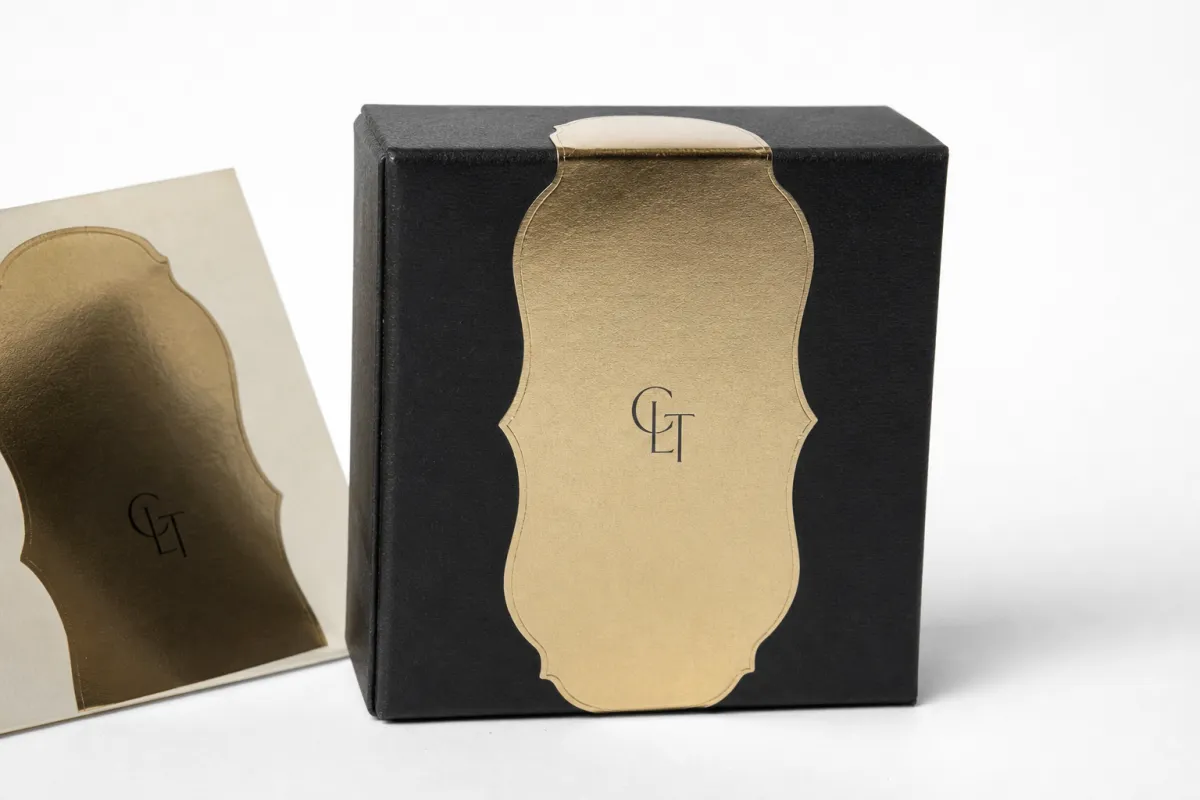
Walk through a packing area and the effect is easy to spot. A kraft box with a plain black label looks practical. Put custom foil labels for boxes on the same carton and the surface catches light, adds contrast, and gives the brand a more intentional presence. The eye notices reflection and edge definition before it fully processes the rest of the design, which is why foil tends to register so quickly.
That is also why foil performs so well on logos, seals, icons, and short taglines. A box rarely needs a lot of shine to look elevated. One controlled visual moment usually does the work. In that sense, custom foil labels for boxes are strongest as a focal point rather than as a busy pattern. A gold logo on a natural kraft mailer suggests luxury. A silver badge on a black rigid box suggests precision. A holographic accent can push a more playful or collectible direction, though it can tip into clutter fast if the rest of the packaging is not disciplined.
They work especially well for ecommerce cartons, subscription boxes, luxury inserts, seasonal packaging, and gift boxes. They also fit short promotional runs, because the box itself can stay simple while the packaging still feels custom. That is one reason many buyers pair custom foil labels for boxes with Custom Packaging Products or use them alongside Custom Labels & Tags to create a cleaner package branding system without committing to a full print plate or new box tooling.
I have seen brands spend extra money on a more elaborate box structure and still end up with a less polished result than a simple carton dressed with the right label. That sounds backwards, but it happens all the time. A good foil label gives the eye a clear place to land, and the packaging feels more confident for it.
The psychology is simple. Reflective finishes slow the eye for a beat. That pause gives the logo or badge more weight. It also makes the box feel less like a shipping container and more like part of the product packaging experience.
A foil label should do one job well: make the box feel finished without turning production into a headache.
Foil is not a cure-all. Custom foil labels for boxes will not rescue a dented carton, a muddy print file, or a label placed across a seam that gets crushed in transit. Dusty boxes, rough shipping surfaces, and heavy humidity can all work against adhesion and appearance. If the box will be stacked, tossed, or scraped, the label has to be specified for actual handling, not the mockup on the screen.
That is the sweet spot for brands that want premium impact without overcommitting. A well-placed foil label can outperform more expensive packaging options that were planned poorly. That is why custom foil labels for boxes stay one of the most practical upgrades in packaging design.
How custom foil labels for boxes are made and applied
Knowing what goes into the label makes ordering easier. At the simplest level, custom foil labels for boxes are built from four parts: the face stock, the adhesive, the liner, and the foil effect itself. The face stock is the visible material. The adhesive bonds the label to the box. The liner protects the adhesive before application. The foil layer may be true metallic foil, a stamped accent, or a specialty finish that echoes the look of foil.
The production method changes the result. With digital printing and foil accents, the artwork is printed first and the metallic effect is added to selected areas. That works well for shorter runs and variable artwork. Hot foil stamping uses heat and pressure to transfer metallic foil onto the label surface. It creates a crisp, high-end finish, though tooling and setup make it better suited to repeat orders or larger volumes. Cold foil and other specialty embellishment methods fall somewhere in between, depending on the supplier and the quantity.
For many buyers, custom foil labels for boxes are hand-applied on short runs and machine-applied on larger batches. Hand application keeps upfront costs lower and gives more flexibility, but it depends on consistent placement. Machine application is faster and more uniform at volume, though it needs tighter dimensional control. If the label is too small, too thin, or too irregular, placement gets sloppy in a hurry. Rounded corners help. So does choosing a shape that matches how the box is handled in the real world.
Box surface matters just as much. Smooth paperboard, clean kraft, and coated panels usually produce the best results. Heavily textured cardboard, dusty recycled board, and cartons with a lot of seam interference are harder to work with. When a label crosses a fold, crease, or edge, adhesive can lift and foil can distort. That is how premium packaging ends up looking like an office supply fix.
Another advantage is flexibility. custom foil labels for boxes can upgrade a basic carton without requiring a new custom printed boxes program. If your order volume is not ready for full box printing, labels let you test the market, tighten the artwork, and keep production risk lower. For many growing brands, that is a more sensible first move than jumping straight into a full packaging redesign.
One practical distinction helps here: the label finish and the box finish are separate decisions. A foil label can do a great deal of visual work on a plain box. The carton itself does not need to be glossy, coated, or printed for the label to look strong. That is why this format shows up so often in retail packaging, premium shipping, and seasonal gift packaging.
Key factors that shape look, durability, and cost
Stock choice sets the tone for how custom foil labels for boxes look and how well they hold up. Paper labels are the most economical and often fit indoor retail packaging, short-run gifting, and light handling. Polypropylene is a better match for moisture resistance and general durability. Polyester is tougher still, which matters if the label will see abrasion, temperature swings, or rougher shipping conditions. Specialty stocks can add texture or visual depth, yet they also increase cost and can reduce production flexibility.
Adhesive selection carries just as much weight. Permanent adhesive is the default for most packaging. Removable adhesive is useful when the label needs to come off cleanly, though it is not ideal if you want the label to stay put long term. Freezer-grade adhesive matters for cold-chain storage. High-tack adhesive can help on rough surfaces, but it can also make repositioning nearly impossible. Pick the wrong adhesive and custom foil labels for boxes can bubble, lift at the corners, or leave residue nobody wants to scrape off later.
Foil color changes the mood more than many buyers expect. Gold reads warm and classic. Silver feels sharper and more technical. Matte metallic gives a softer, more restrained impression. Holographic can create a collectible look, though it can overpower the rest of the design if the brand is not careful. I usually tell buyers to think about hierarchy first, then shine. If every element is competing for attention, the label stops feeling premium and starts feeling loud.
Size and shape also move the price. A small seal label uses less material and can be applied quickly. A large front-panel label takes more stock, more foil coverage, and more care during application. Custom Die Cuts add another layer of setup complexity. A simple circle or rectangle is cheaper than a complex contour shape, even if the difference looks minor on screen. On press and on the applicator, it is not minor at all.
Durability depends on the environment. Will the box sit on a retail shelf, ship across regions, get stacked in a warehouse, or be reused by the recipient? Will it live in humidity? Will it rub against other cartons? A label that looks perfect in a controlled sample can fail after a few days in a hot delivery van. For shipping programs, I like to think in terms of actual handling and test conditions. Transport resistance standards such as ISTA transport test standards are useful because they keep the focus on testing the package, not just admiring the art.
Material sourcing can matter too. If your buyer cares about recycled content, paper recovery, or sustainability claims, ask whether the facestock is FSC-certified and whether the construction supports your recycling goals. If that is part of the brief, anchor the packaging design in real standards rather than vague green language. The FSC certification system is a better starting point than a buzzword on a sales sheet.
For brands comparing options, here is the practical view:
| Label option | Best use | Typical durability | Cost impact |
|---|---|---|---|
| Paper with foil accent | Gift boxes, short runs, light handling | Moderate | Lowest |
| Polypropylene with foil accent | Ecommerce cartons, moisture-prone storage | Good | Mid-range |
| Polyester with metallic finish | Rougher shipping, stacked cartons, reuse | High | Higher |
| Specialty stock with custom foil labels for boxes | Luxury packaging, limited editions | Variable | Highest |
The short answer is simple: the more the label has to withstand, the more the construction deserves your attention. Custom foil labels for boxes are not a place to guess and hope. Packaging design rewards boring details like adhesive strength, facestock choice, and corner radius. Exciting? Not especially. Useful? Very.
Process and timeline: from file to finished labels
The smoothest orders usually follow the same path. The brief comes first: box dimensions, label size, expected quantity, application method, and target look. Artwork prep comes next, where the logo, copy, and foil areas are cleaned up. After that, the supplier sends a proof. Once the proof is approved, production starts, then finishing and packing happen, and the labels ship.
The timeline depends on how prepared the buyer is. If the file is ready, the dieline is correct, and the stock is standard, custom foil labels for boxes can move fairly quickly. If the logo is low resolution, the dieline is missing, or the foil area needs a lot of back-and-forth, the job slows down. That is not the factory being difficult. That is production reality.
Lead times vary by method and quantity. A simple digital run can often move in about 5 to 10 business days after proof approval if the material is in stock. Specialty foil work, Custom Die Cutting, or larger volumes often land closer to 10 to 15 business days. If tooling is needed or the order is split across several boxes and destinations, add time. Rush jobs are possible, though rush fees are not exactly a pleasant surprise.
For custom foil labels for boxes, the delays tend to show up in the same places every time. Missing bleed. Wrong dielines. A logo saved as a low-res PNG instead of a vector file. Color expectations that were never clarified. A late change after proof approval. All of those are avoidable if the label order is treated as part of the packaging production plan rather than something added two days before launch.
A simple preflight checklist helps. Use it every time:
- Final label dimensions, including bleed and safe area.
- Box material and finish, especially if it is textured or recycled.
- Application method: hand-applied or machine-applied.
- Foil color and whether the shine should be bright or restrained.
- Quantity, split shipment needs, and launch date.
- Artwork format, preferably vector for logos and text.
If you are working with a vendor on custom foil labels for boxes, ask for one of two things before production starts: a digital mockup that shows placement on the actual box, or a physical sample on the intended carton stock. A flat proof on plain white paper helps, but it does not show how the foil behaves on the real surface. Packaging buyers get burned most often when they approve a polished file and never touch the actual material.
One more thing that saves headaches: confirm how the labels will be packed and delivered. Sheets, rolls, or individual cut pieces all affect application speed. If the labels are going onto a hand-pack line, the format matters a lot more than people think. A small mismatch there can turn a neat packaging idea into a slow, fussy process.
Cost and pricing: what custom foil labels for boxes really run
Pricing for custom foil labels for boxes depends on quantity, size, material, foil coverage, color count, die cutting, finishing, and shipping. There is no honest shortcut around that. A small run with a simple shape and a single foil accent will cost far less than a larger, custom-cut label with multiple embellishments and specialty adhesive. If a quote seems unusually low, check what is missing. Something usually is.
Minimum order quantity has a sharp effect on unit price. Small runs carry more setup cost per label, so the piece price can feel high. Larger runs spread the setup cost over more units, which lowers the unit price but raises your upfront spend. For a buyer, that is a cash-flow question as much as a packaging question. If you only need 250 labels for a seasonal drop, do not price them like a 10,000-piece retail program. The math will get ugly fast.
Here is a realistic way to think about the market for custom foil Labels for Boxes:
| Run type | Typical unit range | What drives the price | Best fit |
|---|---|---|---|
| Short promotional run | $0.18-$0.45 per label | Setup, small quantity, simple foil accent | Launches, events, test programs |
| Mid-volume ecommerce run | $0.08-$0.22 per label | Quantity, standard shape, one-color foil | Monthly shipping cartons |
| Premium retail packaging run | $0.12-$0.35 per label | Special stock, die cutting, higher coverage | Luxury packaging and gift sets |
| High-volume custom program | $0.05-$0.15 per label | Scale, repeat ordering, efficient application | Ongoing branded packaging systems |
Those ranges are not a promise. They are a practical starting point. Custom foil labels for boxes can land outside them if the stock is premium, the shape is complex, or the project needs special handling. Setup fees, custom tooling, proof charges, rush fees, and split shipments can all add cost. You do not want to find those after the quote has already been approved.
If you want cleaner pricing, send cleaner information. Give the supplier the exact label dimensions, quantity, box material, foil color, application method, and whether the label is decorative, functional, or both. Include the logo file. Mention whether the label will sit on kraft, white board, coated board, or a textured surface. That is how you get a quote that matches the real job instead of a rough guess.
For brands comparing custom foil labels for boxes against full custom printed boxes, labels often win on flexibility. They let you test a design, keep inventory lower, and adjust quickly if the packaging changes. That does not make them the cheapest route in every case. It makes them the smarter route when volume is uncertain or the branding needs to evolve.
And if you are trying to hit a launch date, simplicity wins. A standard stock, one foil color, and a conventional shape are a lot easier to produce than a fancy spec with five moving parts. That may sound a little plain, but plain is often what gets the job out the door on time.
Common mistakes with custom foil labels for boxes
The biggest mistake is designing for the screen instead of the carton. A label that looks crisp in a mockup can fail on a real box with seams, texture, or curvature. If the artwork is too detailed, too small, or too close to an edge, custom foil labels for boxes will expose the problem immediately. Foil has a way of making both good choices and bad choices look more obvious.
Overusing foil is another easy way to flatten the effect. Too much shine can blur the hierarchy and make the packaging feel busy instead of premium. A strong logo mark, a single word, or one accent line usually does more than covering half the label in metallic texture. Premium packaging often depends on restraint, not volume.
Placement matters more than people expect. Labels set too close to folds, handles, corners, tape, or closing flaps can peel early or look crooked after transit. If the box will be stacked, the label should avoid the area that takes the most compression. That sounds basic because it is basic. It is also one of the most common mistakes with custom foil labels for boxes.
Skipping sample testing is another bad habit. Color, reflectivity, and adhesive behavior always look different once the label is on the actual carton. Even a low-volume sample can show whether the label grabs cleanly, whether the foil is too bright, and whether the corner lifts after a day or two. If the packaging will be shipped, test it under conditions that resemble real use. For tougher logistics, it is worth thinking in terms of ASTM-style performance checks and actual abrasion or drop handling rather than wishful thinking.
Spec mismatches create a separate class of problems. A permanent paper label on a humid shipment is a poor choice. A delicate metallic finish on a rough recycled box is another poor choice. A freezer-grade adhesive on a retail box that never sees cold storage is not dangerous, but it may be overkill. Good custom foil labels for boxes start with an honest match between surface, adhesive, and handling environment.
Finally, custom foil labels for boxes are only one part of the package experience. If the box structure is flimsy, the insert is sloppy, or the shipping presentation is messy, the label cannot carry the whole brand. It is a detail, not a rescue plan. Buyers with strong package branding understand that, and they are usually the ones who get the cleanest results.
Expert tips and next steps for a smarter first order
Start with one hero placement. That is usually the cleanest way to test custom foil labels for boxes. Put the label where the eye naturally lands, then let the rest of the box stay quieter. You do not need to flood the carton with foil to get impact. One strong logo badge on the front panel can carry the job, especially if the rest of the packaging design stays clean.
Ask for a physical sample or a photo proof on the actual box surface before you scale. If you are buying custom foil labels for boxes for a launch, a sample tells you more than a rendered mockup ever will. You can check reflectivity, adhesive grab, edge quality, and whether the label sits where you think it sits. That is cheap insurance compared with reprinting a bad run.
Keep typography bold and spacing generous. Thin strokes and tiny copy can disappear once the foil catches the light. If your logo has delicate lines, consider simplifying the version used on the label. This is one of those places where less detail usually performs better. In packaging, legibility beats cleverness most days.
I also like to ask one blunt question before a first order: how is the box actually going to be handled? That single question changes everything, from stock choice to foil brightness to the way the label edge should be cut. A label that looks great in a showroom can get chewed up in transit, and then everybody ends up learning the hard way.
Here is the ordering checklist I would use for custom foil labels for boxes:
- Final label size and shape.
- Box material and surface finish.
- Quantity and reorder expectation.
- Foil color and coverage level.
- Adhesive type and environmental needs.
- Application method.
- Target ship or launch date.
- Logo file and any copy to include.
Then compare two or three specs before you lock anything. Maybe one version uses paper stock and gold foil. Another uses polypropylene and silver foil. A third keeps the same layout but changes the size or adhesive. That comparison usually shows you where the real tradeoff sits: budget, durability, or visual punch. Custom foil labels for boxes are easier to buy well when you compare them like packaging components instead of buying them like decoration.
If you are moving into branded packaging for the first time, it also helps to think about how the label fits with the rest of the system. Box style, tissue, inserts, and shipping method all affect the experience. A label can be the anchor point, but it works best when the whole package is coherent. That is especially true for ecommerce packaging, gift sets, and limited releases where the unboxing moment is part of the sale.
A smarter finish for custom foil labels for boxes
Custom foil labels for boxes are popular for a reason. They create a premium signal fast, they work across a wide range of box styles, and they let brands upgrade packaging without committing to a full printed carton program. That makes them useful for retail packaging, ecommerce cartons, seasonal launches, and product packaging that needs to look sharper without getting complicated.
The catch is that they only perform well when the spec is honest. Choose the Right stock, the right adhesive, the right foil finish, and the right placement. Test the box surface. Respect the timeline. And do not assume that a polished mockup will survive real shipping. Custom foil labels for boxes are a practical tool, not a miracle.
If you want the cleanest result, build the order around the actual carton and the actual handling conditions. That is the difference between a label that just shines and one that genuinely improves package branding. The smartest first move is simple: mock up one strong placement, test it on the real box, and let the handling conditions tell you whether the stock, adhesive, and foil finish are really doing their job.
What are custom foil labels for boxes used for?
They add a premium metallic accent to shipping cartons, gift boxes, and retail packaging without requiring a fully printed box. They are useful for logos, seals, limited editions, and seasonal packaging where quick visual impact matters.
Are custom foil labels for boxes durable enough for shipping?
Yes, if you Choose the Right stock and adhesive for the box surface and handling conditions. For rough shipping, ask for abrasion-resistant materials and test the label on the actual carton before full production.
How much do custom foil labels for boxes cost per unit?
Unit cost depends on quantity, label size, stock, foil coverage, die cutting, and setup fees. Small runs cost more per label, while larger orders usually lower the price but increase upfront spend.
What is the typical turnaround for custom foil labels for boxes?
Turnaround depends on artwork readiness, proof approval, production method, and stock availability. Simple orders move faster; specialty foil, custom shapes, or rush changes usually add time.
What should I send when requesting a quote for custom foil labels for boxes?
Send the label dimensions, quantity, box material, foil color, adhesive preference, and whether the labels will be hand-applied or machine-applied. Include a logo file and a short description of the desired finish so the quote is accurate the first time.
What is the smartest first order for custom foil labels for boxes?
Start with one hero placement, one foil color, and a test run sized to your real packaging needs. That keeps the budget sane and shows whether custom foil labels for boxes are performing the way you want before you scale the order.

