Buyer Fit Snapshot
| Best fit | Custom Set Up Boxes Wholesale projects where brand print, material claims, artwork control, MOQ, and repeat-order consistency need to be specified before quoting. |
|---|---|
| Quote inputs | Share finished size, material target, print colors, finish, packing count, annual reorder estimate, ship-to region, and any compliance wording. |
| Proofing check | Approve dieline scale, logo placement, barcode or warning zones, color tolerance, closure strength, and carton packing before bulk production. |
| Main risk | Vague material claims, crowded artwork, missing packing details, or unclear freight terms can make a low unit price expensive after revisions. |
Fast answer: Custom Set Up Boxes Wholesale: Pricing, MOQ & Lead Time should be specified like a repeatable production item. The safest quote records material, print method, finish, artwork proof, packing count, and reorder notes in one written spec.
Production checks before approval
Compare the actual filled-product size with the drawing, then confirm tolerance on folds, seals, hang holes, label areas, and retail display edges. Reserve space for logos, QR codes, warning copy, and material claims before decorative graphics fill the panel.
Quote comparison points
Review material grade, print process, finish, sampling route, tooling charges, carton quantity, and freight assumptions side by side. A quote is only useful when the supplier can repeat the same color, closure quality, and packing count on the next order.
Custom Set Up Boxes Wholesale: Pricing, MOQ & Lead Time
Custom set up boxes wholesale can look expensive on a line sheet, yet a disciplined rigid box program often ends up more efficient than buyers expect once the structure, board, and artwork are settled early. The reason is simple: a box that is designed correctly does more than hold a product. It can protect it, present it, and speed up packing without demanding excess material at every step. Premium presentation does not have to mean waste.
From a buyer's seat, the real test is practical. The box should read well on a shelf, pack cleanly on the line, and arrive without crushed corners or loose wraps. That is not a small brief. A cosmetics brand launching a holiday set may care most about visual impact, while a subscription brand may care more about repeat pack-out speed and carton efficiency. The best specification solves both problems without inflating the budget.
Wholesale sourcing changes the economics because repeatability matters. Stable dimensions, a finalized setup, and fewer late revisions usually mean less waste and a better unit price as quantity rises. For brands comparing options through Wholesale Programs, rigid set up boxes often win because they bring presentation value without forcing unnecessary material into the build.
There is also a structural reason buyers keep returning to this format. A chipboard or rigid board shell gives the product a firmer home than many folding cartons, which helps with shelf presence, kit assembly, and gift-ready presentation. If the program needs a stronger first impression or better protection for fragile goods, the extra structure can justify the spend. The trick is to match the box to the product, not overspecify every layer because the sample looked impressive in a meeting.
Why Custom Set Up Boxes Wholesale Can Be Cheaper Than You Think
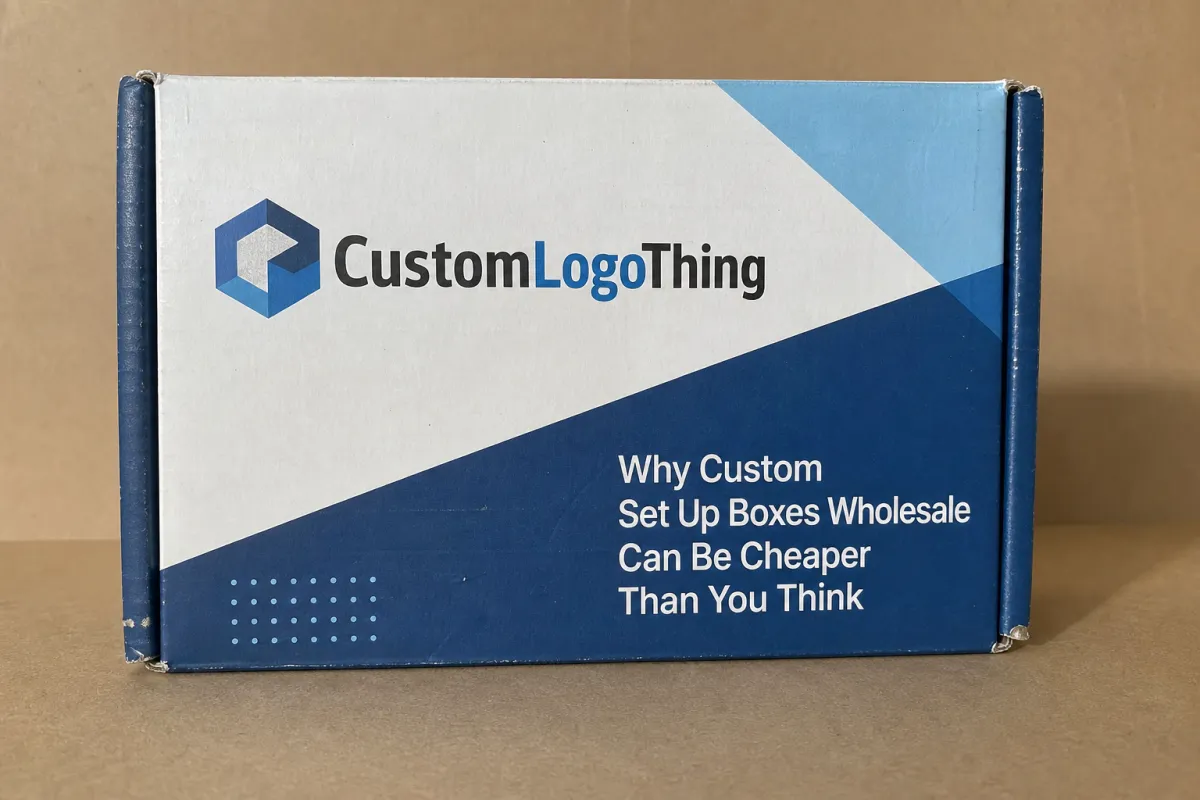
Set up boxes are built for structure. The shell is usually formed before it reaches the customer, so the package feels different from a standard folding carton from the first touch. That extra structure can create a premium impression without relying on heavy ink coverage or complicated decoration. When the size is fixed early and the spec stays disciplined, wholesale pricing often improves because the box can be produced with fewer surprises and less rework.
Volume helps for a practical reason: repetition. Once the build is approved, labor per unit falls because the factory can repeat the same process with better consistency. Print waste is easier to control, nesting becomes more predictable, and packing speed usually improves. Those details matter on the floor. A box that is easy to assemble and easy to ship does not only save time; it also lowers the chance of dents, misalignment, and rejected cartons.
Rigid and chipboard set up boxes are common for products that need both presentation and structure. Cosmetics, candles, apparel kits, electronics accessories, gift sets, and premium samples all benefit from a box that stays square and holds its shape. That shape supports package branding in a way thinner packaging cannot always match. A well-built rigid box can make a modest product feel deliberate and retail-ready.
Wholesale pricing is not just the number printed on the quote. It also depends on how the box affects packing speed, carton efficiency, pallet use, and product protection. A box that protects the item well may reduce damage claims or replacement costs later. A box with smart dimensions may ship more efficiently, which matters a great deal once freight enters the equation. For teams balancing cost against appearance, the real value usually shows up in the full sourcing picture, not the line item alone.
That is why many buyers compare custom printed boxes in the rigid category against simpler alternatives before they decide. A folding carton may cost less on paper, yet a set up box can win if the brand needs shelf presence, gift appeal, or a stronger first impression. The decision is less about luxury for its own sake and more about whether the structure supports the product and the sales channel.
If you are sourcing for a launch, a seasonal promotion, or a premium retail program, the cheapest quote is not always the safest buy. A box that saves thirty cents but slows assembly, crushes in transit, or forces a reprint can erase any savings quickly. The better approach is to compare cost against actual performance in the warehouse, on the shelf, and in the customer's hands.
Practical takeaway: wholesale rigid packaging becomes economical when the size is right, the decoration is controlled, and the box works across presentation, protection, and fulfillment.
Custom Set Up Box Details: Styles, Materials, and Finishes
Set up boxes are pre-formed rigid boxes made from thick chipboard, then wrapped in printed or specialty paper. Unlike folding cartons, they do not collapse flat for shipping to the end user. That one difference changes the feel immediately. The box holds its shape better, closes with more precision, and usually gives the product a stronger retail packaging presence.
The most common structure is the two-piece lid-and-base box, a format that is straightforward, versatile, and easy for many product lines to use. A telescoping style gives the lid a deeper fit over the base, either partially or fully. Shoulder boxes add a visible inner shoulder that creates a more refined opening moment. Drawer boxes, magnetic closure boxes, and specialty sleeves are also common when a brand wants a distinctive reveal or a better fit for a multi-part kit.
Material choice drives a large part of the result. Most rigid box programs use chipboard or greyboard in the range of about 1.5 mm to 3 mm thick, depending on the size and the weight of the item inside. Heavier products usually need a thicker board or a stronger internal support design. The wrap stock matters just as much. Art paper, coated paper, textured stock, kraft paper, and specialty wraps all behave differently when folded around corners and edges. Smooth coated paper supports crisp image reproduction, while textured paper can elevate package branding with a more tactile feel.
Finishing options shape the final impression. Matte lamination keeps the surface subdued and clean. Gloss can make colors pop. Soft-touch coating creates a velvety feel that many brands use for premium product packaging. Embossing and debossing add depth. Foil stamping brings metallic emphasis to logos or graphic accents. Spot UV can highlight selected elements without flooding the whole box with shine. None of these finishes is automatically better; the right choice depends on the brand mood, handling needs, and budget.
Inserts are another major decision. Paperboard inserts, molded pulp trays, foam cushions, and partitions can keep products from moving around inside the box. That matters for fragile cosmetics, glass bottles, electronics accessories, and sample kits with multiple components. The insert should do more than fill space. It should hold the product securely, support a clean presentation, and avoid adding more material than needed.
A buyer handling a fragrance launch, for example, may need a snug paperboard cradle so the bottle does not lean in transit. A jewelry brand may want a shallow drawer insert to keep small pieces aligned and easy to lift. A skincare line with several items in one kit may need partitions, not foam, because the visual presentation matters as much as protection. Those are the kinds of decisions that separate a useful box from a pretty one.
For teams building out Custom Packaging Products, the best structure is usually the one that balances appearance with real handling needs. A box that looks good but chips at the corners or loses its shape in transit is a weak investment. A box that is well specified, on the other hand, can support sales and reduce operational friction at the same time.
A good set up box should close cleanly, survive ordinary handling, and still look intentional after transit. If it only looks premium on a sample table, the structure is not doing enough work.
Specifications That Affect Fit, Strength, and Shelf Appeal
Measurements deserve more attention than many buyers give them. Inside dimensions should reflect the product itself, plus any insert, tray, or clearance needed for loading. If the item fits too tightly, assembly slows down and corner pressure increases. If it fits too loosely, the product can shift and scuff during shipping. A few millimeters can change the entire feel of the box.
Board caliper comes next. Thicker board usually means better rigidity, but it also affects finished size, edge wrapping, and overall cost. Wrap stock changes the visual result too. A highly coated paper might print beautifully but show scratches more easily than a textured stock. Edge finishing, adhesive strength, and wrap tension all influence whether the box stays square over time or starts to soften at the corners.
Buyers preparing artwork for custom printed boxes should treat the dieline as a working technical file, not just a design template. Bleed, safe zones, fold allowances, and glue areas all need to be respected. Color matching should be discussed early, especially if a brand uses a specific Pantone reference or expects a tight match across multiple product packaging runs. Image files should be high resolution, and any small text should be checked carefully because rigid box wraps can expose design problems that look minor on screen but become obvious in print.
The shipping and packing spec matters just as much. How many boxes fit in a case? Can the case stack safely on a pallet? Does the box need to pass compression testing for warehouse handling? Does the program include direct-to-consumer shipping, retail replenishment, or both? If the structure must hold up to distribution, many teams reference transit test methods from the International Safe Transit Association so they can evaluate drops, vibration, and compression in a controlled way.
Material sourcing can matter too. When a buyer wants traceable fiber sourcing, many programs specify FSC-certified paper or board. That is not a design flourish; it is a procurement detail that can support a brand's sustainability claims and supplier documentation. More on that standard can be found through the Forest Stewardship Council.
Small spec changes can create real cost differences. A larger insert, a heavier wrap stock, an extra print pass, or a more complex closure can each push lead time and price upward. On the other side, simplifying the build or standardizing dimensions across several SKUs can lower material waste and make reorders easier. Buyers who understand these tradeoffs usually get better value because they can ask for a cleaner quotation and avoid redesigning late in the process.
- Inside size: must account for product, insert, and loading clearance.
- Board thickness: affects rigidity, feel, and finished dimensions.
- Wrap stock: influences print quality, texture, and scuff resistance.
- Artwork setup: needs bleed, safe zones, and accurate dielines.
- Transit plan: should match warehouse handling and shipping method.
Custom Set Up Boxes Wholesale: Pricing, MOQ, and Quote Factors
Custom set up boxes wholesale pricing usually comes down to five things: size, board grade, print coverage, finishing, and structural complexity. A small lid-and-base box with a single-color logo can follow a very different cost path from a magnetic closure rigid box with foil stamping, soft-touch lamination, and a custom insert. Even when two programs look similar at a glance, the material usage and labor can vary enough to change the quote significantly.
MOQ, or minimum order quantity, is shaped by setup efficiency and production planning. Rigid boxes usually require more planning than folding cartons because the box must be wrapped, formed, and often hand-finished in stages. That means higher quantities can reduce the unit price by spreading setup labor across more pieces. Lower volumes are often possible, but the quote will usually reflect the extra handling. A clear supplier should explain the MOQ up front so buyers can compare options without guessing.
For a broad sense of the market, these are common wholesale ranges for rigid box programs, though the final number depends on the details of the spec and whether freight, tooling, and sampling are included:
| Box Style | Typical Use | Cost Tendency | Approx. Wholesale Range |
|---|---|---|---|
| Two-piece lid-and-base | Retail goods, gift sets, apparel accessories | Lower to moderate | $1.00-$2.50 per unit at moderate volume |
| Shoulder box | Premium presentation, cosmetics, keepsake items | Moderate to higher | $1.75-$3.75 per unit at moderate volume |
| Drawer box | Accessories, kits, luxury retail packaging | Moderate to higher | $1.50-$4.00 per unit at moderate volume |
| Magnetic closure rigid box | Gift sets, electronics, premium branded packaging | Higher | $2.25-$6.00+ per unit depending on finish |
Those ranges are not promises, but they do help buyers frame the conversation. The most expensive box is not always the best choice. Sometimes a cleaner structure, simpler finish, or slightly adjusted size saves enough money to improve margin without hurting shelf impact. On the other side, the cheapest quote can become expensive later if the box is fragile, difficult to pack, or inconsistent in appearance. Damage rates, misprints, and slow assembly all create hidden costs.
When reviewing quotes, ask for a line-by-line breakdown. A solid quote should show board type, wrap stock, print method, finish, insert details, sampling costs, freight assumptions, and any charges tied to revisions or proofing. If the program includes custom tooling or special die work, that should be stated plainly. If the freight is based on an estimate rather than a confirmed destination, the quote should say so. That kind of clarity protects both sides.
There are a few practical ways to trim cost without damaging presentation. Reducing ink coverage can help. Standardizing box dimensions across product families may improve production efficiency. Choosing one premium finish instead of two or three often preserves the look while controlling spend. And if a box is being used across several product lines, a modular structure may reduce tooling changes and simplify reorders.
From a buyer's perspective, the smartest quote is the one that shows total value, not just a low unit price. If the box improves protection, speeds packing, and presents the product cleanly, it can justify its place in the budget far more easily than a bare-bones option that struggles in real use.
Ordering Process, Timeline, and Production Steps
The order path usually begins with a brief that includes product dimensions, target quantity, desired structure, finish ideas, and any insert requirements. From there, the supplier reviews the build and returns a dieline or structural recommendation. If the box is simple, that step can move quickly. If the design needs custom engineering, more back-and-forth may be needed to make sure the product fits properly and the package closes the way it should.
Artwork proofing comes next. Copy, logo placement, color breaks, and technical alignment are checked here. Buyers should treat this as a production approval stage, not a casual design review. A wrong barcode, a missed tolerance line, or a copy error can delay the whole run. If the box includes foil, embossing, or spot UV, each special element may need separate confirmation before the supplier can move forward.
Sampling can take different forms. Some programs move from digital proof to structural sample. Others need a preproduction sample with full print and finish treatment. A sample is worth the time because it reveals how the paper wraps around the board, how the corners behave, and whether the insert holds the item securely. It also lets the buyer judge the box in hand, which matters far more than a render on screen.
Once approval is complete, production usually follows a sequence: material conversion, printing, die-cutting, wrapping, assembly, inspection, and packing for freight. Each stage has its own variables. A heavily finished box may need more drying or curing time. A high-volume run can move efficiently once everything is set, but a complex build may take longer because of additional handwork or extra quality checks. Typical lead time after approval often falls in the 12-20 business day range for standard rigid box programs, though decorative builds, sample revisions, or busy scheduling can extend that window.
Timing matters most when the packaging supports a launch, a seasonal kit, or a replenishment cycle. A buyer who waits too long to place the order often ends up paying for rushed freight or settling for a structure that is not fully optimized. A better approach is to work backward from the launch date and build time for proofing, sampling, production, and transit.
For teams that need a wider packaging mix, it can help to connect the box program to broader sourcing through Custom Packaging Products so the insert, outer carton, and shipper all work together. That coordination reduces surprises and keeps the whole chain more predictable.
- Submit dimensions, quantity, and structure.
- Review the dieline and material suggestion.
- Approve artwork, color targets, and special finishes.
- Check a sample or proof before production starts.
- Confirm freight method and delivery window.
Why Choose Us for Wholesale Set Up Box Sourcing
Wholesale sourcing works best when the partner understands how a box behaves in real use. Clean construction, stable sizing, and consistent finishing matter far more than broad promises. A set up box that looks elegant on day one but arrives with soft corners, loose wraps, or uneven closures is not doing its job. The best supplier pays attention to those details because they affect the entire run, not just the sample.
Technical support matters during quoting and prepress. Many buyers know the product they want to package, but they may not know the best board thickness, wall depth, or insert design. A practical packaging partner helps translate that need into a workable structure without overcomplicating the build. That guidance can prevent costly revisions and keep the order moving on schedule. For custom logo applications and package branding, that support is often the difference between an attractive concept and a box that can actually be produced efficiently.
Quality control is another reason buyers stay with a dependable source. The box should arrive square, the lid should fit properly, print should stay aligned, and the wrap should not bubble or split at the edges. Good inspection catches those problems before freight leaves the facility. That reduces damage claims, avoids rework, and protects the brand presentation the buyer has already paid for.
Customer service should be straightforward and transparent. A packaging buyer needs honest answers about what will work, what will cost more, and what may require a longer lead time. A supplier that explains tradeoffs clearly is easier to work with than one that oversells the spec and creates problems later. This is especially true for wholesale programs where repeat orders matter and consistency has real operational value.
There is also a strategic side to choosing a supplier. The right partner helps the buyer balance price, appearance, and schedule instead of pushing unnecessary upgrades. If a simpler finish delivers the same shelf impact, that may be the smarter choice. If a different board grade improves durability without changing the look, that is worth considering. That kind of honest guidance supports better product packaging decisions over time.
For companies comparing suppliers through Wholesale Programs, the most reliable relationships usually come from clear specs, stable production, and communication that respects both budget and deadline. That is how wholesale packaging stops being a guessing game and starts becoming a repeatable part of the supply chain.
A supplier should help you buy the right box, not the fanciest one. The strongest packaging program is usually the one that protects the product, supports the brand, and keeps the budget under control.
Next Steps to Order Custom Set Up Boxes Wholesale
Before requesting a quote, gather the details that affect the build most: product dimensions, target quantity, structure preference, finish ideas, and any insert or partition requirements. If you already know the shipping method, include that too. A box intended for retail display does not always need the same reinforcement as one that must travel through a rougher distribution path. The more complete the brief, the more accurate the pricing.
It also helps to compare at least two structural options. A two-piece lid-and-base box may be the cleanest fit for one product, while a drawer-style or shoulder box may be stronger for another. Small design changes can shift cost, protection, and shelf appeal in meaningful ways. Buyers who compare options early usually avoid paying for unnecessary features later. That is especially true in custom set up boxes wholesale programs where a little structural discipline can save a surprising amount over the life of the order.
Artwork readiness should be checked before the production schedule starts. Missing files, vague copy, or unconfirmed color references can stall the approval stage and push the lead time out. If the brand uses a specific logo layout, barcode standard, or legal copy block, those elements should be checked now rather than during prepress. That simple step prevents preventable delays.
Reorder planning matters as well. Wholesale packaging should not be treated as a one-time purchase if the product will remain in market. Setting a practical reorder point gives enough time for proofing and production before inventory gets tight. That is especially useful for seasonal packaging, promotional kits, or product Packaging That Ships in consistent monthly cycles.
The most useful next move is not to chase the lowest number. It is to lock the product dimensions, choose one structural family, and request a sample that matches the real use case. If the box passes that check, the wholesale run becomes much easier to place with confidence and much less likely to create surprises later.
What is the minimum order for custom set up boxes wholesale?
MOQ depends on box size, structure, and finishing, because more complex builds usually require more setup and material planning. A clear quote should state the minimum quantity up front so you can compare cost per unit against your packaging needs.
How much do custom set up boxes wholesale usually cost?
Pricing is driven by board thickness, print coverage, finishing, inserts, and quantity, so the unit cost can vary widely. The best way to judge value is to compare total landed cost, not just the per-box price.
What information do I need for a custom set up boxes wholesale quote?
Provide product dimensions, target quantity, structural style, print requirements, and any finish or insert needs. If you already have artwork, include the dieline or file specs so the quote can be accurate from the start.
How long does production take after approval?
Lead time depends on sampling, proof approval, material availability, and how intricate the finish or assembly is. Once the final proof is approved, production moves faster when the specs are locked and the artwork does not need revisions.
Can custom set up boxes wholesale include inserts or specialty finishes?
Yes, many set up boxes can be built with inserts, partitions, foams, or trays to protect and organize the product. Specialty finishes such as foil, embossing, debossing, and soft-touch are common, but they should be selected based on budget and handling needs.
The clearest path is to define the product first, then choose the structure that supports how the box will actually be used. For most buyers, that means testing size, insert fit, and finish together before approving a full production run. Once those three pieces are right, custom set up boxes wholesale becomes far easier to source with confidence, and the packaging starts doing its job instead of creating more decisions.

