Buyer Fit Snapshot
| Best fit | Mailer Envelopes Wholesale projects where brand print, material claims, artwork control, MOQ, and repeat-order consistency need to be specified before quoting. |
|---|---|
| Quote inputs | Share finished size, material target, print colors, finish, packing count, annual reorder estimate, ship-to region, and any compliance wording. |
| Proofing check | Approve dieline scale, logo placement, barcode or warning zones, color tolerance, closure strength, and carton packing before bulk production. |
| Main risk | Vague material claims, crowded artwork, missing packing details, or unclear freight terms can make a low unit price expensive after revisions. |
Fast answer: Mailer Envelopes Wholesale: Bulk Packaging That Ships Better should be specified like a repeatable production item. The safest quote records material, print method, finish, artwork proof, packing count, and reorder notes in one written spec.
Production checks before approval
Compare the actual filled-product size with the drawing, then confirm tolerance on folds, seals, hang holes, label areas, and retail display edges. Reserve space for logos, QR codes, warning copy, and material claims before decorative graphics fill the panel.
Quote comparison points
Review material grade, print process, finish, sampling route, tooling charges, carton quantity, and freight assumptions side by side. A quote is only useful when the supplier can repeat the same color, closure quality, and packing count on the next order.
Bad packaging gets expensive quickly. Mailer envelopes wholesale is not a search for the lowest sticker price; it is a practical way to reduce postage waste, packing errors, and transit damage that can turn one shipment into two. A product that shifts inside the mailer looks cheap in transit, bruises more easily, and often leads to the kind of refund or replacement that erases any savings from a bargain pack.
From a packaging buyer’s perspective, bulk ordering starts to pay off when volumes are steady, SKUs repeat, or several teams need the same spec every week. That is where unit economics improve, rework drops, and the brand presents the same way across ecommerce orders, retail replenishment, and third-party fulfillment.
Why mailer envelopes wholesale beats buying retail packs
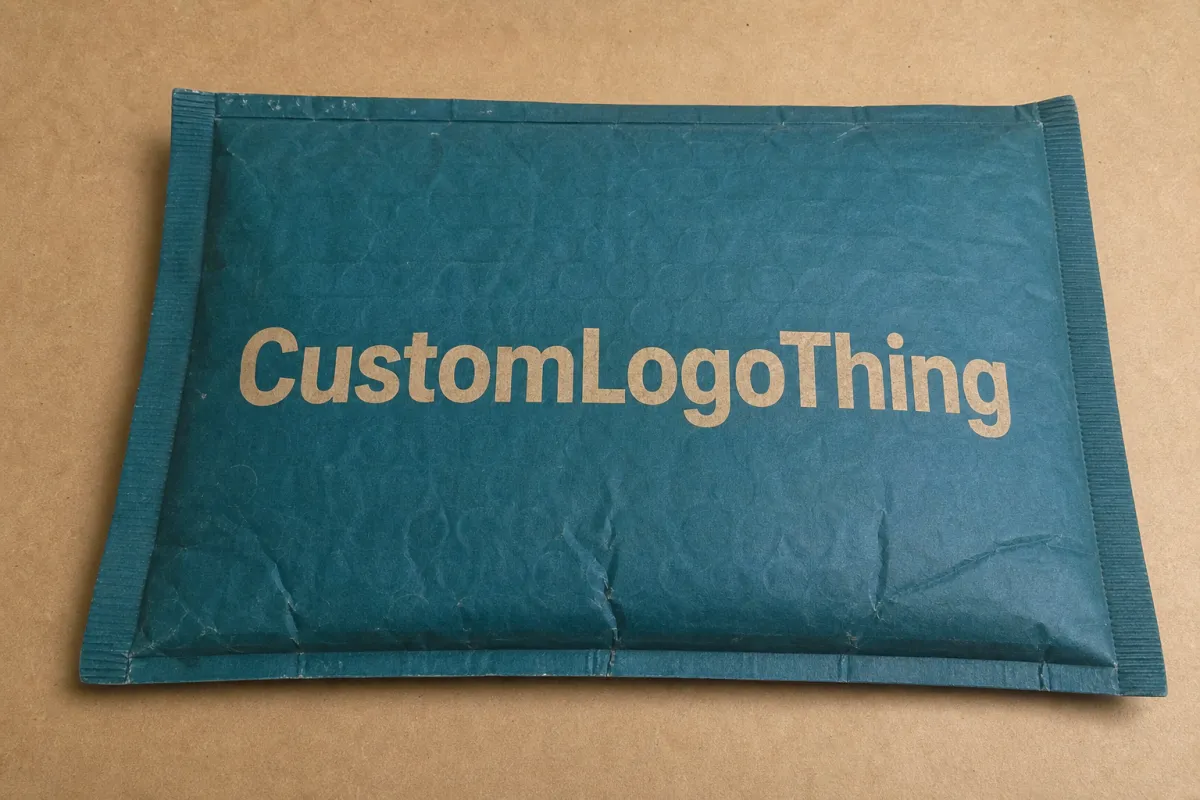
Retail packs work for a handful of mailings a month if you can tolerate slight variation from one envelope to the next. Once shipping volume becomes part of the cost structure, retail pricing stops being the useful comparison. The real cost hides in oversized packaging that raises postage, labor spent fighting a poor fit, and product damage caused by a mailer that was too weak, too large, or too awkward to close cleanly.
A mailer that is only a little too large can trigger dimensional weight charges, force void fill into the pack-out, and slow the line down. That sounds minor until the math is multiplied across thousands of orders. A 10-cent difference in envelope price means very little if the wrong size adds 20 cents in postage and another 15 cents in labor or rework. Cheap can become expensive with unsettling speed.
Wholesale buying also gives you control. Same size. Same closure. Same print layout. Same result. That matters when mailers pass through more than one channel, because a package that looks acceptable in one warehouse and sloppy in another is not a stable program. Consistency here is not branding theater; it is operational discipline.
The cheapest envelope is the expensive one if it creates a second shipment, a damaged return, or a pack-out team that has to improvise.
Brands usually move to mailer envelopes wholesale once the order flow settles for a reason. Bulk purchasing lowers the per-piece price, yes, but the bigger gain is control over spec. Empty air gets reduced, overstuffed mailers disappear, and the product stays protected without paying for structure that adds no value. That tradeoff is plain, useful, and not glamorous.
- Lower labor: faster pack-out because the envelope fits the product the first time.
- Less damage: fewer crushed corners, bent inserts, and torn seams.
- Cleaner branding: consistent print, consistent size, consistent finish.
- Better freight math: less dimensional weight and less wasted void space.
Uneven volume does not rule out wholesale. The trick is choosing a spec that covers the average order without overbuilding for the rare oversized shipment. A supplier that understands packaging can save more money than a tiny price cut on the wrong construction ever will.
Mailer envelope types, materials, and finish options
Not every mailer envelope solves the same problem. Some are built for moisture resistance. Some are meant to resist bending. Some exist mainly to make the brand look polished the moment the customer touches the package. The right choice depends on the product, the route, and how much abuse the package will take before it lands on the customer’s desk.
Common constructions
Poly mailers are the lightest option for many shipping programs. They handle apparel, soft goods, and non-fragile products well, and they keep weight down. That matters when the item already pushes the carrier rate. Poly also handles moisture better than basic paper envelopes. The limitation is obvious: it does not offer much crush protection, so it is a poor match for rigid, sharp, or brittle contents.
Kraft or paper mailers fit brands that want a more natural look or need recyclable messaging that feels credible. They read more premium than a generic plastic mailer, especially with a one-color logo or a restrained print layout. Use them for stationery, flat apparel, inserts, and light subscription items. Delicate products or rough transit routes call for reinforcement rather than optimism.
Padded paper mailers sit between presentation and protection. They work well for beauty samples, booklets, small accessories, and items that need modest shock absorption. The extra structure adds cost and a bit of weight, but that trade often pays off when compared with damage claims or replacement shipments.
Chipboard-style mailers make the most sense for flat, rigid contents that must not bend. Books, prints, documents, certificates, and promotional kits all fit the profile. They are not flashy, yet they do one specific job well. If your item has hard edges or must arrive perfectly flat, chipboard is often the safer answer.
Specialty protective sleeves cover the niche cases. Some include extra lining, some use anti-scratch interiors, and some are designed around tamper resistance. These are useful when presentation and security matter more than shaving a penny off the order.
Closure quality matters just as much as body construction. A self-seal strip is standard for many mailers because it speeds up pack-out. Peel-and-stick adhesive usually gives a cleaner finish and stronger initial tack. Tear strips help the recipient open the package without mangling it. Tamper-evident closures earn their keep when product integrity or customer trust is on the line.
Reusable or higher-value programs need closure strength checked with real sample handling, not just a spec sheet. Adhesive performance shifts with dust, humidity, and operator speed. That is not theory; it is the difference between a smooth production shift and a stack of envelopes that refuse to seal.
Print choices shape the buying decision too. A one-color logo is usually cheaper and often looks cleaner than a full-bleed design. Full-bleed branding can look strong on shelf or in transit, but it raises print complexity and sometimes extends setup time. Inside printing works for a premium reveal or a brand message. Shipping marks, barcode zones, and scan areas still need to stay readable, which means artwork cannot simply cover everything and hope for the best.
For transit testing, ISTA remains a useful benchmark because it gives buyers a practical way to talk about drop, vibration, and compression without pretending shipping is gentle. Paper-based environmental claims deserve a paper trail too; FSC certification is a clean reference point for documented fiber sourcing.
| Product type | Best mailer style | Typical wholesale range at 5,000 units | Why it fits |
|---|---|---|---|
| Apparel | Poly mailer or light kraft mailer | $0.12-$0.32 per unit | Low weight, good pack speed, limited crush risk |
| Stationery and flat inserts | Kraft or chipboard-style mailer | $0.18-$0.40 per unit | Flat protection, tidy presentation, less bending |
| Beauty samples | Padded paper mailer | $0.24-$0.55 per unit | Extra cushioning without a full box |
| Small electronics accessories | Reinforced mailer or padded sleeve | $0.26-$0.60 per unit | Better edge protection and damage control |
| Books and catalogs | Chipboard-style mailer | $0.20-$0.48 per unit | Prevents bending and keeps the package flat |
| Subscription kits | Custom printed paper or poly mailer | $0.18-$0.50 per unit | Branding plus efficient fulfillment |
Comparing structures side by side comes down to risk. Moisture risk points toward poly. Bending risk points toward chipboard. Fragility points toward padding. Soft goods on a gentle route usually need only a lighter envelope. Items with corners, hard edges, or loose inserts should not be squeezed into the cheapest construction and then blamed when they arrive damaged.
Specifications for size, strength, and custom printing
Size should be chosen from the product outward, not from a guessed envelope dimension inward. Measure the item, then add fold allowance, closure clearance, and any protective layer. Apparel needs a fold pattern that makes sense. Rigid inserts care about corner dimensions even more. A package that is technically large enough but miserable to load is a packaging mistake wearing a specification.
The spec sheet should capture the numbers that actually drive production. Width, length, gusset depth if needed, material thickness or GSM, surface finish, adhesive type, and print coverage all belong there. Leave those details out and quotes start drifting fast because every vendor is pricing a different assumption.
- Width and length: match the product plus fold or insert allowance.
- Gusset or depth: useful for bulkier soft goods or mixed kits.
- Thickness or GSM: helps control strength, feel, and weight.
- Finish: matte, gloss, soft-touch, uncoated, or coated.
- Adhesive: self-seal, peel-and-stick, or tamper-evident strip.
- Print coverage: one color, two color, full bleed, inside print.
Strength is not only about material thickness. It is about how the load is distributed. Lightweight goods can move in a thinner construction if the envelope fits well and the closure holds. Heavier items need stronger seams, better tear resistance, and usually some edge protection. Sharp corners are trouble. So are uneven loads that twist inside the mailer during handling.
A practical rule of thumb: soft goods under roughly 8 oz usually do fine in a lighter poly or paper mailer, provided the fit is snug and the closure is reliable. Once the product becomes rigid, fragile, or awkward to stack, shift into padded paper or chipboard-style construction. Upgrading the envelope is usually cheaper than replacing the product after the fact.
Print-ready details are where good packaging gets spoiled. Artwork should be vector whenever possible, especially for logos and text. Raster files should be supplied at 300 dpi at final size. Bleed should usually run 0.125 in around the artwork, and small type should stay readable at around 6 pt at minimum, though bigger is safer on textured or coated surfaces. Keep essential copy inside the safe area so trim tolerances do not clip it.
Color count changes the economics as well. One-color printing is usually the easiest way to keep the piece sharp and affordable. Two-color work adds clarity if the logo depends on contrast. Full-color or full-bleed designs can look strong, but they need tighter proofing because registration drift becomes visible faster. Sloppy print on a mailer looks worse than sloppy print on a box because the envelope is the first thing the customer sees.
Operations details matter too. If the package has to fit an automated packing line, check flatness, seal placement, and fold behavior before approval. If barcode labels are involved, leave quiet zones untouched and keep background print away from scanning zones. If the claim is recyclable paper or recycled fiber content, the claim should match the actual substrate and the documentation you can support. If customer service will handle returns, make sure the mailer can be resealed or at least opened without tearing the contents.
From a buying perspective, the smartest quote is the one that includes the boring details. It should say exactly what material is being used, how the closures are applied, what the finished size will be, and whether the price assumes one-sided or full-coverage printing. A vague quote produces a vague result. Packaging does not improve itself in the factory because someone hoped it would.
Pricing, MOQ, and quote structure for bulk orders
Pricing for mailer envelopes wholesale moves on a few predictable levers: material choice, size, print complexity, finish, quantity, and whether the item is stock-based or fully custom. That is the whole game. If a vendor offers a number without asking those questions, the number is probably not useful.
MOQ is where buyers often get tripped up. Simple stock-style mailers may start in the low hundreds. Fully Custom Printed Mailers usually start closer to 1,000 to 3,000 units, and specialty work often lands higher. The more custom the construction and print, the more likely the supplier needs a larger starting quantity so setup costs do not swallow the order.
| Order type | Typical MOQ | Indicative unit price trend | What drives the cost |
|---|---|---|---|
| Stock-style poly mailers | 250-1,000 units | Lowest starting price | Simple materials, limited print, quicker setup |
| Custom printed kraft mailers | 1,000-3,000 units | Moderate | Artwork prep, print count, coating, and size |
| Padded or reinforced mailers | 1,000-5,000 units | Higher than plain mailers | Extra structure, filler, and heavier material |
| Specialty finishes or inside print | 3,000+ units | Highest | More setup, tighter registration, longer production |
At a bulk level, rough ranges often look like this: simple poly mailers can land around $0.12-$0.28 per unit at 5,000 pieces; Custom Kraft Mailers often sit around $0.18-$0.42; padded paper versions may run $0.24-$0.55; and specialty or heavily printed versions can move higher depending on finish and structure. Those ranges are not promises. They are the kind of numbers a buyer can actually use before the quote arrives.
The part that gets skipped too often is quote structure. A proper quote should separate the base unit price from tooling or plate fees, proof charges, sample fees, freight, packaging, and any rush premium. If those are rolled together and hidden, comparing suppliers becomes nearly impossible. A quote that forgets freight is not savings; it is a surprise waiting to happen.
Volume breaks are real, but they do not drop forever. The biggest drop usually appears once setup is spread across the first production threshold, then savings flatten as quantity keeps climbing. In many programs, the useful break points sit around 1,000, 3,000, 5,000, and 10,000 units. Past that, the unit cost still improves, just more slowly. If the gap between 5,000 and 10,000 pieces is tiny, do not buy twice what you need just to feel efficient.
Landed cost is the only number that matters in the end. Add freight. Add duty if relevant. Add charged samples. Add the labor cost of packing a mailer that is harder to use. Compare all of that against the per-piece price. The cheaper-looking option can become the more expensive one once it is sitting in your warehouse and asking for extra handling.
If you are ordering on a repeat schedule, the smartest move is to keep the same spec sheet every time and prevent the vendor from “optimizing” your packaging into something new. For recurring supply, see our Wholesale Programs page to set up a cleaner buying structure. If the project needs moisture resistance and a lighter shipping profile, compare the option against our Custom Poly Mailers before you commit.
A good quoting conversation should end with one clear answer: what is the total delivered cost for the quantity you actually need, and how much risk does that design remove from pack-out? That is a better question than “what is the cheapest unit price?” Cheap on paper is not the same thing as cheap in operations.
Process and timeline: from quote to delivery
The order process should be simple enough that the buyer can see where time is spent. Start with the intake checklist: dimensions, material preference, print count, quantity, delivery address, target arrival date, and any compliance or handling requirements. If a supplier asks for a sample product, send it. That single step prevents the guesswork that wastes days later.
Proofing is where the job gets controlled or gets sloppy. A real proof should show the finished size, artwork placement, print colors, and any key notes about closure or finish. If the proof changes the spec, ask what changed and whether the timeline changes with it. An approved proof is a production instruction. If nobody reads it carefully, the factory is not the only place mistakes happen.
- Intake: confirm size, construction, print, quantity, and delivery target.
- Prepress: clean up artwork, check bleed, and match the print method.
- Sample or proof: confirm layout, color, and fit before production starts.
- Material prep: source the substrate and prep the mailer body.
- Printing and finishing: apply print, cut, fold, seal, or laminate as needed.
- Inspection: check registration, size, adhesive, and overall consistency.
- Packing and freight: box the finished order and schedule dispatch.
Lead times depend on the job, and anyone who pretends otherwise is selling fantasy. Stock or simple one-color orders can move in roughly 7-12 business days after proof approval. Custom printed mailers with standard finishes often need about 12-18 business days. Specialty finishes, inside print, or large mixed runs can move into the 15-25 business day range. Freight is separate and can add another 2-7 business days domestically, depending on destination and carrier method.
Longer timelines usually come from more print colors, extra finishing, scarce material, larger order volumes, and seasonal congestion. Shorter timelines usually come from stock substrates, simple graphics, and a buyer who answers proof questions quickly. The delay is often not the machine. It is waiting for a decision.
Rush orders deserve caution. They can work, but they narrow your options on material and freight. A split shipment can help if part of the order is needed quickly, but it also raises the chance of inconsistency if batches are not carefully tracked. Reorders are safer when the first run is documented well: same artwork, same size, same adhesive, same approval trail. That is how a packaging program avoids drifting into “close enough,” which is a poor standard for anything that touches shipping.
Approval should be specific. If the proof does not confirm size, print placement, and closure method, the timeline is not really approved yet.
One more practical point: ask whether production days and shipping days are separated in the estimate. That small detail prevents one of the most annoying misunderstandings in packaging buying, where a vendor says “two weeks” and the freight clock behaves like an extra surprise fee. Clear timelines make better purchasing decisions.
Why brands choose our wholesale mailer envelope program
Brands rarely need more packaging buzzwords. They need repeatable results. That is why a wholesale program works best when the supplier watches manufacturing consistency instead of dressing up the quote with shiny language. If the color shifts from run to run, the size drifts, or the closure behaves differently in humid weather, the brand owns the problem anyway.
Spec control is the real value. A stable mailer program reduces warehouse confusion, supports margins, and keeps every outbound package looking like it belongs to the same brand. That matters more than a flashy finish. A buyer who has spent time fixing fulfillment errors knows the difference between “nice sample” and “safe production.” The second one scales.
Direct communication is another advantage. If a buyer needs size advice, wants to adjust print placement, or needs a reorder without re-explaining the whole project, the process moves faster. That is not friendliness for show. It is a way to remove friction from a purchasing cycle that should be boring.
Quality control should be part of the conversation from the start. Sample approval, batch checks, print registration review, and packaging inspection before dispatch all reduce the odds of a bad delivery. No system removes risk entirely, but a disciplined process makes surprises much less likely.
- Sample approval: confirms fit, feel, and print clarity before the full run.
- Batch checks: catch size drift, adhesive issues, or print variation early.
- Registration review: keeps logos, lines, and text aligned.
- Dispatch inspection: confirms the boxes leaving the facility match the approved spec.
Support matters when the buyer is choosing between options. A premium finish is not always worth the spend. Sometimes a clean one-color logo on a properly sized envelope delivers a better result than a complicated print job that costs more and does less. Sometimes a heavier construction is necessary. Sometimes it is just padding for ego. Packaging buyers usually appreciate honesty here because it saves money and avoids paying for features nobody notices.
If you are setting up a recurring supply line, our Wholesale Programs structure is built for repeat orders, consistent specs, and fewer headaches on reorder. If the product needs more moisture protection or a different finish profile, you can also compare the format against our Custom Poly Mailers before locking the spec.
In practice, the best programs are the boring ones: clear specs, same closure method, same print standard, same reorder process, and no last-minute improvisation in the warehouse. That is what keeps packaging from becoming a recurring expense disguised as a creative decision.
Actionable next steps to place your order
If you are ready to move, keep it simple. First, choose the mailer style that matches the product risk. Second, confirm the dimensions and print details. Third, request a quote with quantity and delivery target. That is enough to get useful pricing without wasting time on vague back-and-forth.
- Select the envelope style: poly, kraft, padded paper, chipboard, or specialty protection.
- Lock the specs: finished size, material thickness, closure type, and print coverage.
- Request pricing: include quantity, shipping destination, and target in-hand date.
Before you contact sales, have a product sample ready if the mailer must fit a specific item. Include the preferred finish, logo files, and any budget ceiling that cannot move. If your team uses a certain mail class or packing method, say that up front. The more precise the input, the less time you spend correcting avoidable assumptions later.
Thinking past the first order helps too. A reorder plan should include a stock threshold, a monthly usage estimate, and a point at which you lock in the next production run. That prevents the familiar scramble where packaging runs out just as shipping volume rises. Nothing makes a warehouse less cheerful than discovering the custom mailers are gone on Monday morning.
For comparison shopping, ask for two or three spec-based quotes rather than broad “packaging pricing.” A proper quote should show the exact structure, the unit cost, the setup items, and the freight assumptions. Otherwise you are comparing one guess against another, which is not procurement. It is wishful thinking with spreadsheets.
The cleanest next move is to confirm the size, request pricing, and approve the spec while the product sample is still in front of you. That is the most reliable way to buy mailer envelopes wholesale without overpaying for the wrong construction or waiting through a second round of revisions.
What is the usual MOQ for mailer envelopes wholesale orders?
Most custom runs start in the low hundreds to low thousands, depending on size, print count, and material. Simple stock-style orders usually have a lower MOQ than fully Custom Printed Envelopes. The larger the quantity, the easier it is to absorb setup costs and land a better unit price.
Which material is best for mailer envelopes wholesale shipments?
Poly works well for moisture resistance and lower weight, kraft or paper-based mailers suit brands that want a more natural look, and padded options are better for fragile contents. The right choice depends on product weight, the risk of bending or crushing, and how the package should arrive. If the item is delicate or has sharp edges, structure matters more than saving a few cents.
How long does production usually take for wholesale mailer envelopes?
Stock or simple orders can move faster, while custom printed and specialty-finish jobs need more time for proofing and production. A realistic timeline depends on quantity, material availability, print complexity, and freight method. Ask for separate production and shipping timelines so the schedule is clear and not padded with optimism.
Can I order samples before committing to mailer envelopes wholesale?
Yes, and you should if fit, print clarity, or material strength matters to the product. Samples help confirm closure performance, color accuracy, and whether the envelope looks right in hand. A sample costs less than discovering the wrong fit after a full run.
What do I need to request an accurate mailer envelopes wholesale quote?
Send the envelope size, material preference, print colors, finish, quantity, and shipping destination. Include a product sample or internal dimensions if the packaging must fit a specific item. Clear specs make the quote more useful and cut down on cost or timeline surprises.


