Buyer Fit Snapshot
| Best fit | Custom Shelf Ready Boxes Wholesale for Retail Success projects where brand print, material claims, artwork control, MOQ, and repeat-order consistency need to be specified before quoting. |
|---|---|
| Quote inputs | Share finished size, material target, print colors, finish, packing count, annual reorder estimate, ship-to region, and any compliance wording. |
| Proofing check | Approve dieline scale, logo placement, barcode or warning zones, color tolerance, closure strength, and carton packing before bulk production. |
| Main risk | Vague material claims, crowded artwork, missing packing details, or unclear freight terms can make a low unit price expensive after revisions. |
Fast answer: Custom Shelf Ready Boxes Wholesale for Retail Success should be specified like a repeatable production item. The safest quote records material, print method, finish, artwork proof, packing count, and reorder notes in one written spec.
Production checks before approval
Compare the actual filled-product size with the drawing, then confirm tolerance on folds, seals, hang holes, label areas, and retail display edges. Reserve space for logos, QR codes, warning copy, and material claims before decorative graphics fill the panel.
Quote comparison points
Review material grade, print process, finish, sampling route, tooling charges, carton quantity, and freight assumptions side by side. A quote is only useful when the supplier can repeat the same color, closure quality, and packing count on the next order.
Custom Shelf Ready Boxes Wholesale for Retail Success
A retail shelf is not a museum. It is a working surface where product gets touched, moved, opened, restocked, and judged in about three seconds. That is why Custom Shelf Ready boxes wholesale matters. The right carton protects product in transit, opens cleanly in store, and keeps facings neat without forcing the store team to wrestle with the packaging. A shipping box can survive a truck. A shelf-ready box has to survive the truck and still look decent under fluorescent lights. Different job.
I have watched store teams cut into master cartons with one hand, answer a question from a customer with the other, and try not to drop half the display in the process. That is the real test. If the box opens badly, the whole reset slows down. If the front tears like a bad receipt, the display looks kinda cheap before the first unit sells. Custom shelf ready boxes wholesale exists to remove that mess. It is not just about box price. It is about labor, damage, speed, and how many times someone has to touch the product before it reaches the shelf.
That is why buyers should think about shelf-ready packaging as a retail workflow decision first. Branding matters, sure. But if the case does not convert cleanly, the brand is going to have a rough day on the floor.
Why custom shelf ready boxes wholesale matter on the retail floor
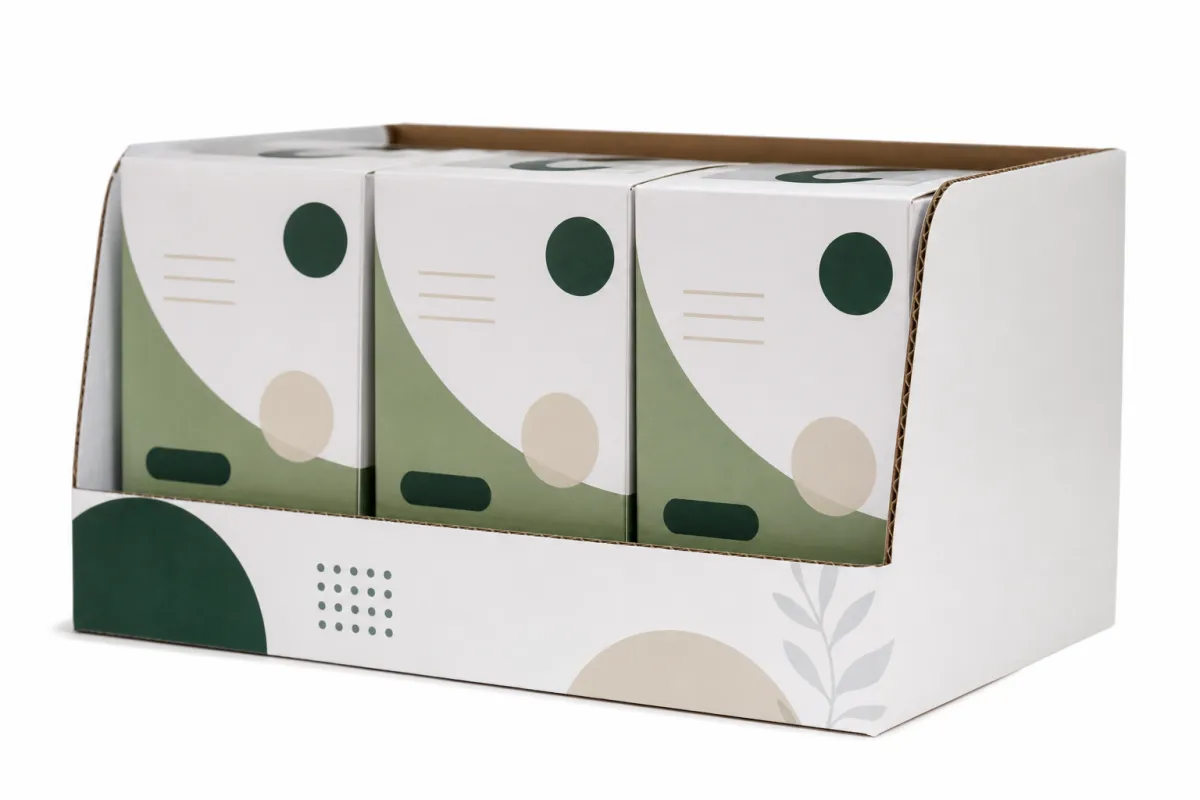
Custom shelf ready boxes wholesale matters because retail labor is expensive and the back room is rarely calm. A standard master carton may protect the contents just fine, but if the team has to slice it open awkwardly, pull out loose packs, and rebuild the presentation by hand, the clock starts bleeding. Shelf-ready design turns the case into the display with less friction. That is exactly why these cartons show up in fast-moving categories like snacks, personal care, supplements, hardware, and small consumer goods.
The value is not only speed. Shelf-ready cartons also help the shelf look organized after the fifth restock of the day. Square corners, stable sidewalls, and a clean front edge keep the display from looking tired before the product has a chance to move. In a busy aisle, that visual order matters. Custom shelf ready boxes wholesale supports package branding in a very practical way because the carton itself becomes part of the merchandising. The brand block is visible, the product stays aligned, and nobody needs a pile of extra shelf talkers to make the display readable.
Damage control is another big piece. Every extra touchpoint increases the chance of scuffed print, crushed corners, bowed panels, or a case that collapses after a store employee opens it. A well-built custom shelf ready boxes wholesale program reduces those touchpoints. The box arrives, converts cleanly, and holds its shape long enough for the team to place it on the shelf or in a display bay without fighting the structure. Retailers ask for shelf-ready cartons instead of plain shipping cartons for that reason. They want fewer headaches, not a prettier headache.
Think about a reset. The store team may have minutes to refill facings, clear old stock, and keep the aisle presentable while shoppers are walking through. A carton that opens badly drags the whole process down. A carton built under a custom shelf ready boxes wholesale spec gives a predictable tear line, a front that drops away cleanly, and a tray that keeps the product upright without drama. That means fewer loose pieces on the floor and fewer displays that look half-finished.
Custom shelf ready boxes wholesale should be treated as a labor-saving purchase, not just a container order. If a carton saves even a couple of minutes per case during a busy reset, that time stacks up fast across stores and replenishment cycles. The board, print, and structure all matter. The return shows up when the people moving the product every day do not have to fight the box.
A shelf-ready carton earns its place when the store team opens it in seconds, sets it down square, and keeps selling instead of rebuilding the display.
The best projects start with the retail environment, not a random box size and some hope. Shelf depth, product height, pack count, display weight, and handling frequency all shape the final structure. If those details are clear early, custom shelf ready boxes wholesale can be built around the product instead of forcing the team to work around a weak design. The result is a carton that protects the goods, presents them cleanly, and helps replenishment move faster.
What custom shelf ready boxes wholesale include
At a basic level, custom shelf ready boxes wholesale usually starts with a corrugated shipper that converts into a retail-facing tray, display, or open-top presentation unit. The carton may include perforations, tear strips, score lines, removable front panels, or a drop-front section that opens neatly on arrival. The point is simple: protect the product during transit, then make the move to shelf as direct as possible once the carton reaches the store. That conversion step is what separates shelf-ready packaging from a standard master case.
There are a few common styles, and each one solves a different retail problem. A front-drop design works well when the store needs fast access and a clean face. A wraparound tray can give stronger shelf presence when the product needs visible branding on the sides and front. A half-slotted or top-opening carton may fit products that need more coverage in shipping but still need a tidy display. In every case, custom shelf ready boxes wholesale should be selected around the product, the retailer's stocking habits, and the weight of the filled case.
Shelf-readiness is not only about opening. It is also about holding the product once the front is removed. The base has to stay level, the sidewalls have to stay square, and the front lip or display edge has to keep the items from sliding forward. When that part is right, custom shelf ready boxes wholesale gives the shelf a cleaner look and cuts the odds that an employee will need to rebuild the display after every restock.
Merchandising details matter more than a lot of buyers expect. Case count visibility, barcode placement, SKU notes, promotional copy, and store-facing brand marks all need a place in the layout. If the structure is meant to face a shopper instead of hide in the stockroom, the print zones should support quick recognition from a few feet away. That is one reason custom shelf ready boxes wholesale often overlaps with broader branded packaging planning: the display is doing merchandising work, not just packing work.
Compatibility with packing lines deserves attention too. Some operations hand-pack, some use semi-automated lines, and some rely on contract packers with very specific folding habits. A carton that looks elegant on screen may become annoying in production if the open style is too stiff or the closure is too fussy. Match the design to the real workflow and custom shelf ready boxes wholesale becomes easier to fill, easier to ship flat, and easier for retail staff to convert without confusion.
If the product is sold in mixed assortments or seasonal bundles, the structure should leave room for inserts or divider panels. That matters when several SKUs need to stay separated inside one display. Good custom shelf ready boxes wholesale planning keeps the presentation clean while still letting the pack survive warehouse handling, pallet stacking, and store-level opening without buckling.
The easiest way to think about it is this: the box has to act like a shipping carton on the truck, then act like a display tray on the shelf. That dual role is the entire point of custom shelf ready boxes wholesale. If either role is weak, the packaging is doing neither job well.
Materials, print, and structural specs for shelf-ready cartons
Board choice is one of the first decisions that shapes custom shelf ready boxes wholesale. For lighter goods, E-flute or B-flute corrugated often gives a good balance of print quality and stiffness. For heavier products, or displays that need more stacking strength, B/C-flute combinations or stronger board grades may fit better. The right answer depends on product weight, pack count, transit distance, and whether the carton will sit on the shelf for a few hours or a few weeks before it is fully emptied.
Caliper and crush resistance matter because shelf-ready cartons get handled more than people expect. A carton that looks fine in the warehouse can bow after a few pallet layers or lose shape if the front opening is too weak. In custom shelf ready boxes wholesale, the board has to do two jobs at once: protect the contents and keep the display squared up. If the side panels flex too much, the presentation looks tired before the product has even sold through.
Print is not just decoration here. A shelf-ready carton is a retail surface, so print quality changes how the pack reads from the aisle. One-color utility printing can work for simple programs, but many brands choose full-color graphics, spot colors, or both so the display feels intentional. Coatings can also help the carton hold up during handling, especially if the pack may face moisture, abrasion, or repeated replenishment. In custom shelf ready boxes wholesale, print and structure have to work together; good graphics on a weak box still look weak.
Structural details matter just as much as the print file. Perforation quality affects how cleanly the front opens. Score depth affects whether the carton folds sharply or fights the opener. Adhesive placement can influence whether panels hold during transit and release where they should during setup. Tear strength at the opening point is especially important, because a ragged front edge makes the display look rushed even when the artwork is strong. These are the small technical choices that separate an average carton from a good custom shelf ready boxes wholesale build.
Testing is another place where buyers need to stay grounded. A sample can look perfect on a desk and still fail in a real distribution environment if the load is too heavy or the pallet stack is too high. Before final approval, the buyer should confirm product dimensions, pack-out weight, shipping method, shelf footprint, and any retailer specifications that affect the dieline. If transit abuse is a concern, ask about ISTA distribution testing guidance and whether the carton should be checked against compression, drop, or vibration expectations. For sustainability claims, specifying FSC-certified paperboard can support sourcing goals without changing the retail design.
Short promotion cartons and repeat-distribution cartons are not the same animal. A promo tray may care most about shelf impact and quick conversion, while a longer-running retail program may need stronger walls, cleaner glue lines, and better resistance to repeated handling. That is why custom shelf ready boxes wholesale should never be specified by appearance alone. The carton has to survive the route, the back room, and the shelf, and each stage puts a different kind of stress on the material.
If you are comparing custom printed boxes for shelf use, ask for material samples, not just a PDF render. Paperboard grades and corrugated flute choices feel different in hand, and that difference often reveals whether the carton will stay crisp after transport. A buyer who looks at a sample stack can usually tell pretty quickly whether the box will keep its shape through the life of the program.
Custom shelf ready boxes wholesale also benefits from thoughtful ink coverage. Heavy dark solids can look sharp, but they may show scuffing more quickly than lighter layouts. If the carton will be handled a lot, it can make sense to keep the most exposed areas simpler or to use a finish that protects the face without making the box feel overly coated. That kind of balance makes the package look deliberate instead of overworked.
Custom shelf ready boxes wholesale pricing and MOQ
Pricing for custom shelf ready boxes wholesale depends on more than carton size. Board grade, flute structure, print coverage, die complexity, perforation count, cutouts, and finishing all affect the final number. A simple shelf-ready tray with light print can land very differently from a full-color converter with tear strips, reinforced corners, and a custom opening profile. That is why the quote should break down what is included instead of hiding the details inside one lump sum.
Quantity matters a lot. Lower runs usually carry a higher unit price because setup, tooling, and prepress work are spread over fewer cartons. As volume rises, the per-unit cost often drops because the fixed work is diluted across the run. With custom shelf ready boxes wholesale, buyers should ask for pricing at multiple tiers so they can see how the unit cost changes at 1,000, 3,000, 5,000, or 10,000 pieces, depending on the project. That makes it easier to decide whether to buy tightly against demand or order enough to lower the unit cost.
MOQ is not one universal number. It can vary based on the structure, the print method, the board choice, and whether custom tooling is needed. A folded tray with simple one-color print may have a lower threshold than a complex display converter with several perforated zones. A useful supplier will show how the minimum changes with each version of custom shelf ready boxes wholesale instead of tossing out a vague answer that helps nobody plan.
Watch the hidden costs too. Freight can matter a lot if the cartons are bulky but light. Sample production may be charged separately. Artwork revisions can add time and money if the file is not ready. In some cases, pre-assembled cartons cost more to ship than flat-packed cartons, but they may reduce labor in the warehouse. The real comparison is landed cost, not just box cost, because the cheapest carton is not always the lowest-cost solution once handling is included.
| Structure | Typical use | Estimated wholesale unit range | Relative setup complexity | Notes |
|---|---|---|---|---|
| Simple shelf tray | Light products, short promotions, quick resets | $0.18-$0.32 at mid-volume | Low | Good for basic retail packaging and fast conversion |
| Drop-front display carton | Higher visibility facings, repeat stocking | $0.28-$0.52 at mid-volume | Medium | Often chosen for cleaner shelf presentation and better package branding |
| Reinforced display converter | Heavier products, longer shelf life, rough handling | $0.45-$0.95 at mid-volume | Higher | Stronger board and more tooling can improve performance in custom shelf ready boxes wholesale programs |
The pricing above is planning data, not a final quote. Print coverage and carton size can shift the economics quickly, and a small change in board strength or opening style can move the cost more than many buyers expect. That is normal in custom shelf ready boxes wholesale, and it is why a good supplier should explain the tradeoffs in plain language instead of pushing the priciest build by default.
There is a strategic side to pricing too. If a box saves enough labor at the retail level, a slightly higher carton cost can still be the better buying decision. A carton that costs a little more but opens cleanly and keeps its shape may reduce stocking time enough to justify the difference across an entire chain. In that sense, custom shelf ready boxes wholesale is not just a packaging expense; it is part of the operating model.
If you are comparing a basic shipper to a display-ready carton, ask for landed cost on both and then compare the labor saved on the floor. That comparison usually tells the real story better than the unit price alone. Many buyers find that custom shelf ready boxes wholesale pays back through faster resets, fewer damaged units, and cleaner presentation during high-traffic periods.
From dieline to delivery: process and timeline
The cleanest custom shelf ready boxes wholesale projects follow a clear workflow. It starts with a product brief, moves into carton sizing, then into the dieline or structure selection, followed by artwork review, sample approval, production, and shipping. When those steps are handled in order, the buyer spends less time fixing avoidable problems and more time approving the Design That Actually fits the product and the retail environment.
What should the buyer provide early? Product dimensions, unit weight, pack count, shelf footprint, print goals, and any retailer-specific display rules should all be on the table before the first proof is sent. If the case has to fit a certain shelf depth or a specific club-store display bay, that should be stated upfront. The more exact the brief, the better the first version of custom shelf ready boxes wholesale is likely to fit the job.
Proofing is where a lot of delays start, so it helps to understand the difference between structure and print approval. A structural sample may be created first so the buyer can check fit, opening behavior, and product stability. After that, print proofs or pre-production samples may follow if the artwork needs a more detailed check. If the team waits until the final stage to notice a problem, the schedule can slip fast. That is one reason suppliers who handle custom shelf ready boxes wholesale well are usually careful about asking the right questions before sampling begins.
Lead times vary by complexity. A simple, well-defined carton can move faster than a display converter with multiple tear points, heavier print coverage, or special finishing. Changes to artwork, material substitutions, and size revisions all add time. A realistic schedule includes proofing, manufacturing, packing, and freight instead of only the print run. Honest timing is part of a trustworthy custom shelf ready boxes wholesale quote, because the buyer needs to plan inventory and retail launch dates around it.
Below is a practical way to think about the process:
- Confirm the product dimensions and target quantity.
- Choose the retail format, such as tray, drop-front carton, or display converter.
- Review the dieline and check the opening behavior.
- Approve artwork placement, barcode zones, and retail marks.
- Validate the sample against product weight and shelf fit.
- Move into production and arrange freight to the final destination.
That sequence is simple, but it prevents a lot of unnecessary back-and-forth. It also gives the buyer a chance to catch practical issues before full production begins. In a good custom shelf ready boxes wholesale program, the sample is not a box-checking exercise. It is the proof that the design works in the real world.
One common delay point is late artwork. Another is a last-minute dimension change after the sample has already been approved. Both can trigger new tooling or a revised dieline, which pushes the schedule back. If the team treats custom shelf ready boxes wholesale like a real production project instead of a graphics-only task, the timeline usually stays far more predictable.
Production often runs smoother when the buyer requests a written spec sheet before approval. That sheet should show the board type, flute, print method, finish, dimensions, carton style, and pack count. Once everyone signs off on the same sheet, the odds of a surprise drop fast. In packaging work, clarity at the front end is often the difference between a calm launch and a rushed one.
Why choose Custom Logo Things for shelf-ready packaging
Custom Logo Things is a strong fit for buyers who want custom shelf ready boxes wholesale handled with practical attention to structure, print, and retail use. The point is not flashy promises. The point is matching the carton style to product weight, shelf conditions, and the kind of handling the packaging will face from fulfillment through store placement. That matters because a display that looks fine in a mockup can still fail if the board is too light or the opening is annoying.
Technical support helps a lot on shelf-ready projects because the carton has to satisfy both shipping and merchandising demands. A buyer may know the branding goal but still need help choosing between a tray, a front-drop carton, or a full display converter. In that situation, a supplier with solid packaging judgment can save time by narrowing the options quickly. That is one reason many customers compare shelf-ready work against broader Custom Packaging Products options before they settle on a structure.
Clear quoting is another real advantage. When the quote shows the board grade, print method, structural features, and quantity breakpoints, it becomes much easier to compare one version against another. Buyers do not have to guess whether a cheaper quote left out perforations, coatings, or freight-related handling. For wholesale planning, that kind of transparency matters. It keeps custom shelf ready boxes wholesale grounded in actual specifications instead of vague sales talk.
Consistent production quality matters too. Shelf-ready boxes have to convert the same way on every pallet and every reprint, because retail teams do not want to relearn a different opening style each time. If the tear line changes, if the front panel opens unevenly, or if the display stands crooked, the merchandising experience feels less dependable. Strong custom shelf ready boxes wholesale programs are built to remove that uncertainty, not add to it.
There is also a wholesale service advantage when the buyer needs to plan around inventory, freight, and repeat orders. If the supplier can think in terms of runs, replenishment, and warehouse efficiency, the packaging decision becomes easier to scale. That matters when the same carton may be used across multiple stores, regions, or seasonal cycles. Many buyers appreciate having one partner who understands both the retail-facing side and the production side of the job, which is where Wholesale Programs can be useful during planning.
Frankly, the best packaging relationships reduce surprises. The buyer should know what is being quoted, how the carton is expected to perform, what sample is coming, and what the timing looks like. That is the standard Custom Logo Things should bring to custom shelf ready boxes wholesale: fewer assumptions, cleaner approvals, and a final carton that works in the place it will actually live.
For brands building out retail packaging, the shelf-ready box can sit at the center of the presentation strategy. It supports branded packaging, protects product during transit, and makes the shelf look organized without piling extra labor onto store staff. If the print file is clear, the structure is right, and the board matches the load, the package does its job from warehouse to aisle.
That mix of practicality and presentation is where custom shelf ready boxes wholesale really matters. It is not only about looking polished. It is about making the retail team faster and the product easier to sell. A carton that does both is worth a serious look.
Next steps for your custom shelf ready boxes wholesale order
If you are planning custom shelf ready boxes wholesale, start by gathering the details that affect the structure. Product dimensions, unit weight, total pack count, target quantity, branding files, shelf depth, and any retail requirements should be ready before you request a quote. Those details make it much easier to recommend the right board, the right opening style, and the right print layout without guessing.
It also helps to ask for a structural recommendation if you are unsure whether a tray, a front-drop carton, or a full display converter is the best fit. Some products need a simple open-top presentation. Others need a reinforced front panel or stronger sidewalls to stay square under load. A good custom shelf ready boxes wholesale consultation should make that choice feel straightforward instead of technical for the sake of sounding smart.
When possible, compare at least two price tiers. One may use a lighter board and simpler print, while the other may offer stronger protection and a better shelf appearance. That comparison shows how the unit price changes against the labor savings and display quality. For many buyers, the better decision is not the cheapest carton, but the one that keeps the whole retail flow moving cleanly.
Before production begins, review the spec sheet carefully, confirm the artwork, approve the sample, and lock the schedule. That sequence keeps the job moving and helps avoid last-minute corrections that slow down launch. If you are ready to move forward with custom shelf ready boxes wholesale, send the product measurements, quantity target, and print files first, then let the structure be matched to the actual shelf use. That is the most reliable way to turn custom shelf ready boxes wholesale into a packaging program that supports retail success instead of creating extra work.
Frequently Asked Questions
What is the typical MOQ for custom shelf ready boxes wholesale?
MOQ usually depends on carton size, board grade, print method, and whether the structure needs custom tooling. A useful quote should show pricing at multiple volume breaks so you can see how unit cost changes with quantity. If you are comparing suppliers, ask whether samples count toward the MOQ and whether reorders can be placed at a lower threshold.
How are shelf ready boxes different from standard shipping cartons?
Shelf-ready cartons are built to convert into a retail display or easy-open tray, while standard shipping cartons are built mainly for transport protection. Shelf-ready designs usually include perforations, tear panels, or removable fronts that make stocking faster on the sales floor. The best versions protect product in transit and still open cleanly without ragged edges or unstable sides.
Which materials work best for heavy products in shelf ready packaging?
Heavier products often need stronger corrugated grades, thicker flutes, or reinforced construction around the base and opening panels. The right choice depends on product weight, pack count, stack height, and how long the carton will sit in distribution before reaching retail. If the load is concentrated in the center or corners, ask for a structural recommendation rather than choosing board by appearance alone.
Can custom shelf ready boxes wholesale include barcodes and retail marks?
Yes, most designs can include barcodes, SKU information, case counts, handling marks, and store-facing identification on approved print zones. Those details should be placed where staff can read them quickly without opening or moving the carton in a busy stockroom. It helps to share retailer requirements early so the print layout supports both shipping and shelf placement.
How long does production take after artwork approval?
Production time depends on order size, structural complexity, print coverage, and whether the job requires a sample round before full run approval. Simple cartons with approved artwork usually move faster than intricate converted displays with special finishes or strict retail specs. A reliable supplier should give you a realistic schedule that includes proofing, manufacturing, packing, and freight timing.
Bottom line: start with the shelf, not the carton. If you know the product size, shelf depth, handling conditions, and restock habits, custom shelf ready boxes wholesale becomes a much cleaner decision. That is the practical path to a display that opens fast, holds its shape, and keeps the retail floor moving.

