Buyer Fit Snapshot
| Best fit | Custom Shipping Bags with Logo projects where brand print, material claims, artwork control, MOQ, and repeat-order consistency need to be specified before quoting. |
|---|---|
| Quote inputs | Share finished size, material target, print colors, finish, packing count, annual reorder estimate, ship-to region, and any compliance wording. |
| Proofing check | Approve dieline scale, logo placement, barcode or warning zones, color tolerance, closure strength, and carton packing before bulk production. |
| Main risk | Vague material claims, crowded artwork, missing packing details, or unclear freight terms can make a low unit price expensive after revisions. |
Fast answer: Custom Shipping Bags with Logo: Film, Print, MOQ, and Carton Packing should be specified like a repeatable production item. The safest quote records material, print method, finish, artwork proof, packing count, and reorder notes in one written spec.
Production checks before approval
Compare the actual filled-product size with the drawing, then confirm tolerance on folds, seals, hang holes, label areas, and retail display edges. Reserve space for logos, QR codes, warning copy, and material claims before decorative graphics fill the panel.
Quote comparison points
Review material grade, print process, finish, sampling route, tooling charges, carton quantity, and freight assumptions side by side. A quote is only useful when the supplier can repeat the same color, closure quality, and packing count on the next order.
Custom Shipping Bags with logo shape the first physical impression a customer gets before the product is even out of the mailer. A plain shipping bag says, “We got this out the door.” A branded one says the brand cared enough to make the package feel finished, and that matters more than people sometimes expect, especially when the order itself is small but the experience still needs to feel considered.
I have watched plenty of packaging decisions get made from a screen and then fall apart on the pack line. The mockup looked clean, the logo looked centered, and then the actual bag showed every weak point in the plan. That is usually where custom shipping bags with logo prove whether the spec was built around real fulfillment or just around a nice-looking PDF.
What Are Custom Shipping Bags With Logo?
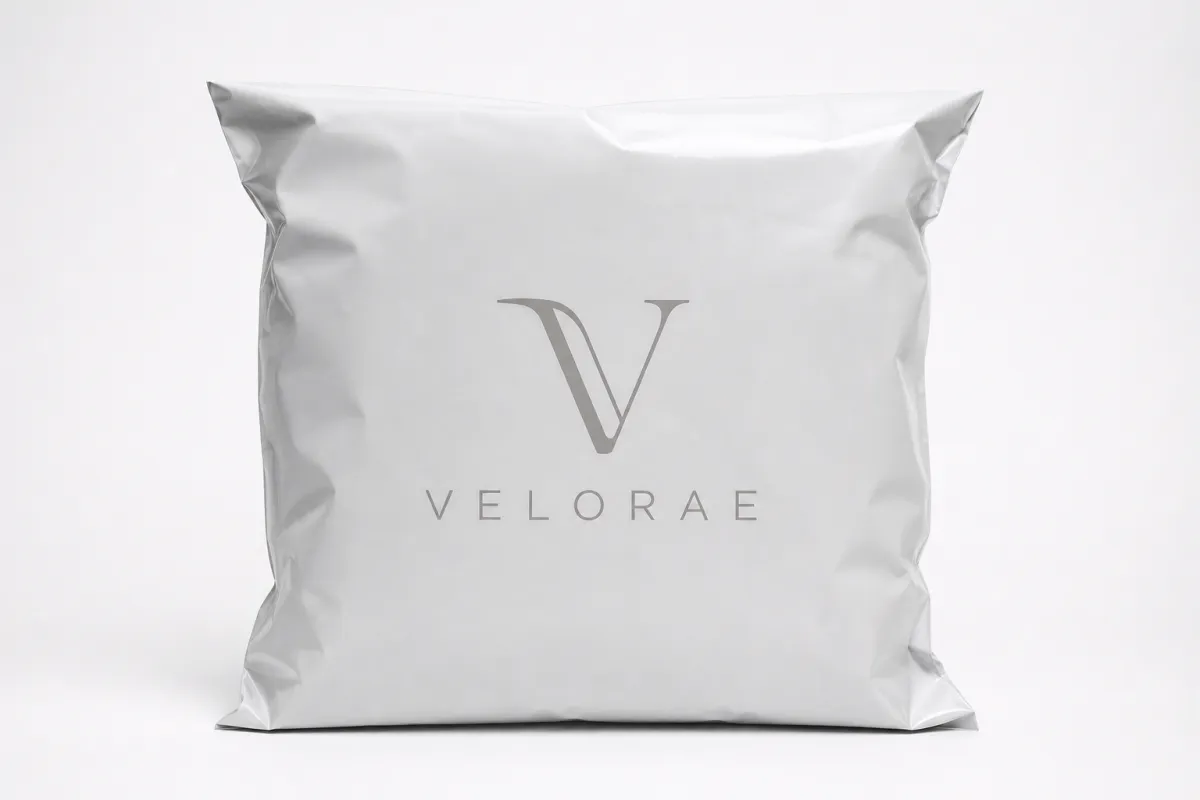
Custom shipping bags with logo are branded mailers and shipping pouches printed with a company name, logo, pattern, slogan, or product-specific message. That can mean a poly mailer for apparel, a kraft mailer with a paper-forward feel, a padded mailer for smaller fragile items, or a recyclable bag intended for ecommerce shipping and order fulfillment. The package carries the product and the brand identity at the same time.
Brands use them for practical reasons, not just visual ones. Branded packaging helps protect the contents, supports faster packing, and gives every outbound order a more deliberate look. A properly sized mailer and closure style can keep the pack line moving. A poor fit creates extra handling, wasted material, and a result that looks rough no matter how nice the logo is. Too much empty space leads to wrinkling and movement. Too little space slows the team down and turns packing into a fight with the material.
For many brands, custom shipping bags with logo sit between basic supplies and more structured options such as Custom Shipping Boxes. Boxes work well for rigid items and a premium presentation, yet they cost more, take up more room, and often add packing time. Mailers are lighter, easier to store, and better suited to soft goods. That is why many ecommerce stores use custom shipping bags with logo for apparel and accessories, then turn to Custom Shipping Boxes for products that need stronger crush protection.
There is also a real branding effect here. A customer will not think, “This is a 2-color flexo print on a 2.5 mil coex film.” They will notice that the parcel looks purposeful. That is package branding doing useful work. The product feels more complete. The order feels less generic. For ecommerce shipping, that small lift in perception can support repeat purchases better than a plain, forgettable parcel ever could.
Custom shipping bags with logo usually make the most sense for soft, low-fragility, or light-to-moderate weight products. They also pair well with tissue, inserts, and a simple sticker seal. For many categories, they are the practical alternative to custom printed boxes, especially when the priority is speed and cost control instead of rigid structure.
How Custom Shipping Bags With Logo Work
The buying process is straightforward, but the small details shape the result. First, you request Specs and Pricing. Then you send artwork, receive a proof, approve the sample or digital mockup, move into production, and finally ship the finished bags to your warehouse or 3PL. Custom shipping bags with logo follow the same general path as other product packaging, although buyers usually avoid surprises when they start with a clean spec sheet.
Lead times depend on order size and artwork readiness. A reorder of an existing size can move quickly. A new custom run takes longer because the supplier has to confirm dimensions, print method, film or paper stock, seal style, and artwork placement. A quick proof cycle and an approved sample help the schedule. Multiple revision rounds slow everything down, especially when several people want to approve the logo shade or line spacing. That is ordinary procurement friction, not mystery.
Before asking for quotes on custom shipping bags with logo, have these details ready:
- Product dimensions and packed size, not just the item by itself.
- Weight range so the material and seal can match the load.
- Closure type such as adhesive strip, zipper, heat seal, or tuck style.
- Print coverage including one-color logo, full bleed, or repeated pattern.
- Order volume for each size so the quote reflects actual usage.
Those details reduce back-and-forth and give suppliers enough information to recommend the right stock, whether that is a simple poly mailer, a kraft mailer, or a more protective padded option. Buyers comparing packaging formats can also review the wider range of Custom Packaging Products before deciding whether one bag style should cover every SKU or only a few.
The proofing stage often gets underestimated. A proof is more than a visual preview. It maps the production file. Placement, bleed, safe zone, Pantone callout, and seam clearance all need to work together. A logo that sits too close to a fold or adhesive edge can look awkward on the finished bag. Low-resolution artwork can force the supplier to clean up the file or reject it. Custom shipping bags with logo become much easier to buy well when the brand keeps artwork organized and one person owns approvals.
A disciplined workflow usually works best: send the correct spec, approve the proof once, test a sample, and lock the run. That kind of boring process saves money, time, and a fair amount of frustration.
Key Factors That Affect Custom Shipping Bags With Logo Fit and Performance
Fit is where many custom shipping bags with logo go wrong. Buyers often size the bag to the product itself instead of the packed product. That sounds minor until the bag has to close around the item every day on a busy line. A shirt in a sleeve is not the same as a shirt folded with a card insert, tissue, and a return document. The bag needs to account for the full packing method, not just the object inside it.
Material choice changes everything
Poly film remains common because it is light, flexible, and cost effective. Kraft mailers create a natural look that suits brands leaning into paper-forward packaging. Recycled film supports sustainability goals, although buyers should still check the actual recycled content and the local recycling rules rather than assuming the sales copy means much. Padded styles protect small fragile items better, but they also add cost and bulk. Custom shipping bags with logo do not solve every problem in the same way, so category fit matters more than a purely visual preference.
If sustainability matters, ask for data sheets and chain-of-custody documentation where relevant. If a supplier says the bag is FSC-certified paper, ask for the proof. If a film bag is labeled recyclable, verify the resin and the local collection rules. The EPA offers plain-language recycling guidance at EPA recycling basics, which is a far better reference point than vague green language on a product page.
Print method affects cost and appearance
One-color logo printing is usually the simplest route for custom shipping bags with logo. Registration is easier, proofs are easier, and the unit price is often lower. Full-color branding can look excellent, especially for retail packaging or special product drops, but the setup takes more time and often pushes the price higher. Some print methods handle large solid areas beautifully; others reveal small flaws quickly. Thin lines and fine text demand a print method and film finish that can carry detail without distortion.
Durability is not optional
Transit exposes the bag to abrasion, compression, and moisture. Thickness, seal strength, puncture resistance, and water resistance all matter. Soft goods may do fine with 1.5 to 2.0 mil poly. Heavier items or rougher shipping lanes often call for 2.5 to 3.0 mil. No single rule covers every route or every product, because carrier handling and internal product movement change the equation. Teams looking for a more disciplined test plan can use ISTA transit methods as a useful benchmark; the International Safe Transit Association is at ISTA.
Good packaging design tries to hold four priorities together: fit, branding, protection, and packing speed. That balance is one reason custom shipping bags with logo can outperform generic mailers before a single review is written. The bag is doing operational work as much as visual work.
A practical way to think about custom shipping bags with logo is simple. If the bag is too loose, you pay in damage and presentation. If it is too tight, you pay in labor and frustration. The strongest spec usually lands in the middle, where the packer can seal it quickly and the order still arrives looking neat.
Custom Shipping Bags With Logo Pricing: What Changes the Cost
Pricing for custom shipping bags with logo rarely comes down to a single number. It changes with size, material gauge, print method, number of colors, finish, order quantity, and freight. The lowest quote is not always the least expensive order once the full landed cost is counted. Packaging math has a habit of being more honest than marketing.
For a rough frame of reference, small test orders often sit in a much higher unit range than a larger production run. A one-color poly mailer at 500 units can cost several times more per bag than the same spec at 5,000 units because setup, proofing, and freight are spread across fewer pieces. That is why custom shipping bags with logo can look expensive at first glance and quite reasonable once volume grows.
Here is a broad comparison. The numbers are intentionally general, because exact pricing depends on spec, supplier, and shipping lane. Even so, the breakpoints are useful.
| Option | Best For | Typical Print | Ballpark Unit Cost at 5,000 | Notes |
|---|---|---|---|---|
| Plain poly mailer | Low-cost ecommerce shipping | No print | $0.08-$0.16 | Lowest cost, but no branding lift |
| One-color branded poly | Most apparel and accessory orders | 1-color logo | $0.14-$0.28 | Often the sweet spot for custom shipping bags with logo |
| Kraft mailer with branding | Natural-looking package branding | 1-2 colors | $0.22-$0.45 | Good for retail packaging feel and recycled-paper positioning |
| Padded branded mailer | Small fragile items | 1-color or simple pattern | $0.40-$0.90 | More protection, more bulk, more freight |
| Heavy-duty custom mailer | Heavier contents or tougher routes | Simple logo | $0.25-$0.55 | Higher film cost, but fewer damage claims |
That table helps, though it does not tell the full story. A supplier can quote a low unit price and hide the true cost in tooling, plate charges, sample fees, or inbound freight. Ask for landed cost, not only printed unit price. If the quote excludes shipping to your warehouse, the final math will move fast.
Volume is the other major driver. Custom shipping bags with logo at 500 units usually serve testing or low-volume SKUs. At 1,000 units, the balance often improves. At 5,000 and above, the economics can support a more deliberate packaging approach across the line. Even so, a SKU that only sells in a few hundred units each quarter should not be overbought just to reach a prettier rate. Dead inventory is expensive no matter how attractive the packaging looked on paper.
A simple buying rule helps: request quotes at 500, 1,000, and 5,000 units, even if the answer seems obvious. The spread shows where the real breakpoints sit. It also reveals whether one size can cover the job or whether two sizes would create better pack efficiency.
Step-by-Step Ordering Timeline for Custom Shipping Bags With Logo
Buying custom shipping bags with logo works best when the timeline is planned in stages rather than handled as a last-minute scramble. Actual timing depends on artwork readiness, sample requests, supplier capacity, and freight method, but the sequence below is realistic for most buyers.
- Define the requirement. Measure the packed product, not just the item. Note the seal style, shipping environment, and whether the goal is protection, presentation, or both. This is where custom shipping bags with logo either solve the problem or get oversized because someone guessed.
- Prepare artwork. Send vector files when possible. Include logo placement, colors, and any text that must stay readable after print setup. If brand colors matter, provide Pantone references or a clean color standard. Sloppy files create sloppy proofs.
- Review the proof. Check seam clearance, bleed, safe zone, and repeat pattern alignment. A proof can look great and still fail if the logo lands on a fold. This is one of the easiest ways custom shipping bags with logo waste money.
- Approve a sample. If the bag is new, or the product is sensitive to crush or moisture, test it. Pack the real item. Carry it across the real line. Ship it through the real carrier path. That is how you learn whether custom shipping bags with logo are actually fit for use.
- Plan production and freight. Manufacturing is only part of the schedule. Add time for inspection, transit, receiving, and any warehouse labeling or repacking. If the bags are coming from overseas, freight timing can matter as much as print timing.
"A package that looks good at the desk but slows the pack line is not a win. It is a very neat problem."
That line gets to the heart of it. Custom shipping bags with logo should support order fulfillment, not create extra work. If the bag requires too much fidgeting, the design is off. If the seal fails on the first cold day, the material is wrong. If the artwork needs revision after revision, the file process needs more discipline.
A realistic timeline for a simple run often includes a few days for quoting and proofing, several more days for sample review if needed, one to three weeks for production depending on volume, and freight time on top. Repeat orders can move faster. First runs with multiple approvals often take longer. Brands with seasonal launches should build in a buffer and treat custom shipping bags with logo like any other inventory item that can run out at the worst possible time.
Storage matters too. A pallet of oversized mailers can fill warehouse space quickly. A tighter fold or a cleaner stacking pattern helps. Small operational choices like that are a reminder that packaging design should sit close to operations, not only marketing.
Common Mistakes That Waste Money or Delay Orders
Custom shipping bags with logo are easy to order badly. That is the frustrating truth. A polished mockup can hide several problems, and most of them appear only after the first shipment reaches the pack line or the carrier network.
- Guessing the size. A bag sized by eye usually ends up too long, too wide, or too sloppy. That means more material, more wrinkles, and a weaker presentation.
- Chasing the lowest quote. Cheap custom shipping bags with logo can work, but not if the film is thin, the seal is weak, or the print fades. Then the savings disappear in damage claims and reorders.
- Ignoring the shipping environment. Moisture, cold storage, abrasion, and compression all matter. A bag that works on a desk can fail in stacked freight or humid conditions.
- Sending messy artwork. Low-resolution files, unmarked colors, and missing placement notes slow the proof process and often distort the logo.
Oversizing creates more than a loose look. It can shift product weight during transit, increase puncture risk, and turn a small parcel into a bulkier one that costs more to ship. For ecommerce shipping, that cuts directly into margin. For retail packaging, it can make the brand look careless. Neither outcome helps.
Over-customizing too early causes another kind of waste. A startup may want three sizes, two finishes, a special zipper, and a full-coverage print from day one. That is how budgets disappear. One proven size and one backup size usually works better. After the first production cycle, the brand can see which SKUs actually deserve a tailored spec. That is how custom shipping bags with logo shift from experimental to efficient.
Skipping real-world testing is the last big mistake. If the product is fragile, test drop behavior. If the route is rough, test abrasion. If the warehouse runs hot or cold, test storage. You do not need a lab coat or a dramatic soundtrack. You need honest sample runs and enough discipline to reject a bag that looks good but behaves poorly.
Packaging standards can help even for small brands. ISTA test methods and basic ASTM thinking reduce wishful thinking and make the buying process more grounded. Not every order needs certification, yet a little structure beats guessing every time. Guessing is how packaging budgets get eaten up.
Expert Tips and Next Steps for a Smarter First Order
If the advice had to be narrowed to one point, it would be this: start simple, then refine. Custom shipping bags with logo work best when the first order solves one real problem well instead of trying to impress everyone with packaging theater. Brands that ship apparel, accessories, and light ecommerce goods usually get better results from a clean, repeatable spec than from a design that changes every month.
These habits save the most time and money:
- Use a spec sheet. Keep dimensions, material, closure type, print file links, color codes, and reorder notes in one place.
- Test on the real line. A sample should be packed by the same people, with the same product, under the same time pressure.
- Set a reorder point. Do not wait until the last pallet is gone. Custom shipping bags with logo need replenishment lead time, and stockouts are expensive.
- Track damage and pack time. If a new bag saves 10 seconds per order or cuts returns by even a small amount, that matters at scale.
Standardizing where possible also helps. Many brands use one branded mailer for a core product set and keep a second style for outliers. That limits complexity without making the packaging dull. If the catalog is still shifting, start with a format that covers the largest share of volume. A sensible first buy often beats a perfect-looking assortment that nobody can maintain.
For brands comparing packaging families, it helps to review Custom Poly Mailers alongside other Custom Packaging Products. That gives a clearer view of whether the job calls for mailers, boxes, or a mix of both. Many buyers discover that the real answer is not one format for everything. It is one format for each shipping job.
Before placing the order, ask three questions. Does the bag fit the packed product? Does the print support the brand without slowing the line? Does the material survive the route? If the answer is yes to all three, you are in good shape. If not, keep refining. Custom shipping bags with logo should make fulfillment easier, improve package branding, and support the product without turning the buying process into a hobby.
Custom shipping bags with logo are worth the effort when they are chosen with transit, packing speed, and unit economics in mind. That is the whole point. A good bag earns its keep every time an order leaves the warehouse. A bad one merely looks fine in a PDF. And PDFs, unfortunately, do not ship packages.
How much do custom shipping bags with logo usually cost?
Cost depends on size, material, print colors, and volume, but the unit price usually drops once you move past small test quantities. Ask for pricing at 500, 1,000, and 5,000 units so the breakpoints are obvious. Compare total landed cost, not just the printed unit price, because freight, tooling, and proofing can change the final number fast for custom shipping bags with logo.
What do I need before ordering custom shipping bags with logo?
Have product dimensions, packed weight, closure style, shipping method, and target order volume ready before requesting quotes. Prepare logo artwork in a clean vector format when possible, plus brand color references and placement notes. If you are unsure on size, ask for a sample or a spec recommendation before placing a full order for custom shipping bags with logo.
How long does it take to produce custom shipping bags with logo?
Simple reorders can move quickly, but new custom runs usually need time for proofing, sample approval, production, and freight transit. Delays usually come from artwork changes, color corrections, or slow internal approvals rather than the actual print run. Build a buffer if you are launching a product, moving warehouses, or planning a seasonal spike with custom shipping bags with logo.
Are custom shipping bags with logo recyclable or eco-friendly?
Some materials are recyclable or made with recycled content, but the answer depends on the exact substrate and local recycling rules. If sustainability matters, ask for material data, recycled-content details, and end-of-life guidance before you approve the bag. Do not assume every bag with a green message is actually eco-friendly; check the spec sheet, not the marketing fluff behind custom shipping bags with logo.
What file format works best for the logo artwork?
Vector files such as AI, EPS, or PDF are usually best because they stay sharp at any print size. If you only have a PNG or JPG, make sure it is high resolution and ask the supplier whether it will print cleanly. Include brand colors, placement notes, and any text that must stay readable at production size for custom shipping bags with logo.

