Buyer Fit Snapshot
| Best fit | Custom Shipping Carton Boxes MOQ projects where brand print, material claims, artwork control, MOQ, and repeat-order consistency need to be specified before quoting. |
|---|---|
| Quote inputs | Share finished size, material target, print colors, finish, packing count, annual reorder estimate, ship-to region, and any compliance wording. |
| Proofing check | Approve dieline scale, logo placement, barcode or warning zones, color tolerance, closure strength, and carton packing before bulk production. |
| Main risk | Vague material claims, crowded artwork, missing packing details, or unclear freight terms can make a low unit price expensive after revisions. |
Fast answer: Custom Shipping Carton Boxes MOQ: Pricing & Lead Time should be specified like a repeatable production item. The safest quote records material, print method, finish, artwork proof, packing count, and reorder notes in one written spec.
Production checks before approval
Compare the actual filled-product size with the drawing, then confirm tolerance on folds, seals, hang holes, label areas, and retail display edges. Reserve space for logos, QR codes, warning copy, and material claims before decorative graphics fill the panel.
Quote comparison points
Review material grade, print process, finish, sampling route, tooling charges, carton quantity, and freight assumptions side by side. A quote is only useful when the supplier can repeat the same color, closure quality, and packing count on the next order.
Custom Shipping Carton Boxes MOQ: Pricing & Lead Time
Many buyers assume custom shipping carton boxes MOQ means committing to a warehouse full of cartons before the first sample even exists. That assumption is expensive. In reality, the minimum is shaped by board setup, print method, dieline complexity, and the way the carton moves through a corrugated production line.
That distinction matters for brands that want better packaging without freezing cash in dead inventory. A clean shipping carton with a standard footprint and restrained print can often start lower than expected, especially for ecommerce shipping, order fulfillment, and product packaging that does not need heavy finishing or special effects.
I have seen packaging teams overestimate the barrier by a factor of two or three. A brand planning a launch for candles or glassware often imagines a massive first run, then learns that a practical custom shipping carton boxes MOQ can be much smaller if the structure stays standard and the art stays disciplined. The box does not need to shout to do its job.
Why custom shipping carton boxes MOQ is lower than you think
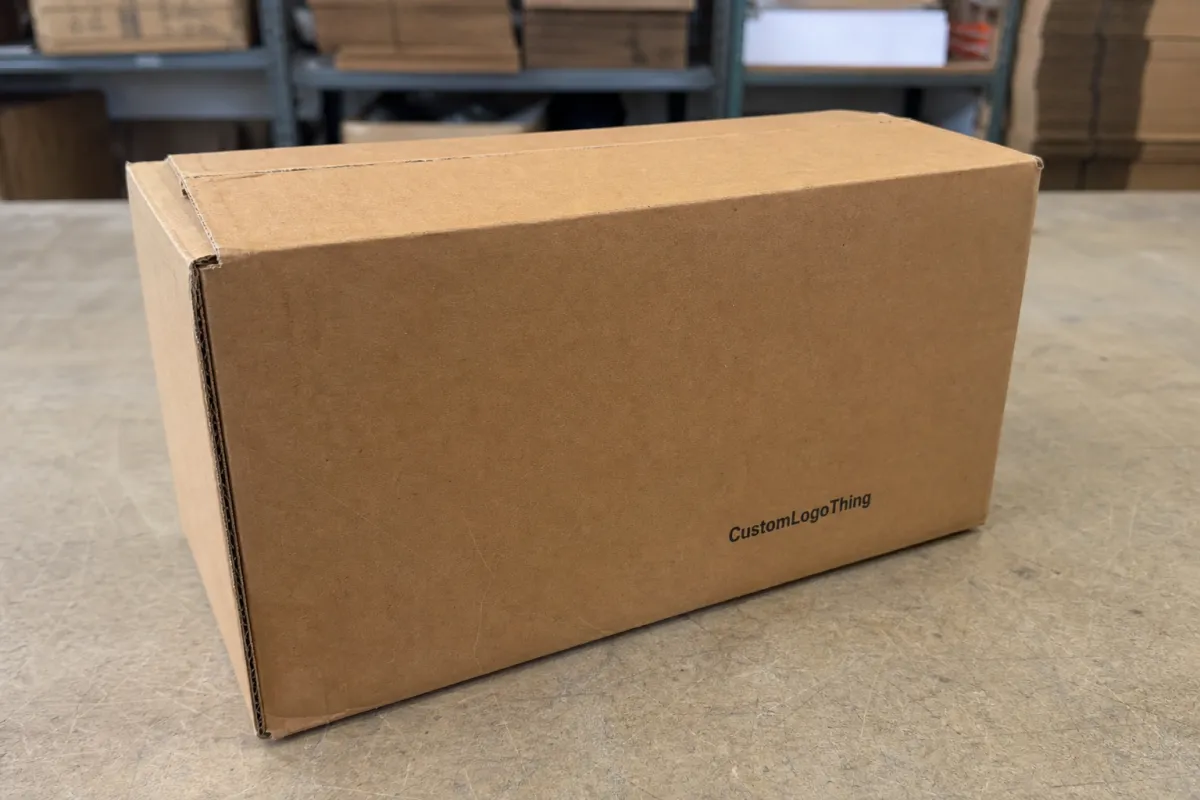
The biggest mistake is treating the word custom as if it automatically means huge volume. It does not. A large share of custom shipping carton boxes MOQ decisions come down to whether the supplier needs new tooling, whether the box follows standard corrugated workflows, and whether the artwork is a simple one-color mark or a more demanding printed run.
Here is the short version: if the carton uses a standard corrugated structure, a familiar flute profile, and straightforward branding, the minimum can be very manageable. I have seen buyers start with 500 to 1,000 units for a basic mailer-style carton, especially when the size is close to a standard footprint and there are no inserts, windows, or special finishes raising the setup burden.
That is the practical side of custom shipping carton boxes MOQ. A small ecommerce brand shipping candles, ceramics, or bottled goods does not need to jump straight into 10,000 cartons to look polished. A smaller run lets the brand test packaging performance, confirm whether the carton survives transit, and see whether the print strengthens package branding instead of muddying it.
Cash flow enters the picture fast. A low headline unit price can be a trap if it forces a brand to buy more cartons than it can use in a reasonable time. Lower MOQ protects working capital, cuts warehouse clutter, and reduces the risk of sitting on a stale packaging design after the product line changes. A carton is a working tool. It earns its place by protecting the product and moving through the supply chain, not by looking clever on a spreadsheet.
Buyers should compare custom shipping carton boxes MOQ against landed cost, damage reduction, and presentation quality. Chasing the smallest minimum usually misses the real economics. The better question is whether the carton reduces damages, improves unboxing, and supports the product well enough to justify the order size.
For brands comparing several package formats, the same logic applies across Custom Packaging Products. The right minimum is the one that keeps shipping stable without stranding cash in extra stock. That sounds plain. It is also how margin survives.
Custom shipping carton boxes MOQ: product details that matter
Shipping cartons do not all behave the same way once they hit production. The carton style, board grade, flute profile, and print coverage each push custom shipping carton boxes MOQ in different directions. A simple structure tends to keep the threshold friendlier. Once the build adds complexity, the minimum rises quickly.
Common carton types include regular slotted cartons, mailer-style cartons, tuck-front shipping cartons, and reinforced options for heavier products. Regular slotted cartons are usually the easiest to quote because they fit standard corrugated box production. Mailer-style cartons work well for ecommerce shipping and retail packaging that needs a better opening experience. Tuck-front cartons can feel more polished, though they often raise setup requirements. Reinforced cartons handle heavier loads, but they may need stronger board and more careful compression testing.
- RSC cartons: good for basic shipping, storage, and order fulfillment.
- Mailer-style cartons: better for subscription kits, cosmetic sets, and branded packaging.
- Tuck-front shipping cartons: useful when presentation matters and the box doubles as product packaging.
- Reinforced cartons: better for bulkier or heavier goods that need extra stacking strength.
Board choice matters just as much. Single-wall corrugated in E-flute or B-flute is common for lighter goods. C-flute or double-wall board fits heavier loads or rough handling environments better. If the carton needs to survive long transit routes, stacking pressure, or humid conditions, the supplier may suggest a stronger board grade. That improves performance, but it can also raise custom shipping carton boxes MOQ if the line needs different materials or a separate setup.
Branding choices change the economics too. One-color print on kraft board is usually easier to launch than full-color exterior coverage. Interior print adds visual punch, but it still means extra work. Spot varnish, soft-touch lamination, foil, and other finishes can make sense for premium launches, yet they almost always raise setup time and production cost. That is why simple printed boxes usually keep the minimum more approachable than highly finished retail packaging.
Fit is the last piece buyers tend to overlook. A carton with standard dimensions is easier to produce and easier to quote. Once the project moves into unusual dimensions, custom inserts, odd depth ratios, or a folded structure that needs a new dieline, custom shipping carton boxes MOQ tends to climb. The carton may still be worth it. The extra engineering is not free, and the quote should never pretend it is.
If your project sits between shipping and presentation, compare your options against Custom Shipping Boxes and decide how much the box truly needs to do. Some programs need simple protection. Others need a stronger package branding moment. Those are different jobs.
Specifications for custom shipping carton boxes MOQ
Good quotes start with good specs. That is not a marketing line. It is the difference between a useful proposal and a price that looks attractive until missing details surface later. For custom shipping carton boxes MOQ, the supplier needs enough information to estimate board usage, print setup, tooling, freight, and waste.
Start with internal dimensions, not outer dimensions. Internal dimensions tell the supplier how much product space is actually available after board thickness and any insert system are counted. Include product weight too, because a light box and a heavy box may share the same size but need very different board grades. Add the closure style, print area, and whether the carton ships flat or pre-glued. Those details shape both cost and lead time.
A buyer who sends a clean spec sheet usually gets a better answer faster. A buyer who sends a vague idea and a logo file gets a guess. Guessing is expensive.
Here are the core details I would define before requesting custom shipping carton boxes MOQ quotes:
- Internal dimensions: length, width, and height in the finished packed state.
- Board grade: single-wall or double-wall, plus flute type such as E, B, C, or combinations.
- Print coverage: one-color, two-color, full-color, interior print, or no print.
- Closure style: tuck, lock, tape seal, or self-locking structure.
- Performance target: burst strength, edge crush test, stacking strength, or rough-handling resistance.
- Delivery location: needed for freight estimate and landed cost.
Tolerances matter more than many buyers expect. A box that is too tight slows packing and can crush the product. A box that is too loose needs more void fill and looks sloppy in transit. If inserts, molded pulp, paper dunnage, or protective wrap are part of the packout, include that in the spec. The box should hold the product, not fight it.
Performance standards are worth asking about too. For shipping cartons, common checks include edge crush test ratings, burst strength, and stacking strength. For transit validation, suppliers may reference ISTA procedures. If the board is sourced from responsible forestry, FSC certification may matter to your brand. Those standards do not magically lower custom shipping carton boxes MOQ, but they do help you compare suppliers on facts instead of polished sales copy.
One more practical point: the cleaner the spec sheet, the easier it is to separate real savings from fake savings. If a supplier has to chase three rounds of clarification, the quote usually comes back higher, and often for a dull reason like extra setup time or a revised dieline. No drama. Just math.
There is also a trust issue here. A supplier should be willing to say, plainly, that a request is under-sized for the structure being asked for. I would rather hear that on the first call than discover it after artwork approval, when the only options are to change the pack or pay for the mistake.
Pricing, MOQ, and unit cost breakpoints
This is where buyers either save money or convince themselves they did. Custom shipping carton boxes MOQ affects unit cost because setup costs get spread across the run. A lower quantity means each carton carries more of the fixed costs. A larger quantity usually drops the per-box price, but that only helps if the cartons will be used before the packaging changes.
The main cost drivers are easy to list and easy to ignore: material thickness, print coverage, die cutting, finishing, inserts, and whether new tooling is required. A simple one-color corrugated carton may stay relatively friendly. Add a custom insert, heavier board, or more elaborate print and the number moves quickly.
| Carton type | Typical MOQ | Approx. unit cost at 1,000 | Approx. unit cost at 5,000 | Typical lead time | Best fit |
|---|---|---|---|---|---|
| Standard-size RSC, one-color print | 500-1,000 | $0.58-$1.25 | $0.28-$0.62 | 10-15 business days | Basic ecommerce shipping and order fulfillment |
| Custom-size mailer carton, simple branding | 1,000-2,500 | $0.72-$1.60 | $0.34-$0.78 | 12-18 business days | Branded packaging for subscription and direct-to-consumer kits |
| Reinforced carton, heavier board, no print | 500-1,000 | $1.10-$2.40 | $0.65-$1.55 | 12-20 business days | Heavy goods, fragile items, or warehouse stacking |
| Printed carton with inserts and finishing | 2,500+ | $1.80-$4.50 | $0.95-$2.40 | 2-4 weeks | Premium product packaging and retail packaging programs |
The numbers above are examples, not a promise. Size, board grade, freight, and current paper market conditions can move them. Even so, the pattern is clear: as custom shipping carton boxes MOQ climbs, the unit price usually falls until storage and cash flow become the real problem.
That is why I tell buyers to compare quotes by landed cost per usable carton. Do not chase the headline unit price and ignore freight, overrun risk, sample fees, or repack labor. A carton that saves three cents but slows packing is not cheap. It is just quieter about the damage it causes.
The cheapest quote on paper is often the expensive one after you add tooling, rework, and cartons sitting in a warehouse for half a year.
Here is the decision rule I would use: if the packaging is for a short launch, a seasonal line, or an untested SKU, accept a slightly higher unit cost and keep the run tight. If the carton is a core part of stable product packaging and the dimensions are locked, push for a larger batch and ask where the price break actually lands. That is how custom shipping carton boxes MOQ should be treated: as a purchasing tool, not a trophy number.
One more comparison helps. A price that drops by 20 percent at 5,000 units looks attractive, but if your forecast only supports 2,000 cartons before a redesign, the discount is fictional. Inventory carrying cost, obsolescence, and storage space all belong in the same calculation. Packaging buyers who ignore those lines usually end up paying for them later in a different budget.
Process, timeline, and production steps from quote to delivery
The production process is not mysterious. Good suppliers follow a sequence, and each step protects the next one. For custom shipping carton boxes MOQ, the flow usually starts with a quote request, moves into spec review, then dieline confirmation, artwork approval, sampling if needed, production, inspection, and freight booking.
That sounds orderly because it is orderly. The mess usually comes from missing information. If the carton size is uncertain, the print file is not final, or the buyer changes the board grade midstream, the schedule moves. Often by several days. Sometimes by more. Most delays do not come from the factory being slow. They come from unclear instructions and last-minute “small changes” that are never small.
A realistic timeline looks like this:
- Simple unprinted or lightly printed runs: often 7-10 business days after artwork approval.
- Standard printed custom runs: often 12-15 business days, depending on current load.
- Die-cut cartons with inserts or finish work: often 2-4 weeks.
- Transit time: separate from production and depends on freight mode and destination.
That last point matters. A fast production run can still arrive late if freight planning is sloppy. I have seen buyers celebrate a quick factory turnaround and then miss a launch because shipping was booked too late. Production time and transit time are not the same thing, and custom shipping carton boxes MOQ does not change that. A carton still has to move.
It helps to think about the timeline as two tracks. One track is production: proof approval, tooling, print, cut, and pack. The other is logistics: booking freight, checking carton pallet counts, and lining up receiving on your side. If your team handles ecommerce shipping and order fulfillment tightly, the carton project stays calm. If nobody owns the freight side, even a good run can turn into a headache.
For buyers still deciding on packaging structure, a smaller pilot order can bridge the gap between sampling and full production. It gives you enough cartons to test real packing speeds, shipping damage, and shelf or unboxing presentation without committing to a giant run of custom printed boxes. That is often where custom shipping carton boxes MOQ proves useful rather than restrictive.
If you need background material before requesting quotes, the FAQ page is a good place to check common setup questions. It is faster than waiting for someone to guess what you meant in an email that was missing the dimensions anyway.
A careful timeline also protects quality. The best box suppliers do not rush a dieline just to hit a date. They want one pass on the structure, one pass on the art, and no surprises when the carton is stacked, dropped, or filled on a packing bench. That is the real measure of schedule discipline.
Why choose us for custom shipping carton boxes
Buyers do not need more hype. They need answers that hold up when the cartons hit the floor, the dock, or the conveyor. Our approach to custom shipping carton boxes MOQ is simple: give clear guidance, keep the quote honest, and match the carton to the product instead of forcing the product to fit a fashionable box style.
That means low-friction quoting, straightforward spec reviews, and real guidance on where MOQ can drop and where it cannot. If a job can begin at 500 or 1,000 units without turning into a production mess, we say so. If the structure, board, or print pushes the minimum higher, we say that too. Fancy language does not help a buyer compare options. Facts do.
We also care about repeatability. Consistent board sourcing, stable print quality, and proper packaging checks matter more than a dramatic sales pitch. A carton that looks good on a mockup but fails in transit is not branded packaging. It is an expensive mistake.
From a packaging buyer's point of view, the commercial advantage is clear:
- Fewer revisions: clean specs and a clear dieline reduce back-and-forth.
- Better control of setup costs: you see where the price is coming from.
- Lower risk: carton style, board strength, and shipping method get matched before the order is locked.
- More useful samples: you can test product fit and protection before a larger production run.
That last point is especially useful for ecommerce shipping and product packaging. A strong carton must do two jobs at once: protect the product and support the brand. If the box is only strong, it feels generic. If it is only pretty, it fails where it matters. Good package branding lives in the middle.
Our range of Custom Packaging Products lets buyers compare box styles, inserts, and mailing formats before locking a run. For lighter items, some programs also start with Custom Poly Mailers before moving into cartons, especially if freight weight or dimensional pricing matters. Different products, different math. That part never changes.
Most important, we keep custom shipping carton boxes MOQ grounded in reality. No fake “cheap” price that doubles later because the print or tooling was never mentioned. No mystery add-ons. No pretending a complex build should cost the same as a plain shipping box. That is not salesmanship. That is noise.
There is a professional discipline behind that approach. In my experience, the suppliers that answer the hard questions early tend to deliver the fewest surprises later. The ones that avoid details usually leave the buyer carrying the risk.
Next steps: quote, sample, and order checklist
If you want an accurate quote for custom shipping carton boxes MOQ, stop guessing and send the information that actually drives the price. Better inputs lead to better numbers. This is one of those cases where being organized saves real money.
- List internal dimensions: length, width, height, and any insert space.
- State product weight: the carton needs to survive handling, not just look good on a screen.
- Choose board preference: single-wall or double-wall, plus flute if you know it.
- Define print goals: one-color, full-color, inside print, or no print.
- Set the target quantity: be honest about your launch volume and storage space.
- Include the shipping destination: freight and landed cost depend on it.
If you already have a sample box, send it. If you have a photo of the packed product, send that too. If you have a dieline, even better. Those three things can reduce back-and-forth faster than a long email describing the box “kind of like the one we saw online.” That phrase is the enemy of a clean quote.
Before You Order, decide four things first: structure, size, print coverage, and target MOQ. Those choices drive both price and lead time. Everything else is secondary. Once those are set, the supplier can tell you whether custom shipping carton boxes MOQ sits near 500, 1,000, 2,500, or higher for your build.
From there, compare the quoted landed cost against the value the carton adds. Does it reduce damage claims? Does it improve unboxing? Does it support package branding enough to justify the spend? Those are the right questions. A box is supposed to protect revenue, not just sit on a spreadsheet with a good-looking unit price.
If you are ready to move, send the specs and ask for a quote. That is the fastest way to see whether custom shipping carton boxes MOQ for your project is low enough to start now or whether a small adjustment in size or print can bring it down further. Either way, the answer should be based on the carton you actually need, not a number pulled out of thin air.
The most practical takeaway is simple: pick the carton structure first, then let the spec sheet decide the MOQ, not the other way around. That sequence saves time, keeps the quote honest, and helps the packaging do its real job from the first shipment onward.
Frequently asked questions
What is the usual MOQ for custom shipping carton boxes?
It depends on size, board grade, and print method rather than a single universal number. For simpler custom shipping carton boxes MOQ requests, short-run orders often start around 500 to 1,000 units. More complex printed cartons or specialty builds can require 2,500 units or more.
Can I lower custom shipping carton boxes MOQ by using a standard size?
Yes. Standard footprints usually reduce setup work, waste, and tooling needs. A standard structure with simple print gives the best chance of a lower custom shipping carton boxes MOQ. Fully custom dimensions and inserts usually push minimums higher.
How does MOQ affect the unit cost of custom shipping carton boxes?
Lower quantities spread setup and production costs across fewer cartons, so unit cost rises. Higher quantities usually reduce the per-box price until storage and cash flow become the bigger issue. A good quote should show where the price break happens as quantity increases, especially for custom shipping carton boxes MOQ planning.
How long does production take after artwork approval?
Simple unprinted or lightly printed runs can move in about 7 to 10 business days. Printed or die-cut custom runs often need 2 to 4 weeks depending on complexity and factory load. Freight time is separate, so the delivery date depends on both production and shipping.
What do I need to request an accurate quote for custom shipping carton boxes MOQ?
Send internal dimensions, product weight, board preference, print coverage, and target quantity. Include the delivery location so freight can be estimated correctly. Add a sample photo, existing packaging, or a dieline if you already have one. The cleaner the input, the faster the answer for custom shipping carton boxes MOQ.
Custom shipping carton boxes MOQ should help you buy smarter, not push you into over-ordering. If you have the specs ready, request a quote, compare the landed cost, and choose the carton that fits your product, your margin, and your timeline. That is how custom shipping carton boxes MOQ turns from a guess into a practical purchasing decision.

