Buyer Fit Snapshot
| Best fit | Custom Shipping Cartons for Cold Chain projects where brand print, material claims, artwork control, MOQ, and repeat-order consistency need to be specified before quoting. |
|---|---|
| Quote inputs | Share finished size, material target, print colors, finish, packing count, annual reorder estimate, ship-to region, and any compliance wording. |
| Proofing check | Approve dieline scale, logo placement, barcode or warning zones, color tolerance, closure strength, and carton packing before bulk production. |
| Main risk | Vague material claims, crowded artwork, missing packing details, or unclear freight terms can make a low unit price expensive after revisions. |
Fast answer: Custom Shipping Cartons for Cold Chain: Board, Finish, Dieline, and Unit Cost should be specified like a repeatable production item. The safest quote records material, print method, finish, artwork proof, packing count, and reorder notes in one written spec.
Production checks before approval
Compare the actual filled-product size with the drawing, then confirm tolerance on folds, seals, hang holes, label areas, and retail display edges. Reserve space for logos, QR codes, warning copy, and material claims before decorative graphics fill the panel.
Quote comparison points
Review material grade, print process, finish, sampling route, tooling charges, carton quantity, and freight assumptions side by side. A quote is only useful when the supplier can repeat the same color, closure quality, and packing count on the next order.
Custom Shipping Cartons for Cold Chain: Practical Guide
Custom shipping cartons for cold chain do more than carry a product from point A to point B. They hold the packout together, keep insulation and gel packs from drifting out of position, and preserve stability long enough to survive the dock, the sortation belt, and the final handoff. In many lanes, the outer carton is the first part of the system to fail under moisture, compression, and pallet pressure, even when the coolant still has life left in it.
That makes the box itself worth the same scrutiny as the coolant, liner, and label set. A regular corrugated carton can move goods. A purpose-built cold chain carton helps preserve condition, reduce leaks, and keep the shipment inside its target temperature window long enough to matter. For a buyer, that is not a simple box purchase. It is a packaging system decision with operational consequences, and the wrong choice usually shows up in returns, spoilage, or extra labor before it shows up in a spec sheet.
There is also a practical reality that procurement teams learn quickly: the least glamorous component can set the ceiling for the whole shipment. A premium gel pack cannot rescue a box that buckles on a humid loading dock. A strong liner cannot compensate for a carton with too much void space. Once the outer shipper starts to drift, the rest of the packout loses efficiency with it.
What custom shipping cartons for cold chain actually solve
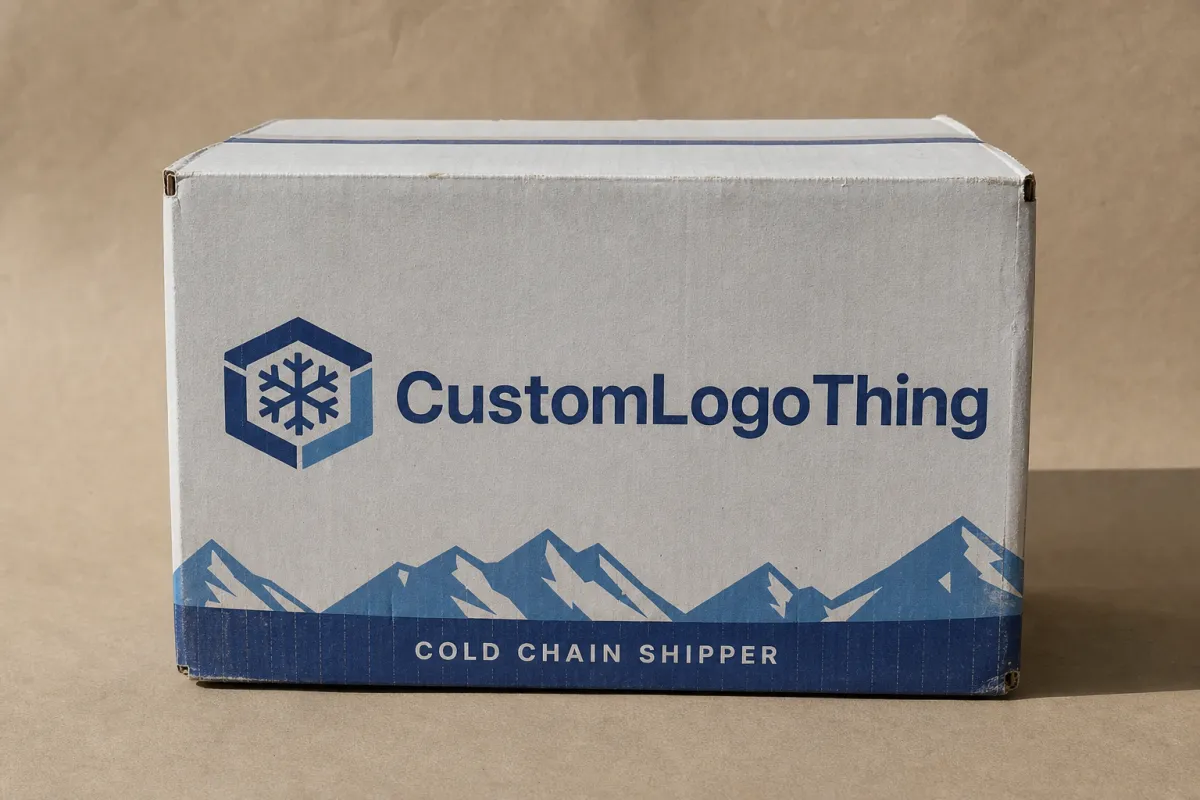
The most common mistake in temperature-sensitive shipping is treating the outer carton as an afterthought. The product gets the attention, the insulation gets specified, and the box is whichever standard size happens to be close. Then the shipment sits on a dock, moisture softens the board, a corner crushes under stack pressure, and the interior packout starts shifting. The coolant may still be present, but the system has already lost efficiency.
From a packaging buyer's point of view, custom shipping cartons for cold chain solve a narrow but costly problem: they keep the primary packout intact until delivery. That means holding insulated liners, trays, divider sets, or gel packs in position so the product does not migrate, tip, leak, or puncture the internal structure. It also means the carton resists the handling abuse that is routine in order fulfillment and ecommerce shipping, even for premium food and life science shipments.
The product categories that depend on this are easy to recognize. Seafood needs leak control and structural strength. Vaccines and biologics need stable thermal performance and disciplined packout geometry. Nutraceuticals, dairy, meal kits, prepared meals, and specialty beverages all have different thermal tolerances, yet they share one thing: a small failure in the outer shipper can create a much larger loss downstream. A carton collapse can turn a usable shipment into a write-off fast.
There is also a useful distinction between a standard corrugated box and a purpose-built cold chain carton. One is designed mainly for containment and transport. The other is designed around a thermal system: insulation, coolant, fit, closures, and environmental exposure. That sounds subtle, but it changes how the carton is engineered, tested, and priced. It also changes how buyers should evaluate Custom Printed Boxes for cold-sensitive goods.
For branded packaging, there is a second benefit. The outer shipper can carry package branding without compromising function, as long as the board grade, print coverage, and coating choices match the performance brief. A well-designed shipper can feel like part of the brand experience instead of a generic corrugated cube. That matters for product packaging in subscription food, DTC wellness, and premium retail packaging programs, where the first touch often shapes the customer's view of the product before the lid is even opened.
If the carton cannot survive the dock, the coolant is doing the wrong job.
If you are building a broader packaging program, it helps to look at the outer shipper alongside related formats. Our Custom Packaging Products page is a useful starting point for branded programs, while Custom Shipping Boxes fits the structural side of the decision. For lighter secondary packaging inside a larger fulfillment flow, Custom Poly Mailers can support accessory or sample shipments that move alongside the main cold chain order.
How custom shipping cartons for cold chain work in transit
A cold chain carton does not create temperature control on its own. It supports the components that do the real work. Think of it as the shell around the system. The carton absorbs handling stress, keeps the insulated components snug, and limits the air gaps that let warm air move in or cold air escape. If the fit is sloppy, the box becomes part of the problem.
The physics are straightforward, even if the execution is not. Heat moves by conduction, convection, and radiation. Corrugated board slows some of that transfer, but only when it is paired with the right liner, the right closure, and the right packout geometry. A box with too much dead space allows internal air to circulate. A box with too little clearance can crush gel packs, deform trays, or force the closure to fail. The best design keeps the system balanced.
Fit and fill deserve more attention than they usually get. Oversized cartons create dead air pockets and movement. Undersized cartons can compress the coolant and the product until the load becomes unstable. That matters especially for glass jars, liquid-heavy goods, clamshell trays, and mixed-SKU shipments. The right inner fit can make a standard design behave like a much more expensive system.
In transit, the carton faces several pressure points that are easy to underestimate. Cross-docking introduces temperature swings. Parcel sortation can add drop events and conveyor vibration. Freight lanes may include long dwell times on hot trailers or cold docks. Final-mile delivery adds the last variable: someone at the destination may not be ready to receive the shipment immediately. A carton that looks adequate in a climate-controlled test room can behave differently once those variables stack up.
Many teams treat the carton, the liner, and the coolant as one unit for a reason. Change one component and the result can change with it. A different board caliper, a new adhesive, or even a revised closure pattern can alter thermal performance by changing air exchange and compression resistance. For that reason, the outer shipper should be tested with the exact inserts and coolants that will be used in production, not a substitute.
There is also a practical lane question. Parcel shipments often need a tighter box with stronger corner integrity because they experience more transfers. Palletized freight can tolerate different dimensions, but the carton still has to survive compression under stacked load. In both cases, the outer box is not merely moving the product; it is preserving the cold chain components around it long enough for the shipment to stay usable.
- Insulation reduces thermal gain, but only if the carton keeps it compressed correctly.
- Corrugated structure resists handling stress and stack pressure.
- Closures prevent leaks and reduce air exchange.
- Inserts keep product, gel packs, or trays from shifting.
- Fit controls dead air and protects temperature stability.
For packaging teams used to retail packaging, the shift can be surprising. A cold chain shipper has to perform like a shipping container and a protection system at the same time. That is a different brief from a shelf-facing carton, even if the graphics look equally polished. The most attractive box in the room is not very useful if the corners cave in under load.
Key factors that shape performance and shelf life
Product sensitivity comes first. Frozen items, chilled items, and ambient-controlled items each have different allowable temperature drift. A frozen seafood lane tolerates a different excursion profile than a chilled dairy lane, and both differ from a nutraceutical shipment that only needs to avoid heat spikes. The carton should be specified around the actual product window, not a generic cold-chain label.
Board strength is the next major variable. Compression resistance matters because a carton that holds up in a single-hand parcel test may still fail under pallet stacking or warehouse dwell. ECT and BCT values give useful direction, but only in context. A 32 ECT board may be enough for a lightweight chilled parcel with a rigid liner. A heavier or more moisture-exposed load may need 44 ECT, double-wall construction, or a reinforced structure. The point is not to pick the thickest board automatically. The point is to match the board to the lane.
Moisture resistance is easy to miss because it often develops after the box looks fine. Condensation, chilled surfaces, and humid dock conditions can weaken fiberboard, soften adhesives, and reduce box integrity before the product reaches the customer. That is why wet-strength adhesives, coatings, and careful print coverage matter. A carton can fail mechanically even while the coolant is still doing its job. That is a frustrating and expensive kind of failure.
Ship duration changes the spec as much as product type does. Overnight parcel, regional freight, and multi-day distribution networks each expose the package to different risks. A shipment that travels two hours by local delivery van is one thing. A shipment that passes through multiple handoffs and a weekend delay is another. Designing around the shortest route is usually a mistake. Designing around the worst credible lane gives the carton a much better chance of surviving reality.
Load geometry matters more than many teams expect. Long narrow items, glass bottles, pouches, tubs, and multi-pack kits each create different pressure points. A box that fits square product beautifully can be wrong for odd shapes. That is where custom printed boxes become more than a branding exercise; they are a structural tool that can reduce movement, simplify loading, and protect fragile contents. The same logic applies to product packaging in general: geometry drives risk.
For teams thinking about sustainability, it helps to separate the outer shipper from the whole system. Corrugated made with responsibly sourced fiber can be specified with FSC certification, and that can be a practical procurement criterion if your brand wants a cleaner chain of custody. The FSC standard is worth reviewing directly at fsc.org if fiber sourcing matters to your buyers or retail accounts.
Testing standards also deserve a mention. Many packaging teams borrow from ISTA methods to qualify shipping performance, because temperature-sensitive goods do not get extra credit for good intentions. A carton should be tested in a way that reflects its real handling risks, and the ISTA framework is a sensible reference point for transit simulation, drop testing, and packaging qualification thinking.
| Option | Typical Outer Carton Cost at 5,000 Units | Best Fit | Tradeoff |
|---|---|---|---|
| Standard corrugated RSC | $0.55-$1.10 per unit | Short lanes, lighter chilled goods, simple packouts | Lower protection against moisture and compression |
| Custom cold chain carton with print and moisture-resistant finish | $1.10-$2.40 per unit | Mixed lanes, branded packaging, better fit control | Higher setup and material cost |
| Engineered shipper with die-cut features and custom inserts | $2.25-$4.80 per unit | Higher-value product packaging, fragile contents, tighter thermal goals | More sampling, more production steps, more design discipline required |
Those figures cover the outer carton only. They do not include coolant, insulation, labels, warehouse labor, or freight. In many cold chain programs, that is exactly where the real spend sits. A buyer who only compares box price is missing the biggest part of the total landed packaging picture. The carton can be the smallest line item and still have the largest effect on the outcome.
There is another layer here that is often overlooked: shelf life is not only a product chemistry question. It is also a logistics question. A carton that buys six more hours of temperature stability may be the difference between a usable delivery and a spoiled one, especially in lanes with weekend holds or unpredictable last-mile delays. That is why the outer shipper should be treated as part of the preservation strategy, not just the shipping method.
Step-by-step process, timeline, and production steps
The cleanest way to develop custom shipping cartons for cold chain is to start with the product and the route, not the artwork. Begin by defining the product dimensions, weight, target temperature range, shipping method, and failure risk. A frozen meal kit moving through parcel channels has a different brief from a chilled medical product moving through regional freight. The carton spec should reflect that difference from the start.
After that, the structure comes into focus. A packaging engineer or carton supplier will usually translate the requirements into a dieline, board choice, closure style, and any required features such as hand holes, vents, vent closures, or die-cut inserts. This is also the point where print design should be considered, because branding can affect coating, ink coverage, and even how the board behaves under moisture exposure.
A practical development sequence usually looks like this:
- Define the product, temperature target, lane, and handling risks.
- Build the structural spec and dieline.
- Select board grade, coatings, and print method.
- Produce prototypes or samples.
- Test the carton with the actual packout, coolant, and closure method.
- Revise the design if the data shows weak points.
- Approve production and lock the packing instructions.
That sequence matters because the carton should be tested in context, not in isolation. A beautiful box that works empty may fail once the insulation kit, gel packs, and product are installed. The same is true in reverse. A good packout can be undermined by a box that is too loose, too weak, or too vulnerable to moisture. Real validation means testing the complete system.
Timelines vary, but the usual bottlenecks are predictable. Structural design can move quickly if the product dimensions are clear. Sampling often takes longer because the first version rarely survives contact with reality. Artwork approval can also slow the project if the brand team wants a polished package branding story while the operations team is focused on box strength. Material sourcing becomes a factor when special coatings, custom inserts, or higher-grade board are required.
For a straightforward program, it is reasonable to think in terms of roughly 10-15 business days from approved structure to sample, then another 1-2 weeks for testing and revisions. Production can follow in about 12-20 business days after final approval, depending on volume, print complexity, and plant capacity. If a project requires new tooling, custom inserts, or multi-stage qualification, the timeline expands. That is normal, not a sign of failure.
The fastest projects are the ones with the slowest front end.
If you need to keep the process moving, a clear spec sheet helps more than almost anything else. Include product dimensions, weight, temperature target, order volume, branding requirements, and whether the carton must work with existing order fulfillment equipment. The better the input, the fewer revision loops you usually need. In packaging design, vague requirements create expensive surprises later.
For buyers managing several SKUs, standardizing packout steps can be just as valuable as changing the carton itself. A written checklist for coolant placement, closure sequence, label position, and pallet configuration reduces variation between shifts and facilities. That is especially useful in ecommerce shipping, where line speed and staffing changes can quietly alter performance.
A final note on validation: if your product is regulated, the qualification bar may be higher than a simple ship test. Life science, diagnostic, and certain food applications may require documented performance under defined conditions, not just a passing trial run. That is not a reason to avoid custom shipping cartons for cold chain. It is a reminder to build the project around the actual compliance environment, not a generic packaging assumption.
Cost, pricing, MOQ, and quote drivers
The largest cost drivers are usually board grade, carton dimensions, print complexity, and any special features such as moisture resistance or die-cut inserts. A larger box consumes more material. A custom structure adds design and setup time. Full coverage print raises ink and finishing costs. Add a specialty coating or laminated surface, and the quote moves again. None of that is mysterious, but it does mean the cheapest-looking option on paper is rarely the cheapest option in use.
MOQ changes the price equation in a very direct way. Smaller quantities spread setup costs across fewer units, which pushes unit price higher. Larger runs reduce that pressure. That is why buyers sometimes see a dramatic price difference between 1,000 units and 10,000 units for the same carton. The tooling is similar; the economics are not. If your volume is still uncertain, it may make sense to sample at a moderate quantity and reserve the final pricing conversation until the design is proven.
Here is the part many teams miss: the hidden cost of a weak carton can dwarf the price difference between two box specs. One failed shipment can wipe out the savings from thousands of cartons. Product spoilage, customer refunds, replacement freight, and brand damage all add up. A carton that costs 40 cents more but prevents even a small percentage of losses can be the better financial decision.
Freight, warehousing, and packout labor should also be part of the decision. If a cheaper box adds two minutes to pack time, or causes more damage during stacking, that labor cost belongs in the equation. If the carton is awkward to build or requires extra tape, the real packaging cost climbs. A procurement team that only compares carton price is not seeing total landed packaging cost.
To get an accurate quote quickly, suppliers usually need a very specific input set:
- Product dimensions and weight
- Target temperature range
- Shipping lane and transit time
- Parcel, freight, or palletized handling
- Order volume and forecast
- Branding or print requirements
- Need for testing, samples, or custom inserts
If your cold chain carton is part of a broader branded packaging program, it helps to align the shipper with the rest of the product line. The same visual system that supports retail packaging can carry through to outer shippers, inserts, and secondary cartons. That does not mean every surface needs decoration. It means the packaging design should feel deliberate rather than patched together.
Buyers sometimes ask whether a more complex carton is always the better option. It is not. Simpler structures often outperform ornate ones if the lane is short, the product is forgiving, and the packout is disciplined. The right spec is the one that protects the product with the least unnecessary complexity. In cold chain, extra features only matter if they solve a real transport problem.
Common mistakes that break temperature control
Oversized cartons are one of the fastest ways to weaken a cold chain packout. Extra void space creates movement, and movement leads to crushed corners, shifted coolant, and better heat transfer. It also increases the chance that the insulation will not sit where it should. In some cases, the oversized carton becomes a thermal liability because it holds too much dead air and too little structure.
Price-only buying is another common problem. A weak board can look economical until it lands under stack pressure or absorbs moisture on a humid dock. Then the carton bows, the seams fail, or the corners collapse. Once that happens, temperature control and physical protection are both compromised. A box that is cheap in procurement and expensive in operations is not a bargain.
Untested packouts cause avoidable failures. Teams sometimes assume a carton will perform the same way with a slightly different product, a warmer season, or a new carrier network. It usually does not. Even small changes in fill weight, coolant mass, or closure pattern can shift performance enough to matter. The safe habit is to test every meaningful change instead of trusting a previous result by default.
Condensation and dwell time also get ignored more often than they should. A carton that handles a short direct route may struggle if it sits on a trailer, in a warehouse, or on a sortation belt for longer than planned. Moisture can soften fiberboard, and dwell time can expose the shipment to higher ambient temperatures. Designing only for the ideal route is risky.
Branding can also distract from function. A visually polished carton is not automatically a good cold chain carton. Graphics, coatings, and custom printed boxes have to support the structural brief, not replace it. If the box needs reinforcement, or if the closure method needs to change, the packaging team should make that call even if it means adjusting the look. Function comes first.
One more issue deserves mention: inconsistent packing discipline. Even a well-designed carton can underperform if different shifts pack it differently. That is why standard operating procedures matter. The box, the coolant, the labels, and the seal method should all be consistent enough that the test result actually reflects production reality.
There is also a documentation mistake that can create trouble later. Teams sometimes validate one configuration and then let production drift without updating the record. A revised insert, a substitute adhesive, or a new supplier can quietly alter performance. If the carton matters to shelf life or product safety, change control matters too. Packaging failures are often process failures wearing a corrugated mask.
Expert tips and next steps for a better cold chain carton
Design for the worst credible lane, not the average one. Summer delays, weekend holds, multi-stop routes, and dock congestion expose weaknesses quickly. If a carton survives the harsh lane, it is much more likely to survive the good one. That is one of the simplest and most useful mental shifts in cold chain packaging.
Build in a safety margin on both strength and thermal performance. Cold chain packaging rarely fails in a neat, linear way. A shipment can look fine for most of its trip and then lose control at the end because of one long dwell or one missed handoff. A little extra strength or thermal capacity often buys more reliability than buyers expect.
Standardize the packout with a written checklist. Specify the carton, liner, coolant mass, seal method, and label placement. If the process depends on memory, performance will vary. If it depends on a checklist, variation drops. That matters in order fulfillment, where the same SKU may be packed by multiple people across multiple shifts.
Pilot runs are worth the time, especially when a product line, carrier, or season changes. A carton that worked in one context may need adjustment in another. A pilot gives you a chance to see how the system behaves before you commit to volume. That is a small investment compared with a large spoilage event.
If you are ready to move, the practical path is simple: collect the product specs, map the shipping lane, request samples, test the packout, and only then place the production order. That sequence protects budget and brand at the same time. It also gives your supplier enough information to quote accurately and recommend the right structural options, whether that ends up being a custom cold chain carton, a broader box program, or a mix of custom shipping cartons for cold chain and related custom packaging products.
For teams building a recognizable brand presence, the outer shipper can carry more than logistics. It can support package branding, reinforce product packaging standards, and even improve the customer's first physical impression. The carton still has to do the hard work first. But once that is handled, the design can do more than survive the trip. It can help the brand feel organized, dependable, and ready for scale.
Ultimately, the strongest programs treat custom shipping cartons for cold chain as part of a system, not a standalone SKU. That mindset leads to better specs, fewer surprises, and cleaner total cost decisions. It also makes it easier to balance protection, presentation, and throughput without pretending those goals are identical. If you need a starting point, begin with the lane, the packout, and the failure mode you can least afford; the carton spec should be built around that risk first.
What makes custom shipping cartons for cold chain different from standard corrugated boxes?
They are designed around temperature control, moisture exposure, compression strength, and the packout system, not just product containment. A standard box may move a product safely, but it usually is not engineered to protect a cold-sensitive shipment through the full route.
How do I choose the right board strength for custom shipping cartons for cold chain?
Start with product weight, stack height, and whether the shipment will be palletized or handled as parcel freight. Then factor in moisture exposure, since a carton that looks strong in dry conditions can lose performance when condensation builds up. Ask for strength specs that match your lane and packout rather than picking the thickest board automatically.
How long does the custom shipping cartons for cold chain process usually take?
Timelines vary based on whether you need a new structure, custom print, inserts, or testing before approval. Sampling and revisions often take the longest because the carton has to work with the actual product and coolant configuration. A clear spec sheet and fast feedback can shorten the timeline significantly.
What affects the cost of custom shipping cartons for cold chain the most?
Material choice, carton size, print coverage, and any special features such as moisture resistance or die-cut inserts are usually the biggest drivers. MOQ matters because setup costs are spread across fewer units when the order is small. Shipping, warehousing, and packout labor can matter as much as the carton price itself.
Can custom shipping cartons for cold chain be reused or recycled?
Some can be reused if they stay dry, intact, and free of product contamination, but cold chain performance usually drops after wear and moisture exposure. Recyclability depends on coatings, liners, inks, and any bonded components, so material choices should be made early. If reuse is part of the plan, the carton design should be specified for that workflow from the start, especially for custom shipping cartons for cold chain that need predictable performance across repeated handling.

