Buyer Fit Snapshot
| Best fit | custom shoe boxes with logo packaging more for packaging buyers comparing material specs, print proof, MOQ, unit cost, freight, and repeat-order risk where brand print, material, artwork control, and repeat-order consistency matter. |
|---|---|
| Quote inputs | Share finished size, material target, print colors, finish, packing count, annual reorder estimate, and delivery region. |
| Proofing check | Approve dieline scale, logo placement, barcode or warning zones, color tolerance, and any recyclable or compostable wording before bulk production. |
| Main risk | Vague material claims, crowded artwork, or missing packing details can create delays even when the unit price looks attractive. |
Fast answer: Custom Shoe Boxes with Logo Packaging More: Dieline, Finish, Proof, and Buyer Review should be specified like a repeatable production item. The safest quote includes material, print method, finish, artwork proof, carton packing, and reorder notes in one written spec.
What to confirm before approving the packaging proof
Check the product dimensions against the actual filled item, not only the sales mockup. Ask for tolerance on folds, seals, hang holes, label areas, and retail display edges. If the package carries a logo, QR code, warning copy, or legal claim, reserve that space before decorative graphics fill the panel.
How to compare quotes without losing quality
Compare board or film grade, print process, finish, sampling route, tooling charges, carton quantity, and freight assumptions side by side. A lower quote is only useful if the supplier can repeat the same color, closure quality, and packing count on the next order.
Custom shoe Boxes With Logo do a lot more than move footwear from one place to another. They set the tone before the shoe is even lifted out of the carton, and they often stay in use long after the first unboxing. That matters in retail, in ecommerce, and in private-label programs where the package has to work as hard as the product itself. A well-made box can improve brand perception, protect shoes during shipping, and keep the packing table moving without a bunch of little surprises. The practical side matters too: the right box fits, stacks, prints cleanly, and holds up through storage, transit, and returns.
Shoe packaging is a useful stress test because the product range is so uneven. Sizes change, shapes change, weight changes, and the same line can include a flat, a runner, and a boot that all need different clearance. A box that looks fine in a mockup can still fail once the shoe is actually inside it. That is why custom shoe Boxes with Logo should be planned around the real footwear, the shipping method, and the shelf or storage space they need to live in. A package that only looks good on screen is kind of missing the point.
The decision is rarely just about artwork. Board grade, structure, finish, quantity, and delivery timing all shape the final result. Get those pieces right and custom shoe boxes with logo can support presentation, reduce damage, and protect margin. Get them wrong and the costs show up in reprints, freight, wasted space, or product damage that could have been avoided. If you want to compare box styles and print approaches, browse Custom Packaging Products for related formats and finishes.
What Are Custom Shoe Boxes with Logo?
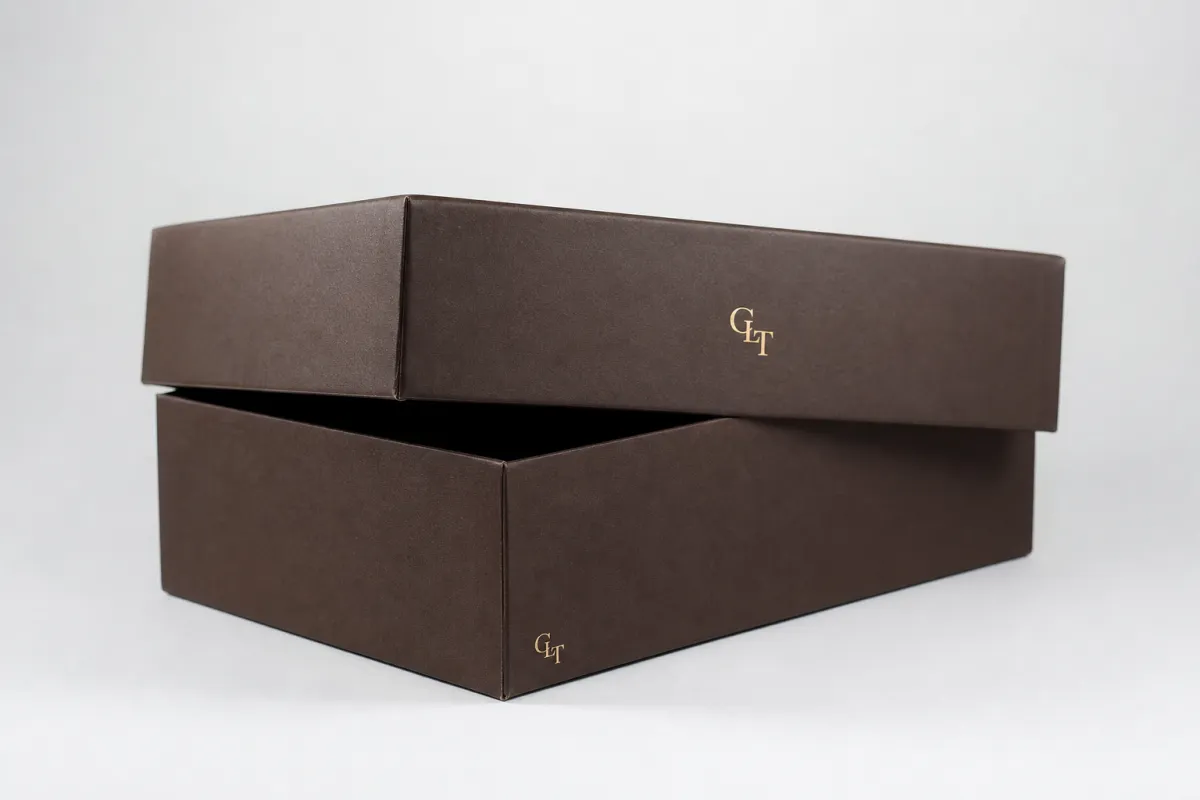
At the simplest level, custom shoe boxes with logo are branded containers sized for footwear and printed with a company mark, color system, or product message. In practice, the phrase covers several box styles. Folding cartons are common for lighter retail shoes and for programs where storage space matters. Corrugated boxes suit ecommerce and parcel shipping because they handle rougher transit better. Rigid boxes sit at the premium end of the range and are often chosen when presentation is part of the selling strategy. Inserts can be added to keep the shoes still, separate accessories, or prevent tissue from shifting inside the box.
Footwear creates packaging problems that are easy to underestimate. Shoes are dense for their size, they are rarely symmetrical, and they vary more from style to style than many product categories. A women's flat, a men's sneaker, and a tall boot may all need a different internal footprint. That is why custom shoe boxes with logo are usually designed from the inside out. Internal dimensions tell the real story. The outer panel size only matters after the fit has been solved.
For brands, the box is part of the first physical impression. A clean logo on a well-proportioned carton can make a modest shoe look more refined, while a crowded layout can make an expensive shoe feel ordinary. Private-label launches, boutique sneaker releases, and direct-to-consumer programs rely on that moment more than most teams admit. custom shoe boxes with logo serve as branded packaging, but they also act as product packaging, which means they carry both marketing and operational weight.
There is also a straightforward business reason to pay attention. A stronger box can reduce corner crush, limit scuffing, and protect returns that need to go back into stock. Clean stacking matters in retail packaging too, where a box that stays square and faces the right direction can hold the shelf better than a prettier one that warps under load. custom shoe boxes with logo are not decoration. They are part of how the product reaches the customer in sellable condition.
Material, structure, logo placement, and finish all affect how the box performs. A single-color matte carton can feel premium when the proportions are right. A box with too much copy or too many effects can look cheaper than a simpler design if the artwork has no discipline. Good custom shoe boxes with logo are quiet and practical. They support the shoe instead of competing with it.
How Custom Shoe Boxes with Logo Move Through Process and Timeline
The production path for custom shoe boxes with logo usually follows a clear sequence, even when the details change by supplier. It begins with a brief: box style, dimensions, print coverage, finish, quantity, and delivery target. The next step is the dieline, which is the flat template showing folds, glue zones, bleed, and safe areas. Once the dieline is approved, artwork is placed onto it and a digital proof is prepared. If the box is structurally complex or the colors are sensitive, a sample or prototype may follow before the full order is released.
Approval time tends to shape the schedule more than print time does. Artwork edits can add days, and structural changes can add more. If a team is still adjusting logo placement, size numbering, or finish choice, custom shoe boxes with logo can sit idle while the launch plan keeps moving. A clean approval chain helps more than people expect. Dimension checks, color targets, barcode placement, and pre-production sign-off should all happen before the order is released to production.
The timeline also shifts with box type. A simple printed folding carton is usually faster than a rigid presentation box with foil stamping, embossing, soft-touch lamination, and a custom insert. Each finishing step adds handling, queue time, and room for rework. A basic run of custom shoe boxes with logo may move through production in a shorter window, while a premium build needs more time for assembly and curing. That is normal, not a warning sign.
For launch planning, the better question is not how long printing takes. The better question is how much calendar time is needed from brief to receiving. A realistic planning window includes sample review, proof approval, production, freight, and warehouse intake. If the boxes support a seasonal drop or a retail reset, buffer time should be built in from the start. Shoes do not wait for packaging. custom shoe boxes with logo should arrive early enough to be counted, staged, and labeled before the first units ship.
Testing standards matter here too. If the boxes will move through parcel networks, ask about compression and drop testing aligned with common ISTA methods. The International Safe Transit Association is a useful reference point for transit testing when shipping matters as much as presentation. For brands that want a documented paper origin, FSC chain-of-custody certification can be relevant, and the framework is available at fsc.org. Those details are part of the real decision-making around custom shoe boxes with logo.
One practical habit keeps the schedule from slipping. Treat packaging as its own workstream instead of a side task. Assign one approver, set a lock date for artwork, and use a short checklist before release. That kind of discipline can save days and prevent the familiar situation where the shoes are ready, but custom shoe boxes with logo are still waiting on a barcode revision or a late logo color change.
Custom Shoe Boxes with Logo Cost, Pricing, and MOQ Factors
Pricing for custom shoe boxes with logo turns on a small set of variables that matter more than the quote sheet may suggest. Board grade is one. Box style is another. Print coverage, finish choice, insert design, and the number of decorated panels all move the unit cost. A one-color folding carton on standard paperboard will usually cost far less than a rigid box with foil, embossing, and a molded insert. That gap can be big enough to affect the margin on the shoe itself.
MOQ works the same way. Setup costs do not vanish just because the order is small, so the per-unit price usually drops in visible steps as quantity rises. A buyer may see a high number at 500 units, a better one at 2,500, and a tighter number again at 5,000 or 10,000. The supplier is not always changing the material. The fixed costs are being spread across a larger run. With custom shoe boxes with logo, scale tends to reward brands that can forecast demand with some confidence.
Hidden costs can catch first-time buyers off guard. Freight can be a real line item, especially for large carton counts. Samples cost money, though not much compared with a bad production run. Rush fees appear when a launch gets compressed. Reprints happen when artwork changes late or size labels are wrong. Warehousing can become part of landed cost if the order sits for a while. When buyers compare custom shoe boxes with logo options, full landed cost gives a truer picture than the print price alone.
| Box Option | Typical Unit Cost Range | Best Use Case | Notes |
|---|---|---|---|
| Basic folding carton | $0.18-$0.35 | Entry-level retail and lighter footwear | Fast to store, efficient to print, good for simple custom shoe boxes with logo |
| Printed corrugated box | $0.42-$0.85 | Ecommerce and parcel shipping | Better compression resistance and transit protection |
| Rigid presentation box | $1.20-$3.50+ | Premium launches and gift-style packaging | Higher material and assembly cost, stronger brand feel |
| Folding carton with insert | $0.28-$0.60 | Pairs that need alignment or accessory support | Useful for keeping product steady inside custom shoe boxes with logo |
Those ranges are directional rather than universal. A small order with heavy coverage and specialty finish can land well above the low end. A larger run with standard board and simple print can come in much lower. That is why quotation requests should be specific. Exact dimensions, quantity tiers, finish level, delivery ZIP, and channel use all matter. If the boxes are for shelf display, the supplier may recommend different board and coating than if the boxes are for shipping. custom shoe boxes with logo need that context to be priced honestly.
Tiered pricing is worth asking for because it shows where the real break points sit. It also helps with reorder planning. A brand that knows the difference between 2,500 and 5,000 units can decide whether to test a colorway or commit harder to it. That sort of visibility is part of what makes custom shoe boxes with logo useful as a planning tool rather than just another packaging line item.
If you want a closer look at product tiers and print options, review Custom Packaging Products for formats that can support different budget and performance goals.
Key Factors That Make Custom Shoe Boxes with Logo Work
Fit comes first. The box should protect the shoe without crushing it, and it should not leave so much empty space that the pair slides around inside. Even a few millimeters can matter, especially with higher-end footwear where scuffing shows quickly. Inserts can help, but they need to be designed around the shoe rather than added as an afterthought. In well-planned custom shoe boxes with logo, the internal structure keeps the pair aligned, supports the upper, and limits movement in transit.
Material choice changes both the feel and the economics. Recycled paperboard is often a practical choice for retail packaging because it balances print quality, cost, and sustainability claims. Corrugated board is stronger and better for shipping. Rigid board signals a higher value level and gives the unboxing moment more weight. Each choice changes the story the package tells. A premium sneaker line in thin board may feel underbuilt. A school shoe in a heavy rigid box may feel overstated. The point is not to spend the most. The point is to match the box to the product and the channel.
Design discipline matters too. The strongest package branding usually looks simpler than buyers expect. The logo should be readable at arm's length. Typography should not fight the product name. Color contrast should hold up under store lighting, not just on a screen. Finishes should support the message rather than crowd it. A soft-touch coating can make custom shoe boxes with logo feel refined, but only if the artwork is already clear. Too many inks, too many effects, and too much type tend to weaken the result.
A useful rule of thumb: if the logo, size, and product line cannot be understood in three seconds, the box is doing too much.
Channel strategy matters as well. Retail packaging needs shelf impact, neat stacking, and easy opening for staff. Ecommerce packaging needs compression resistance, edge protection, and a structure that survives parcel handling. Some brands try to force one structure to do both jobs. That can work only if the box is designed for the harsher environment, not the easier one. custom shoe boxes with logo should be specified around reality instead of around an idealized warehouse photo.
Sustainability can add value when it is handled plainly. FSC-certified board, lighter-weight structures, and smarter sizing can reduce waste and shipping volume. Oversized packaging uses more material and raises transport cost at the same time. The EPA has long pointed out that source reduction and better packaging design are practical ways to cut waste. For shoe brands, that often means custom shoe boxes with logo that are smaller, lighter, and easier to recycle without giving up protection.
There is also a brand return that buyers sometimes miss. A neat, consistent box can improve the perceived value of a private-label line and make product photography easier. Better photos, better shelf presence, fewer transit issues, and a cleaner customer experience can all trace back to the same choice: selecting the right custom shoe boxes with logo.
Step-by-Step Guide to Ordering Custom Shoe Boxes with Logo
Start with the shoe line itself. Sneakers, dress shoes, boots, sandals, and kids' sizes often need different structures or at least different internal clearance. If the line is broad, do not assume one carton will cover everything. Build a simple spec sheet first. It should include inside dimensions, outside target size if needed, artwork files, quantity, preferred finish, budget range, and required delivery date. custom shoe boxes with logo become much easier to quote once the supplier can see the full picture.
Next, compare structural options. A folding carton is usually appropriate for lighter retail use. Corrugated may fit ecommerce or heavier shoes better. Rigid boxes make sense only if the brand can justify the added cost through positioning, gifting value, or margin. At this stage, it helps to think through the customer journey. The box should look right on the shelf, open cleanly in the warehouse, travel safely in transit, and store well if it needs to be reused. That is a lot to ask, but custom shoe boxes with logo can handle it when the structure is chosen with care.
Then request samples before committing to the full run. Check fit, opening feel, print sharpness, and assembly time. A box that looks fine in a render may be awkward in hand. A box that prints beautifully may be annoying to fold, glue, or pack. If a warehouse team will assemble it, ask them to test one or two samples and time the process. That feedback is usually more useful than a purely visual review. With custom shoe boxes with logo, handling matters as much as appearance.
After that, review the proof with a careful eye. Check Pantone targets if color matters. Check logo placement against the dieline. Check legal copy, country-of-origin text, size labels, and barcode readability. If the product is sold through retail partners, make sure their label rules are satisfied before sign-off. That one step can prevent an expensive reprint. It is also the point where many teams discover that the box they liked on screen is not the box they actually need. Good custom shoe boxes with logo survive that review.
For a broader set of product options, you can also explore Custom Packaging Products before finalizing board, finish, or assembly style. That helps teams compare alternatives instead of locking into one format too early.
Finally, create a reorder plan. Packaging inventory can look abundant until it suddenly is not. Use a calendar that tracks sell-through, seasonal colorways, and replacement stock. Keep a note of which size or version corresponds to each style code. If the line scales, it is much easier to reorder custom shoe boxes with logo when the spec sheet is already clean than to start from scratch under pressure. That small bit of structure saves time later.
Common Mistakes That Hurt Custom Shoe Boxes with Logo
The first mistake is sizing from the outside in. Buyers sometimes approve a box because the exterior dimensions look neat, only to find the internal clearance is too tight. That leads to crushed toes, bent heels, or boxes that close poorly once the shoe and tissue are inserted. A few millimeters of mismatch can also create friction during assembly. With custom shoe boxes with logo, internal fit should drive the spec, not the other way around.
The second mistake is overdesigning. It is easy to add more color, more effects, more gloss, and more typography. It is much harder to improve the customer's impression enough to justify those costs. Extra inks and specialty finishes raise production time and price, and they often do little for sell-through. Strong packaging design is usually disciplined. It picks one or two features and executes them cleanly. Many of the best custom shoe boxes with logo use fewer elements than the buyer expected.
The third mistake is skipping insert planning. If the shoe shifts during transit, the finish scuffs. If the tissue tears or the lid flexes, the presentation looks tired by the time it reaches the customer. Inserts also help with accessories, which matters for products that include extra laces, warranty cards, or care materials. In ecommerce especially, the right insert can make the difference between a tidy unboxing and a box that arrives looking used. That is why custom shoe boxes with logo should be tested in motion, not only on a table.
The fourth mistake is ignoring storage math. Packaging takes space, and space costs money. A brand that orders too large a run too early can end up with cash tied up in cartons sitting in a corner. A brand that orders too little can run out in the middle of a strong season. Both problems can be avoided if the MOQ is sized against real turnover. Effective custom shoe boxes with logo programs are built around inventory discipline rather than hope.
The fifth mistake is proof fatigue. Teams get used to looking at artwork and stop checking details such as barcodes, size callouts, or regulatory text. That is how rework starts. It is also how a polished package turns into an expensive delay. A solid final proof review should include one person who thinks like a retailer, one who thinks like a warehouse operator, and one who thinks like a buyer. That combination catches more errors than a single approval. custom shoe boxes with logo deserve that level of review because the cost of a miss is usually higher than the cost of a careful check.
If you want one external benchmark for transit resilience, look at the testing logic used by ISTA instead of relying only on visual approval. It is a better lens for how custom shoe boxes with logo behave once they start moving through carts, conveyors, and parcel networks.
Expert Tips and Next Steps for Custom Shoe Boxes with Logo
Ask for tiered quotes at three quantities. That one step often reveals where the real break points are and whether it is worth moving up to a larger run. If the difference between two quantities is small, it may make sense to buy more and reduce the risk of a mid-season reorder. If the gap is wide, a smaller pilot may be the smarter test. Either way, custom shoe boxes with logo should be priced as a system, not as a single number.
If possible, compare two physical samples. One can be optimized for structure. The other can be optimized for finish. The first tells you how the shoe fits, how the lid closes, and how the box stacks. The second tells you how the logo reads, how the coating feels, and whether the color story supports the brand. A lot becomes clear once those samples sit beside each other. Often the best final version is not the one that looked best on screen. It is the one that handles the most jobs well. That is the quiet advantage of custom shoe boxes with logo.
Use a launch checklist that covers dieline, artwork approvals, freight dates, receiving instructions, and lead-time buffer. If the boxes are needed for a product drop, the buffer should cover at least one approval cycle plus freight slack. If they are for a seasonal retail reset, add extra time for store or warehouse setup. That may sound cautious, but packaging delays tend to arrive at the least convenient moment. A little calendar discipline keeps custom shoe boxes with logo from becoming the bottleneck in the entire launch.
Test the box against the actual customer journey. Does it display well on a shelf? Does it survive shipping? Does it store neatly? Can the customer reuse it? Does the structure still feel intentional after a return cycle? Those questions separate decent packaging from packaging that earns its keep. Brands that treat custom shoe boxes with logo as part of product strategy rather than just a print order usually end up with better margins and a more coherent line.
For teams that want to move from idea to order, a practical next step is simple: define the shoe mix, choose the channel, set the budget band, and request a spec-led quote. That sequence gives the supplier enough detail to recommend the right structure instead of guessing. It also helps the buyer see tradeoffs clearly. The best custom shoe boxes with logo are specified after the product mix, price target, timeline, and reorder plan are clear. The strongest box is the one that supports both the brand and the margin.
What size custom shoe boxes with logo do I need for sneakers versus dress shoes?
Measure the longest, widest, and tallest shoe in the pair, then add clearance for tissue, inserts, and easy packing. Use separate specs for bulky sneakers, slim dress shoes, and boots instead of forcing one size to do everything. Ask the supplier for an internal dimension recommendation, not just the outside box size, so fit errors do not show up in production.
How long do custom shoe boxes with logo usually take to produce?
Simple printed boxes can move faster than rigid or heavily finished boxes, but the artwork approval stage usually controls the schedule. Sample rounds, color matching, and artwork revisions are the most common reasons the timeline stretches. Build in extra time for freight and receiving so the boxes arrive before the shoes do, not after.
What is a realistic MOQ for custom shoe boxes with logo?
MOQ depends on box style, print method, and finish level, but the smallest order is rarely the cheapest per unit. If you need multiple sizes, ask whether the supplier can combine versions or quote each size separately. Use MOQ to test demand on one style first, then scale into larger runs once the design and sizing are proven.
How much do custom shoe boxes with logo cost per unit?
Unit cost changes with quantity, materials, print coverage, and finishing, so ask for pricing at several volume tiers. A simpler box with minimal print can keep costs controlled, while premium finishes and inserts raise the price quickly. Do not compare quotes by unit price alone; include freight, samples, and any setup fees in the full landed cost.
Can custom shoe boxes with logo be made for e-commerce shipping?
Yes, but the structure should be stronger than a display-only retail box and may need corrugated construction or an outer mailer. Ask for drop-resistance and compression considerations if the box will move through parcel networks. If the box also serves as the shipping carton, make sure the branding still holds up after tape, labels, and transit wear.

