Buyer Fit Snapshot
| Best fit | Custom Shopping Bags Recycled Paper for Brands projects where brand print, material claims, artwork control, MOQ, and repeat-order consistency need to be specified before quoting. |
|---|---|
| Quote inputs | Share finished size, material target, print colors, finish, packing count, annual reorder estimate, ship-to region, and any compliance wording. |
| Proofing check | Approve dieline scale, logo placement, barcode or warning zones, color tolerance, closure strength, and carton packing before bulk production. |
| Main risk | Vague material claims, crowded artwork, missing packing details, or unclear freight terms can make a low unit price expensive after revisions. |
Fast answer: Custom Shopping Bags Recycled Paper for Brands: Film, Print, MOQ, and Carton Packing should be specified like a repeatable production item. The safest quote records material, print method, finish, artwork proof, packing count, and reorder notes in one written spec.
Production checks before approval
Compare the actual filled-product size with the drawing, then confirm tolerance on folds, seals, hang holes, label areas, and retail display edges. Reserve space for logos, QR codes, warning copy, and material claims before decorative graphics fill the panel.
Quote comparison points
Review material grade, print process, finish, sampling route, tooling charges, carton quantity, and freight assumptions side by side. A quote is only useful when the supplier can repeat the same color, closure quality, and packing count on the next order.
Custom Shopping Bags recycled paper can do a lot of quiet work for a brand. They carry the purchase, carry the logo, and keep showing up after the transaction is over. I have seen a simple paper bag get reused for a week because the shopper liked the look and the handle held up. That is the kind of tiny repeat exposure marketers pay for, whether they admit it or not.
The bag is not just a carrier. It is retail packaging, branded packaging, and sometimes the only part of the purchase another person sees in public. That puts custom shopping bags recycled paper in a weird but useful spot where presentation, performance, and sustainability all have to get along. If one of those falls apart, the whole thing feels off.
Buyers usually ask the same blunt question: does recycled paper actually improve the bag, or is it just greener-sounding copy? The honest answer is that it depends on the fiber source, paper weight, structure, print coverage, and finish. Get those right, and custom shopping bags recycled paper can look polished without pretending waste reduction happens by magic.
Custom Shopping Bags Recycled Paper: What They Are
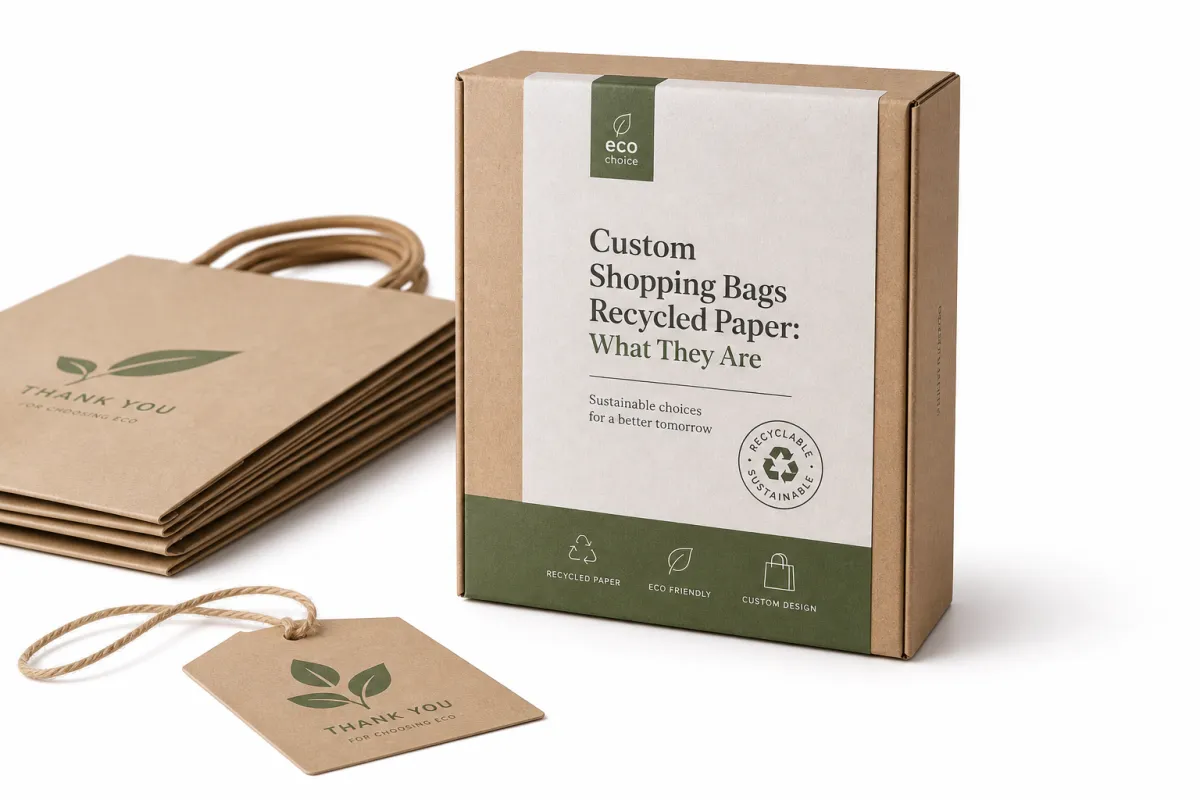
Custom shopping bags recycled paper are Paper Carry Bags made from fiber that has already been used once, or from recovered manufacturing scrap that gets processed again. Recycled content can come from post-consumer fiber, which is paper people used and tossed, or post-industrial fiber, which is scrap pulled back into the system before it ever reached a shopper. That difference matters. Post-consumer content usually carries more weight in sustainability claims, while post-industrial fiber still reduces virgin material use and keeps production waste in play.
From a packaging buyer's point of view, the word "recycled" is not a performance guarantee. Two bags can both qualify as custom shopping bags recycled paper and still feel completely different in hand. One may have a natural tone and a softer surface. Another may be calendered for a smoother finish and cleaner print. Virgin paper usually looks brighter and more uniform. Recycled paper may show small fiber flecks or a less stark white point. That is not a flaw. For plenty of brands, it is exactly the point.
Perception matters too. A lightweight recycled bag can feel restrained and thoughtful. A premium gift-style bag made from recycled stock can feel intentional and expensive. Push the bag too thin, too floppy, or print it badly, and the message falls apart fast. In practice, custom shopping bags recycled paper work best when the format matches the product and the brand promise.
Common formats include:
- Flat tote bags for lightweight giveaways, apparel, or inserts.
- Gusseted boutique bags for retail apparel, cosmetics, and accessories.
- Reinforced handle bags for heavier carryout or higher perceived value.
- Premium gift-style bags with board inserts, rope handles, or heavier stock.
The real question is simple: does custom shopping bags recycled paper improve the customer experience enough to justify the spec, or would a different format do the job better? A lot of teams mess this up. They buy the look first and the load rating second. Smarter move: define the product weight, carry distance, and brand moment first, then choose the bag.
For brands that already treat packaging as part of the product experience, the bag should sit alongside custom printed boxes, tissue, and inserts as one coordinated system. That is how custom shopping bags recycled paper become more than a green claim. They become part of the packaging design.
How Custom Shopping Bags Recycled Paper Are Made
Custom shopping bags recycled paper begin with recovered fiber, which gets cleaned, pulped, and turned back into sheet stock. The fiber is screened to remove staples, tape, and other junk, then washed and refined before it reaches the paper machine. At that stage, the mill decides a lot of the final personality: fiber length, brightness, formation, and how much strength the sheet can hold before it gets too stiff or too fragile.
Strength does not come from one thing alone. It comes from basis weight, caliper, and fiber quality working together. Basis weight, usually shown as gsm, tells you how much paper is in the bag. Caliper tells you how thick the sheet feels. Fiber length affects tear resistance. For custom shopping bags recycled paper, the mouth of the bag and the handle attachment zone take the abuse, so converters often add reinforcement patches, folded tops, or gusset structures there.
After the sheet is formed, it moves to cutting, folding, gluing, and handle attachment. That is the point where the bag stops being a flat printed sheet and starts acting like retail packaging. Handle style matters more than many buyers expect. Twisted paper handles are common because they are economical and recyclable. Flat paper handles feel more understated. Rope handles bring a higher-end look, but they can complicate recycling if the materials are mixed. For custom shopping bags recycled paper, the most durable setup is not always the prettiest one.
Printing usually comes next. Flexographic printing works well for longer runs and simpler artwork. Offset printing fits sharper detail and stronger color control. Digital printing can work for smaller runs or variable artwork. Ink coverage matters because heavy full-bleed artwork can affect recyclability and push cost upward. The EPA explains that coatings and mixed materials can change how paper behaves in recycling streams, so finish choices are not just cosmetic. See the agency's recycling guidance at EPA recycling guidance.
Here is the practical finish tradeoff:
- Uncoated stock is the easiest to recover and usually has the most natural look.
- Aqueous coating can improve rub resistance while staying more recycling-friendly than heavier plastic films.
- Matte lamination adds a premium feel but makes end-of-life recovery more complicated.
- Spot effects like foil or UV should only show up when they support the brand story and the disposal plan still makes sense.
Before a retail run gets the green light, converters usually check seam strength, load capacity, rubbing resistance, and handle pull performance. Some buyers want informal in-house testing. Others want test logic that mirrors ISTA handling expectations for transit abuse. The point stays the same: custom shopping bags recycled paper should survive real use, not just look good in a proof.
What Drives Cost for Custom Shopping Bags Recycled Paper?
Custom shopping bags recycled paper are priced by more than one line item, which is why quotes can be slippery. Paper grade is one lever. Recycled content percentage is another. Size, print coverage, handle type, finish, and shipment packing all matter too. A simple one-color paper bag can be reasonable. A heavy gift bag with a laminated finish, rope handles, and custom inserts lands in a different cost bracket fast.
Small runs cost more per unit because setup gets spread across fewer bags. Larger orders lower the unit price, but they raise cash outlay and storage needs. That tradeoff matters for seasonal retail programs, pop-ups, and limited-edition packaging design. For custom shopping bags recycled paper, the best price is not the lowest unit quote. It is the best total cost for the volume you can actually use.
Recycled and virgin paper are not locked into a fixed price hierarchy. Sometimes recycled fiber costs more because supply, brightness targets, or specialty sheet grades push it up. Other times the gap disappears. For a common retail run, custom shopping bags recycled paper with a one-color print and twisted handles might land around $0.18-$0.28 per unit at 5,000 pieces. A more premium spec can move to $0.34-$0.58 or higher depending on print coverage and finish. That is why the quote should always be read against the spec sheet, not in a vacuum.
| Spec | Typical recycled paper bag | Typical virgin paper bag | What changes the quote |
|---|---|---|---|
| 120 gsm, one-color logo, twisted handle | $0.18-$0.28 at 5,000 units | $0.17-$0.26 at 5,000 units | Paper grade, print coverage, handle attachment |
| 150 gsm, full-coverage print, rope handle | $0.34-$0.58 at 5,000 units | $0.32-$0.54 at 5,000 units | Artwork density, finish, labor, packaging method |
| Premium gift bag, reinforced top, matte coating | $0.55-$0.95 at 5,000 units | $0.50-$0.88 at 5,000 units | Structure, coating, board inserts, freight configuration |
Hidden costs show up fast. Custom tooling, proofing, freight, and pallet configuration can move the landed total more than buyers expect. If the bags ship flat, freight is usually easier to manage. If they are packed in small retail-ready bundles, handling costs rise. That is why experienced teams compare price per bag, price per impression, and total landed cost before they sign off on custom shopping bags recycled paper.
Storage deserves a look too. Ordering 20,000 bags at a lower unit price only helps if you have room and a real forecast. If the bags sit too long, they can collect dust, absorb moisture, or become obsolete after a packaging refresh. For brands that need coordinated product packaging across multiple formats, it can make more sense to align bag volume with rollout timing and with other items in the Custom Packaging Products range.
The best procurement habit is simple: ask for three numbers at once, unit price, print setup cost, and landed freight. Then compare those numbers against sell-through or campaign value. Custom shopping bags recycled paper make financial sense when the bag supports brand retention, protects the product, and avoids waste from over-ordering.
How to Spec Custom Shopping Bags Recycled Paper
Choosing custom shopping bags recycled paper starts with use case, not decoration. What is the heaviest likely purchase? How many items does one shopper usually carry home? Does the bag need to fit a shoe box, a candle set, folded apparel, or a mixed basket of cosmetics and accessories? Those answers drive size, gusset depth, and handle choice better than any generic chart.
Paper stock should be chosen for function. A lighter 120 gsm sheet may be enough for small apparel items, event handouts, or lightweight retail packaging. A 140-160 gsm sheet is often the safer middle ground for boutique use. Heavier stock is worth it if the bag carries glass, books, or dense boxed goods. For custom shopping bags recycled paper, the right stock is the one that survives the heaviest realistic load, not just the average purchase.
Handle style changes comfort and presentation. Twisted paper handles are cost-effective and common. Flat paper handles feel more understated and often show up in minimalist package branding. Rope handles read as premium, especially on gift-style bags, but they raise cost and may affect recovery if the materials are mixed. Die-cut handles work for lightweight applications and create a clean silhouette, but they are not ideal for heavier retail use. The buyer should match the handle to the product, not the mood board.
Color strategy matters too. A one-color logo on natural recycled stock can look sharp and controlled, especially for brands that want an earthy, modern look. Full-coverage graphics can make a strong shelf impression, but they push print cost up and can complicate end-of-life behavior. A brand already using custom printed boxes can often keep consistency by echoing the same ink family, line weight, and logo placement across bags, cartons, and labels. That is how branded packaging starts to feel intentional instead of assembled on the fly.
Finishing should earn its keep. Spot UV, foil, and soft-touch coatings can create a premium tactile effect, but they should not be automatic. If the finish clashes with the recycled content story or creates a mixed-material recovery problem, it can undercut the value of custom shopping bags recycled paper. Aqueous coating or an uncoated surface often gives a better balance for brands that want a cleaner recycling message.
- Best for low-weight retail: lighter stock, twisted handles, minimal ink coverage.
- Best for mid-range boutique use: midweight stock, reinforced mouth, one or two print colors.
- Best for premium gifting: heavier stock, rope handles, restrained finishing, board reinforcement.
If you want the bag to feel premium without drifting into excess, start with the load, then the look, then the finish. That order keeps custom shopping bags recycled paper tied to actual performance instead of visual guesswork.
Step-by-Step Timeline for Ordering Recycled Paper Bags
Custom shopping bags recycled paper usually move through a predictable chain, but the calendar stretches when the brief is vague. Clean projects start with a spec sheet that includes bag size, paper weight, handle type, artwork file format, target quantity, and any certification needs. Once that is clear, the supplier can quote accurately instead of guessing.
- Define the brief: size, load, finish, color count, and target delivery date.
- Request samples: one physical sample for feel and one field sample for load testing.
- Approve artwork: confirm logo placement, bleed, and color values before plates or digital setup.
- Lock the structure: finalize gusset depth, handle style, reinforcement, and coating.
- Confirm the purchase order: quantity, pack configuration, freight terms, and documentation.
- Run production and inspection: print check, seam check, rub test, and final packing review.
- Ship and receive: allow time for transit, receiving, and retail placement.
Timing depends on complexity, but simple custom shopping bags recycled paper orders often need 12-15 business days from proof approval to completion, with shipping added on top. More complex runs, especially those with custom tooling, premium finishes, or imported freight, can take longer. If a launch date is fixed, build in buffer time. A bag change that costs one extra week can spill into a missed promotion, and nobody enjoys explaining that one.
The usual delay points are ordinary but annoying: incomplete artwork, unclear size targets, late sample edits, and missing sustainability paperwork. If the supplier has to chase answers one by one, the project slows down. If the team already knows whether the order needs FSC documentation, recycled content declarations, or special packing notes, the order moves faster. That is true for custom shopping bags recycled paper and for most branded packaging projects.
One useful habit is to create a milestone schedule and share it with marketing, operations, and procurement at the same time. That way nobody assumes the bag is "almost done" while artwork is still open. With custom shopping bags recycled paper, the fastest projects are usually the ones where decisions happen early and sample review is treated like a real approval step, not a casual glance.
Common Mistakes with Custom Shopping Bags Recycled Paper
The biggest mistake is buying on price alone. A cheap bag can save pennies and cost much more in customer frustration if it tears, folds badly, or stains in humid conditions. Custom shopping bags recycled paper are not exempt from the basics of structure. If the caliper is too low or the seam glue is weak, the environmental message gets buried under a broken handle and a damaged purchase.
Another mistake is chasing premium branding and then specifying a bag that feels disposable. A boutique shopper can spot the gap in seconds. If the paper is too soft, the print too thin, or the base too narrow, the bag feels like a temporary wrapper instead of a piece of package branding. That is a problem because custom shopping bags recycled paper are often supposed to signal care, not compromise.
There is also a finish trap. Too much ink, heavy lamination, or mixed-material handles can complicate recycling and weaken the story behind the bag. The EPA's guidance on recycling materials is a useful reminder that coatings and combinations matter. A more restrained spec often supports both appearance and recovery. In other words, the greener-looking option is not always the greener-performing option, even for custom shopping bags recycled paper.
"A recycled paper bag that fails at the handle tells a louder story than the logo ever will."
Wrong sizing is another expensive mistake. If the bag is too small, the shopper cannot close it without warping the top. If it is too large, items slide around and can get damaged. Handle choice can fail in the same way. Rope handles on a lightweight bag can feel excessive; die-cut handles on a heavy bag can feel risky. For custom shopping bags recycled paper, the right size and handle are part of product protection, not just presentation.
Documentation errors can hurt just as much as material errors. If recycled claims matter to the brand, ask for fiber content details, certification options, and test results before the order gets approved. If the supplier cannot explain the recycled percentage clearly, that should slow the project down. Buying custom shopping bags recycled paper without documentation is a shortcut that can create problems with sustainability reporting and customer trust.
Put bluntly: the most expensive bag is the one that has to be reordered because the first one missed the job. That is why experienced buyers treat custom shopping bags recycled paper as a spec-driven purchase, not a decorative afterthought.
Expert Tips and Next Steps for Better Recycled Paper Bags
If you want custom shopping bags recycled paper to perform well, order two sample types before you approve anything: one production sample that reflects the actual press and converting setup, and one field test sample that gets loaded with real product. That is the fastest way to catch a handle issue, a color shift, or a weak top edge before the full run is locked. I have watched a supposedly premium bag split at the gusset because the buyer approved a photo proof and skipped physical testing. That mistake was not cheap.
Match the bag to the heaviest likely purchase, not the average one. That sounds cautious because it is. It is also the smart way to reduce breakage. A bag that survives the heaviest realistic load will usually feel better in everyday use too. For custom shopping bags recycled paper, a little extra structure often costs less than one replacement shipment or a round of customer complaints.
Ask for recycled content paperwork, FSC options, and clear recycling guidance in the market where the bags will be used. FSC chain-of-custody claims can support procurement records, while local recycling guidance clarifies whether coatings or handles affect disposal behavior. A quick honesty check: FSC does not mean recycled. It means the paper source was managed under the FSC system. If recycled content matters, ask for the recycled percentage in writing. No guessing. No hand-waving.
If the same brand also orders custom printed boxes, ask the supplier to align logo placement, paper tone, and visual hierarchy across the whole line so the packaging design feels coordinated rather than pieced together. That consistency does not happen by accident. Someone has to spec it.
A simple scorecard helps. Score each option on cost, appearance, strength, and end-of-life recovery, then compare totals instead of arguing over one feature in isolation. That kind of comparison is especially useful for custom shopping bags recycled paper because the bag has to satisfy marketing, operations, and sustainability at the same time.
For teams that need one vendor path for retail packaging and related items, it can also help to review the broader Custom Packaging Products catalog before placing the order. That keeps the artwork system, sizing logic, and print language consistent across product packaging and carryout packaging. If the rollout includes multiple store formats, consistency matters more than most people think.
The final check is simple: request the spec sheet, confirm recycled content, approve the sample, and then place the order for custom shopping bags recycled paper. Start with the heaviest realistic load, then lock the paper weight, handle, and finish around that use case. Do that, and the bag does its job without creating extra waste, extra cost, or extra drama.
Are custom shopping bags recycled paper strong enough for retail use?
Yes, if the paper weight, gusset depth, and handle reinforcement match the product load. For heavier items, ask for load testing instead of trusting appearance alone, because custom shopping bags recycled paper can look sturdy even when the seams are underbuilt. Moisture resistance also matters in beauty, food, and apparel retail, so storage conditions and coating choices should be checked before approval.
What paper weight works best for custom recycled paper shopping bags?
There is no single best gsm number, but lighter retail items often work with midweight stock, while premium or heavier products need a higher basis weight. Ask the supplier to match gsm to the carried weight, not just to the bag size. If the bag will be reused often, choose a sturdier spec so custom shopping bags recycled paper can survive more than one trip.
How long does it take to produce custom shopping bags recycled paper?
Timing depends on artwork approval, sample review, and whether the order uses custom tooling or standard components. Simple runs move faster; complex finishes, larger quantities, and freight planning add time. The safest approach is to build in buffer time before a launch, because custom shopping bags recycled paper rarely stay on schedule if approvals are still open near the production start date.
Are custom recycled paper shopping bags more expensive than virgin paper bags?
Not always. Recycled and virgin paper pricing often move with fiber supply, print complexity, and order size. A recycled-content bag may cost a little more at small volumes, but the gap can narrow or disappear on larger runs. The better comparison is total landed cost, because custom shopping bags recycled paper should be judged on freight, storage, and performance, not only on the unit quote.
What should I ask a supplier before ordering custom shopping bags recycled paper?
Ask for recycled content details, paper weight, handle type, load test results, and a physical sample. Request a proof and a clear timeline so you know what will arrive and when. Confirm whether inks, coatings, and adhesives still fit your recycling goals, because that is what separates a good spec from a weak one. If the answers are clear, custom shopping bags recycled paper are much easier to approve with confidence.

