Buyer Fit Snapshot
| Best fit | Custom Shopping Bags with Foil Stamping projects where brand print, material claims, artwork control, MOQ, and repeat-order consistency need to be specified before quoting. |
|---|---|
| Quote inputs | Share finished size, material target, print colors, finish, packing count, annual reorder estimate, ship-to region, and any compliance wording. |
| Proofing check | Approve dieline scale, logo placement, barcode or warning zones, color tolerance, closure strength, and carton packing before bulk production. |
| Main risk | Vague material claims, crowded artwork, missing packing details, or unclear freight terms can make a low unit price expensive after revisions. |
Fast answer: Custom Shopping Bags with Foil Stamping: Cost & Process should be specified like a repeatable production item. The safest quote records material, print method, finish, artwork proof, packing count, and reorder notes in one written spec.
Production checks before approval
Compare the actual filled-product size with the drawing, then confirm tolerance on folds, seals, hang holes, label areas, and retail display edges. Reserve space for logos, QR codes, warning copy, and material claims before decorative graphics fill the panel.
Quote comparison points
Review material grade, print process, finish, sampling route, tooling charges, carton quantity, and freight assumptions side by side. A quote is only useful when the supplier can repeat the same color, closure quality, and packing count on the next order.
Custom Shopping Bags with Foil Stamping: Cost & Process
Custom shopping bags with foil stamping can turn an ordinary carrier into something that feels deliberate rather than disposable. The trick is not adding more shine; it is choosing the right paper, keeping the foil area sensible, and using a die that stamps cleanly on the first run. I have sat through enough press checks to know this: a restrained design almost always ages better than a loud one. The bag ends up doing a quiet kind of work, which is exactly what good packaging should do.
What Custom Shopping Bags with Foil Stamping Really Add
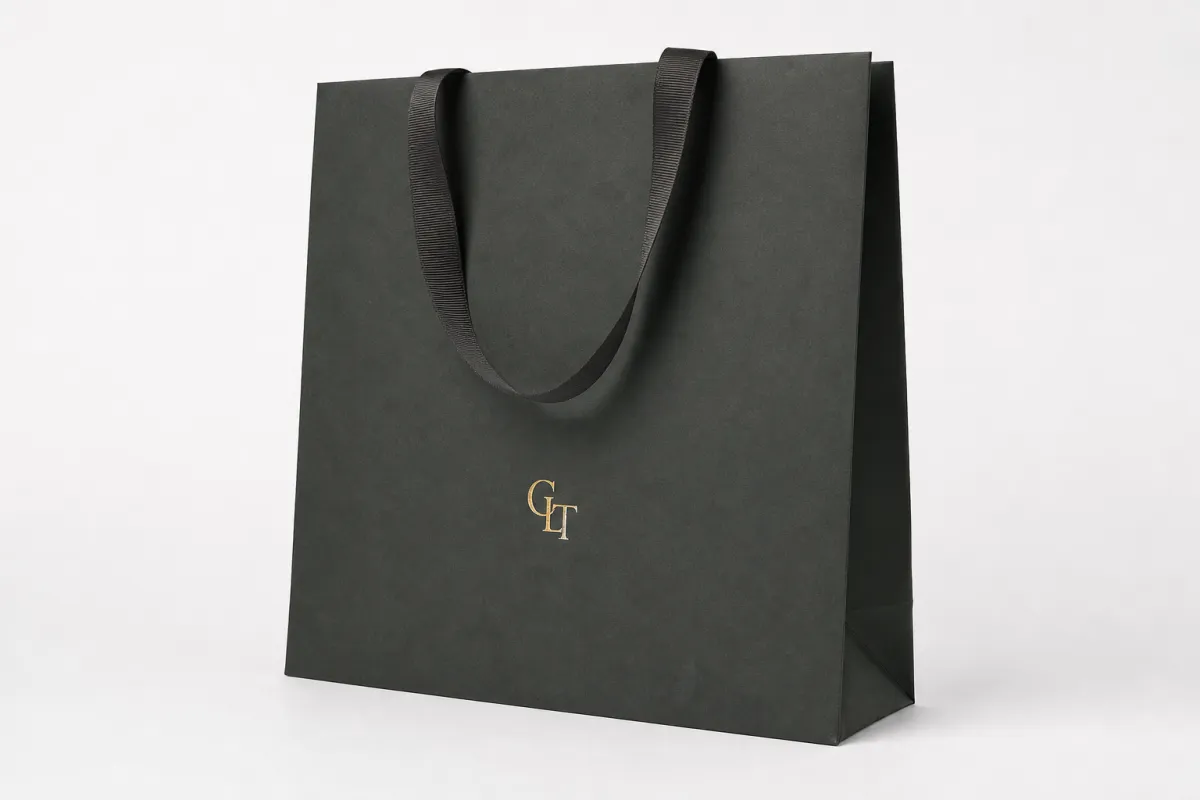
Custom shopping bags with foil stamping are usually less about showing off and more about control. One metallic mark, placed with intent, can make a budget-friendly paper bag feel like part of a branded system instead of a generic carryout item. Retail packaging lives or dies on those small signals. Customers may not name them, but they register them fast. A shopping bag gets one job: carry the product and carry the brand story with it. Foil helps that story land.
Foil stamping is straightforward in principle. A heated metal die presses foil onto the surface, and the finish transfers where pressure and temperature line up correctly. The result is a crisp reflective mark, not an ink layer sitting on top of the sheet. That difference matters. Custom shopping bags with foil stamping often look cleaner than full-color artwork that tries to dominate every inch of the bag. Ink can be lovely, but foil gives you a different kind of authority. It catches the eye without trying to explain itself.
The finish works well for boutique retail, gift packaging, premium events, and product packaging that needs a stronger brand cue without full coverage print. If your business already uses Custom Printed Boxes, foil on the bag can echo the same visual language and make the entire package set feel more expensive without changing every component. Consistency beats excess nearly every time. I have seen brands spend extra on a second embellishment when the real fix was just using the same foil tone across the box, insert, and bag.
One misconception keeps showing up in buyer conversations: foil must mean high cost. Sometimes it does raise the bill, but the shine itself is not the real culprit. Setup, die creation, artwork complexity, stock choice, and order quantity usually drive the number. Custom shopping bags with foil stamping can be surprisingly workable on larger runs when the artwork is clean and the supplier does not have to engineer around a tiny, fussy logo. The expensive part is often the overcomplication, not the metal finish.
A foil logo should still read from six feet away. If it only looks good under a phone flash, the artwork is carrying too much baggage.
Buyers who get the best results usually make the most restrained choices. Strong type. One icon. One placement. Enough space to let the finish breathe. Custom shopping bags with foil stamping reward that approach because the metallic mark has room to look intentional rather than crowded. The bag has a job: carry product, signal the brand, and survive handling. It does not need to behave like a billboard in motion.
There is also a practical reason restraint helps. Foil transfer depends on pressure, heat, and surface contact. The more artwork you cram into a small area, the harder it becomes to keep every edge crisp. A clean logo with clear line weights is simply less likely to fail on press. That is not glamor, but it is how the job actually works.
How Custom Shopping Bags with Foil Stamping Are Made
Custom shopping bags with foil stamping begin with a metal die cut from your artwork. Think of it as a heated stamp with a raised face. The press brings the die down onto the bag surface, and the foil transfers only where the raised artwork makes contact. That is why clean edges matter so much. Weak artwork produces a weak result. The press does not politely fill in the gaps.
The die is the center of the job. Thicker lines, sharper corners, and larger letterforms usually stamp better than hairline strokes or tiny decorative elements. A delicate script that looks elegant on a screen can blur on paper because the press needs enough surface area to bite into. For custom shopping bags with foil stamping, the better question is not whether the logo looks pretty, but whether it has enough structural strength to survive production. In my notes from one production run last year, a logo that looked polished in PDF form lost almost all clarity below 7 pt equivalent line weight. The supplier was right to flag it.
Die material matters too. Shorter runs often use magnesium dies because they are quicker and less expensive to make, while brass dies are stronger and better suited for longer production stretches or more demanding detail. Not every factory offers both, and not every job needs the heavier option. Still, if you are ordering a higher quantity or want a die that can be reused later, ask what the supplier is cutting and why. That answer tells you a lot about how they think about the job.
Material matters just as much. Coated paper, matte laminated stock, kraft paper, and textured papers all behave differently under heat and pressure. Smooth surfaces tend to give a cleaner foil edge. Rough fibers can still work, yet the finish becomes less predictable. That does not rule out kraft. It simply means the supplier may need a different setup or a foil color that gives better contrast on the stock. On very rough stock, the foil can look slightly broken at the edges, which is not a defect so much as a tradeoff the buyer should understand before approving the run.
The foil itself changes the tone of the piece. Gold and silver are the safest choices because they read clearly and still feel premium without explanation. Rose gold softens the effect. Black foil gives a sharper and more modern edge. White foil stays understated but can look excellent on dark or saturated bags. Holographic foil can work for fashion or event packaging, though it can veer into costume territory if the brand voice is not already bold. That last one is a little risky, honestly. Fun, yes. Universal, no.
Registration is where many buyers underestimate the risk. Foil gives you less forgiveness than ink, so placement needs to be precise when the logo sits near a fold, a gusset, a handle, or a border. That matters even more on custom shopping bags with foil stamping than it does on a flat print. If the artwork shifts by a few millimeters, people see it. Packaging buyers see it first. Then customers notice it too. A fraction of an inch can make the difference between premium and sloppy.
Combining finishes can look excellent when the concept supports it. Foil and embossing can create a raised, tactile feel that works especially well on luxury retail packaging. Once embossing, spot UV, complex die cutting, or multiple foil colors enter the mix, tolerances tighten and the job becomes less forgiving. Clean design wins again. Fancy is fine. Clutter is expensive. A design can be technically impressive and still feel overworked. That is the trap.
Custom Shopping Bags with Foil Stamping: Cost, MOQ, and Quote Drivers
Custom shopping bags with foil stamping are priced from several moving parts, and suppliers are not being mysterious when they break the quote into separate lines. Setup fees, die creation, foil application, bag stock, handle style, print area, and shipping all show up in the math somewhere. If a quote looks cheap at first glance, ask what is missing. Cheap quotes are very good at hiding the hard parts until later. I have seen more than one buyer get seduced by a low unit number and then discover that the freight, proof, and tooling charges were waiting quietly in the wings.
MOQ matters because setup gets spread across the run. On a small order, the die and press time may make each bag feel expensive. On a larger order, unit cost usually drops enough to make the project workable. For custom shopping bags with foil stamping, that pattern is normal. Mechanical decoration is not built for one-off pricing unless the supplier already has tooling in place and can schedule your job into an existing production window. If the order is urgent and tiny, the math starts to bite hard. That is not a sales trick. It is how manufacturing overhead behaves.
A practical way to think about the cost tiers helps. A single foil logo on a standard paper bag is the least complicated path. Add laminated stock, larger artwork, extra imprint locations, or specialty handles, and the price rises. Add a second finish, such as embossing, and you are paying for alignment and consistency as much as decoration. That is why custom shopping bags with foil stamping often look more affordable when the artwork is simple and the run is sized correctly. The bag is not just being decorated; it is being built to hit tolerances.
| Option | Typical MOQ | Setup / Die Cost | Unit Price Range | Best Fit |
|---|---|---|---|---|
| Single-location foil on standard paper bag | 500-1,000 | $75-$160 | $0.30-$0.75 | Boutique retail, gift shops, simple branded packaging |
| Foil on laminated or soft-touch bag | 500-1,500 | $120-$220 | $0.60-$1.35 | Premium product packaging, events, cosmetics, apparel |
| Multi-location or specialty foil finish | 1,000-3,000 | $150-$350 | $0.95-$2.25 | Luxury retail, launch kits, higher-end package branding |
Those ranges are not a promise. They are a useful working frame for many common orders, and they move depending on bag size, stock thickness, foil color, and how complicated the artwork is. For cleaner comparison shopping, ask every supplier for pricing at 500, 1,000, and 5,000 units. That usually exposes where the unit price starts to make sense and where it still feels padded. If the pricing barely changes across those quantities, that is worth a follow-up question. A healthy quote should show where the fixed cost gets diluted.
I would also ask for separate numbers on sample creation, rush handling, and freight. A quote that bundles everything can be convenient, but a quote that splits those pieces shows what is actually driving the bill. That matters if you are comparing custom shopping bags with foil stamping against other options like custom printed boxes or plain retail packaging with a better insert. It also keeps you from thinking the packaging is cheap when the shipping lane is doing most of the damage.
If a supplier gives you only one price point, push back. Ask for a range, not a single number with a confident tone. Better yet, request a small, medium, and larger run on the same spec sheet. The tipping point usually appears fast, and that often saves money. If they cannot model the job at more than one quantity, they are asking you to carry all the uncertainty.
Material and Design Factors That Change the Result
Custom shopping bags with foil stamping behave differently depending on the substrate, and paper stock is never a neutral backdrop. Smooth clay-coated paper usually gives crisp results. Matte laminated paper creates a refined low-gloss contrast. Kraft paper can look warm and earthy, though the texture may make very fine detail less reliable. If the brand wants sharp edges, the bag material needs to support that goal instead of fighting it. I have seen kraft chosen for an eco-friendly look, only for the foil to lose clarity because the fibers were too open. Nice idea, wrong surface.
Design simplicity saves money and improves quality. Large logos, bold type, and clean icons tend to stamp better than dense artwork or microtext. A mark that is 1 inch wide can outperform a sprawling 5-inch composition if the lines are stronger and the spacing is cleaner. That is a useful lesson for anyone ordering custom shopping bags with foil stamping: the design is not only a creative decision, it is a production decision. It is also a reader-distance decision. If the bag is supposed to work from a few feet away, tiny details are mostly dead weight.
Finish and texture change the way the foil reads. Matte surfaces usually make the metallic effect pop harder because the background stays quiet. Glossy surfaces can feel more reflective overall, yet the foil sometimes loses contrast and starts to look less deliberate. That is one reason many buyers prefer matte lamination for premium retail packaging. It gives the foil a stage instead of a contest. The shine lands harder when the rest of the surface knows how to get out of the way.
Placement strategy matters more than people think. Centered logos are safer than edge placements, and the cleanest spot is usually a flat area that stays stable during pressing. Avoid pushing the design too close to a handle fold, gusset, or bottom seam. If you are ordering custom shopping bags with Foil Stamping on a shaped bag, remember that bag geometry can distort the result. The same logo may look crisp on one structure and awkward on another. A few millimeters can matter a lot more on a structured paper bag than they do in a digital mockup.
Package branding and packaging design need to function as one system. If the bag is part of a larger kit with product packaging, inserts, or custom printed boxes, the finish language should stay consistent. Foil can sit on the bag while embossing appears on the box, but the hierarchy should feel planned. Random embellishment is not premium. It is just busy with a higher price tag. A packaging set can be quietly luxurious or loudly confused. There is rarely a middle ground.
For buyers building a retail program, three choices matter most. Use a stock that suits the finish. Make the artwork bold enough for the press. Keep the placement simple in the best possible way. Custom shopping bags with foil stamping reward restraint. Fancy paper is not the same thing as good design, and the manufacturing floor will expose the difference quickly. The better the structure, the less the finish has to work to earn its keep.
Production Steps, Timeline, and Lead Time for Foil-Stamped Bags
Custom shopping bags with foil stamping usually move through a standard workflow: artwork review, die creation, proofing, sample or pre-production check, stamping, inspection, packing, and freight booking. If a supplier skips one of those steps, ask why. The answer is rarely reassuring. A clean process is boring, and boring is a virtue in manufacturing. Fancy branding is the visible part; process discipline is what keeps the whole job from drifting.
The slowdowns tend to happen in the same places. Late artwork changes are the obvious one. Missing die approval is another. Material shortages can also stall the job, especially when the bag stock or handle component is specialty ordered. Sample revisions add time too, because foil is far more sensitive to placement than a digital proof makes it look. That is why custom shopping bags with foil stamping usually need more breathing room than buyers expect. A proof can look acceptable on a screen and still fail once pressure and heat enter the picture.
A realistic lead-time framework looks something like this: simple jobs can sometimes move in 10-15 business days after final proof approval, while new tooling, specialty foil colors, or larger quantities can stretch that window to 20-30 business days or more. Add embossing, a unique die cut, or a custom bag shape, and the schedule should stretch further still. More complexity means more checkpoints. Manufacturing never rewards optimism for its own sake. If someone gives you a fixed date without asking about the foil spec, they are probably guessing.
Rush orders are possible in some cases, but they usually tighten the menu. A buyer may lose foil options, stock choices, or packaging flexibility. Priority handling can also raise the price. That is not a moral judgment. It is simply how the shop floor behaves. If timing matters, custom shopping bags with foil stamping should be quoted with a written schedule, not a vague promise and a pleasant tone. Good scheduling has dates, not vibes.
For transit-sensitive orders, ask whether the cartons should be tested or packed to a standard such as ISTA transit methods. If sustainability claims matter to your brand, check whether the paper stock or board is certified through FSC. Those are not decorative acronyms. They help you talk about transport and sourcing with less guesswork. If a supplier cannot explain the difference between a production lead time and a freight transit window, that is a warning sign, not a personality quirk.
Ask for the schedule in stages: proof date, die date, sample date, production start, production finish, and ship date. Once those dates are in writing, the project becomes easier to manage. Buyers who order custom shopping bags with foil stamping without a timeline are basically hoping the factory can read minds. It cannot. A good supplier will usually welcome this level of detail because it keeps both sides honest.
One extra piece of advice from the floor: give the supplier the final art file only after the dimensions are locked. It sounds basic, but it saves everyone from remaking a die because the bag face changed by half an inch. That kind of change is common enough to be painful.
Common Mistakes When Ordering Custom Shopping Bags with Foil Stamping
Custom shopping bags with foil stamping often go wrong because the artwork is trying to do too much. Thin lines, tiny text, delicate gradients, and crowded layouts may look polished on a monitor, then fall apart in a press run. The supplier is not being difficult when they ask for simplification. They are trying to prevent the logo from becoming a shiny smear. A foil press rewards decisiveness. It does not enjoy decorative hesitation.
Choosing the bag first and expecting it to behave like a different material later is another common mistake. Rough kraft does not behave like coated paper. Glossy laminated stock does not behave like uncoated stock. If the supplier says the foil needs a smoother face to stamp cleanly, that is not upselling. That is material science without the drama. The best custom shopping bags with foil stamping begin with a bag spec that supports the finish, not one that has to be bullied into it.
Proofing mistakes are expensive because they are so avoidable. If you skip a physical proof or a detailed digital proof, you can end up with the logo too small, too close to an edge, or parked awkwardly near a handle fold. That is especially painful on branded packaging where the bag is part of the first impression. One bad placement can make an entire run feel off, even when the foil itself is perfect. I have seen buyers try to “fix it later” with a second order, which is usually a much pricier way to learn the same lesson.
MOQ mistakes are just as common. Ordering too few bags can make the unit cost absurd. Ordering too many without testing the artwork can trap you with a finish that is technically fine but visually wrong. Both problems usually start with guessing instead of quoting. If you are evaluating custom shopping bags with foil stamping, ask for a quantity ladder before you commit. Suppliers can quote 500, 1,000, and 5,000 pieces if you ask directly. That small step often reveals where the order starts to make sense.
Timing mistakes hurt too. Foil stamping is a mechanical process. It is not a print-on-demand trick that appears because the spreadsheet became urgent. If you need bags for a launch, event, or seasonal retail packaging window, leave enough room for proofing and shipping. That does not mean padding the schedule for fun. It means respecting the time the process actually takes. The factory is not slow; the process is simply real.
One more mistake deserves a mention: using the most expensive-looking finish as a substitute for good design. A shiny bag with weak proportions still looks weak. Custom shopping bags with foil stamping work best when the stock, foil color, and artwork all point in the same direction. Fancy details do not rescue bad layout. They just make the mistake glossier. That is the truth nobody loves hearing, but it saves money.
Expert Tips and Next Steps for a Better Quote
Build a one-page spec sheet before you request quotes. Include bag size, stock, foil color, imprint area, quantity breaks, handle type, and ship-to location. If you request custom shopping bags with foil stamping and leave out half the spec, suppliers will fill in the blanks differently. Then you will compare two quotes that are not actually the same job. Procurement turns into a guessing contest fast when the paperwork is vague. I can say from experience that the fastest way to confuse a price comparison is to leave room for interpretation.
Ask for a mockup and at least one proof image before production starts. A good proof should show foil placement, approximate shine, and logo scale relative to the bag face. If you can get a sample or a pre-production reference, even better. That small step catches more problems than a long email thread ever will. For custom shopping bags with foil stamping, the proof is not paperwork. It is the warning system. The extra hour spent reviewing it usually beats the extra week spent fixing an avoidable mistake.
Compare apples to apples. That means the same quantity, same foil coverage, same stock, same handle, same delivery expectation, and same packaging method. If one quote includes a rigid carton and another ships loose-packed cartons, the numbers are not equivalent. If you also need matching Custom Packaging Products for boxes or inserts, keep the same finish language across the full set so the brand does not wander. That kind of consistency makes a line feel designed, not assembled.
Keep the art bold and the decisions simple if you want a premium result without blowing up the budget. A strong logo, a clean foil color, and a useful stock choice will usually get you farther than three decorative effects stacked together. Custom shopping bags with foil stamping should look expensive because the details are disciplined, not because the design is shouting. A little restraint goes a long way. The best-looking bag is often the one that knows when to stop.
One smart next step is to shortlist two or three suppliers, send the same spec sheet to all of them, and ask for side-by-side pricing with lead times included. If one quote is much lower, ask what is missing. If one quote is much higher, ask what extra quality control, material, or finish handling is built in. That kind of comparison is easier than arguing after the order is already moving. It also exposes whether a vendor really understands foil work or is just treating it like a generic print job.
For brands that also need labels, cartons, or gift-ready retail packaging, it can be worth building the whole package once instead of fixing each piece separately. You can often match the foil tone on the bag to the board finish on custom printed boxes, then keep the rest of the system calm. That is how package branding starts to feel coherent instead of improvised. One strong finish used well will usually beat four finishes used badly. The bag, the box, and the insert should feel like they belong in the same conversation.
If you are still deciding, start with the buyer experience. What should the bag say when a customer leaves the store? Clean? Luxurious? Warm? Minimal? Custom shopping bags with foil stamping can support all of those moods, but only if the design choices line up with the message. Pick the message first. Let the finish follow. That order matters more than most teams think.
When you are ready to quote, use Custom Packaging Products as your starting point for matching formats, then ask suppliers to build the foil bag spec around the product you actually sell. That keeps the order grounded in the real package, not in a glossy fantasy spreadsheet. For custom shopping bags with foil stamping, that usually leads to better quotes and fewer ugly surprises. The actionable part is simple: lock the bag size, choose one foil color, confirm the artwork scale, and ask for a written schedule before anyone cuts a die.
What drives the price most on foil-stamped shopping bags?
The biggest drivers are quantity, die creation, bag stock, foil coverage, and how complicated the logo is. A small run with a fresh die will cost more per bag than a larger run with simple art. If you want the clearest read on pricing, ask for quotes at 500, 1,000, and 5,000 pieces so you can see where the unit cost settles. Freight can matter too, especially if the cartons are heavy or the delivery window is tight.
What minimum order quantity should I expect?
MOQ depends on the factory and the bag style, but foil work usually favors moderate to larger runs. Some suppliers will do lower quantities, but the unit price climbs quickly because the setup cost has fewer bags to spread across. If you only need a small batch, ask whether they can simplify the artwork or use existing tooling. A modest logo and a standard bag spec can make a small order much more realistic.
Can this finish work on kraft paper?
Yes, it can, but the result depends on the kraft texture, coating, and foil color. Smoother or lightly coated kraft usually stamps cleaner than rough, fibrous stock. Gold, silver, black, and white are common choices because they hold contrast well on kraft without making the bag look overdesigned. If the kraft is very coarse, ask for a sample first so you can see how much detail survives.
How long does production usually take?
Lead time depends on whether the die already exists, how quickly the proof is approved, and whether the stock is standard or special order. A straightforward project may finish in about 10-15 business days after final approval, while more complex runs can take 20-30 business days or more. If timing matters, get the schedule in writing before you approve the order. That is the cleanest way to avoid last-minute scrambling.
Which foil color usually looks best?
Gold and silver are the safest choices because they read clearly and still feel premium. Black foil works well for sharper, more modern branding, especially on lighter bags or matte finishes. The better choice is the one that matches the brand mood and the bag stock, not just the one that looks expensive in a sample deck. For custom shopping bags with foil stamping, a simple finish on the right material almost always beats a flashy finish on the wrong one.

