Buyer Fit Snapshot
| Best fit | Custom Foil Stamping on Boxes projects where brand print, material claims, artwork control, MOQ, and repeat-order consistency need to be specified before quoting. |
|---|---|
| Quote inputs | Share finished size, material target, print colors, finish, packing count, annual reorder estimate, ship-to region, and any compliance wording. |
| Proofing check | Approve dieline scale, logo placement, barcode or warning zones, color tolerance, closure strength, and carton packing before bulk production. |
| Main risk | Vague material claims, crowded artwork, missing packing details, or unclear freight terms can make a low unit price expensive after revisions. |
Fast answer: Custom Foil Stamping on Boxes: What Brands Should Know should be specified like a repeatable production item. The safest quote records material, print method, finish, artwork proof, packing count, and reorder notes in one written spec.
Production checks before approval
Compare the actual filled-product size with the drawing, then confirm tolerance on folds, seals, hang holes, label areas, and retail display edges. Reserve space for logos, QR codes, warning copy, and material claims before decorative graphics fill the panel.
Quote comparison points
Review material grade, print process, finish, sampling route, tooling charges, carton quantity, and freight assumptions side by side. A quote is only useful when the supplier can repeat the same color, closure quality, and packing count on the next order.
Custom Foil Stamping on Boxes: What Brands Should Know
Custom Foil Stamping on Boxes changes how a carton is read before the product is even touched. That sounds minor until you watch a buyer pick up a plain box and then the same box with a narrow strip of gold or silver on the logo. The second one gets handled longer. It gets remembered. A reflective accent can signal care, craft, and price point in a few seconds, which is a lot of work for a detail that may cover less than 5% of the surface. Plain cartons still do the job, but custom foil stamping on boxes makes the work visible.
For brands weighing custom foil stamping on boxes against standard print, the decision usually comes down to three things: how much premium signaling the package needs, how strong the stock is, and whether the budget can absorb tooling without squeezing the launch. The best foil work is not blanket shine. It is placement. Put the effect where the eye already wants to land, then leave the rest of the surface quiet. That restraint is doing a lot of heavy lifting.
Custom Foil Stamping on Boxes: Why a Small Accent Feels So Premium
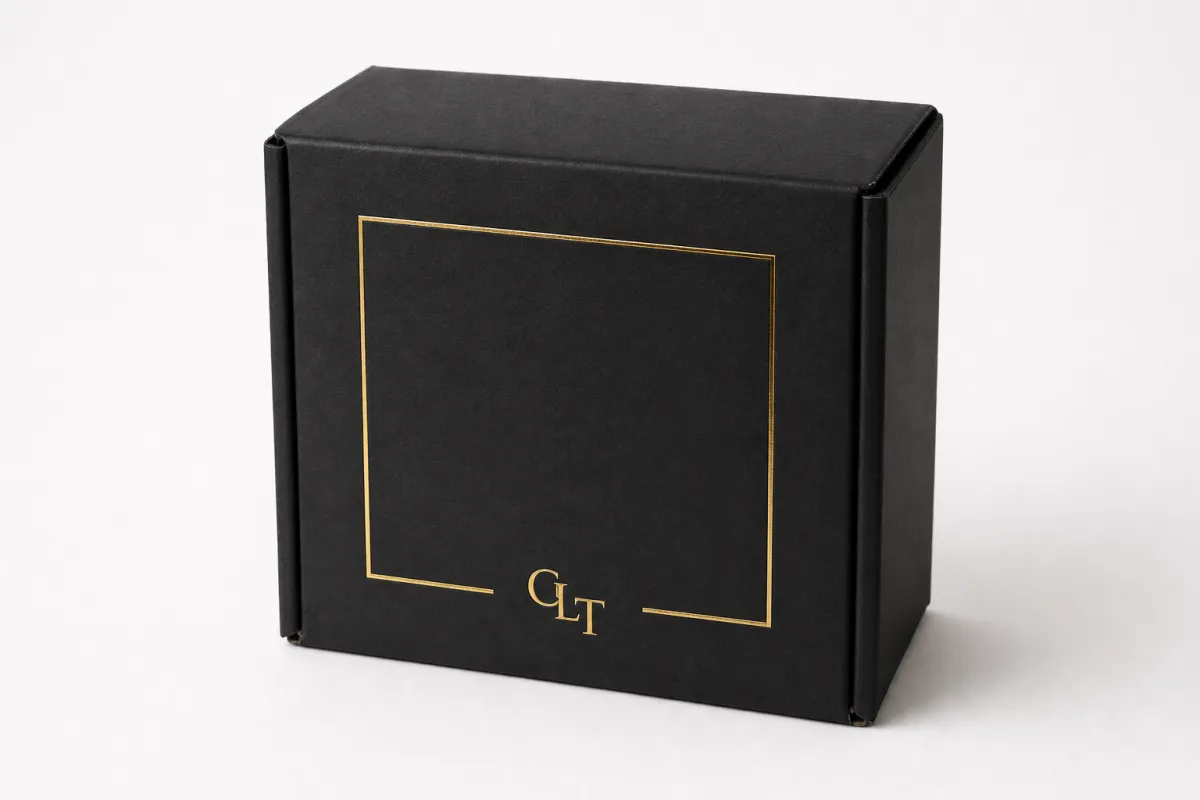
Packaging has a funny rule: custom foil stamping on boxes can change perceived quality more than a much larger print change. A slim foil logo on a matte carton often reads as more expensive than a full-coverage graphic because contrast does the storytelling. The eye sees restraint and translates it into confidence. That is one reason luxury brands often use less surface decoration than shoppers expect.
custom foil stamping on boxes is a finishing process that uses heat and pressure to press metallic or pigmented foil onto selected areas of a carton. The foil transfers only where the die contacts the stock. What appears on the box is not ink. It is a bonded film layer, which creates a sharp reflective effect, a soft metallic effect, or a more muted contrast depending on the foil chosen. The appeal is not just shine. It is control over where the shine appears.
Brands use custom foil stamping on boxes for a few practical reasons:
- Shelf contrast: a metallic logo stands out against kraft, soft-touch laminate, or a dark printed background.
- Premium signaling: buyers often associate foil with giftable, collectible, or higher-margin product packaging.
- Design efficiency: a carton can stay simple and still feel complete, which matters when budgets are tight.
- Category fit: cosmetics, wellness, spirits, tech accessories, and seasonal retail packaging often benefit from a more deliberate finish.
The catch is that custom foil stamping on boxes is never a fixed outcome. Stock choice, coating, artwork line weight, foil color, and final assembly all change the result. A clean silver stamp on smooth SBS board will behave differently from gold foil on rough kraft or textured paperboard. If the goal is quiet elegance, the design has to leave room for it. If the goal is high-impact shine, the rest of the package needs to make that shine look intentional rather than loud.
A little foil often does more than a lot of ink. The strongest boxes usually choose one focal point and let the rest of the surface breathe.
That is why custom foil stamping on boxes works best as part of the full product packaging system, not as an afterthought. Structure, print, coating, and finishing need to be planned together. A smart carton can feel premium without becoming crowded. A careless one can look expensive in a mockup and flat on press.
Later sections cover how custom foil stamping on boxes moves from file to finished carton, what it usually costs, and where production goes wrong. If you also need broader format options, it helps to compare foil work with the rest of your Custom Packaging Products lineup before you lock the design.
How Custom Foil Stamping on Boxes Works: The Process and Timeline
The mechanics of custom foil stamping on boxes are straightforward, but the production sequence is where delays hide. A custom die is made from approved artwork, the press is heated to the right temperature, and pressure moves the foil film onto the selected areas of the carton. The foil bonds only where the die touches the stock. What appears afterward is transferred film, not printed ink.
In a typical workflow, custom foil stamping on boxes moves through file review, proofing, die creation, press setup, stamping, inspection, and packing. Each stage can add a day or more, especially when artwork needs cleanup. A first-time job may need vector adjustments, line-thickness fixes, or a separate sample before production starts. A repeat order usually moves faster because the die already exists and the approved setup is on file.
Here is a practical way to think about timing for custom foil stamping on boxes:
- Artwork review: 1-2 business days if the files are clean; longer if the foil layer is unclear.
- Die making: often 2-5 business days for a standard logo die, depending on supplier backlog.
- Proof approval: same day for simple changes, or several days if multiple stakeholders need to sign off.
- Press setup and run: usually 1-3 business days for a moderate carton order, more if multiple foil colors are involved.
- Post-press packing: allow time for inspection, drying, and careful packing to prevent scuffing.
When custom foil stamping on boxes is paired with embossing, the job becomes more tactile and more exacting. Embossing adds raised relief, which means the die has to register perfectly with the foil area. If the box also uses soft-touch coating, window cutouts, or folding and gluing, the timeline stretches because each finishing step affects the next one. Rush jobs and complex finishes rarely like each other.
From a buyer’s point of view, the best question is not “How fast can you do custom foil stamping on boxes?” It is “What is the critical path?” If die creation is the long pole, start there. If approval is the long pole, build in internal review time. If carton converting is the long pole, do not promise a retail launch until the full schedule is mapped.
There is also a difference between a fresh order and a replenishment order. The first time a brand orders custom foil stamping on boxes, the supplier may need to verify placement against a dieline, confirm the visible panel after folding, and check whether the finish survives handling. A repeat run is simpler, but only if the same board, same coating, and same artwork are used. Change one of those pieces, and the press can behave differently enough to matter.
For launches tied to trade shows, gift seasons, or product drops, treat custom foil stamping on boxes as a lead-time item with real dependencies, not a cosmetic extra that can be squeezed into the end of the schedule. The box is the last thing the customer touches before the product, which makes the finishing timeline part of the product timeline.
Custom Foil Stamping on Boxes Cost, Pricing, MOQ, and Quote Factors
Pricing for custom foil stamping on boxes usually starts with setup and tooling, then moves into unit cost. The setup charge matters because the supplier has to make a die, calibrate the press, and tune temperature and pressure before the run becomes stable. Once the job is running, per-box cost drops as volume rises because the fixed work is spread over more units. That math is boring, but it is also the part that decides whether the project stays profitable.
For planning purposes, a small run of custom foil stamping on boxes often carries a higher unit price than buyers expect. A 500-piece order can look inexpensive on paper until the setup fee is divided across a tiny quantity. At 5,000 pieces or more, the economics usually improve, especially if the design is simple and foil coverage stays limited to one panel.
Typical quote factors for custom foil stamping on boxes include:
- Die charge: custom metal tooling for each distinct design or size.
- Setup time: press calibration, alignment, and make-ready waste.
- Foil coverage: a small logo costs less than a large panel or full-wrap accent.
- Color count: one foil color is easier than two or three separate foil passes.
- Artwork complexity: fine detail and tight registration take longer to run cleanly.
- Quantity: higher volume usually lowers the per-unit cost.
| Run Size | Typical Setup | Approx. Unit Cost | Best Fit | Main Tradeoff |
|---|---|---|---|---|
| 250-500 boxes | Die charge plus setup | $0.45-$1.10 each | Prototype launches, limited editions | High unit cost because setup is spread thin |
| 1,000-2,500 boxes | Standard tooling and press setup | $0.22-$0.55 each | Small retail programs, seasonal drops | Still sensitive to artwork complexity |
| 5,000+ boxes | Lower setup ratio | $0.08-$0.28 each | Core product packaging, replenishment runs | Requires storage and inventory planning |
Those numbers are broad on purpose. custom foil stamping on boxes can land below or above them depending on stock, foil area, and whether the box includes extras like embossing, insert trays, or specialty coating. Still, the table is useful because it shows the shape of the cost curve. Small quantities are dominated by setup. Larger quantities are dominated by material and press time.
If you are comparing quotes for custom foil stamping on boxes, ask whether the estimate includes all of the following:
- Tooling or die creation.
- Proofs or samples.
- Press setup and make-ready waste.
- Freight to your warehouse or fulfillment partner.
- Rework if the first sample needs adjustment.
That last item is where some low quotes become expensive. A supplier may offer a low headline price for custom foil stamping on boxes, then add fees for revisions, rush production, re-pressing, or separate dies later. The first number looks good. The final invoice does not. A quote only matters if it says what is included and what triggers a change order.
Minimum order quantities also matter. MOQ is not a random barrier; it usually reflects the economics of setup. If a supplier accepts very low volumes of custom foil stamping on boxes, the unit price rises because the fixed cost is concentrated into fewer cartons. That can still make sense for a test launch or a premium pilot, but it is rarely the cheapest route for a standard replenishment program.
For brands watching margin, there is a simple rule: the more exact the foil area, the better the chance that custom foil stamping on boxes stays efficient. One logo, one die, one pass. Every extra shape, position, or color adds handling and cost. The savings are real, but only when the design is disciplined.
Key Factors That Make or Break Custom Foil Stamping on Boxes
Stock selection is the first technical variable in custom foil stamping on boxes. Smooth coated paperboard usually gives the sharpest result because the die can contact the surface evenly. Rough kraft, recycled board, and pronounced textures can still work, but they often soften fine detail. That does not make them wrong. It means the design has to respect the material instead of fighting it.
Coatings matter almost as much as the board itself. Some laminations and varnishes support custom foil stamping on boxes cleanly, while others resist transfer or create adhesion issues. Soft-touch film, for example, can look excellent with foil, but it needs testing because surface chemistry varies by supplier. Approving artwork without checking the actual board and coating combination is a gamble, not a plan.
Artwork complexity is another fault line. Fine hairlines, tiny reversed text, and dense linework can look elegant on screen, then fill in or break apart on press. In custom foil stamping on boxes, bold shapes usually survive production better than delicate ones. The strongest marks are often the simplest: a wordmark, a border, a seal, or one focal icon. That is one reason packaging design teams often keep foil elements larger than their first instinct suggests.
Foil choice changes the brand message quickly. Gold feels warm and traditional. Silver feels crisp and modern. Holographic feels energetic and less restrained. Matte metallics can be the most surprising because they create contrast without the mirror shine many people expect from custom foil stamping on boxes. Pigment foils can add color without using ink in the usual sense. The right choice depends on category and shelf context.
Durability is the last big variable. If cartons will move through distribution centers, ship individually, or sit in retail packaging displays where shoppers handle them repeatedly, the foil has to survive scuffing and edge wear. That is where tests such as abrasion resistance and transit simulation become useful. The ISTA suite is a sensible reference point for distribution testing, especially when the box is part of a fragile or premium product line.
For sourcing, the board itself may also need to satisfy sustainability expectations. If the project calls for certified paperboard, the FSC system helps buyers document responsible fiber sourcing. That matters because custom foil stamping on boxes usually sits inside a larger packaging decision that includes brand values, not just shelf appeal.
One more detail: embossing can raise both the visual and tactile value of custom foil stamping on boxes, but it also increases the chance of registration issues. The foil area and the relief area must align tightly. If the design is too intricate, the effect can blur rather than impress. A better rule is one main accent and one supporting texture, not three competing effects.
There is a practical comparison many teams miss. A carton with strong structural paperboard, restrained artwork, and precise custom foil stamping on boxes can feel more premium than a box overloaded with gloss, embossing, and multi-color decoration. More finish does not equal more value. Often the opposite is true. The cleanest result is usually the one with the fewest competing signals.
Production Steps for Custom Foil Stamping on Boxes
The prepress stage is where custom foil stamping on boxes is won or lost. Before anything goes to production, the supplier should confirm the dieline, the foil-only artwork layer, the exact placement on the flat pattern, and the orientation after folding. If the box has multiple panels, You Need to Know which one is visible first on shelf and which panel actually carries the logo once the carton is assembled.
Clean files save time. Vector artwork is the standard starting point for custom foil stamping on boxes, and fonts should be outlined so the die maker is not guessing at letter shapes. Very small reversed text is risky, especially if the chosen stock has any texture. A larger, simpler mark usually stamps better than a tiny decorative line that looks clever in a proof and falls apart in production.
Proofing and sampling
Proofs are not a formality. In custom foil stamping on boxes, proof review should cover size, line thickness, spacing, and the relationship between foil and the printed artwork around it. If the design uses a dark background, check whether the foil color has enough contrast. If the board is natural kraft, check whether the foil still reads clearly under warm retail lighting. A physical sample is even better because foil can look different once the material is folded and handled.
Whenever possible, ask for a sample on the exact stock and finish you plan to use. That is the surest way to understand how custom foil stamping on boxes will look in real life. A digital proof confirms placement. It cannot tell you how the carton catches light in a store aisle. I have seen a sample look perfect under office LEDs and then flatten a bit in daylight; that kind of mismatch is small on a screen and expensive in a launch.
Press setup and run
Press operators calibrate temperature, pressure, and dwell time so the foil transfers cleanly without damaging the carton. That balance matters. Too little heat, and the image skips or ghosts. Too much pressure, and the board can crush or the edges can distort. The best custom foil stamping on boxes runs are the ones where the operator spends time during setup so the actual press run can repeat consistently.
During the run, inspection should happen continuously, not just at the end. Registration drift, foil depletion, and edge wear can appear gradually. A good supplier will pull samples at intervals and compare them against the approved reference. For premium product packaging, that discipline is not extra. It is the baseline.
After stamping, cartons need to be checked for scuffing, alignment, and consistency across the batch. Then they should be packed carefully so the foil surface does not rub against itself in transit. This is where secondary details matter. A beautiful custom foil stamping on boxes result can be damaged by rough pallet handling or loose bundling.
For brands that work with custom printed boxes as part of a wider line, keep the file naming and proof approval process consistent across all packaging formats. It reduces revision errors, and it helps when a seasonal SKU needs a quick repeat order. If your team buys multiple branded packaging options, standardizing the prepress checklist saves more time than most people expect.
One thing I appreciate about custom foil stamping on boxes is that the workflow is visible. You can usually see where the process went right or wrong. The foil is either crisp, even, and well placed, or it is not. That makes it easier to diagnose problems than with some other finishes, where the flaw is buried under several layers of print.
Common Mistakes With Custom Foil Stamping on Boxes
The most common mistake with custom foil stamping on boxes is trying to make every element important. If the logo is foiled, the product name is foiled, the border is foiled, and the side panel is foiled, the eye loses its anchor. Premium packaging usually needs hierarchy, not decoration everywhere. Too much foil can flatten the design and make the box feel busy instead of deliberate.
Another frequent issue is artwork that is too fine. Hairline strokes and tiny reversed type are elegant in a design file. They are much less elegant when a heated die meets a carton that flexes slightly under pressure. In custom foil stamping on boxes, a thicker stroke almost always gives the supplier more room to achieve a sharp result. The safer path is not always the most dramatic one, but it is often the smarter one.
Coating mistakes are expensive because they are discovered late. A team approves the concept, signs off on the render, and only learns after sampling that the foil is not releasing cleanly from the chosen board. That is why testing the exact stock matters so much in custom foil stamping on boxes. Substitutes are not substitutes when chemistry is involved.
Quantity planning errors also create friction. Order too few cartons and your unit price climbs. Order too many and you may be stuck with product packaging that no longer matches the brand, the formula, or the market position. That is a real risk in fast-moving categories. If the packaging design is tied to a short-lived promotion, it should not be treated like a permanent inventory item.
Timing is the last trap, and it is the one that shows up most often in launches. If a team leaves no buffer for proofing, die creation, or freight, custom foil stamping on boxes becomes a schedule risk rather than a finishing upgrade. The simplest fix is also the least glamorous: start earlier than you think you need to.
One more point matters. Not every product deserves the same level of finish. A low-price consumable may not recover the added packaging cost, while a giftable or margin-rich product may benefit immediately. From a buyer’s point of view, custom foil stamping on boxes should earn its place by supporting pricing, shelf visibility, or brand position. If it does not move one of those levers, it may be prettier than necessary.
Expert Tips and Next Steps for Custom Foil Stamping on Boxes
If you want custom foil stamping on boxes to look expensive, start with one hero area. The logo is the obvious choice, but the product name, a seal, or a single icon can also work. Restraint often creates more value than coverage because it gives the foil room to matter. The shopper should notice the detail, not feel buried by it.
Ask for a sample on the exact stock and finish you plan to use. That one step solves a surprising number of problems in custom foil stamping on boxes, especially if the carton is natural kraft, soft-touch, or embossed. A sample shows how light hits the surface, how sharp the edges are, and whether the chosen foil color supports the brand story.
If the team is undecided, request two foil comparisons. Warm metallic versus cool metallic is a useful starting point. So is glossy foil versus matte foil, because the difference is often more visible under store lighting than it is on a screen. With custom foil stamping on boxes, the distance between “fine” and “excellent” can be one or two design choices wide.
Before approval, confirm five things: MOQ, timeline, reprint policy, tool ownership, and freight responsibility. Those details keep the quote honest. They also make it easier to compare suppliers on real terms rather than headline numbers that leave out essential costs. In my experience, the best quotes for custom foil stamping on boxes are the ones that look a little less exciting and a lot more complete.
It also helps to match the finish to the packaging job. A launch box, a gift box, and a subscription mailer do not need the same level of sheen. If your line includes multiple SKUs, a restrained foil system can create a family look without making every carton identical. That is useful in packaging design because it keeps the brand consistent while still allowing product differences to show through.
Here is a simple action plan for custom foil stamping on boxes:
- Finalize the carton structure and dieline.
- Choose the stock and finish before designing the foil area.
- Keep the foil artwork bold and purposeful.
- Approve a sample on the exact material whenever possible.
- Lock timeline, MOQ, and die ownership before production starts.
That sequence sounds basic, and it is. Basic is where packaging projects either stay efficient or drift into rework. A box with a strong logo mark, a smooth stamping surface, and the right amount of white space can do a lot of selling before the product is even touched. That is the quiet advantage of custom foil stamping on boxes: it helps a carton communicate value without shouting.
One final practical note. If sustainability is part of the brief, combine foil decisions with board sourcing and transport testing rather than treating them as separate conversations. Industry references such as packaging.org resources can help teams keep terminology and process discussions aligned, while FSC and ISTA standards keep the sourcing and distribution sides grounded. Good packaging is rarely one decision. It is a chain of decisions that all need to hold up together.
For brands evaluating custom foil stamping on boxes right now, the smartest next step is usually not a full redesign. It is a controlled test: one panel, one foil color, one stock, one proof. If the result earns attention under real lighting and survives handling, scale it. If not, revise before the full run. That kind of discipline protects budget and improves package branding at the same time.
Done well, custom foil stamping on boxes can lift a simple carton into a premium signal that feels earned rather than decorated. Done carelessly, it becomes just another expensive surface treatment. The difference usually comes down to stock, setup, and restraint. The practical takeaway is straightforward: Choose the Right board, keep the foil area focused, and approve a physical sample before you commit to a full production run.
FAQ
What is custom foil stamping on boxes, and when should I use it?
custom foil stamping on boxes transfers foil onto selected areas with heat and pressure, so the shine stays focused on the logo or key message. Use it when you want premium cues, stronger shelf contrast, or a more collectible look without redesigning the whole carton. It usually works best as an accent rather than a full-surface effect.
How much does custom foil stamping on boxes usually cost?
Pricing for custom foil stamping on boxes usually includes a setup or die charge plus a per-box stamping cost. The unit price drops as quantity rises, so MOQ has a major impact on budget. Ask for a quote that separates tooling, production, and freight so you can compare vendors on the same terms.
What artwork files do I need for custom foil stamping on boxes?
Send vector artwork, outlined fonts, and a separate foil layer so the supplier can build the die correctly. Keep lines bold enough for production and avoid tiny reversed text unless the printer confirms it will hold. Include the dieline and exact foil placement notes to reduce proofing delays in custom foil stamping on boxes.
How long does custom foil stamping on boxes take from proof to delivery?
The timeline depends on artwork readiness, die creation, proof approval, and whether the job needs a sample first. Rush orders can be possible, but they usually raise cost and increase the risk of mistakes. Build in extra lead time if the boxes also need folding, gluing, or other finishing steps.
Which box materials work best for custom foil stamping on boxes?
Smooth coated paperboard typically gives the cleanest, sharpest result for custom foil stamping on boxes. Kraft and textured boards can work, but they often need testing because the foil may look less crisp. Always test on the exact stock you plan to order, not a substitute.

