Buyer Fit Snapshot
| Best fit | Custom Shrink Sleeve Branding projects where brand print, material claims, artwork control, MOQ, and repeat-order consistency need to be specified before quoting. |
|---|---|
| Quote inputs | Share finished size, material target, print colors, finish, packing count, annual reorder estimate, ship-to region, and any compliance wording. |
| Proofing check | Approve dieline scale, logo placement, barcode or warning zones, color tolerance, closure strength, and carton packing before bulk production. |
| Main risk | Vague material claims, crowded artwork, missing packing details, or unclear freight terms can make a low unit price expensive after revisions. |
Fast answer: Custom Shrink Sleeve Branding: Design, Cost & Process should be specified like a repeatable production item. The safest quote records material, print method, finish, artwork proof, packing count, and reorder notes in one written spec.
Production checks before approval
Compare the actual filled-product size with the drawing, then confirm tolerance on folds, seals, hang holes, label areas, and retail display edges. Reserve space for logos, QR codes, warning copy, and material claims before decorative graphics fill the panel.
Quote comparison points
Review material grade, print process, finish, sampling route, tooling charges, carton quantity, and freight assumptions side by side. A quote is only useful when the supplier can repeat the same color, closure quality, and packing count on the next order.
Custom Shrink Sleeve Branding: Design, Cost & Process
Custom shrink sleeve branding can turn a plain bottle into shelf-ready retail packaging fast, but only when the fit, film, and artwork are planned together. Leave one of those pieces vague, and the finished pack can end up expensive, awkward, and hard to recover from once production starts.
What Custom Shrink Sleeve Branding Does on Shelf
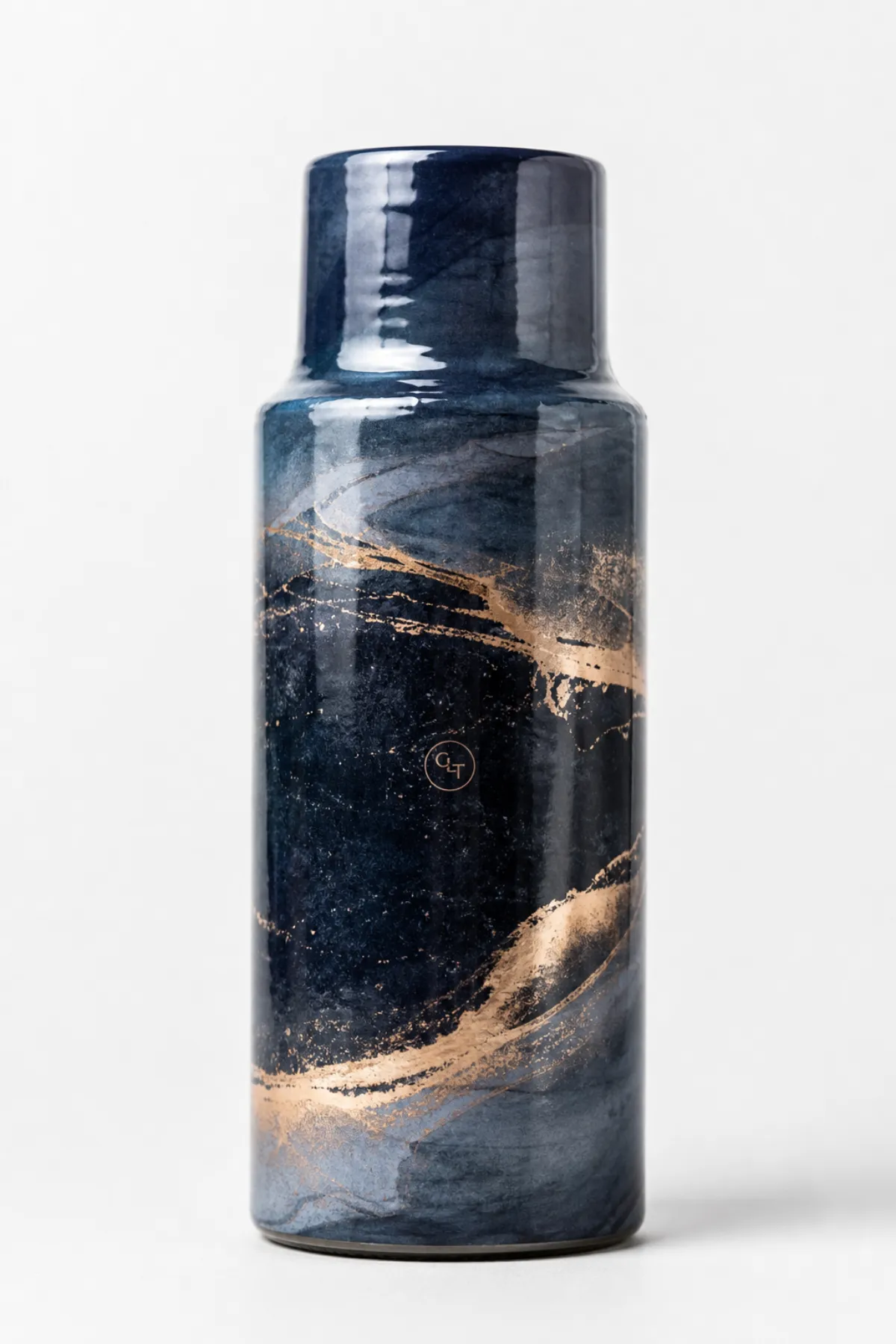
Picture a plain, awkwardly shaped bottle sitting between two competitors on a retail shelf. The label only covers part of the container, the shoulder feels unfinished, and the back panel looks like it was added as an afterthought. Custom shrink sleeve branding changes that quickly. It turns the full container into a 360-degree sales surface, which is why it appears so often in beverage, beauty, health, and specialty food packaging.
In simple terms, the process begins with a printed film sleeve. The sleeve is placed loosely over the container, then heat pulls it tight so it follows the shape of the bottle, jar, can, or tube. That full-coverage approach gives you room for color, product story, compliance text, and a much stronger visual impression than a standard pressure-sensitive label usually delivers. For brands working to sharpen their brand identity, that extra space matters.
There is a reason buyers choose custom shrink sleeve branding when other label formats fall short. Curved containers are easier to cover. Textured surfaces are less of a problem. Promotional packaging gets more space for seasonal graphics. Tamper evidence can be built into the sleeve or band. If the goal is to move a product from ordinary product packaging into something that reads as premium branded packaging, the sleeve can do that without changing the actual container.
That said, the sleeve is not magic. A good result depends on three things working together: the container shape, the design file, and the print specification. If one of those is off, the sleeve can wrinkle, distort, or cover the wrong part of the bottle after shrinking. That is why custom shrink sleeve branding should be planned as part of the broader packaging design system, not treated like an afterthought near the end of the project.
From a packaging buyer’s point of view, the appeal is straightforward. You get stronger shelf impact, more flexible graphics, and a cleaner route to high-coverage package branding. If you want to compare sleeve choices with other label formats, it helps to look at Custom Labels & Tags and broader Custom Packaging Products before locking in a direction.
How the Custom Shrink Sleeve Branding Process Works
Custom shrink sleeve branding usually moves through the same core stages, even if suppliers describe them a little differently. First comes container measurement. Then the printer builds or confirms the dieline. After that, artwork gets proofed, approved, printed, slit, seamed, and prepared for application. The final step is heat shrinking, either on a packaging line or through a converter that applies the sleeves before shipment.
Here is the practical version of that flow:
- Measure the container accurately. Height, diameter, shoulder shape, neck profile, and any curves or ridges all matter.
- Request a dieline. The dieline defines the printable area, seam position, and shrink allowances.
- Build artwork around the shape. This is where most brands lose time. A clean flat layout is not enough if the sleeve has to shrink around a tapered bottle.
- Review proofs and samples. A digital proof helps, but it is not the final answer. Real-world fit can still surprise you.
- Print, slit, and seam the film. The film is made into individual sleeves or rolls depending on the application setup.
- Apply heat. The sleeve shrinks to the container and locks into place.
Timelines depend mostly on approval speed. A straightforward job with finished artwork might move from proof to production in about 10 to 15 business days after approval, while complicated shapes, special finishes, or sample revisions can add another week or two. Custom shrink sleeve branding rarely runs late because the press is slow. It runs late because someone kept changing the art file, or the bottle measurements were not locked down.
Testing is where the smart money goes. A short run or sample should confirm barcode readability, seam placement, panel alignment, and whether the graphics hold up after shrink. If the sleeve has fine type, gradients, or QR codes, those details need checking on the actual container shape, not just on a screen.
A sleeve can look perfect in a mockup and still fail on the bottle. The container decides the final look, not the design file.
Depending on the operation, sleeves may be supplied loose for in-house application or delivered already applied by the printer or converter. That choice affects labor, line speed, and total cost. A contract packer with the right equipment can move quickly. A small brand with limited machinery may need a supplier that can handle more of the application side. Either way, custom shrink sleeve branding works best when the handoff between printer and packer is clear.
If you want a shipping sanity check after the sleeves are applied, the ISTA test methods are a useful reference for distribution and handling abuse. Not glamorous, but neither is replacing crushed packaging after launch.
Cost, Pricing, and MOQ for Custom Shrink Sleeve Branding
Pricing for custom shrink sleeve branding is driven by more than just how many sleeves you need. Film choice, print coverage, color count, finish, tamper-evident features, and whether the sleeves are applied in-house or by the supplier all affect the final number. If the design covers nearly the full bottle, expect more ink, more setup care, and more sensitivity around seam placement than a simple wrap label.
For rough planning, smaller runs usually land higher per unit because the setup cost is spread across fewer pieces. At 1,000 to 2,500 units, a sleeve-only cost might fall somewhere around $0.22 to $0.45 each, depending on coverage and print method. At 5,000 units, many jobs move closer to $0.12 to $0.28 each. At 10,000 units or more, the unit price can drop further, often into the $0.08 to $0.20 range. Those numbers are not a promise, obviously. They are a buying reference point so you are not comparing quotes blind.
If application is included, the total cost goes up. That is normal. You are paying for labor, line handling, and more process control. Some buyers want the printer to do more of that work because it reduces stress on their own team. Others have a packaging line already and only need loose sleeves. In custom shrink sleeve branding, that single choice can change the quote more than a small artwork adjustment.
| Run Size | Typical Sleeve-Only Cost | Typical Applied Cost | Best Fit |
|---|---|---|---|
| 1,000-2,500 | $0.22-$0.45 | $0.35-$0.70 | Pilot launches, test markets, short promotions |
| 5,000 | $0.12-$0.28 | $0.22-$0.45 | Common launch quantity for growing brands |
| 10,000+ | $0.08-$0.20 | $0.16-$0.35 | Higher volume programs with stable artwork |
Minimum order quantities vary by supplier and print method. Digital or short-run programs can be friendlier to smaller brands, while gravure and large-format production usually make more sense at higher counts. The trick is not chasing the lowest entry point. It is finding the lowest cost that still fits the actual launch plan. A cheap quote that forces you into ugly inventory levels is not cheap. It is only hiding the bill.
There are also hidden costs that show up after the first quote. New artwork versions, extra proofs, rush production, changes to the bottle shape, and reprints caused by bad measurements all create friction. Custom shrink sleeve branding gets expensive fast when the container changes after the dieline has already been approved. That is why I always tell buyers to lock the bottle first, then build the art.
A good rule of thumb: ask for pricing at two or three quantities. Maybe 2,500, 5,000, and 10,000. That gives you a real sense of the cost curve instead of one misleading number. If you are comparing broader packaging options, the team at packaging.org is a solid general reference for packaging basics and terminology. It will not price your job, but it can help you speak the same language as your vendor.
For brands working on a bigger launch stack, it also helps to compare sleeve costs against other custom printed boxes or secondary packaging choices. Sometimes the best money is spent on a sleeve; sometimes it is smarter to upgrade the carton or shipper and keep the sleeve simpler. That is the part many teams miss when they treat custom shrink sleeve branding as a standalone item instead of one piece of the whole product packaging budget.
Key Design Factors That Decide Whether It Looks Premium
Good-looking custom shrink sleeve branding starts with a blunt truth: the artwork has to be built for the container, not just dropped onto a flat template and hoped for the best. Shrink film moves. It stretches. It compresses. It changes how type, faces, logos, and background blocks appear once heat hits the sleeve. If the shape is tapered or has deep curves, the design has to account for that distortion before anyone prints anything.
Seam placement is another detail that separates smart packaging design from expensive guesswork. The seam should not land on a face, a critical logo edge, or a key legal statement. Small type also needs room away from the seam and from zones that shrink hardest. A 1-point error in the file can become a visible problem on the bottle, which is exactly why custom shrink sleeve branding rewards disciplined layout work.
Finish choices change the shelf story in a big way. Matte finishes feel calmer and often more premium. Gloss gives color more pop and can make bright artwork read from farther away. Metallic effects, clear panels, and selective printing can create a stronger signal, but they also add complexity and cost. For retail packaging, I usually advise brands to pick one finish direction and do it well instead of stacking effects just because the sample board looked exciting.
Readability still matters more than decoration. Barcodes need to scan. QR codes need enough quiet space. Nutrition panels, ingredient lists, and regulatory copy must stay legible after application. That includes sleeves used in food, beverage, and wellness packaging where compliance is not optional. If the art is so busy that the information becomes hard to read, the design has failed no matter how polished the mockup looked in email.
One more thing: think about the sleeve as part of the broader brand identity. If the rest of the line uses clean white cartons, minimal graphics, or strong structural shapes, the sleeve should not fight that system. Custom shrink sleeve branding should strengthen the package branding story, not drift away and make the product feel like it belongs to another company. That is also why many brands compare sleeve decisions against Case Studies before approving the final direction. Seeing how another pack solved the same shape problem can save a lot of second-guessing.
From a shopper’s point of view, the sleeve has about two seconds to earn attention. In that window, clarity usually beats chaos. Bold color blocks, strong contrast, and a clean hierarchy tend to outperform overdesigned graphics that try to say five things at once. That does not mean every sleeve has to be minimal. It means the best custom shrink sleeve branding knows what to prioritize.
Step-by-Step: From Artwork to Application
Here is the part where planning saves real money. Custom shrink sleeve branding works far better when the team treats it like a controlled process instead of a design-only task. Start with the container, then move to the dieline, then the art, then the sample. That order sounds plain because it is plain. It also works.
- Collect container specs first. Get the actual bottle or jar, not just a guessed dimension sheet. Measure the body height, panel width, shoulder angle, neck transition, and any ribs or texture. Photos help too, especially if the shape is unusual.
- Request the dieline before artwork starts. The dieline should include shrink allowances, seam position, and safe zones. If the artwork is being developed in-house, make sure the designer knows which parts of the container will distort most.
- Build the layout with the sleeve behavior in mind. Keep critical text away from the seam. Leave enough space for the artwork to shrink without making thin lines look broken or stretched. This is where a good proof saves you from a bad production run.
- Review a mockup on a real bottle image. Flat proofs are useful, but they do not show how the sleeve will feel on the actual package. A rendered mockup or sample is far better for judging hierarchy, color balance, and legibility.
- Approve a physical sample when the shape is difficult. If the container is tapered, ribbed, or irregular, do not skip the sample round. That one step catches most of the expensive mistakes.
On the application side, line settings matter. Heat tunnel temperature, dwell time, and conveyor speed all affect the final look. A 50-70 micron PETG sleeve behaves differently than a thicker OPS option, and both behave differently than PVC. That is not theory. It is the difference between a neat fit and a sleeve that wrinkles at the shoulder.
If the sleeves are being applied in-house, ask for a short setup run before production starts in volume. A few packs tell you a lot. You can see whether the sleeve floats, whether the seam stays where it should, and whether the graphics hold their shape after shrinking. That is a cheap test compared with discovering a problem after 10,000 units are already moving through the line.
For brands with more than one package format, this is also the stage where custom shrink sleeve branding should be checked against the rest of the system. If you are also using secondary cartons, shipper boxes, or display packs, the sleeve should match the tone of the entire branded packaging range. That is why some teams review sleeves alongside Custom Packaging Products instead of approving them in isolation.
One practical note: if the launch has a fixed date, build in time for one revision cycle. Not three. One. The best projects are the ones where the brand brings final content, the vendor brings a clean dieline, and nobody tries to redesign the label after proof approval. Miracles are great. Predictable production is better.
Common Mistakes That Waste Time and Money
The biggest mistake in custom shrink sleeve branding is shockingly ordinary: bad measurements. Someone measures the container at the widest point, assumes the sleeve will simply take care of itself, and then acts surprised when the final result is loose, distorted, or uneven. That is not a packaging problem. That is a planning problem.
- Using the wrong dimensions. Measure the real container, not the idea of the container.
- Ignoring the seam. Important art should not land where the seam will hide it or create visible disruption.
- Skipping the test application. A quick sample often reveals shrink wrinkles, misalignment, or panel distortion.
- Overloading the design. Too many finishes, too many type sizes, and too much copy raise cost without improving shelf impact.
- Changing the bottle late. If the container changes after approval, expect the sleeve to need adjustment too.
The seam issue deserves special attention. A lot of teams treat it like an invisible technical detail, which is a quick way to create a visible problem. If a key face, logo edge, or claim sits near the seam, the sleeve can look messy even if the print quality is excellent. In custom shrink sleeve branding, print quality and placement both matter. One without the other is only half a solution.
Another common mistake is treating barcodes and compliance text like filler. They are not filler. If a barcode will be used at retail, it has to scan after shrinking. If the pack needs legal copy or nutrition details, they still need space and contrast. It is a simple rule, but brands break it constantly because they fall in love with the front panel and forget the rest of the package.
Then there is the “more effects must equal more premium” trap. Not always. A matte sleeve with clean typography can look far more expensive than a noisy design with metallic ink, multiple varnishes, and three competing focal points. Good package branding is usually about restraint, not volume. That is especially true on smaller bottles where visual clutter shrinks along with the film.
Finally, do not ignore how the sleeve fits into the launch economics. If the job needs rush shipping, extra revision rounds, or a reprint because the container changed, the cost can jump quickly. That is why smart teams compare custom shrink sleeve branding decisions against the full product plan, not just the print quote. They are looking at total packaging behavior, not a single line item.
Expert Tips and Next Steps for Custom Shrink Sleeve Branding
If you want a cleaner quote and fewer surprises, gather the right inputs before you start asking vendors for pricing. I would get three things ready every time: container samples, final dimensions, and the target quantity. Add the finish you want too, because “premium” is not a specification. It is a feeling, and suppliers cannot price feelings.
For a serious custom shrink sleeve branding request, send a simple approval checklist with the RFQ:
- Artwork file format and source files
- Container measurements and sample photos
- Barcode or QR code requirements
- Seam placement preference
- Finish choice, such as matte, gloss, or specialty effects
- Expected lead time and launch date
- Whether sleeves are shipped loose or applied
Then compare vendors on more than price. Ask how they handle proofs. Ask whether they can provide a physical sample. Ask what happens if the first test fit is off by a little. Ask what film options they recommend for your container shape. A supplier that answers those questions clearly is usually worth more than the one who just sends a lower number and hopes you never inspect the output.
For brands that are building a broader packaging line, this is the moment to step back and look at the full shelf story. Does the sleeve support the carton? Does it match the look of the outer shipper? Does it fit the same visual rules as other custom printed boxes or custom packaging products in the range? That kind of consistency is how custom shrink sleeve branding strengthens the whole launch instead of only one SKU.
If you are still deciding whether to use a sleeve, a pressure-sensitive label, or another format, that is normal. Different shapes need different answers. A curved bottle with a strong retail presence often benefits from custom shrink sleeve branding, while a simpler container might be better served by a cleaner label or a more structural box. There is no prize for choosing the most complicated option. The best choice is the one that fits the product, the budget, and the line.
My short version: Custom Shrink Sleeves can look expensive, but they only earn that look when the art, the film, and the application plan are treated as one system. Ignore one piece and the result gets messy fast. Handle all three together and custom shrink sleeve branding can lift the shelf presence of almost any container without forcing a complete packaging redesign. The most practical next step is simple: lock the container, confirm the seam location, and build the artwork from those two decisions instead of guessing your way there.
FAQ
What is custom shrink sleeve branding used for?
It creates 360-degree branding on bottles, jars, cans, and other containers with awkward curves or limited label space. Custom shrink sleeve branding is especially useful when you need stronger shelf impact, more room for regulatory copy, or tamper evidence without changing the actual container.
How much does custom shrink sleeve branding usually cost per unit?
The unit price depends on quantity, film choice, print complexity, finish, and whether the sleeves are applied in-house or by the printer. Smaller runs usually cost more per piece because setup is spread across fewer units. For planning, ask for quotes at multiple quantities so you can see how custom shrink sleeve branding behaves as volume increases.
What files do I need for custom shrink sleeve branding artwork?
A vector-based design file is ideal, plus any linked images in high resolution. You also need accurate container measurements so the printer can build the dieline with proper shrink allowances. If the sleeve includes barcodes, QR codes, or legal text, those should be included and checked early in the custom shrink sleeve branding process.
How long does the custom shrink sleeve branding process take?
Timing depends mostly on artwork approvals and sample review, not just print speed. Straightforward jobs move faster; complex containers, specialty finishes, or extra sample rounds add time. If your launch date is fixed, leave room for one revision cycle so custom shrink sleeve branding does not become a last-minute scramble.
What container shapes work best with custom shrink sleeve branding?
It works well on curved, tapered, and irregular shapes where standard labels struggle to stay aligned. The best candidates have enough surface area for the sleeve to shrink evenly without excessive distortion. Very sharp angles, deep ridges, and unusual neck geometry need extra testing before production, which is exactly where custom shrink sleeve branding earns its keep or exposes a bad fit.

