Buyer Fit Snapshot
| Best fit | Custom Shrink Sleeves with Cmyk Printing projects where brand print, material claims, artwork control, MOQ, and repeat-order consistency need to be specified before quoting. |
|---|---|
| Quote inputs | Share finished size, material target, print colors, finish, packing count, annual reorder estimate, ship-to region, and any compliance wording. |
| Proofing check | Approve dieline scale, logo placement, barcode or warning zones, color tolerance, closure strength, and carton packing before bulk production. |
| Main risk | Vague material claims, crowded artwork, missing packing details, or unclear freight terms can make a low unit price expensive after revisions. |
Fast answer: Custom Shrink Sleeves with Cmyk Printing: Material, Print, Proofing, and Reorder Risk should be specified like a repeatable production item. The safest quote records material, print method, finish, artwork proof, packing count, and reorder notes in one written spec.
Production checks before approval
Compare the actual filled-product size with the drawing, then confirm tolerance on folds, seals, hang holes, label areas, and retail display edges. Reserve space for logos, QR codes, warning copy, and material claims before decorative graphics fill the panel.
Quote comparison points
Review material grade, print process, finish, sampling route, tooling charges, carton quantity, and freight assumptions side by side. A quote is only useful when the supplier can repeat the same color, closure quality, and packing count on the next order.
Custom Shrink Sleeves With CMYK Printing That Sell
Custom Shrink Sleeves with CMYK printing do something plain labels rarely manage: they make the container feel like part of the design, not just a vessel holding the product. That sounds subtle. It is not. On shelf, a bottle with full-body coverage reads faster, looks more deliberate, and usually feels more premium before a shopper has even read the claims. In categories where buyers decide in a few seconds, that visual density matters.
The format is popular for a practical reason too. A sleeve starts flat, gets printed, is formed into a tube, then shrinks around the container with heat. That means the artwork can cover more of the package than a front-and-back label, while the bottle underneath stays the same. For brands that want a stronger shelf presence without changing molds or retooling the package, custom shrink Sleeves with CMYK printing offer a pretty efficient path.
CMYK adds another layer of usefulness. It supports gradients, photography, layered backgrounds, and richer illustration than a limited spot-color build. That flexibility is why the format shows up so often in beverage, beauty, nutraceutical, and household product packaging. The catch is simple: the artwork cannot be designed like a flat sticker. Film stretches. Bottles taper. Heat changes everything a little. Ignore that, and the print can look clean on paper but off on the actual container.
So the real question is not whether sleeves can look good. They can. The question is whether the file, the film, and the bottle have been considered together from the start. That is the difference between a polished launch and a packaging headache.
Custom Shrink Sleeves With CMYK Printing: Why They Stand Out
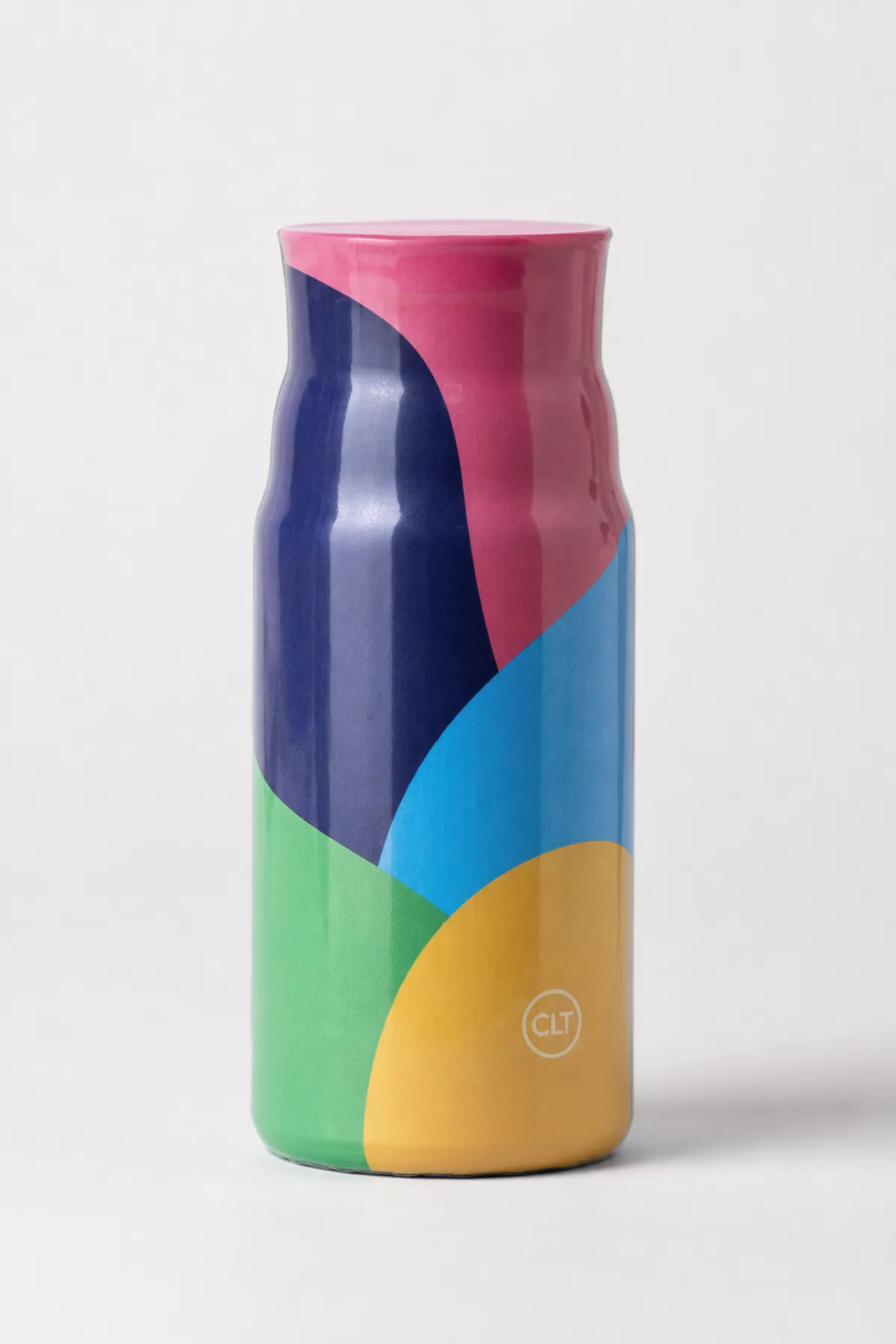
Put two nearly identical bottles on a counter. One has a modest label panel with exposed shoulders. The other uses custom shrink sleeves with CMYK printing and looks as if the graphics were wrapped around the container by design, not added later. Same fill. Same formula. Different perception.
That difference is doing real commercial work. More surface area means more room for branding, claims, icons, regulatory copy, and visual rhythm. It also means the package can block out competing shelf noise more effectively. In crowded categories, full-coverage sleeves often make the product feel more established, even when the brand is still new. I have seen launch teams underestimate that effect and then get surprised when the sleeve becomes the most discussed part of the package.
There is also a structural advantage. A sleeve can help unify a family of SKUs that come in different sizes or container shapes. One design system can hold together across multiple bottles, which makes the line feel intentional instead of pieced together. That is especially useful in retail packaging where the front face, side panels, and back copy all need to work as one visual system.
CMYK is the engine behind a lot of that versatility. It handles photographic imagery, soft gradients, textured backgrounds, and layered color better than many simplified print builds. Brands that need a rich shelf story do not always want a loud one. Sometimes they want depth. Custom shrink sleeves with CMYK printing can provide that depth without forcing a complete container redesign.
There is a tradeoff, of course. More coverage also means more opportunities for distortion, more attention to safe zones, and more prepress discipline. The sleeve only looks premium if the artwork respects the shrink behavior. If it does not, the package can feel slightly off in a way customers may not name, but they will notice it. Kind of like a shirt that almost fits.
Related note: if you are comparing sleeve options against other formats, it helps to review the broader Manufacturing Capabilities behind the program and the range of Custom Packaging Products available for a complete package system.
How Custom Shrink Sleeves With CMYK Printing Work
The production path is straightforward on the surface: artwork review, proofing, printing, converting, application, heat shrink, inspection. The trouble starts when one of those steps is based on the wrong assumption. Custom shrink sleeves with CMYK printing are unforgiving in that way.
First comes the dieline. The artwork has to be mapped to the actual container, not a generic cylinder. That matters because a neck, shoulder, taper, or foot ring will change how the image lands once the sleeve shrinks. Type that looks centered in a flat file can drift after application. A border that looked balanced can bow. One beverage launch I reviewed had a clean back panel on screen, but after shrink the copy migrated just enough to make the whole package feel a bit crooked. Nothing was technically wrong. It still looked wrong.
The file is usually built in reverse because the ink sits on the inside of the film. That detail trips people up more often than you would think. If the layout is treated like a pressure-sensitive label, the final sleeve can come out with misplaced graphics or text that reads backward during setup. So yes, file orientation matters. A lot.
Film selection is the next major decision. PETG, PVC, OPS, and related shrink films each behave differently under heat and each carry their own clarity, shrink ratio, and cost profile. PETG is common because it balances print quality and performance well. PVC can be economical, though sustainability policies may make it a tougher sell for some brands. OPS can offer a clean finish but can be more sensitive during handling. The right choice depends on the container, the line, and the brand’s recycling and compliance priorities.
Once printed, the film is converted into a tube and seam-formed. Seam placement is not just a shop-floor detail. It affects readability, barcode placement, and the visual balance of the sleeve. The sleeve is then applied to the filled container and sent through a heat tunnel or steam tunnel, where the film contracts around the package shape. That is where custom shrink sleeves with CMYK printing either prove the prepress work was solid or expose every missed assumption in the file.
CMYK itself is strong, but not magical. It reproduces a broad range of color and image detail well, yet exact brand colors can still shift from screen to substrate. A deep red may print beautifully but not match a Pantone reference perfectly. That is normal. If color is critical, proofing on the actual film is not optional. It is the closest thing to a reality check a packaging team gets before the press starts moving.
For distribution testing and packaging context, some teams also reference ISTA methods and broader guidance from packaging.org. Those resources do not replace print review, but they do help frame how the package should survive handling, transit, and retail display.
Design Factors That Affect Color, Fit, and Shelf Impact
Good sleeve design starts with the film and the container, not the pretty part of the artwork. Transparent film, white film, and metallized film all change the look of custom shrink sleeves with CMYK printing in ways that are easy to miss on a monitor and obvious on shelf. Transparent film can feel elegant on a clear bottle, but it also reveals whatever is underneath it. White film gives the design a cleaner, brighter base. Metallized film reflects more light and can push the package toward a premium look, though it usually adds Cost and Process complexity.
Safe zones are not decorative lines in a template. They protect the design from the parts of the container that shrink the most. Logos, legal copy, and barcodes should stay away from the shoulders, neck, and high-taper areas whenever possible. If the container shape is aggressive, tiny type can compress enough to become hard to read. That is one reason custom shrink sleeves with CMYK printing work best when the artwork is built around the actual bottle dimensions rather than a reused template that was never meant for this specific shape.
Container material changes the perceived color too. Glass can make saturated colors feel deeper and more reflective. PET often feels a little brighter and lighter. HDPE may soften the final appearance because the substrate is more opaque. Same file, different substrate, different result. That is not a print failure; it is a physical system doing what physical systems do.
Ink coverage deserves attention as well. Heavy backgrounds can look rich, but too much coverage can create banding or muddy detail if the press is not tuned correctly. Gradients need enough resolution to stay smooth after shrink. Fine lines need enough spacing to survive the wrap. The best custom shrink sleeves with CMYK printing usually keep the hierarchy clear and the composition simple enough to tolerate a little movement.
A useful comparison: offset carton printing keeps the image flat and fixed. A shrink sleeve has to travel from a flat web to a curved bottle, and that changes everything from barcode size to type placement to border treatment. It is less like printing a flyer and more like tailoring a jacket after the fabric is already cut.
If the bottle shape is unusual, the artwork should usually get cleaner, not busier. That feels counterintuitive to some teams, especially launch teams trying to say a lot in one package. But crowded sleeves magnify distortion. Simpler sleeves absorb it more gracefully, and that usually reads better at retail distance anyway.
Custom Shrink Sleeves With CMYK Printing: Cost, MOQ, and Pricing Drivers
Pricing is where the nice theory gets real. On a basic level, custom shrink sleeves with CMYK printing are priced by film choice, size, coverage, finishing, order quantity, and application complexity. Two sleeves can look almost identical and still cost differently because one needs tighter seam control, more prepress time, or a more demanding shrink profile. Those are the hidden mechanics behind the quote.
As a rough planning range, a standard mid-volume run of custom shrink sleeves with CMYK printing might land around $0.18-$0.35 per unit at 5,000 pieces, depending on film, color coverage, and converting requirements. More complex versions with opaque white underprint, perforations, matte varnish, special finishes, or unusual bottle geometry can move higher, sometimes into the $0.30-$0.45 range or beyond. Those numbers are only useful as a ballpark, not a promise.
MOQ changes the math because setup costs get spread across the order. Film staging, press setup, proofing, and converting all need to happen whether the run is 5,000 pieces or 50,000. The press does not care. The prep is still there. That is why short-run buyers feel the pressure first and why very small orders can look expensive on a unit basis.
| Option | Typical Cost Impact | Best Use | Main Tradeoff |
|---|---|---|---|
| PVC film | Lowest material cost, often useful for budget-led runs | Simple container shapes and higher shrink needs | Recycling concerns can make it less appealing for some brands |
| PETG film | Mid-range cost with strong clarity and print performance | Most mainstream custom shrink sleeves with CMYK printing | Can cost more than PVC and needs careful spec review |
| OPS film | Often competitive, depending on supply and region | Lightweight sleeves with a clean finish | Heat sensitivity can complicate handling and application |
| Metallized or opaque film | Higher cost because of material and finish complexity | Premium retail packaging and stronger shelf blocking | More setup work and sometimes longer lead time |
Freight can matter too, especially when the launch window is tight. Proofing adds cost and days, but it usually saves more than it costs when color is important. Application compatibility can also move the budget. A sleeve that runs beautifully on a sample bottle may behave differently on a production line if the fill speed changes, the tunnel temperature drifts, or the bottle wall is softer than expected.
If cost needs to come down, the safest levers are usually visual, not structural. Reduce ink coverage where the design can handle it. Simplify the background. Keep the seam and barcode in straightforward places. Use standard film unless the brand story truly needs a premium effect. And compare quotes on the same scope. One supplier may include prepress review, one physical proof, and application guidance; another may not. Those are not equivalent offers just because the totals look similar.
The cheapest quote is often the one that ignores the details. The expensive quote is sometimes the one that saves the launch.
Production Steps and Timeline: From File Review to Delivery
A clean sleeve job usually follows a familiar sequence: brief, file review, proof, material selection, print, converting, inspection, shipment. It looks linear on paper. Real life is less obedient.
File review is the first major gate. This is where the supplier checks bleed, seam position, safe zones, shrink allowance, and image resolution. If the designer has not built for shrink, the review can catch the issue before it reaches press. That is the moment to catch it. Once the job moves further into production, custom shrink sleeves with CMYK printing become more expensive to revise because the mistake is no longer theoretical.
For planning, many straightforward sleeve runs land around 12-15 business days after proof approval. The full cycle can stretch longer if the artwork arrives late, the finish is specialized, or the film has to be sourced to order. Complex structures, opaque coverage, and multiple proof rounds can push the timeline into the 2-4 week range, sometimes beyond that if the launch requires application testing. Those are realistic anchors, not guarantees.
Sample approval is where projects often gain or lose time. A physical proof tells you more than a PDF ever can, especially when the design uses a bright brand color, metallic effects, or a subtle gradient. Custom shrink sleeves with CMYK printing behave differently under shop lights than they do on a laptop screen. A monitor can lie in a cheerful, well-lit kind of way.
Backward planning helps more than optimism. When does product need to be in the filler? When does the line need sleeves in hand for trials? When does the distributor want finished cases? If the launch includes secondary packaging, the sleeve schedule should sit inside the broader branded packaging timeline, not off to the side like an afterthought. That includes any Custom Packaging Products tied to the carton or shipper, not just the sleeve itself.
The cleanest schedule is usually the one that locks artwork early, confirms the dieline before design is finalized, and leaves a real approval window for sample review. A rushed sleeve project is rarely just a printing problem. More often, it is a sequencing problem pretending to be a deadline.
Common Mistakes to Avoid Before You Approve Print
The most common mistake is designing the sleeve as if it will stay flat. It will not. Shrink distortion can stretch logos, pull type, and compress images on tapered surfaces, and custom shrink sleeves with CMYK printing make those effects easier to spot because the artwork usually carries more detail. If the file is built without shrink allowance, the final package can look technically correct and visually awkward at the same time.
Screen color is another trap. A monitor can show a bright blue or a saturated orange, but custom shrink sleeves with CMYK printing rarely match the screen exactly without proofing and calibration. That gap is normal. CMYK on film behaves differently than RGB on glass, and the film itself affects how light bounces back to the eye. If a team is judging color only from a PDF preview, the conversation has already drifted away from the physical package.
Low-resolution art causes more damage than people expect. Fine lines, tiny legal text, and dense icon rows can soften after application, especially on curved or highly contoured containers. If the text is already small in the file, shrink will not make it friendlier. This is the point where brand design and packaging engineering need to talk to each other instead of operating in separate lanes. The sleeve has to satisfy both appearance and compliance.
Seam placement can undermine the whole design if it is treated casually. A barcode across the seam may scan poorly. A logo near the seam can appear off-center once the tube is closed. A crowded back panel can feel pinched if the seam cuts through it. Those are practical failures, not just aesthetic preferences.
Application testing matters too. A sleeve that looks good in a proof can wrinkle, scuff, or shrink unevenly if line speed, tunnel heat, or bottle stiffness do not suit the film. Some issues do not show up until the sleeve is on the real container. That is exactly why testing exists. If the project is tied to a retail launch, a short delay in sample approval is usually cheaper than a pallet of rework.
Brands that also manage Custom Printed Boxes or other secondary packaging should align sleeve approval with the broader launch schedule so the full package system lands together. Otherwise one piece of the program gets polished while the rest is still catching up.
The fastest way to make custom shrink sleeves with CMYK printing look cheap is to rush them. The second fastest way is to pretend the bottle shape does not matter. Both are avoidable.
Expert Tips and Next Steps for a Better Sleeve Order
Start with a preflight checklist. Include container dimensions, fill level, preferred finish, barcode location, seam preference, application method, and target volume. That sounds basic, but incomplete data still causes too many pricing errors and production delays. Custom shrink sleeves with CMYK printing are easier to quote correctly when the supplier is not guessing at the bottle profile or the launch environment.
If color fidelity is critical, ask for a physical proof or a real material sample. That matters especially for custom shrink sleeves with CMYK printing that use brand-signature colors, dark solids, or photographic artwork. A printed sample is not a nice extra. It is the fastest way to see whether the design holds together on the actual film and under real light.
Test one production-ready sample on the real container before approving the full run. Not a mockup. The real bottle. A sleeve can behave beautifully on a straight cylinder and then get a little weird on a container with a shoulder curve or a sharper taper than expected. A production-ready sample exposes those issues early, which is exactly why experienced packaging teams treat samples as decision tools rather than display pieces.
Ask suppliers how they handle prepress and application guidance. Some shops are only sending printed film. Others are solving the fit problem with you. The second type is usually worth more. A vendor that understands the relationship between custom shrink sleeves with CMYK printing, tunnel behavior, and line speed can save a lot of rework. That is the sort of help you want when a launch date is real and the margin for error is not.
For broader industry context, packaging teams often compare sleeve specs against distribution standards and then decide whether the final package should be tested against protocols such as ISTA 3A or similar methods. If the project includes a larger product packaging program, that thinking should extend to the carton and shipper too. That is where a careful Manufacturing Capabilities review becomes useful: it shows whether the supplier can support proofing, converting, and the practical side of application.
One habit saves money quickly: compare quotes by total cost of ownership, not only by the unit line. If one option saves a cent but adds a week of delay, a second approval round, or a color miss that slows the launch, it is not really the cheaper choice. Custom shrink sleeves with CMYK printing work best when the project is planned as a package system, not as an isolated print buy.
If a launch is already on the calendar, the cleanest next step is to gather the container spec sheet, the actual sample bottle, the intended finish, and the target quantity before anyone opens the design file. That gives the supplier enough information to flag shrink risk early and keeps custom shrink sleeves with CMYK printing on the practical side of the line rather than the expensive side.
FAQ
How do custom shrink sleeves with CMYK printing differ from standard labels?
Custom shrink sleeves with CMYK printing cover more of the package, so they create a full-body brand surface instead of a single label panel. They are also applied with heat, which means fit, distortion, and container shape matter much more than they do with a pressure-sensitive label. That extra coverage is one reason many teams use sleeves for stronger retail packaging impact.
What artwork setup is best for custom shrink sleeves with CMYK printing?
Use the supplier's dieline, keep critical copy away from seams and other high-shrink zones, and build safe margins for logos, barcodes, and legal text. High-resolution files help, but proof review matters more than file size alone. Custom shrink sleeves with CMYK printing can look clean on screen and still need adjustment once they are mapped to the actual bottle.
What affects the price of custom shrink sleeves with CMYK printing the most?
Film choice, ink coverage, finishing, and artwork complexity usually drive cost the hardest. Quantity matters because setup gets spread across the run, so short orders carry a higher unit price. Special requirements such as perforations, opaque coverage, or unusual bottle geometry can add labor and material expense to custom shrink sleeves with CMYK printing.
How long does the production process usually take for custom shrink sleeves with CMYK printing?
Lead time depends on artwork approval, proofing, material availability, and whether the design is straightforward or highly customized. A clean file and quick approvals can shorten the schedule, while late changes usually add days. Build extra time for application trials, because custom shrink sleeves with CMYK printing should be tested on the real container before launch.
What are the most common mistakes with custom shrink sleeves with CMYK printing?
Designing without shrink allowance is one of the fastest ways to end up with stretched text or skewed graphics. Skipping proof review can create color surprises, especially on dark backgrounds and bright brand colors. Ignoring application testing can also cause wrinkles, seam issues, or uneven shrink, which is why custom shrink sleeves with CMYK printing should never be approved on artwork alone.
Custom shrink sleeves with CMYK printing are not difficult because they are trendy; they are difficult because the package is physical. Film moves, bottles curve, heat changes shape, and color behaves differently on each substrate. That is exactly why the format can work so well. When the spec is right, custom shrink sleeves with CMYK printing deliver stronger shelf presence, cleaner branding, and a more deliberate product story than a flat label usually can.

