Buyer Fit Snapshot
| Best fit | Custom Single Wall Shipping Boxes projects where brand print, material claims, artwork control, MOQ, and repeat-order consistency need to be specified before quoting. |
|---|---|
| Quote inputs | Share finished size, material target, print colors, finish, packing count, annual reorder estimate, ship-to region, and any compliance wording. |
| Proofing check | Approve dieline scale, logo placement, barcode or warning zones, color tolerance, closure strength, and carton packing before bulk production. |
| Main risk | Vague material claims, crowded artwork, missing packing details, or unclear freight terms can make a low unit price expensive after revisions. |
Fast answer: Custom Single Wall Shipping Boxes: Quote Scope, Sample Proof, MOQ, and Lead Time should be specified like a repeatable production item. The safest quote records material, print method, finish, artwork proof, packing count, and reorder notes in one written spec.
Production checks before approval
Compare the actual filled-product size with the drawing, then confirm tolerance on folds, seals, hang holes, label areas, and retail display edges. Reserve space for logos, QR codes, warning copy, and material claims before decorative graphics fill the panel.
Quote comparison points
Review material grade, print process, finish, sampling route, tooling charges, carton quantity, and freight assumptions side by side. A quote is only useful when the supplier can repeat the same color, closure quality, and packing count on the next order.
Custom single Wall Shipping Boxes can look plain on paper and still outperform heavier packaging when the board grade, flute profile, and fit are chosen with care. That is the part many buyers miss. Corrugated packaging is not strong in some abstract, universal sense; it is strong, or weak, against a specific product, a specific packout, and a specific shipping lane. Once those variables line up, custom single wall shipping boxes become the steady, unglamorous workhorse behind ecommerce shipping, order fulfillment, and retail packaging.
From a packaging buyer’s point of view, the appeal is easy to understand: less void fill, tighter product control, less waste moving through the warehouse, and a cleaner branded presentation when the box reaches the customer. The tradeoff is real as well. Custom single wall shipping boxes are not the right answer for every shipment, especially not for heavy, sharp, or high-risk goods. The strongest programs start with real product dimensions, realistic transit conditions, and measurable performance goals rather than assumptions pulled from memory or convenience.
“A carton should fit the product, not force the product to adapt to the carton.”
That simple idea explains why custom printed boxes can save money in one program and create damage in another. The box itself is only one part of the system. Tape choice, inserts, dividers, stack height, and warehouse handling all shape how custom single wall shipping boxes behave after they leave the dock. If you have ever opened a beautiful carton with a crushed corner and found the product inside untouched, you already know the difference between cosmetic packaging and a real shipping specification.
In a working program, the product comes first and the carton follows. Weight, fragility, surface finish, center of gravity, and replenishment pattern all matter. A subscription skincare kit, a folded apparel order, and a set of machine parts can all look lightweight on paper, yet each one asks for a different corrugated structure, a different insert strategy, and a different closure method. That is why custom single wall shipping boxes deserve more than a size check and a logo placement. I have seen plenty of packaging decisions go sideways because someone assumed the smallest box that “basically fit” would be fine. It usually is not.
What Are Custom Single Wall Shipping Boxes?
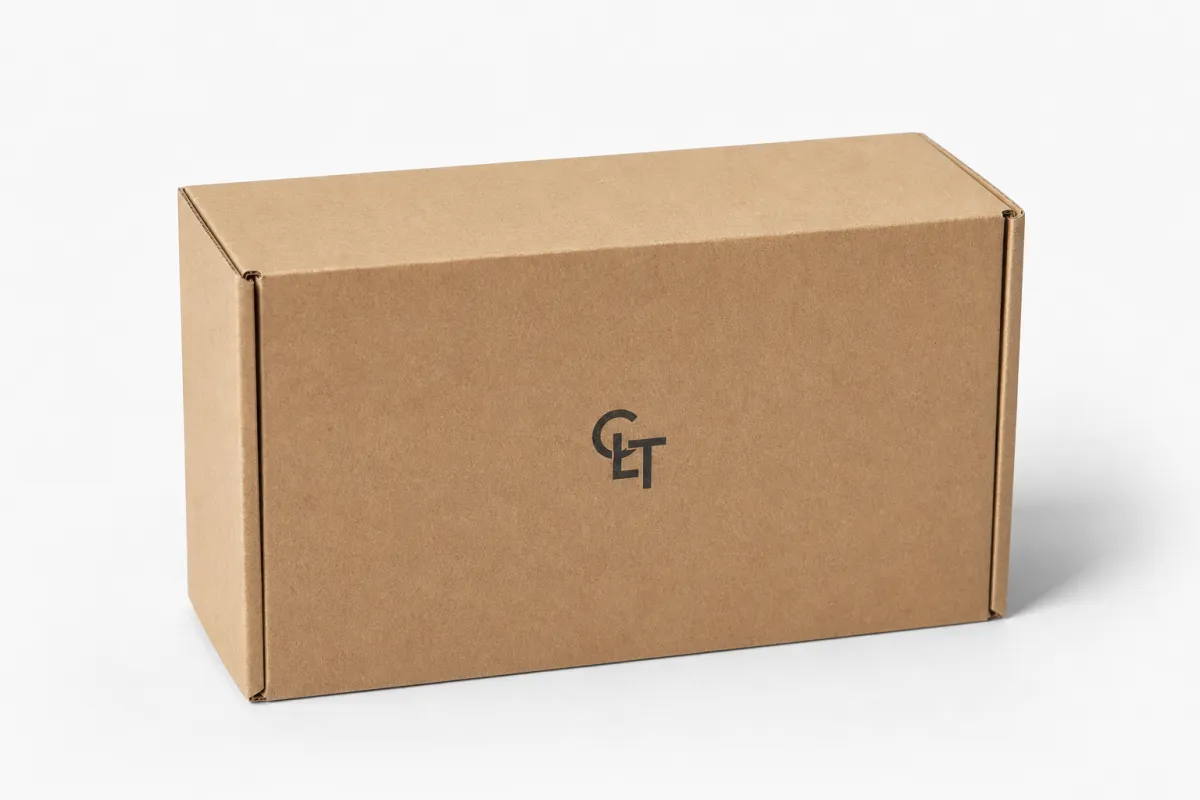
Custom single wall shipping boxes are corrugated cartons made with one layer of fluting between two linerboards. In practical terms, that gives you a lighter structure than double wall, while still providing enough rigidity for a large share of everyday shipments. The “custom” part matters because the internal dimensions, print, board grade, and style are built around the product instead of pulled from a generic size chart.
That difference changes the whole packing experience. A standard carton may leave too much empty space, which invites movement and increases the amount of cushioning material you need. A well-planned custom single wall shipping boxes program does the opposite. It tightens the fit, reduces product drift, and often lowers the total amount of material moving through product packaging and freight workflows. It also helps warehouse teams pack more consistently, since the right-sized box removes some of the improvisation from the station.
Most buyers use custom single wall shipping boxes for lightweight-to-medium products, subscription kits, parts, apparel, cosmetics, accessories, books, and mixed ecommerce orders. They also show up in retail packaging programs where unboxing matters, because the structure can carry clean graphics without the cost of a heavier board construction. A printed outer surface can carry product messaging, barcodes, care instructions, or a simple brand mark while still keeping the box practical for parcel networks.
The real benefit is not just protection. It is fit. A carton sized to the product often uses less void fill, packs faster, and ships more efficiently because you are not paying to move dead air. That matters in ecommerce shipping, where dimensional weight can turn a slightly oversized box into a costly mistake. A box that is two inches too large in each direction can add volume quickly, and the freight bill can rise faster than the product margin.
There are also different box styles to think about. A regular slotted container, often called an RSC or 0201 style, is the most common because it is easy to run, easy to tape, and widely available. A roll-end tuck style, mailer-style carton, or crash-lock bottom may be better for a premium unboxing experience or for faster packing at the fulfillment station. Custom single wall shipping boxes can be designed in any of these forms, but the style should follow the product and the packing process, not the other way around.
Board choice matters too. E-flute is popular for sharper print and a slimmer profile. B-flute brings more cushion and better puncture resistance. C-flute is often chosen for a stronger balance of compression and printability. The right flute is not just a technical detail; it determines how the carton behaves under stacking load, how crisp the print looks, and how much the finished box weighs. For a brand that ships hundreds of thousands of small parcels, those differences add up.
If you are comparing formats, it helps to look at the box as part of a larger packaging system. Some products need a simple shipper, while others need a shipper plus insert, partition, or protective wrap. That is why it can be useful to compare against our broader Custom Packaging Products and our Custom Shipping Boxes options before locking the spec. A box choice should follow the product, not the other way around.
How Custom Single Wall Shipping Boxes Work in Transit
To understand custom single wall shipping boxes, you have to think about what happens after the box is sealed. It is not the print that protects the product. It is the geometry, the material behavior, and the way force moves through the structure as it is sorted, stacked, tossed, dropped, and compressed along the route.
Corrugated board works because the fluted medium acts like a series of tiny arches. That geometry absorbs energy and spreads pressure across the panel. On a parcel line, a box may be dropped on a corner, squeezed under a heavier carton, or flexed repeatedly as it rides conveyor systems. The board has to survive those stresses while keeping the contents within acceptable movement limits. Custom single wall shipping boxes do that well when the packout is tuned to the load.
Corner strength deserves special attention. A carton rarely fails by flattening evenly like a sheet of paper. It usually gives way at a corner, a seam, or a panel that was weakened by over-scoring or poor board selection. That is why custom single wall shipping boxes are often specified with careful attention to score placement, glue flap width, and seam direction. A box that closes neatly but folds too easily at the corners will not perform the way buyers expect.
Product movement inside the box is the next issue. If an item can shift, bounce, or rotate, the carton may survive while the product does not. This is where inserts, paper cushions, molded pulp, corrugated dividers, and die-cut retention features become part of the packaging system. A glass serum bottle, for example, might sit safely in a custom insert inside a single wall mailer, while the same bottle without retention could crack during a moderate drop test. The board alone is not enough.
Shipping lane matters just as much as product type. A direct consumer parcel shipped regionally is a very different risk profile from a box going through multiple hubs, long conveyor runs, and weather swings. Humidity can soften board. Temperature changes can affect adhesive performance. Heavy stacking during palletized transit can crush lighter cartons if the compression strength is not specified correctly. Custom single wall shipping boxes should be tested against the worst realistic lane, not the ideal one.
Standards help keep the process honest. ISTA procedures, especially common parcel tests such as ISTA 3A, are useful for simulating distribution hazards. ASTM D4169 is another common reference for performance testing. Neither standard replaces real-world judgment, but both give packaging teams a consistent way to compare options. A carton that passes a standard under a defined load profile carries more credibility than one approved because it “looked strong enough.”
The practical takeaway is simple: custom single wall shipping boxes perform best when the product is supported, the void is controlled, and the outer carton is specified for compression as well as drop resistance. If you are shipping something with sharp corners, uneven weight distribution, or a high replacement cost, ask for a test plan. A few prototype runs can reveal problems that a CAD drawing will never show.
Cost, Pricing, and MOQ for Custom Single Wall Shipping Boxes
Pricing is where many programs get distorted. Buyers see a low unit price for a generic carton and assume the custom version should sit close to it. That is not always how corrugated pricing works. Custom single wall shipping boxes are priced by size, board grade, print coverage, tooling, run length, and freight, which means the final number can move more than expected.
For straightforward brown boxes with limited print, custom single wall shipping boxes may land in the range of about $0.35 to $0.85 per unit at moderate volumes, depending on size and spec. Small, high-volume mailer formats can come in lower. Larger cartons, heavy print coverage, specialty coatings, or tight tolerances can push pricing higher. If you add inserts, foam, paper pads, or complex die cuts, the unit cost climbs again. The honest answer is that packaging economics depend on the full structure, not just the shell.
MOQ often starts around 1,000 to 3,000 units for custom production, although digital print runs can go lower and flexographic runs often prefer larger quantities. Some suppliers will quote smaller starter quantities to help a program launch, then improve pricing at higher repeats. That can be useful if you are still validating the box size, the customer fit, or the damage rate. It is less useful if you already know your annual volume and simply want the best landed cost.
Shipping carton economics should also account for freight and storage. A box that saves 20 grams of board weight may not be the winner if it takes longer to pack, requires more void fill, or ships in a pallet pattern that wastes cube. The cheapest custom single wall shipping boxes on paper are not always the cheapest in the warehouse. Labor can erase unit savings surprisingly fast. Packaging buyers who track total delivered cost usually make better decisions than those who focus on the carton price alone.
Print coverage matters more than many people expect. A one-color logo on a kraft surface is very different from a full-wrap printed carton with registration targets, white ink, and coated areas. The latter may require more setup, tighter process control, and more waste in proofing. If the goal is brand presentation, that may be worth it. If the goal is pure shipping efficiency, a simpler print spec usually gives better economics.
Board grade is another major driver. A stronger board with a higher ECT or Mullen test number can reduce collapse risk, but you should not specify extra strength just because it sounds safer. Overspecifying the carton can increase cost without solving the real issue. For many custom single wall shipping boxes, the better move is to improve fit or add an insert rather than jump to heavier board. That is often a smarter investment than simply thickening the outer shell.
One useful comparison is to ask what the box is protecting and what a damage event actually costs. If a carton costs $0.18 more but prevents one in fifty shipments from being replaced, the apparent savings may disappear. For lower-value goods, the math may favor a leaner spec. For premium goods, the packaging should be judged against return rates, replacement labor, and customer trust. Custom single wall shipping boxes make sense when the total business equation works, not only when the carton invoice looks attractive.
Process, Timeline, and Lead Time
The process for custom single wall shipping boxes usually moves through a familiar sequence, but the pace depends on how clear the brief is. If the product dimensions are exact, the artwork is ready, and the structural requirements are simple, the project can move quickly. If the team is still debating the right flute, the closure method, or whether the box will ship flat or pre-assembled, the schedule stretches.
Most projects begin with a spec review. That includes product dimensions, target weight, shipping method, print requirements, and any performance expectations. A packaging engineer or sales rep may ask for photos of the product, sample units, or a current carton to measure. This step matters because custom single wall shipping boxes are often designed around the real object, not the nominal product size on a spec sheet. If a lotion bottle has an overcap or a retail hanger tab, the usable dimensions may differ from the listed product dimensions.
Next comes structural design. A carton designer builds a dieline, checks fit allowances, and confirms how the box will fold, ship, and seal. At this stage, small changes can have large consequences. A score moved by a few millimeters can make a tuck flap tighter or a locking tab less secure. A structural prototype is worth the time because it shows the behavior of the box before you commit to a full run.
Artwork approval follows. This is where color management, barcode placement, legal copy, recycling statements, and brand marks are checked. A clean dieline does not guarantee a clean print. If the design includes fine text near a fold, it may blur or disappear once the board is creased. Good custom single wall shipping boxes keep artwork away from the most stressed areas unless that detail is intentional and tested.
After proof approval, production typically takes about 12 to 20 business days for standard custom runs, though some projects are faster and some take longer. Add time for freight, especially if the cartons are moving internationally or require palletized delivery to multiple sites. If you need samples first, plan for a little extra. Prototype sampling can add several days to the front of the schedule, but it is usually cheaper than discovering a fit problem after thousands of units are printed.
Lead time also depends on board availability. Common kraft liners and standard flute structures are easier to source than specialty papers, moisture-resistant coatings, or fully recycled content stocks with strict appearance requirements. If your procurement window is tight, ask early whether the board grade is a standard item or a special-order material. That question alone can save a week.
A disciplined timeline for custom single wall shipping boxes often looks like this: specification review, structural proof, artwork proof, sample approval, production, then freight. The projects that slip usually do so because one of those stages was treated as a formality. Packaging is physical. Small assumptions become expensive once the line is running.
Step-by-Step Guide to Specifying the Right Box
Getting custom single wall shipping boxes right is less about guesswork and more about disciplined inputs. A clear brief leads to a cleaner result, fewer revisions, and a better chance that the first production run performs as expected. Here is the sequence that tends to work best.
-
Measure the actual product.
Use the longest, widest, and tallest finished dimensions, not the idealized carton-friendly ones. Include caps, handles, labels, and any part that creates a bulge. If the product is flexible, measure it in the condition it will be packed in. Custom single wall shipping boxes fail more often from bad dimensions than from bad print.
-
Define the protection goal.
Ask what the box must do. Hold the product still? Survive parcel drops? Stack on a pallet? Deliver a premium unboxing moment? A single box cannot optimize every goal equally. If the product is delicate, the answer may be a custom insert inside the carton rather than heavier board. If the product is sturdy, the focus may be on right-sizing and speed.
-
Choose the flute and board grade.
E-flute often works for print-driven, lighter parcels. B-flute offers more cushion. C-flute can improve compression for larger cartons. Ask for a board spec that matches the route and product weight. If the supplier recommends a grade, ask why. The best answer should reference performance, not habit.
-
Decide on closure and packout.
Do you need standard pressure-sensitive tape, water-activated tape, a tuck lock, or a glued structure? Do you need dividers, paper wrap, or a molded insert? The closure method affects labor, appearance, and durability. Custom single wall shipping boxes are easiest to scale when the closure system is simple and repeatable.
-
Set the print priorities.
Choose between branding, instructions, compliance text, or shipping marks. A minimal print spec often looks more refined and costs less. If shelf presentation matters, think about how the carton will appear scuffed, stacked, and handled. Matte finishes and restrained graphics often age better than glossy heavy coverage.
-
Test before committing.
Ask for a sample and, if possible, a small run through a real packing shift. Then drop test, stack test, and ship test the box. A few field trials often reveal whether the fit is too tight, the flaps are awkward, or the insert needs refinement. That kind of feedback is more useful than a polished PDF.
One practical example: a cosmetics brand shipping three glass jars in a single parcel might start with a compact custom single wall shipping box, a B-flute board, and a paper insert that stops lateral movement. If the jars touch each other during transit, the board has not failed, but the system has. A small adjustment to the insert geometry may solve what a stronger carton would not.
Another example: an apparel company shipping folded garments in branded mailers may not need extra cushioning at all. In that case, custom single wall shipping boxes can be sized tightly, printed lightly, and sealed quickly. The benefit comes from reduced void fill, lower dimensional weight, and a more polished customer experience. The same concept would not work for a ceramic item, and that is the point.
Common Mistakes Buyers Make
One of the biggest mistakes is choosing custom single wall shipping boxes by outside dimensions alone. The internal size matters more. Even a good-looking box can waste space if the product slides around inside it. Buyers often underestimate the effect of a few millimeters, especially when the item has a sleeve, label, or irregular shape.
A second mistake is assuming more board automatically means more protection. That is not always true. A heavier board can improve compression, but if the product is free to move, the damage mechanism may be impact rather than crush. In that case, the better fix is retention, not brute strength. Many packaging teams spend money on the carton when they should be spending it on the interface between product and carton.
Another common issue is ignoring the way the box will be packed. If packers have to fold, tape, and insert in awkward steps, line speed suffers and error rates rise. The box should fit the warehouse process as well as the product. Custom single wall Shipping Boxes That save a few cents but slow the team can become expensive quickly once labor is included.
Color and print placement can also create trouble. Dense ink coverage near score lines may crack when folded. Small text may disappear on kraft board. A white logo that looks sharp on screen can become muddy if the substrate absorbs more ink than expected. Good packaging design respects the board surface instead of fighting it.
Some buyers also forget compliance and distribution standards. If the carton will move through retail channels or export lanes, it may need barcodes, recycling symbols, product identifiers, or carton markings that stay legible after handling. For regulated products, the outer shipper may need to carry warnings or traceability information. Custom single wall shipping boxes should be designed with those requirements from the start, not patched later.
Finally, many teams under-test. They approve a box after one hand sample and one approval signature, then discover the issue in the first real shipment. That is a costly way to learn. A better process is simple: sample, simulate, ship, review, then scale. It is slower at the beginning and faster by the end.
Expert Tips and Next Steps
If there is one practical rule for custom single wall shipping boxes, it is this: optimize the whole package system, not just the outer shell. A well-fit carton, a sensible insert, and a clean closure method will usually outperform a heavier box with a sloppy packout. That is the part buyers can control most directly.
Pay attention to damage patterns from previous shipments. If the common failure is corner crush, you may need better stacking resistance. If the failure is product rattle, you need retention. If the issue is customer perception rather than product damage, you may need better print quality or a cleaner unboxing sequence. The carton should answer the problem you actually have.
Ask suppliers for realistic testing references. ISTA 3A is often useful for parcel programs, while ASTM D4169 can help structure broader distribution testing. FSC-certified paper or liner options may matter if sustainability claims are part of the brief. None of these things should be treated as decoration. They help align the package with the channel, the claim, and the brand promise.
For many programs, custom single wall shipping boxes work best when the design is intentionally simple. A strong structural fit, a restrained print layout, and a sensible board grade often outperform a complicated build that looks impressive but is awkward to pack. That advice is not flashy, but it holds up when the cartons start moving through a real warehouse instead of a prototype table.
If you are building a new program, start with three questions: What is the product weight? How will the carton travel? What does damage really cost? Answer those clearly and the design decisions get much easier. If you already have a box in market, compare the current spec against actual return data, not assumptions. A box that seems “fine” can still be leaving money on the table.
My honest view is that the best custom single wall shipping boxes programs are boring in the right ways. They fit well, print cleanly, pack quickly, and arrive intact. They do not draw attention to themselves unless the brand wants them to. That is usually the mark of good packaging work, and it is kinda the point.
Custom Single Wall Shipping Boxes: decision table
| Decision area | Best fit | What to verify | Risk if skipped |
|---|---|---|---|
| Board or flute choice | Product protection, stacking strength, and shipping distance | Caliper/flute, crush resistance, and sample fit | Weak structure or oversized cartons increase damage and freight cost |
| Print and finish | Retail presentation, unboxing, and shelf recognition | Color proof, coating, scuff resistance, and logo placement | A good dieline can still look cheap if finish and color drift |
| Packing method | Hand packing, ecommerce fulfillment, or retail-ready cartons | Inner count, master carton, label position, and warehouse handling | Good packaging slows operations if pack-out is ignored |
FAQ
Are custom single wall shipping boxes strong enough for ecommerce?
Often, yes. For apparel, accessories, books, subscription kits, and many light-to-medium products, custom single wall shipping boxes are a practical choice. The key is matching board grade, box style, and internal fit to the product weight and shipping lane. They are not ideal for every fragile or heavy item, so the answer depends on the use case.
What board specs are most common?
Common choices include E-flute for slimmer, print-friendly cartons, B-flute for better cushioning, and C-flute for stronger compression in larger boxes. You may also see 32 ECT or 200# test references, depending on the supplier and the intended performance target. The right answer depends on load, stacking, and the risk profile of the shipment.
How much do custom single wall shipping boxes usually cost?
Pricing varies by size, print coverage, board grade, and quantity. For many straightforward runs, a reasonable working range is about $0.35 to $0.85 per unit at moderate volumes, with lower pricing possible for simpler, larger runs and higher pricing for specialty print or complex structures. Freight and inserts can change the total materially.
What is a typical minimum order quantity?
MOQ often starts around 1,000 to 3,000 units, though digital programs and some specialty suppliers may offer lower quantities. Flexographic production usually makes more sense at higher volumes. If you are still validating the spec, a smaller first order can be a smart way to reduce risk.
How long does production usually take?
Many custom single wall shipping boxes projects take about 12 to 20 business days after proof approval, plus freight. Sampling, artwork revisions, and board availability can stretch that timeline. If your launch date is fixed, build in buffer time for proofing and shipping.
Can custom single wall shipping boxes be FSC certified?
Yes, many can. FSC certification depends on the substrate and the supplier’s chain-of-custody capability. If sustainability claims matter to your brand, ask for documentation early and confirm which components are certified, especially if inserts or coatings are part of the build.
Custom single wall shipping boxes work best when the spec is honest about the product, the route, and the business goal. If you get those three things right, the carton does its job quietly: it protects the product, supports the brand, and keeps shipping costs under control. Start with the real product dimensions, choose the board around the transit risk, and test the full packout before you place a big order. That is the clearest path to a box that earns its keep.

