Buyer Fit Snapshot
| Best fit | Order Custom Branded Shipping Boxes That Build Trust projects where brand print, material claims, artwork control, MOQ, and repeat-order consistency need to be specified before quoting. |
|---|---|
| Quote inputs | Share finished size, material target, print colors, finish, packing count, annual reorder estimate, ship-to region, and any compliance wording. |
| Proofing check | Approve dieline scale, logo placement, barcode or warning zones, color tolerance, closure strength, and carton packing before bulk production. |
| Main risk | Vague material claims, crowded artwork, missing packing details, or unclear freight terms can make a low unit price expensive after revisions. |
Fast answer: Order Custom Branded Shipping Boxes That Build Trust should be specified like a repeatable production item. The safest quote records material, print method, finish, artwork proof, packing count, and reorder notes in one written spec.
Production checks before approval
Compare the actual filled-product size with the drawing, then confirm tolerance on folds, seals, hang holes, label areas, and retail display edges. Reserve space for logos, QR codes, warning copy, and material claims before decorative graphics fill the panel.
Quote comparison points
Review material grade, print process, finish, sampling route, tooling charges, carton quantity, and freight assumptions side by side. A quote is only useful when the supplier can repeat the same color, closure quality, and packing count on the next order.
When a carton is the first physical touchpoint a customer has with your brand, the details carry real weight. Shape, print quality, board strength, and closure style all show up before the product is even handled. If you order Custom Branded Shipping boxes early, you give yourself room to line those decisions up in a way that supports the product instead of trying to fix packaging problems after orders are already moving through fulfillment.
That matters for ecommerce shipping, subscription programs, wholesale orders, and launch kits where the outer box has to protect the contents and still look deliberate. A plain corrugated shipper can do the job, sure, but when you order Custom Branded Shipping boxes with the right structure, the package starts carrying your message from the moment it lands on a doorstep.
Why order custom branded shipping boxes sooner than you think
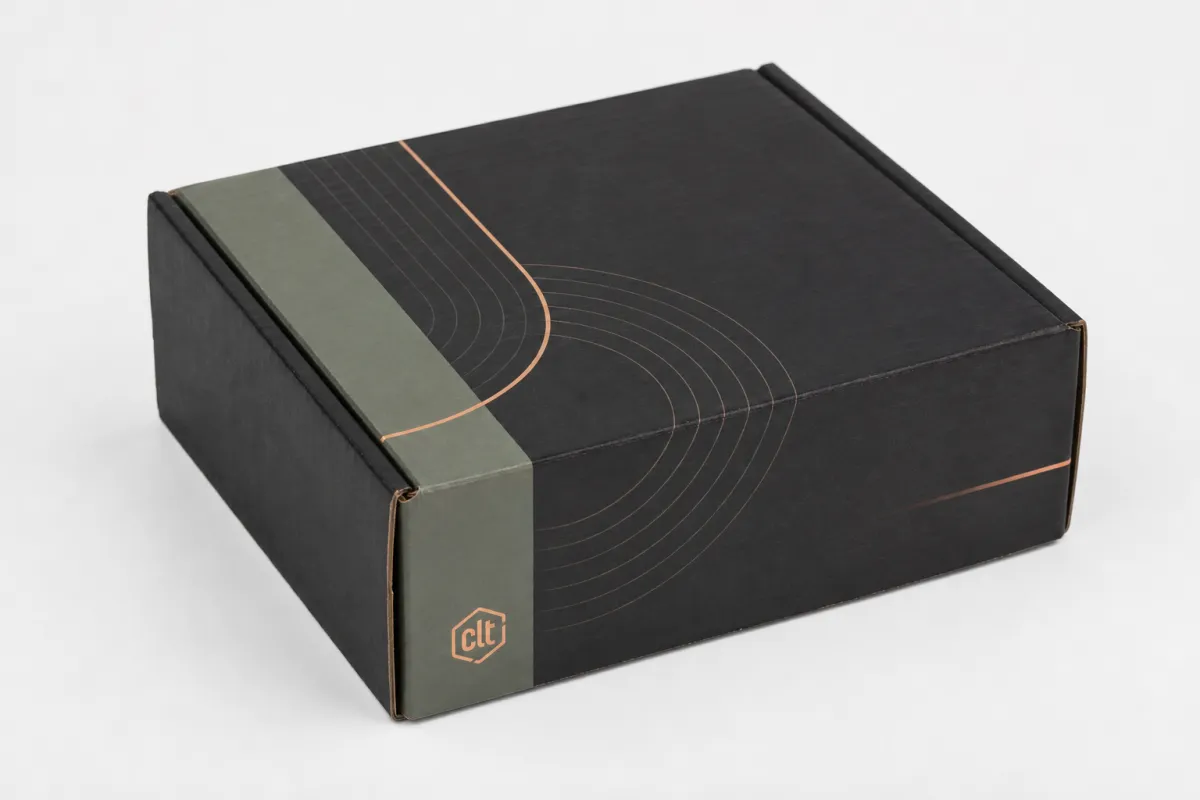
Packaging damage often starts with a carton that is only a little too large. Products slide, inserts compress, corners rub, and the shipment arrives with visible wear even if the item itself survived the trip. I've seen that happen more times than I can count, and it is one of the clearest reasons to order Custom Branded Shipping boxes before the schedule gets crowded, because the box can be built around the actual product instead of a guessed dimension.
From a packaging buyer's perspective, the benefit starts with process control. A properly sized carton reduces packing time, keeps inserts in place, and lowers the chance that an item shows up with crushed edges or scuffed surfaces. It also gives warehouse staff a repeatable pack-out, which matters a lot when the same product ships in standard, gift-ready, and replacement-part versions. Many teams think of order custom branded shipping boxes as a print decision, yet the bigger gain usually comes from cleaner operations and fewer packing exceptions.
Branded packaging also changes how the shipment feels when it is opened. A corrugated box with a simple one-color logo and a restrained layout can make even a modest order feel intentional. That matters in retail packaging, and it matters just as much in direct-to-consumer and subscription programs where the carton is part of the experience. If you order custom branded shipping boxes, you are buying more than a container; you are shaping the first impression the customer carries back into the product itself.
A common scenario shows up again and again. A product line launches with one size, then grows into several sizes along with accessory bundles, replacement parts, or seasonal variations. The old generic carton no longer fits the pack-outs cleanly, void fill starts changing from order to order, and the warehouse spends extra time solving the same issue in different ways. At that point, it usually becomes clear that it would have been smarter to order custom branded shipping boxes built for the full range of SKUs from the start.
A good shipping box protects the product and signals that the brand understands the details.
That is why the best time to order custom branded shipping boxes is often earlier than buyers expect. Box style, board grade, print method, minimum quantity, production timing, and freight all affect one another. When those pieces are clear before the quote stage, the project moves with fewer revisions and fewer expensive surprises.
For teams comparing formats and print options, it helps to look at the broader packaging lineup too. Our Custom Packaging Products page shows the range of formats available, while Case Studies can help you see how other packaging programs were built around product size, protection needs, and presentation goals.
For transit testing and distribution planning, the packaging industry relies on standards rather than guesswork. Resources from ISTA are useful when you want to think more realistically about handling, vibration, drops, and parcel movement.
If you plan to order custom branded shipping boxes for a launch or rebrand, the rest of the page focuses on the practical questions buyers need answered before they approve a spec.
Product details when you order custom branded shipping boxes
The first decision is box style. Mailer boxes, regular slotted cartons, die-cut shippers, and heavier corrugated formats all solve different problems. A mailer style usually makes sense when the goal is a premium opening experience and a neat retail-like presentation. A regular slotted carton is often the better structural choice when the product is heavier or the box is going through a distribution center rather than being handed straight to a parcel carrier. Many buyers who order custom branded shipping boxes for the first time assume style is mostly about appearance, but in practice it also controls how the box assembles, how it seals, and how well it stacks.
Board construction comes next. A kraft exterior brings a warmer, more natural look and tends to hide scuffs better. A white exterior gives cleaner graphics and stronger contrast, especially for full-color artwork. Single-wall corrugate works well for many ecommerce programs, while double-wall may be a better fit for heavier items, fragile goods, or shipments that need more compression strength. Flute choice matters as well. E-flute prints well and keeps the profile slim, while B-flute and C-flute usually offer more crush resistance. When you order custom branded shipping boxes, it helps to ask how the board will behave after tape, labels, and carrier handling are added to the equation.
Print method changes both the appearance and the cost structure. One-color flexographic print is often the practical choice when the goal is straightforward branding and a clean box run. Full-color digital print gives more visual range for smaller quantities and artwork-heavy designs. Litho-laminate wraps can create a premium surface, though they add complexity and are not the right fit for every shipping program. Some projects also use inside printing, which is an easy way to add a surprise detail without overloading the exterior graphics. If you order custom branded shipping boxes with a restrained special effect, such as a spot color or a subtle pattern, you can raise perceived value without changing the core construction.
A few design choices are easy to miss. Seam placement affects how a logo reads when the box is closed. Tuck orientation changes how the carton opens in the hand. Printable space near folds is never as forgiving as a flat artboard, so copy should stay away from score lines unless the design intentionally crosses them. Once tape, shipping labels, and carrier stickers are applied, the finished box is no longer the perfect mockup on a screen. Teams that order custom branded shipping boxes with those realities in mind usually like the production result more.
A quick way to narrow the choice is to match the product and shipping path to the box type:
- Lightweight ecommerce item: Mailer box or die-cut shipper with clean printed branding.
- Heavier or bulkier product: Regular slotted carton, often with stronger board and tighter closure control.
- Premium unboxing program: White-board mailer with inside print, insert, or litho-laminate face.
- Rougher parcel route: Corrugated style with higher edge crush and simpler exterior graphics.
If you are planning to order custom branded shipping boxes for a growing line, it is usually smarter to start with the structural answer and then build the print story around it. That order avoids the common mistake of designing a beautiful box that is awkward to pack.
Specifications to confirm before you order custom branded shipping boxes
Sizing is where many packaging projects either become smooth or turn into a long back-and-forth. Box dimensions should be based on the product, any protective insert, and the clearance needed to pack and close the carton without forcing the flaps. A box that looks right on a spreadsheet can still be wrong if the internal space is not verified. That is why buyers who order custom branded shipping boxes should always ask whether the dimensions are inside measurements or outside measurements, and whether the pack-out includes wrap, tissue, foam, molded pulp, or another insert.
Inside and outside dimensions are not the same thing, and comparing quotes without confirming the measurement method can create an expensive misunderstanding. Two cartons may both be listed as 10 x 8 x 4, but if one supplier is quoting inside size and another is quoting outside size, the usable space is different. When you order custom branded shipping boxes, ask the vendor to state the dimension convention in writing so no one is guessing later.
Structural specs matter just as much as the fit. Edge crush test values, burst strength, flute profile, and board thickness all affect how a carton behaves under stack pressure and parcel handling. If the box will move by parcel carrier, it needs different thinking than a carton that rides on a pallet to a retail warehouse. If the shipment will be handled more than once, or if it will sit in a humid environment, those conditions should be part of the brief. Buyers who order custom branded shipping boxes for that kind of use usually get better results when they define the shipping path up front instead of only describing product weight.
Print-ready specifications matter too. Artwork should be supplied in the correct layout size, with bleed where needed and copy placed far enough from folds, seams, and glued areas to avoid distortion. If your brand depends on exact color, note whether you want Pantone matching or CMYK reproduction. Barcodes, QR codes, and compliance text should be positioned so a folded edge does not interfere with scanning. When teams order custom branded shipping boxes without this level of detail, approval tends to drag because the design and production teams keep revisiting the same layout questions.
There are also logistics specs that affect the total cost of the program. Carton count per pallet, stackability in the warehouse, and dimensional weight can all influence freight before the customer ever sees the packaging. A larger box footprint may increase shipping cost even if the product inside is light, simply because the carrier charges for the space the carton occupies. That is why the smartest teams that order custom branded shipping boxes think about the box and the shipment as one system, not separate pieces.
Useful confirmation checklist before approval:
- Inside dimensions confirmed with the actual product or a physical sample.
- Board grade and flute type matched to the shipping environment.
- Print method chosen with a realistic view of quantity and brand detail.
- Barcode, warning text, and graphics positioned away from folds and glue areas.
- Pallet count, carton count, and freight destination reviewed before release.
For brands that want packaging sourcing aligned with sustainability goals, it helps to review paper sourcing and certification language with care. If recycled content, responsible forest management, or FSC labeling matters to your program, the certification language on FSC can be a useful reference before you place the order. The point is not to add paperwork for its own sake; it is to make sure the carton you order custom branded shipping boxes for actually matches the business goals attached to it.
Cost, pricing, and MOQ when you order custom branded shipping boxes
Pricing comes down to a few clear levers. Box size, board grade, print coverage, color count, inserts, tooling, finishing, and order volume usually move the quote more than the artwork itself. A larger footprint uses more board. Heavier board costs more. More print coverage can add press time and setup. Special finishes increase labor and material handling. When buyers order custom branded shipping boxes, they often focus on the visible print and overlook the structural choices that quietly shape the final unit price.
Minimum order quantity is another major factor. Smaller runs are harder to price efficiently because setup cost gets spread across fewer units, which is why low-volume projects often rely on different print methods or more standard box sizes. Larger runs usually bring the per-box cost down because the preparation work is spread over more cartons. If you order custom branded shipping boxes at low MOQ, it helps to decide whether speed, flexibility, or visual complexity matters most, because you usually cannot maximize all three at once.
Quote comparison should be handled carefully. A low headline unit price is not always the best deal if it excludes freight, proofs, tooling, insert costs, or color matching. Some quotes look attractive until the extra charges appear near the end of the process. That is why experienced packaging teams who order custom branded shipping boxes ask for landed cost, not just box cost. Landed cost gives a better answer to the real business question: what will each finished packed carton actually cost to buy, receive, and ship?
There are practical ways to control spend without weakening the brand message. Reducing the number of print colors can lower cost. Using a standard carton footprint can save tooling and simplify warehousing. Simplifying inside print preserves a premium exterior while keeping production manageable. If demand is still being validated, a phased buy can also make sense, especially if the team wants to test how the packaging performs before placing a larger commitment. Buyers who order custom branded shipping boxes with a phased plan usually find it easier to scale the design once real shipping feedback comes in.
The table below gives a rough planning view. These ranges vary by size, board grade, and production method, but they help anchor budget conversations.
| Option | Best for | Typical pricing signal | Notes |
|---|---|---|---|
| One-color corrugated shipper | Basic ecommerce shipping and simple branded packaging | Often the lowest per-unit cost at moderate to high volume | Good balance of function and brand presence when you order custom branded shipping boxes for everyday fulfillment |
| Full-color digitally printed box | Short runs, seasonal programs, and artwork-heavy product packaging | Usually higher per unit on larger sizes, but efficient for shorter MOQs | Useful when you want flexibility and visual detail |
| Litho-laminate premium shipper | High-end retail packaging feel or presentation-focused launches | Higher setup and finishing cost, but strong shelf and unboxing appeal | Best when appearance matters as much as shipping performance |
| Double-wall heavy-duty carton | Fragile, dense, or high-value products | Higher material cost, justified by added compression strength | Often the right choice if damage risk is the bigger cost |
To keep pricing realistic, it helps to request quotes with complete specs. Clear dimensions, quantity, board choice, print instructions, and delivery destination reduce back-and-forth. In practice, the cleanest way to order custom branded shipping boxes is to give the packaging team enough information to quote the right structure the first time instead of asking them to guess and then revise.
For brands comparing packaging formats, the right box may not be the only item in the program. Some projects pair shipping cartons with inserts or a secondary format such as Custom Shipping Boxes, while others may need a companion solution like Custom Poly Mailers for lighter, lower-profile shipments. The budget conversation gets easier when the full distribution mix is visible.
Process, timeline, and production steps for custom branded shipping boxes
The usual path starts with the inquiry. Product dimensions, estimated quantity, shipping method, and artwork goals come in first. From there, the packaging team recommends a structure, checks whether the board and print method fit the use case, and issues a quote. Good projects stay organized at this stage. Teams that order custom branded shipping boxes with complete information tend to move faster because fewer assumptions need to be corrected later.
After the quote, the next stage is usually artwork review and dieline confirmation. Fold lines, glue zones, and print placement are checked against the brand layout. A proof is more than a picture; it is the point where a production file gets translated into a buildable carton. If you order custom branded shipping boxes and skip careful proofing, small copy errors or misplaced graphics can spread across the whole run.
Timeline depends heavily on complexity. A simple one-color shipping carton with final artwork and a standard structure usually moves faster than a multicolor project that needs precise brand matching, custom tooling, or a new insert. Complex jobs may also require sample approval before full production, especially if the package has to protect fragile or high-value goods. Buyers who order custom branded shipping boxes for a launch should build in time for proof review, not only print time.
Common delays are predictable. Missing measurements slow the dieline stage. Late art approvals push the production date. Pantone uncertainty causes more back-and-forth. Design changes after dieline approval can force a new proof cycle, which adds time and sometimes cost. One of the easiest ways to keep the project moving is to line up the decision-makers before the order is submitted. When that happens, buyers can order custom branded shipping boxes with less stress because the approval path is already clear.
In many programs, a realistic schedule for a straightforward order is measured in business days rather than loose calendar promises. Simple orders with final art and approved specs can move relatively quickly, while jobs with custom inserts, premium finishes, or testing requirements take longer. If your team wants stronger evidence before release, distribution testing guided by resources from ISTA can help frame the conversation around handling, drop exposure, and transit stress. That kind of planning is especially useful when you order custom branded shipping boxes for products that cannot afford a damaged arrival.
Production steps, in practical sequence:
- Receive product details and target quantity.
- Recommend box style, board, and print method.
- Issue quote with clear assumptions.
- Review artwork and prepare dieline proof.
- Approve print placement, copy, and color targets.
- Run production and inspect the cartons.
- Package and ship to the destination.
If your business depends on repeatable order fulfillment, this process is where the value of a well-planned carton becomes obvious. A box that packs cleanly saves minutes on every order, and those minutes add up quickly. That is one reason many teams order custom branded shipping boxes not only for appearance, but for throughput.
Why choose us when you order custom branded shipping boxes
The right packaging partner should understand structure and branding at the same time. A box can look good in a mockup and still be awkward in the warehouse, and that is where real packaging knowledge matters. Our approach stays close to the practical side of production: how the carton folds, how it prints, how it stacks, and how it holds up after normal carrier handling. That makes it easier to order custom branded shipping boxes with confidence instead of trial and error.
We focus on recommendations that fit the product, not only the artwork. If a box needs stronger board, a tighter fit, or a different print method, that should be part of the conversation from the start. The goal is to balance board strength, print quality, and budget so the final package performs well in real use. Many teams come to us with a clear brand system already in place, but they still need help turning it into a printable shipping carton they can actually run in fulfillment. When they order custom branded shipping boxes, they want a box that looks intentional and works efficiently, and that is the standard we use.
We also help with the details that often slow projects down, including artwork placement, dieline reading, inside print decisions, and material selection. Those choices are not flashy, but they decide whether a box feels polished or becomes a daily headache for the warehouse team. If you need a quote from a broad packaging perspective, our Custom Packaging Products page is a good starting point, and our Case Studies section shows how different packaging goals become finished cartons and fulfillment-ready specifications.
Consistency matters just as much as the first order. Reorders should match the original run closely enough that the warehouse does not have to relearn the pack-out, and the customer sees the same branded experience again and again. That is one reason people return to order custom branded shipping boxes through a packaging partner rather than treating every reorder as a new sourcing project. Stable packaging means fewer surprises, cleaner procurement, and less time lost to correction.
Honestly, the strongest reason to work with a specialized team is simple: fewer unknowns. Clearer specs, cleaner proofs, and fewer production questions make the whole job easier. If your team wants to order custom branded shipping boxes without a long chain of clarifications, having someone who can translate brand goals into manufacturing language is a real advantage.
Next steps after you order custom branded shipping boxes
Start with the basics. Gather product dimensions, pack-out method, estimated annual quantity, shipping environment, and brand assets that affect color or layout. If the product has a sleeve, insert, tissue, or wrap, include that in the measurement set too. Teams that order custom branded shipping boxes with complete information usually get cleaner quotes and faster turnaround because there is less guessing in the first pass.
Ask for a sample or prototype when the product is fragile, high-value, or unusually shaped. A physical check can uncover clearance issues, closure pressure, or handling problems that are easy to miss on a screen. It can also show whether the box feels too loose or too tight once the full pack-out is inside. When you order custom branded shipping boxes for a product with any kind of handling risk, that sample step is often worth more than the time it takes.
Decide what matters most before the quote is finalized. Is the priority speed, lower unit cost, premium print quality, or stronger protection? The answer changes the recommended structure. If the product is light and visual impact matters, a branded mailer may be the right choice. If the product is heavy or the route is rough, the structure should probably lead the discussion. Buyers who order custom branded shipping boxes with a clear priority get better results because the packaging choice is aligned with the business goal instead of driven by habit.
It also helps to create one internal approval checklist. Include artwork sign-off, size confirmation, target quantity, shipping address, and any compliance copy. That keeps the order moving without a pause every time a new stakeholder wants to weigh in. If your team wants to order custom branded shipping boxes efficiently, the cleanest path is to make sure everyone sees the same spec before production starts.
One last practical point: if your first shipment is going to raise product visibility, consider how the box sits beside the rest of the packaging system. Does the carton coordinate with labels, tape, and inserts? Does it fit alongside retail packaging or other branded packaging in the same brand family? Does the design still look good after the carrier label is applied? These are the questions that separate a usable packaging program from a pretty mockup. When you order custom branded shipping boxes, the finish line is not the proof; it is the customer opening the carton and finding everything exactly where it should be.
If you are ready to order custom branded shipping boxes, send the measurements, quantity, print goal, and any artwork files together so the quote, spec review, and production plan can start from the same information. That one step saves time, cuts revisions, and gives the project a better chance of landing cleanly the first time.
How do I order custom branded shipping boxes if I only know my product size?
Send the product dimensions, not only the retail label size, and include any insert, sleeve, tissue, or protective wrap that will sit inside the carton. Ask for a dieline or sample so the fit can be checked before production starts. If the product is fragile, tell the team whether you want a snug pack or extra clearance for packing speed. That detail helps you order custom branded shipping boxes with fewer surprises.
What affects pricing most when I order custom branded shipping boxes?
Box size, board grade, and print coverage usually drive the biggest price differences. Quantity matters because setup and tooling cost are spread across more units at higher volumes. Inserts, special finishes, and freight can also move the final landed cost more than buyers expect. If you order custom branded shipping boxes with clear specs, the quote is usually easier to compare.
How long does it take to order custom branded shipping boxes?
The timeline depends on proof approval, print method, and whether the box needs custom tooling or a standard die. Simple orders move faster when artwork is final and dimensions are confirmed on the first round. Complex jobs take longer if color matching, samples, or structural revisions are needed before production. To order custom branded shipping boxes on schedule, the best move is to lock the spec early.
What files should I send to get a quote for custom branded shipping boxes?
A vector logo, editable artwork, or high-resolution print files help the quote process move faster. Include Pantone colors if brand matching matters, and note any copy that must stay away from folds or seams. If you already have one, send the dieline so the layout can be checked against the product dimensions. That makes it easier to order custom branded shipping boxes without layout rework.
Can I order custom branded shipping boxes in a lower MOQ?
Yes, but the print method, box style, and size usually need to support shorter runs economically. Standard sizes and simpler artwork often make low-MOQ orders easier to price. If demand is still uncertain, it can help to start with a phased order and scale once the packaging is proven. Many buyers order custom branded shipping boxes this way when they are testing a new launch or subscription tier.

