Custom Size Labels for Clothing B2B sourcing sound minor until a shipment lands and the wrong size code appears on thousands of units. Then the “small detail” turns into a relabeling job, warehouse delays, and occasionally a returns spike that burns through margin faster than most buyers expect. A size label is not decoration. It is part of the product, the packaging flow, and the brand experience all at once.
That is why custom size labels for clothing b2b sourcing deserves real attention, not a last-minute checkbox. The right label supports clearer fit communication, faster sorting, cleaner retail presentation, and fewer headaches across warehousing and fulfillment. The wrong one creates work nobody budgeted for. Which, naturally, is the one everyone notices first.
Why custom size labels matter in clothing sourcing
Size labels do three jobs at once. They tell the customer what they are buying. They help warehouse teams sort garments quickly by SKU and size run. They also support package branding, whether the garment ships in polybags, hangs on retail fixtures, or moves through a distribution center in cartons.
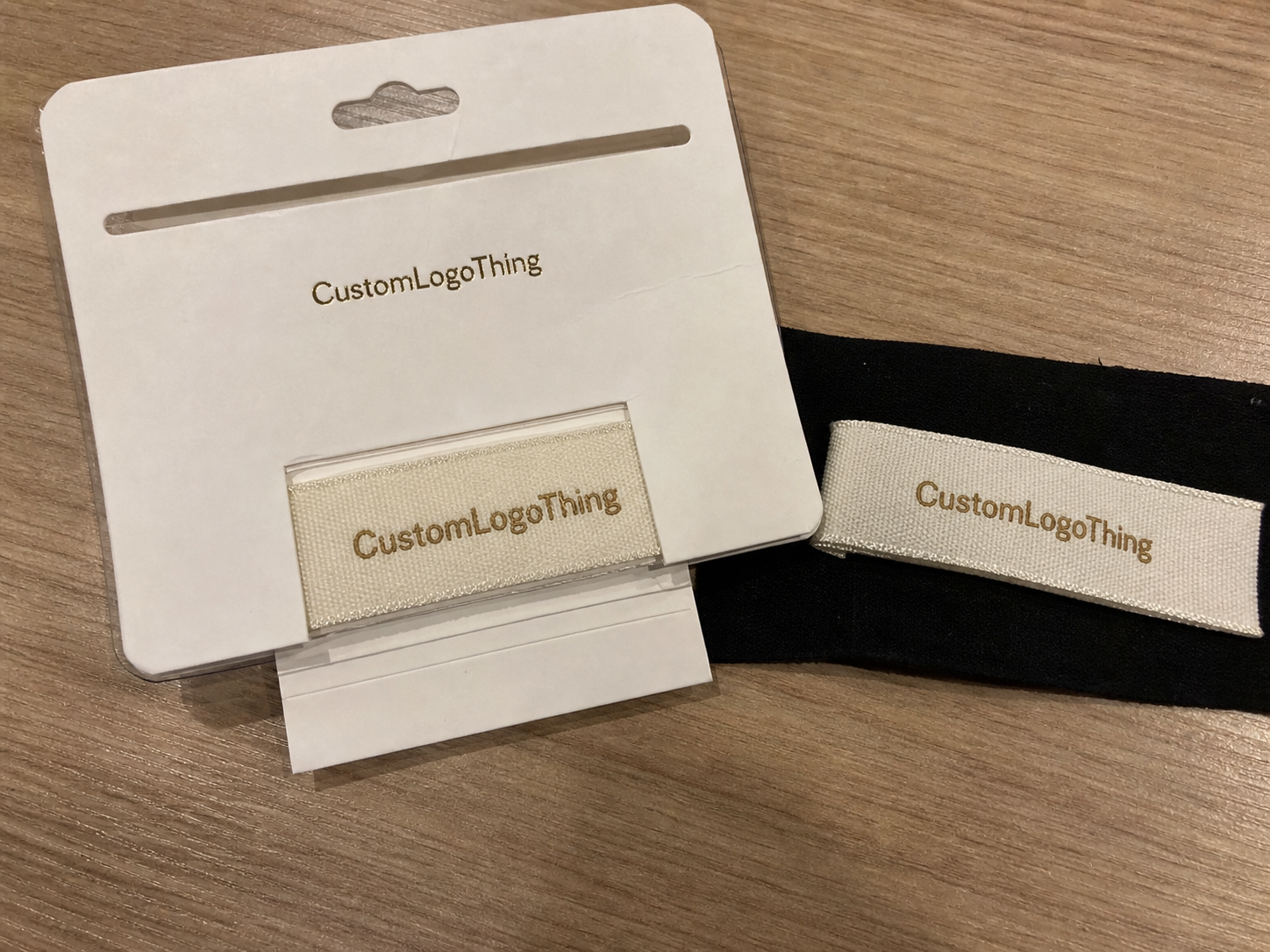
The format matters more than many buyers think. A woven size label feels permanent and premium. Printed satin is softer against the skin. Heat-transfer marks remove the sewn-in edge entirely, which matters for comfort-sensitive basics and activewear. Temporary stickers are useful for logistics or pre-retail identification. Care/size combo labels reduce clutter by putting operational details in one place.
There is a practical distinction between branding and operations. A label can match your Custom Packaging Products program, sit alongside Custom Labels & Tags, and still fail if the size callout is hard to read or the edge scratches the wearer. The real buyer question is simple: what label fits this garment, this channel, and this volume?
“The cheapest label is rarely the cheapest outcome. If it creates relabeling, complaints, or warehouse exceptions, it gets expensive quickly.”
That is especially true for private-label brands, retailers, and subscription apparel programs that rely on tight size accuracy. A mismatch between the garment and the label can trigger chargebacks, manual sorting, or customer service tickets. None of those are listed on the first quote. Funny how that works.
How the labeling process works from artwork to sewn-in labels
The workflow is usually straightforward if the buyer sends the right information early. For Custom Size Labels for Clothing b2b sourcing, the process often starts with a spec request: garment type, size run, label placement, quantity by size, language requirements, and artwork files. Then comes the supplier proof, sample approval, production, and final packing.
What needs to be provided upfront matters more than people expect. If the size breakdown is still moving, the supplier cannot quote accurately. If the brand standard says the label must sit at the inner back neck, but the garment has a narrow neckline, the format may need to change. If the product ships into multiple regions, the label may need multilingual care instructions or dual sizing, such as S/M/L plus numeric equivalents.
Different label types are manufactured differently. Woven labels require loom setup, which affects detail clarity and production speed. Printed labels rely on ink, substrate, and curing method. Heat-transfer labels depend on press temperature, dwell time, and the fabric receiving the transfer. The label is not just “printed.” It is built for a specific garment and application method.
Where do delays happen? Usually in three places: unclear artwork, missing size matrix information, and post-proof changes. A buyer may approve a proof with one size callout, then ask for another adjustment after the supplier has already prepped the run. That usually means extra time and extra cost. Stable specs beat rushed creativity every time.
During sampling, check four things: legibility, wash durability, hand feel, and placement accuracy. If the label rubs the neck on a basic tee or looks fine but turns blurry after laundering, the sample has done its job by failing early. Better to catch it on one piece than on 20,000 units.
Key specs that affect fit, durability, and shelf appeal
Material choice is the first major decision. Polyester is common because it balances cost and wash performance. Satin is smoother and often used when comfort matters. Cotton can support a more natural brand feel, though it is not the best fit for every wash regime. Nylon is durable, but hand feel depends on weave and finish. Heat-transfer films are often chosen for activewear, babywear, and premium basics because they remove the sewn edge entirely.
Construction comes next. Folded end labels, center fold labels, side fold labels, cut-and-sew formats, and printed-only marks all serve different products. A center fold woven label works well inside a side seam or neck seam. Cut-and-sew labels sit more cleanly on outerwear or accessories. Printed-only size marks are often enough for basic undergarments, internal logistics, or low-profile branding.
Legibility is not optional. Font size, contrast, spacing, and symbol use need to work under real conditions, not just on a monitor. If sourcing spans Europe, North America, and parts of Asia, buyers may need dual sizing or translated care icons. ASTM and ISO-style care symbols are widely understood, but the label still needs enough contrast to be read quickly in a stockroom or fitting room.
Durability should be specified, not assumed. Ask how the label performs after repeated washes, abrasion, and sweat exposure. If the garment is industrially laundered, the bar rises again. A label that survives five home washes may not survive twenty commercial cycles. Buyers in uniforms, hospitality, and performance apparel should ask for testing references or at least a documented wash expectation.
Placement affects both comfort and shelf appeal. A neck label may suit tees and sweatshirts, while a side seam label can reduce irritation. Waistbands and hems work for some bottoms. Hang tags or temporary stickers can carry size information in retail packaging before the garment is worn, which is useful when the final sewn-in label is intentionally minimal. In packaging terms, the label becomes part of the garment’s visual hierarchy, the same way carton graphics or custom printed boxes influence presentation.
For buyers comparing options, here is a practical view:
| Label type | Typical use | Comfort | Durability | Relative cost |
|---|---|---|---|---|
| Woven size label | Apparel, basics, premium branding | Good | High | Mid |
| Printed satin label | Soft-touch garments, children’s wear | Very good | Medium to high | Low to mid |
| Heat-transfer size mark | Activewear, seamless basics, sportswear | Excellent | High if applied correctly | Mid |
| Sticker-style temporary label | Warehouse sorting, retail prep | N/A | Temporary | Low |
| Care/size combo label | Streamlined compliance and operations | Good | High | Mid to high |
Pricing and MOQ factors
Price is driven by a handful of variables, and the biggest one is not always the obvious one. Material matters, yes. So do the number of colors, weave complexity, finishing, packaging format, and whether the supplier must split a run across multiple sizes. For Custom Size Labels for clothing b2b sourcing, a quote that looks low on paper can rise once the supplier adds folding, cutting, testing, or secondary packing.
MOQ behavior is equally important. If one label design must cover six sizes, the supplier may need to produce each size variant separately or increase the total quantity to absorb setup costs. Special finishes, metallic yarns, or custom inserts can push minimums higher. Small runs are possible, but the unit price is usually less forgiving because setup does not shrink just because the order is smaller.
Here is a realistic way to think about cost bands. For simple printed size labels, buyers sometimes see pricing in the range of $0.03-$0.10 per unit at higher quantities, depending on print coverage and packaging. Woven labels with more detail may land closer to $0.08-$0.25 per unit in many sourcing scenarios, while heat-transfer labels or specialty formats can move higher based on application complexity. Those are directional ranges, not guarantees. Every spec sheet changes the math.
Below is the kind of comparison that helps buyers avoid apples-to-oranges quotes:
| Cost driver | Lower-cost choice | Higher-cost choice | Why it changes price |
|---|---|---|---|
| Material | Standard polyester | Soft satin, specialty film | Different raw material and finish costs |
| Artwork complexity | One-color size mark | Multi-color logo plus size code | More setup and print passes |
| Construction | Printed-only | Woven or cut-and-sew | More manufacturing steps |
| Packaging | Bulk packed | Sorted by size, cartonized, barcoded | Labor and handling increase |
| Volume | Small run | Higher run | Setup gets spread across more units |
Hidden line items matter too. Sampling, freight, rush service, revisions, and split shipments by warehouse can change the total landed cost more than the label itself. If two suppliers quote the same label but one includes only a digital proof while the other includes a stitched sample and basic testing support, the cheaper offer may not be cheaper.
Compare quotations against one exact spec sheet. That includes dimensions, fold style, material, color reference, size ratio, packaging, and target delivery date. Without that, you are not comparing the same product. You are comparing guesses. And guesses are cheap right up until the order lands.
Production steps and timeline from sample approval to delivery
A realistic production flow starts with brief intake, then quotation, artwork verification, proofing, sampling if needed, approval, production, quality control, packing, and dispatch. The shorter the feedback loop between those steps, the better the timeline tends to hold.
Lead time varies by label type. Simple printed size labels are usually faster than woven or specialty versions because they require less setup. More detailed woven labels, custom folds, and labels with complex finishing add days. If the order also requires sorting by size, barcode stickers, or market-specific packaging, the timetable grows again.
Approval speed is the hidden variable that can make or break a launch. A supplier may quote 12-15 business days from proof approval, but if artwork revisions take four days and the sample is approved only after a second round, the real lead time becomes much longer. Buyers often blame production when the real issue is slow internal sign-off.
Quality control should not be vague. Ask what gets inspected: trim accuracy, color consistency, size match across the run, label count by SKU, and packaging quantity per carton. If the labels are entering a garment production flow, count verification matters because one short carton can slow an entire assembly line.
For international sourcing, build in freight and customs time even if production stays on schedule. Ocean freight can add weeks. Air freight reduces transit time, but it can distort the economics of a small label order. Warehouse receiving also takes longer than people assume, especially when cartons must be matched to size ratios before goods are booked into inventory.
Buyers working alongside Wholesale Programs often do well to align label timing with garment booking windows rather than final delivery dates. That small planning shift can prevent bottlenecks that show up during launch week.
Common mistakes buyers make when sourcing label suppliers
The first mistake is obvious but still common: buying on price alone. A low-cost label is not a win if it fails wash testing, feels scratchy, or comes with weak color control. The second mistake is using the wrong sizing logic across markets. Alpha sizes, numeric sizes, and regional measurement assumptions do not always line up cleanly, especially in international apparel programs.
Artwork problems create another expensive layer of rework. Missing bleed, low-resolution logos, and incorrect Pantone references all slow the process. A supplier can usually fix a minor issue, but repeated revisions add time, proofing rounds, and labor. If the brand also uses coordinated branded packaging, the mismatch becomes more visible because the label no longer matches the broader retail packaging system.
Placement errors matter more than many teams expect. A neck label that scratches premium cotton can trigger complaints. A side seam label placed too low can twist awkwardly after wash. A size mark that obscures care details creates confusion for both consumers and warehouse teams. Small issues, yes. But they pile up.
Another operational trap is failing to align label SKU counts with garment size ratios. If the production run is 30% medium, 25% large, and 10% extra-large, the label order should reflect that logic. Otherwise, one carton ends up short and another ends up full of sizes nobody needs. Basic arithmetic, apparently still a competitive advantage.
“A clean size-label plan is really an inventory plan in disguise. If the ratio is wrong, the labeling line feels it first.”
Expert tips for cleaner specs, faster approvals, and better results
Create a one-page label spec sheet before requesting quotes. Include material, width and height, fold style, size chart, artwork files, Pantone references if needed, placement, quantity by size, and the name of the final approver. That one page removes a surprising amount of guesswork from custom size labels for clothing b2b sourcing.
If the label touches skin or is meant to survive repeated laundering, ask for a physical sample. Digital proofs are useful, but they cannot tell you how printed satin feels at the neck or whether a heat-transfer mark survives stretching on a garment with elastane. The sample stage is where many sourcing mistakes are caught before they become expensive.
Use one master template for all sizes whenever possible, then change only the size callout. That reduces approval errors and makes reorders easier. It also keeps packaging design more consistent across sizes, colors, and channels.
Supplier communication quality is a better predictor than many buyers realize. If the representative responds clearly, asks follow-up questions, and confirms specs in writing, the order usually has fewer surprises. If the early communication is loose, the production phase often reflects that looseness.
Ask for pre-production photos or a short video of the first run before the full batch is packed. It is a small request, but it can catch a trimming issue, a color shift, or a size mix-up before cartons leave the building. That matters even more when the labels are part of a larger product packaging program with other branded elements.
For teams building apparel lines, labels and packaging should sit in the same planning system instead of living in separate departments. That is where consistency improves, and why suppliers offering Custom Labels & Tags often also handle hang tags, tissue, and insert cards.
Next steps for a smoother label sourcing order
Start by auditing the garment line. List every size, every label placement, every target market, and every special requirement in one worksheet. That single document will do more for the sourcing process than five scattered email threads.
Then gather artwork, size breakdowns, and wash-test expectations before asking for quotes. You will get better comparisons, fewer revisions, and less confusion over what each supplier is actually pricing. If you are buying across several product families, separate standard basics from premium lines so the whole program is not overspecified.
Choose the label format that fits the product category, not just the cheapest available option. A premium knit top, an athleisure set, and a workwear tee do not need the same construction. The right answer depends on comfort, durability, wash conditions, and how the label fits into the broader retail packaging system.
Confirm timeline, MOQ, and packaging details in writing before approval. That includes counts per carton, size sorting, delivery windows, and whether the supplier can split shipments if the warehouse needs staged receiving. The fewer assumptions you make, the fewer launch-week surprises you absorb.
After delivery, inspect a small sample from each carton and document issues immediately. If the problem is a color shift, a fold error, or an incorrect size ratio, you want evidence ready before the reorder is triggered. That discipline makes the next run faster and more consistent.
For buyers building repeatable apparel programs, custom size labels for clothing b2b sourcing is not a one-off purchase. It is a process that supports fit clarity, operational efficiency, and brand presentation. Get the spec right once, and the next order gets easier instead of noisier.
How do custom size labels for clothing B2B sourcing usually work?
You send size breakdowns, artwork, and placement requirements to the supplier. The supplier then returns a proof or sample for approval before production. After approval, labels are manufactured, checked, packed, and shipped with the rest of the order.
What affects the price of custom size labels for clothing orders?
Material choice, label type, print or weave complexity, and finishing all affect unit cost. MOQ, sampling, freight, and rush fees can change the total landed price. Prices usually improve at higher volumes because setup costs are spread across more labels.
What is a typical lead time for custom clothing size labels?
Simple printed labels are usually faster than woven or specialty finishes. Artwork revisions, sampling, and approval delays often add more time than production itself. International shipping and customs should be added to the supplier’s quoted lead time.
Which label material is best for durable clothing labels?
Polyester and woven options are common for wash durability and long wear. Heat-transfer labels can work well for comfort-sensitive garments when applied correctly. The best choice depends on fabric type, wash cycle, and whether the label touches skin.
What should I check before approving a custom size label sample?
Check legibility, size accuracy, color match, and placement. Confirm the label feels comfortable and does not irritate the skin. Verify it holds up to the expected wash and wear conditions for the garment.