If you’re ordering custom size labels for clothing private label, that small strip inside the garment can shape how finished the product feels. A hoodie with a soft hand but a scratchy, hard-to-read size label still gets judged as cheap. Customers rarely call out the label directly; they just remember the discomfort, the inconsistency, or the slightly unpolished look.
Size labels do more than say S, M, or L. They help warehouse teams pick faster, keep assortments organized, and make retail-ready packaging feel complete from the first touch. For private label brands, that matters because the label is part of the product experience, not a cleanup item added at the end of development.
Why custom size labels matter more than most brands think
A well-made garment can still feel unfinished if the size label is hard to read, itchy, or inconsistent across styles. Brands often spend heavily on fabric selection, fit development, and presentation, then lose polish on the smallest component. It sounds minor. In practice, it affects how the whole garment is judged.
Custom Size Labels for Clothing private label solve three practical problems at once: customer clarity, brand presentation, and operational speed. If your warehouse can identify sizes quickly, picking errors drop. If shoppers can read the size cleanly, returns tied to confusion can fall. If the label matches the rest of the garment, the line feels more deliberate.
The effect is strongest on basics, underwear, children’s apparel, and activewear. On those items, the customer is physically close to the garment. They feel the seam allowance. They notice whether the label sits flat or twists. They see if the text is crisp, centered, and consistent. Small details carry more weight than glossy brand copy ever will.
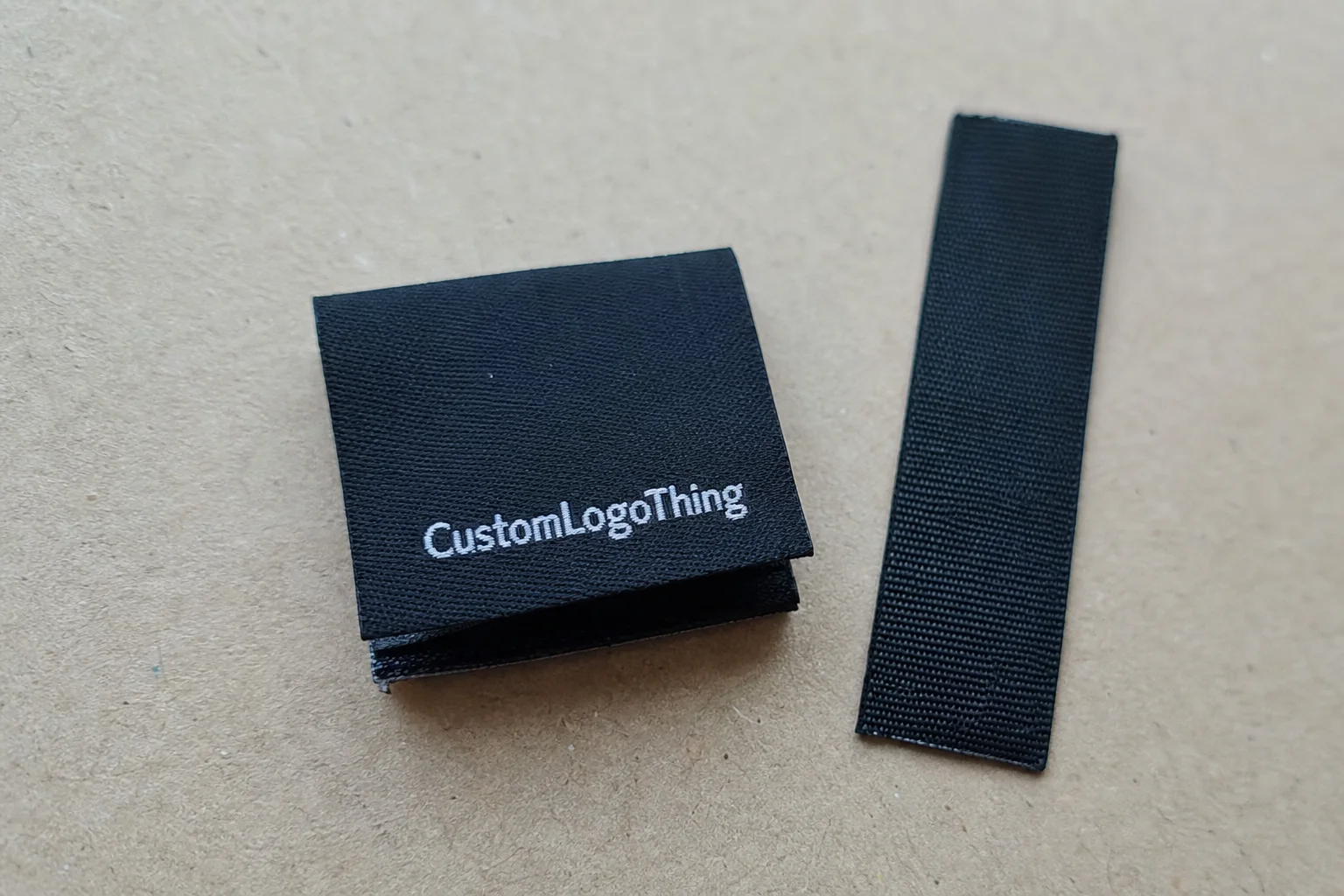
Common label types include woven size labels, printed satin labels, cotton labels, heat-transfer labels, and tagless labels. The best option depends on the garment, the brand position, and how much comfort matters at the skin. Private Label Buyers usually need a label that matches sizing standards, fabric type, and retail presentation on day one—not after a second or third production round.
“If the size label is wrong, the customer notices before they notice your marketing.” That is not a theory. It is how clothing behaves in real use.
For brands that care about the full presentation, size labels should sit in the same conversation as Custom Labels & Tags, hang tags, and other branded packaging details. The garment should tell one story. If the label says something cheaper than the rest of the piece, the mismatch is obvious.
How custom size labels are produced for private label clothing
The production workflow is straightforward, but the details matter. It usually starts with the size chart, then artwork setup, material selection, proofing, manufacturing, and finishing. If one stage is rushed, the whole run becomes expensive to correct. Labels are low-cost compared with garments, but they are not low-stakes.
Standard stock size markers are usually pre-made, limited in style, and fast to source. Fully custom size labels are different. They can use brand-specific typography, exact color matching, custom woven structures, and a fold or attachment method that suits the garment. That is the point of Custom Size Labels for Clothing private label: the label fits the line instead of forcing the line to fit a generic label.
Common construction choices include:
- End fold for sewing into side seams or waistbands.
- Center fold for neck or seam placement.
- Side seam labels for lower irritation and cleaner presentation.
- Heat seal or heat transfer for tagless applications.
- Printed-on-satin for a softer hand feel with clear size information.
Garment type changes the decision. Knits usually need softer materials and a little more flexibility. Denim can handle a sturdier woven label. Kidswear often benefits from tagless or very soft options because parents notice irritation quickly. Premium basics need cleaner typography and tighter fold consistency because the label is part of the perceived value, not just an information carrier.
Proofing is where careful buyers slow down. Check the size hierarchy. Check legibility at the intended finished width. Check color contrast. Check whether the brand name and size sit in the right visual balance. If the proof looks crowded, it will look worse once sewn into a garment. Print files can hide bad spacing. Physical labels do not.
For brands building wider product lines, it helps to coordinate labels with broader Custom Packaging Products so the identity stays aligned across packaging, inserts, and retail-ready presentation pieces.
Key specs that affect fit, comfort, and brand perception
The label material changes how the garment feels. Woven labels usually look more premium and hold detail well. Printed labels often feel softer and can be better for low-friction contact. Heat-transfer labels are a strong option for tagless comfort, especially where neck irritation is a frequent complaint.
Size systems need more thought than many buyers give them. US, EU, UK, alpha sizing, and numeric sizing can collide if you serve multiple markets. If your private label line sells across regions, the label needs to be clear enough that nobody has to guess whether “M” means the same thing on every style. In apparel, sizing consistency is often more fragile than brands expect.
Placement and fold style matter because a label that scratches the neck or twists inside the seam gets complaints fast. A label in the wrong position can also distort the garment finish, especially on light knits and children’s apparel. Test the placement on a production-like sample. A flat mockup does not tell you how the fabric behaves on-body.
Durability is another filter. Ask about wash testing, colorfastness, and fray resistance. A label should survive repeated laundering without curling, fading, or becoming unreadable. Standards vary by category, but practical language is better than vague quality claims. If the label should survive 20–30 wash cycles, say that. If your line requires more, build that into the spec.
Compliance basics matter as well. Depending on market and category, care content, fiber content, and country-of-origin details may need to appear near the size label or be integrated into the same system. For broader packaging and labeling practices, organizations like the ISTA and the FSC provide useful standards and sustainability context, especially if your label program ties into paper-based inserts or eco-minded retail packaging.
| Label type | Typical feel | Best for | Relative cost |
|---|---|---|---|
| Woven | Premium, textured | Denim, outerwear, elevated basics | Mid to higher |
| Printed satin | Softer, smoother | Fashion basics, light garments | Lower to mid |
| Heat-transfer | Tagless, barely felt | Kidswear, activewear, loungewear | Mid |
| Cotton | Natural, casual | Organic or eco-positioned brands | Mid |
Custom size labels for clothing private label: cost, MOQ, and quote factors
Pricing depends on quantity, material, label size, colors, fold style, and finishing method. That is the plain answer, and it is usually the only reliable one. The cheaper answer often ignores setup, wastage, and whether the label is actually suitable for the garment. Buyers who compare only unit price are usually comparing half the story.
For small runs, unit cost is higher because setup gets spread across fewer pieces. For larger runs, the price per label drops, but inventory risk rises. If your line changes often or you are testing a new fit, lower MOQs can save cash even when the per-piece rate looks less attractive. That tradeoff matters more than chasing the lowest number on a quote.
Typical pricing ranges vary by specs, but for a simple run of custom size Labels for Clothing private label, lower-MOQ orders may land around $0.06–$0.18 per piece, while more complex woven or specialty labels can move into $0.12–$0.30+ depending on size, color count, and finishing. If a quote comes in far below that without explanation, ask what is being left out. Usually something is.
Hidden pricing drivers often include setup fees, sample charges, rush production, special cutting, roll formatting, and individual folding or bundling. Ask whether the quoted price includes a packing format suitable for your sewing or fulfillment process. A cheap label that creates more labor is not actually cheap. It is just delayed cost.
To keep quotes comparable, ask suppliers to price based on actual garment usage, not just a sticker-style number. The same label can look affordable on paper and expensive on the floor if it slows the sewing line or adds handling. Brands building a stronger packaging system should price labels together with the rest of their branded packaging, not in isolation.
Production steps and timeline: from artwork to delivery
The normal workflow is simple enough: request a quote, submit specs, approve a digital proof, approve a sample if needed, then move into bulk production. The process is simple. The timing is only simple if your side stays organized. Most delays come from missing information, not from manufacturing drama.
For standard orders with ready artwork, production often takes about 7–15 business days after proof approval. More custom constructions, specialty materials, or sampling can extend that to 15–25 business days. Rush orders are possible in some cases, but rush is where costs climb and patience gets tested. If your launch date is fixed, build margin into the schedule.
What slows things down? Unclear size charts. Missing artwork files. Color revisions. Delayed approvals. And the classic issue: the buyer realizes the label should have matched the garment’s seam allowance after the proof is already approved. That mistake is easy to avoid and annoying to repair.
Shipping can also change the delivery date, especially for overseas production or split shipments to multiple warehouses. Air shipping is faster and usually more expensive; sea shipping is cheaper but rarely the right choice if your launch window is tight. If your supply chain uses consolidated shipments or seasonal inventory planning, coordinate the label order with the garment order. Otherwise the labels become the bottleneck.
Planning ahead is smart for any line using retail packaging or coordinated custom printed boxes. Labels should sit inside the same development calendar, not as a side task remembered after the samples are already moving through approvals.
Common mistakes brands make when ordering size labels
The biggest mistake is choosing a label that looks good on a screen but fails in wear, washing, or production handling. Mockups are useful. They are not a substitute for a physical sample. A label can look balanced digitally and still feel wrong once it is sewn into a neckline or side seam.
Another common problem is inconsistent size naming across styles. If one collection uses S/M/L and another uses numeric sizing or a custom range without a clear system, customers get confused and warehouses make mistakes. Customer service then gets the job of explaining it. A master size chart prevents a lot of that confusion.
Overlooked details matter too: font size, contrast, seam allowance, fold orientation, and whether the label needs to be reversible. If the label is too wide for the seam, it bunches. If the text is too small, it becomes decoration instead of information. The label’s job is to communicate size quickly and survive handling. Anything else is secondary.
Ordering too few extras is another common issue. Misprints happen. QC rejects happen. Replacement launches happen. If you do not have a buffer, you will pay more later just to fill a small shortage. A modest 5–10% overage is often more practical than pretending production will be perfectly precise every time.
Skipping samples is the expensive version of the same mistake. If the label touches skin, supports premium positioning, or has to survive repeated washing, sample it. The sample fee is cheap insurance compared with replacing thousands of labels or dealing with refunds tied to comfort complaints.
Expert tips for ordering better labels without overpaying
Standardize your label specs across collections whenever possible. One master system cuts cost, simplifies reorders, and reduces the odds that your warehouse, supplier, and sewing team interpret the same label differently. Consistency is not exciting, but it saves money.
Use one core size label structure for your main products, then customize only when the fabric, market, or product category truly requires it. A tagless heat-transfer label may be right for a kids’ tee, while a woven label may better suit a premium sweatshirt. That does not mean every item needs a unique solution. Usually, it does not.
Ask for a physical sample or photo proof when the label sits close to skin or belongs on premium goods. If the product is expensive, the label should not feel like an afterthought. It is part of the packaging story, even though it sits inside the garment rather than on a shelf.
Ask suppliers about pack format options. Rolls, cut pieces, and folded bundles affect warehouse efficiency and labor. If your production team is sewing in labels by hand, a clean roll format may speed things up. If the factory needs cut pieces for automation, specify that early. The lowest quote can become the most expensive one if the format creates extra handling.
Do not assume the cheapest label is the best buy. If it causes returns, discomfort, or a weak brand presentation, you pay for it later. Usually more than once.
Next steps to order the right labels for your line
Start with a simple spec sheet. Include garment type, size system, label placement, material preference, target quantity, and whether you need woven, printed, satin, cotton, or tagless construction. Add any compliance details too, because “we’ll sort that later” is how avoidable delays start.
Then gather your artwork, color references, and care-content requirements before requesting quotes. Suppliers can price more accurately when they have complete information. If your brand already uses a clear packaging design system, include that as well. It helps the label match the rest of the product packaging instead of drifting off-brand.
If comfort or premium feel matters, compare samples from at least two constructions. A printed label may beat a woven one on softness. A woven label may beat a printed one on perceived quality. The right answer depends on the garment, the customer, and where you want the line to sit in the market.
Before you place bulk, confirm minimums, lead times, and whether the supplier can match your previous run exactly for reorders. Keep the approved spec on file. Keep the approved sample too. Future launches get easier when you do not have to rebuild the spec from memory.
For brands buying custom size Labels for Clothing private label, the smartest move is not chasing the fanciest option. It is choosing the label that fits the garment, survives use, supports the brand, and does not create unnecessary waste. That is how you buy well without pretending every label needs to be expensive to look good.
What are custom size labels for clothing private label used for?
They identify garment size clearly for retail, fulfillment, and customer use. They also help reinforce brand presentation and reduce sizing mistakes.
Which material is best for custom clothing size labels?
Woven works well for a premium look and durability. Printed or heat-transfer labels are often better for softness and tagless comfort.
How much do custom size labels usually cost?
Pricing depends on quantity, material, label size, colors, and finishing. Lower MOQs usually raise unit cost, while larger runs bring the price down.
How long does production take for custom size labels?
Standard orders are faster when artwork is ready and proofs are approved quickly. Complex specs, samples, and rush shipping can extend the timeline.
What should I send to get an accurate quote for custom size labels for clothing private label?
Send your size breakdown, label type, material preference, artwork, quantity, and placement details. Include care-content needs and any packaging or packing-format requirements.