Custom Slider Lock Clothing Bags for Skincare Brands
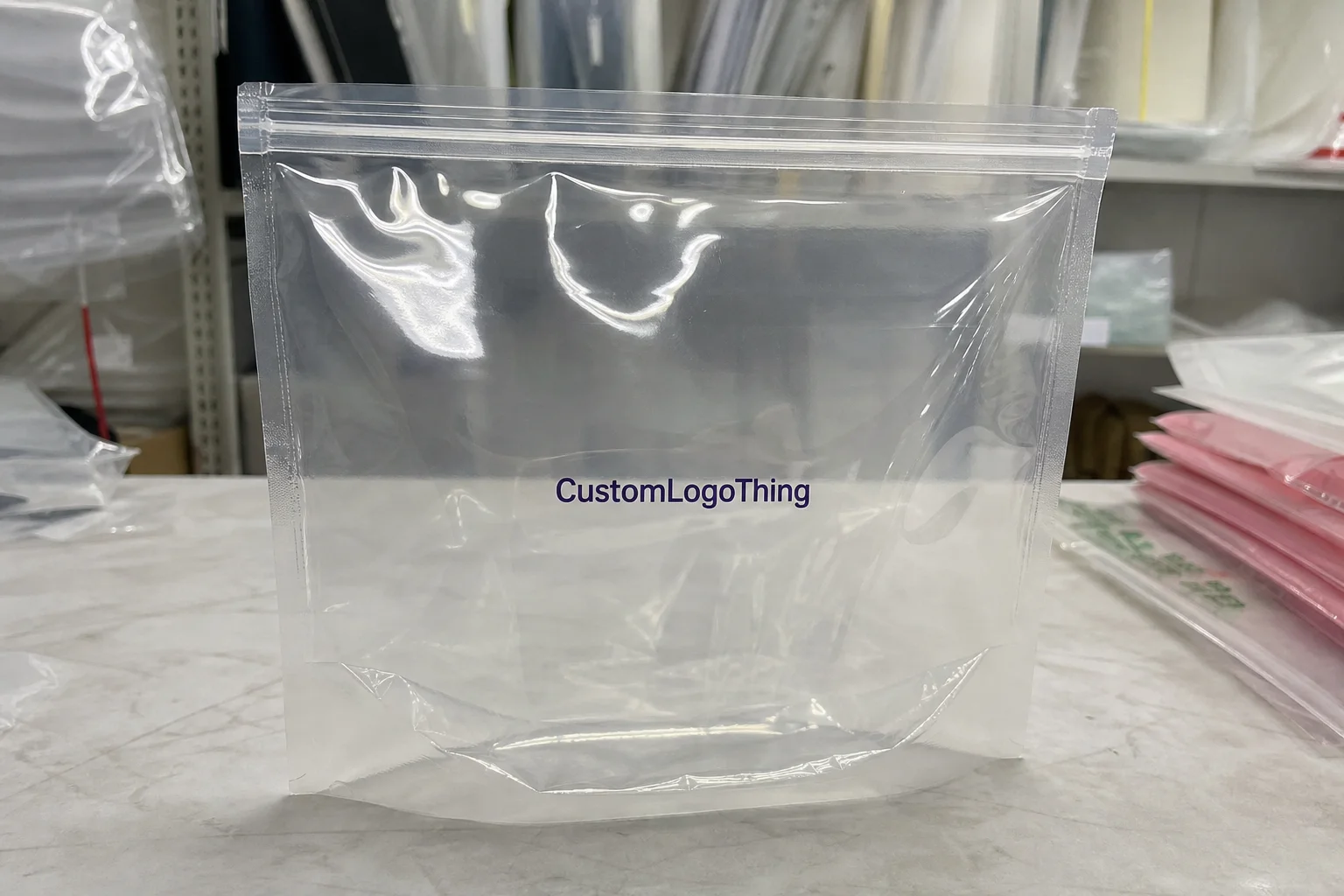
Custom Slider Lock Clothing Bags for skincare brands protect more than robes, uniforms, and branded apparel. They affect how the item is packed, handled, displayed, and judged before it is removed from the bag. That matters for retail shelves, spa programs, press kits, influencer mailers, and internal stockrooms where soft goods need to look clean and intentional.
The format is simple: a clear or printed bag with a track closure and a movable slider that opens and closes the seal. Compared with a plain poly sleeve, the slider makes the bag easier to reseal and easier to check during packing. A good bag reduces lint, scuffing, packing errors, and rework while keeping the product presentation consistent.
Skincare brands use these bags for spa uniforms, robes, promotional merchandise, apparel drops, and organized back-of-house storage. If the garment arrives dusty, wrinkled, or difficult to reseal, the packaging weakens the product experience even when the item itself is well made. The right spec supports faster fulfillment and a more polished first touch.
How the Slider Lock Closure Works
The closure uses two interlocking tracks along the opening. As the slider moves across the top edge, it presses the tracks together in a controlled pass. For packing teams, that consistency matters because it reduces the hand pressure and guesswork required to close each bag evenly.
Compared with open-top bags, slider versions are easier to reuse. Compared with press-to-close bags, they are often easier to verify by sight and touch because the slider position shows whether the closure has traveled across the full opening. In fast packing environments, that visible checkpoint can prevent half-sealed bags from reaching the customer.
For the end user, the experience is cleaner. A robe, uniform, or merch item can be removed, inspected, and returned to the bag without distorting the opening. That is useful for spa staff, retail associates, and customers who may reopen the package more than once.
Closure quality should match the product weight and how often the bag will be reopened. A lightweight retail handoff does not need the same reuse profile as a bag used for staff uniforms or storage. Weak tracks, poor alignment, or sliders that bind can make the top edge look uneven and can create failure points during handling.
Key Specs That Decide Performance
Size is the first specification to confirm. The bag should fit the folded item with enough room to load it easily, but not so much extra space that the package looks loose. An oversized bag can make a premium robe look careless. A bag that is too tight can stretch seams, stress the closure, and slow packing.
Measure the product after folding, not flat. Include the folded thickness, any belt, insert, tag, or accessory, and the way the item will sit inside the carton. If the folded profile changes between sizes, confirm whether one bag can handle the full range or whether separate sizes will reduce wrinkling and wasted material.
Film thickness affects durability, clarity, and cost. Lightweight apparel or small merch often works in 2.5 to 3 mil equivalent structures. Heavier robes, bundled sets, or products handled repeatedly may need 3.5 to 4 mil for better puncture resistance and a more stable feel. A stiffer film can also make hand packing faster because the opening does not collapse as easily.
Clarity and finish change how the product reads. Crystal-clear film displays color and texture directly. Frosted or matte finishes can soften the look, hide minor folding variation, and feel calmer on shelf. Gloss usually increases clarity, while matte can reduce glare in photography or retail lighting.
Secondary details can affect both cost and usability:
- Print coverage: one-color logo marks are usually more economical than full-bleed artwork and often look cleaner on clear film.
- Hang holes: useful for peg merchandising or organized stockroom display.
- Gussets: helpful for bulky robes, folded sets, or flatter presentation.
- Slider color: can match a brand accent with limited added complexity if stock colors are available.
- Film type: clear PE, recycled-content blends, and co-extruded films differ in stiffness, clarity, seal strength, and price.
- Warning text: required suffocation warnings or recycling marks should be placed before artwork approval, not added after proofing.
Do not assume two bags with the same dimensions will perform the same. Film gauge, seal strength, track quality, print method, and slider consistency can produce very different results even when quotes look similar.
Print method also deserves early attention. Simple one- or two-color graphics are usually easier to keep crisp. Full-coverage designs need tighter registration and more careful proofing, especially on transparent film where opacity affects how logos read over the garment. For premium skincare packaging, restrained print often looks more deliberate than crowded artwork.
| Option | Typical Spec | Estimated Unit Price | Best Fit |
|---|---|---|---|
| Basic clear slider bag | 2.5-3 mil, no print, standard slider | $0.18-$0.26 at 5,000 pcs | Internal storage, simple garment protection |
| Branded retail bag | 3-3.5 mil, 1-2 color print, hang hole | $0.24-$0.38 at 5,000 pcs | Retail packaging, gift sets, spa uniforms |
| Premium presentation bag | 3.5-4 mil, custom print, matte finish, upgraded slider | $0.32-$0.52 at 5,000 pcs | Launch kits, PR mailers, branded apparel |
These ranges are directional. Tooling, freight, testing, carton pack configuration, and compliance requirements can move landed cost. Buyers who compare only unit price may miss the more expensive part of the program.
If the packaging includes recycled content, paper inserts, or a secondary carton, verify claims before printing them. The FSC guidance is useful for paper-based components. For transit durability, the ISTA resource library can help distinguish warehouse handling from parcel shipping risk.
For brands building a wider packaging system, the product lineup on Custom Packaging Products shows how different formats can share visual and handling standards. The same logic appears across bags, inserts, and Case Studies: fit, finish, and operational performance drive perceived value more than decoration alone.
Cost, Pricing, and MOQ for Custom Orders
MOQ is a tradeoff between inventory risk and unit cost. A smaller run lowers the chance of holding obsolete packaging after a campaign, but larger runs usually reduce the per-piece price and create a steadier supply. This matters for skincare launches, seasonal robes, limited-edition kits, and staff uniform programs where timelines can be tight.
Price is usually driven by:
- Dimensions: larger bags use more film and increase shipping weight.
- Film gauge: thicker film costs more but improves durability.
- Print complexity: more colors, heavier coverage, and tighter registration add cost.
- Slider type: standard sliders cost less than upgraded hardware or custom colors.
- Packing configuration: individual folding, bulk packing, carton labeling, and bundle counts affect labor.
- Testing and inspection: added checks can raise sample and setup cost but reduce shipment risk.
Compare quotes against the same spec sheet. Sampling, tooling, plates, freight, inspection, overage, and outer carton packing may or may not be included in the headline price. A lower unit quote can become the expensive option once missing line items are added.
Think in total landed cost: unit price plus setup, freight, customs if applicable, rework risk, and the cost of holding inventory. A supplier with a slightly higher unit price but a lower MOQ may be better for a short campaign. A higher MOQ may make sense for evergreen staff apparel or retail replenishment.
“The cheapest bag is rarely the lowest-cost program once you count damage, rework, and the time spent fixing a weak spec.”
Quality also changes the cost equation. A poorly specified bag can tear at the seal, cloud faster than expected, or make the slider bind after repeated use. Those failures affect both product protection and customer confidence. For premium skincare brands, the perception gap can be larger than the material price difference.
If the bag is part of a launch kit or PR pack, ask how the supplier handles overage and replacement units. A modest buffer can protect a schedule. Reordering a small quantity under pressure usually costs more than planning the right allowance from the start.
Process, Timeline, and Production Steps
A clean order usually moves through spec confirmation, artwork setup, proof approval, sample review, production, inspection, and shipment. Delays often come from unclear dimensions, late artwork changes, unavailable materials, or sustainability claims that have not been documented.
Send the supplier a complete brief up front:
- Product dimensions after folding or stacking.
- Intended use: retail display, storage, gifting, or shipping.
- Closure preference and expected reclosure frequency.
- Film gauge, finish, and any recycled-content requirements.
- Print requirements, including colors, logo placement, and warning text.
- Target quantity, release schedule, and delivery destination.
- Inspection requirements and acceptable tolerances.
Artwork revisions are a common schedule risk. If a design needs multiple proof cycles, lead time expands even when production capacity is available. Material sourcing can also affect timing. Standard clear film may be quick to source, while a custom tint, matte finish, recycled-content request, or unusual slider color can add days or weeks.
For planning, a straightforward order often lands in the 12-18 business day range after proof approval. More complex builds can take longer. If the bags are needed for photography, a trade show, a spa opening, or a seasonal promotion, build in extra time for samples, transit, and inspection.
Inspection should include seal integrity, slider movement, print accuracy, sizing, carton count, and visual consistency across multiple cartons. If the bags need to align with labels, inserts, mailers, or outer cartons, ask the supplier to match finish, logo treatment, and color tone before production starts.
Confirm the delivery pack-out too. Flat-packed bundles are efficient, but overly compressed cartons can create curling or deformation that slows packing. Carton labels should identify size, quantity, artwork version, and purchase order so fulfillment teams can pull the right bags quickly.
Common Mistakes to Avoid
The biggest mistake is ordering for a hypothetical use case instead of the real one. A bag designed for retail display may not suit back-of-house storage. A bag that looks elegant in a PR mailer may be too delicate for repeated handling by spa staff. Tie the spec to how the bag will actually be used.
Wrong size and gauge decisions are also common. Too thin, and the bag tears or feels flimsy. Too large, and the presentation looks loose while material and freight costs rise. A bag that shifts inside the carton can create wrinkles and inconsistent pack-out.
Rushed approvals create avoidable problems. Digital proofs do not show how the film feels, how the slider moves, or how the artwork reads over the actual garment. Test the sample with the real product, folding method, insert, label, and packing line before approving production.
Print expectations can be misleading. Some films diffuse ink slightly or make small type less legible. Matte and gloss finishes can also change contrast under store lighting. If legal text, care details, or recycling marks need to be readable, confirm minimum type size during proofing.
Do not ignore the closure. A strong print cannot compensate for a slider that catches, skips, or varies from carton to carton. Since the slider is often the first part the user touches, it should be inspected as closely as the print panel.
Finally, do not treat decoration as the whole job. The bag has to protect inventory, support retail standards, and fit the fulfillment workflow. If it only looks good when empty, it is not a complete packaging spec.
Expert Tips and Next Steps Before You Order
Start with a short spec sheet. Include product dimensions, folded thickness, bag size, film gauge, closure type, print count, packing method, tolerance requirements, delivery deadline, and destination. A clear brief prevents assumptions and makes supplier quotes easier to compare.
Request a sample and test it with the actual item. Open and close the slider several times. Check seal alignment, corner strength, scuffing, clarity, and how the bag looks after being packed in a carton. If spa staff or fulfillment workers will use the bags daily, include them in the sample review.
Compare two or three quotes against the same requirements. One supplier may be cheaper but include less inspection. Another may have a higher unit price but better turnaround, stronger film, or more reliable print consistency. Those differences matter more than a small price gap.
If the packaging belongs to a wider brand system, compare it beside labels, inserts, mailers, and cartons. The finish, logo scale, and color should feel consistent across formats. A slider bag does not need to carry every brand element, but it should support the same quality standard.
Handled well, custom Slider Lock Clothing bags for skincare brands protect garments, speed fulfillment, and make the product feel considered from the first touch. Handled poorly, they become a small but repeated source of damage, delays, and presentation problems.
FAQ
What are custom slider lock clothing bags for skincare brands used for?
They are used for branded apparel, spa uniforms, robes, merch, and bundled promotional items. They keep items clean, organized, and easier to present in retail, storage, or fulfillment settings.
Are slider lock clothing bags better than standard poly bags for skincare packaging?
They are usually better when presentation, repeated access, or reclosure matters. Standard poly bags may cost less, but slider lock bags are easier to reopen and reseal without damaging the package.
How do I choose the right size and thickness for custom slider lock bags?
Measure the product after folding or stacking it exactly as it will be packed. Choose thickness based on item weight, handling conditions, desired clarity, puncture resistance, and cost target.
What affects the price of custom slider lock clothing bags the most?
Order quantity, dimensions, film gauge, print complexity, slider style, freight, tooling, sampling, and inspection all affect total cost. Compare complete landed quotes, not just unit price.
How long does production usually take after artwork approval?
Timelines vary by order complexity, factory workload, and material availability. Straightforward orders often take about 12-18 business days after proof approval, while custom materials or complex printing can take longer.


