The phrase slider lock clothing Bags Unit Cost for beauty sounds straightforward until the quote arrives at $0.19 per piece, freight adds another $0.05 to $0.12, and the landed number no longer feels small. The bag itself is rarely the whole story. Film gauge, slider style, print coverage, setup charges, packing format, and shipping method usually decide whether the final cost stays reasonable or starts creeping outside the launch budget.
Beauty teams use slider lock bags for sample sets, travel kits, accessories, PR mailers, retail inserts, and limited-run promotional packs because they protect small items while giving the presentation a cleaner, more intentional feel. The packaging needs to survive handling, but it also has to look right under photography lights, in a fulfillment room, and in a customer’s hand. A wrinkled, cloudy, oversized bag can make a carefully built set look cheaper than it is.
The common mistake is not choosing a premium spec. It is asking for pricing before the spec is stable. If the supplier has to guess at size allowance, film thickness, print method, or closure type, that uncertainty usually gets priced into the quote. A clear brief gives procurement a better comparison and gives production fewer reasons to revise the number later.
Why Beauty Brands Overpay for a Simple Slider Lock Bag
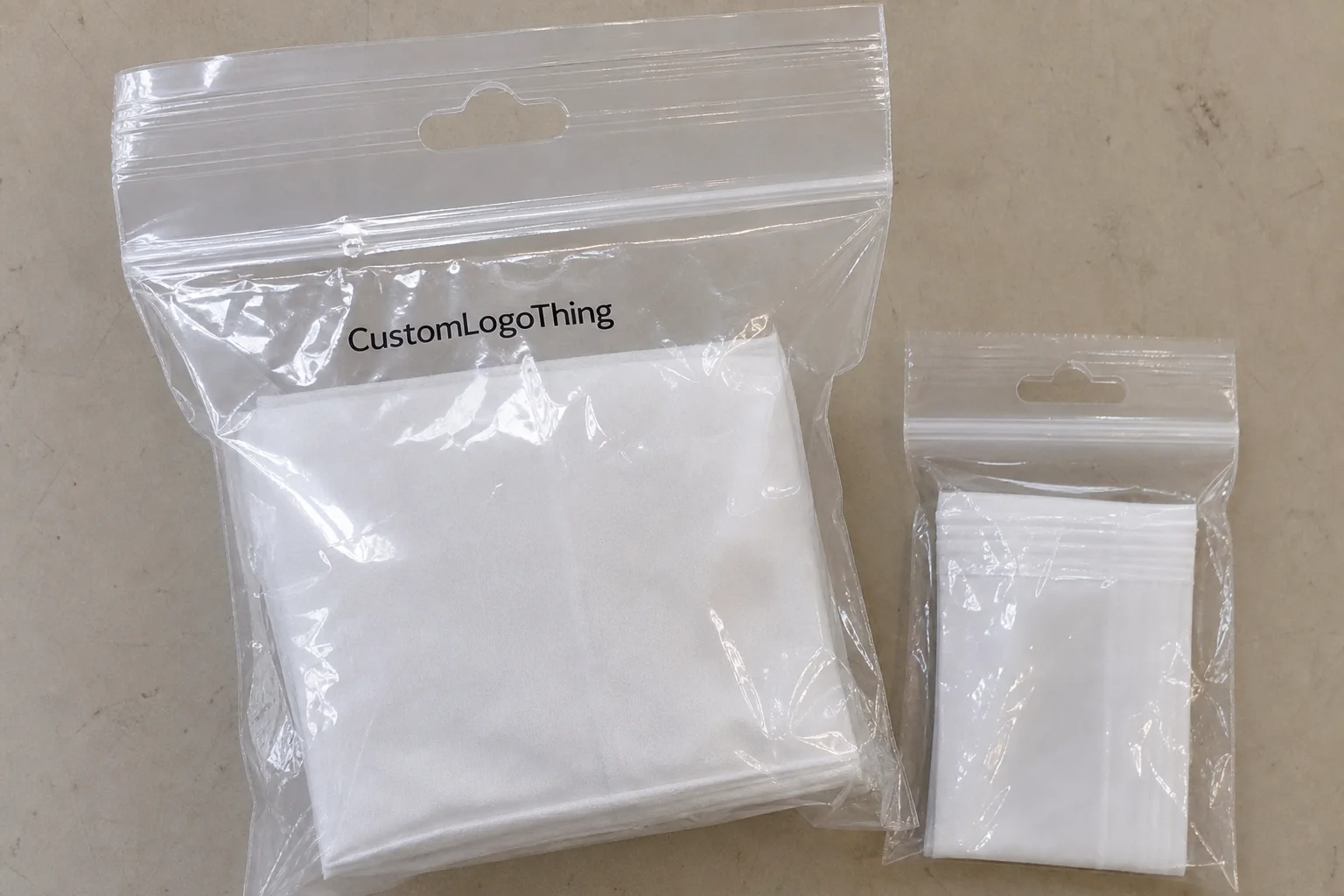
Most buyers look at the visible pouch and assume that is the cost. It is only one piece of it. You are also paying for resin, extrusion or film sourcing, cutting yield, slider components, zipper alignment, print setup, spoilage allowance, carton packing, and the freight path that gets the bags to the right location on the right week. On a small order, fixed costs can dominate the quote. On a larger run, those same costs spread out and the per-piece price starts to behave.
That is why a low-MOQ quote can look surprisingly high next to a bulk tier. A 3,000-piece order still requires artwork review, setup time, production scheduling, packaging, and inspection. The supplier cannot divide those steps by hope. They get divided by quantity.
For beauty packaging, the bag is usually doing two jobs at once: presentation and protection. It may hold a mini cream jar, sponge, headband, applicator, sample sachets, folded insert card, or a mixed kit with several small components. If the bag is too large, the contents shift around and the pack looks careless. If it is too tight, the seal strains and the slider feels rough. A bag that is technically functional can still fail the brand test.
Presentation is not only about gloss or print coverage. Clear film can look sharp when the product layout inside is orderly. Frosted film can hide visual clutter and soften the overall impression. A heavy matte bag can feel premium but may be wasteful for a single-use insert. The right spec depends on how the customer will see and handle the piece.
If the bag is part of the brand experience, spec it like a brand asset, not a generic poly sleeve. That shift usually saves more money than arguing over pennies after the quote is already built around unclear assumptions.
The hidden cost often sits in the parts of the brief that sound minor: a slightly larger size, a second print color, a custom tint, a thicker film, a different slider, or a revised carton count. None of those choices is automatically wrong. They simply need to be chosen before final pricing, not discovered during proofing.
Slider Lock Clothing Bags Unit Cost for Beauty Brands
A useful cost breakdown separates material, slider closure, printing, setup or tooling, packing, freight, and any duty or tax. If a supplier gives only one line number, ask what is included. Otherwise, you may be comparing a factory unit price from one quote against a landed cost from another, which makes the lower number almost meaningless.
Size and film thickness move the price quickly. A bag that is one inch wider or two mil heavier uses more material, may run slower, and can change the carton count. Add a fuller print area or tinted film, and the quote moves again. Slider bags are not priced as one universal commodity, even when the product photos look similar.
Print setup also matters. One-color logo printing on clear PE is usually easier to price than multiple print zones, tight registration, heavy ink coverage, or art that sits close to the sealed edges. If a brand needs barcode space, warning text, recycling marks, batch fields, or a specific opacity, those details should be in the first quote request. Late additions are rarely free.
For planning purposes, ask for three tiers: economy, balanced, and premium. This makes the trade-offs visible before anyone falls in love with the wrong spec.
| Tier | Typical Spec | Unit Cost at 5,000 Pieces | Setup / Tooling | Best For |
|---|---|---|---|---|
| Economy | Clear PE, 3-4 mil, one-color logo, standard slider | $0.16-$0.24 | $90-$160 | Samples, inner kits, internal use |
| Balanced | Clear or frosted PE, 4-5 mil, one- or two-color print | $0.24-$0.36 | $120-$220 | PR kits, travel sets, customer-facing beauty packs |
| Premium | Frosted or matte finish, 5-6 mil, higher print coverage, reinforced slider | $0.36-$0.58 | $180-$320 | Retail presentation, premium launch kits, reusable packaging |
These ranges are not fixed market promises. They move with resin pricing, order quantity, shipping lane, print method, packing requirements, and whether the bag is a stock size or a custom dimension. They are still useful as a sanity check. If a simple one-color clear PE slider bag comes back far above the balanced tier, the quote may include a cost driver you have not seen yet. If it comes back far below the economy tier, inspect the film gauge, slider quality, and freight assumptions carefully.
Freight can change the budget more than buyers expect. A bulky bag order may be inexpensive by unit weight but still consume carton space. Depending on volume and transport method, landed cost often rises by another $0.03-$0.14 per piece. Air shipping can make sense for urgent launch quantities, but it can erase the savings from a lower base price. Ocean or ground freight gives better economics when the timeline allows it.
The best comparison separates unit cost, setup charges, sample fees, freight, and estimated duty or tax. That allows procurement to see whether the cheaper unit price is actually cheaper after shipping, rework risk, and packing format are included. A low number on the first line of a quote is useful only if the rest of the math holds up.
Film Gauge, Size, and Closure Specs That Change Performance
Start with the product, not a guessed bag size. Measure the item or complete kit, then add room for the slider channel, sealing tolerance, insert clearance, and the way the product will sit after packing. For small beauty sets, a quarter inch can change the look more than expected. Too much extra space creates wrinkles and movement. Too little makes packing slow and puts stress near the seal.
Film gauge should match weight, edge profile, and intended reuse. A common range is 3-4 mil for lighter sample packs, sachets, flat inserts, or low-risk accessories. For heavier items, mixed kits, sharp-edged tools, or reusable packaging, 5-6 mil is more appropriate. Thicker film costs more, but it can reduce punctures and improve the perceived value of the bag.
Slider lock closures earn their place when the customer will open and close the pack more than once. They are easier to use than a basic press-to-close zipper and tend to feel more finished, especially on travel sets or reusable kits. A standard zipper may be perfectly fine for an inner pack that gets opened once. For customer-facing beauty packaging, the slider often justifies the added cost because the opening motion is part of the experience.
Closure quality needs real attention. A slider that catches, pops off track, or feels loose can make the whole bag seem cheap even if the film is good. During sampling, check the glide before and after the bag is filled. Some closures feel fine on an empty pouch and behave differently once a jar, compact, or accessory set pushes against the sides.
Film appearance should be chosen with the contents in mind. Clear film gives product visibility and keeps the package honest, but every insert, cap, sachet, and label inside becomes part of the presentation. Frosted film softens the view and hides busy contents, which can help when the kit includes mixed colors or irregular shapes. Tinted film can support brand color, but weak tint over crowded artwork often looks muddier than intended.
- 3-4 mil: lighter kits, sample packs, sachets, and lower-weight accessories.
- 5-6 mil: premium customer-facing bags, heavier contents, and repeat-use kits.
- Clear film: best for product visibility and simple presentation.
- Frosted film: useful for softer branding and hiding visually busy contents.
Reusable expectations change the whole specification. If the customer is likely to keep the bag in a tote, drawer, or travel case, seal consistency, edge finish, and slider feel become part of the product experience. Beauty buyers are rarely just buying a plastic bag. They are buying a small handling moment attached to the brand.
Print Coverage, Finish, and Shelf Presentation Choices
Print affects both appearance and cost. Logo placement, barcode position, SKU text, warning copy, lot code area, disposal marks, and any regulatory language need to be decided before final pricing. If those details change after proof approval, the supplier may need a revised proof or new plates. That is how a small artwork change becomes another setup charge.
Fewer ink colors usually reduce cost and lower the risk of mismatch. A clean one-color logo on clear or frosted film often looks better than a crowded multi-color design with imperfect registration. More ink does not automatically look more premium. In beauty packaging, restraint often photographs better than density.
Finish deserves the same level of attention. Matte and frosted effects can hide scuffs and make the pack feel softer in the hand. Fully clear bags can look crisp for retail presentation when the contents are organized and the graphics are disciplined. A fulfillment-only bag and a shelf-facing bag may share dimensions, but they should not always share the same finish.
Artwork should also respect the limits of flexible plastic. Fine type, very thin lines, low-contrast colors, and heavy coverage near seals can create problems once the bag is produced at speed. If the printed area needs to land in a tight position relative to the slider or edge, build in tolerance and confirm it during proofing. Perfect alignment on a flat PDF is not the same as repeatable alignment on flexible film.
Beauty-related labeling should be approved early. If the bag needs caution language, suffocation warnings, recycling marks, ingredient-related references, country-of-origin text, or retail barcode space, include that copy in the artwork file used for quoting. Late compliance changes can delay proof approval and push production into a tighter shipping window.
The strongest print spec is the one that survives production without drama: simple art, enough contrast, readable type, and a finish that supports the product inside. You can spend more on print coverage, specialty effects, or a custom tint. Sometimes that is the right move. But if the finished bag looks cluttered, the extra spend has not improved the presentation. It has only added ink.
For transit expectations and broader packaging checks, industry references from ISTA can help frame the conversation around shipping performance. If the kit includes paper inserts, belly bands, or cartons, FSC sourcing may also matter for the paper components, even though the slider bag itself is a separate material decision.
Production Steps, Lead Time, and Approval Milestones
The normal production flow is brief confirmation, artwork review, digital proof, sample or pre-production approval, bulk production, quality control, packing, and shipment. It sounds plain because it should be plain. Each step is there to catch the expensive mistakes that show up when a bag is rushed into production with half-set artwork or a moving size spec.
Lead time depends on tooling, print complexity, material availability, and whether a sample round is required. A simple clear PE bag with one-color print can usually move faster than a frosted bag with multiple print locations, custom tinting, special labeling, and a reinforced slider. As a rough planning range, many straightforward custom orders fall around 12-15 business days after proof approval when the spec is already frozen. Sampling, revised artwork, special finishes, or congested shipping windows can add time.
The most common delays are not mysterious: unclear artwork, missing dimensions, last-minute size changes, slow proof approvals, and incomplete shipping details. The supplier can only produce what has been approved. If the brief keeps changing, the schedule changes with it.
Freeze the bag spec before asking for final pricing. If the size, film, closure, print map, and destination are still moving, the quote is not final pricing. It is a placeholder with risk built in.
A good supplier should confirm assumptions early: exact outside dimensions, usable inside space, slider style, film gauge, print colors, finish, hang hole requirements, insert pockets, carton quantity, master carton dimensions, and ship-to location. Those details may feel tedious during quoting, but they are cheaper to settle before production starts.
For launches tied to retail dates, campaign mailings, or influencer send-outs, give the packaging schedule more room than the production time alone suggests. Proof approval, sample shipping, internal review, carton labeling, and freight handoff can each consume a day or two. The tighter the launch calendar, the less room there is for design indecision.
There is also a practical approval point that buyers sometimes miss: the pre-production sample should be judged as a manufacturing sample, not only as a design mockup. Check the slider, film stiffness, odor, print opacity, trim, and packed appearance with the actual product inside. Approving the color but ignoring the fit can lead to a technically approved bag that still feels wrong when it reaches fulfillment.
Quality Checks That Prevent Reprints and Delays
The three failure points behind many slider bag complaints are zipper glide, seal integrity, and edge trimming. If the slider sticks, the bag feels cheap. If the seal is weak, product confidence drops immediately. If the trim is uneven, the whole pack looks careless. These are not subtle defects; customers notice them quickly.
Ask for batch sampling and keep an approved reference sample on file. That gives receiving teams something physical to compare against when the bulk order arrives. Memory is a poor quality standard. A retained sample is better, especially when a reorder happens months later and the team needs to confirm whether the film, slider, and print still match the approved version.
Receiving inspection should cover count accuracy, print registration, ink rub, odor, denting, closure function, seal strength, and transit damage. Do not skip odor if the bag will hold beauty products. A strong plastic smell can be a real problem in PR kits, retail sets, and any package that sits closed around fragrance, skincare, or cosmetic items. It is not a glamorous QC point, but it can affect the unboxing experience fast.
For functional checks, test filled bags as well as empty ones. Open and close the slider several times, turn the filled bag gently, and look for stress near the seal or corners. If the contents include a jar, metal tool, pump, clip, or sharp-edged accessory, check for puncture risk during handling. A bag that passes flat inspection may still fail once the real product is inside.
Print checks should be tied to the approved proof. Look at registration, color consistency, placement, and legibility of small text. If the artwork includes a barcode, scan it from the actual printed bag rather than assuming the proof guarantees performance. Film glare, tint, and curvature can affect readability.
If the shipment travels in master cartons, ask how the cartons are packed and protected. Carton compression, poor stacking, or loose internal packing can crease bags before they ever reach your fulfillment team. Alignment with transit testing expectations under ISTA methods will not guarantee a flawless shipment, but it gives the buyer a more disciplined way to discuss risk.
A basic incoming QC plan can save a launch from repacking, delays, and embarrassing defects. Count the cartons, sample the first and last carton, check zipper action, compare print against the reference sample, and confirm the packing method. That small amount of discipline is far cheaper than discovering a defect after the kits are assembled.
What to Send for a Fast Quote
A clean RFQ should include bag size, usable inside dimensions if critical, film thickness, closure type, print colors, quantity, finish, product weight, target use, and ship-to location. If the bag will hold a cream jar, brush, sponge, folded insert, garment accessory, or mixed sample set, say so. The contents affect size tolerance, film choice, closure stress, and packing recommendations.
Send vector artwork whenever possible, along with Pantone or other color references if color accuracy matters. Include any required warning copy, barcode area, recycling mark, lot code location, or retail labeling before the supplier prepares the quote. If you have an existing bag you like, provide its dimensions, film gauge, and photos of the closure and seams. Photos help, but measurements decide the quote.
Ask for separate line items for unit cost, setup or tooling, sample cost, freight, and estimated duty or tax. Also ask for quantity breaks, such as 3,000, 5,000, 10,000, and 25,000 pieces. The price curve often reveals whether a slightly larger order would lower the landed cost enough to justify the extra inventory.
If the bag is customer-facing, tied to PR, or carrying important branding, order a pre-production sample. This is especially useful for frosted film, custom tint, special closure hardware, heavy print coverage, or print near the edges. A sample adds cost and time. A reprint adds more of both.
The most reliable way to control Slider Lock Clothing bags Unit Cost for Beauty is to remove guesswork before the quote is built. Lock the dimensions, choose the film gauge, define the slider, approve the print map, and confirm the delivery window. After that, price negotiation becomes a real comparison instead of a foggy argument over numbers that do not describe the same bag.
What changes slider lock clothing bag unit cost the most for beauty brands?
Size, film thickness, closure style, and order quantity usually move the price first. Print coverage, number of ink colors, custom finish, packing format, and freight method can also shift the landed cost. Low-quantity orders carry higher unit pricing because setup and proofing costs are spread across fewer bags.
Is a slider lock bag worth it for beauty packaging versus a standard zipper?
It is usually worth it when the bag is customer-facing, reusable, or part of a PR or retail presentation. The slider makes opening and closing easier and feels more finished in the hand. A standard zipper can still be the better choice for inner packs or one-time-use packaging where presentation matters less.
What MOQ should I expect for custom beauty slider lock bags?
MOQ varies by size, print method, material, and supplier setup. Lower MOQs are often available, but they usually raise the unit cost. Ask for tiered pricing at several quantities so you can see where the price breaks become meaningful.
How long does production usually take after artwork approval?
Simple custom orders often fall around 12-15 business days after proof approval when material, size, print, and closure details are already confirmed. Samples, special finishes, revised artwork, or tight shipping windows can extend that schedule. Freight time should be planned separately from production time.
What files should I send to get an accurate quote?
Send exact dimensions or a dieline, target quantity, vector artwork, print colors, finish preference, shipping destination, and the intended contents. Include any warning text, barcode space, recycling marks, or lot code areas before quotation. That is the cleanest way to control Slider Lock Clothing Bags unit cost for beauty without paying for unclear specifications later.


