Custom Snapbacks for Subscription Brands That Sell
Custom snapbacks for subscription brands work because they keep the brand in view after the box is opened. A cap gets worn on errands, travel days, and casual outings, so the impression lasts longer than most inserts or one-time freebies. That makes it easier to justify as a retention piece when the build feels premium enough to keep.
The format also avoids some common fulfillment problems. One size fits most, the item packs reasonably well, and the perceived value can be strong if the spec is right. The catch is that the cap only works when the audience wears hats and the design feels intentional, not like generic merch.
For buyers, the real question is whether the spec, cost, and timeline support the role the hat needs to play in the subscription offer.
How Custom Snapbacks for Subscription Brands Lift Retention
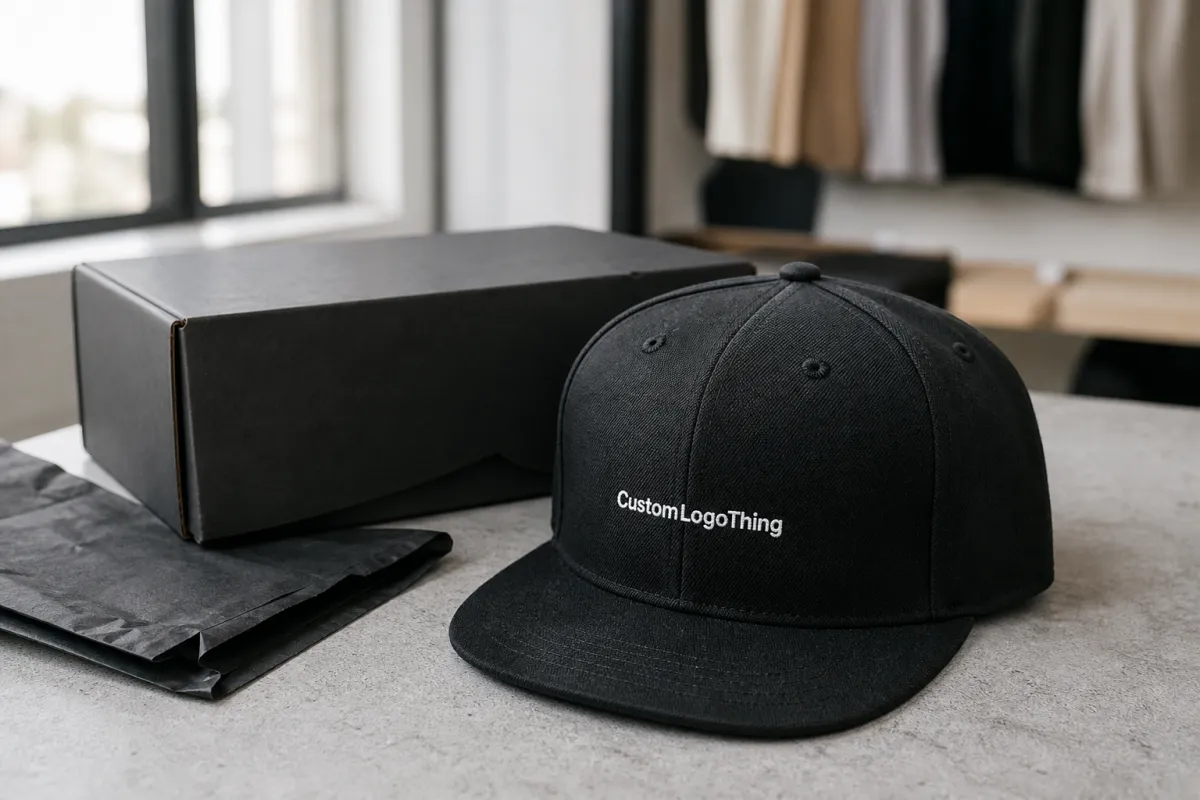
Subscription programs depend on perceived value, and a snapback can change how a shipment feels. It turns a routine box into something that reads like a member-only reward. That matters because people keep and reuse tangible items, especially ones that work in everyday settings.
Snapbacks also travel well beyond the box. They show up in photos, on video calls, and in places where the brand would not otherwise appear. That is why they often work best as welcome gifts, anniversary rewards, referral perks, or limited-run bonuses. The item feels earned, which helps it land better than random merch.
- Visible value: A well-made cap reads closer to apparel than promo swag.
- Long wear cycle: It can stay in rotation for months instead of minutes.
- Low friction: One-size merch reduces exchange and fit issues.
- Flexible use: It works for subscribers, staff, affiliates, and event kits.
That does not mean every program should default to a hat. If the audience rarely wears caps, the case weakens quickly. But for the right community, the item can support retention without feeling forced. The simplest test is whether the cap still makes sense three months later.
Production Process, Timeline, and Approval Milestones
The cleanest orders follow a predictable path: brief, artwork, digital proof, sample or pre-production review, production, inspection, pack-out, and shipping. Most delays come from logo revisions, color changes, or slow approvals after a sample arrives.
Lead time depends on how custom the build gets. A blank-stock cap with embroidery can often move in about 10-15 business days after proof approval. A fully custom build with woven patches, custom labels, special packaging, or interior details usually needs closer to 20-30 business days, plus transit. Rush production exists, but it leaves less room for corrections.
Approval needs to be defined up front. Is the clock based on the digital mockup, the physical sample, or the first production piece? If that is unclear, teams waste days debating whether the timeline has actually started. That kind of ambiguity is avoidable.
Sampling should be treated as a decision point, not a formality. A digital proof confirms placement and color direction, but it will not show crown height, front-panel stiffness, or how the closure feels in hand. For color-critical orders, detailed patch work, or launches with fixed dates, a physical sample is worth the time. It can also catch issues such as small text that is too dense for the stitch count or a patch border that feels too bulky.
Shipping and pack-out matter as much as decoration. Some caps are packed flat to reduce freight. Others ship with crown inserts or in individual polybags to preserve shape. If the hat has to arrive cleanly inside a subscription box, ask how the brim is protected and whether the carton plan prevents the front panel from crushing.
Specs That Change Fit, Feel, and Perceived Value
Snapbacks look simple until the spec sheet gets specific. Structured versus unstructured, high crown versus mid crown, flat bill versus curved bill, plastic snap closure versus metal closure, cotton twill versus mesh: every choice changes fit and impression. A high crown usually reads stronger in photos. A mid crown often feels easier for daily wear.
Material choice drives the first physical impression. A structured 6-panel cap in cotton twill or a cotton-poly blend usually feels more substantial than a thin blank. Mesh-back trucker styles are lighter and more breathable, but they read more casual. If the goal is a collectible or premium look, a solid-front build usually helps.
Decoration method matters just as much. Embroidery is durable and familiar. Woven patches hold small detail better than stitch alone. PVC patches feel more modern and tactile. Leather patches push the cap toward a heritage look. Puff embroidery adds depth, but it needs simple art. For subscription brands, the best method is the one that survives repeated wear and still reads clearly from a few feet away.
Color discipline is another value cue. A neutral base with one strong accent often looks more deliberate than a loud multi-color build. That is especially true if the cap has to live beside branded boxes, inserts, or other packaging. The hat should feel like it belongs to the same system.
Packaging compatibility belongs in the spec too. If the cap is going into a mailer or a kit with other items, check whether the crown needs support, whether a polybag is required, and whether the brim can sit flat without arriving bent. If the project uses paper sleeves or inserts, decide whether those need to match the brand standard.
Most premium-feeling merch is not expensive because of one feature. It is expensive because several small decisions line up: structure, stitch quality, restrained color, and packaging that protects the shape from warehouse to doorstep.
Cost, Pricing, MOQ, and Unit Cost Levers
Quotes should include the blank cap, decoration, setup, sampling, packaging, freight, and any custom labeling. If one of those pieces is missing, the price is not really comparable. That is where budget surprises usually begin.
MOQ changes the math quickly. Smaller runs carry more setup cost per unit, while larger runs spread that cost across more pieces. A 100-piece order can make digitizing or patch tooling feel expensive, but that is normal. What matters is knowing which fees are one-time charges and which repeat on every run.
| Option | Typical MOQ | Indicative Unit Cost | Best Fit |
|---|---|---|---|
| Blank-stock with embroidery | 50-100 | $6-$11 | Fast launches and simpler logos |
| Semi-custom patch build | 100-250 | $8-$15 | Premium feel with controlled complexity |
| Fully custom build | 250-500 | $12-$22 | Hero drops, VIP gifts, and repeat programs |
First runs often carry setup fees for digitizing, patch tooling, print screens, or label creation. Those charges may run roughly $30-$150 depending on the method and vendor. Reorders can be cheaper only when the spec stays the same. Change the patch size, closure, or colorway and the savings usually shrink.
Freight is the other place budgets slip. Hats look light until they are packed, kitted, and moved in bulk. Individual polybags, carton inserts, and mixed-product pack-outs all add cost. A low unit price means little if the shipment lands late or the packaging line items appear only at the end.
The cheapest quote is often the one that left out the useful details.
Step-by-Step Ordering Plan for a Subscription Drop
Start with the business goal. Is the cap a welcome gift, a loyalty reward, a retail add-on, or a limited subscriber perk? The answer changes the quantity, spec, and packaging. A reward for top-tier members can justify a more detailed build. A broad giveaway usually cannot.
Put one clean spec sheet together before asking for pricing. Include the logo files, color targets, cap style, closure style, quantity, packing requirement, and delivery window. If the hat needs to sit with Custom Printed Boxes or other branded packaging pieces, note that early so the supplier can plan the pack-out correctly.
- Define the goal and audience.
- Lock artwork files and color references.
- Choose the cap shape and decoration method.
- Request a proof or sample.
- Review logo size, stitch density, crown shape, and color match.
- Approve the final spec and confirm the ship window.
That sequence is basic because it works. Most timeline failures come from moving ahead before the visual and physical details are settled. If the cap is part of a larger subscriber experience, make sure the hat, box, and insert all speak the same visual language.
Common Mistakes That Turn Premium Hats Into Dead Stock
The biggest mistake is treating the hat like generic promo merch. Subscription customers can tell the difference between a considered design and a rushed logo slap. Thin stitching, awkward proportions, and cheap-feeling closures weaken the value signal fast.
Another trap is trusting the flat mockup too much. Artwork that looks balanced on screen can shrink or warp once it wraps around a curved crown. Tiny type is the usual casualty. If the design depends on detail smaller than the stitch or patch can hold, the finished cap may look muddy.
Budget blind spots cause their own damage. Teams often plan for unit price and forget freight, replacements, overages, and revision rounds. That matters because these hats usually sit inside a launch window with other moving parts. If they arrive late or overspend the budget, the whole drop feels weaker even if the cap itself is fine.
Audience mismatch is another quiet failure. A winter-heavy audience may not need a bright sports-style cap. A minimalist wellness brand may not want a loud contrast bill. A streetwear audience might accept bolder color, while a premium lifestyle audience usually wants restraint. Dead stock often starts as a positioning problem, not a production problem.
Too many novelty details can also undo a good design. One interesting element is enough. Two can still work. Three usually starts to look like a draft that never got edited.
Most dead stock starts as a spec-sheet problem, not a marketing problem.
Expert Tips for Better Unboxing, Reorders, and Variants
Use the cap as a tiered reward when possible. A first-order gift, anniversary drop, or referral bonus feels more intentional than a random add-on. That shift raises perceived value because the item feels earned.
Keep one master spec sheet and use it every time. Save the approved art files, color codes, patch dimensions, and crown notes in one place. Without that record, a reorder can drift in ways that are hard to catch until the boxes are packed. Thread lots change, patch vendors change, and crowns can come back slightly off.
Hold onto one approved physical sample. It becomes the reference point for future production. A photo helps with memory, but it does not replace checking stitch density or the exact curve of the brim. If the next batch needs to match the first, the sample saves time and arguments.
Keep the variant plan tight. One hero colorway and one backup option is usually enough. More than that can fragment inventory. If the brand wants recurring drops, a better move is to keep the core cap stable and vary the patch, insert, or packaging treatment. That keeps the series collectible without forcing a new factory lesson every month.
The unboxing experience also benefits from context. A short insert note, a clean story card, or a simple explanation of why the cap is included can turn the item into part of the ritual.
Actionable Next Steps Before You Request Quotes
Before pricing starts, sort four things: audience, margin, launch month, and the role the cap plays in the offer. A retention gift, a VIP reward, and a retail add-on do not need the same spec, and they should not be priced like they do.
- Gather quantity targets, artwork files, color references, and closure preferences.
- Decide whether the cap needs custom labeling, special packing, or matching inserts.
- Ask for quotes that show sample terms, freight, and setup fees on the same basis.
- Build a buffer for approvals, transit, and kitting before the drop date.
That buffer matters. A two-day approval delay can snowball into a missed freight window, especially if the hats are tied to other packaging components. Once the final spec is locked, keep it locked. The fastest way to burn margin is to let a small change trigger another proof round.
Handled well, custom snapbacks for subscription brands can do more than fill space in a box. They can carry the brand into daily wear, extend the life of the offer, and make the subscription feel less disposable.
How many custom snapbacks for subscription brands should I order first?
Start with a run sized to your active subscriber base plus a small buffer for replacements, VIP gifts, and packing errors. That gives you room to check fit, logo clarity, and subscriber response before you commit to a larger order.
What drives custom snapback pricing up the fastest?
Multiple decoration locations, specialty patches, custom labels, and rush production usually raise the price the fastest. Sampling rounds and freight can also move the final number, so ask for a quote that shows every cost line clearly.
How long does the custom snapback process usually take?
Blank-stock decoration moves faster than fully custom builds. Plan on roughly 10-15 business days after approval for simpler runs and 20-30 business days for more complex builds, then add transit and any kitting time.
Which decoration method works best for subscription box snapbacks?
Embroidery and woven patches are the most flexible choices because they look premium and hold up well in daily wear. Pick the method based on logo detail, desired finish, and how the design needs to photograph.
How do I keep reorders consistent across future drops?
Save the approved spec sheet, art files, color codes, and patch placement so every reorder starts from the same reference. Ask the supplier to flag any material or vendor changes before production, especially if exact repeatability matters.
What should I pair with the hats for a stronger subscription experience?
A clean insert card, matching branded packaging, or a short note explaining why the hat is included can make a big difference. For custom snapbacks for subscription brands, that small context layer often turns a nice item into a memorable one.

