Custom Sock Boxes That Help Retail Programs Look Ready, Not Random
Custom sock boxes do a simple job with outsized consequences. They turn a flexible, forgettable product into something that reads clearly on shelf, survives handling better, and looks worth the price tag. Socks are easy to sell badly. Packaging is usually where that failure starts.
Buyers do not spend much time decoding a sock pack. They glance, compare, and move on. If the box looks flimsy, crowded, or improvised, the product starts at a disadvantage before anyone checks fabric blend or stitch count. A good pack creates order fast. That matters for private label, retail assortments, seasonal gift sets, and any line that needs to look disciplined without wasting margin on unnecessary theatrics.
The real work is not decoration. It is matching structure, material, print finish, and unit economics to the channel. A box that works for a boutique gift wall can be a mistake in a value-driven retail program. A premium look is useful only if the rest of the spec can support it.
What custom sock boxes change on the shelf
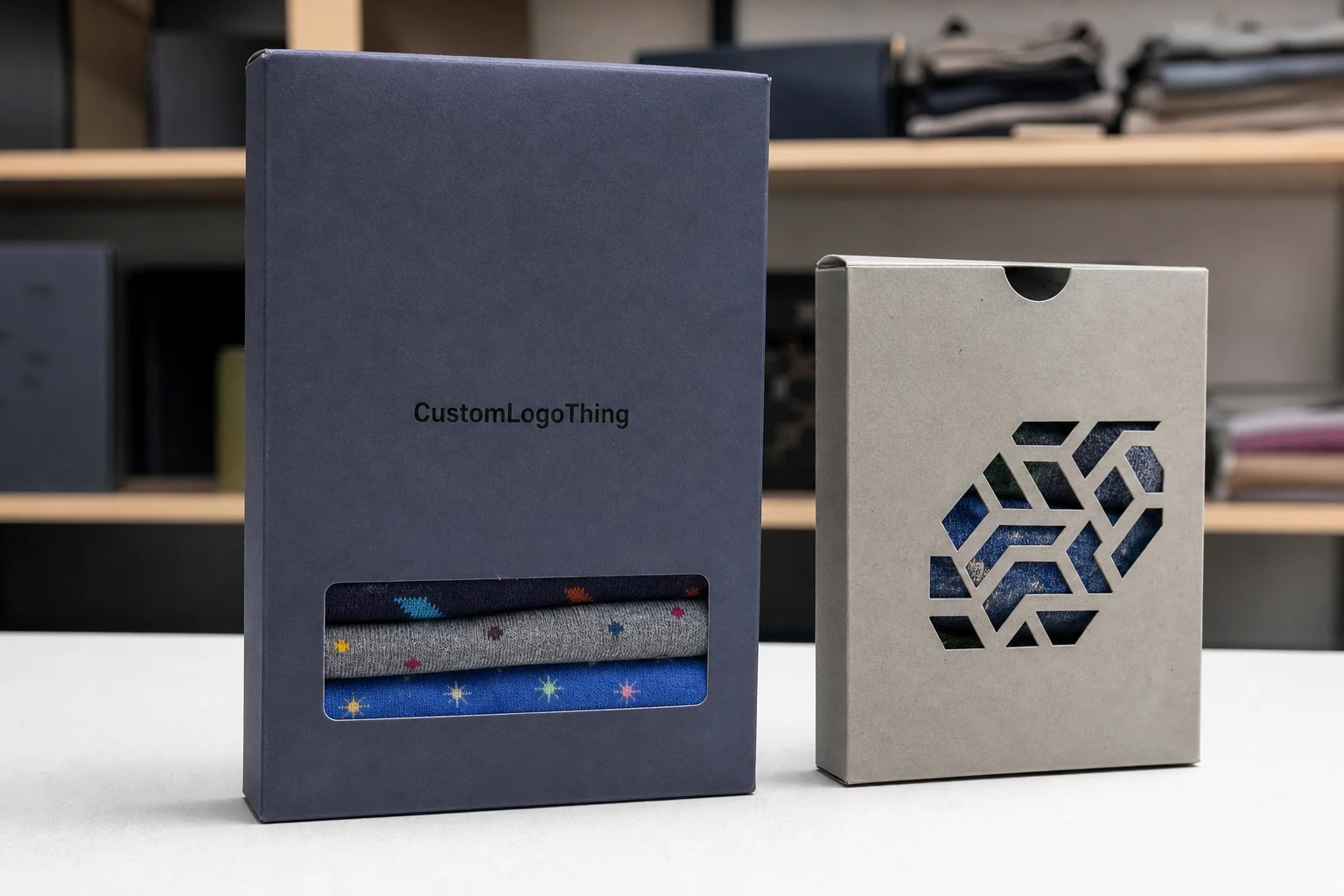
A loose pair of socks looks soft, small, and easy to ignore. Put that same pair into a well-built carton and the product gains shape, hierarchy, and shelf presence. That is not cosmetic fluff. It changes how the item is perceived before the shopper ever touches it.
For socks, packaging does three jobs at once. It protects the fold, presents the brand, and keeps the retail read clean. If one of those breaks down, the pack usually feels cheaper than the product inside. That is especially true for multi-packs and licensed items, where the box has to carry more of the selling load.
There is also a practical advantage that gets overlooked. A rigid outer format keeps the pack from slumping in transit and helps stores face product quickly. Soft goods without structure tend to arrive with uneven edges, warped folds, or labels sitting off-center. That creates extra labor in the back room and a sloppy shelf presentation. Neither helps sell-through.
“A sock program can fail for reasons that have nothing to do with the sock itself. The packaging was the weak link, and the shelf exposed it.”
The best packaging for this category is rarely the fanciest one. It is the one that aligns with price point, retail channel, and how the product is actually handled. That is the difference between packaging that looks good in a mockup and packaging that performs in distribution.
How the box structure and print finish work
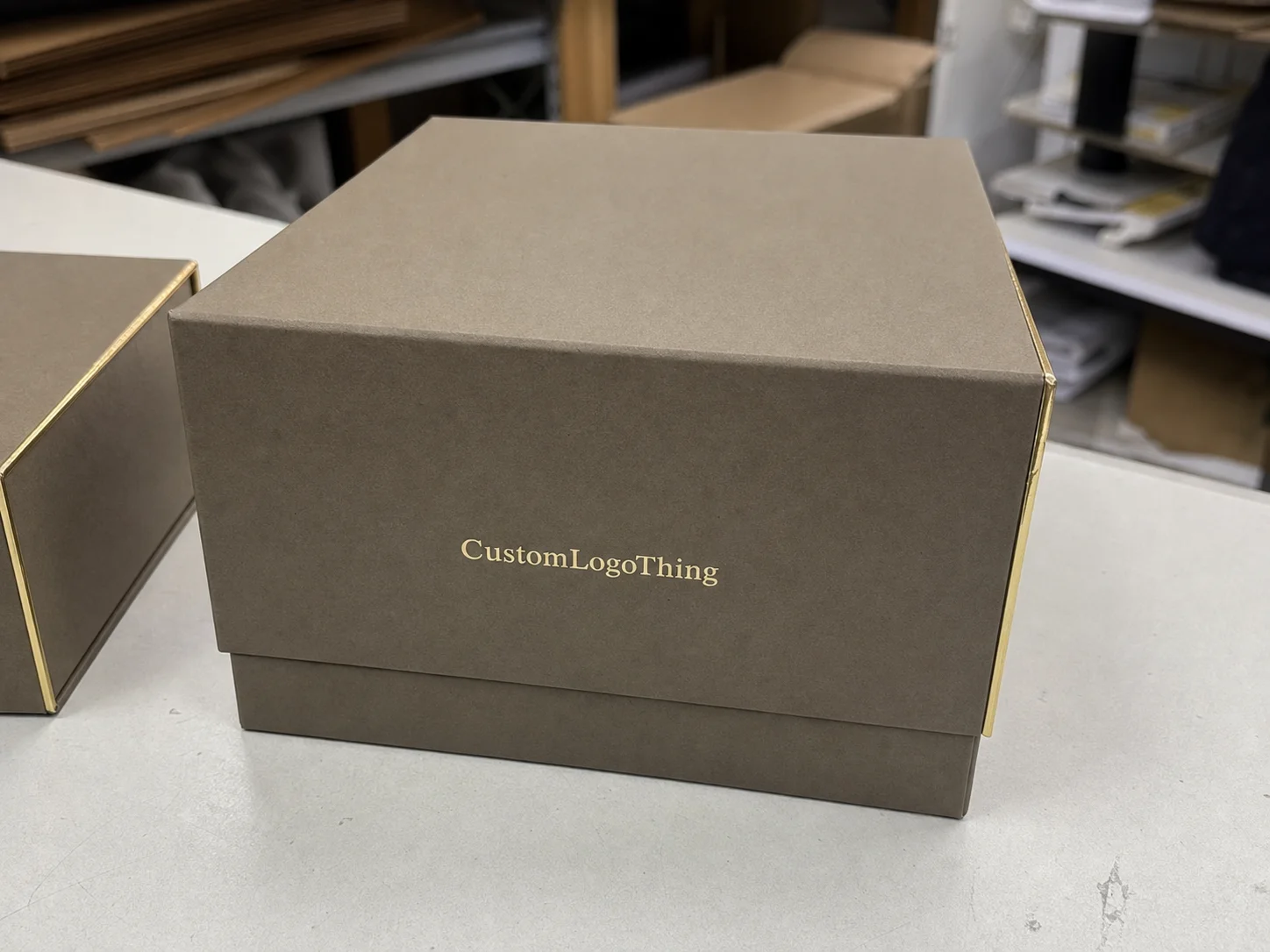
Sock packaging usually falls into a few dependable structures. Tuck-end cartons are common for standard retail because they are efficient to produce, easy to stack, and inexpensive relative to premium formats. Sleeve packs add a cleaner reveal and can make a line feel more giftable without moving all the way into rigid-box territory. Rigid boxes sit at the top end and make sense only when the price point and margin can carry the extra cost.
Material choice matters more than most buyers expect. A 350gsm to 400gsm folding carton is enough for many sock programs if the pack size is right and the box does not need to carry unusual weight or repeated handling. Rigid boxes use thicker chipboard wrapped with printed paper, which gives a heavier hand feel and better perceived value, but the labor and material cost rise quickly. For everyday retail, that premium can disappear into the margin before it returns any benefit.
Print finish changes how the packaging feels under store lighting. Matte gives a calmer, cleaner look. Gloss pushes color harder and can help novelty or sports lines read more sharply from a distance. Soft-touch adds tactile appeal, though it can show wear if the pack is handled often. Spot UV, foil, and embossing work best as accents. Pile them on and the box stops feeling premium and starts looking noisy.
Common structure choices
- Tuck-end cartons for everyday retail, private label, and tighter budgets.
- Sleeve packs for seasonal updates, visual layering, and moderate shelf impact.
- Rigid gift boxes for higher-margin bundles and presentation-driven lines.
- Window cartons when the sock pattern itself is part of the purchase decision.
Internal support is worth planning early. Tissue, paperboard inserts, belly bands, and simple retainers keep the folded pair from shifting in transit. Without that control, the socks can end up loose, skewed, or bunched by the time they reach the shelf. The fix usually costs very little compared with the value of a cleaner presentation.
For brands with sustainability targets, FSC-certified board is a practical starting point. It does not solve everything, but it gives the program a better material story without complicating production. If the packaging will travel through a warehouse or e-commerce channel, ask for transport testing aligned with ISTA methods instead of assuming a pretty box will survive rough handling on its own. More on transport standards is available through ISTA, and material certification references can be found at FSC.
| Box style | Best use | Visual impact | Typical cost signal |
|---|---|---|---|
| Tuck-end carton | Everyday retail, multi-packs, private label | Clean and efficient | Usually the lowest unit cost |
| Sleeve pack | Seasonal sets, brand refreshes, mid-tier retail | More shelf presence | Moderate due to extra assembly |
| Rigid box | Giftable collections, premium bundles | Highest perceived value | Highest material and labor cost |
| Window carton | Pattern-led lines and specialty assortments | Lets product color show | Moderate to high, depending on window type |
Cost, pricing, MOQ, and what moves the quote
The quote for custom sock boxes comes down to a handful of variables: structure, board stock, print coverage, finishing, and quantity. A plain folding carton with limited color can be far less expensive than a rigid box with foil, embossing, and a custom insert. The gap is not subtle once the estimate is broken out honestly.
MOQ is where buyers often misread the economics. Setup costs for die-cutting, plates, press make-ready, and finishing get spread across the run. A small order carries a heavier burden per unit. Larger volumes usually bring the unit price down enough to matter. For simple folding cartons, smaller runs may land around $0.55 to $1.25 each, while higher quantities with simpler specs can move closer to $0.18 to $0.40 per unit. Those ranges shift with board choice, coverage, and finish complexity.
Multi-SKU programs change the math fast. If the line has several colorways or size variants, the supplier may need separate artwork files, separate plates, or separate packing instructions. That does not kill the project, but it adds cost and complexity. The cleanest way to hold the line is to standardize the box size wherever the packed sock dimensions allow it, then vary only the graphics.
Pricing comparison works best when everyone quotes the same spec. Same dimensions. Same material. Same print sides. Same finish. Same delivery assumption. A quote that looks low but leaves out inserts, proofs, or freight is not really low. It is just incomplete.
Here is a practical view of what moves cost up or down:
- Reduce finish complexity before you cut the board quality.
- Keep one dieline across core SKUs whenever the pack size allows it.
- Use the same front-panel layout across variants.
- Confirm whether a single insert can serve more than one SKU.
For reference, a clean quote should also state whether tooling, sample charges, packaging labor, and freight are included. That detail sounds boring until a project gets pushed because someone assumed the number was all-in. Honest pricing is usually more useful than a low number with missing pieces.
| Order profile | Likely setup burden | Unit cost tendency | Best fit |
|---|---|---|---|
| Short run, simple carton | High per unit | Higher | Testing, small launches, limited editions |
| Mid-volume, standard carton | Moderate | Balanced | Core retail programs |
| Large-volume, limited finish | Low per unit | Lower | Replenishment and recurring assortments |
| Premium rigid or multi-finish pack | Highest | Highest | Gift sets and seasonal hero items |
One more point: freight can change the economics more than expected, especially for bulky formats. If a box ships flat, stores well, and packs efficiently, the program stays simpler. If the structure increases carton volume or hand assembly, the total landed cost climbs even if the printed box price looks acceptable.
Production process, timeline, and lead time expectations
The production sequence is familiar: dieline approval, artwork prep, proofing, printing, finishing, converting, and final packing. The slow part is usually not the machine time. It is the revision loop before production starts. Missing barcode details, vague color references, or late dimension changes can stall a job longer than the print run itself.
For a straightforward folding carton order, a realistic production window after proof approval is often 12 to 18 business days. Complex finishes, rigid structures, inserts, or larger volumes can take longer. That range is not a promise. It depends on the plant schedule, the accuracy of the artwork, and the shipping method. But it is a useful planning baseline for retail packaging.
Special coatings and hand assembly add steps. So do packages that require multiple components to be fitted together. If a launch date matters, build margin into the schedule. A three-day delay in proofing can become a two-week problem when it lands too close to the production slot.
It helps to separate print time from total launch time. A box may come off the press quickly and still not be ready for shelf if receiving, warehousing, labeling, or kitting sits in front of it. Timing should include every hand the package passes through. That sounds basic, but it is where many programs get burned.
If the boxes will move through a distribution center or e-commerce route, ask for basic transport validation early. Drop, vibration, and compression tests catch weak spots before the order is locked in. A pack that looks fine on screen can fail once stacked, shipped, and handled. Testing is cheaper than replacing damaged inventory.
Design specs that keep socks looking premium and organized
The box should be built around the finished folded pack, not the loose socks. That detail sounds small until the first samples arrive. A carton sized to the unpacked product often ends up too loose once the socks are folded. The result is wasted space, poor visual fit, and a box that looks bigger than the product deserves.
Good packaging design gives the shopper answers quickly. Brand, product type, size, variant, and assortment should be easy to read at a glance. If the layout makes the eye work too hard, the box starts losing its job. Clear hierarchy matters more than decorative tricks.
Window placement deserves actual thought. A tiny window can look accidental. A huge one can strip away the premium feel and reveal fold edges or inconsistencies. Barcode space, hang-tab needs, and shelf-facing panels should all be planned together, because retail packaging has to work on a hook, on a shelf, and in back-of-house handling.
Color accuracy is another area where cheap shortcuts show up fast. If a brand uses a specific navy, red, or muted neutral, the print reference needs to be explicit. A flyer can survive a small shift. A retail box cannot always get away with it, especially across a multi-store rollout where consistency is visible beside competing products.
- Confirm the folded pack dimensions before finalizing the dieline.
- Reserve space for barcode, size, and variant copy.
- Keep the front-panel hierarchy consistent across the line.
- Check legibility under fluorescent retail lighting, not just on a monitor.
There is also a fulfillment angle that gets ignored until labor costs show up. A box that folds predictably, opens cleanly, and packs without fighting the operator saves time every day. That matters if the line is assembled by hand or replenished often. Good packaging design is not just about how it looks. It should reduce friction in the workflow behind it.
Common mistakes that waste budget or weaken sell-through
The first mistake is specifying the box before the product dimensions are locked. That leads to loose fits, awkward void space, or a redesign when the actual folded pack does not match the original assumption. Packaging decisions depend on the packed state. Skipping that step creates unnecessary rework.
The second mistake is spending on finishes that the margin cannot support. A heavy foil-and-emboss program on a box that needs to live in value retail is a mismatch. It may look polished in a sample, but the extra cost can erase the benefit once volume starts moving. Fancy packaging does not fix a weak unit economics problem.
The third mistake is weak hierarchy. If the product name, assortment variant, or size is too small, the pack becomes harder to shop. That is not a subjective design issue. It is a sell-through problem. Shoppers need to understand the item in seconds, and retail buyers notice when a pack slows that process down.
Skipping samples is another expensive habit. A digital proof will not tell you how the board feels, whether the matte finish darkens the artwork, or if the fold score lands in the wrong place. A sample is where Fit and Print issues show up while they are still cheap to fix. That is the point.
There is also a tendency to overcomplicate the structure from season to season. If every run changes size, insert style, and finish, future ordering gets harder and more expensive. Stability has value. A clean core pack lets graphics change without rebuilding the whole packaging system every time the assortment shifts.
Many brands handle this well by keeping the core line simple and reserving premium treatment for holiday, collaboration, or gift-tier SKUs. That keeps the main program efficient while still leaving room for higher-impact presentation where it makes financial sense.
Next steps for a cleaner quote and a faster launch
If you want a usable price, send a complete spec set. Include the finished product dimensions, quantity, box style, artwork status, finish preference, and delivery target. If there are multiple SKUs, send them together. That makes it easier to standardize the box size and avoid needless variation.
Ask for a proof or sample before full production. That is the cleanest way to catch fit issues, barcode placement problems, or color shifts before the order is locked. For retail-ready work, the sample stage is where most of the risk should be removed.
Standardizing the core packaging usually works better than chasing a different box for every variant. Keep one reliable structure, then reserve special treatments for a smaller number of seasonal or premium items. That approach keeps production manageable and still gives the brand room to create visual separation where it matters.
When comparing suppliers, ask the same technical questions every time: what board is quoted, what print method is used, how the boxes are packed, what the MOQ is, what the lead time is from proof approval, and what freight assumption is included. That is the only way to compare offers cleanly. Anything less turns into noise.
The fastest path is usually the least dramatic one: lock the fold size, confirm the brand copy, approve the dieline, and keep the spec tight. That is how custom sock boxes stay useful instead of becoming a revision trap. If the box is doing its job, the product looks organized, the quote makes sense, and the launch does not get buried in avoidable cleanup.
What size should custom sock boxes be for a standard folded pair?
Measure the finished folded pack, not the loose socks. The fold pattern changes the actual footprint, and that is what the box needs to fit. Leave enough clearance for easy insertion and a clean close, but not so much that the product floats inside the carton.
How much do custom sock boxes usually cost per unit?
Unit cost depends on quantity, board stock, print coverage, and finishing. Smaller runs carry more setup cost per box, which pushes unit pricing up. Simple folded cartons are usually more economical than rigid boxes or packs with several finishing steps.
What is the typical lead time for custom sock box production?
A straightforward carton order often takes 12 to 18 business days after proof approval, though complex finishes, inserts, and larger quantities can extend that window. The cleanest artwork and fastest approvals usually save more time than any production shortcut.
Are boxes better than poly bags for retail sock packaging?
Boxes usually create a more ordered and premium presentation, and they hold the fold better than flexible packaging. Poly bags can still work for lower-cost or high-volume programs, but they rarely produce the same shelf value. The right choice depends on channel and margin.
What should I send before requesting a quote for custom sock boxes?
Send the packed product dimensions, target quantity, artwork files if available, finish preferences, and delivery deadline. If you have multiple SKUs, include them together so the supplier can see whether one format can serve the whole line.