A coffee cup sticker looks like a small detail until it fails in public. One wrinkle, one lifted edge, one smeared QR code, and the whole cup reads as rushed. That is why custom stickers for coffee cups deserve more technical attention than a quick logo upload and a guess at size.
These labels do more than decorate. They identify drinks, carry promos, seal lids, mark allergens, support seasonal campaigns, and turn plain stock cups into branded packaging without the cost of custom printed cups. For cafés, roasters, caterers, pop-ups, hotels, and event teams, that flexibility is often the difference between a workable package system and a messy one.
The catch is that a coffee cup is a difficult surface. Heat changes adhesive behavior. Cold cups sweat. Curved walls fight large labels. Some cup coatings resist adhesion better than buyers expect. A label that looks perfect on a proof can behave very differently once it meets condensation, handling, and a barista rush.
Why Custom Stickers for Coffee Cups Matter More Than Most Buyers Think
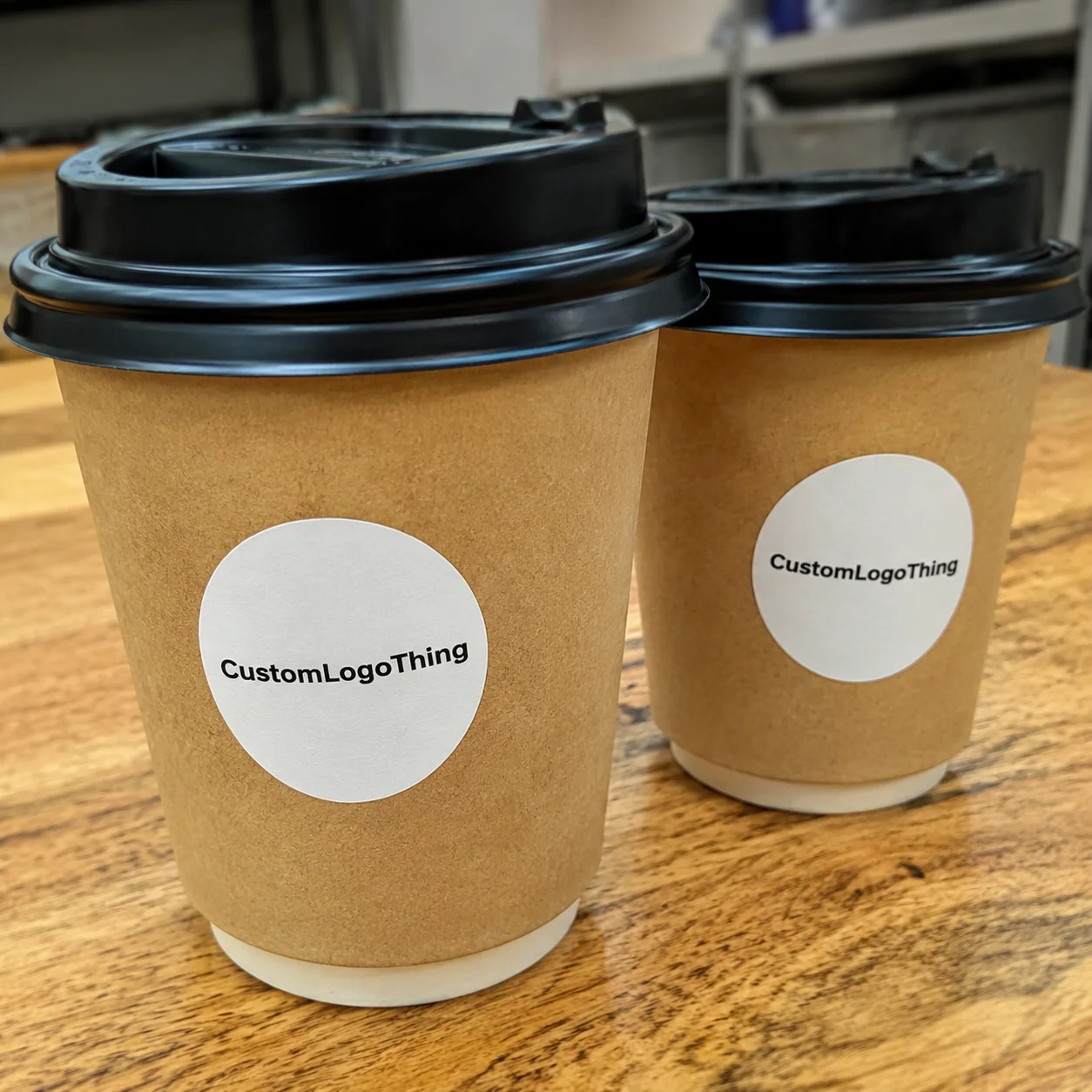
Stickers solve a practical problem: they let brands communicate on demand. A café can label different roast notes, note milk alternatives, flag oat or almond drinks, promote a weekend special, or add a QR code without reordering an entire run of printed cups. That matters most for businesses with changing menus or lower order volumes.
For seasonal drinks, stickers are usually easier to manage than full cup printing. A printed cup ties you to one design and one inventory pool. A sticker system gives you room to test new offers, update artwork, or switch campaigns without dead stock sitting in a storeroom for six months. That flexibility has value, even if the unit price looks higher at first glance.
There is also a brand consistency argument. A well-chosen label can sit on cups, sleeves, pastry boxes, to-go bags, and insert cards while keeping the same color system and logo rules. That is especially useful for smaller brands that need a polished look without ordering a different printed substrate for every package type.
Decorative labels and functional seals are not the same product. A round logo sticker on a hot paper cup is doing a different job from a long seal crossing a lid seam. The adhesive strength, die cut, and finish should match the job. If the sticker needs to survive moisture, heat, or repeated handling, that has to be specified before the quote is built.
Practical rule: decide first whether the sticker is branding, identification, promotion, or a seal. The material follows the function, not the other way around.
If you already source other branded pieces, such as Custom Labels & Tags or broader Custom Packaging Products, cup stickers can be folded into the same packaging system. That keeps artwork aligned and reduces the number of design decisions staff have to make later.
How Coffee Cup Stickers Work on Hot, Cold, Paper, and Plastic Cups
A sticker is a stack of materials, not a single layer of print. Face stock, adhesive, ink, coating, liner, and cut shape all affect performance. A cup label that sits neatly on a flat proof may still fail if the adhesive is wrong for a glossy cup or if the stock cannot handle condensation.
Paper labels are usually the most economical choice for dry, short-use applications. They work well on hot paper cups, sleeves, bakery bags, and low-moisture service. Coated paper prints cleanly and tends to hold sharper text than textured stock. Uncoated or textured paper can look premium, but it should be tested because it scuffs faster and may not behave well on curved cups with heavy handling.
BOPP and film labels are the better fit for iced coffee, smoothies, refrigerated drinks, and outdoor service. BOPP is biaxially oriented polypropylene, a moisture-resistant film widely used in retail packaging. It performs better than paper when condensation is present, and it usually keeps colors cleaner through handling. Some buyers also use vinyl-style films, although polypropylene-based materials are common for everyday beverage labels because they balance durability and cost.
Surface texture matters more than many first-time buyers expect. Matte paper cups are easier to label. Glossy cups, wax-coated cups, compostable coatings, and some plastic cold cups can create adhesion problems if the wrong adhesive is used. Cold cups introduce condensation; hot cups introduce heat and stress. A sticker on a tapered cup also has to stretch visually around a curve, which is why oversized designs can look awkward even if they print well.
Finish changes both appearance and utility. Matte gives a softer, more restrained look. Gloss makes colors appear stronger and can help darker logos stand out. Writable coatings are useful when staff need to add names, drink modifications, or batch numbers by hand. Waterproof laminate or a moisture-resistant coating helps in cold or outdoor environments.
Clear film can produce a printed-on effect on transparent plastic cups, but it has a hidden requirement: bright artwork often needs white ink underneath. Without white ink, reds can dull, yellows can vanish, and thin type can disappear against the cup. That is not a design flaw so much as a material limitation.
The best labels are chosen for the real service environment, not the mockup. A cup that leaves a warm bar and sits in a carrier for twenty minutes is a different test from a cup that sweats in a refrigerated case for an hour. Packaging professionals think in use conditions because those conditions decide whether the label survives.
Key Specs to Decide Before You Ask for a Quote
Vague requests produce vague pricing. A supplier can only quote accurately when the use case is clear. Size, shape, quantity, finish, material, number of artwork versions, and format all change the cost. A screenshot and the words “how much for stickers?” usually create extra back-and-forth that could have been avoided.
Start with size. Small logo stickers often sit around 1.5 to 2 inches wide. Front-facing cup labels commonly fall in the 2 to 3 inch range. Larger promo labels may reach 3 to 4 inches, but large artwork can fight the taper of a cup. Lid seals often need 4 to 6 inches depending on the cup diameter and where the seal lands.
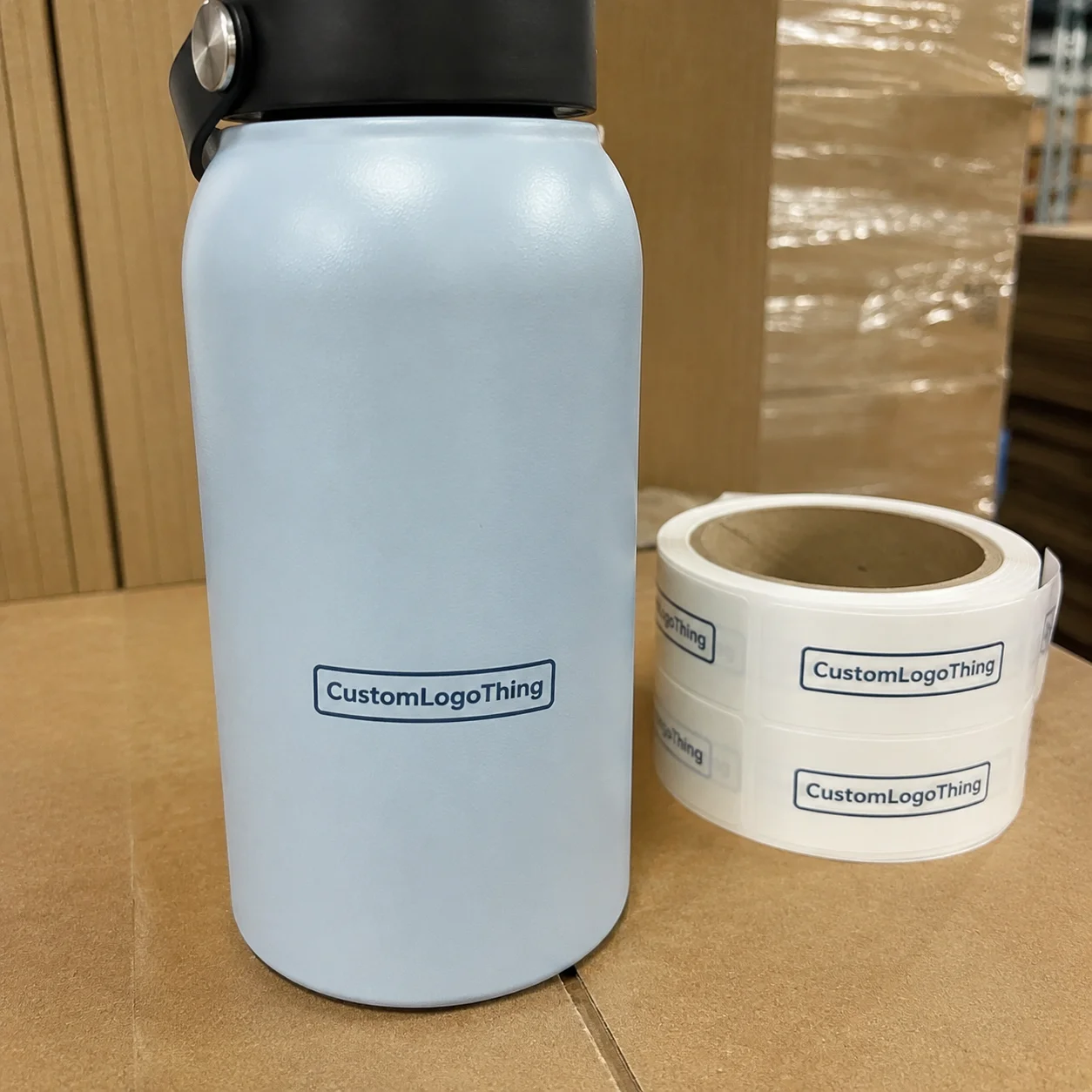
Shape affects both production efficiency and visual impact. Circles and rectangles are easy to nest, so they tend to be economical. Ovals can feel slightly softer and may suit premium café branding. Custom Die Cuts stand out, but they often require more setup and leave more waste between labels. That extra setup rarely shows up in the mockup, yet it shows up in the quote.
- Circle stickers: efficient, simple, and good for logos or seals.
- Rectangles: useful for QR codes, promos, ingredients, or drink IDs.
- Ovals: a softer visual shape, often used for café branding.
- Custom die cuts: distinctive, but usually pricier and slower.
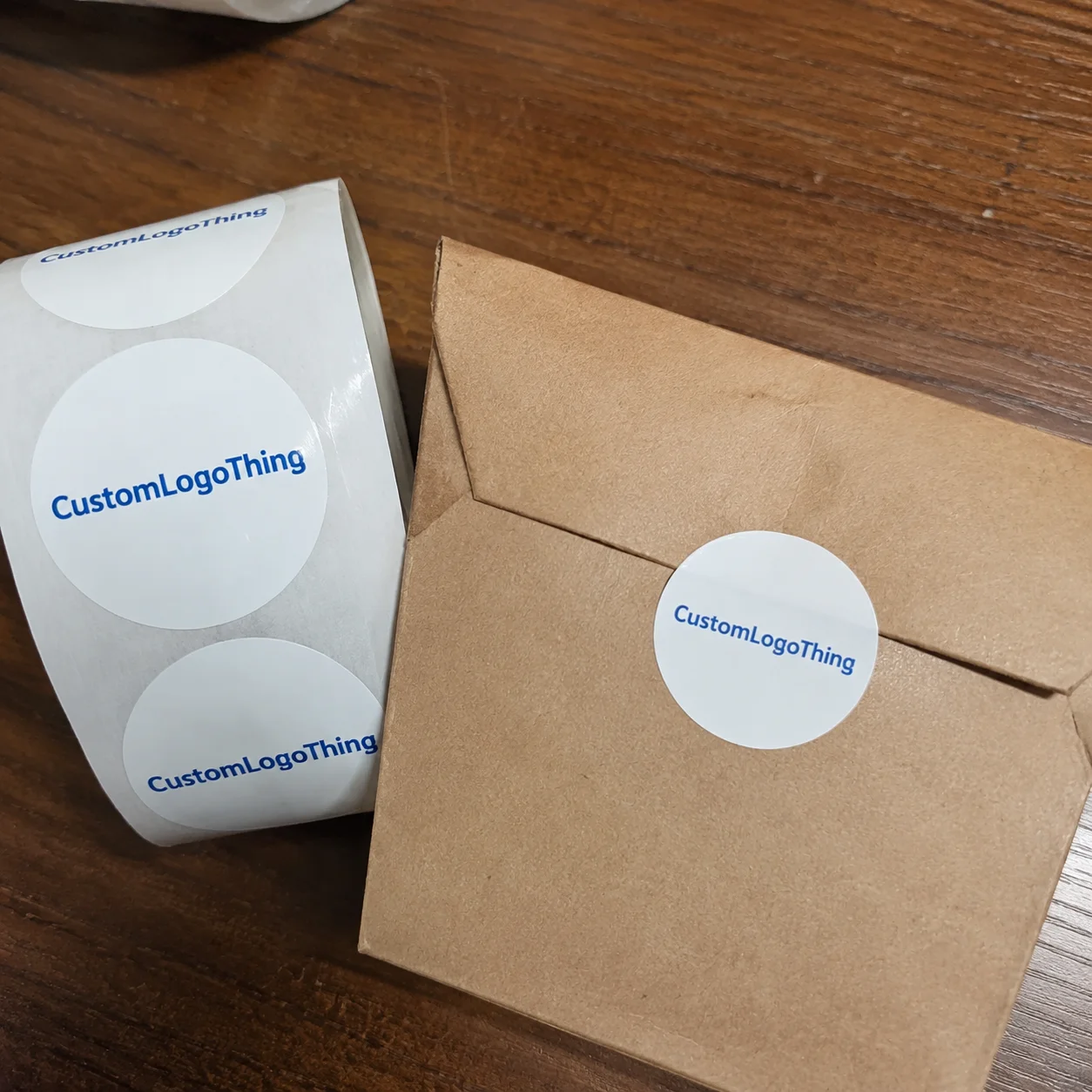
Format matters too. Roll labels are the better choice for daily café use and high application volume. They dispense quickly, work with label applicators, and keep counters less cluttered. Sheet labels make sense for low-volume runs, market stalls, event kits, gifting, and seasonal packaging where staff are applying a smaller number of stickers by hand.
Artwork has to be prepared for print, not just for screens. Send vector files such as AI, EPS, or a press-ready PDF. Add bleed, usually around 0.125 inch. Keep important text inside a safe margin. Check QR codes at final size, because a code that scans on a laptop preview may fail on a two-inch label if it is too dense or too small.
Also think about what the label should not cover. Avoid blocking legal cup markings, recycling notes, compostability claims, or supplier warnings. If the sticker identifies ingredients or allergens, the text must remain readable at counter distance. A decorative label should not be used as a tamper seal unless the adhesive and cut are designed for that purpose.
Cost and Pricing Factors for Coffee Cup Sticker Orders
Pricing for custom stickers for coffee cups depends on more than size and quantity. Material, finish, shape, number of versions, and turnaround time all move the number. Anyone giving a fixed price without specs is estimating, even if the estimate sounds confident.
Short runs cost more per piece because setup, proofing, file handling, and machine time are spread across fewer labels. Larger roll-label orders usually reduce the unit price because the fixed costs are distributed over a bigger batch. Digital printing is the practical option for smaller quantities and multiple designs. Flexographic production can be more efficient at scale, but it generally makes sense only once volume is high enough to justify the setup.
| Sticker Option | Best Use | Typical Quantity Range | Practical Cost Behavior |
|---|---|---|---|
| Coated paper label | Dry hot cups, sleeves, bags | 250 to 10,000+ | Lowest material cost; less reliable with condensation |
| BOPP film label | Iced drinks, plastic cups, refrigerated use | 500 to 25,000+ | Higher cost than paper; stronger moisture resistance |
| Textured paper sticker | Premium branding, gift drinks, boutique cafés | 250 to 5,000+ | More expensive stock; needs testing on curved cups |
| Custom die cut label | Campaigns, events, distinctive package branding | 500 to 20,000+ | More setup and waste; stronger visual distinction |
| Laminated film seal | Cold drinks, lid seals, outdoor service | 1,000 to 50,000+ | Higher unit cost; strongest handling performance |
For planning purposes, simple paper labels may land around $0.04 to $0.18 per piece, depending on size and quantity. Film labels often sit around $0.08 to $0.30 per piece for common beverage volumes. Very small batches, specialty finishes, foil effects, unusual adhesives, or rush production can raise those numbers. They are useful ranges, not a promise.
Material is usually the first tradeoff. Paper is cheaper and looks clean on hot paper cups, but it is not the right answer for sweaty cold cups. Film handles moisture better, but the price rises with the added durability. Finish is the second tradeoff. Matte or gloss is usually manageable. Soft-touch coatings, metallic elements, and special varnishes add cost quickly.
Hidden cost drivers include multiple artwork versions in one order, tight color matching, specialty adhesives, custom shapes with high matrix waste, and expedited shipping. The cheapest sticker is not always the cheapest package choice if it peels off on the first iced drink. Total landed cost matters more than a single unit price.
Good buyers ask for a simple comparison: paper for dry hot cups, matte BOPP for mixed hot and cold use, and laminated film for heavy condensation. That gives a clearer choice than forcing every order into the same material category.
Process, Timeline, and Lead Time from Artwork to Finished Labels
The production flow is straightforward, but each step depends on the one before it. First comes the quote, then the proof, then approval, then printing, cutting, quality checks, packing, and shipping. Production usually does not begin from a blurry logo image and a hopeful note. It begins when final specs and usable artwork are in hand.
Lead time depends on artwork readiness, proof turnaround, material availability, order size, finish complexity, and shipping distance. A simple digital sticker order may take around 5 to 10 business days after proof approval. More complex roll labels, specialty stocks, custom die cuts, or larger-volume runs may take 10 to 20 business days. Rush service may exist, but it becomes harder once specialty materials or exact color matching are involved.
Digital proofs confirm placement, cut line, copy, and color expectations. They do not fully predict how the sticker will behave on a cup. Adhesion, condensation resistance, and handling durability still need testing on the actual substrate. For brand-critical launches or larger orders, a sample or short test run is worth the time.
Testing does not need to be complicated. Apply the label to the real cup. Fill it with a hot drink and a cold drink. Hold it for the length of normal service. Check for edge lift, bubbling, ink smear, scuffing, and whether the QR code still scans. For café use, a basic test window of 30 minutes to 2 hours usually reveals the most common problems.
- Confirm the actual cup material and finish.
- Approve the final size and label placement before print.
- Order enough for the launch, promotion, or monthly usage target.
- Watch how the stickers perform during service and storage.
- Save one approved sample for future reorders.
Build in buffer time if the stickers are tied to a seasonal menu, opening, event, or catering launch. An extra week is a sensible margin. Revisions, shipping delays, and material substitutions happen more often than buyers expect, especially during busy retail periods.
If environmental claims matter, verify them carefully. FSC-certified paper stocks may be available, and the Forest Stewardship Council publishes standards for responsible forest sourcing. A certified face stock does not automatically make the entire label compostable or recyclable, though. Adhesive, liner, ink, and lamination all matter.
Common Mistakes That Make Cup Stickers Peel, Smear, or Look Cheap
The most common mistake is choosing by price alone. A low-cost label can work fine on a dry hot cup sleeve and still fail badly on a cold cup covered in condensation. The surface conditions decide the outcome. The sticker is only one part of that equation.
Paper-on-cold-cup failure is especially common. Untreated paper labels can absorb moisture, swell, wrinkle, or lose adhesion. Ink may blur if the coating is not suited to damp handling. For iced coffee, smoothies, refrigerated drinks, or outdoor service, a water-resistant film is usually the safer choice.
Size mistakes are just as visible. Oversized stickers struggle on tapered cups. Tiny stickers disappear on larger cup sizes. QR codes that fall below roughly 0.8 to 1 inch can become unreliable, especially when the label curves or the artwork has weak contrast.
Placement matters more than many buyers expect. Avoid seams, oily fingerprints, wet zones, textured ridges, and the most aggressively tapered sections of the cup. Labels should be applied to a clean, dry surface with firm pressure. Adhesive needs contact time. It does not fix a sloppy application.
Design overload creates another problem. Too much text, thin fonts, low contrast, and crowded graphics can make a cup label look busy and hard to read. On a small surface, restraint usually performs better. A logo, one short message, and a readable code are often enough.
Workflow can fail even when the artwork is good. If staff have to peel tiny labels from sheets during a morning rush, the process slows down fast. Rolls are usually better for daily service. Sheets are acceptable for lower-volume applications, gift sets, and event prep, where speed is less critical.
Color also needs realistic expectations. Screen color is not print color. Kraft cups warm up the palette. Clear labels need white ink to hold brightness. Matte coatings mute color slightly. Gloss boosts saturation. The right way to judge the label is on the actual cup, under actual lighting.
Skipping real-world testing is the expensive mistake sitting beneath all the others. One sample on the cup tells more truth than a dozen polished mockups. It reveals the parts that matter: surface energy, moisture, pressure, and time.
Next Steps: Build a Sticker Spec That Your Supplier Can Actually Price
Before asking for pricing on custom stickers for coffee cups, gather the details that affect production. Clear information makes the quote faster and more accurate. It also reduces the odds of surprise changes after proof approval.
- Cup type: paper, plastic, compostable, wax-coated, glossy, matte, or textured.
- Cup size: 8 oz, 12 oz, 16 oz, 20 oz, or another size with taper details.
- Drink condition: hot, cold, iced, refrigerated, outdoor, or short-term dry use.
- Sticker size and shape: final dimensions, die cut style, and placement area.
- Quantity: total pieces, number of designs, and reorder expectations.
- Format: rolls for daily use, sheets for low-volume or event kits.
- Finish: matte, gloss, writable, clear, waterproof laminate, or textured stock.
- Deadline: in-hands date, not just “ASAP.”
Photograph the actual cup and note the surface finish. Matte paper, gloss-coated stock, compostable coatings, waxy surfaces, and plastic cups all behave differently. If you use more than one cup supplier, test across all of them. Two cups that look nearly identical can still respond differently because the coatings are not the same.
Decide the job before the material. Is the sticker for branding, drink ID, lid sealing, QR promotion, seasonal decoration, or retail packaging? One label rarely does every job well. That limitation is not a flaw. It is a production reality.
Ask for a recommendation based on use case rather than leading with the cheapest option. A good supplier can usually steer you toward coated paper, BOPP, waterproof film, removable adhesive, permanent adhesive, clear stock, or textured material once the conditions are clear.
For higher-volume orders or cold-drink applications, request a digital proof and a sample test before the full run. If the label is part of a broader packaging system, treat it with the same care as Custom Printed Boxes or other primary packaging elements. Small labels still carry the brand, and customers notice when they fail.
A simple rule set is usually enough: use paper labels for dry, short-term hot cup branding; use film labels for condensation-heavy or cold drinks; use roll format for fast daily service; use sheet format for small batches, pop-ups, catering kits, and events. Custom stickers for coffee cups work best when the buyer treats them as functional packaging, not just decoration. Once the cup, surface, and service conditions are clear, the rest becomes much easier to price correctly.
FAQ
What material is best for stickers on coffee cups?
For dry hot paper cups, coated paper stickers can work well and keep costs lower. For iced drinks, condensation, or refrigerated cups, BOPP or another water-resistant film is usually the safer choice. Premium textured paper or matte film can look better, but the adhesive still has to match the cup surface.
Are custom coffee cup stickers waterproof?
Only if the material, ink, and finish are made for moisture resistance. Paper stickers may handle light use, but they can wrinkle or smear on cold cups with condensation. Film stickers with protective lamination are a better fit for iced coffee, smoothies, and outdoor service.
How much do custom stickers for coffee cups cost?
Cost depends on size, quantity, material, finish, shape, number of designs, and turnaround time. Paper labels are usually cheaper, while waterproof films, custom die cuts, and specialty finishes cost more. Larger orders usually lower the unit price because setup and production time are spread across more stickers.
Can I use coffee cup stickers instead of custom printed cups?
Yes. Stickers are often better for small batches, seasonal drinks, pop-ups, catering, and testing new branding. Printed cups are more efficient for high-volume daily use with one consistent design. Stickers give more flexibility because you can update promotions or QR codes without rebuilding inventory.
How do I stop stickers from peeling off coffee cups?
Match the adhesive to the cup material and avoid applying stickers to wet, oily, dusty, or heavily textured areas. Use smaller or curved-friendly shapes on tapered cups so the label does not fight the cup’s surface. Test the sticker on the actual cup with real hot or cold drinks before approving the full order.