A sticker is often the smallest branded item your customer touches. It can also be the one that sticks around longest, sitting on a laptop, water bottle, takeout box, shipping carton, candle jar, or retail package long after the first sale. For custom stickers portland buyers, that little adhesive print has to do real work: identify products, seal packaging, support promotions, carry compliance copy, and survive normal handling without looking cheap by week two.
A custom sticker is a printed adhesive graphic made to a chosen size, shape, material, and finish, then supplied on rolls, sheets, or individually cut pieces. Stickers, labels, decals, and seals overlap, but the words usually point to different uses. “Label” often means product information or packaging. “Sticker” leans promotional or decorative. “Decal” suggests longer-life graphics for equipment, windows, gear, or vehicles. “Seal” usually closes tissue, bags, boxes, envelopes, or food packaging.
What Custom Stickers Portland Buyers Should Know First
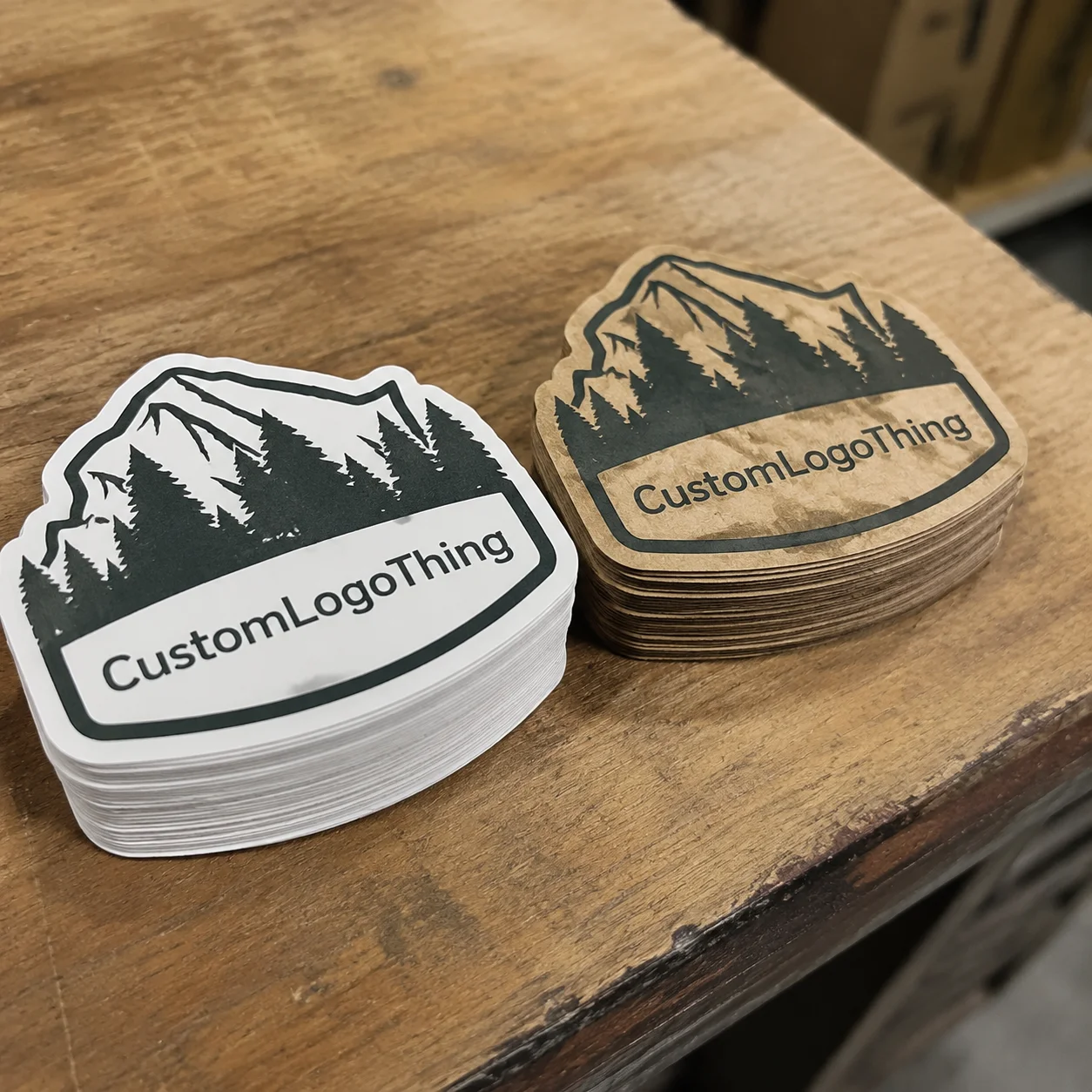
Good sticker ordering starts with the surface, not the artwork. A polished design printed on the wrong stock can wrinkle on a chilled bottle, peel off a textured mailer, fade outside, or slow down a packing line because the roll is wound the wrong direction. Annoying? Yes. Preventable? Also yes.
The right specification depends on where the sticker will live. Indoors is different from outdoors. A dry bakery box is different from a refrigerated drink bottle. A laptop sticker is different from a warning label on a candle tin. Before talking about finishes, answer five plain questions: What surface is it going on? How long should it stay there? Will it get wet, cold, rubbed, squeezed, or exposed to sunlight? Is it applied by hand or by machine? Does it carry required information such as a barcode, batch code, ingredients panel, warning copy, or QR code?
Those answers shape the whole order. A 2-inch paper thank-you seal for a dry box is mostly about presentation, cost, and quick application. A 3.5-inch white BOPP label for a refrigerated bottle needs moisture resistance, adhesive planning, clean barcode contrast, and a finish that holds up through cold handling. Both may be called stickers in a meeting. Production will not treat them the same.
Packaging floor rule: if the sticker is part of product packaging, test it on the real package before buying thousands. A ten-minute surface check can prevent a very expensive reprint.
Portland brands often need Stickers for Coffee bags, food service packaging, brewery releases, maker markets, ecommerce shipments, outdoor products, event handouts, and retail jars or bottles. That mix creates a wide range of durability requirements. Paper may be perfect for a short-run market seal. Film with a laminate may be the minimum for something tossed in a cooler or handled outdoors.
If the sticker also ties into cartons, tags, sleeves, or other branded packaging, review broader Custom Labels & Tags options before locking in the sticker spec. Matching a sticker to the rest of the packaging system is less glamorous than picking a finish, but it saves mistakes.
How Sticker Materials, Adhesives, and Finishes Work
The face stock is the printable top layer. Common choices include paper, white BOPP, clear BOPP, vinyl, kraft paper, and specialty films. Paper is cost-effective and attractive for dry indoor use: bakery boxes, tissue seals, thank-you stickers, candle warning labels, product inserts, and short promotions. It can look warm and natural, especially in uncoated or kraft styles. It is not the first choice for ice buckets, rain, heavy abrasion, oily surfaces, or anything that will be repeatedly handled with damp hands.
White BOPP, a polypropylene film, is a dependable option for bottles, jars, cosmetics, bath products, supplements, and food containers that may see moisture or frequent contact. Clear BOPP is used when the buyer wants a “no-label” look on glass or smooth plastic. It usually needs white ink behind logos, barcodes, and small type so the design does not disappear on dark liquids or tinted containers.
Vinyl is tougher and more flexible. It suits decals, equipment labels, outdoor gear, hard hats, merch stickers, and other uses where longer wear matters. It usually costs more than paper or basic film, but the upgrade makes sense if the sticker has to survive weather, abrasion, or repeated use.
Adhesive matters just as much as the printable material. Permanent adhesive suits most product labels and seals. Removable adhesive works for temporary promotions, price stickers, event use, and applications where residue would create complaints. Freezer-grade adhesive is designed for cold application or cold storage. Aggressive adhesive helps on textured board, rough plastics, powder-coated surfaces, and some lower-energy materials.
The final bond depends on surface energy, texture, temperature, cleanliness, dwell time, and application pressure. Translation: a sticker that sticks beautifully to a clean flat sample may still lift on a damp bottle, a curved tin, a dusty corrugated mailer, or a flexible pouch. Testing beats guessing.
Finishes affect both performance and shelf feel. Gloss coating adds color pop and works well for promotional stickers. Matte reduces glare and can improve readability on small type. Soft-touch lamination gives a premium feel for retail packaging, though it can show oils or scuffs depending on use. UV coating and film lamination add scuff resistance, which helps when product packaging is packed, shipped, handled, and shelved multiple times.
| Material | Best Use | Typical Strength | Watch-Out |
|---|---|---|---|
| Paper | Dry boxes, inserts, seals, short promotions | Lower cost, strong print quality | Can fail with moisture or heavy rubbing |
| White BOPP | Bottles, jars, cosmetics, food packaging | Moisture-resistant and clean-looking | Needs correct adhesive for cold or curved surfaces |
| Clear BOPP | Glass, clear plastic, premium product packaging | No-label appearance | White ink planning is often required |
| Vinyl | Outdoor decals, merch, gear, equipment | Durable and flexible | Usually costs more than paper or basic film |
| Kraft Paper | Natural, handmade, and rustic package branding | Warm uncoated look | Color appears more muted than on white stock |
Format changes the job too. Rolls are best for fast hand application, label dispensers, and machine labeling. Sheets are convenient for office use, events, small batches, and mixed designs. Individually cut pieces work well for giveaways, merch packs, customer inserts, and trade show tables.
Pricing, MOQ, and Quote Factors for Local Sticker Orders
Sticker pricing is built from several moving parts: size, shape, material, adhesive, finish, print method, quantity, number of designs, roll direction, and final format. A 1.5-inch round paper seal on rolls will not price like a 4-inch laminated vinyl die-cut sticker, even if the quantity is identical.
Unit cost usually drops as quantity rises because setup, prepress, die-cutting, press preparation, and inspection time are spread across more pieces. As a rough planning range, simple digitally printed paper stickers may land around $0.08 to $0.20 each at moderate quantities. Durable laminated vinyl or specialty film stickers can run $0.25 to $0.85 each or more depending on size, shape, adhesive, and finish. Very small runs can cost more per piece because setup time does not shrink just because the order is tiny. Production math is rude like that.
Minimum order quantity depends on the production method. Digital printing often supports lower runs, sometimes a few hundred pieces for practical pricing. Larger roll-label jobs, specialty adhesives, metallic stocks, foil effects, custom tooling, or flexographic production may make more sense at 1,000, 2,500, 5,000, or higher. That is not a universal rule. Equipment, material availability, finishing requirements, and repeat potential all matter.
Custom shapes affect price in different ways. Some jobs use a physical die, which may add tooling cost but can be efficient for repeat orders. Shorter runs may use digital cutting or laser cutting, especially for complex outlines or multiple shapes. Very sharp corners, hairline details, and intricate cut paths can slow cutting and make peeling harder. A slightly simplified outline often saves money and frustration.
Premium materials cost more for defensible reasons. Clear films, waterproof films, metallic stocks, heavy laminates, freezer adhesives, and outdoor-rated vinyl can prevent failures that cost far more than the material upgrade. The cheapest sticker is not always the lowest-cost choice if it peels on the shelf, wrinkles during application, blocks a barcode scanner, or forces your packing crew to slow down.
For a stronger quote, send complete specs: finished size, quantity, shape, material preference, finish, application surface, indoor or outdoor use, hand or machine application, number of designs, deadline, and artwork status. If you are comparing stickers with printed boxes, inserts, or other Custom Packaging Products, ask for grouped pricing so the package branding decisions line up instead of being quoted in isolation.
Process and Timeline: From Artwork to Finished Stickers
A normal order follows a predictable path: define the use case, choose size and material, prepare artwork, review the proof, approve production, print, finish, cut, inspect, and ship or pick up. Simple list. Plenty of places for delays.
Production starts with accurate artwork and complete specifications. Missing bleed, unclear cut lines, low-resolution logos, unconverted fonts, unconfirmed roll direction, and vague material requests all create avoidable back-and-forth. For custom stickers portland buyers working toward a market launch, retail delivery, subscription box pack-out, or event date, that lost time can hurt more than the print cost.
Digital printing is useful for short runs, fast design changes, variable artwork, and multiple versions such as flavors or seasonal batches. Flexographic roll-label production can be better for high-volume repeat work where speed, roll consistency, and unit cost matter. Neither method is automatically better. The right choice depends on quantity, repeat frequency, color expectations, finish, and how the stickers will be applied.
The proof is the buyer’s last clean checkpoint. Check spelling, dimensions, barcode readability, QR code function, cut path, safe zone, color expectations, version names, and white ink instructions. On clear or metallic material, white ink is especially important because any area without backing may become transparent, reflective, or muted. For barcodes, leave enough quiet zone and contrast so scanners can read reliably under retail lighting.
Typical timing varies. A straightforward digital sticker job with available stock and clean artwork may move in several business days after proof approval. Specialty materials, custom dies, laminates, white ink, freezer adhesive, complex kiss-cutting, or high-volume roll production can push schedules closer to one to three weeks or longer. Material availability is a real factor, so plan backward from launch dates, markets, trade shows, subscription box shipments, and retail receiving windows.
Standards can guide testing expectations. For shipping exposure, many packaging teams reference ISTA transit testing concepts, especially when labels are applied to cartons or ecommerce mailers that will be rubbed, stacked, and handled. For responsibly sourced paper-based materials, FSC certification may be relevant if your brand makes sustainability claims tied to retail packaging.
Step-by-Step Guide to Preparing Sticker Artwork
Start with the final use case before design details. Where will the sticker be applied? How large should it be? Will customers read it from 6 inches away on a jar, from 3 feet away on a display, or only after they open the box? Does it need to survive moisture, cold, sunlight, friction, or repeated handling?
- Confirm the surface. Test the sticker size on the actual jar, pouch, box, cup, lid, mailer, or product. A paper mockup cut with scissors can reveal fit problems before any file is uploaded.
- Choose the size and shape. Round stickers work well for seals and lids; rectangles carry more copy; ovals soften the look; custom die cuts make logos and merch more memorable.
- Build clean artwork. Vector files such as AI, EPS, or print-ready PDF are best for logos, type, and cut paths. Raster images should usually be 300 dpi at final print size.
- Outline fonts and embed images. This prevents font substitution and missing-link problems during prepress.
- Add bleed and safe zone. A common bleed is 0.0625 to 0.125 inch beyond the cut line, while key text and logos should sit safely inside the trim edge.
- Mark the cut path clearly. For custom die-cut stickers, use a separate spot-color line or named layer so production can identify exactly where the sticker should be cut.
- Plan white ink. Clear and metallic stocks need clear instructions for which areas should print with white backing and which should remain transparent or reflective.
For detailed shapes, leave enough spacing around small notches, thin points, and interior corners. A sticker that looks crisp on screen may be hard to weed, cut, or peel if the outline is too delicate. Labels meant for hand application also benefit from friendly peel geometry; rounded corners usually release and apply more cleanly than sharp corners.
If you are ordering flavor sets, batch codes, event versions, or seasonal artwork, label each file clearly. Names like “Lavender-2x3-BOPP-Matte-Roll” beat “finalfinal2.pdf” every time. Basic? Absolutely. Still one of the easiest ways to prevent wrong-version proofs and inconsistent repeat orders.
Common Sticker Ordering Mistakes That Cause Reprints
The most common mistake is choosing material based only on appearance. Uncoated paper can look beautiful on a candle box or dry bakery sleeve, but it is usually a poor match for refrigerated drinks, wet coolers, or outdoor equipment. Film, adhesive, and laminate choices should follow the actual environment.
Skipping surface testing is another expensive shortcut. Textured boxes, oily plastics, powder-coated bottles, damp glass, curved tins, and low-energy plastics can behave unpredictably. A sticker may bond well to a flat sample sheet but lift on a tight bottle radius or wrinkle on a flexible pouch. If the surface is unusual, ask about adhesive testing before committing to volume.
Artwork problems create plenty of reprints: missing bleed, low-resolution logos, tiny reverse type, unconverted fonts, weak contrast, and distorted barcodes. Small type under 5 or 6 points can plug up depending on the print method and material. White text on kraft stock may lose contrast. QR codes need enough size and quiet space to scan after printing and coating.
Size mistakes happen because screens lie. A 3-inch sticker can look modest on a monitor and enormous on a 6-ounce jar. Print the art at actual size, trim it, and place it on the real item. If the sticker wraps a cylinder, check whether the edges overlap, whether the front panel centers properly, and whether required copy remains readable.
Roll direction is easy to overlook. For machine application, the label must feed top-first, bottom-first, right-edge-first, or left-edge-first depending on the applicator. Even in hand packing, the wrong orientation can slow the crew because every label has to be rotated before placement. If you use a dispenser or applicator, send a photo or diagram with the quote request.
Another quiet cost driver is splitting too many designs into tiny quantities. Ten versions at 100 pieces each may cost more than expected because setup and file handling multiply. A grouped quote or consolidated production run may reduce cost, especially when all versions share the same size, material, finish, and cut path.
And please do not approve proofs while distracted. The proof is not a formality. It is the last checkpoint for copy, cut line, color expectations, quantity, roll format, and version names before production begins. Once the job is printed and cut, a typo becomes inventory.
Next Steps Before You Request a Sticker Quote
Before asking for pricing, gather the details a production team needs to give a useful answer. A complete quote request saves time, reduces assumptions, and usually produces better recommendations.
- Size: finished width and height, measured in inches or millimeters.
- Quantity: total pieces and quantity per design if there are multiple versions.
- Shape: square, rectangle, circle, oval, custom die cut, kiss cut, or sheeted.
- Material preference: paper, kraft, white BOPP, clear BOPP, vinyl, or another film.
- Finish: matte, gloss, soft-touch, UV coating, or lamination.
- Application surface: glass, plastic, coated paper, corrugated board, pouch film, metal, or painted surface.
- Exposure: indoor, outdoor, refrigerated, frozen, wet, oily, handled often, or shipped.
- Format: rolls, sheets, or individually cut stickers.
- Deadline: proof date, in-hand date, launch date, event date, or retail delivery window.
Collect real-world samples if possible. Bottles, jars, pouches, textured boxes, coated papers, and plastics all tell you more than a spec sheet alone. For higher-risk uses, order a small test batch or production proof and check adhesion after 24 to 72 hours, especially under cold, wet, curved, or handled conditions.
Photos help too. A straight-on package photo, a side view, and basic measurements let the manufacturer flag fit, readability, or application issues before production. If a sticker must line up with a window, lid seam, tamper band, or carton edge, mark that clearly on the file or include a simple diagram.
Prioritize tradeoffs based on the job the sticker has to do. If budget is tight, simplify the shape, reduce the number of versions, or choose a standard finish. If durability matters, invest in the right film, adhesive, and laminate. If speed matters, choose available materials, submit clean artwork, and approve the proof carefully but promptly.
Ordering Custom Stickers portland buyers can rely on is much easier when the specs are clear, the surface has been tested, and the timeline is realistic. Bring the use case, artwork, material expectations, and deadline into the conversation early. The result is less drama: stickers that apply cleanly, look sharp, scan correctly, and support the package instead of creating another problem to solve.
FAQ
What materials work best for custom sticker printing in Portland’s rainy climate?
For dry indoor use, paper can work well and keep costs down. For moisture, condensation, refrigeration, or outdoor exposure, choose BOPP, vinyl, or another film-based stock with a protective laminate or coating. The adhesive matters as much as the face material, especially on cold, damp, textured, curved, or low-energy surfaces.
How much do custom stickers in Portland usually cost?
Cost depends on size, quantity, material, finish, shape, number of designs, and whether the order is produced on rolls, sheets, or individually cut pieces. As a planning range, simple paper stickers may be around $0.08 to $0.20 each at moderate quantities, while laminated vinyl or specialty film stickers can run $0.25 to $0.85 each or more. Exact pricing depends on the final spec.
What is the typical turnaround time for Portland custom stickers?
Simple digital sticker orders can often move faster than specialty or high-volume jobs, but timing depends on proof approval, material availability, cutting, finishing, and order size. Custom shapes, laminates, white ink, metallic materials, freezer adhesives, or large roll runs can add lead time. Complete artwork and prompt proof review are the two easiest ways to avoid delays.
Should I order stickers on rolls, sheets, or as die-cut singles?
Rolls are best for product labeling, packing stations, and machine application. Sheets are convenient for small batches, office use, events, and mixed designs. Individually cut stickers are ideal for giveaways, merch, promotional packs, and customer inserts.
What artwork file is best for custom stickers Portland businesses order?
Vector files such as AI, EPS, or print-ready PDF are usually best for logos, text, and cut paths. Raster images should be high resolution at final print size, with fonts outlined or provided properly. Files should include bleed, safe zones, clear cut lines for custom shapes, and white ink instructions for clear or metallic materials.