Custom String Bags: Buyer's Guide to Specs and Pricing
Custom string bags: what they are and where they work best
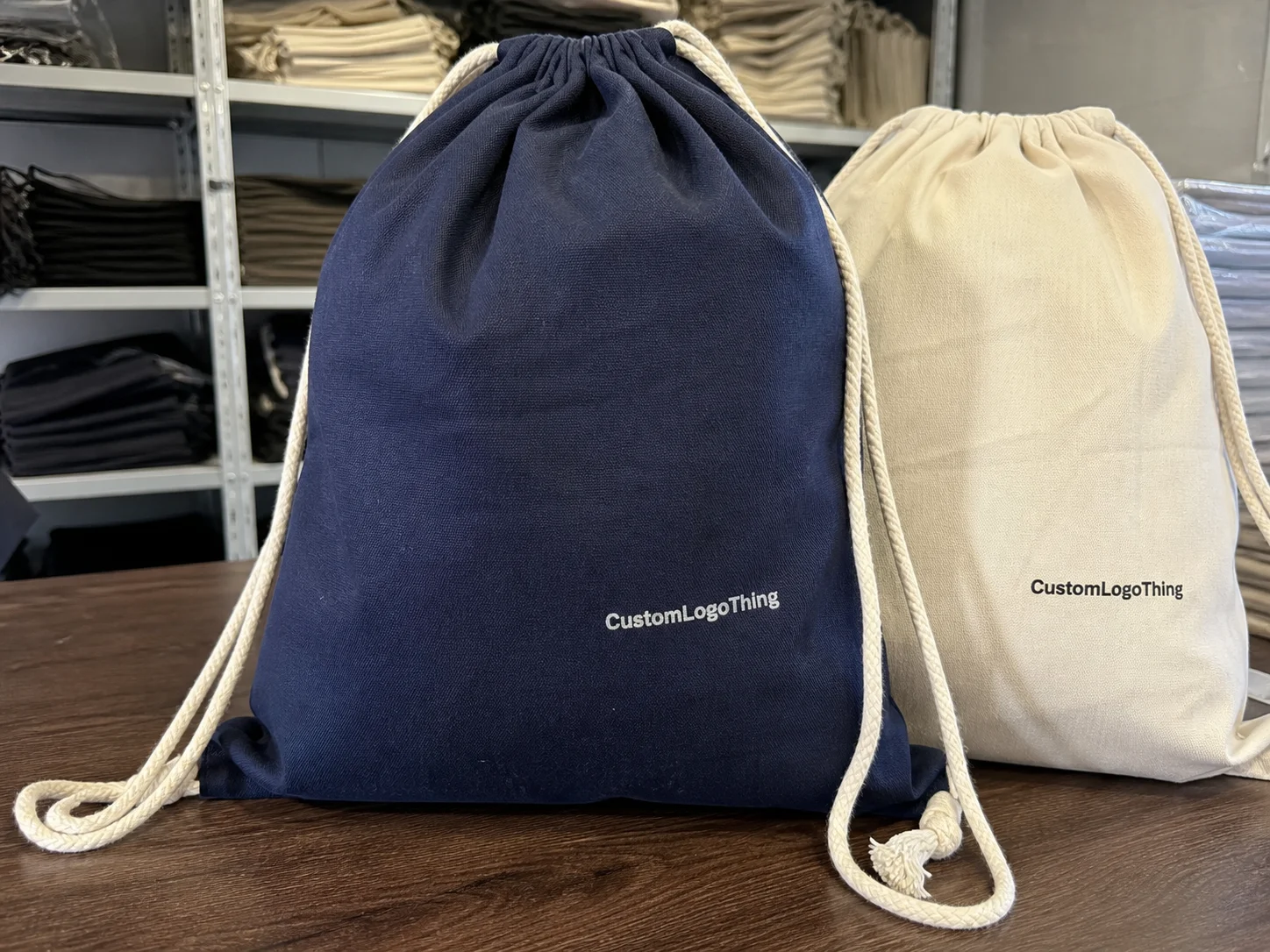
The cheapest-looking bag on a shelf is often the one that was specified badly. With custom string bags, the mistake is usually not the logo. It is the fabric, the cord, the stitch pattern, or the print method under the logo. Fix those parts and the bag feels intentional. Miss them and it reads like disposable promo stock with a graphic on top.
At the simplest level, custom string bags are flexible bags closed with a drawstring or cord. They are usually made from mesh, nonwoven, cotton, polyester, or nylon. Each material changes the hand feel, print quality, breathability, durability, and the way the bag behaves after a few uses. That is the part buyers tend to underestimate.
These bags work best when portability and low-cost branding matter more than rigid structure or high-end presentation. If the job is to carry a brochure, sample pack, event kit, or retail giveaway, string bags do the work well. If the goal is shelf presence, product protection, or a premium unboxing feel, you are usually better off with Custom Printed Boxes or another form of product packaging.
The use cases are pretty consistent: event kits, wellness promos, school programs, youth sports, hospitality, retail handouts, and lightweight store packaging. In those settings, the bag has to do two jobs at once. It needs to carry something, and it needs to carry the brand without looking thrown together.
That second part matters more than people think. A logo on weak fabric does not build value. It just confirms the budget was cut in the wrong place.
How the bag construction actually works
Most buyers start with size and color. Fair enough. But the construction details are what decide whether the bag feels cheap, sturdy, or forgettable. The main parts are straightforward: body material, cord type, closure style, stitch quality, and the printing surface. If any one of them is off, the whole bag feels off.
The cord deserves more attention than it usually gets. Thin, rough cords make even a decent bag feel flimsy. A smoother cord, a cleaner knot, and a reinforced entry point raise the perceived quality fast. People do not need a materials lab to notice the difference. They pick it up once and know.
Body material drives both appearance and function. Mesh is breathable and visible, which makes it useful for sports kits, produce-style promotions, and any package where the contents should be seen. Nonwoven is the volume-friendly option. Cotton brings a softer, more premium feel. Polyester and nylon tend to hold up well and print cleanly when the artwork is kept sensible.
Printing behavior changes by fabric. A bold one-color logo usually reads cleanly on polyester or nonwoven. Fine details, hairline rules, and tiny text get ugly quickly on coarse mesh or low-density fabric. If the artwork depends on subtle color shifts or small type, ask for a proof on the actual material. Mockups are useful. Real fabric is better.
Common print methods include screen printing, heat transfer, and, on some polyester styles, sublimation. Screen print is usually the best match for simple spot colors and larger runs. Heat transfer can help with smaller quantities or more detailed art. Sublimation works well on light-colored polyester, but it is not the right answer for every bag, especially if the color of the bag itself matters.
- Mesh: breathable, visible, casual, good for sports or produce-style presentation.
- Nonwoven: lower cost, broad use, usually the simplest route for volume.
- Cotton: softer hand feel, better perceived value, often used for retail packaging or premium promos.
- Polyester or nylon: practical for repeated use, better for crisp logo placement.
For buyer teams that care about transit stress and pack-out, the International Safe Transit Association publishes useful packaging test frameworks at ISTA. Not every string bag needs formal testing, but if the bags are going into a shipped kit, that is the right lens. A bag that survives a handout table and a bag that survives distribution are not always the same thing.
Cost, pricing, and MOQ: what changes the unit price
Price moves for predictable reasons: material choice, size, print coverage, color count, cord upgrades, and pack-out requirements. Those are the levers. Generic words like premium or high quality do not explain much. A spec sheet does.
MOQ works the way buyers expect it to work, even if they dislike the result. Lower minimums usually mean a higher unit cost because setup, printing, and labor are spread across fewer bags. A 300-piece run can look expensive next to a 5,000-piece order even when the fabric is identical. The factory still has to prepare screens, align the print, and run the same process.
Hidden costs are where budgets slip. Screen or setup fees, sample charges, rush premiums, extra-color printing, freight, customs, and individual polybagging can all move the total. Shipping is the one that surprises teams most often. A quote without freight is not a full quote. It is a headline.
For custom string bags, the cheapest unit price is rarely the best value. Compare three numbers together: unit cost, setup cost, and landed cost. Landed cost is the one that matters because that is what the warehouse, event team, or retailer actually receives.
| Material / build | Typical fabric weight | Best use | Typical MOQ | Approx. unit price at 1,000 pcs | Approx. unit price at 5,000 pcs | Notes |
|---|---|---|---|---|---|---|
| Nonwoven | 70-100 gsm | Low-cost giveaways, large promotions | 300-1,000 pcs | $0.28-$0.65 | $0.14-$0.32 | Best for simple branding and tight budgets. |
| Mesh | Light to mid-weight mesh | Sports, visibility, breathable carry | 500-1,500 pcs | $0.55-$1.10 | $0.28-$0.65 | Useful when the contents need to be seen or ventilated. |
| Polyester | 190T-210D equivalent styles | Repeated use, cleaner print results | 500-1,000 pcs | $0.45-$0.95 | $0.22-$0.55 | A balanced choice for branded packaging and events. |
| Cotton | 5-8 oz | Retail packaging, premium promos | 500-2,000 pcs | $0.70-$1.60 | $0.38-$0.95 | Better hand feel, higher perceived value, higher cost. |
Those ranges are reference points, not promises. One-color printing on stock material can land below them. Double-sided printing, custom colors, special cord hardware, woven labels, or individual bagging pushes the number up. If you are sourcing branded packaging for a product launch, ask for each add-on to be listed separately. That is the only way to see what is actually driving the quote.
It also helps to compare the bag with the rest of the order. If you are buying inserts, sleeves, or display components, the string bag should be priced in the context of the full kit. See Custom Packaging Products for a broader view of package system sourcing. The cheapest line item can still create the messiest final order.
Production steps and turnaround: from artwork to delivery
The production flow is not complicated, but skipping one step slows everything down. A clean order usually follows the same path: request a spec sheet, submit artwork, receive a proof, approve sampling if needed, move into production, then inspect and ship. That sequence is boring for a reason. It keeps rework down.
Artwork is where most delays begin. Missing Pantone targets, low-resolution files, fuzzy fonts, and last-minute art changes after booking can push a schedule off track. Vector files help. So does keeping the design simple. Fine lines look clever on a screen and muddy on fabric. Tiny text is even worse.
Timelines depend on the build. Simple stock-material jobs often land in the 10 to 18 business day range after proof approval. Specialty fabrics, custom colors, extra print locations, or sample revisions can stretch that into three to five weeks. Freight, customs, and warehouse receiving can add more time after production ends, which is where a lot of buyers get caught. The factory is done. The bags are still not in your hands.
If the bags need to hit a fixed event date, build in a buffer. A one-week cushion is not luxury. It is insurance against slow artwork approval, freight delays, and the usual nonsense that shows up after everyone assumes the order is finished.
For teams tracking sustainability or paperwork requirements, it is worth checking whether any paper components or secondary packaging align with FSC standards at FSC. The bag itself may not be FSC-certified, but tags, inserts, cartons, and wrap often can be specified more carefully.
A cheap quote is not cheap if the bag arrives late, the print is off, or the cord snaps on first use.
What to check on a sample before approving the run
A sample is not a formality. It is the fastest way to catch the mistakes that look small on paper and obvious in hand. Hold it, pull it, and inspect the details that affect the final order. The goal is not to admire the mockup. It is to find the weak points before the run starts.
Start with the stitch lines. Even spacing matters more than most people expect. Loose seams, crooked corners, and weak reinforcement around the cord opening are all signs that the bag will age badly. If the sample feels uneven in the hand, the production run probably will too.
Then check the cord. Pull it several times. It should move cleanly without fraying or biting into the fabric. A rough cord feels cheap fast, especially on a bag that is meant to be reused. If the cord lock is part of the design, test that too. The thing should open and close without a fight.
Print quality is the other obvious checkpoint. Look at registration, color match, edge sharpness, and how the ink sits on the fabric. If the logo is drifting or the color goes muddy, fix it before production. A sample that looks slightly off usually becomes a run that looks very off. Paper proofs do not catch that.
It also helps to check odor, shrinkage, and packability. Some low-cost materials arrive with a stronger chemical smell than buyers expect. Cotton and polyester samples should be folded, unfolded, and packed again to see how they behave. If the bag is going into retail packaging or a shipping kit, the way it nests in a carton matters.
A practical sample review is simple:
- Measure the finished bag against the spec sheet.
- Inspect stitch density and reinforcement points.
- Test the cord pull and closure action.
- Check print sharpness, color, and placement.
- Pack the bag with the intended contents and see if the size still works.
How to choose size, material, and closure for your use case
Start with the use case, not the decoration. Event giveaways, retail purchases, school kits, and athletic use all need different sizes and load profiles. If the bag is only carrying a brochure, a charger, and a sample pack, you can keep the spec light. If it needs to hold shoes, bottles, or several products, the bag needs more body and better stitching.
Size controls both usefulness and appearance. Oversized bags waste material and make the quote look bloated. Undersized bags create a poor user experience and squeeze the logo into a cramped area. The goal is not to maximize fabric. The goal is to make the bag feel intentional and easy to use.
Material should match the job. Mesh works when visibility and breathability matter. Cotton feels more premium and fits retail packaging or brand stores. Polyester handles branding well and tends to stay presentable. Nonwoven keeps cost under control for large campaigns, especially when the goal is simple package branding rather than repeated daily use.
Closure style is not a small detail. Simple drawstrings are fast and common. Cord locks make repeated opening easier. Reinforced openings help the bag stay intact after more use. If the bag will be handled by kids, athletes, or busy event staff, the closure should be easy to grab without feeling fiddly.
For a practical selection process, match the spec to the pressure points below:
- Light giveaway: nonwoven or thin polyester, single-side print, standard cord.
- Retail handout: cotton or better-grade polyester, cleaner print, stronger closure.
- Sports or school use: mesh or reinforced polyester, better stitching, comfortable cords.
- Kit packaging: size matched to the contents so the bag does not swallow or crush the items inside.
That is also how you keep the item aligned with the rest of the package system. If you are building a kit around product packaging, the bag should feel like part of the same brand language, not a random add-on. Good packaging usually looks calm because the decisions were made in the right order.
Common mistakes that make bags feel cheap
The fastest way to make custom string bags look disposable is to overbrand them. Too much artwork on a small surface crowds the layout and kills legibility. A logo, a short line of text, and one supporting graphic usually work better than a full poster crammed onto fabric. The bag is not a billboard, no matter how much someone wants it to be.
Weak cord selection is another obvious miss. If the cord is too thin, rough, or poorly attached, the bag feels low value the first time someone picks it up. Stitching matters here too. Loose seams and uneven entry points are the sort of defects people notice without trying. They do not need expert eyes.
Color mismatch can flatten the whole design. A strong logo on the wrong bag color can disappear or turn muddy. High-contrast combinations are usually safer, especially for event use. If the bag color is doing the heavy lifting, the logo often does not need extra complexity at all.
The classic budget trap is cutting every spec to the minimum and then expecting the bag to feel branded. It will not. It will feel cheap. There is a difference between lean sourcing and false economy. The first controls waste. The second buys disappointment.
If the spec is uncertain, ask for a sample or a proof against the actual fabric. You will learn more from that than from a polished mockup. That rule holds for custom string bags, and it holds for most custom printed boxes as well.
Expert tips and next steps before you request a quote
Good quotes start with good inputs. Gather four things before you reach out: target quantity, bag dimensions, preferred material, and artwork file format. That alone cuts down on back-and-forth and gives a cleaner price comparison.
If you are unsure about the spec, ask for two quotes: one for the exact build you think you want, and one for a slightly upgraded version. The spread can be revealing. Sometimes the better material adds only a few cents per unit. Sometimes it does not. Either way, you should see the tradeoff instead of guessing.
Before you place the order, compare sample quality, proof clarity, and landed cost. Those three things tell you more about a supplier than a sales pitch ever will. If the sample feels flimsy, the proof is vague, or freight is buried, the project needs another pass.
A straightforward order checklist looks like this:
- Define the use case and expected load.
- Pick the minimum acceptable spec.
- Confirm print method and artwork limits.
- Ask for setup fees, sample costs, and freight up front.
- Lock the timeline before approving the proof.
If the bag is part of a larger branded package, keep the materials, print style, and color treatment aligned with the rest of the system. The bag should sit comfortably beside your inserts, sleeves, and shipper cartons. For a broader sourcing pass, browse branded packaging options that can support the same campaign. The order reads better when every piece feels like it belongs in the same stack.
That is the actual job of custom string bags: carry the contents, carry the brand, and not fall apart while doing either. Choose the use case first, then the material, then the print. That order saves money, reduces rework, and usually produces a better-looking result.
Frequently Asked Questions
Are custom string bags durable enough for retail giveaways?
Yes, if the material and cord are matched to the load. Lightweight giveaways do fine with standard specs, while heavier carry needs reinforcement and better stitching. Durability depends more on construction than on the logo, so ask about seam quality, cord thickness, and expected weight capacity.
What is the usual MOQ for custom string bags?
MOQ varies by material, print method, and color count. Stock materials usually support lower minimums than fully custom builds. If you need a low quantity, expect a higher unit price because setup costs are spread across fewer bags.
How long does custom string bag production usually take?
Simple runs move faster than specialty orders. The fastest jobs are usually stock material with straightforward artwork and quick proof approval. Add time for sampling, custom colors, complex printing, or freight if the bags need to arrive by a fixed event date.
Which material is best for custom string bags?
There is no single best material. Mesh is practical for visibility and breathability, cotton feels more premium, polyester handles branding well, and nonwoven keeps cost low. The right choice depends on whether the bag needs to look upscale, carry heavier items, or move fast through production.
Can custom string bags be printed on both sides?
Usually yes, but double-sided printing adds cost and can extend production time. If the bag will be handed out at events, one strong side print is often enough unless the reverse side will be visible in daily use.
Should I ask for a sample before placing a larger order?
Yes, if the bag has specific print placement, color requirements, or a heavier load. A sample catches stitch issues, cord problems, and print errors before they become expensive. For larger campaigns, that step is usually cheaper than fixing a bad run.