Custom Hessian Bags: Buyer’s Guide to Specs and Pricing
Custom hessian bags are no longer the rough, forgettable sacks people associate with farm stores. They show up in premium retail, gift packaging, event kits, and branded packaging programs where texture does some of the selling before the logo even lands. That shift makes sense. The material feels honest, sturdy, and restrained, which is exactly why buyers keep choosing it over shinier options.
From a packaging buyer’s point of view, the appeal is practical as much as visual. A well-made hessian bag can carry heavier contents, add a tactile unboxing moment, and support packaging that needs to feel eco-conscious without looking flimsy. The catch is that hessian behaves differently from paper, cotton, or plastic, so the spec sheet matters more than most first-time buyers expect.
What Custom Hessian Bags Are and When They Make Sense
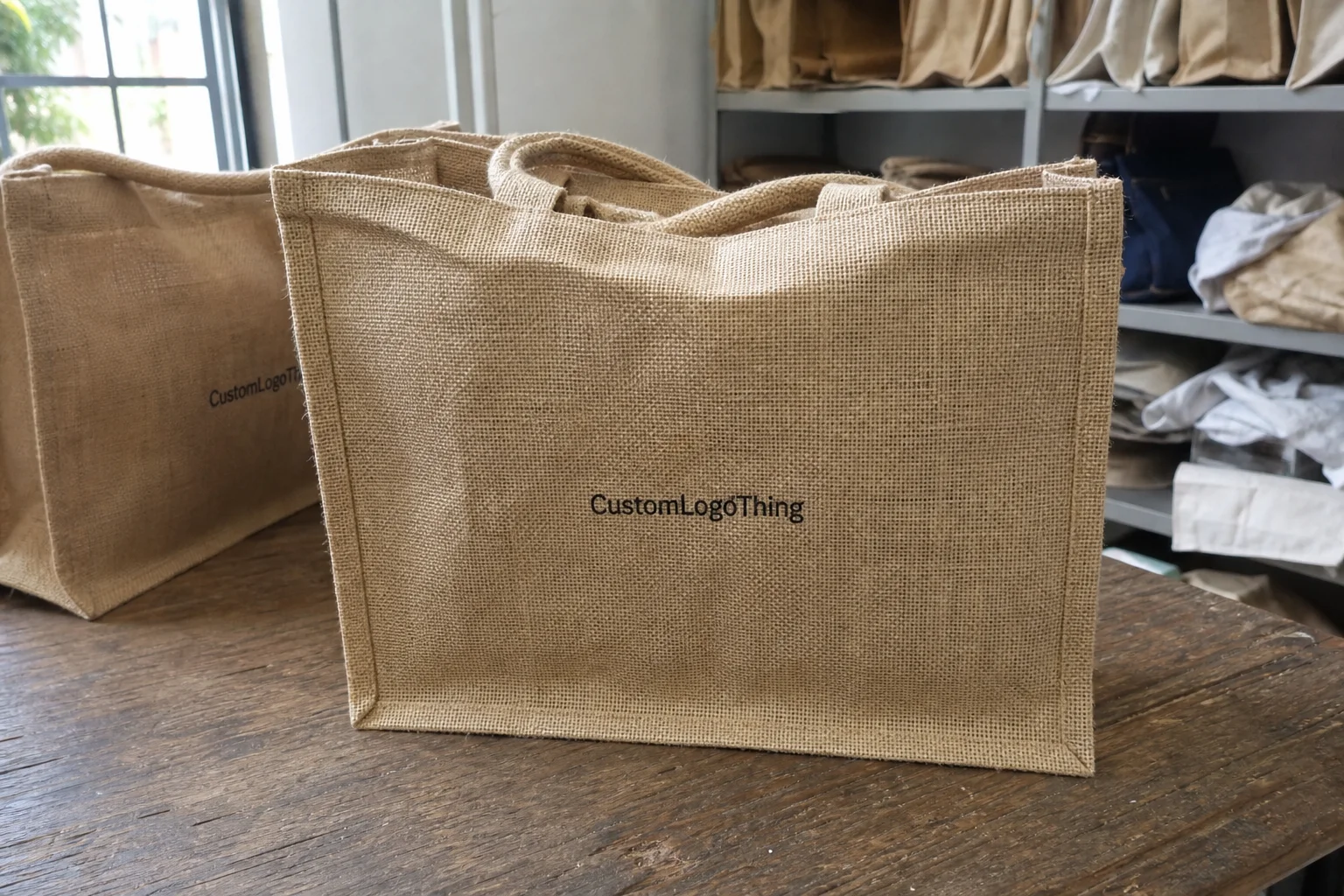
Hessian is a woven fabric made from jute fibers. It is open-textured, slightly coarse, and naturally stiffer than cotton. That structure gives these bags a distinct look: less polished than coated paper, more durable than a thin tote, and more tactile than many synthetic alternatives. The fabric’s character is the point. Buyers often want that visible weave because it signals a grounded, natural brand position.
These bags make the most sense when reuse matters. A gift bag that gets kept on a shelf. A retail bag that leaves with a purchase and gets used again. A trade show kit that has to carry brochures, samples, and a few heavier items without collapsing. In each case, the bag becomes part of the brand experience, not just a container.
They also work well for brands that want a rustic or premium-natural aesthetic. Think artisan foods, wellness products, vineyard gifts, seasonal promotions, and boutique retail packaging. The look is strong even with limited decoration. Too much decoration usually works against the material. The weave is already doing part of the visual work.
The best hessian programs usually keep the message simple: one clear logo, one or two ink colors, and a structure that feels deliberate instead of overdesigned.
There are tradeoffs. Hessian can fray, shed fibers, and print less cleanly than smoother substrates. It also varies more from batch to batch than many buyers expect. That does not make it a bad choice. It just means the right expectation is “natural and textural,” not “perfectly uniform.” If you need a highly refined graphic surface, Custom Printed Boxes or coated paper may be a better fit. If you need something reusable with a tactile edge, hessian usually wins.
For buyers comparing formats, it helps to think in use cases. A luxury candle brand may pair hessian bags with rigid cartons inside. A promotional team may use them alongside other Custom Packaging Products for a coordinated kit. A direct-to-consumer brand may use them as the outer layer of package branding for seasonal launches. Same material, different job.
How Material Weight, Weave, and Linings Change Performance
The spec stack is where many quotations diverge. Two bags can look similar in a mockup and perform very differently in production. The real variables are fiber grade, weave density, fabric weight, lining, stitching, handle style, and closure type. Ignore those details and you are buying a photo, not a product.
Fabric weight affects everything from hand feel to load-bearing performance. A lighter fabric can reduce cost, but it may feel too limp for premium retail. A heavier fabric usually looks and handles better, but it can push unit price up quickly. In practice, buyers often land in the middle: enough body for shape retention, not so much that the bag feels bulky or expensive to ship.
Weave density matters for both print clarity and strength. A tighter weave gives a cleaner surface for logos and helps the bag carry heavier contents with less distortion. A looser weave is cheaper and more rustic, but the print can look softer and the overall finish can feel less controlled. If your artwork includes fine text or small iconography, tighter weave is the safer choice.
Lining is worth considering when the contents are small, sharp, or valuable. It reduces fiber shedding, improves product protection, and makes the interior feel more finished. Linen-look lining, cotton lining, or a simple inner fabric can all change the user experience. The right choice depends on whether the bag is for one-off gifting or repeated retail use.
| Spec Choice | What It Changes | Typical Buyer Outcome |
|---|---|---|
| Lighter fabric, open weave | Lower cost, more texture, less structure | Best for rustic campaigns and light contents |
| Heavier fabric, tighter weave | Better shape retention and clearer print | Better for retail packaging and premium gifts |
| With lining | Less shedding, improved protection, cleaner interior | Best for higher-value items or repeated use |
| No lining | Lower unit price and simpler construction | Fine for giveaways and lighter contents |
Handle construction is another detail people underestimate. Flat woven handles are economical and common for giveaway bags. Rope handles feel more premium but add cost. Stitched fabric handles can work well for heavier loads if the seam reinforcement is done properly. For a reusable bag, handle attachment is often the first failure point, not the fabric itself.
Closures also change the user experience. Drawstrings add a gift-like feel. Zips improve security. Open-top bags are easier to pack and cheaper to make. The right closure depends on whether the bag is designed as a presentation piece, a transport carrier, or a retail takeaway item.
For packaging buyers who care about supplier standards, ask how the material is sourced and tested. If the jute is FSC-certified or paired with responsibly sourced components, that can support a broader sustainability claim. For transport and durability expectations, supplier teams should also be able to explain how the bag holds up under repeated use or shipping vibration. Resources from groups like the International Safe Transit Association are useful when you are thinking beyond aesthetics and into performance. The EPA’s packaging guidance is also a practical reference point for environmental claims and materials context: EPA packaging materials guidance.
Cost, MOQ, and Unit Pricing: What Moves the Quote
Pricing for custom hessian bags is driven by a small number of variables, but those variables add up quickly. Size is the first one. A large bag uses more fabric and longer seams. Fabric weight is next. Then come print colors, lining, handle type, stitching, and any finishing such as labels, inserts, or custom closures.
MOQ, or minimum order quantity, matters because setup costs are spread across fewer or more units. A 500-piece run nearly always carries a higher unit price than a 5,000-piece run, even if the design is identical. That is not supplier greed; it is how labor, prep, and machine time get allocated. Buyers comparing quotes should ask for price breaks at multiple volume tiers, not just the first number that comes back.
Here is the part that trips people up: the cheapest unit price is not always the best value. A low quote can hide weak stitching, poor print consistency, or expensive extras later in the process. A better comparison looks at the whole bill, including sampling, art setup, freight, customs if applicable, and any packing requirements for shipment.
| Cost Driver | Why It Raises Price | Buyer Question to Ask |
|---|---|---|
| Bag size | More fabric, longer seams, larger cutting pattern | Does the size match the actual fill height? |
| Print complexity | More screens, more setup, more risk of alignment issues | Can the artwork be simplified without losing impact? |
| Lining or reinforcement | More material and extra labor | Is the bag meant for repeated use or heavier contents? |
| MOQ | Setup costs are spread over fewer units on small runs | What is the price at 1,000, 3,000, and 5,000 pieces? |
| Custom finishing | Labels, patches, or specialty closures add steps | Which finish adds value, and which is cosmetic only? |
As a working market range, plain hessian bags at scale often land in the low sub-dollar to low single-dollar range per unit, depending on size and construction. Add print, lining, or premium handles, and the price moves up fast. Small runs are a different story. The per-unit cost can jump enough to make the packaging budget look awkward if the order was sized on instinct instead of demand. Exact numbers depend on the spec, but the pattern is consistent across most suppliers.
One more cost factor is shipping format. Nested, compressed, or individually packed bags create different freight weights and carton counts. If you are also ordering related items such as custom printed boxes or inserts, ask whether combining shipments reduces overall landed cost. A quote that looks slightly higher on unit price can still be cheaper once freight and handling are included.
Production Steps and Lead Time From Artwork to Delivery
Production usually follows the same sequence: brief, sizing, artwork prep, sample or proof, approval, bulk production, quality check, and shipment. That sounds simple. It rarely is. Delays usually happen at the handoff points, especially when the buyer changes the size, adjusts the artwork, or approves a sample that no longer matches the brief.
The most common failure point is artwork. If the file is not print-ready, the supplier has to spend time cleaning it up or asking for revisions. Fine lines, gradients, and tiny typography can become a problem on textured fabric, so the proof stage is not just administrative. It is where you decide whether the logo will actually survive the substrate.
Lead time depends on order complexity. Standard printed runs are often faster than bags with lining, custom handles, or unusual dimensions. A straightforward order may move in roughly 10 to 15 business days after proof approval, while a more customized order can stretch beyond that if sampling or sourcing slows things down. That range is normal. What matters is whether the supplier explains where time is being spent.
If you need to shorten turnaround, preparation is the only real fix. Lock the size, confirm artwork, decide on color references, and send all of it in one brief. A good supplier can still advise on materials and finish, but they should not have to guess what you want.
For more complex designs, ask for a pre-production sample, especially if the order includes multiple print colors, custom stitching, or a lining that has to sit neatly inside the shell. It adds time, but it can prevent a much bigger delay if the first bulk run misses the mark. For high-value product packaging, that extra step usually pays for itself.
Quality control should not be vague. Ask how the supplier checks seam strength, handle attachment, print registration, and color consistency. A useful QC pass usually includes dimensional checks against the approved spec, inspection of fraying at cut edges, and pull testing on handles. If the supplier cannot describe those checks plainly, they are probably improvising.
Design Choices That Improve Branding Without Weakening the Bag
The best designs for custom hessian bags usually feel calmer than the first draft. Bold logos work well. Strong typography works well. High contrast works well. Dense artwork, tiny copy, and decorative clutter usually do not. The fabric’s texture already adds visual noise, so the design has to respect that surface instead of fighting it.
Simple layouts are not a compromise; they are often the smarter brand move. A centered logo with clear spacing can look more premium than a busy composition that disappears into the weave. That is a basic packaging rule: the substrate decides how much detail can survive.
Screen printing is common because it handles bold branding well. It is not the only option, though. Woven labels, stitched patches, hang tags, and embossed-style appliques can add texture without relying entirely on printed detail. Those finishes are especially useful for Premium Retail Packaging where the bag needs to feel collectible, not disposable.
For a retail bag, you might prioritize a clean logo and strong handles. For a corporate gift bag, you may want more finish and a lined interior. For an event giveaway, durability and cost efficiency might matter more than ornamental detail. Good package branding starts with the use case, then works backward to the bag spec.
- Use one clear logo placement rather than crowding multiple panels.
- Keep type large enough to survive the weave.
- Choose high-contrast inks for better readability.
- Reserve premium finishes for bags that will be reused or displayed.
If you are building a wider branded packaging program, keep the hessian bag aligned with the rest of the materials. That does not mean everything should match exactly. It means the tone should stay consistent across boxes, inserts, labels, and the bag itself. A strong bag can support the rest of the unboxing; it should not feel like an unrelated add-on.
Common Mistakes Buyers Make When Ordering
The most expensive mistake is approving the size without measuring the real product. Not the catalog dimensions. The actual filled product, with any padding, inserts, or seasonal additions. If the bag is too shallow, the top will sit awkwardly. If it is too narrow, the shape will distort and the branding will look forced.
Another common error is sending vague artwork. “Use the logo from our website” is not a production brief. Suppliers need vector files, Pantone references if color match matters, and guidance on what should be centered, repeated, or left blank. When the file is poor, the result is usually poor too.
Buyers also underestimate how much handle strength matters. If the bag is meant for repeated use, a weak handle or poorly reinforced seam can fail long before the fabric does. The same logic applies to edge finishing and lining. A bag that is meant to represent a premium brand should not shed fibers every time it is handled.
The last trap is comparison shopping on a single metric. Price alone can mislead. So can lead time. A supplier who is fast but vague is not necessarily better than one who is slightly slower but precise about structure, print quality, and tolerances. A sensible quote review weighs the full spec sheet, not just one line item.
What to Prepare Before Requesting Samples or a Quote
If you want accurate pricing, send a complete brief. That means target dimensions, expected contents, quantity range, logo files, preferred colors, and any requirements for lining, closures, or handles. A deadline matters too. If you need the bags for a launch date, say so early. The supplier cannot schedule around a date they do not know.
It also helps to think ahead about the approval path. Who signs off on artwork? Who approves the sample? Who checks the final shipment? Delays often come from internal handoffs, not production itself. The cleaner your process, the faster the order moves.
For more complex designs, ask for a digital proof and, where practical, a pre-production sample. That is especially useful when the bag includes multiple ink colors, visible stitching, custom labels, or a lining that has to sit neatly inside the shell. It is cheaper to catch a problem before bulk production than to fix it after 2,000 units are made.
Use a simple comparison checklist when reviewing suppliers:
- Does the quote clearly state size, fabric weight, and finish?
- Are MOQ and price tiers shown at more than one quantity?
- Is sampling included or billed separately?
- Are shipping and packing assumptions visible?
- Does the supplier explain print limitations and acceptable tolerances?
That checklist sounds basic, but it saves money. Buyers often focus on the mockup first and the spec later. It should be the other way around. Once the structure is right, the branding becomes much easier to trust.
If you are assembling a broader purchase across bags, boxes, and inserts, keep the system aligned. A well-planned package branding program often combines custom hessian bags with other product packaging formats so the whole presentation feels intentional. That is where Custom Packaging Products can make planning easier, because the bag no longer has to carry the entire story by itself.
Custom hessian bags work best when the design fits the material instead of pretending it is something else. Confirm the dimensions, check the weave, match the print method to the artwork, and treat QC as part of the order rather than an afterthought. That is how you end up with bags that look deliberate, carry properly, and survive enough reuse to justify the spend.
Are custom hessian bags durable enough for retail and gift packaging?
Yes, if the weave, stitching, and handle construction match the product weight. They work especially well for reusable retail bags, premium gifts, and event kits. Add lining or reinforced seams when the contents are heavy, sharp, or frequently reused.
What print methods work best on custom hessian bags?
Simple logos usually print best because the rough texture limits fine detail. Screen printing is common for bold branding, while patches and woven labels add a premium finish. Choose high-contrast artwork and avoid tiny text that can fill in on coarse fibers.
How does MOQ affect the unit cost of custom hessian bags?
Lower quantities usually raise the unit price because setup and labor are spread across fewer bags. More print colors, custom sizes, and finishing details also push cost up. Ask suppliers to quote several volume tiers so you can see where the pricing break occurs.
What is a normal lead time for custom hessian bags?
Lead time depends on sampling, approval speed, and production queue position. Standard runs are faster than highly customized bags with lining, special handles, or multi-color print. The fastest way to shorten turnaround is to submit final artwork and confirmed specs before quoting.
What should I send to get an accurate quote for custom hessian bags?
Provide bag dimensions, quantity, artwork files, print colors, and any lining or handle requirements. Include your target deadline and whether you need samples before bulk production. The more complete the brief, the fewer revisions and surprises in the final quote.