Buyer Fit Snapshot
| Best fit | Custom Subscription Boxes with Logo projects where brand print, material claims, artwork control, MOQ, and repeat-order consistency need to be specified before quoting. |
|---|---|
| Quote inputs | Share finished size, material target, print colors, finish, packing count, annual reorder estimate, ship-to region, and any compliance wording. |
| Proofing check | Approve dieline scale, logo placement, barcode or warning zones, color tolerance, closure strength, and carton packing before bulk production. |
| Main risk | Vague material claims, crowded artwork, missing packing details, or unclear freight terms can make a low unit price expensive after revisions. |
Fast answer: Custom Subscription Boxes with Logo: Board, Finish, Dieline, and Unit Cost should be specified like a repeatable production item. The safest quote records material, print method, finish, artwork proof, packing count, and reorder notes in one written spec.
Production checks before approval
Compare the actual filled-product size with the drawing, then confirm tolerance on folds, seals, hang holes, label areas, and retail display edges. Reserve space for logos, QR codes, warning copy, and material claims before decorative graphics fill the panel.
Quote comparison points
Review material grade, print process, finish, sampling route, tooling charges, carton quantity, and freight assumptions side by side. A quote is only useful when the supplier can repeat the same color, closure quality, and packing count on the next order.
Custom Subscription Boxes with Logo: Branding Guide
Custom subscription Boxes with Logo do more than carry goods from a warehouse to a doorstep. They do a piece of branding work before a customer has touched the product, read the insert, or even decided whether to keep the subscription. I have watched a strong product lose some of its shine because it arrived in a plain carton that looked borrowed from a freight shelf. I have also seen a modest product feel far more valuable simply because the packaging looked deliberate. That gap is not cosmetic. It is commercial.
In subscription businesses, the box is part of the product story. The customer sees it first, handles it second, and remembers it last. A branded mailer can signal care, consistency, and enough operational discipline to make the monthly shipment feel dependable. A generic box with a sticker might get the job done, but it rarely tells the same story. That first physical encounter carries more weight than many teams expect, because the box is the first thing a subscriber can judge without waiting for a marketing claim to prove itself.
Why Custom Subscription Boxes With Logo Change the First Impression
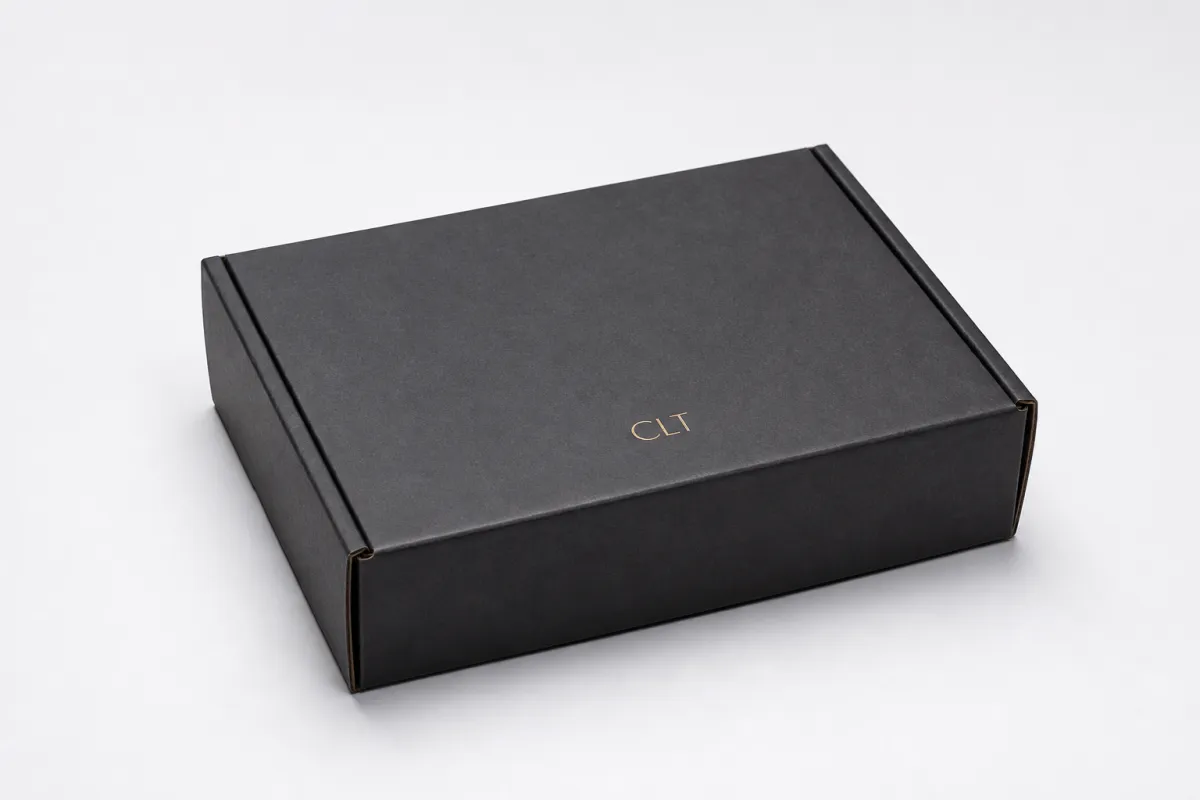
Think about the first few seconds after a parcel lands on the porch. The subscriber has not used the product yet. They have not compared it to the last box. They have not decided whether renewal feels worth it. All they have is the package. Custom subscription boxes with logo create a quick read on value through shape, finish, print quality, and even the opening sequence. That judgment happens fast, and it is often more practical than emotional. A box that feels controlled suggests the brand is controlled. A box that looks flimsy suggests the opposite.
That reaction is especially important because subscription brands are selling repetition, not one-off novelty. Customers are making a small monthly trust decision. If the packaging arrives dented, over-taped, or off-center, the box starts to work against that trust. A clean logo on a stock mailer can reduce cost, sure, but it does not create the same sense of ownership as a structure designed for the product. Custom subscription boxes with logo can include a printed exterior, an interior reveal, a tight insert, or a closure that fits the item instead of forcing the item to adapt to whatever box happened to be available.
Different categories need different packaging behavior. Beauty and wellness boxes usually benefit from a polished reveal and careful protection. Snacks need freshness cues and compact packing. Apparel needs a box that keeps folds crisp and prevents the contents from shifting. Collectibles need a controlled fit and a presentation that feels intentional rather than accidental. Custom subscription boxes with logo can support all of those categories, but the structure has to be designed around the product, not decorated afterward like the logo was added at the end because someone remembered branding existed.
Premium packaging does not forgive sloppy dimensions. If the product rattles, the logo cannot rescue it.
That lesson often shows up after a brand has already approved a run that looked excellent on screen and then failed in transit. A box that is too large feels wasteful. A box that is too thin feels cheap. A box loaded with decoration can look busy enough to distract from the product rather than frame it. Custom subscription boxes with logo work best when structure, print, and insert layout all move in the same direction.
For brands planning packaging strategy, the decision usually comes down to four variables: structure, print, timing, and budget. Get those right and the box can support retention, unboxing content, and perceived value. Miss them and packaging becomes one more line item that never quite earns its keep.
Custom Subscription Boxes With Logo: Process, Timeline, and Lead Time
Custom subscription boxes with logo usually follow a predictable path, but the process slows down quickly when the inputs are vague. The cleanest projects start with a short brief: product dimensions, product weight, quantity per box, shipping method, branding goals, and the level of protection needed. From there, the supplier selects a structure, confirms the dieline, places the artwork, and sends proofs before sampling or production begins. That sequence sounds tidy. Real projects are a bit messier, because somebody always discovers a measurement issue late and everybody has to stare at the calendar for a minute.
Here is the usual flow for custom subscription Boxes with Logo:
- Brief and sizing - confirm product dimensions, count per box, and shipping constraints.
- Box style selection - choose mailer, folding carton, rigid box, sleeve, or insert system.
- Dieline setup - map out where folds, edges, and print safe zones land.
- Artwork placement - position logo, messaging, and any inside print or pattern.
- Proofing - check color, type, line work, and structural notes.
- Sampling - approve a physical sample or pre-production prototype.
- Production - print, cut, glue, finish, and package the run.
- Packing and delivery - ship flat or assembled, depending on the spec.
Most delays are not dramatic. They are small, annoying, and easy to underestimate. A missing vector file. A proof approval that sits in one person’s inbox for three days. A product size change that lands after the dieline is already set. A foil or coating choice that needs extra setup. Custom subscription boxes with logo rarely miss launch because of a single catastrophe. They miss launch because half a dozen tiny decisions were left floating too long.
Lead time depends on structure, finish, and order quantity. A first production run of custom subscription boxes with logo often needs about 18 to 30 business days after proof approval. Specialty finishes and structural sampling can stretch that window. Reorders tend to move faster, often around 10 to 15 business days if the artwork and spec stay the same. For a monthly subscription cycle, do not build the schedule around the best-case estimate. Build it around the version that includes a few revisions and a little freight delay, because printers work from files and reality, not optimism.
A conservative timeline usually looks like this: week one for brief, sizing, and quote review; week two for artwork placement and proof corrections; week three for sample approval if a sample is needed; week four and beyond for production and freight. That slower path is not pessimism. It is insurance. Brands that launch custom subscription boxes with logo for a seasonal campaign or recurring shipment schedule need room for the normal friction that comes with packaging production.
If the structure still feels undecided, take a look at Custom Packaging Products before you lock the spec. A box that looks right in a mockup can turn expensive once fit, assembly, and shipping weight enter the picture. Teams learn that lesson once and usually never forget it.
Transit testing helps separate guesswork from real performance. The ISTA test standards offer a useful reference for how packages behave under drop, vibration, and handling stress. A supplier worth working with should be comfortable talking about edge crush, compression, and transit wear without hiding behind marketing language. If they cannot explain those basics, the weakness usually shows up later as damaged product and refund requests.
Key Design Factors That Make the Box Work
Design decides whether custom subscription boxes with logo feel memorable or merely expensive. Structure comes first. A tuck-end folding carton works well for lighter products and retail-style presentation. A corrugated mailer handles shipping better and tolerates rougher treatment. A rigid box feels more premium, though it raises cost quickly and usually makes sense only for gift sets, high-value kits, or launches where the packaging is part of the story. Sleeves can do good work when the brand wants strong printed real estate without rebuilding the whole package.
Print coverage comes next. Some brands need nothing more than a logo on the lid and a short line on the inside flap. Others want full-color exterior artwork, printed interiors, and a few accent finishes. Custom subscription boxes with logo do not need every finishing option in the catalog. They need the right one. Spot UV can lift a mark off the surface. Foil can signal a premium tier. Embossing adds texture that customers notice with their hands. Stack all of those onto one box and the result can turn kinda busy fast.
Logo placement deserves more attention than it usually gets. The mark needs to read in shipping photos, in social posts, in the customer’s lap, and during that split second before the box opens. If the brand name disappears when the box is taped or stacked, the packaging loses some of its value. Custom subscription boxes with logo should be designed for the real world, not just for a render with perfect lighting and no tape seams. A strong layout works from a top-down shot, a porch photo, and the quick glance a customer gives the parcel before opening it.
Internal fit matters just as much. Inserts and dividers keep products from sliding around, which protects the contents and sharpens the reveal. A serum bottle that knocks against cardboard walls, a snack pouch that arrives bent, or a set of bottles that lands out of order sends the wrong message immediately. Custom subscription boxes with logo work best when the interior makes the product feel organized, not merely contained. A customer should not have to dig through filler to find the actual value.
Sustainability belongs in the conversation, but only if the claims hold up in practice. Recycled corrugated board, FSC-certified paper stock, and reduced-plastic packing can support the brand story when they fit the supply chain and the product needs. For recycling guidance, the EPA recycling resources are more useful than vague packaging copy. If a box says recyclable, the materials and construction should make that claim believable. Customers spot the gap between a real decision and a green-looking prop pretty quickly.
A practical rule helps keep budgets honest: invest where customers see and touch the box, and trim where no one notices. The outer print, the opening sequence, and the insert fit usually matter more than a stack of flashy extras. Custom subscription boxes with logo should support the brand story, not compete with it.
Cost, Pricing, MOQ, and Quote Basics for Branded Boxes
Pricing for custom subscription boxes with logo usually comes down to six variables: size, material, print coverage, quantity, finishing, and shipping weight. Small changes in any of those can move the quote more than a buyer expects. A larger box uses more board. Heavier board raises material cost and freight. Full-bleed printing increases press time and ink coverage. Foil, embossing, and die-cut inserts add setup complexity. None of that is mysterious. It just accumulates.
For rough planning, a corrugated mailer with one-color or limited-color print might land around $0.85 to $1.75 per unit at medium quantities, and closer to $0.45 to $1.10 per unit at higher quantities, depending on size and print coverage. A premium rigid box can run several dollars per unit, and complex builds can climb past that quickly. Those figures are planning ranges, not promises. They help a buyer stop expecting every custom subscription boxes with logo quote to behave like a plain stock carton.
MOQ, or minimum order quantity, is another place where planning gets messy. Smaller runs usually cost more per unit because tooling, setup, and proofing are spread across fewer boxes. Larger runs usually reduce unit cost, but only if the design stays stable and the storage plan makes sense. Ordering too many boxes for an untested launch is a gamble. Ordering too few and paying for a panic reorder later is also a gamble. The middle lane is usually where custom subscription boxes with logo make the most sense for a growing brand.
| Box Option | Best Use | Typical Unit Cost Range | Notes |
|---|---|---|---|
| Corrugated mailer | Subscription shipping, apparel, wellness, snacks | $0.45-$1.75 | Strong for transit; good balance of cost and branding space |
| Folding carton | Lighter products, retail packaging, inserts | $0.18-$0.95 | Lower material cost, but not ideal for rough parcel handling without outer packaging |
| Rigid box | Premium kits, gift sets, high-value items | $3.50-$9.00+ | Feels premium, but freight and assembly can raise total cost quickly |
| Mailer with insert system | Mixed product sets, multi-SKU subscription kits | $0.70-$2.25 | Useful when product movement is the main problem |
The table gives a starting point. The real work happens in the quote detail. Ask what is included: plates, tooling, sample charges, proof revisions, freight, packaging assembly, and any setup tied to special finishes. The lowest quote often leaves out one or two of those line items. That is not value. That is a spreadsheet with a missing floor.
It also helps to compare the quote against how the box will actually be used. If the box opens once and gets tossed, a heavy premium build may waste money. If the packaging is part of the launch story, customer photos, or gift behavior, custom subscription boxes with logo can justify stronger board, better print, and a more polished finish. The point is not to spend more across the board. The point is to spend where the customer will feel the difference.
If you need help narrowing the structure before requesting pricing, another pass through Custom Packaging Products can reduce guesswork. That usually cuts down on revisions and keeps the final invoice closer to the first quote.
Step-by-Step Guide to Launching a Subscription Box Program
The strongest launches begin with the customer experience, not the artwork file. Before custom subscription boxes with logo are quoted, the brand should know what the box must protect, what it must communicate, and how the pack-out will work. That means defining the product set, the opening sequence, and the shipping path. A box built for direct-to-consumer transit has different demands than a box headed for a retail shelf or a distribution center.
Start with the facts. Product dimensions. Weight. Quantity per kit. Monthly volume. Logo files in vector format if available. Brand color references. Desired ship date. Custom subscription boxes with logo move faster when the supplier gets useful information immediately. Waiting until proofing to discover that one bottle is 8 mm taller than expected is how schedules collapse in slow motion.
Build a proofing chain next. One person should approve the structure, one person should confirm the color, and one person should verify the copy. A rushed approval can ruin an entire batch, and a typo on 5,000 boxes is not the kind of mistake anyone enjoys explaining. The more disciplined the review process, the easier it is to keep custom subscription boxes with logo consistent from the first run through the third reorder.
Physical testing should follow the proof. Pack a sample, drop it, stack it, shake it, and inspect what happens. Does the product move? Do the edges crush? Does the lid stay aligned after stress? Does the box still look sharp once it has been handled like actual parcel freight? A good sample answers those questions quickly. This is the part where packaging stops being a rendering exercise and starts being a functional product.
Here is a practical pilot sequence for custom subscription Boxes With Logo:
- Approve the final dimensions and structural sample.
- Test one packed unit for transit damage and product fit.
- Check assembly time per box for the packing team.
- Review shipping cost per order, not just unit price.
- Inspect the box in a real unboxing scenario, not just on a desk.
That pilot stage often reveals that the most expensive box is not the best box. Sometimes the answer is a tighter mailer with better dimensions and a simpler insert. Sometimes the product needs heavier board or a stronger closure because the item is fragile or the route is rough. Custom subscription boxes with logo should be chosen from evidence, not from a mood board.
A pilot run also helps refine labor. If assembly takes too long, the margin shrinks. If the fit is too loose, filler costs rise. If the logo disappears once tape and shipping labels are added, the brand has already lost some of the package value. Small batches give teams room to adjust before inventory piles up. Custom subscription boxes with logo are much easier to improve after one controlled run than after a full warehouse commitment.
Common Mistakes That Waste Money and Delay Launches
The first mistake is ordering before the product dimensions are final. A box that is even slightly off can create awkward gaps, crushed corners, extra filler, or a lid that refuses to close cleanly. Custom subscription boxes with logo are unforgiving in that way. The box does not care that the product team is still debating a cap change. It only responds to the math in front of it.
The second mistake is stacking finishes because they sound premium. Foil, embossing, soft-touch lamination, spot UV, and specialty coatings can look excellent in the right context. They can also chew through budget when the design does not need them. Custom subscription boxes with logo should feel premium because the layout is disciplined, not because every finish in the sample book got invited to the same box. Too many effects usually make a package feel busy before they make it feel better.
The third mistake is sending poor files and expecting production to clean up the mess. Vector logo files are usually the right starting point. A tiny JPG, unclear color specs, or a logo without safe-space guidance slows the schedule and complicates proofing. Good file prep is tedious, but it saves time. In packaging, time often becomes the hidden cost behind custom subscription boxes with logo.
The fourth mistake is forgetting what shipping does to a box. A beautiful package that collapses in transit is not premium. It is a refund with better typography. If the box has to survive parcel handling, test it like a parcel. Think about edge crush, impact, humidity, and stacking. For a packaging benchmark, ISTA 3A and ASTM D4169 are common references for transit testing. If a supplier can speak about those standards clearly, that is a good sign. If they cannot, the weakness usually shows up later in damaged product and customer complaints.
The fifth mistake is skipping a sample. Rushing from proof approval to full production without a physical check is a fast way to pay twice. One batch with the wrong fit, the wrong color, or the wrong insert spec can wipe out the savings from a cheaper quote. Custom subscription boxes with logo reward patience here. A sample costs less than a mistake, and that is not even close.
The cheapest quote can be tempting. I understand why. Numbers on paper feel clean. Yet with branded packaging, the lowest figure often carries the highest number of explanations later. Compare board strength, print method, freight, and included services before making the call. The first invoice is not the whole cost.
Expert Tips and Next Steps for a Better Rollout
For a cleaner rollout, build a checklist before the order goes in. Confirm the final product fit. Confirm logo visibility on the front panel and in the opening view. Confirm the box survives a drop test. Confirm packing time per unit. Confirm freight class. Custom subscription boxes with logo become easier to manage once the brand treats packaging as part of operations, not just as a design task that happens late in the process.
Ask for a structural sample if the product is fragile, premium, or awkwardly shaped. That one step cuts down on guesswork quickly. A structural sample shows whether the insert needs tightening, whether the lid closes cleanly, and whether the box stacks well. If the packaging is going to ship every month, stability matters more than a pretty rendering. Custom subscription boxes with logo should work on repeat, not just in a slide deck.
Comparing two packaging paths side by side can make the decision clearer. Build one option around budget and production efficiency. Build the second around stronger brand impact. Place both next to the product, the shipping cost, and the expected customer reaction. The trade-off usually becomes obvious. Sometimes the simpler version wins. Sometimes the more polished build earns its place because it lifts perceived value enough to support retention and referrals. Either way, the decision is deliberate instead of guessed.
After the first shipment leaves, watch what customers actually do. Unboxing photos tell one story. Damage complaints tell another. Assembly problems tell a third. If the box is too big, too plain, or too expensive to pack, the feedback shows up quickly. Use that information on the next run. Packaging should not be frozen in place forever. Custom subscription boxes with logo should evolve with the product, the audience, and the shipping reality.
For brands ready to move from idea to order, the practical route is simple: lock the size, request a sample, confirm the quote, and place a small pilot run of custom subscription boxes with logo before scaling. That approach is not flashy. It is steady. It is also how a packaging budget stays under control while the brand learns what the box needs to do.
FAQ
How many custom subscription boxes with logo should I order first?
Start with a pilot quantity that covers one or two shipping cycles instead of guessing at a huge launch order. That gives you room to test assembly time, damage rates, and customer response before you commit to a larger run of custom subscription boxes with logo. If your supplier has a higher MOQ, ask whether a structural sample or short-run proof is possible first.
What affects the price of custom subscription boxes with logo the most?
Box size, board thickness, print coverage, and finish choices usually have the biggest impact on price. Quantity matters too, because setup costs get spread across more units on larger runs of custom subscription boxes with logo. Freight can swing the total hard, especially for oversized boxes or heavy materials, so always compare landed cost, not just unit price.
How long does production usually take for custom subscription boxes with logo?
First orders usually take longer because the dieline, proofs, and sample approval steps have to happen before production starts. Simple custom subscription boxes with logo can move faster on reorders, while complex finishes and custom structures add time. The cleanest way to avoid delays is to have artwork, dimensions, and approvals ready before you request a quote.
What logo file should I send for custom subscription boxes with logo?
Send vector artwork when possible, such as AI, EPS, or PDF, because it holds up better in print production. Make sure brand colors are specified clearly, especially if exact Pantone matching matters on custom subscription boxes with logo. If you only have a PNG or JPG, expect extra cleanup time and a higher chance of proofing issues.
Are custom subscription boxes with logo worth it for a small brand?
Yes, if the box is part of the customer experience and not just a shipping container. Small brands often benefit the most because custom subscription boxes with logo help them look established fast and create a more memorable unboxing. The smart move is to balance brand impact with a controlled pilot run so you do not overspend before demand is proven.
Custom subscription boxes with logo are worth the effort when the box helps the product feel more complete, more credible, and more repeatable. Lock the dimensions, test the structure, and compare landed cost before you place a run. Then start small, learn from the first shipment, and scale only after the box proves it can do the job every month.

