Buyer Fit Snapshot
| Best fit | Custom Sugarcane Bagasse Boxes projects where brand print, material claims, artwork control, MOQ, and repeat-order consistency need to be specified before quoting. |
|---|---|
| Quote inputs | Share finished size, material target, print colors, finish, packing count, annual reorder estimate, ship-to region, and any compliance wording. |
| Proofing check | Approve dieline scale, logo placement, barcode or warning zones, color tolerance, closure strength, and carton packing before bulk production. |
| Main risk | Vague material claims, crowded artwork, missing packing details, or unclear freight terms can make a low unit price expensive after revisions. |
Fast answer: Custom Sugarcane Bagasse Boxes: Film, Print, MOQ, and Carton Packing should be specified like a repeatable production item. The safest quote records material, print method, finish, artwork proof, packing count, and reorder notes in one written spec.
Production checks before approval
Compare the actual filled-product size with the drawing, then confirm tolerance on folds, seals, hang holes, label areas, and retail display edges. Reserve space for logos, QR codes, warning copy, and material claims before decorative graphics fill the panel.
Quote comparison points
Review material grade, print process, finish, sampling route, tooling charges, carton quantity, and freight assumptions side by side. A quote is only useful when the supplier can repeat the same color, closure quality, and packing count on the next order.
Custom Sugarcane Bagasse Boxes: What To Know Before Buying
Custom sugarcane bagasse boxes are not decorative eco props. They are molded fiber containers built to survive grease, steam, stacking, and the rough hands of customers without turning soft at the edges. That sounds obvious, yet packaging buyers still treat them like a green checkbox instead of working packaging. The bill for that mistake shows up fast.
For food, retail packaging, and sample kits, custom sugarcane bagasse boxes sit in a useful middle zone: they feel solid, look natural, and tell a cleaner sustainability story than plastic without pretending every problem is solved by fiber. For a broader view of structure choices, our Custom Packaging Products page is a useful starting point before you request a quote.
Sales copy tends to blur an important distinction. Custom sugarcane bagasse boxes perform well in the right applications and poorly in the wrong ones. Wall thickness, lid fit, shape, heat exposure, and delivery time all matter. Miss those details, and the result is branded packaging that sags the moment condensation shows up.
What custom sugarcane bagasse boxes actually are
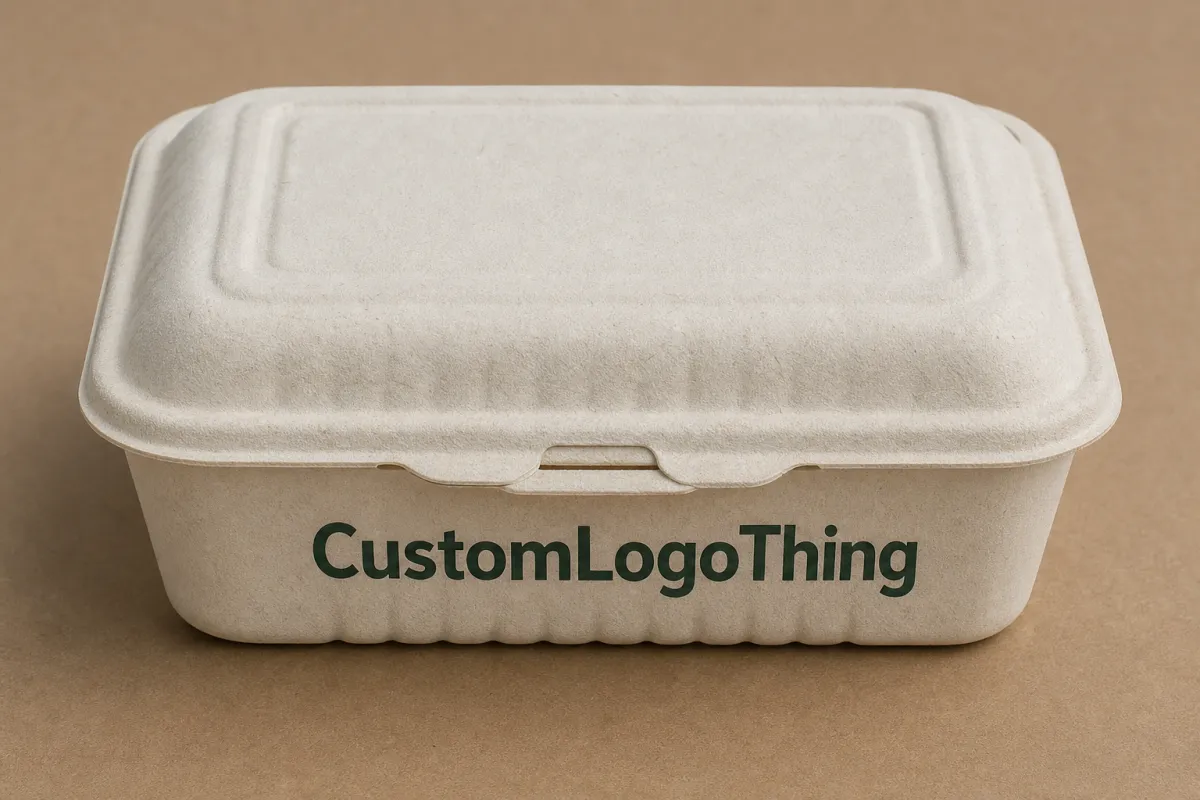
Custom sugarcane bagasse boxes are molded from bagasse, the fibrous residue left after sugarcane stalks are crushed for juice. Put more plainly, leftover plant fiber becomes packaging instead of waste. That is the real story behind the material, not the loose green language that gets pasted onto every compostable-looking carton.
The material starts as pulp, then gets pressed into molds and dried into trays, clamshells, lids, compartments, and other box forms. The result is a rigid package with a matte surface and a natural appearance that works well for product packaging and retail packaging when a glossy plastic look would feel out of place. Custom sugarcane bagasse boxes often appear first in food service because they feel substantial in hand and signal sustainability without looking flimsy.
The useful part shows up in the applications. These boxes are strongest in dry to moderately moist settings. Once hot grease, long dwell time, or heavy condensation enters the picture, the technical details become more important than the marketing sheet. A box with thicker walls, cleaner molding, or a better lid can outperform a cheaper version that looks identical from across a counter. That is why custom sugarcane bagasse boxes are not a one-size answer. They are packaging structures, not a slogan.
Brands choose custom sugarcane bagasse boxes instead of plastic or standard paperboard for a few concrete reasons:
- Stiffness: molded fiber can feel more solid than thin paperboard in takeaway use.
- Natural surface: the texture looks restrained and clean, which helps package branding without loud graphics.
- Food-friendly presentation: they can hold warm meals, bakery items, and mixed portions without reading as cheap.
- Lower visual waste: customers often read them as less disposable than shiny plastic clamshells.
The simplest reason people buy custom sugarcane bagasse boxes is usually the best one: they want packaging that works and supports the brand story at the same time. Not every buyer is chasing a grand sustainability message. Some just need a box that keeps lunch from arriving as a soggy apology.
If the packaging looks sustainable but fails in transit, nobody remembers the label. They remember the sauce on the bag.
That is why the first question should never be “How green is it?” A better question is: What does this box need to survive? Dry snacks, steamed rice, pasta, salads, bakery items, and retail sample kits all behave differently. Custom sugarcane bagasse boxes can handle many of those uses, but only when the spec fits the product.
I have seen teams approve a box from a photo alone, then watch it lose shape after fifteen minutes in a warm delivery bag. The material had not failed. The spec had.
How custom sugarcane bagasse boxes work in real use
In real use, custom sugarcane bagasse boxes depend on structure more than decoration. The molding process creates walls, corners, hinge lines, and closure points that help the box keep its shape. That matters because a rigid box stacks better, ships cleaner, and is less likely to collapse under a warm meal or a warehouse pile-up.
Most buyers notice the feel first. A molded fiber box has a dry, dense hand-feel that reads as premium without trying too hard. That gives it an advantage for Custom Printed Boxes and understated branded packaging, especially when the logo is embossed or printed in a restrained palette. Not every box needs to shout. Some of the best package branding looks calm enough to trust.
Where custom sugarcane bagasse boxes earn their keep is in handling. A well-designed box can offer:
- Compartmented interiors for meal combos or sampler kits
- Tight-fitting lids that reduce movement during delivery
- Stackable edges for storage and prep lines
- Closure tabs that stay shut without forcing staff to fight the box
The material still has limits. Bagasse fiber can absorb moisture over time. That does not mean the box is weak; it means the box has a defined operating range. Very wet food, very oily food, or long holding times can soften the structure, stain the surface, or blur the edges. Grease resistance, venting, and lid fit matter more than many buyers expect. A poor seal traps steam, and trapped steam is a quick route to soggy packaging. No one benefits from that.
The difference between “looks sustainable” and “actually works” is straightforward: custom sugarcane bagasse boxes should protect presentation, stackability, and delivery handling. If a box only passes a shelf photo test, it is not doing enough. Buyers should test it with the real item, the real dwell time, and the real delivery path rather than holding it in a meeting room and admiring the texture.
Restaurants, meal prep brands, bakery items, corporate gifting, and sample kits all use this material differently. In those settings, custom sugarcane bagasse boxes can support both product packaging and a cleaner customer impression. The box should feel like part of the item, not a sustainability lecture stuck on the outside.
For brands still comparing structures, it helps to review the molded fiber option alongside paperboard and mixed-material setups on our Custom Packaging Products page. That comparison is usually more useful than a generic quote request because the best material depends on the product, not the mood board.
Key factors that decide box quality and performance
Quality starts with density and wall thickness. Most custom sugarcane bagasse boxes land somewhere in the molded fiber range of about 1.5 mm to 3 mm wall thickness, depending on the shape and use case. Thicker does not automatically mean better, but thin, uneven molding tends to show up quickly in weak corners, lid warp, or a box that feels soft before it ever meets food.
Barrier treatment comes next. Some custom sugarcane bagasse boxes need added grease resistance, moisture resistance, or better heat tolerance. That treatment can improve function, but it also changes the disposal story, print behavior, and sometimes the compostability claim. If a supplier says “compostable,” ask what that means in practice. Uncoated fiber is one thing. Coated or heavily printed fiber is another.
Print and branding come after that. Bagasse is not smooth coated paperboard. It has a natural texture, so print tends to look strongest when the design is simple, bold, and deliberate. Fine detail, tiny reverses, and heavy full-bleed color can look muddy. Embossing and debossing often work better than aggressive ink coverage, especially on custom sugarcane bagasse boxes meant to feel premium without imitating glossy carton stock.
A practical rule helps here: if your logo has too many small lines to survive a slightly rough surface, simplify it. Packaging design should serve the material, not argue with it. Too many brands force complex artwork onto molded fiber and then act surprised when the box looks fuzzy. The box is not the problem. The design brief is.
Size and shape matter just as much as finish. A wrong footprint leads to product movement, crushed corners, poor lid closure, and unnecessary shipping volume. Oversized custom sugarcane bagasse boxes waste material and space. Undersized ones deform the product or make staff hate assembly. Neither outcome is acceptable for retail packaging.
Sustainability claims need discipline, not poetry. If a box is described as compostable, recyclable, or made from recycled content, that claim should be verifiable. Ask for documentation, food-contact confirmation, and end-of-life guidance that matches the actual build. Vague green language is where buyers get burned because the box may sound ideal and still be wrong for the market they sell into.
For shipping-sensitive programs, ask about transit testing. The ISTA test methods are a sensible starting point if the packaging has to survive parcel networks, stack pressure, and temperature swings. A food box and a shipper are not the same problem, but both need a realistic handling plan. For disposal claims, it is wiser to confirm local facility acceptance and the relevant ASTM standards than to rely on a recycled-looking label.
Three checkpoints separate decent custom sugarcane bagasse boxes from weak ones:
- Structural consistency: corners, lids, and closures should look even from box to box.
- Material fit: the box should match the heat, moisture, and dwell time of the actual product.
- Brand alignment: the print and shape should reinforce the product story instead of muddying it.
Custom sugarcane bagasse boxes should do more than exist on a spec sheet. They should protect the food or item, carry the brand, and hold up in the real distribution path. That is the job.
Production process and lead time for custom sugarcane bagasse boxes
The production path for custom sugarcane bagasse boxes is usually direct, but the handoff points are where delays creep in. The typical sequence is brief and specs, dieline or mold selection, sample approval, tooling if needed, mass production, inspection, packing, and shipment. Simple on paper. Not always simple in practice, because every revision adds time.
Tooling is usually the first slowdown. If you use a stock-style shape with logo customization, the timeline is shorter because the mold already exists. If you want a fully custom shape, special compartments, or a unique closure, the mold work becomes a project in its own right. That is why custom sugarcane bagasse boxes with structural changes usually take longer than buyers expect. The factory is not stalling; it is waiting on a mold, not waving a wand.
Sample approval is the second delay point. A sample may look right and still fail in hand because the lid is too stiff, the stack height is off, or the logo placement feels awkward. The smarter move is to test the sample with the actual product, not just the box by itself. Warm it. Fill it. Stack it. Close it with staff who are moving quickly. If custom sugarcane bagasse boxes are awkward in a lunch rush or during packing, the final order will be awkward too.
Typical timelines depend on how custom the job is, but these ranges are realistic:
- Sample development: often 5-10 business days for standard work, longer if the shape is unusual
- Tooling and mold work: commonly 2-4 weeks
- Production after approval: often 12-20 business days for a normal run
- Ocean freight: often 3-6 weeks depending on route and customs timing
- Air freight: often 5-10 business days when speed matters more than cost
That means a launch date should never depend on best-case assumptions. If the box is for a restaurant opening, seasonal menu, or subscription rollout, custom sugarcane bagasse boxes need to be ordered early enough to handle one revision round without panic. A late box shipment is not a minor inconvenience. It can derail a launch schedule, force a packaging swap, and irritate everyone from operations to marketing.
Buyers can shorten lead time with boring but effective discipline:
- Finalize dimensions before asking for print quotes.
- Keep artwork simple enough for the material.
- Approve samples quickly and with the real product in hand.
- Avoid last-minute shape changes after tooling starts.
- Confirm packaging, carton count, and shipping method before production begins.
Custom sugarcane bagasse boxes are a packaging project, not a guessing game. The cleaner the brief, the fewer delays you get. If the supplier has to guess at lid fit, heat tolerance, or artwork placement, the calendar stretches. That is not a mystery. That is workflow.
Custom sugarcane bagasse boxes cost, pricing, and MOQ
Cost for custom sugarcane bagasse boxes depends on a stack of variables that all behave differently: mold complexity, dimensions, fiber thickness, print method, barrier treatment, order volume, and shipping weight. There is no honest way to quote one flat number for every program because the box itself changes the math.
MOQ matters just as much as unit price. Smaller runs usually cost more per box because tooling, setup, and quality control get spread across fewer pieces. If you only need a small run, custom sugarcane bagasse boxes are still possible, but the price per unit will reflect the setup burden. That is normal. Factories do not absorb that cost for free.
For buyers comparing options, landed cost is the number that matters, not just the quoted unit price. Freight, carton packing, sample fees, tooling, and any special finishing can move the total by a surprising amount. A quote that looks cheap on paper can become expensive after shipping and reject risk are added. Itemized quotes beat headline numbers every time.
| Option | Typical Unit Cost | Best For | Main Trade-Off |
|---|---|---|---|
| Stock shape with simple logo | $0.14-$0.24 at 10,000+ pcs | Fast launches, basic branded packaging | Limited shape control |
| Semi-custom mold with one-color print | $0.22-$0.38 at 5,000-10,000 pcs | Restaurants, meal kits, retail packaging | Moderate tooling and setup |
| Fully custom shape with stronger structure | $0.35-$0.80 at 5,000-10,000 pcs | Premium product packaging, unique form factors | Higher mold cost and longer lead time |
| Barrier-treated food box | $0.30-$0.65 depending on treatment | Greasy or steam-heavy food | May affect compostability claims |
Those ranges are not fantasy pricing. They are the kind of numbers a buyer should expect depending on how custom the job really is. If the order is small, the per-unit cost rises. If the order is large, the unit cost falls, but the cash tied up in inventory rises. Pick your pain. There is always one.
Here is the buying advice by volume tier:
- Low volume: use standard shapes, simple branding, and avoid custom tooling unless the box is central to the product experience.
- Mid volume: prioritize a mold that fits the product exactly and keeps shipping efficient.
- High volume: simplify the spec, reduce color changes, and negotiate on carton loading and freight terms.
For pricing comparisons, ask each supplier to separate tooling, samples, packaging, freight, and unit cost. That way you can compare custom sugarcane bagasse boxes on equal footing instead of getting trapped by one low number with five hidden add-ons. If a quote refuses to break out the components, treat it as a warning sign.
Need a broader packaging quote set? Start with our Custom Packaging Products catalog, then ask vendors to match the exact use case rather than just the box shape.
Common mistakes when ordering custom sugarcane bagasse boxes
The biggest mistake is buying on looks alone. A box can look clean in a render and still fail the moment steam builds up, grease migrates, or the customer keeps the meal in the box longer than your test allowed. Custom sugarcane bagasse boxes need to be judged under real conditions, not showroom lighting.
Vague specs are the second mistake. If the supplier does not know the exact dimensions, closure style, print needs, and intended use, the sample can still seem “fine” while the production run ends up wrong. That gap happens often. A box that is 3 mm too shallow can work on paper and fail in a delivery bag. A lid that closes with a firm snap in the office can become irritating in a prep line that handles 300 units a day.
The compostability assumption trap causes its own problems. Not every fiber box belongs in every compost stream. Local rules, contamination, coatings, and print treatments all affect disposal. Buyers should verify the claim before printing it on the package. A green statement that cannot be supported is not branding. It is liability with better typography.
Shipping and storage errors do more damage than people admit. Custom sugarcane bagasse boxes need dry storage, good carton protection, and sensible stacking. If they sit in damp conditions or get crushed in transit, they can arrive warped or dirty. The material is durable enough for normal handling, not enough for sloppy logistics.
Test the box the way the customer will use it, not the way the sales sample was staged. That single habit saves a lot of regret.
The fifth mistake is skipping prototyping for retail launches or food rollouts. A box can fit and still be a poor operational choice if it is hard to assemble, noisy to close, awkward to stack, or confusing to open. Custom sugarcane bagasse boxes should support the workflow, not slow it down. Staff time costs money too, even if it never appears on the packaging invoice.
For any buyer building a new line of custom printed boxes or shifting from plastic to molded fiber, the safest move is to request one sample, one small test batch, and one real-world use check before greenlighting production. That sounds cautious because it is. Caution is cheaper than reorders.
Expert tips and next steps for custom sugarcane bagasse boxes
Start with the product, not the packaging. Measure the item first. Then ask what the box has to survive: steam, condensation, grease, stacking, courier handling, or retail shelf display. Custom sugarcane bagasse boxes should be chosen around the product conditions, not around the prettiest mockup in the email thread.
If the item stays hot, test the box after 20 to 30 minutes, not after two minutes. That timing matters more than people think. A short hand test can hide moisture buildup that shows up later. For cold items, test condensation and lid slip. For bakery items, check whether crumbs, oils, or frosting smear the surface. Custom sugarcane bagasse boxes can handle a lot, but only when the structure matches the use.
Before committing to full production, ask for a small sample batch. That lets your team check fit, print clarity, stacking, and customer handling in the real world. If the sample batch performs, the production order has a much better chance of behaving the same way. If it fails, you have not wasted a full run.
For shipping-heavy programs, ask for transit testing based on your route. The ISTA test methods are a useful reference if the packaging has to survive parcel networks, stack pressure, and temperature swings. For compostability or disposal claims, verify the local facility rules and the applicable ASTM standard before the wording ever reaches a dieline.
Use a vendor comparison sheet before you choose. Keep it boring and specific. Boring wins here.
- Size: exact dimensions, internal fit, and lid clearance
- Material: wall thickness, finish, and any barrier treatment
- Print: color count, logo placement, embossing, or debossing
- Volume: target order quantity and reorder forecast
- Timing: sample date, production lead time, and ship date
- Claims: food contact, compostability, and disposal notes
If you are comparing custom sugarcane bagasse boxes across several suppliers, ask every vendor for the same spec sheet and the same delivery assumptions. That makes the comparison fair. It also shows which supplier understands packaging and which one is mostly translating your email into a quote.
One final practical move: shortlist two or three suppliers, request samples and itemized quotes, then choose the option that balances performance, timeline, and unit cost for custom sugarcane bagasse boxes instead of defaulting to the cheapest bid. The lowest price is often the most expensive mistake once defects, delays, and poor customer experience show up.
For brands building a fuller product packaging program, custom sugarcane bagasse boxes can be the right move when the use case fits. They are not a magic answer, and they are not a trend to chase blindly. They are a packaging tool. Use them for the job they actually do, and they earn their place.
Actionable takeaway: if you are ordering custom sugarcane bagasse boxes, lock the product dimensions, define the worst-case heat and moisture exposure, request an itemized quote, and approve a real sample that sits under those conditions for at least 20 to 30 minutes before you place the full run. That one sequence filters out most bad buys.
Frequently Asked Questions
Are custom sugarcane bagasse boxes compostable in regular home compost?
Sometimes, but not always. It depends on local compost rules, coating levels, and whether the box is contaminated with food grease or sauce. Uncoated fiber usually breaks down more easily than coated or heavily printed versions, but buyers should verify the exact disposal claim before printing it on the box.
Can custom sugarcane bagasse boxes handle hot, greasy, or saucy food?
Yes, to a point. The right box can handle hot takeaway and moderate grease, but the wall thickness, lid fit, and barrier treatment need to match the food type. For very oily or steam-heavy items, ask for samples and test them for 20 to 30 minutes, not just a quick hand check.
What is a normal MOQ for custom sugarcane bagasse boxes?
MOQ varies by supplier and customization level, but custom tooling or special print usually pushes the minimum higher than stock-style orders. If you want better unit cost, larger volumes usually win; if you only need a small run, standard sizes and simpler branding usually make more sense.
How do I compare pricing for custom sugarcane bagasse boxes?
Compare itemized quotes, not just unit price. Tooling, samples, freight, packaging, and finishing can change the real landed cost a lot. The cheapest quote is often the most expensive mistake once you factor in defects, weak boxes, or a delay that blows up your launch.
What should I prepare before requesting a quote for custom sugarcane bagasse boxes?
Have exact dimensions, intended use, target quantity, artwork files, print colors, and any performance requirements like grease resistance or heat tolerance. If possible, send reference photos or a sample product so the supplier can recommend the right structure instead of guessing.

