Buyer Fit Snapshot
| Best fit | Custom Sugarcane Inserts Bulk projects where brand print, material claims, artwork control, MOQ, and repeat-order consistency need to be specified before quoting. |
|---|---|
| Quote inputs | Share finished size, material target, print colors, finish, packing count, annual reorder estimate, ship-to region, and any compliance wording. |
| Proofing check | Approve dieline scale, logo placement, barcode or warning zones, color tolerance, closure strength, and carton packing before bulk production. |
| Main risk | Vague material claims, crowded artwork, missing packing details, or unclear freight terms can make a low unit price expensive after revisions. |
Fast answer: Custom Sugarcane Inserts Bulk: Specs, MOQ, and Pricing should be specified like a repeatable production item. The safest quote records material, print method, finish, artwork proof, packing count, and reorder notes in one written spec.
Production checks before approval
Compare the actual filled-product size with the drawing, then confirm tolerance on folds, seals, hang holes, label areas, and retail display edges. Reserve space for logos, QR codes, warning copy, and material claims before decorative graphics fill the panel.
Quote comparison points
Review material grade, print process, finish, sampling route, tooling charges, carton quantity, and freight assumptions side by side. A quote is only useful when the supplier can repeat the same color, closure quality, and packing count on the next order.
Custom sugarcane inserts bulk orders usually make sense when breakage, loose pack-out, and excess void fill are quietly eating into margin. Most damage does not begin with the outer carton. It starts when a product can move, tilt, or rattle because the insert was guessed instead of engineered.
That matters whether you ship glass bottles, skincare sets, candles, small electronics, or anything with a neat retail presentation that can turn ugly in transit. A molded fiber insert made from bagasse can hold the product in place, reduce return risk, and make pack-out more predictable. The sustainable choice is often the practical one too. Fancy that.
For brands buying custom packaging, the real question is not whether sugarcane fiber sounds eco-friendly. The real question is whether the insert fits the product, the carton, the packing workflow, and the order volume without forcing you into wasteful extras. That is what this article covers: specs, pricing logic, MOQ, lead time, and how to place a bulk order without getting trapped in vague packaging language.
Why custom sugarcane inserts bulk can cut damage and waste fast
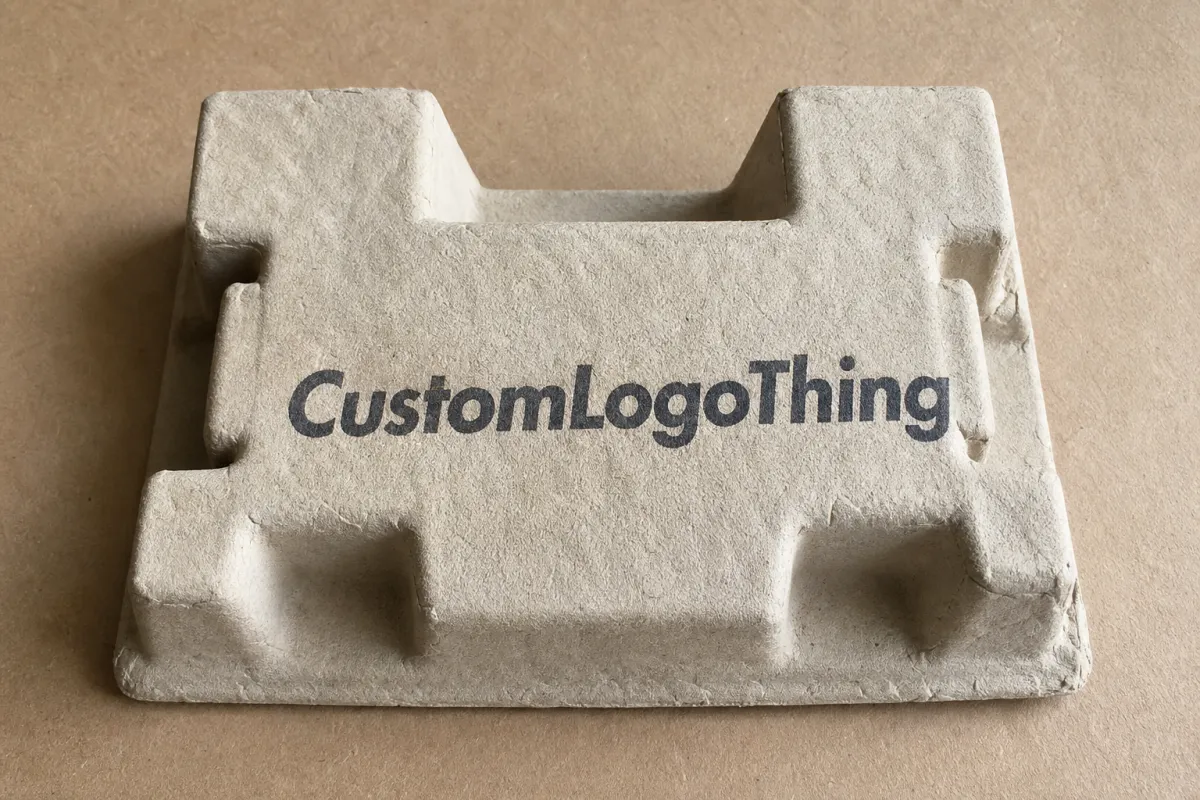
Most breakage claims come from movement, not from the carton itself. A strong box with loose contents is still a poor shipment. Fit matters more than polished outer graphics. If the product can shift even a little during transit, the package is already working against itself.
Think about a set of glass serum bottles inside a retail gift box. A shaped insert keeps each bottle in one clear position, so the packer drops it in and moves on. A wrong insert turns the line into a guessing contest. Paper stuffing, foam scraps, extra filler, repeated adjustments. It all looks improvised because it is. Protection ends up inconsistent from order to order.
Custom sugarcane inserts bulk also helps with rework. Repacking damaged goods is expensive. Sorting returns is expensive. Answering emails from a distributor who says half the set arrived tilted is expensive too. Packaging should prevent those costs, not create them. A proper molded fiber insert often reduces the need for secondary dunnage because the cavity does the job loose fill never quite does.
There is a packing-line benefit buyers miss. Good inserts speed people up. When the cavity is obvious and the product only fits one way, the operator does not have to think through every unit. That sounds small. It is not. On a repeat run, shaving a few seconds per pack adds up quickly, especially when the order count climbs and the team is trying to keep pace.
A well-designed insert pays for itself twice: fewer damages, fewer repacks.
From a product packaging angle, sugarcane fiber is not only a sustainability choice. It is a manufacturing choice. It can reduce wasted material, lower the amount of void fill used per carton, and create a cleaner presentation for branded packaging and retail packaging. That matters if the product sits on shelves, gets unboxed on camera, or goes straight from a shipping carton to a customer’s gift table.
To keep the discussion grounded, it helps to compare this with a few common shipments:
- Skincare sets: Bottles and jars need side control more than brute-force cushioning.
- Candle kits: The insert has to stop glass-on-glass contact and keep lids from rattling loose.
- Small electronics: Accessories, cords, and the main device need separate cavities or the box turns into a noise machine.
- Gift bottles: Premium presentation matters, but so does keeping the neck and base from taking impact.
If you want a broader look at packaging construction and material options, our Custom Packaging Products page shows the categories we work with, from inserts to Custom Printed Boxes and supporting packaging design elements.
What custom sugarcane inserts are made to do
Sugarcane inserts are molded fiber packaging made from bagasse, the fibrous residue left after sugar extraction. That detail matters because buyers are increasingly asked to explain what their packaging is made from, where the fiber comes from, and how it fits into a lower-plastic strategy. If you need sustainability claims later, material origin is not a footnote. It is part of the package story.
Functionally, the insert has a simple job list. It cushions the product. It immobilizes it. It supports stack pressure. It protects edges and corners. It keeps the item centered so the outer carton does not have to absorb every bump alone. If the product has multiple pieces, the insert can separate them so they do not grind against each other in transit.
Compared with foam, molded sugarcane fiber usually feels stiffer and more structured. That can help with presentation and repeat packing. Foam may absorb shock in different ways, and it still has its place, but buyers often prefer the cleaner look of molded fiber when the product is sold as premium retail packaging rather than industrial ship packaging.
Compared with paper-based fillers, molded fiber wins on repeatability. Loose paper, crinkle fill, and folded pads all depend on the packer using enough of the right material every time. A molded cavity gives you a consistent location and consistent contact points. That makes it easier to predict how a product will travel inside the carton.
That said, sugarcane inserts are not magic. If the product is heavy, very fragile, or oddly shaped, the design may need thicker walls, deeper cavities, or a more carefully engineered carton pair. Packaging design earns its keep here. A nice-looking cavity that does not actually protect the item is just expensive decoration.
These inserts work best for products with repeatable dimensions and a stable SKU structure:
- Cosmetics and skincare kits
- Candles and home fragrance sets
- Gift bottles and drink accessories
- Premium food gifts and dry goods kits
- Small electronics and accessory packs
- Subscription boxes with fixed component layouts
For brands moving from basic product packaging into more polished branded packaging, molded sugarcane fiber can bridge the gap nicely. It looks more intentional than loose fill and usually feels more deliberate than a generic tray. Small detail, big difference.
Specifications to lock down before you request a quote
If you want a clean quote, start with measurements. Not “about this size.” Not “roughly bottle-shaped.” Exact numbers. The factory needs the product length, width, height, corner radii, cavity depth, and the interior carton size. Loose measurements create loose quotes, and loose quotes create fit problems later.
The biggest mistake is under-describing the product. Buyers often send only the item dimensions and forget the carton interior. That is how you end up with an insert that protects the product but forces you into a larger shipping box. Bigger box. Higher freight. More dunnage. A lovely way to save money, apparently.
Wall thickness matters too. Thicker is not automatically better. A thicker insert can improve stiffness, but it may also increase carton size, add material cost, or make nesting less efficient. The right balance depends on the product weight and the transit risk. A candle set and a ceramic bottle do not need the same structure.
Other details affect the quote and the final result:
- Tolerance: How much room is allowed around the product in the cavity.
- Finish level: Rough molded fiber, smoother finish, or a more refined retail look.
- Moisture resistance: Useful if humidity, chilled storage, or long transit is part of the plan.
- Nesting style: Whether the insert stacks tightly for storage and packing efficiency.
- Component count: One product, or multiple cavities for lids, cables, and accessories.
Photos help more than people admit. A few clear shots from multiple angles can reveal pressure points, protruding parts, and fragile zones that a dimension sheet misses. CAD files are better if you have them. A simple sketch can still work for a straightforward item, but it should be measured and labeled. The cleaner the input, the faster the answer.
For projects that need sustainability documentation, it also helps to state whether you need paper trail support for FSC-related sourcing language or a packaging data sheet for internal compliance. If your team wants to compare transit requirements against recognized methods, the ISTA testing standards are worth reviewing. If you are checking fiber sourcing and forestry claims, FSC is the common reference point.
Quote speed usually improves when you provide these items up front:
- Product dimensions and weight
- Carton interior dimensions
- Target order quantity
- Desired insert quantity per carton
- Any drop-test, stack, or retail display requirements
- Photos, sketches, or CAD files
That is the difference between a guessing game and a proper packaging conversation.
Custom sugarcane inserts bulk: cost, pricing, and MOQ
Pricing for molded fiber is usually split into two parts: tooling and unit cost. Tooling is the mold or setup required to make your shape. Unit cost is the per-piece price once production starts. Buyers often obsess over the unit cost and then act shocked by the mold charge. That is backwards. The opening setup cost is where many custom packaging projects live or die.
Here is the practical reality: a simple insert with a shallow cavity will usually cost less to tool and less to produce than a multi-cavity tray with tighter tolerances. A larger insert, a thicker insert, or one with more detailed hold points needs more material and more process control. Surface finish can also move the number up if you want a cleaner presentation for retail packaging rather than a plain ship-ready tray.
MOQ depends on the shape, the mold complexity, and the production method. Simple trays can sometimes start in lower thousands. More complex or larger shapes often need a higher first run because the setup and mold cost have to be spread across enough pieces to make sense. That is not greed. That is basic manufacturing math, and it does not care how excited your launch calendar is.
Typical price breaks often look something like this, though the exact numbers depend on size, material weight, and shipping basis:
| Order Size | Typical Tooling Situation | Unit Price Range | Best For | Notes |
|---|---|---|---|---|
| 1,000-3,000 pcs | Simple mold or pilot tooling | $0.28-$0.65 | Testing fit and pack-out | Higher setup burden; not always the cheapest landed cost |
| 5,000 pcs | Standard production mold | $0.16-$0.38 | Early repeat orders | Often the point where custom sugarcane inserts bulk starts to make sense |
| 10,000 pcs | Production mold fully utilized | $0.11-$0.28 | Stable SKUs | Better absorption of tooling cost and usually stronger freight efficiency |
| 25,000+ pcs | Optimized production run | $0.08-$0.22 | High-volume replenishment | Often the best balance of unit cost and predictable supply |
Those ranges are not a quote. They are a buying frame. Freight, packaging format, and mold detail can change the total faster than a small unit difference. If one supplier quotes a lower piece price but charges more for tooling, palletization, or export packing, the landed cost may end up worse.
That is why apples-to-apples comparison matters. Compare the same material, the same dimensions, the same finish, the same tolerance, the same shipping basis, and the same lead time. If one quote quietly uses a lighter-weight tray or a larger tolerance, then it is not the same product. It is a cheaper problem.
Buyers also need to think beyond unit cost. A good insert can reduce damage claims, lower repacking labor, and improve speed on the line. That matters for wholesale programs and direct-to-consumer fulfillment alike. A slightly higher insert price can still be cheaper overall if it reduces returns and keeps the carton size tight.
If your team is comparing molded fiber against other packaging design options, our Wholesale Programs page is useful for understanding how repeat ordering, volume planning, and replenishment timing can affect your real cost structure.
For brands that are also juggling custom printed boxes, the smartest move is to treat the insert and the carton as one system. The insert should fit the carton, not fight it. If the outer box grows because the tray was overspecified, freight will punish you. That is the part of product packaging people only notice after the invoice lands.
Production steps, process, and lead time
The production flow is straightforward, but only if the buyer stays organized. It usually starts with inquiry and spec review. Then comes quote approval, sample development, mold approval, pilot run, bulk production, quality inspection, packing, and shipment. That sounds long because it is. Manufacturing does not care that your launch date is emotionally urgent.
Most delays are not factory mysteries. They come from missing measurements, unclear photos, late sample feedback, or changes after the mold is already in motion. If the carton size changes midway, the insert has to change too. That can add days or even weeks. The fastest projects are the ones where the buyer makes decisions once, not five times.
Sample lead time and bulk lead time are not the same thing. A prototype or pre-production sample can move quickly because one unit is easy to make. Bulk production takes longer because the tool has to be set, the run has to be stabilized, and the finished pieces have to dry, inspect, and pack properly. A fast sample does not mean a fast thousand-piece run.
Realistic lead times look like this:
- Simple sample: Often 5-10 business days after specs are confirmed.
- New mold development: Commonly 10-20 business days before the first qualified sample.
- Bulk production: Often 12-20 business days after sample approval, depending on quantity and complexity.
- Complex or large insert programs: Add extra time for mold refinement, drying, or special surface requirements.
Those are practical ranges, not promises carved into stone. A simple tray with a repeat shape moves faster than a multi-cavity insert for a fragile retail set. Shipping destination matters too. Ocean freight, air freight, and consolidated shipments each affect the calendar differently.
There are ways to shorten the timeline without turning the project into a mess:
- Send complete measurements and photos on day one.
- Lock the carton size before sample approval.
- Approve samples quickly and in writing.
- Confirm packing format and pallet needs before production starts.
- Choose a ship method that matches your launch date instead of hoping for miracles.
For buyers who care about standards, it is smart to check whether the product and carton pairing has been tested against the relevant transit profile. ISTA methods help buyers think in terms of shock, vibration, and compression rather than wishful thinking. That is especially useful for Fragile Items That look stable until the first hard drop. If your packaging program is tied to sustainability reporting, document the material source early. It saves a lot of back-and-forth later.
Why choose us for custom sugarcane inserts bulk orders
Packaging buyers do not need poetry. They need fit, repeatability, and honest production feedback. That is the standard. A supplier who can quote quickly but cannot control dimensions is not helping much. Neither is the supplier who talks about sustainability for three pages and still cannot tell you whether the cavity will hold a 240 ml bottle securely.
Our approach is practical. We look at the product shape, the carton interior, the target quantity, and the packing workflow. Then we refine the insert so it does what it should do in bulk, not just on a sample bench. That matters because many packaging problems only show up once real operators start packing hundreds or thousands of units.
Design support matters too. A good molded fiber project often improves after the first review. Maybe the cavity needs a tighter shoulder. Maybe the base needs more support. Maybe the insert should be deeper by a few millimeters so the lid does not rub. Those small adjustments are the difference between an average tray and one that protects the product cleanly.
QC is not a slogan. It means dimensional checks, consistency across the run, appearance review, and shipment-ready packing. Buyers often assume defects only mean obvious breakage. Not true. A slightly warped cavity or uneven edge can slow the packing line and create fit problems even when the insert looks fine at first glance.
We also understand documentation. Many buyers need material details for internal specs, supplier onboarding, or customer-facing sustainability claims. If you are building branded packaging around a lower-plastic story, it helps to have the right notes ready instead of improvising after launch.
Communication speed is another practical advantage. Fast, clear answers save more money than a tiny unit-price discount. Vague quote sheets create confusion, and confusion creates delays. Most packaging teams have enough chaos already.
For brands growing into repeat orders, our Custom Packaging Products and Wholesale Programs pages are useful starting points for planning replenishment, comparison quotes, and multi-SKU packaging design.
There is also a brand layer to consider. Sugarcane inserts can support package branding even when they are not printed. The fit, finish, cavity shape, and presentation all affect how premium the unboxing feels. That matters for product launches, subscription kits, and retail packaging where the inside has to live up to the outside.
Next steps for ordering custom sugarcane inserts bulk
Start with the non-negotiables. You need final product dimensions, carton dimensions, target quantity, and the level of protection required in transit. If you skip any of those, the quote will either be vague or wrong. Neither outcome is useful.
Then build a simple quote package. Include photos, sketches, and CAD files if you have them. If the insert needs to hold more than one item, label each cavity. If the product has fragile points, mark those too. A good quote request does not need to be fancy. It just needs to be complete.
If you can, request two or three options. One may have lower tooling cost. Another may have better unit pricing at volume. A third may reduce carton size and freight. That comparison helps you see the real tradeoff instead of locking onto the first number that looks cheap.
Before bulk approval, ask for a sample plan. You want to verify fit, packing speed, product retention, and carton closure before the production run starts. That is especially important if the product is delicate, heavy, or part of a premium retail packaging launch.
Confirm freight, delivery window, and re-order terms before you sign off. If the insert is part of a long-term SKU, the re-order path matters almost as much as the first run. A smart buyer plans for the second order before the first one lands.
Finally, compare the insert with the rest of the packaging system. If the carton is too large, the insert loses efficiency. If the carton is too tight, operators will hate the pack-out. If the insert is built well, custom sugarcane inserts bulk becomes one of those boring packaging decisions that quietly saves money every month. That is the real win.
FAQ
What is the MOQ for custom sugarcane inserts bulk orders?
MOQ usually depends on insert size, mold complexity, and whether the design needs a new tool. Simple trays can start in lower volumes, but more complex inserts often need a higher first run to justify tooling. Ask for the MOQ and the price break at the same time so you can see whether a slightly larger order lowers your landed cost.
Are custom sugarcane inserts bulk cheaper than foam inserts?
Not always on the first quote, because tooling and mold setup can make the opening order look higher. At volume, the total cost often becomes competitive when you factor in packing speed, lower damage, and better presentation. Compare landed cost, not just unit cost, because freight, carton size, and returns can change the real math fast.
What files do I need to quote custom sugarcane inserts bulk?
Send product dimensions, carton dimensions, target quantity, and clear photos of the item from multiple angles. A CAD file or technical drawing is best, but a well-measured sketch can work if the product is simple. Include any fit requirements, such as cavity count, drop-test expectations, or whether the insert must hold accessories too.
How strong are custom sugarcane inserts for fragile products?
They work well when the insert is designed to immobilize the product instead of just filling space. Fragile items usually need the right wall thickness, cavity depth, and carton pairing to perform properly. If the item is very heavy or has sharp edges, ask for sample testing before committing to a bulk run.
Can one mold handle multiple product sizes in a bulk order?
Sometimes, but only if the size range is close enough that the cavity can be adapted without weakening the fit. A shared mold can lower setup cost, but it may not be the best choice if the products vary a lot in shape or weight. If you plan multiple SKUs, ask for a modular design so future re-orders stay efficient without starting over. For growing brands, that is usually the cleaner path for custom sugarcane inserts bulk because it protects the packaging plan, not just the first shipment.

